I am Ben Trapskin, founder of Yawnder. I have reviewed mattresses and sleep products for more than a decade and have personally tried every mattress o... Full Bio
Yawnder Reviews · Disclosure: Test scores come from Yawnder's standardized record. Some links may be affiliate links. Manufacturer pricing and policies can change.
OkiOki is now archived, but the original Yawnder review was unusually useful because we received all four firmness models and compared them side by side.
Four distinct models
The older lineup included OkiSoft, OkiEasy, OkiFlex and OkiFirm. The models used different combinations of memory foam, graphite foam and pocketed coils rather than simply changing one thin comfort layer.
Cooling covers
All four mattresses used a cool-to-the-touch cover material. That gave the lineup a consistent surface feel even though the support systems varied substantially from model to model.
OkiSoft testing
The OkiSoft used a simple all-foam build. Our 14-pound bowling-ball test showed the deepest sinkage of the group, and motion transfer was very low because the soft upper foam absorbed impact.
Why the comparison mattered
Having all four models in the same room made it possible to see a gradual progression in firmness rather than relying on brand labels alone. That hands-on comparison is worth preserving even though the brand is no longer active.
Original four-model construction graphic.Original sinkage test.
Current-shopping note
OkiOki is archived/closed, so this page is preserved as a historical multi-model review rather than a current shopping recommendation.
Yawnder Reviews · Disclosure: Some links may be affiliate links. Current specifications and policies can change.
Discover the Coop Eden Pillow, where luxury meets adjustability! Crafted with cooling gel-infused memory foam and microfiber, this pillow is perfect for achieving personalized comfort while staying cool throughout the night.
The Dump Furniture Outlet Review (2026): Value & Style Analysis
Yawnder Reviews · Updated October 2026
The Dump Furniture Outlet Review (2026): Value & Style Analysis
Discover unbeatable value and stylish finds at The Dump Furniture Outlet, where quality meets affordability—with a treasure trove of unique pieces just waiting to transform your home! Join the savvy shoppers who trust The Dump for incredible discounts and a delightful shopping experience!
The Dump Furniture Outlet.
“The Dump” is a well-known furniture outlet that offers a wide range of stylish and high-quality furniture pieces at discounted prices. The concept of the store is based on providing customers with access to overstocks, closeouts, and one-of-a-kind furniture items sourced from top manufacturers and brands. With its focus on affordability and variety, “The Dump” aims to deliver exceptional value to shoppers looking for quality furnishings without breaking the bank.
This comprehensive review will explore the various aspects of “The Dump” furniture outlet, including its location and accessibility, store layout and design, product range and quality, pricing and discounts, customer service, online presence, and overall shopping experience. The objective is to provide an unbiased assessment of the outlet and help potential customers make informed decisions when considering “The Dump” for their furniture shopping needs.
History of “The Dump”
In the world of furniture retail, there exists an enterprising individual who has managed to create a thriving business based on the principles of quality, affordability, and customer satisfaction. This shrewd entrepreneur is none other than E.J. Strelitz, the proud owner of “The Dump” furniture outlet.
E.J. Strelitz, a visionary with a keen understanding of the furniture market, recognized the potential for a retail model that prioritized value without compromising on style or durability. By capitalizing on unique opportunities such as overstocks, closeouts, and factory sell-offs, Strelitz was able to amass an impressive inventory that catered to a wide range of tastes and budgets.
Under Strelitz’s leadership, “The Dump” has flourished, expanding its presence across several locations and becoming a go-to destination for savvy furniture shoppers. The company’s success is a testament to the owner’s unwavering commitment to providing customers with the best possible experience, from the moment they step into the store until their chosen furniture pieces find a home in their living spaces.
As a result, E.J. Strelitz’s name is synonymous with “The Dump” furniture outlet, reflecting his dedication to the brand’s core values and his ongoing pursuit of excellence in the world of furniture retail.
How Do You Get To The Dump?
The outlet is situated near several public transportation options, including bus and train stations, which make it convenient for those without a car. Additionally, ample parking space is available in the nearby parking lot, ensuring that customers driving to the store can easily find a spot to park their vehicles.
Hours and Locations
There are 14 The Dump locations in the following cities:
Houston, TX
Dallas/Irving, TX
Hampton, VA
Norfolk, VA
Philadelphia, PA
Atlanta, GA
Tempe, AZ
Richmond, VA
Deerfield, IL
Turnersville, NJ
Oaks, PA
Langhorne, PA
The hours of operation for each location vary, but they are generally open from 10am to 9pm on weekdays and from 10am to 6pm on weekends. You can find the specific hours of operation for each location on the The Dump website.
Mattress Brands Offered
The Dump offers a wide variety of mattress brands, including Aireloom, Classic Brands, Paramount Sleep, Restonic, Serta and TEMPUR-Pedic. These brands offer a variety of mattresses to suit different needs and budgets.
Annual Dump Sale
The best time to buy from The Dump is during their annual “Dump Sale”, which usually takes place in March. During this sale, The Dump offers discounts of up to 50% on a wide variety of products, including mattresses.
If you’re looking for the best deal on a mattress, the Dump Sale is the time to buy. However, it’s important to note that the Dump Sale is a very popular event, and the stores can get very crowded. If you’re planning on shopping during the Dump Sale, it’s a good idea to arrive early or to shop online.
The Dump Financing
The Dump offers a variety of financing options, including:
The Dump Credit Card: This credit card offers 0% APR for 12 months on purchases, with a 29.99% APR after the introductory period.
Home Furnishings Credit Company: This company offers a variety of financing options, including installment loans and lease-to-own agreements.
Genesis Credit: This company offers a variety of financing options, including installment loans and lease-to-own agreements.
Progressive Leasing: This company offers a variety of financing options, including installment loans and lease-to-own agreements.
Which financing option is right for you will depend on your individual needs and budget. It’s a good idea to compare the different options before you choose one.
The Dump’s return policy can change by item, location, and promotion. Verify the current policy before purchase; the older terms below may no longer apply:
Older versions of this review listed a short return window, restocking fees, and sale-item exclusions. Verify The Dump’s current item-specific return policy directly before purchase.
Please note that The Dump’s return policy is subject to change at any time. It is always a good idea to check the policy before making a purchase.
Frequently Asked Questions About The Dump Furniture Outlet Review (2026): Value & Style Analysis
Is The Dump Furniture Outlet worth it for finding good deals on furniture and mattresses?
Yes, The Dump Furniture Outlet is worth it for shoppers looking for stylish, high-quality furniture and mattresses at discounted prices. They specialize in overstocks, closeouts, and unique items from renowned manufacturers, allowing customers to furnish their homes without overspending, especially during their annual sale.
Who is The Dump Furniture Outlet best for?
The Dump Furniture Outlet is best for discerning shoppers who want value and style, catering to diverse tastes and budgets. It is ideal for those looking for contemporary or classic furniture designs, as well as a variety of trusted mattress brands.
What are the downsides of shopping at The Dump Furniture Outlet?
The article provided does not detail specific downsides of shopping at The Dump, focusing instead on its benefits and unique retail approach. However, as an outlet, inventory can fluctuate, and specific items may not always be available.
Is The Dump a good place to buy mattresses?
Yes, The Dump is a good place to buy mattresses, offering a diverse array of trusted brands including Aireloom, Classic Brands, Paramount Sleep, Restonic, Serta, and TEMPUR-Pedic. This selection caters to various comfort and budget preferences, allowing shoppers to find tailored options.
Where can I try out mattresses from The Dump in person?
You can try out mattresses from The Dump at one of their 14 store locations across different cities such as Houston, Dallas/Irving, and Atlanta. However, The Dump does not have a location in San Diego, so you cannot try their products at the Yawnder showroom in Encinitas, CA.
How does The Dump Furniture Outlet manage to offer such low prices?
The Dump Furniture Outlet manages to offer low prices by sourcing inventory through overstocks, closeouts, and distinctive items from manufacturers. This business model, envisioned by E.J. Strelitz, allows them to provide significant discounts compared to traditional retail models.
Want to test this in person? Visit our Encinitas showroom or call 858-232-5760.
Original Purple Pillow review with 24 x 16 x 3-inch GelFlex Grid specifications, 10-pound weight, adjustable boosters, and clear comparison with Harmony, DreamLayer and Freeform.
A modular sectional is a versatile and stylish seating arrangement that consists of multiple individual pieces, often referred to as modules, which can be easily rearranged to create various configurations. For model-specific recommendations, see Yawnder’s best modular sofas comparison. Designed to maximize functionality and adaptability, these sectionals offer homeowners the freedom to reconfigure their living spaces according to their needs and preferences. With a wide range of shapes, sizes, and upholstery options, modular sectionals cater to different tastes, allowing for the creation of a truly personalized and comfortable living space.
What to Look for in a Modular Sofa
When shopping for a modular sectional, follow these steps to ensure you find the perfect piece for your living space:
Assess your space: Begin by measuring your living room, taking note of the dimensions and any architectural features that may affect the placement of your modular sectional. Consider how you want to utilize the space and how the sectional will fit into your existing layout.
Determine your configuration: Based on your room measurements and desired usage, decide on a configuration that suits your needs. Modular sectionals come in various shapes, such as L-shaped, U-shaped, and chaise sectionals. Consider whether you want a symmetrical or asymmetrical design, as well as the placement of any additional pieces like ottomans or corner sections.
Choose your upholstery: Select a material that complements your lifestyle and design preferences. Consider factors such as durability, stain resistance, and maintenance requirements. Popular upholstery options include leather, fabric, and microfiber, each with its own set of benefits and drawbacks.
Consider the style: Modular sectionals are available in a wide range of styles, from traditional to contemporary. Take into account your existing interior design theme and select a style that harmonizes with your space. Consider aspects like color, leg design, and additional features like tufting or nailhead trim.
Test for comfort: Visit furniture stores to test different modular sectionals for comfort. Sit, recline, and even lie down on various models to determine the ideal seat depth, cushion firmness, and overall support for your preferences.
Examine the construction: Investigate the quality of the modular sectional by inspecting its frame, suspension, and cushion construction. Look for hardwood frames, reinforced corner blocks, and high-quality suspension systems like sinuous springs or webbing. Additionally, high-density foam cushions will provide long-lasting support.
Check the assembly mechanism: Ensure the modular sectional has a sturdy and user-friendly connection system. The pieces should fit together securely and be easy to assemble and disassemble.
Compare prices and warranties: Once you have identified your preferred modular sectional, compare prices across different retailers and look for any ongoing promotions or discounts. Don’t forget to inquire about the warranty, as this will provide protection against manufacturing defects or other issues.
By following these steps and taking your time to research, you can confidently shop for a modular sectional that suits your needs, preferences, and living space.
How Much Do Modular Sofas Cost?
The price range of modular sofas varies widely depending on factors such as size, materials, construction quality, and the brand. Here’s a general overview of the price ranges you can expect when shopping for a modular sofa:
Budget-friendly options ($500 – $1,500): These affordable modular sofas may be smaller in size, made from lower-cost materials, and feature simpler designs. However, they still offer versatility and can be an excellent choice for those on a tight budget or for furnishing smaller spaces.
Mid-range options ($1,500 – $3,500): In this price range, you can find a wider variety of sizes, configurations, and styles. The construction quality and materials are generally better than the budget-friendly options, often featuring higher-quality upholstery, cushioning, and frame construction. These sofas may also include added features such as adjustable headrests, built-in storage, or even reclining capabilities.
High-end options ($3,500 – $10,000+): Modular sofas in this price range are typically made from premium materials such as top-grain leather, high-quality fabrics, or luxury textiles. The construction and craftsmanship are of the highest quality, ensuring durability and long-lasting comfort. These sofas often come in unique designs, customizable options, and a wide variety of configurations to suit any space or style. High-end modular sofas may also feature sophisticated mechanisms, such as power reclining, and additional accessories like matching ottomans or throw pillows.
Keep in mind that these price ranges are approximate, and the actual cost of a modular sofa will vary depending on the specific model, brand, and retailer. When shopping, it’s essential to consider your budget, space, and desired features to find the perfect modular sofa that meets your needs and preferences.
Our Top Modular Sofa Picks
Burrow
The Burrow modular sofa is a popular choice for modern homes, offering a seamless blend of style, comfort, and functionality. Here are some of the best features that make the Burrow modular sofa stand out:
Customizable design: The Burrow modular sofa allows you to mix and match components to create your ideal configuration. Choose from a variety of sizes, shapes, and colors to design the perfect sofa that fits your space and personal style.
High-quality materials: Burrow uses premium, sustainable materials, such as sustainably sourced hardwood, non-toxic foam, and stain-resistant fabrics. The result is a durable and comfortable sofa that’s built to last.
Easy assembly and disassembly: The Burrow modular sofa features a unique, tool-free assembly system that makes it simple to put together or take apart. This makes it easy to move, reconfigure, or add components to your sofa as your needs change.
Built-in USB charger: Each Burrow modular sofa comes equipped with a built-in USB charger, allowing you to keep your devices powered and within reach while you relax.
Risk-free trial: Burrow offers a 30-day risk-free trial period, giving you the chance to test out the sofa in your own home. If you’re not satisfied with your purchase, you can return it for a full refund.
Warranty: Burrow’s warranty coverage can change by product and component. Verify the current frame, cushion, and fabric warranty terms before purchase.
Price: Prices for the Burrow modular sofa range from around $1,400 for a simple loveseat configuration to over $4,000 for a large, multi-piece sectional. This makes the Burrow sofa an affordable option that suits various budgets while maintaining a high level of quality and comfort.
In summary, the Burrow modular sofa offers a stylish, versatile, and comfortable seating solution with customizable options, high-quality materials, and added features like a built-in USB charger. With its risk-free trial and warranty, you can be confident in your investment as you create the perfect seating arrangement for your home.
The Lovesac Sactional is an excellent couch for families due to its impressive features and adaptability. Here’s why this modular sofa stands out for family-friendly living:
Versatility: With its modular design, the Lovesac Sactional can be reconfigured to accommodate a growing family or changing room layouts. This makes it an ideal investment for long-term use.
Durability: Lovesac uses high-quality materials and construction techniques to ensure their Sactionals can withstand the wear and tear of daily family life. The couch is built to last, providing a comfortable and reliable seating solution for years to come.
Easy to clean: Many of the Sactional covers are machine-washable or can be spot cleaned, making it easy to maintain a clean and fresh-looking couch even with kids and pets around.
Comfort: The Lovesac Sactional is designed with plush cushioning and ample support to ensure the entire family can relax in comfort.
Price: Lovesac Sactionals can be quite an investment, with prices starting around $2,000 and going upwards depending on the size, configuration, and fabric choices. However, the long-term benefits and adaptability make it a worthwhile purchase for many families.
Trial: Lovesac offers a 60-day home trial period for their Sactionals. This allows you to test the couch in your home and ensure it meets your needs and expectations.
Warranty coverage for Lovesac Sactionals can change by component and purchase date. Verify the current frame, hardware, cushion, cover, and electronics warranty terms directly before purchase.
A bonus features is their Stleathtec, technology.
Lovesac StealthTech is a proprietary sound system that is embedded inside Sactionals furniture. It delivers immersive 4D Dolby Digital surround sound, and it is designed to optimize audio based on the specific fabric, density, and color of the Sactionals. The system also includes integrated wireless charging, so you can easily charge your phone while you’re watching a movie or listening to music.
StealthTech is available in a variety of Sactionals configurations, including straight couches, loveseats, U-shaped couches, L-shaped couches, M-loungers, and pits. It is also available in a variety of fabric and color options.
If you’re looking for a high-quality sound system that is designed to enhance your home entertainment experience, then Lovesac StealthTech is a great option.
Frequently Asked Questions About Modular Sectionals: Must-Have Comfort for Your Living Space
Is a modular sectional worth the investment for a small living space?
Yes, a modular sectional is a dynamic solution for small living spaces due to its versatility and ability to transform the area. Comprising multiple individual pieces, these sectionals can be rearranged to fit various configurations, making them ideal for adapting to changing needs or optimizing limited square footage. This adaptability allows homeowners to customize their living areas based on specific measurements and how they utilize the space.
Who are modular sectionals best suited for?
Modular sectionals are best suited for homeowners seeking ultimate flexibility and comfort in their living space. They empower users to customize their seating arrangements based on specific needs, whether that means creating a cozy nook or an open layout, and are particularly beneficial for those who enjoy rearranging their furniture or have evolving lifestyle requirements. Their array of designs and upholstery options also makes them ideal for individuals looking to elevate their interior aesthetics.
How do modular sectionals compare to traditional sofas in terms of customization?
Modular sectionals offer significantly more customization than traditional sofas, as they consist of individual pieces that can be rearranged into various configurations. This allows for personalized arrangements like L-shaped, U-shaped, or chaise options, empowering homeowners to tailor their living areas to exact specifications and preferences. Traditional sofas typically come in fixed shapes and sizes, limiting their adaptability to different room layouts.
What are the potential downsides of modular sectionals?
One potential downside of modular sectionals is the need to carefully assess space and configuration to ensure a proper fit. Additionally, while the article highlights testing for comfort, the ultimate comfort depends on individual preferences for seat depth and cushion firmness, which can vary widely. It is crucial to examine the construction quality and ensure a reliable assembly mechanism for long-term satisfaction.
Is a modular sectional good for families with pets or young children?
A modular sectional can be good for families with pets or young children, provided you choose the right upholstery. The article advises considering fabrics that are more stain-resistant and easy to clean, such as certain types of fabric or microfiber. This thoughtful selection helps maintain the sectional's appearance and longevity despite daily wear and tear from family life.
Where can I try out different modular sectionals in person?
You can try out different modular sectionals in person at furniture stores to test for comfort. Visiting a showroom like Yawnder in Encinitas, CA would allow you to sit, recline, and lie down on various models. This hands-on experience is crucial for finding the ideal seat depth and cushion firmness that provides the support you prefer.
Want to test this in person? Visit our Encinitas showroom or call 858-232-5760.
Ready to buy?
See today’s best sleep deals
Live pricing and current promotions on the mattresses, bases, and sleep tech we recommend.
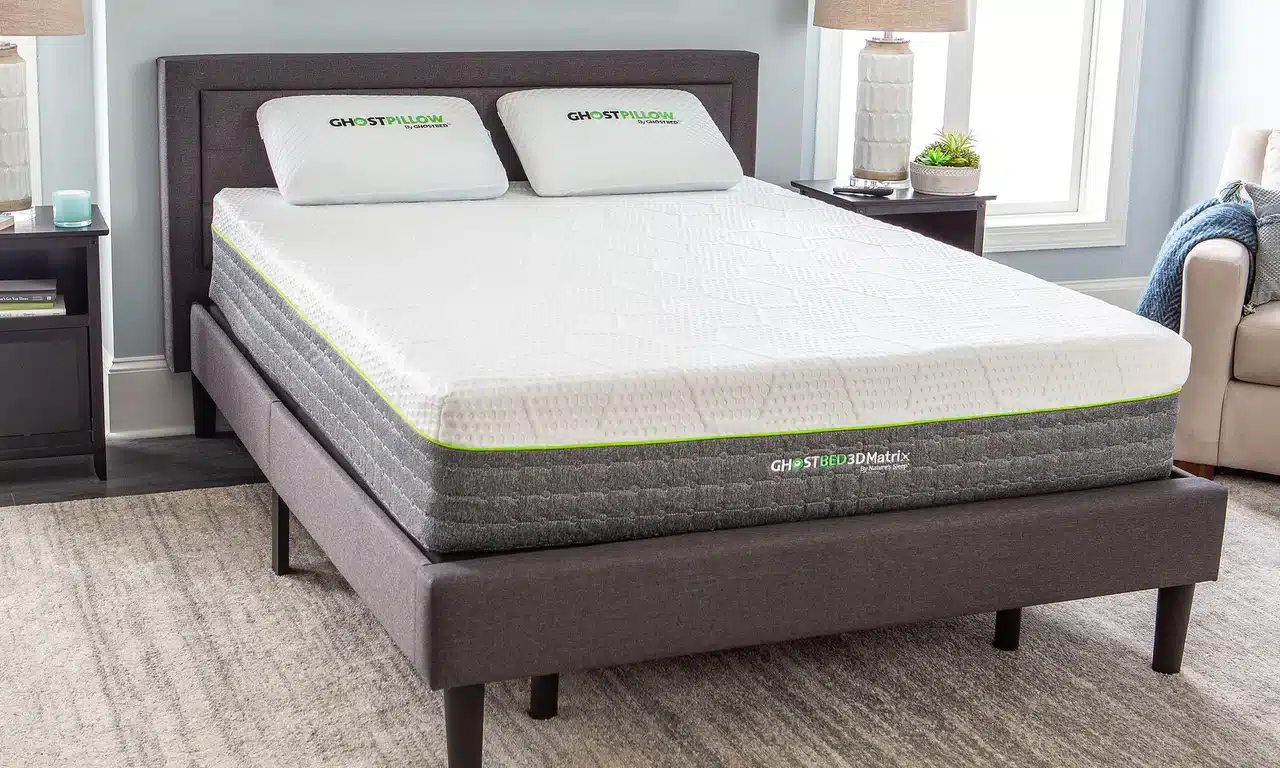
Prepare to elevate your sleep game with the GhostBed 3D Matrix Mattress, where cutting-edge gel technology embraces your body for unmatched comfort and pressure relief. Dive into a spectral slumber experience that transforms restless nights into sweet dreams!
Once upon a mattress, a revolutionary sleeping experience was born!” Welcome, fellow sleep enthusiasts, to our eerily delightful review of the GhostBed 3D Matrix Mattress – a bed that promises to transform your slumber into a hauntingly cool, otherworldly experience. Are you ready to embark on this spectral journey and unearth the secrets of this innovative mattress? Let’s get started!
Before we tiptoe through the graveyard of mattress details, let’s shed some light on the history of GhostBed. Founded by a sleep-savvy phantom named Marc Werner, GhostBed has been raising the spirits of sleepers everywhere since 2015 with its spine-chillingly comfy mattresses and bed accessories. Now, with the release of the GhostBed 3D Matrix Mattress, the brand is taking a giant leap into the spectral realm, blending advanced materials and spectral technology to make restless nights a thing of the past.
So, why should you trust this phantom-inspired review? Fear not! We’ve spent countless nights tucked away in our crypt, rigorously testing and analyzing the GhostBed 3D Matrix Mattress so you can rest in peace (and comfort). From the ghoulishly delightful 3D Matrix polymer layer to the spine-tingling edge support, we’ve left no tombstone unturned. So, let’s dive into the netherworld of mattress features and see if this otherworldly bed is truly the stuff dreams are made of, or if it’s just a passing ghostly apparition.
Now that we’ve set the stage for our spooktacular journey, let’s unravel the mystery behind the GhostBed 3D Matrix Mattress’s supernatural comfort. What makes this mattress truly stand out from the restless crowd is its unique, ghostly concoction of layers designed to lure you into a peaceful slumber.
First up, we have the star of the show, the 3D Matrix polymer layer. This ghoulish gel-like layer is eerily effective at distributing your body heat and adapting to your individual shape, cradling you in a cocoon of coolness and support. Say goodbye to sleeping hot – it’s time to chill with Casper, not sweat with Slimer!
Beneath this innovative polymer lies the realm of gel memory foam, providing additional cooling properties and pressure relief. This enchanting combination of layers ensures that your spine remains in alignment while you snooze away in a world of spectral dreams.
But fear not, dear sleepers, for the GhostBed 3D Matrix Mattress has yet another trick up its phantom sleeve – pocketed coils! These individually wrapped springs work their supernatural magic to provide exceptional support and spine alignment, all while minimizing motion transfer. Restless spirits, rejoice – your tossing and turning won’t disturb your slumbering partner.
Now that we’ve unveiled the ghostly secrets behind the GhostBed 3D Matrix Mattress, it’s time to put it to the test. In the next part of our eerie exploration, we’ll delve into the Spectral Seven – our ghastly guide to evaluating the key features of this mattress. From comfort and temperature regulation to edge support and adaptability, we’ll leave no crypt unopened as we determine whether this mattress is a dream come true or a night terror.
Stay tuned, fellow sleep-seekers, as we continue to uncover the ghostly delights of the GhostBed 3D Matrix Mattress. Will it have you sleeping like the dead, or running for the hills? Only time (and our spectral investigation) will tell!
How Much Does it Cost?
Mattress Size
Spooktacular Price*
Twin
$1,400
Twin XL
$1,500
Full
$1,700
Queen
$2,000
King
$2,300
Cal King
$2,300
*Note: These spine-chilling prices are subject to change, so be sure to double-check the GhostBed website for the most up-to-date phantom pricing.
Welcome back, fellow sleep adventurers! As we venture further into our spectral investigation, it’s time to examine the Spectral Seven – our ghastly guide to the key features of the GhostBed 3D Matrix Mattress. Hold on to your blankets, for we’re about to conjure the truth behind this otherworldly bed!
Comfort: “Does it feel like sleeping on a cloud, or is it a nightmare in the making?” Our ghostly test revealed that the 3D Matrix Mattress truly excels in providing spine-tingling comfort. The innovative combination of the 3D Matrix polymer and gel memory foam layers works in perfect harmony, creating a soft yet supportive surface that cradles your body like a comforting apparition. Say farewell to aching joints and hello to rejuvenating slumbers!
Temperature Regulation: “Will you be chilling with Casper or breaking a sweat with Slimer?” Our spectral experiment confirmed that the GhostBed 3D Matrix Mattress is a chillingly cool sleep solution. The 3D Matrix layer actively dissipates heat while the gel memory foam adds an extra touch of coolness, ensuring you won’t wake up drenched in sweat – unless, of course, it’s from a haunting nightmare!
Motion Isolation: “Sleeping with a restless ghost or resting in peace?” Fear not, light sleepers and restless spirits – the GhostBed 3D Matrix Mattress’s pocketed coils work their supernatural magic to minimize motion transfer. Our midnight snack sneak test revealed that even the most spirited movements won’t disturb your slumbering partner, allowing you both to rest in eternal peace.
Edge Support: “Living on the edge or fearing a spooky tumble?” The GhostBed 3D Matrix Mattress provides exceptional edge support, preventing any spine-chilling falls from the bed. Our ghastly testers found that sitting and lying on the edge remained comfortable and secure, keeping any fears of a midnight tumble at bay.
Adaptability: “From restless spirits to peaceful dreamers, can this mattress accommodate all?” Our investigation unearthed that the GhostBed 3D Matrix Mattress is indeed suitable for a wide range of sleepers. Whether you’re a back, side, or stomach sleeper, or a lightweight wisp or a heavy phantom, this mattress adapts to your unique shape, ensuring a cozy and supportive slumber.
Durability: “Will it last for an eternity, or crumble like a haunted mansion?” With its high-quality materials and craftsmanship, the GhostBed 3D Matrix Mattress is built to withstand the test of time. Although it might not last for all eternity, you can expect this ghoulishly good mattress to serve you well for years to come.
Price and Value: “Is it a ghostly steal or a monstrous investment?” While the GhostBed 3D Matrix Mattress may seem like a spine-chilling splurge, its spectral features and hauntingly good comfort make it a worthwhile investment. When compared to its spectral competitors, this mattress offers a spooktacular value that’s hard to beat.
As we emerge from our chilling exploration of the GhostBed 3D Matrix Mattress, it’s time to ask the ultimate question: Is it a dream come true or a night terror? Stay tuned for our final verdict, as we lay to rest the enigma of this spectral sleep solution!
Final Thoughts on the Ghost Bed 3D Matrix
As our otherworldly journey comes to a close, we must now summon the courage to answer the ultimate question: Is the GhostBed 3D Matrix Mattress a dream come true or a night terror? Let us unveil the final verdict by revisiting the supernatural strengths and ghostly weaknesses of this spectral sleep solution.
The GhostBed 3D Matrix Mattress boasts numerous spine-chilling pros, such as its hauntingly comfortable feel, chilling temperature regulation, and exceptional motion isolation. Moreover, its adaptability accommodates a wide range of sleepers, and its durability ensures years of peaceful slumbers. All of these spectral strengths combine to make the GhostBed 3D Matrix Mattress a dream come true for many sleep-seekers.
However, no mattress is without its ghostly weaknesses. For those seeking a budget-friendly option, the GhostBed 3D Matrix Mattress may be a monstrous investment. Yet, for the spectral features and otherworldly comfort it offers, we believe this mattress is well worth the investment.
In light of our spectral investigation, we wholeheartedly recommend the GhostBed 3D Matrix Mattress to those who seek a spine-tingling combination of comfort, support, and cooling. With an overall rating that would make even the most restless spirits envious, this mattress is truly a dream come true for many.
So, is it time to embrace the ghostly comfort or continue the search for the perfect sleep? We say, don’t be spooked – give the GhostBed 3D Matrix Mattress a try and experience it for yourself! Sweet dreams and ghostly slumbers await, fellow sleep-seekers. As we bring our chilling adventure to an end, remember that the key to a peaceful night’s sleep might just be a spectral encounter with the GhostBed 3D Matrix Mattress. Sleep tight, and don’t let the bed ghosts bite!
Ghostbed Accessories
Ahoy, sleep explorers! Did you think our spectral journey ended with the GhostBed 3D Matrix Mattress? Think again! The ghostly realm of GhostBed accessories awaits us, so let’s dive in and discover the spooktacular sleep-enhancing extras that’ll elevate your bedtime experience to haunting new heights.
GhostPillow: Your eerie slumbers deserve a pillow that’s nothing short of supernatural. The GhostPillow, with its chillingly adaptive memory foam and cooling technology, will cradle your head and neck like a gentle phantom, ensuring a spine-tinglingly comfortable rest.
GhostSheets: Wrap yourself in these ghoulishly delightful sheets, made from supernatural Supima cotton and ethereal Tencel fibers. These soft and breathable sheets will keep you cool and cozy as you drift away into a spectral slumber.
GhostProtector: Shield your GhostBed 3D Matrix Mattress from the horrors of spills and stains with the GhostProtector. This ghostly guard is waterproof, breathable, and oh-so-soft, ensuring your spectral sleep surface stays pristine for years to come.
GhostBed Adjustable Base: Elevate your sleeping experience to a new dimension with the GhostBed Adjustable Base. This otherworldly wonder features customizable head and foot positions, hauntingly relaxing massage settings, and eerie under-bed lighting to guide your midnight wanderings.
GhostBed Weighted Blanket: Embrace the soothing comfort of a ghostly hug with the GhostBed Weighted Blanket. This cozy cover is designed to ease anxiety and lull you into a deep, restorative sleep, making your dreams more peaceful than a stroll through a moonlit graveyard.
So there you have it, fellow sleep-seekers: a haunted treasure trove of GhostBed accessories to complete your ghostly sleep haven. Mix and match these spectral extras with your GhostBed 3D Matrix Mattress to create a bedtime experience that’s truly out of this world. Sweet dreams and ghostly slumbers await!
Both renowned for their supernatural comfort and innovative technology, but which one will emerge as the champion in our spooktacular face-off? Let’s pit these spectral sleep solutions against each other and see who reigns supreme!
Spine-Tingling Comfort: The GhostBed 3D Matrix Mattress offers a hauntingly delightful blend of the 3D Matrix polymer layer, gel memory foam, and pocketed coils that work together to provide a cloud-like comfort and spine alignment. On the other hand, the Purple Mattress utilizes the ghostly power of the Purple Grid – a unique hyper-elastic polymer layer that adapts to your body for spine alignment and pressure relief. While both mattresses provide otherworldly comfort, the GhostBed 3D Matrix may have the edge when it comes to a luxurious feel.
Chilling Temperature Regulation: Both mattresses excel in keeping you cool during your spectral slumbers. The GhostBed 3D Matrix Mattress boasts a unique gel-like layer that distributes body heat, while the Purple Mattress relies on its open-grid design for optimal airflow. This chilling category might just end in a spine-tingling tie!
Eerie Motion Isolation: The GhostBed 3D Matrix Mattress features individually wrapped pocketed coils, which excel at minimizing motion transfer, ensuring that restless spirits won’t disturb their partners. The Purple Mattress, with its flexible Purple Grid, also performs well in isolating motion. It’s a close call, but the GhostBed 3D Matrix may have a slight edge due to its pocketed coils.
Ghoulish Price: When it comes to spectral pricing, the Purple Mattress may be a more budget-friendly option, starting at a lower price point than the GhostBed 3D Matrix Mattress. If affordability sends shivers down your spine, the Purple Mattress may be the ghoul for you.
Restless Variety: While the GhostBed offers a range of mattresses, including the GhostBed Luxe and GhostBed Flex, the Purple family expands to the Purple Hybrid and Purple Hybrid Premier, offering varying thicknesses of the Purple Grid for customizable comfort. The Purple Mattress takes the win for variety, catering to a broader range of ghoulish preferences.
So, which one will you choose, dear sleep-seekers? The GhostBed 3D Matrix Mattress or the Purple Mattress? Both mattresses offer spine-tingling comfort and chilling temperature regulation, but your choice may ultimately boil down to personal preference and budget. May your spectral journey to the perfect sleep surface be as thrilling as a midnight stroll through a haunted mansion!
Frequently Asked Questions About GhostBed 3D Matrix Review: Must-Have Comfort for Dreamers
What makes the GhostBed 3D Matrix Hybrid different from other mattresses?
The GhostBed 3D Matrix Hybrid stands out due to its advanced 3D Matrix polymer layer, which is made from surgical-grade gel and adapts uniquely to your body for pressure relief. This layer, combined with gel memory foam, offers a cooler and more supportive sleep surface. It also features pocketed coils for targeted support and minimal motion transfer.
Is the GhostBed 3D Matrix Hybrid a good option for hot sleepers?
Yes, the GhostBed 3D Matrix Hybrid is designed with innovative cooling technology to prevent overheating. The 3D Matrix polymer layer and gel memory foam actively dissipate heat, ensuring a cool and comfortable sleep experience. You can expect a refreshing feel that helps you avoid waking up sweating.
Who is the GhostBed 3D Matrix Hybrid best suited for?
The GhostBed 3D Matrix Hybrid is ideal for individuals seeking comfort, support, and temperature regulation in one mattress. Its adaptive design accommodates various sleeping positions, including back, side, and stomach sleepers, and it is particularly beneficial for those who share a bed due to its motion isolation properties. Shoppers at our San Diego showroom often highlight its pressure-relieving qualities.
How well does the GhostBed 3D Matrix Hybrid handle motion transfer if my partner moves a lot?
The GhostBed 3D Matrix Hybrid excels in motion isolation thanks to its individually wrapped pocketed coils. These coils absorb movement, preventing disturbances from transferring across the mattress. This ensures that you and your partner can enjoy undisturbed sleep, even if one of you is a restless sleeper.
Does the GhostBed 3D Matrix provide good edge support?
Yes, the GhostBed 3D Matrix offers commendable edge support, as noted in our analysis of its features. This means you can comfortably sit or lie near the edge of the mattress without feeling like you will roll off. Good edge support also contributes to the overall durability and usable surface area of the bed.
Where can I try the GhostBed 3D Matrix Hybrid in person?
You can try the GhostBed 3D Matrix Hybrid in person at Yawnder's Encinitas, CA showroom. Our sleep experts can guide you through its features and help you determine if it's the right mattress for your needs. Visiting the showroom allows you to experience its unique feel and cooling properties firsthand.
Want to test this in person? Visit our Encinitas showroom or call 858-232-5760.
Ready to buy?
Check current GhostBed pricing and promos
Live pricing, current promotions, and full manufacturer warranty through our affiliate partner. Buying through this link supports Yawnder’s independent testing at no extra cost to you.
Yawnder Reviews · Legacy hands-on material restored September 2026
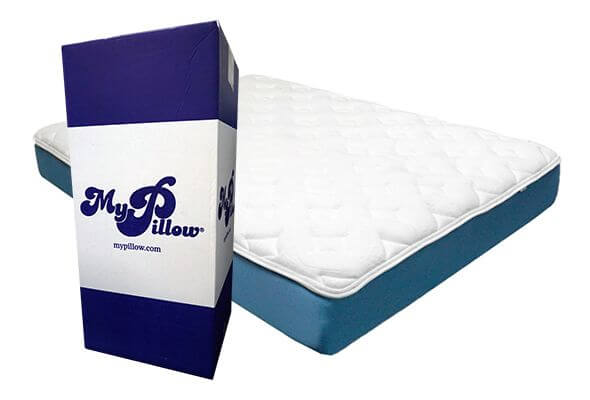
MyPillow Mattress Review: Original Hands-On Experience Restored
Most of the original MyPillow Mattress review had been replaced by a short generic page. This version brings back the first-hand testing while separating it from old promotions and policy language.
Our original MyPillow Mattress experience
Yawnder tested the original all-foam MyPillow Mattress and found it more supportive and spring-like than expected for a foam bed. On first lying down, the support and pressure relief were strong enough that it initially felt as though coils might be involved.
The review mattress used multiple resilient foam layers. I tested the medium/white firmness option and found the top layer plush enough to cushion the body while the firmer layers underneath kept the mattress from feeling flat or unsupportive.
As a side sleeper, I paid particular attention to shoulder and hip pressure. On this mattress I did not experience the same pressure-point discomfort I sometimes get on firmer beds. The foam contoured well without feeling completely stuck.
Temperature control was decent for the version we tested. It was not the coolest mattress I had tried, but the upper foam did not produce the heavy heat-retention feel associated with some older memory foams.
Construction we photographed
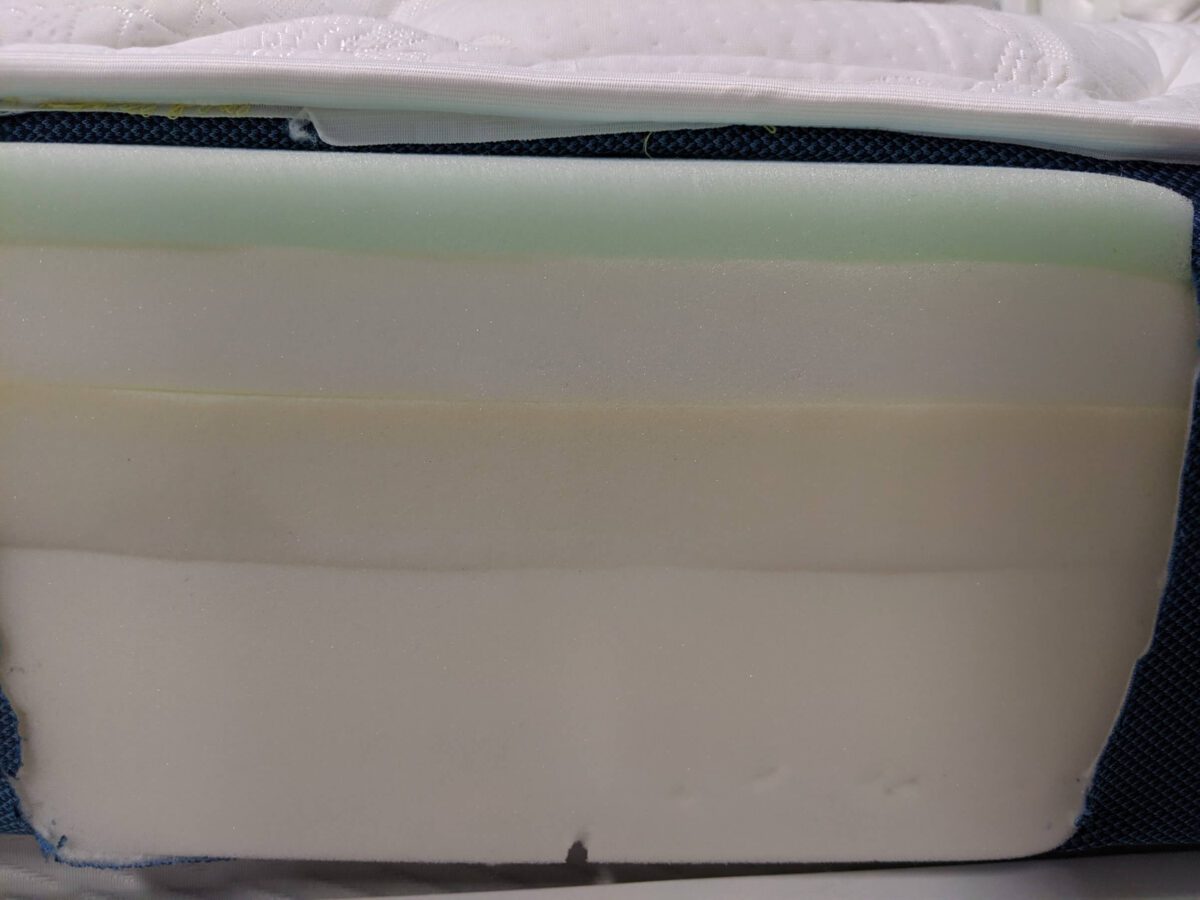
The original review included a physical look at the foam stack, which showed a true multi-layer mattress rather than one undifferentiated slab of foam. That layering was a major reason the mattress felt more refined than a basic budget foam bed.
Original construction photo from Yawnder’s review.
MyPillow’s current mattress lineup may differ substantially from the model reviewed here. The restored material is valuable as a record of Yawnder’s actual experience with the original mattress, not as a guarantee about current construction or firmness options.
Yawnder Reviews · Disclosure: Some links may be affiliate links. Legacy observations are retained for transparency and are not presented as current specifications.
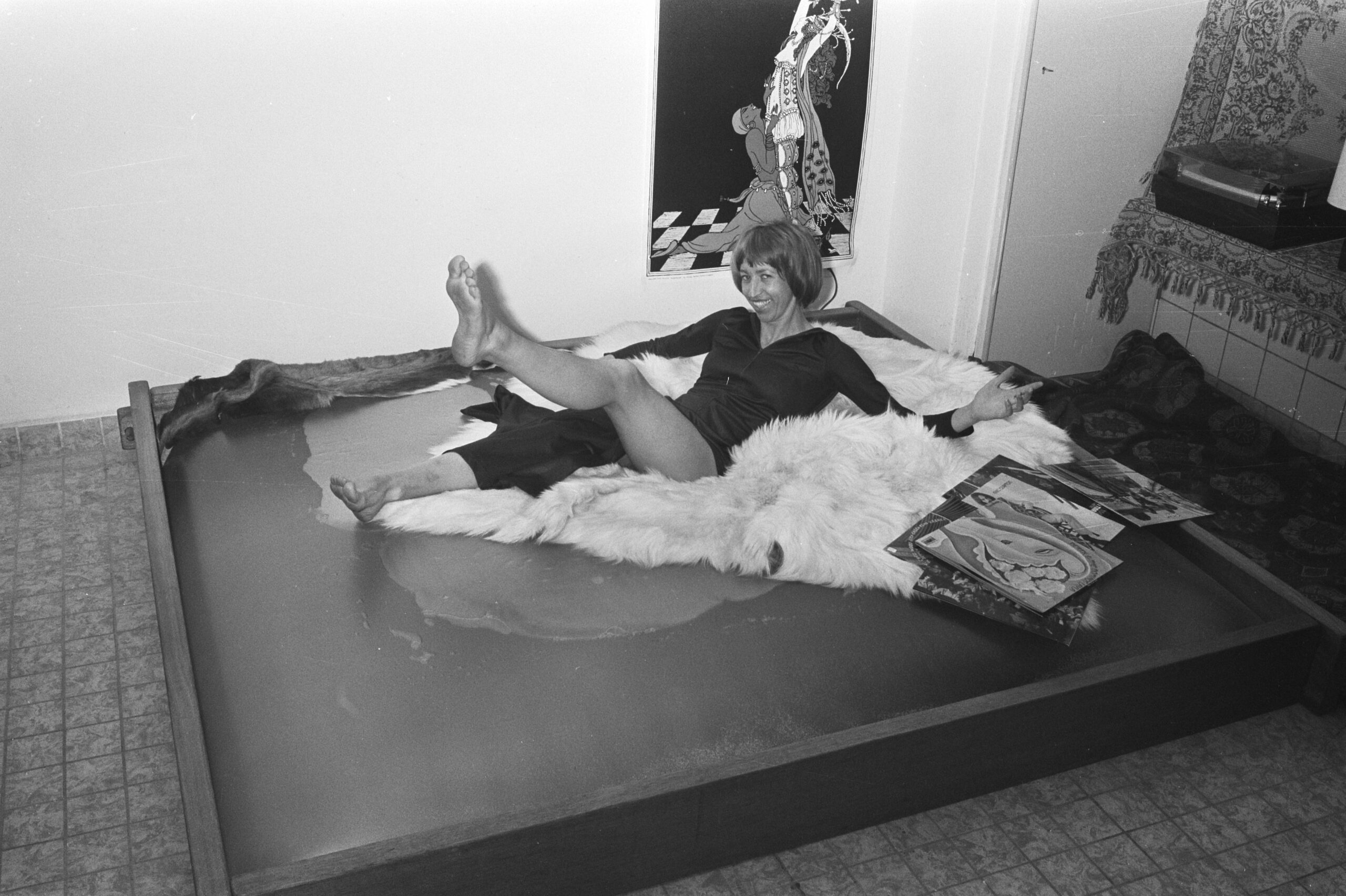
Waterbeds were a popular bedroom staple in the 1970s and 1980s, but their popularity has certainly declined since then. However, that doesn’t necessarily mean that they’re no longer used by people today.
There are still many individuals who enjoy the unique feeling and benefits of sleeping on a waterbed. For example, waterbeds can help reduce pressure points on the body, provide excellent support for those with back pain, and offer a comfortable, cool sleeping surface during hot weather.
Moreover, many waterbed enthusiasts appreciate the fact that waterbeds can be customized to suit individual preferences, from the firmness of the bed to the temperature of the water. They can even be made with extra features, such as massage settings or built-in heating systems.
Of course, waterbeds are not for everyone, and they may not be the best choice for every sleeping situation. They can be more challenging to move or maintain than traditional mattresses, and they may not be as widely available in stores.
But if you’re someone who is curious about waterbeds or looking for a unique and comfortable sleeping experience, it’s worth considering the benefits that waterbeds can offer.
So, to answer your question: yes, people still use waterbeds! While they may not be as common as they once were, there are still plenty of waterbed enthusiasts out there who enjoy the benefits of this unique sleeping surface.
History of Waterbeds
Waterbeds may seem like a modern invention, but their history actually goes back several decades. In fact, the first waterbed was invented in 1833 by Scottish physician Dr. Neil Arnott!
However, it wasn’t until the late 1960s that waterbeds began to gain popularity as a mainstream consumer product. That’s when a design student named Charles Hall created a more comfortable and practical version of the waterbed, using vinyl and other materials to create a more stable and durable mattress.
By the 1970s, waterbeds had become a cultural icon, popularized in movies, TV shows, and music videos. They were seen as a symbol of the free-spirited, counter-culture movement of the time.
Despite their initial popularity, however, waterbeds began to decline in popularity in the 1980s and 1990s, as more traditional mattresses and bedding options became more widely available. Today, waterbeds are less common, but there are still many people who appreciate the unique comfort and benefits of sleeping on a waterbed.
Whether you’re a die-hard waterbed enthusiast or just curious about this unique sleeping surface, the history of waterbeds is a fascinating tale of innovation, creativity, and cultural change.
Waterbeds and Film
Waterbeds have had a long and interesting relationship with film, dating back to the 1970s when they first gained popularity as a mainstream consumer product.
During this time, waterbeds became a symbol of the free-spirited, counter-culture movement of the era. They were often depicted in films and TV shows as a luxurious and indulgent item, used by characters to express their rebellious, carefree lifestyles.
One of the most iconic uses of a waterbed in film is in the 1973 movie “American Graffiti”, where a character named Terry the Toad is seen lounging on a waterbed while listening to music. The scene captures the essence of the 1970s and the carefree, hedonistic attitudes of the time.
Waterbeds also appeared in other classic movies of the era, such as “The Love Machine” (1971) and “Fast Times at Ridgemont High” (1982). These films helped to establish waterbeds as a cultural icon, synonymous with the era’s attitudes towards sex, drugs, and rock and roll.
Today, waterbeds may be less common in popular culture, but they still hold a special place in the hearts of those who appreciate their unique comfort and benefits. And who knows? With the resurgence of retro and vintage styles in pop culture, we may see a renewed interest in waterbeds in film and beyond.
Waterbeds and Climate Control
Waterbeds can be designed to provide a cool sleeping surface, which is one of the reasons they can be a great choice for people who tend to sleep hot.
One of the key benefits of a waterbed is that it can be customized to the individual’s preferences, including the temperature of the water. This means that you can adjust the temperature to suit your specific needs, whether you prefer a cooler or warmer sleeping environment.
In addition to temperature control, waterbeds can also provide excellent support and pressure relief for the body. This is because the water in the bed conforms to the shape of your body, reducing pressure on your joints and spine. This can help to prevent aches and pains that can be caused by traditional mattresses that don’t conform as well to the body.
Overall, waterbeds can be an excellent choice for people who are looking for a comfortable and customizable sleeping surface that can help to regulate temperature and provide excellent support. So, if you tend to sleep hot and are looking for a way to stay cool and comfortable all night long, a waterbed may be just what you need!
Where to Buy Waterbeds
If you’re interested in buying a waterbed, you may be wondering where you can find them for sale. While waterbeds may not be as widely available as traditional mattresses, there are still several places where you can purchase them.
One option is to check with your local mattress stores. While not all mattress stores carry waterbeds, some do, and they may even have models available for you to try out before you buy.
Another option is to search online for waterbed retailers. There are several online stores that specialize in waterbeds and waterbed accessories, and they may offer a wider selection than you can find in a physical store.
You can also check with specialty bedding stores, as they may carry waterbeds or have information on where you can find them.
If you’re looking for a more affordable option, you may want to consider purchasing a used waterbed. You can often find them for sale on online marketplaces or in classified ads.
Overall, while waterbeds may not be as common as they once were, there are still several places where you can purchase them. So, if you’re interested in trying out a waterbed for yourself, start by checking with local mattress stores, specialty bedding stores, or online retailers.
Waterbed Brands and Pricing
Boyd Waterbeds:
Resonance: $1,499.99
Genesis: $1,999.99
Free Flow: $2,499.99
Innomax:
Sanctuary: $1,999.99
Medallion: $2,499.99
Genesis 400 Gentle Wave: $2,999.99
Strobel Organic:
Sof-Frame: $1,499.99
Super 8: $1,999.99
Ultra Waveless: $2,499.99
Classic Sleep Products:
Natural Expressions: $1,499.99
Better Sleep 750: $1,999.99
Luxury Support LS 9000: $2,499.99
American National Manufacturing:
Softside: $1,499.99
Hardside: $1,999.99
Luxury Support: $2,499.99
Land and Sky:
Dreamweaver: $1,499.99
Ultra Waveless: $1,999.99
Mystique: $2,499.99
Sterling Sleep Systems:
8600: $1,499.99
9000: $1,999.99
9500: $2,499.99
Comfort Craft:
5500: $1,499.99
6500: $1,999.99
7500: $2,499.99
Aqua Pedestal:
UltraWaveless: $1,499.99
MidFill: $1,999.99
SuperSponge: $2,499.99
Genesis Series:
400: $1,499.99
500: $1,999.99
600: $2,499.99
Please note that these are just list prices and the actual prices may vary depending on the retailer.
Trial and Warranty
If you’re considering purchasing a waterbed, you may be wondering about the trial period and warranty that comes with the bed. Let’s take a closer look at what you can expect when it comes to waterbed trials and warranties.
Waterbed Trial Periods:
Many waterbed manufacturers offer trial periods that allow you to try out the bed for a certain period of time, usually ranging from 30 to 120 days. During this time, you can sleep on the bed and decide if it’s the right fit for you. If you’re not satisfied with the bed, you can return it for a full refund.
It’s important to note that trial periods may come with certain conditions, such as a requirement to keep the bed for a minimum period of time before returning it, or a requirement to pay for return shipping or restocking fees. Make sure you read the terms and conditions carefully before committing to a waterbed trial.
Waterbed Warranties:
Warranties for waterbeds can vary depending on the manufacturer and the model of the bed. Generally, waterbed warranties will cover defects in materials and workmanship for a certain period of time, usually ranging from 5 to 20 years.
It’s important to read the warranty carefully to understand what is covered and what is not. For example, some warranties may not cover damage caused by accidents, misuse, or normal wear and tear. Make sure you understand the terms and conditions of the warranty before making your purchase.
In addition to the warranty, you may also want to consider purchasing additional protection, such as a mattress protector or extended warranty, to further safeguard your investment.
Overall, waterbed trials and warranties can offer peace of mind when purchasing a new waterbed. By understanding the terms and conditions of the trial and warranty, you can make an informed decision and find a waterbed that meets your needs and budget.
Frequently Asked Questions About Pros and Cons of Waterbeds
Are waterbeds still worth it in today's market?
Yes, waterbeds can still be a worthwhile sleeping surface, particularly for those seeking unique customization and pressure relief. Despite their decreased popularity since the 1980s, modern waterbeds offer distinct comfort advantages, including adjustable firmness and temperature control. At Yawnder, we understand that personalized sleep experiences are key, and waterbeds provide a level of adaptability rarely found in traditional mattresses.
Who are waterbeds best suited for regarding sleep issues?
Waterbeds are particularly well-suited for individuals experiencing back pain or those who tend to overheat while sleeping. The gentle, conforming support of water helps alleviate pressure points, providing a different feel than conventional mattresses. The inherent cooling effect of water makes them a refreshing alternative, especially beneficial in warmer climates like San Diego.
What are the main downsides of choosing a waterbed over a traditional mattress?
The primary downsides of waterbeds include their more cumbersome maintenance, difficulties in moving, and limited availability compared to traditional mattresses. While modern improvements exist, the logistics of setup and relocation can be more complex. Yawnder's experts can discuss these practical considerations with customers exploring all mattress types.
How does the temperature regulation of a waterbed compare to other mattress types?
Waterbeds offer a unique advantage in temperature regulation through their inherent cooling properties and the option for built-in heating systems. This allows users to actively adjust their sleep temperature, a level of control generally not found in traditional memory foam or innerspring mattresses. This makes waterbeds particularly appealing for hot sleepers.
Are waterbeds good for back pain?
Yes, waterbeds are often considered a good option for relieving back pain due to their ability to alleviate pressure points. The way water molds to the body offers a distinct type of support that can conform more closely than many traditional mattresses. This conforming support can lead to enhanced comfort and reduced spinal stress for some individuals.
Where can I try out a waterbed in person in the San Diego area?
While the article mentions their decreased availability, visitors to the Yawnder showroom in Encinitas, CA, can discuss modern options and explore unique mattress solutions. While we focus on a curated selection of contemporary sleep surfaces, our staff can provide insights into various mattress types, including historical perspectives on waterbeds and their current market presence. We aim to help every customer find their ideal sleep system.
Want to test this in person? Visit our Encinitas showroom or call 858-232-5760.
Ready to buy?
See today’s best sleep deals
Live pricing and current promotions on the mattresses, bases, and sleep tech we recommend.
Yawnder Reviews · Disclosure: Brand links may be affiliate links. Test scores come from the standardized Yawnder record; pricing and policies can change.
Updated October 18, 2026. Current specifications and direct-purchase terms were checked against Harvest Green’s published information. This page does not carry a complete standardized model-specific scorecard, so no numerical performance score is assigned.
Disclosure: Some links on Yawnder may earn a commission.
Harvest Green review: choose the exact construction
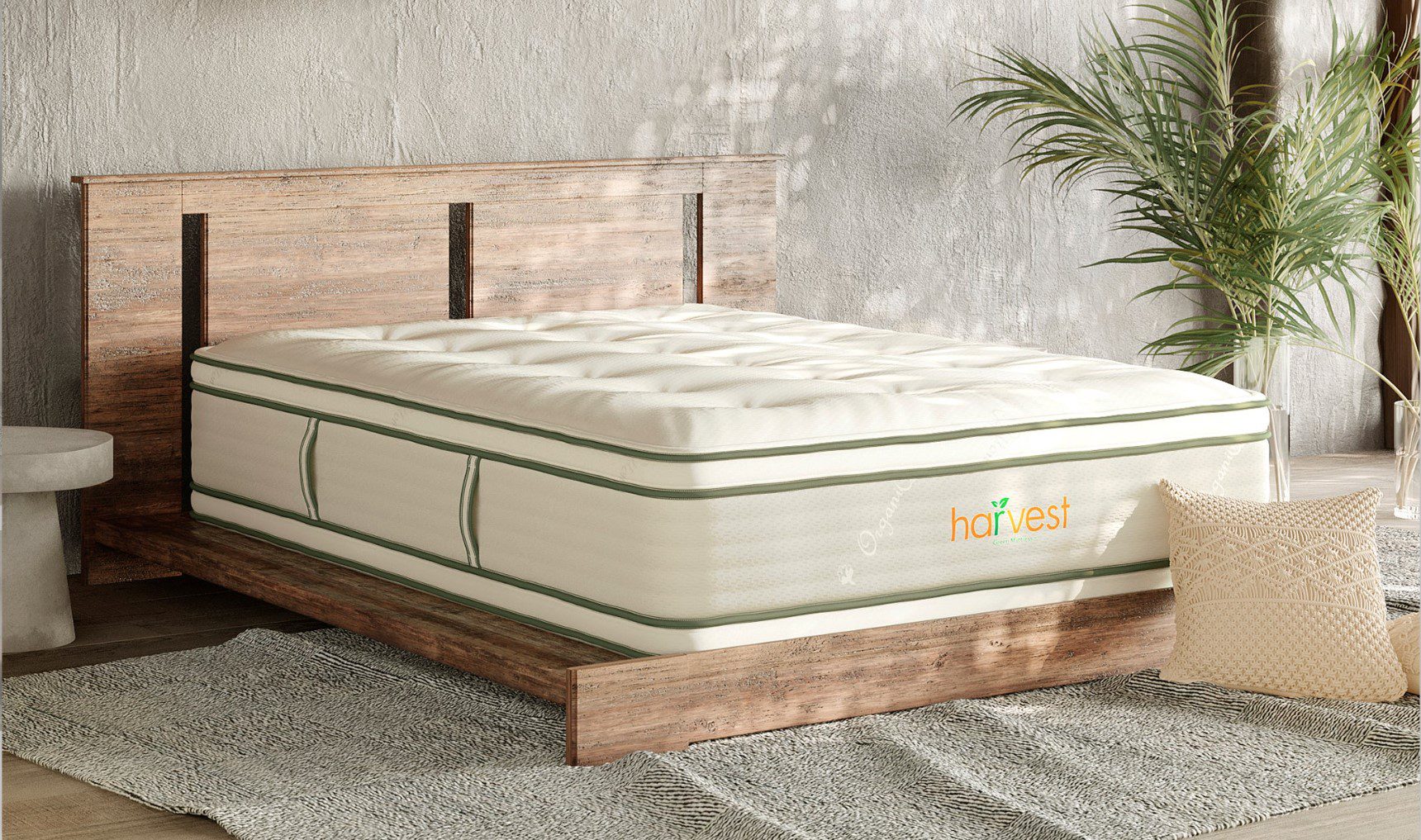
Harvest Green is a useful comparison for shoppers interested in a latex-and-coil mattress with cotton and wool. The main decision is how much surface cushioning you want, followed by whether you are considering the standard Original, Pillow Top or a separately identified double-sided model.
The earlier page described the lineup too broadly as flippable. Do not flip a mattress unless the care instructions for that exact model permit it. Different products from the same brand can require different care.
Source: Harvest Green’s Original page and specification tables. The brand lists organic latex, cotton and wool with pocketed coils; its Queen coil count is 825. These firmness figures are manufacturer labels, not Yawnder measurements.
The Pillow Top adds cushioning rather than simply changing the cover. Essentials and double-sided products should be compared using their own specification sheets. We have removed the earlier price table because a single starting price is not a quote for every size or model. Check the selected size, stock and delivery estimate at purchase.
Which one should you try?
Back and stomach sleepers: Compare Original’s more supportive brand-designated feel with your current bed. Check whether your hips settle comfortably without putting your lower back in an awkward position.
Side sleepers: Compare Pillow Top if you want additional cushioning. Spend time on both sides, paying attention to shoulder pressure and whether your waist feels supported. More latex does not guarantee a better fit for every sleeper.
Couples: Try changes of position together and sit near the edge. We do not have instrumented motion-transfer or edge-compression results for the current model on this page.
Material-focused shoppers: Review the exact certifications and components for the model you are buying. Natural materials alone do not guarantee that every sleeper will stay cool or find the mattress comfortable.
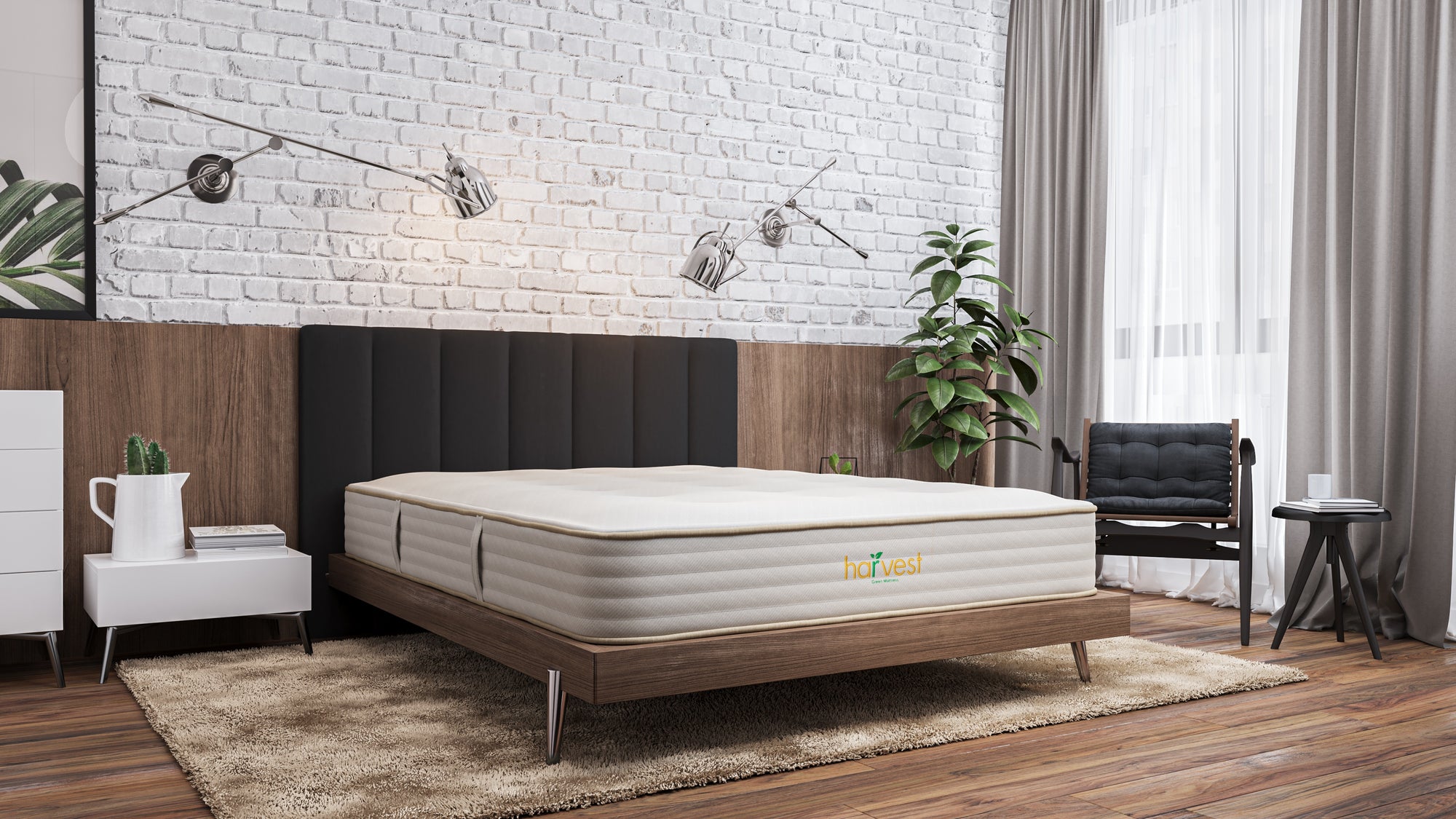
Archive image from earlier coverage; current models and specifications may differ.
100-night trial: direct versus retailer purchases
The dedicated trial policy says the 100-night period begins at delivery for direct website purchases. Eligible returns have no pickup or restocking fee, but white-glove delivery fees are not refunded. The product must be suitable for donation, without stains, tears, excessive odors or soiling.
Harvest requests 30–60 days for adjustment but says it does not impose a minimum use period for direct trial returns. The dedicated policy limits the trial to one product per order per address, with an exception for two Twin XL mattresses used as a King. Confirm eligibility for multiple-mattress orders before paying.
Some product-page wording suggests broader trial coverage through partners, while the dedicated policy explicitly says retail purchases follow that retailer’s agreement. Get the seller’s terms in writing. When buying through Yawnder, use the terms on your Yawnder purchase agreement rather than assuming Harvest’s website policy applies.
25-year limited warranty
The manufacturer describes years 1–10 as non-prorated and years 11–25 as prorated. Read the full warranty for eligibility, exclusions and foundation requirements. This is defect coverage, separate from a comfort trial, and does not establish a 25-year useful lifespan.
Before delivery, check the total bed height, sheet pocket depth and access route. The listed weights make handling a practical consideration; arrange help rather than assuming a Queen or King will be easy to reposition alone.
Frequently asked questions
Are all Harvest Green mattresses double-sided?
Do not make that assumption. Confirm the exact model and its care instructions before flipping it.
Are the firmness ratings independent test results?
No. The figures above are Harvest’s own labels, useful for comparing its options but not directly interchangeable with other brands’ scales.
Is Pillow Top always best for a side sleeper?
No. It is a sensible version to compare for additional cushioning, but body size, position and personal preference determine fit.
Our recommendation: Compare Original and Pillow Top side by side if possible, then confirm the exact model, seller’s trial terms and foundation requirements.
Learn how to steam clean your mattress to ensure a healthy and refreshing sleep experience. As we spend a considerable amount of time on our mattresses, it is crucial to know how to clean them properly. Moreover, considering mattresses are a significant investment, it’s essential to take measures to make them last longer. While there are various cleaning methods, steam cleaning is undoubtedly the most effective. The high temperatures, often exceeding 250℉, effectively kill mites, bacteria, and break down dirt and stains.
Another advantage of steam cleaning is its eco-friendliness, using only water and steam to get the job done without the need for harsh chemicals. It’s particularly essential to avoid chemicals that can irritate the skin or trigger allergies for items that you frequently come into contact with.
To steam clean your mattress, start by checking whether it is suitable for steam cleaning, especially memory foam mattresses that may require specialized cleaning methods. Strip the bed of all linens, including the mattress protector, and wash the bedding. Spot treat stains with a dry absorbent cloth, cold water, and a sponge. Vacuum the mattress, including the sides, to remove dust particles and debris.
Assemble and prep your equipment, using a handheld steam cleaner like the BISSELL Little Green or renting a commercial steamer. Hold the steam cleaner about six inches above the mattress and work your way across the surface, using slow and even strokes, making sure not to saturate any one spot for too long to avoid mold growth or damage.
For optimal mattress maintenance, steam clean it bi-weekly, or monthly if bi-weekly is not feasible. Consider steaming it more frequently if you have allergies, respiratory problems, or sleep with pets, children, or eat in bed. It usually takes five to eight hours for a steamed clean mattress to dry. To speed up the drying process, open windows or position a fan towards it.
While steam-cleaning can reduce the population of bed bugs, it may not completely eliminate them. If you have an infestation, seek professional extermination. Prevent future infestations by regularly vacuuming and steam cleaning your mattress, rotating it frequently, and using a mattress protector.
In conclusion, there’s nothing like a fresh-feeling bed to ensure a good night’s sleep. Steam cleaning your mattress is an effective and eco-friendly way to keep it free of dust, germs, and allergens.
Can Steam Actually Sanitize Your Mattress?
Steam can sanitize some types of furniture, such as upholstered furniture, using high temperature steam to kill bacteria and germs. However, it’s important to check the manufacturer’s instructions before using a steam cleaner on a particular type of furniture, as some materials may be sensitive to heat and moisture. It’s also important to note that while steam cleaning can kill bacteria and germs, it may not completely remove all types of stains or dirt from furniture.
Steam Cleaning for Urine
Steam cleaning can help remove urine stains and odor from a mattress to some extent. The high temperature steam can help to kill bacteria and germs, and the moisture can help to loosen the urine stain and odor from the mattress. However, it’s important to note that steam cleaning may not completely remove all traces of urine from the mattress, especially if the urine has seeped deep into the mattress layers. It’s recommended to use a specialized enzymatic cleaner specifically designed for removing urine stains and odor from mattresses in conjunction with steam cleaning for best results.
Can It Remove Blood?
Steam cleaning can help remove blood stains and odor from some surfaces, such as carpets and upholstery. The high temperature steam can help to break down the proteins in the blood, and the moisture can help to loosen the stain and odor from the surface. However, it’s important to note that steam cleaning may not completely remove all traces of blood from certain surfaces, especially if it has deeply penetrated the fibers or fabric. It’s recommended to clean up any blood as soon as possible and use a specialized cleaner specifically designed for blood stains and odor before steam cleaning for best results.
What Temperature Does Steam Need to Be for Sanitizing?
To effectively sanitize surfaces with steam, the temperature needs to reach at least 212 degrees Fahrenheit (100 degrees Celsius), which is the boiling point of water. However, some steam cleaners can produce steam at even higher temperatures, which may provide a more thorough and effective sanitation. It’s important to follow the manufacturer’s instructions and safety precautions when using a steam cleaner to sanitize surfaces, and to use appropriate personal protective equipment when necessary.
Frequently Asked Questions About How to Steam Clean a Mattress
Is steam cleaning a mattress really worth the effort?
Yes, steam cleaning your mattress is worth the effort because it sanitizes by eliminating dust mites, bacteria, and stubborn stains, contributing to a healthier sleep environment. This method also extends the life of your mattress, protecting your investment for years to come. Our experts at Yawnder recommend regular steam cleaning to maintain optimal hygiene.
Who is mattress steam cleaning best for?
Mattress steam cleaning is best for individuals who suffer from allergies or respiratory issues because it uses high temperatures to effectively eradicate allergens without harsh chemicals. It's also ideal for those with pets, children, or anyone who frequently eats in bed, as these activities can introduce more debris and stains. Regular cleaning helps reduce airborne irritants and maintain a fresh sleep space.
What are the downsides of steam cleaning a mattress?
The primary downside of steam cleaning a mattress is the potential for moisture buildup if not done correctly, which can lead to mold growth or damage. Memory foam mattresses, for example, may not be suitable for steam cleaning and require specialized care. Proper drying, typically five to eight hours with good ventilation, is crucial to avoid these issues.
How often should I steam clean my mattress?
You should aim to steam clean your mattress every two weeks for optimal maintenance, but aiming for once a month is also beneficial if a bi-weekly schedule is impractical. More frequent cleanings are recommended if you have allergies, sleep with pets or children, or occasionally eat in bed. This helps reduce allergens and maintain a hygienic sleeping environment.
Can steam cleaning remove old urine stains from a mattress?
Steam cleaning can help with urine stains, but it is most effective when combined with a specialized enzymatic cleaner designed for urine. While steam's high temperatures sanitize, the enzymatic cleaner actively breaks down the components of urine causing the stain and odor. For comprehensive cleaning, we suggest a two-pronged approach for the best results.
Where can I learn more about mattress care in person?
You can learn more about mattress care and cleaning best practices by visiting the Yawnder showroom in Encinitas, CA. Our knowledgeable staff can provide personalized advice on maintaining your mattress and selecting the right products. We can also demonstrate various cleaning techniques and discuss mattress suitability for different cleaning methods.
Want to test this in person? Visit our Encinitas showroom or call 858-232-5760.
Ready to buy?
See today’s best sleep deals
Live pricing and current promotions on the mattresses, bases, and sleep tech we recommend.
Unlock the ultimate sleep experience with the Spartan Mattress by Brooklyn Bedding, designed specifically for athletes! With cutting-edge FIR Technology to boost recovery and comfort, it’s time to elevate your night’s rest and rejuvenate like a true warrior.
A good night’s sleep is crucial for overall well-being, and choosing the right mattress can make all the difference. Brooklyn Bedding, a well-established company in the bedding industry, offers a range of high-quality mattresses designed to cater to different preferences and needs. One of their premium offerings is the Spartan Mattress, which boasts unique features and technologies aimed at promoting restful sleep and aiding in recovery. In this comprehensive review, we’ll delve into the various aspects of the Spartan Mattress to help you determine if it’s the right choice for you.
Overview of Brooklyn Bedding
Brooklyn Bedding is a family-owned company that has been producing high-quality mattresses since 1995. Over the years, they’ve continued to innovate and expand their product lineup, offering a variety of mattress models to cater to a wide range of sleepers. Their commitment to quality and customer satisfaction has earned them a solid reputation in the industry.
A good mattress can significantly impact your sleep quality, affecting your physical and mental health. With so many options on the market, it’s essential to find a mattress that suits your individual needs and preferences. The Spartan Mattress by Brooklyn Bedding aims to provide a luxurious sleep experience while also promoting enhanced recovery for those with active lifestyles.
Detailed Look at the Spartan Mattress
1. Layers and Construction
The Spartan Mattress is a hybrid mattress with a combination of foam and coil layers designed to provide optimal comfort, support, and breathability. Let’s take a closer look at each layer:
Cover: The mattress cover is made with Nanobionic R.E.S.T. Technology, a cutting-edge material designed to transform your body heat into far infrared rays, which are then reflected back to your body to promote faster recovery and better sleep quality.
Comfort Layer: Beneath the cover lies a layer of CopperFlex Foam, a copper-infused foam that offers both pressure relief and antimicrobial properties. The copper in the foam helps draw heat away from your body, keeping you cool throughout the night.
Transition Layer: The transition layer features Hyper-Elastic TitanFlex Foam, which provides additional contouring and support. This responsive foam layer is engineered to adapt to your body’s movements and maintain proper spinal alignment.
Support Layer: The core of the mattress consists of Ascension X Encased Coils, which offer robust support and minimize motion transfer. These individually wrapped coils contour to your body while maintaining excellent breathability.
Base Layer: Finally, a high-density foam base layer provides additional support and durability to the mattress, ensuring long-lasting comfort and performance.
2. Unique Features and Technologies
The Spartan Mattress incorporates several innovative features and technologies that set it apart from other mattresses on the market:
Nanobionic R.E.S.T. Technology: This advanced technology in the mattress cover helps to enhance recovery and overall sleep quality. By converting body heat into far infrared rays and reflecting them back towards the body, it can help promote improved blood flow and reduce inflammation.
CopperFlex Foam: The copper-infused foam in the comfort layer not only provides pressure relief and contouring, but also has antimicrobial properties. The copper infusion aids in heat dissipation, ensuring a cooler and more comfortable sleep experience.
TitanFlex Foam: The responsive and adaptive nature of TitanFlex Foam in the transition layer ensures excellent pressure relief and support, while maintaining proper spinal alignment regardless of your sleeping position.
Ascension X Encased Coils: These individually wrapped coils provide robust support, minimize motion transfer, and promote breathability. They contour to your body while still offering exceptional airflow, which can be especially beneficial for hot sleepers.
3. Firmness Options and Sizes
The Spartan Mattress is available in three different firmness levels: Soft, Medium, and Firm. This variety ensures that there’s a suitable option for different types of sleepers, including side, back, and stomach sleepers, as well as those with varying weight and firmness preferences.
The mattress is available in the following sizes: Twin, Twin XL, Full, Queen, King, California King, and Split King. This wide range of size options ensures that the Spartan Mattress can accommodate various room sizes and user needs.
4. Health Benefits and Performance
The Spartan Mattress has been designed with health and performance in mind. Some of the notable benefits include:
Improved Sleep Quality: The combination of advanced materials and technologies, such as Nanobionic R.E.S.T. Technology and CopperFlex Foam, can help promote better sleep quality and facilitate a more rejuvenating rest.
Enhanced Recovery: The Spartan Mattress is designed to aid in physical recovery, making it an excellent choice for athletes and individuals with active lifestyles. The far infrared rays emitted by the Nanobionic R.E.S.T. Technology can help reduce inflammation and improve blood flow, contributing to faster recovery times.
Temperature Regulation: The copper-infused foam, breathable coils, and innovative cover work together to ensure effective temperature regulation, keeping you cool and comfortable throughout the night.
Edge Support: The Ascension X Encased Coils provide excellent edge support, which can be particularly beneficial for couples and those who require additional sleeping space.
5. Aesthetics and Design
The Spartan Mattress boasts a modern and stylish design, featuring a dark gray and black color scheme with a bold Spartan emblem on the cover. In addition to the visually appealing design, Brooklyn Bedding also offers matching foundations and accessories, allowing you to create a cohesive and stylish bedroom setup.
6. Comparisons to Other Brooklyn Bedding Mattresses
To help you better understand how the Spartan Mattress stacks up against other popular offerings from Brooklyn Bedding, here’s a brief comparison:
Spartan vs. Aurora: While both mattresses are hybrid models designed for temperature regulation, the Spartan features Nanobionic R.E.S.T. Technology and CopperFlex Foam for enhanced recovery and performance. The Aurora, on the other hand, focuses primarily on cooling with its phase change material cover and copper-infused foam.
Spartan vs. Signature: The Signature is Brooklyn Bedding’s flagship mattress, offering a balanced feel with its combination of foam and coils. The Spartan, however, incorporates more advanced materials and technologies, such as the Nanobionic R.E.S.T. Technology, making it a more premium and performance-oriented option.
Spartan vs. Bowery: The Bowery is an all-foam mattress with a more budget-friendly price point. While it offers comfort and support, it lacks the advanced recovery features and hybrid construction of the Spartan Mattress.
7. Customer Reviews and Testimonials
Positive Reviews
Many customers have praised the Spartan Mattress for its comfort, support, and temperature regulation.
The enhanced recovery features have been particularly well-received by athletes and those with active lifestyles.
Users appreciate the variety of firmness options available, allowing them to find a mattress that suits their specific needs and preferences.
Critical Reviews
Some users have noted that the Spartan Mattress may require a short break-in period to adjust to its unique feel.
A few customers have mentioned that the mattress is relatively heavy, which can make it challenging to move or rotate.
8. Pricing and Warranty
The Spartan Mattress falls within the luxury segment of Brooklyn Bedding’s product lineup, with prices ranging from $1,199 for a Twin to $2,399 for a Split King. It’s worth noting that Brooklyn Bedding often offers discounts and promotions, which can help reduce the overall cost.
The mattress comes with a 10-year warranty that covers defects in materials and workmanship. Additionally, Brooklyn Bedding has offered an in-home trial, but the current duration, break-in requirement, and return terms should be verified directly before purchase.
9. Environmental Impact and Certifications
The Spartan Mattress is CertiPUR-US certified, meaning it’s free from harmful chemicals and meets strict standards for emissions and durability. Brooklyn Bedding is also committed to eco-friendly manufacturing processes and participates in various recycling initiatives to minimize their environmental impact.
10. How to Choose the Right Spartan Mattress for You
To select the perfect Spartan Mattress for your needs, consider the following factors:
Sleeping Position: Your preferred sleeping position will play a significant role in determining the ideal firmness level. Side sleepers typically require a softer mattress, while back and stomach sleepers may find more comfort in a medium or firm option.
Firmness Preference: Personal preference also plays a role in selecting the right mattress. Consider your previous experiences with mattresses and which firmness levels have provided the most comfort.
Budget and Size Requirements: Evaluate your budget and room size to determine the most suitable mattress size and whether the Spartan Mattress aligns with your financial constraints. Keep an eye out for discounts and promotions to help reduce costs.
7.How long does it take for the Spartan Mattress to fully expand after unboxing? The Spartan Mattress may take up to 24 hours to fully expand after unboxing. However, you can sleep on the mattress within a few hours of setting it up.
Frequently Asked Questions
Is the Spartan Mattress suitable for all sleeping positions? Yes, the Spartan Mattress is designed to accommodate all sleeping positions. With three firmness options available, you can choose the one that best suits your preferred sleeping position and comfort preferences.
Does the Spartan Mattress require a special foundation or bed frame? While the Spartan Mattress doesn’t require a specific foundation or bed frame, it’s essential to use a sturdy and supportive base to maintain its structure and prevent sagging.
Can I try the Spartan Mattress in-store before purchasing? Yes, Brooklyn Bedding has showrooms where you can try their mattresses, including the Spartan Mattress, before purchasing. Brooklyn Bedding has offered an in-home trial, but the current duration, break-in requirement, and return terms should be verified directly before purchase.
How does the home trial work? The Spartan has been sold with an in-home trial, but the current trial length and conditions should be verified before purchase. If you decide it is not the right fit, return eligibility and any refund depend on the current policy. Verify the terms before purchase. Brooklyn Bedding may require you to keep the mattress for at least 30 nights before initiating a return to ensure you have enough time to adjust to the new sleep surface.
How long does it take for the Spartan Mattress to fully expand after unboxing? The Spartan Mattress may take up to 24 hours to fully expand after unboxing. However, you can sleep on the mattress within a few hours of setting it up.
Are there any precautions for people with allergies or sensitivities? The Spartan Mattress is CertiPUR-US certified, which means it’s free from harmful chemicals and has low VOC emissions. Additionally, the copper-infused foam has antimicrobial properties, making it resistant to allergens and bacteria. However, if you have specific allergies or sensitivities, it’s always a good idea to consult with your healthcare provider before making a mattress purchase.
Is the Spartan Mattress suitable for couples and people who share a bed? Yes, the Spartan Mattress is an excellent choice for couples and people who share a bed. The individually wrapped Ascension X Encased Coils minimize motion transfer, which helps reduce sleep disturbances when one person moves during the night. Furthermore, the mattress offers strong edge support, providing more usable sleep surface for couples.
How does the Spartan Mattress compare to other mattresses in terms of price? The Spartan Mattress falls within the luxury segment of Brooklyn Bedding’s product lineup and has a higher price point compared to some other mattresses. However, the premium materials, advanced technologies, and unique features make it a worthwhile investment for those seeking a high-quality, performance-oriented sleep surface.
What is the weight limit for the Spartan Mattress? The Spartan Mattress is designed to support up to 900 pounds of combined weight for a Queen size and larger, or up to 450 pounds of individual weight for Twin and Full sizes. It’s essential to ensure that the foundation or bed frame you use is also capable of supporting the necessary weight.
How often should I replace my Spartan Mattress? The lifespan of a mattress can vary depending on factors such as usage, care, and individual preferences. On average, a high-quality mattress like the Spartan Mattress should last for 7-10 years. To maximize the lifespan of your mattress, follow the care guidelines provided by Brooklyn Bedding and consider replacing your mattress when you notice a decline in comfort or support.
Where is the Spartan Mattress manufactured? The Spartan Mattress is manufactured in the USA by Brooklyn Bedding. The company owns its factory, ensuring control over the entire production process and maintaining high-quality standards.
Can I use an electric blanket or heating pad with the Spartan Mattress? While it’s generally safe to use an electric blanket or heating pad with the Spartan Mattress, it’s important to follow the manufacturer’s guidelines and safety precautions for both the mattress and the heating device. Keep in mind that the Spartan Mattress already has temperature regulation features, so additional heating elements may not be necessary for most users.
Frequently Asked Questions About Spartan Mattress: Best Recovery Solution for Athletes
Is the Spartan Mattress a good choice for athletes?
Yes, the Spartan Mattress is specifically designed with athletes and active individuals in mind, focusing on enhanced recovery and restorative sleep. Its Nanobionic R.E.S.T. Technology converts body heat into far infrared rays to promote better sleep and faster recovery, while the CopperFlex Foam helps regulate temperature and offers pressure relief. These features are tailored to help active individuals wake up revitalized.
What unique technologies are used in the Spartan Mattress for recovery?
The Spartan Mattress features Nanobionic R.E.S.T. Technology, which converts body heat into far infrared rays to improve blood flow and decrease inflammation. Additionally, the CopperFlex Foam layer is infused with copper for temperature regulation and antimicrobial properties, contributing to a cooler and more hygienic sleep environment beneficial for recovery.
Can I try out the Spartan Mattress in person before buying it?
Yes, you can experience the Spartan Mattress firsthand at the Yawnder showroom in Encinitas, CA. Visiting our San Diego area location allows you to personally evaluate the different firmness options and feel the unique construction of this recovery-focused mattress. Our staff can help you determine if it's the right fit for your sleep needs.
Who would benefit most from the Spartan Mattress's firmness options?
The Spartan Mattress offers Soft, Medium, and Firm options, making it suitable for a wide range of sleepers including side, back, and stomach sleepers. This versatility ensures that individuals can choose the firmness level that best supports their preferred sleeping position and body type for optimal comfort and spinal alignment. During our hands-on testing, we found each firmness level provides distinct support tailored to different preferences.
How does the Spartan Mattress address motion transfer for couples?
The Spartan Mattress incorporates Ascension X Encased Coils in its support layer, which are individually wrapped to minimize motion transfer. This design allows each coil to respond independently to pressure, isolating movement and ensuring that one partner's tossing and turning doesn't disturb the other's sleep. This feature makes it an excellent choice for couples seeking undisturbed rest.
Is the Spartan Mattress a good option for hot sleepers?
Yes, the Spartan Mattress is designed to keep sleepers cool through several features ideal for hot sleepers. Its CopperFlex Foam layer is infused with copper to effectively regulate temperature, and the Ascension X Encased Coils promote airflow throughout the mattress to prevent heat buildup. These components work together to ensure a cool and comfortable sleep environment.
Want to test this in person? Visit our Encinitas showroom or call 858-232-5760.
Yawnder Reviews · Original review material restored September 2026
Bedtech.
BedTech Mattress Review: Mattress & Adjustable-Base Line Explained
The BedTech page had been reduced to a stub. Its backup was primarily a brand/product overview rather than a single hands-on mattress test, so this restoration keeps that useful scope clear.
What BedTech sells
BedTech has offered memory-foam, gel-foam and hybrid mattresses alongside adjustable bases, pillows, protectors and bedding accessories.
Mattress variety
Because the brand spans multiple constructions and firmnesses, there is no single universal BedTech feel. Foam models emphasize contouring and motion control, while hybrids add more bounce and edge support.
Adjustable bases
BedTech is also well known for adjustable foundations. Those products are separate from mattress feel and should be evaluated for lift range, motor design, controls and compatibility.
Why exact model matters
A brand-level review can only go so far. Shoppers should compare the exact mattress model and exact base model instead of assuming all BedTech products share the same materials or warranty.
Current-shopping note
Current BedTech models and Yawnder showroom availability can change. Confirm the exact model and current terms before purchase.
Yawnder Reviews · Disclosure: Some links may be affiliate links. Current specifications and policies can change.
A good mattress can improve cardiovascular health and reduce the risk of heart disease.
Mattresses can be made with different levels of customization to provide personalized support.
The first modern waterbed was introduced in the 1960s.
Mattresses can be made with different levels of durability to withstand wear and tear over time.
Mattresses can be made with different levels of temperature regulation to keep sleepers cool and comfortable.
A mattress can contain up to 2 million dust mites per gram of dust.
Mattresses can be made with different levels of motion isolation to prevent disturbances from a partner’s movements.
The first adjustable air bed was introduced in the 1980s.
Mattresses can have different levels of electromagnetic fields (EMFs) depending on the materials used, which can affect sleep quality and overall health.
Frequently Asked Questions About Mattress Facts (2026): 90 Things Most People Don’t Know
How often should I replace my mattress and what are the signs that it's time for a new one?
You should generally replace your mattress every 7-10 years, or sooner if you notice specific signs of wear.
What are some surprising hygiene facts about mattresses?
Mattresses can harbor a significant amount of dust mites, bacteria, and fungi, underscoring the importance of cleanliness.
Are there mattress options for people with allergies?
Yes, hypoallergenic mattresses are available, specifically designed with materials that minimize allergy triggers.
What kind of innovative materials are used in modern mattresses for temperature regulation?
Modern mattresses incorporate temperature-regulating technologies like gel-infused foam and materials embedded with copper or graphite.
What unique features can I find in specialty mattresses, such as those for athletes?
Specialty mattresses, including those for athletes, incorporate features designed to enhance recovery and improve sleep quality.
Where can I try different types of mattresses in person in San Diego?
You can explore various mattress types, including those with natural materials or pressure-relieving technology, at the Yawnder showroom in Encinitas, CA.
Want to test this in person? Visit our Encinitas showroom or call 858-232-5760.
Ready to buy?
See today’s best sleep deals
Live pricing and current promotions on the mattresses, bases, and sleep tech we recommend.
Helix is a company that specializes in mattress technology. The company was founded in 2014 by two engineers, John Chambers and Marc Gorlin, who were frustrated with the lack of innovation in the mattress industry. Helix offers a variety of mattresses, including the Helix Dawn, which is a hybrid mattress that offers a firm and supportive feel.
The Helix Dawn mattress is made with a layer of latex-like polyfoam, transitional foam, and pocketed coils. This mattress is a good option for back and stomach sleepers who prefer a firmer feel. It also has a good amount of bounce and mobility, so you can easily change positions. The Helix Dawn is also a good option for hot sleepers, as it has temperature-neutral materials that help keep you cool at night. However, it is not the best mattress for side sleepers, as it can feel too firm for them.
Helix offers a variety of mattress sizes, including twin, full, queen, king, and California king. The company also offers a variety of mattress firmness levels, so you can choose the perfect mattress for your needs.
Helix has offered an in-home trial on its mattresses, butHelix trial and return terms have changed over time. Verify the current policy for the exact model and sales channel before ordering. Helix also offers a 10-year warranty on all of its mattresses.
Helix is a reputable company that offers high-quality mattresses. The company has a good reputation with customers and has been featured in a variety of publications, including The New York Times, The Wall Street Journal, and Forbes.
The Helix Dawn Mattress
The Helix Dawn is a hybrid mattress that offers a firm and supportive feel. It is made with a layer of latex-like polyfoam, transitional foam, and pocketed coils. This mattress is a good option for back and stomach sleepers who prefer a firmer feel. It also has a good amount of bounce and mobility, so you can easily change positions. The Helix Dawn is also a good option for hot sleepers, as it has temperature-neutral materials that help keep you cool at night. However, it is not the best mattress for side sleepers, as it can feel too firm for them.
Here are some of the features of the Helix Dawn mattress:
Firm and supportive
Good amount of bounce and mobility
Temperature-neutral materials
Good for hot sleepers
The purpose of this review is to provide an honest and unbiased opinion of the Helix Dawn mattress. I will discuss the pros and cons of the mattress and help you decide if it is the right mattress for you.
I will also provide some tips on how to choose the right mattress for your needs.
Firmness and Support
The Helix Dawn mattress is a firm mattress. It has a firmness rating of 7.5 out of 10 on the firmness scale. This means that it is a good option for people who prefer a firmer mattress. The mattress provides good support for the body, especially for the back and stomach. It also has a good amount of bounce and mobility, so you can easily change positions.
If you are considering sleeping on a firm mattress, it is important to weigh the pros and cons carefully. You should also talk to your doctor or a sleep specialist to get their opinion.
How Does the Helix Dawn Feel?
The Helix Dawn mattress is a comfortable mattress. It has a comfortable feel that is both supportive and conforming. The mattress provides good pressure relief and helps to reduce pain and discomfort. It also has a good amount of bounce and mobility, so you can easily change positions.
Can cause you to sink too deeply into the mattress
Can make it difficult to move around
If you are considering sleeping on a comfortable mattress, it is important to weigh the pros and cons carefully. You should also talk to your doctor or a sleep specialist to get their opinion.
Here are some tips on how to choose the right mattress for your needs:
The Helix Dawn mattress is a good option for hot sleepers. It has a temperature-neutral design that helps to keep you cool at night. The mattress is made with materials that are breathable and help to dissipate heat. The mattress also has a good amount of bounce and mobility, so you can easily change positions to stay cool.
The mattress is made with breathable materials that help to dissipate heat.
The mattress has a good amount of bounce and mobility, so you can easily change positions to stay cool.
The mattress has a temperature-neutral design that helps to keep you cool at night.
If you are a hot sleeper, the Helix Dawn mattress is a good option to consider. The mattress is designed to keep you cool and comfortable at night.
Sleeping Position
The Helix Dawn mattress is a good option for people who sleep on their backs or stomachs. The mattress has a firm feel that provides good support for the spine. The mattress also has a good amount of bounce and mobility, so you can easily change positions.
If you are a back sleeper or stomach sleeper, the Helix Dawn mattress is a good option to consider. The mattress provides good support for the spine and helps to reduce pressure points.
However, it is important to note that these complaints are from a small number of customers. The majority of customers who have purchased the Helix Dawn mattress have been happy with their purchase.
If you are considering purchasing the Helix Dawn mattress, it is important to read the reviews from other customers to get an idea of what to expect. You should also try out the mattress in a store before you buy it to make sure it is comfortable for you.
Where Can I Try a Helix Mattress?
You can try a Helix mattress at at our showroom or at a participating retailer. A list of showrooms and retailers can be found on the Helix Sleep website.
When you try out the mattress, make sure to lie on it for at least 10 minutes to get a feel for it. You should also move around on the mattress to see how it feels.
If you are not sure whether the Helix Dawn mattress is the right mattress for you, Helix trial and return terms have changed over time. Verify the current policy for the exact model and sales channel before ordering.
The Helix Dawn mattress is a good option for people who sleep on their backs or stomachs. The mattress has a firm feel that provides good support for the spine. The mattress also has a good amount of bounce and mobility, so you can easily change positions.
If you are a back sleeper or stomach sleeper, the Helix Dawn mattress is a good option to consider. The mattress provides good support for the spine and helps to reduce pressure points.
I would give the Helix Dawn mattress an overall rating of 8 out of 10. It is a well-made mattress that provides good support and comfort. It is also a good option for hot sleepers. However, it is not the best mattress for side sleepers.
I would recommend the Helix Dawn mattress to people who are looking for a firm and supportive mattress. It is also a good option for people who are looking for a mattress that is good for hot sleepers. However, it is not the best mattress for side sleepers.
Conclusion and Final Thoughts
The Helix Dawn mattress is a firm, supportive mattress that offers good pressure relief and temperature neutrality. It is a good option for back and stomach sleepers, but may not be the best mattress for side sleepers. The mattress is made with high-quality materials and is designed to last for many years.
Overall, the Helix Dawn mattress is a good option for people who are looking for a firm, supportive mattress that offers good pressure relief and temperature neutrality. It is also a good option for people who are looking for a mattress that is good for hot sleepers. However, it is not the best mattress for side sleepers.
As you can see, both mattresses are very similar in terms of price, type, support, comfort, feel, and warranty. However, there are a few key differences between the two.
The Helix Dawn is a hybrid mattress, which means it is made with a combination of memory foam and pocketed coils. The Nectar Original is a memory foam mattress, which means it is made entirely of memory foam.
The Helix Dawn is a bit firmer than the Nectar Original. This means that it may be a better option for people who prefer a more supportive mattress. The Nectar Original is a bit softer than the Helix Dawn. This means that it may be a better option for people who prefer a more comfortable mattress.
Ultimately, the best mattress for you depends on your individual needs and preferences. If you are looking for a mattress that is a bit firmer and offers more support, the Helix Dawn is a good option. If you are looking for a mattress that is a bit softer and offers more comfort, the Nectar Original is a good option.
Overall Rating
I would give the Helix Dawn mattress an overall rating of 8 out of 10. It is a well-made mattress that provides good support and comfort. It is also a good option for hot sleepers. However, it is not the best mattress for side sleepers.
I would recommend the Helix Dawn mattress to people who are looking for a firm and supportive mattress. It is also a good option for people who are looking for a mattress that is good for hot sleepers. However, it is not the best mattress for side sleepers.
Conclusion and Final Thoughts
The Helix Dawn mattress is a firm, supportive mattress that offers good pressure relief and temperature neutrality. It is a good option for back and stomach sleepers, but may not be the best mattress for side sleepers. The mattress is made with high-quality materials and is designed to last for many years.
Overall, the Helix Dawn mattress is a good option for people who are looking for a firm, supportive mattress that offers good pressure relief and temperature neutrality. It is also a good option for people who are looking for a mattress that is good for hot sleepers. However, it is not the best mattress for side sleepers.
Frequently Asked Questions About Helix Dawn Mattress: Best Firm Support for Hot Sleepers
Who is the Helix Dawn mattress best for?
The Helix Dawn mattress is best for back and stomach sleepers who prefer a firm sleeping surface. It provides excellent spinal alignment, which can help alleviate back and neck pain.
Is the Helix Dawn mattress good for hot sleepers?
Yes, the Helix Dawn mattress is a great choice for hot sleepers due to its temperature-regulating materials. It is engineered with breathable components that effectively dissipate heat, ensuring a cool and comfortable night's rest.
What are the downsides of the Helix Dawn mattress?
The Helix Dawn mattress may not be suitable for side sleepers, as its firm design might lead to heightened pressure on shoulders and hips. Some individuals might also find the firmness too rigid if they prefer a softer feel.
How firm is the Helix Dawn mattress?
The Helix Dawn mattress has a firmness rating of 7.5 out of 10, indicating a noticeably firm sleeping surface. This level of firmness is ideal for those who need solid support to maintain spinal alignment.
Is the Helix Dawn mattress good for people with back pain?
The Helix Dawn mattress can be beneficial for people with back pain, especially back and stomach sleepers, due to its firm support. Its design promotes proper spinal alignment, which can help alleviate discomfort.
Where can I try the Helix Dawn mattress in person?
You can try the Helix Dawn mattress in person at the Yawnder showroom located in Encinitas, CA. Our team can provide a hands-on testing experience to help you determine if it aligns with your sleep needs.
Want to test this in person? Visit our Encinitas showroom or call 858-232-5760.
The importance of sleep in human life is indisputable, as it plays a vital role in our physical, mental, and emotional well-being. From the restoration of bodily functions to the consolidation of memories and learning, sleep is essential for maintaining overall health and productivity. It is no wonder, then, that sleep has been a subject of fascination for humans throughout history.
In literature and art, sleep has been an enduring theme, serving as a symbol, metaphor, and narrative device. From ancient texts to modern masterpieces, creative works have depicted sleep in various ways, exploring its mysteries, challenges, and impact on the human experience. These portrayals of sleep have not only enriched our understanding of its role in our lives but have also provided insights into the cultural and historical contexts in which they were created.
The purpose of this article is to delve into the diverse depictions and interpretations of sleep in various forms of literature and art, spanning different time periods and cultures. By examining these artistic expressions, we aim to gain a deeper appreciation of the role sleep has played in shaping human creativity, storytelling, and our understanding of the world.
Sleep in Ancient Literature and Art
Egyptian, Mesopotamian, and Greek mythology are rich with gods and goddesses associated with sleep and dreams. These mythological figures played important roles in ancient cultures, as people sought to understand and interpret the mysterious realm of sleep.
Egyptian gods and goddesses: Bes and Nut
In ancient Egyptian mythology, Bes was considered the protector of households, particularly with regard to sleep. Often depicted as a dwarf with a lion-like face, Bes was believed to ward off evil spirits and nightmares, ensuring a peaceful night’s rest for the inhabitants of the household. He was also associated with protection during childbirth, music, and dance.
Nut, the Egyptian sky goddess, was closely associated with the night. As the embodiment of the nighttime sky, Nut was believed to swallow the sun each evening and give birth to it anew each morning. She was also considered the mother of the stars and the moon. Nut was often depicted as a woman arched over the earth, her body covered in stars, symbolizing her role in the cycle of day and night.
Mesopotamian deities: Nanshe and Mamu
In Mesopotamian mythology, Nanshe was the goddess of dreams, social justice, and fertility. She was believed to possess the power to interpret dreams and provide guidance to those who sought her wisdom. As a divine judge, Nanshe was also associated with maintaining order and fairness in society.
Mamu, another Mesopotamian deity, was the god of dreams and visions. He was often invoked to aid individuals in deciphering the meaning behind their dreams, as these were believed to contain messages and prophecies from the gods. Mamu’s role as a divine messenger made him an important figure in Mesopotamian religious practices.
Greek mythology: Hypnos, Morpheus, and the Oneiroi
In Greek mythology, Hypnos was the god of sleep and brother to Thanatos, the god of death. Hypnos was often depicted as a gentle, benevolent figure who brought rest and respite to weary mortals. He lived in a palace in the realm of dreams, surrounded by sleep-inducing plants like poppies.
Morpheus, the god of dreams, was one of Hypnos’ sons and was considered the most skilled among them. He had the power to shape-shift into any human form and enter the dreams of mortals, often delivering messages from the gods or influencing their thoughts and actions during sleep.
The Oneiroi were personifications of dreams in Greek mythology and served as minor deities. They were the siblings of Hypnos and Morpheus, and the children of Nyx, the goddess of night. As ethereal beings, the Oneiroi would emerge from the gates of the underworld each night, carrying dreams to mortals in the form of images and symbols.
These gods and goddesses associated with sleep and dreams demonstrate the importance of these phenomena in ancient cultures. Sleep and dreams were not only considered essential aspects of daily life, but also as mysterious realms where the divine could communicate with the mortal world.
The Story of Gilgamesh
Sleep and dreams play a significant role in the Epic of Gilgamesh, one of the earliest known works of literature. This ancient Mesopotamian epic tells the story of Gilgamesh, the king of Uruk, and his journey of self-discovery alongside his friend and companion, Enkidu. Throughout the narrative, sleep and dreams serve as transformative experiences, sources of divine messages, and integral plot elements that shape the hero’s journey.
The role of sleep as a transformative experience in the hero’s journey
In the Epic of Gilgamesh, sleep serves as a powerful transformative experience that marks key moments in the hero’s journey. When Enkidu, initially a wild man who lives among animals, sleeps with the temple priestess Shamhat, he undergoes a profound transformation. After this encounter, he loses his connection with wild animals and becomes more human-like, ultimately leading him to meet and befriend Gilgamesh.
Later, when Gilgamesh and Enkidu embark on their quest to defeat the monstrous Humbaba, they experience a series of dreams during their sleep. These dreams shape their understanding of their journey and foreshadow the challenges they will face, contributing to the transformation of Gilgamesh from a tyrannical ruler into a more compassionate and wise leader.
Gilgamesh’s prophetic dreams as divine messages
Throughout the epic, Gilgamesh experiences several prophetic dreams that serve as divine messages and guidance on his journey. For example, before his confrontation with Humbaba, Gilgamesh dreams of a meteorite falling from the sky, which Enkidu interprets as a positive omen indicating the gods’ support. These dreams help to reinforce the heroes’ resolve and prepare them for the trials they will face.
Additionally, Gilgamesh dreams of the Bull of Heaven, which foreshadows the conflict with the goddess Ishtar and the ensuing battle with the celestial bull. This dream provides insight into the challenges Gilgamesh must face and emphasizes the role of divine intervention in his journey.
The significance of Enkidu’s dreams in the narrative
Enkidu’s dreams also play a crucial role in the narrative, particularly in foreshadowing his own death. After Gilgamesh and Enkidu kill Humbaba and the Bull of Heaven, Enkidu dreams of the gods holding a council in which they decide that he must die as punishment for his actions. This dream serves as a turning point in the story, as it signals the beginning of the end for Enkidu and ultimately leads to his demise.
Enkidu’s death profoundly affects Gilgamesh, prompting him to embark on a new quest to seek the secret of eternal life. In this way, Enkidu’s dreams not only contribute to the development of the plot but also shape the trajectory of Gilgamesh’s personal growth and transformation.
In conclusion, sleep and dreams play a pivotal role in the Epic of Gilgamesh, serving as transformative experiences, divine messages, and essential plot elements. These aspects of the narrative reflect the importance of sleep and dreams in ancient Mesopotamian culture and showcase the depth of human understanding and fascination with these phenomena even in the earliest works of literature.
The Odyssey
The role of sleep in Homer’s Iliad and Odyssey is multifaceted, serving as a metaphor for death and vulnerability, a means for divine intervention, and a symbolically significant element in the hero’s journey.
Sleep as a metaphor for death and vulnerability in the Iliad
In the Iliad, sleep is often used as a metaphor for death, emphasizing the vulnerability of the warriors on the battlefield. Characters such as Patroclus and Hector are killed while their opponents are in a state of sleep or temporary rest. Sleep serves as a reminder that even the mightiest of warriors are susceptible to moments of vulnerability, just as they are to the ultimate vulnerability of death.
Additionally, sleep sometimes represents a respite from the horrors of war, as soldiers seek rest amidst the chaos and bloodshed. However, this respite can also be short-lived and dangerous, as the battlefield is an unpredictable and treacherous environment.
The intervention of gods through sleep and dreams in the epic narratives
The gods play a significant role in both the Iliad and the Odyssey, often intervening in the lives of mortals through sleep and dreams. In the Iliad, Zeus sends a deceptive dream to Agamemnon, convincing him that the time is ripe for a successful attack on the city of Troy. This dream ultimately leads to disastrous consequences for the Achaean forces and highlights the power of the gods to manipulate the fate of mortals through their dreams.
Similarly, in the Odyssey, the gods frequently communicate with Odysseus and other characters through dreams and visions during sleep. Athena, in particular, offers guidance and assistance to Odysseus as he embarks on his long and perilous journey home.
The symbolic significance of sleep and dreams in Odysseus’ journey home in the Odyssey
Sleep and dreams serve a symbolic function in the Odyssey, reflecting the psychological and emotional states of the characters as they navigate their respective journeys. Odysseus, for example, is often plagued by sleeplessness due to his longing for home and the many dangers he encounters along the way. His inability to find rest underscores the challenges he faces and his resilience in overcoming them.
In contrast, when Odysseus finally returns to Ithaca and is reunited with his wife, Penelope, their shared sleep symbolizes the restoration of their relationship and the resolution of Odysseus’ long and arduous journey. This peaceful sleep stands in stark contrast to the turmoil and unrest that defined much of his odyssey.
The role of sleep in Homer’s Iliad and Odyssey is complex and nuanced, serving as a metaphor for death and vulnerability, a vehicle for divine intervention, and a symbolically significant aspect of the hero’s journey. These elements highlight the importance of sleep as a literary device and a window into the human experience in ancient Greek culture.
Sleep in Medieval and Renaissance Literature and Art
Sleep in the works of Dante, Chaucer, and Boccaccio
Sleep, dreams, and their related themes play significant roles in the works of Dante, Chaucer, and Boccaccio, three of the most influential authors in medieval literature.
Dante’s Divine Comedy: The role of sleep in the journey through Hell, Purgatory, and Heaven
In Dante’s Divine Comedy, sleep and dreams serve as transitional devices and sources of divine inspiration throughout the protagonist’s journey. As Dante and his guide, Virgil, traverse the realms of Hell, Purgatory, and Heaven, sleep often marks the transition between different stages of the journey. For example, Dante falls asleep at the entrance to Purgatory, waking up to find himself miraculously transported to the shores of Mount Purgatory.
Dreams in the Divine Comedy often carry symbolic significance and divine messages. Dante experiences several prophetic dreams during his journey, which foreshadow upcoming events or provide spiritual guidance. These dreams underscore the connection between the mortal realm and the divine, emphasizing the importance of divine intervention in Dante’s spiritual journey.
Chaucer’s Canterbury Tales: The use of dreams and sleep as storytelling devices
In Chaucer’s Canterbury Tales, dreams and sleep are frequently employed as storytelling devices and thematic elements. Several of the tales feature dreams as important plot points or sources of insight and revelation. For instance, in “The Nun’s Priest’s Tale,” the protagonist, Chauntecleer, dreams of a fox attacking him, foreshadowing the events that later unfold in the story.
Additionally, the use of dreams and sleep in the Canterbury Tales often serves to explore the nature of reality and illusion, questioning the reliability of human perception and memory. The tales invite readers to consider the blurred boundaries between dreams and reality, truth and fiction, and the implications of these distinctions in their own lives.
Boccaccio’s Decameron: The connection between sleep, dreams, and morality in the tales
In Boccaccio’s Decameron, sleep and dreams play a significant role in the exploration of human nature and morality. Many of the tales in the Decameron feature sleep and dreams as central themes, often revealing the characters’ inner desires, fears, and moral struggles.
For example, in one of the tales, a man dreams of finding a beautiful woman who turns out to be a snake, symbolizing the dangers of succumbing to temptation and the potential consequences of immoral actions. In another tale, a character’s dream guides him to discover a hidden treasure, reflecting the idea that dreams can provide valuable insights and wisdom.
Throughout the Decameron, sleep and dreams serve as vehicles for examining the complexities of human morality, the nature of desire, and the consequences of one’s actions. These themes contribute to the larger social and moral commentary present in Boccaccio’s work.
Sleep and dreams play vital roles in the works of Dante, Chaucer, and Boccaccio, serving as transitional devices, storytelling elements, and thematic explorations of morality and human nature. The significance of sleep in these medieval masterpieces highlights the enduring importance of this universal human experience in literature and its ability to shed light on the complexities of the human condition.
Depictions of sleep and dreams in Shakespeare’s plays
Depictions of sleep and dreams in Shakespeare’s plays serve a variety of purposes, from exploring symbolism and thematic elements to driving character development and conflict. In plays such as Macbeth, Hamlet, and A Midsummer Night’s Dream, sleep and dreams take on significant roles that contribute to the richness and complexity of the narrative.
The symbolic and thematic importance of sleep in Macbeth, Hamlet, and A Midsummer Night’s Dream
In Macbeth, sleep is a recurring theme that represents innocence, peace, and a respite from the chaos and bloodshed that surrounds the characters. After committing regicide, Macbeth laments that he has “murdered sleep” and will never know peace or rest again, highlighting the guilt and remorse he experiences as a result of his actions.
In Hamlet, the protagonist famously ponders the nature of sleep and dreams in his “To be, or not to be” soliloquy, contemplating the possibility of an eternal sleep as a release from the struggles and uncertainties of life. Hamlet’s fixation on sleep and dreams reflects his introspective nature and the play’s exploration of existential questions.
A Midsummer Night’s Dream delves deeply into the world of dreams, exploring themes of love, desire, and the blurred boundaries between reality and fantasy. The magical forest setting, where characters fall in and out of love due to the influence of a love potion, serves as a dreamlike realm where the lines between the conscious and unconscious mind are blurred.
Sleep as a plot device to drive character development and conflict
Shakespeare often uses sleep and dreams as plot devices to reveal character motivations and drive conflict within his plays. In Macbeth, Lady Macbeth’s sleepwalking scene exposes her guilt and mental turmoil, ultimately leading to her demise. Similarly, in Hamlet, the Ghost’s appearance in the form of King Hamlet, along with the revelation that he was murdered in his sleep, sets the stage for the play’s central conflict and propels the protagonist into action.
The use of sleep and dreams to explore the nature of reality and illusion in Shakespeare’s works
In many of Shakespeare’s plays, sleep and dreams serve as metaphors for the nature of reality and illusion, prompting both the characters and the audience to question the reliability of their perceptions and the distinction between truth and falsehood. This theme is particularly evident in A Midsummer Night’s Dream, where the characters’ experiences in the enchanted forest challenge their understanding of reality, leaving them to wonder if their adventures were merely dreams or if they held some deeper truth.
Similarly, in The Tempest, the character Prospero uses his magical powers to create illusions and manipulate the other characters’ perceptions, drawing attention to the tenuous boundaries between reality and imagination.
In conclusion, the depictions of sleep and dreams in Shakespeare’s plays serve a multitude of purposes, from exploring symbolism and thematic elements to driving character development and conflict. Shakespeare’s masterful use of sleep and dreams as literary devices not only enhances the depth and complexity of his works but also invites the audience to reflect on the nature of reality and the human experience.
Sleep in the Renaissance
Sleep symbolism in Renaissance paintings plays a significant role in conveying deeper meaning and exploring themes related to religion, mythology, and human experience. The works of renowned artists such as Michelangelo and Botticelli demonstrate the importance of sleep symbolism in their art.
Michelangelo’s The Creation of Adam: The depiction of God awakening Adam from a deep sleep
Michelangelo’s iconic fresco, The Creation of Adam, which adorns the ceiling of the Sistine Chapel, showcases the moment when God breathes life into Adam, awakening him from a deep sleep. The depiction of sleep in this context symbolizes the transition from lifelessness to life, as well as the divine spark that imbues humanity with consciousness and reason. The portrayal of sleep in this seminal work of art underscores the importance of divine intervention in human existence and emphasizes the relationship between the Creator and His creation.
Botticelli’s The Birth of Venus: The symbolism of sleep and awakening in the context of love and beauty
In Botticelli’s famous painting, The Birth of Venus, the goddess of love and beauty emerges from the sea, standing on a shell. Although sleep is not explicitly depicted in the painting, the theme of awakening can be interpreted through Venus’ arrival into the world. This awakening symbolizes the birth of love, beauty, and sensuality in the human experience.
Moreover, the painting has been interpreted as an allegory for the awakening of the soul to divine love. In this context, the theme of awakening from sleep can be understood as a metaphor for the spiritual transformation that occurs when individuals open their hearts to the transcendent beauty and love embodied by Venus.
The role of sleep in religious and mythological themes during the Renaissance period
During the Renaissance, the use of sleep symbolism in art was often employed to explore religious and mythological themes. Artists utilized the concept of sleep to convey the idea of spiritual awakening, the transition between life and death, and the connection between the mortal and divine realms.
Representations of the biblical story of the Resurrection often depict Jesus awakening from the sleep of death, symbolizing his victory over mortality and sin. Additionally, in depictions of mythological stories, sleep might be used to represent vulnerability, transformation, or the influence of divine powers over human affairs.
Sleep symbolism in Renaissance paintings, as exemplified in the works of Michelangelo and Botticelli, serves to convey complex ideas related to religion, mythology, and the human experience. By incorporating sleep and awakening into their art, these artists invite viewers to explore profound themes and contemplate the deeper aspects of existence.
Sleep in Romaticism and Realism
Sleep and dreams in the poetry of Wordsworth, Coleridge, and Keats
The Romantic poets often explored themes of sleep and dreams in their work, using these concepts as metaphors for inspiration, transcendence, and reflection on the human condition.
Wordsworth’s exploration of sleep as a source of inspiration and reflection on the human condition
William Wordsworth, a prominent figure in the Romantic movement, often used sleep as a metaphor in his poetry to represent the mind’s ability to reflect on life, nature, and the human experience. For example, in his poem “Lines Composed a Few Miles above Tintern Abbey,” Wordsworth describes the “sweet mood” of tranquil contemplation that comes over him while in nature, comparing this state of mind to a deep sleep that allows him to connect with his inner self and find a sense of peace.
Coleridge’s “Kubla Khan”: A dream-inspired poem and the significance of sleep in the creative process
Samuel Taylor Coleridge’s famous poem “Kubla Khan” is an excellent example of the Romantic fascination with sleep and dreams. The poem was allegedly inspired by an opium-induced dream, and its vivid imagery and fantastical landscape reflect the dreamlike quality of the subconscious mind. Coleridge’s exploration of sleep and dreams in “Kubla Khan” highlights the role of the subconscious in the creative process and the power of the imagination to transcend the boundaries of the conscious mind.
Keats’ “Ode to a Nightingale” and “Sleep and Poetry”: Sleep as a metaphor for transcendence and escape from reality
John Keats, another influential Romantic poet, often employed sleep and dreams as metaphors in his work to represent the desire for transcendence and escape from the harsh realities of life. In “Ode to a Nightingale,” Keats longs for the ability to escape the world of suffering and sorrow through the transformative power of sleep, envisioning a world where he can be “half in love with easeful Death.”
Similarly, in “Sleep and Poetry,” Keats considers the role of sleep in the creative process, suggesting that the act of sleeping allows the poet to access a realm of imagination and beauty that lies beyond the confines of everyday life. Through these poems, Keats emphasizes the importance of sleep as a means of transcending the mundane and finding solace in the world of dreams and imagination.
In conclusion, the exploration of sleep and dreams in the poetry of Wordsworth, Coleridge, and Keats highlights the Romantic fascination with the subconscious mind, the creative process, and the human condition. By using sleep as a metaphor for inspiration, transcendence, and reflection, these poets invite readers to delve deeper into their own inner worlds and consider the transformative power of sleep and dreams.
The importance of sleep in the novels of Charles Dickens, Jane Austen, and the Brontë sisters
Sleep plays a significant role in the works of many 19th-century authors, including Charles Dickens, Jane Austen, and the Brontë sisters. Through their novels, these writers used sleep and dreams to explore a variety of themes and reveal insights into their characters’ inner lives.
Charles Dickens’ exploration of sleep, dreams, and nightmares in novels such as A Christmas Carol and Oliver Twist
Charles Dickens frequently employed sleep and dreams as literary devices in his novels, using them to reveal his characters’ fears, hopes, and moral dilemmas. In A Christmas Carol, for example, Scrooge’s transformation is brought about through a series of vivid dreams and supernatural visitations that occur while he sleeps. These encounters force Scrooge to confront the consequences of his actions and ultimately lead to his redemption.
Similarly, in Oliver Twist, sleep and dreams play an important role in the narrative. Oliver’s dreams often provide a window into his innocence and longing for love and family, while the nightmares experienced by other characters, such as Fagin, reflect their guilt and inner turmoil. Through these depictions of sleep, Dickens explores themes of morality, social injustice, and the human capacity for change.
Jane Austen’s use of sleep and dreams to reveal character traits and emotions in novels like Pride and Prejudice and Sense and Sensibility
In Jane Austen’s novels, sleep and dreams are often used to reveal aspects of her characters’ personalities and emotional states. For example, in Pride and Prejudice, Elizabeth Bennet’s restlessness and inability to sleep after learning about Mr. Darcy’s role in separating Jane and Mr. Bingley demonstrate her growing emotional turmoil and feelings of confusion.
Similarly, in Sense and Sensibility, the sleep patterns and dreams of characters like Marianne Dashwood and Elinor Dashwood provide insight into their emotional lives and the romantic relationships they navigate throughout the novel. Austen’s use of sleep and dreams as a narrative tool allows her to subtly explore her characters’ inner lives and develop their emotional arcs.
The Brontë sisters’ exploration of sleep, dreams, and the supernatural in Wuthering Heights and Jane Eyre
The Brontë sisters, Emily and Charlotte, also used sleep and dreams to explore themes of passion, desire, and the supernatural in their novels. In Wuthering Heights, Emily Brontë utilizes dreams to reveal the depths of her characters’ emotions and the haunting connection between Heathcliff and Catherine. The novel’s Gothic atmosphere is further enhanced by the use of dreams and sleep to blur the line between the living and the dead.
In Jane Eyre, Charlotte Brontë uses sleep and dreams to explore themes of love, identity, and the supernatural. Jane’s dreams often foreshadow significant events in the narrative and reveal her inner desires and fears. Additionally, the novel’s Gothic elements are underscored by the use of sleepwalking and supernatural occurrences that take place in the night.
These authors use sleep and dreams to explore their characters’ inner lives, develop emotional arcs, and enhance the themes and atmospheres of their narratives. By incorporating sleep and dreams into their works, these writers offer readers a deeper understanding of their characters and the worlds they inhabit.
Sleep imagery in the paintings of Francisco Goya, John Everett Millais, and other realist artists
Sleep and its various connotations were popular subjects among realist artists, who used sleep imagery in their paintings to explore themes related to human nature, death, and everyday life.
Francisco Goya’s “The Sleep of Reason Produces Monsters”: The connection between sleep and the darker aspects of human nature
Francisco Goya’s “The Sleep of Reason Produces Monsters” is a print from his famous “Los Caprichos” series. The print depicts the artist asleep at his desk, surrounded by bats and owls, symbolizing the darker aspects of human nature that emerge in the absence of reason and rational thought. The print serves as a warning against the dangers of irrationality and the consequences that can arise when reason is ignored. In this context, sleep serves as a metaphor for ignorance and the dangers of unenlightened thought.
John Everett Millais’ “Ophelia”: The portrayal of sleep as a symbol of death, innocence, and vulnerability
John Everett Millais’ famous painting, “Ophelia,” depicts the Shakespearean character lying in a stream, surrounded by flowers. The painting is often interpreted as a representation of death and the transience of life. Ophelia’s sleeping form serves as a symbol of innocence and vulnerability, while the surrounding flowers allude to her eventual death by drowning. Through this depiction of sleep, Millais explores themes related to the fragility of life and the inevitability of mortality.
The exploration of sleep as a subject in genre paintings, capturing everyday life and intimate moments
Realist artists often used sleep as a subject in their genre paintings, capturing intimate moments and everyday life. Paintings like Johannes Vermeer’s “A Maid Asleep” and Gustave Courbet’s “The Sleepers” depict individuals sleeping in private, domestic settings, highlighting the quiet intimacy of these moments and the vulnerability of the sleeper.
In other paintings, like Edward Hopper’s “Nighthawks,” sleep is used to convey a sense of solitude and isolation. The painting depicts a group of people sitting in a late-night diner, each lost in their own thoughts and seemingly disconnected from one another. The use of sleep imagery in this painting underscores the theme of loneliness and the human need for connection and companionship.
Sleep imagery played an important role in the works of realist artists, who used the subject to explore a variety of themes related to human nature, death, and everyday life. Whether used as a metaphor for ignorance, a symbol of death and vulnerability, or a representation of intimate moments and solitude, sleep imagery provided a powerful visual language for these artists to explore the complexities of the human experience.
Depictions of insomnia and sleep disorders in modern literature, such as in Franz Kafka’s The Metamorphosis and F. Scott Fitzgerald’s The Great Gatsby
Insomnia and other sleep disorders have been explored in modern literature, providing insight into characters’ mental states and emotional turmoil.
The role of sleeplessness in illustrating the protagonist’s alienation and existential crisis in Kafka’s The Metamorphosis
In Kafka’s The Metamorphosis, the protagonist, Gregor Samsa, experiences a complete inability to sleep after he transforms into an insect. This sleeplessness serves as a metaphor for his existential crisis and feelings of alienation from his former life. Gregor’s insomnia reflects the sense of disorientation and helplessness he experiences in his new form, highlighting his lack of control over his own life and circumstances.
The symbolism of insomnia in depicting the restless, unfulfilled lives of characters in Fitzgerald’s The Great Gatsby
In Fitzgerald’s The Great Gatsby, insomnia is used as a symbol of the characters’ restless, unfulfilled lives. The novel’s protagonist, Jay Gatsby, is plagued by insomnia as he obsesses over his past love and tries to climb the social ladder. Similarly, the other characters in the novel, such as Nick Carraway and Daisy Buchanan, struggle with insomnia as they grapple with their own desires and the disappointments of their lives. The use of insomnia in the novel reflects the restlessness and unease of the characters’ existences, emphasizing their longing for something more.
This provides a glimpse into characters’ inner lives and emotional turmoil. Through the use of these literary devices, authors like Kafka and Fitzgerald explore themes related to alienation, existential crisis, and unfulfilled desires. These depictions of insomnia serve to highlight the complexity of human experience and the impact that sleep and its disorders can have on our mental and emotional states.
Sleep-related themes in contemporary literature, including magical realism and science fiction
Sleep and dreams continue to be popular literary themes in contemporary literature, with authors exploring the deeper meanings and implications of these topics.
The exploration of dreams and sleep in the works of Gabriel García Márquez, such as One Hundred Years of Solitude
In One Hundred Years of Solitude, Gabriel García Márquez uses dreams and sleep to explore themes of time, memory, and the cyclical nature of life. The novel is infused with magical realism, with characters experiencing prophetic dreams and supernatural occurrences. Through the depiction of sleep and dreams, Márquez emphasizes the mystical quality of life and the way in which our dreams and memories shape our perceptions of reality.
The portrayal of futuristic sleep technology and its implications on society in science fiction novels, such as Do Androids Dream of Electric Sheep? by Philip K. Dick
In science fiction literature, authors often explore the implications of futuristic sleep technology on society. In Do Androids Dream of Electric Sheep?, Philip K. Dick imagines a future where people use mood organs to regulate their emotions and sleep machines to control their dreams. The novel explores the impact of this technology on the human psyche, questioning whether it leads to greater happiness or emotional numbness. Through this exploration of sleep technology, Dick highlights the potential dangers of using technology to control our most fundamental human experiences.
Sleep-related themes continue to be popular subjects in contemporary literature, with authors exploring the deeper meanings and implications of sleep and dreams in unique and imaginative ways. Whether through magical realism or science fiction, these writers offer insights into the human experience and the impact that sleep has on our lives and societies.
The influence of sleep research on modern art, such as installations and performance pieces
Sleep research has influenced modern art, inspiring artists to create installations and performance pieces that explore the themes of sleep and its effects on the human psyche.
The incorporation of sleep and dreams in multimedia installations, like the Dreamachine by Brion Gysin
The Dreamachine is a multimedia installation created by Brion Gysin that consists of a spinning cylinder with a light inside. The device is designed to create flickering patterns of light that stimulate the visual cortex and induce a hypnotic state. Gysin believed that the Dreamachine could induce lucid dreaming and provide access to the subconscious mind, offering a unique and immersive experience for the viewer.
Other multimedia installations, such as those by contemporary artist Pipilotti Rist, also incorporate sleep and dreams as central themes. Rist’s installations use video, sound, and lighting to create immersive environments that transport the viewer into a dreamlike state, blurring the line between reality and the subconscious.
The exploration of sleep deprivation and its effects in performance art, such as Marina Abramović’s “The House with the Ocean View””
Performance artists have also used sleep deprivation as a tool to explore the limits of the human body and mind. In Marina Abramović’s performance piece, “The House with the Ocean View,” the artist spent three days living in a gallery space without food or sleep, interacting with visitors and documenting her experiences through video and photography. Through this exploration of sleep deprivation, Abramović aimed to push the limits of the body and mind, questioning the role of the artist and the boundaries of the human experience.
Sleep research has inspired modern artists to explore the themes of sleep and its effects on the human psyche through multimedia installations and performance art. Through these works, artists offer unique insights into the nature of consciousness, the subconscious mind, and the limits of the human experience.
Sleep and Art in the 21st Century and Beyond
Throughout history, sleep has been a popular subject matter in literature and art, explored through a variety of lenses and interpretations. From mythology and religion to modern multimedia installations, sleep has been used to explore themes related to the human experience, including love, death, and the subconscious mind.
Depictions of sleep and dreams in various forms of literature and art, including ancient mythology, Renaissance paintings, and modern performance art. We have seen how artists and writers have used sleep to explore themes related to the human condition, from the fragility of life and the inevitability of mortality to the mysteries of the subconscious mind and the potential dangers of sleep technology.
Despite the centuries of exploration, the importance of sleep as a subject matter in the creative world continues to endure. As our understanding of sleep science continues to evolve, there is potential for future exploration of sleep in literature and art. We may discover new ways to use sleep as a tool to explore the nature of consciousness and the human experience, offering unique insights into the mysteries of the mind and the meaning of life itself.
The study of sleep and its depictions in literature and art provides a window into the human experience, highlighting the complexity and beauty of our most fundamental bodily function. As we continue to explore the mysteries of sleep, we can look forward to new and exciting works of literature and art that push the boundaries of our understanding and offer new insights into the nature of the human condition.
Frequently Asked Questions About History of Sleep (2026): Impact on Humanity Explained
What ancient cultures viewed sleep as a way to connect with the divine?
Ancient Egyptian, Mesopotamian, and Greek cultures all believed sleep provided a bridge to the divine and offered opportunities for receiving messages from gods. Mythological figures like Hypnos and Mamu were central to these beliefs, often carrying dreams or interpreting their meanings. This perspective highlights sleep's deep spiritual significance across these early civilizations.
Who is the Egyptian god known for protecting sleep from evil spirits?
The ancient Egyptian god Bes was known as the protector of households and was particularly associated with safeguarding sleep from nightmares and evil spirits. Often depicted as a dwarf with a lion-like face, Bes also symbolized joy, music, and dance. His role extended beyond mere protection, fostering well-being during slumber.
How did classical literature use sleep as a narrative device?
Literary masterpieces such as The Epic of Gilgamesh and Homer's Odyssey used sleep not just as a pause, but as a critical element for character development and plot advancement. Dreams often served as prophetic guidance or transformative experiences for key figures, illustrating sleep's profound impact on their journeys. This shows how integral sleep was to deeply meaningful storytelling.
Is the sky goddess Nut from Egyptian mythology associated with sleep?
Yes, Nut, the ancient Egyptian sky goddess, held deep significance in relation to sleep as the embodiment of the night sky. She was believed to swallow the sun each evening and give birth to it anew each morning, symbolizing renewal and representing the mysteries of dreams. Her arched form covered in stars visually evokes the vastness associated with night and slumber.
What role did Nanshe and Mamu play in Mesopotamian beliefs about dreams?
In Mesopotamian culture, Nanshe was the goddess of dreams and social justice, known for her ability to interpret dreams and provide wisdom. Mamu, the god of dreams, was often invoked for assistance in deciphering the hidden meanings within dreams, which were believed to be divine messages. Both deities illustrate how interconnected sleep and spirituality were in daily Mesopotamian life.
Where can I learn more about the historical impact of sleep on human well-being?
While our San Diego showroom focuses on modern sleep solutions, articles like 'History of Sleep (2026): Impact on Humanity Explained' provide excellent insights into sleep's historical significance. Understanding its past importance can inform present-day decisions about sleep health. This ongoing exploration helps us appreciate sleep's timeless value.
Ready to buy?
See today’s best sleep deals
Live pricing and current promotions on the mattresses, bases, and sleep tech we recommend.
Yawnder Cooling Protector Guide · Updated September 24, 2026
Best Cooling Mattress Protectors
A protector does not actively cool a mattress. The goal is to preserve airflow and surface feel while adding waterproofing, or use a cooling-treated face if you like a cool-to-touch sensation.
Testing disclosure: These picks are based on current construction, Yawnder inventory and published specifications. We are not presenting instrumented temperature-drop scores for protectors we have not measured.
Cooling options at a glance
Pick
Price
Cooling approach
Best for
Yawnder Fresh HEIQ
From $49
HEIQ cooling-treated microfiber face
Best-value in-stock cooling option
Ice Mattress Protector
From $69
Cooling-focused five-sided protector
More coverage + cooler-touch surface
Sleep Tite Cooling Protector
From $150
Premium cooling-focused surface
Shoppers willing to pay more for surface cooling
Slumber Cloud Performance
About $159–$199
Phase-change fabric
Premium outside option for hot sleepers
Yawnder Fresh HEIQ — best value
Starts at $49 and is the obvious first stop in Yawnder’s current lineup. It combines ordinary waterproof protection with a cooling-treated surface without jumping into premium pricing.
Currently starts around $150. The price only makes sense if the cooling-focused surface is a meaningful priority; basic waterproofing can be bought for far less.
Important: Malouf HyperChill is currently out of stock in Yawnder’s WooCommerce inventory, so it is no longer being presented here as a current buy-now recommendation.
Cooling protector vs active cooling
A cooling protector mainly tries not to get in the way of the mattress underneath it. If you routinely wake hot despite breathable bedding, compare an active system such as BedJet or a water-based cooling cover in our bed cooling systems guide.
What to prioritize
Look for a thin construction, stretch if the mattress has a responsive surface, low-heat care instructions and a skirt deep enough for your mattress. Do not buy a thick padded protector just because the product name contains “cooling.”
Introduction: Imagine if states were actually mattress brands. This article is a tongue-in-cheek look at the 50 states and what kind of mattress brand they would be. Get ready to snuggle up with some state-inspired hilarity!
Alabama: The Sweet Home Memory Foam Alabama’s charm would be a memory foam mattress that hugs you like a warm Southern breeze. It remembers all the good times and provides the perfect balance of comfort and hospitality.
Alaska: The Arctic Chill Hybrid Alaska is the perfect blend of rugged wilderness and icy coolness. This hybrid mattress would feature individually wrapped coils for bear-hug support and a cooling gel layer to make your dreams as pristine as a glacier.
Arizona: The Desert Dreamer Latex Arizona would be a latex mattress that offers the perfect balance of bounce and contouring support, just like the state’s unique desert landscape. Plus, it’s naturally cooling for those hot, dry nights.
Arkansas: The Razorback Firm This firm mattress brand offers unparalleled support, much like the state’s beloved Razorbacks. It’s perfect for those who appreciate a no-nonsense approach to their sleep.
California: The Golden State Pillow Top The California mattress brand would be as luxurious and diverse as its namesake. A plush pillow top surface with a supportive core offers comfort for everyone from beach bums to tech entrepreneurs.
Colorado: The Rocky Mountain Plush This mattress brand would be as adventurous and outdoorsy as Colorado, with a soft, plush feel that’s perfect for sinking into after a day of hitting the slopes or hiking the Rockies.
Connecticut: The New Englander Adjustable With a nod to Connecticut’s revolutionary past, this adjustable mattress brand would be perfect for those who want to customize their sleep experience. It’s as refined and sophisticated as the state itself.
Delaware: The First State Flippable Delaware would be a flippable mattress brand, providing two unique comfort options in one. Because, like Delaware, why not be first in something?
Florida: The Sunshine State Waterbed The Florida mattress brand would, of course, be a waterbed. It’s the perfect way to drift off to sleep while dreaming of the state’s sun-kissed beaches and swaying palm trees.
Georgia: The Peachy Keen Innerspring Georgia would be an innerspring mattress with a peachy-soft quilted top. It’s as comfortable and welcoming as a Georgia peach.
Hawaii: The Aloha Wave Foam Hawaii’s mattress brand would capture the spirit of aloha with its wave-like foam layers that cradle you to sleep while offering gentle, island-inspired support.
Idaho: The Potato Sack Organic Idaho’s mattress brand would be an organic option that’s as earthy and down-to-earth as the state’s famous potatoes. It’s perfect for those who want a natural, eco-friendly sleep surface.
Illinois: The Windy City Dual-Comfort Illinois would be a dual-comfort mattress with a firm side for Chicago’s hustle and bustle and a soft side for the state’s more laid-back rural areas. It’s the perfect blend of city and country.
Indiana: The Hoosier Support Coil Indiana would be a coil mattress offering the firm support that hardworking Hoosiers need. It’s as reliable and sturdy as the state’s limestone bedrock.
Iowa: The Cornhusker Quilted Iowa’s mattress brand would be a quilted mattress with individually stitched squares, reminiscent of the state’s patchwork of cornfields. It’s a heart
Kansas: The Tornado Resistant Pocket Coil Kansas would be a pocket coil mattress, designed to withstand the wildest of weather. Just like Dorothy’s house, it’ll keep you grounded during those tornado-like nights.
Kentucky: The Bluegrass Box Top The Kentucky mattress brand would feature a box top layer for extra cushioning, just like the state’s lush, rolling bluegrass fields. It’s perfect for those who appreciate a good bourbon-infused snooze.
Louisiana: The Bayou Bounce Latex Louisiana’s mattress brand would be a bouncy latex mattress that adds a bit of Cajun spice to your sleep. It’s as lively and unique as a night in the French Quarter.
Maine: The Lobster Trap Innerspring The Maine mattress brand would be an innerspring mattress with a sturdy, lobster trap-inspired support system. It’s perfect for those who need a good night’s sleep before hitting the high seas.
Maryland: The Old Line State Orthopedic Maryland’s mattress brand would be an orthopedic option, offering firm support and a nod to the state’s historic nickname. It’s as sturdy and dependable as the Old Line State itself.
Massachusetts: The Revolutionary Memory Foam Massachusetts would be a memory foam mattress that supports your body like a well-regulated militia. It’s the perfect choice for those who want to sleep like a founding father.
Michigan: The Great Lakes Gel The Michigan mattress brand would feature a cooling gel layer, designed to keep you comfortable even during the hottest Motor City nights. It’s as refreshing as a dip in one of the Great Lakes.
Minnesota: The North Star Hybrid Minnesota’s mattress brand would be a hybrid option that combines the best of innerspring and foam technologies. It’s as reliable and steadfast as the North Star, guiding you to the perfect night’s sleep.
Mississippi: The Magnolia State Pillow Top The Mississippi mattress brand would feature a luxurious pillow top layer, as soft and inviting as the state’s blooming magnolia trees. It’s the epitome of Southern comfort.
Missouri: The Show-Me-State Adjustable Air Missouri’s mattress brand would be an adjustable air bed that lets you find your perfect comfort level. It’s perfect for those who demand proof before committing to a sleep surface.
Montana: The Big Sky Plush The Montana mattress brand would be a plush option that captures the wide-open spaces and endless horizons of Big Sky Country. It’s perfect for those who love to sleep under the stars.
Nebraska: The Cornhusker Comfort Foam Nebraska’s mattress brand would be a comfort foam option that provides the perfect balance of support and cushioning, just like the state’s fertile soil. It’s perfect for those who appreciate a good night’s sleep and a good ear of corn.
Nevada: The Silver State Reversible Nevada’s mattress brand would be a reversible mattress, offering two distinct sleep surfaces. One side is perfect for high-rolling Las Vegas nights, while the other is ideal for peaceful desert slumbers.
New Hampshire: The Granite State Rock-Firm New Hampshire’s mattress brand would be a rock-firm option, providing the unyielding support needed after a day of exploring the state’s rugged terrain. It’s as strong and durable as its granite namesake.
New Jersey: The Garden State Euro Top New Jersey’s mattress brand would be a Euro top mattress that offers a little bit of luxury, just like the state’s famous shorelines and gardens. It’s perfect for those who want to sleep like royalty.
New Jersey: The Garden State Euro Top New Jersey’s mattress brand would be a Euro top mattress that offers a little bit of luxury, just like the state’s famous shorelines and gardens. It’s perfect for those who want to sleep like royalty.
New Mexico: The Land of Enchantment AirFoam The New Mexico mattress brand would be an AirFoam mattress, offering a lightweight and breathable sleep surface that’s as enchanting as the state’s breathtaking landscapes. It’s perfect for those who appreciate the magic of the desert.New York: The Empire State Multi-Layer New York’s mattress brand would be a multi-layer option that captures the state’s diverse and bustling spirit. It’s perfect for those who want to sleep like a king in the city that never sleeps.
North Carolina: The Tar Heel Memory Coil North Carolina’s mattress brand would be a memory coil mattress that provides the perfect combination of support and cushioning. It’s as comfortable and steadfast as a Tar Heel.
North Dakota: The Peace Garden Plush Top The North Dakota mattress brand would be a plush top option that’s as serene and inviting as the state’s beautiful peace gardens. It’s perfect for those who need a peaceful night’s sleep.
Ohio: The Buckeye State Hybrid Ohio’s mattress brand would be a hybrid mattress that’s both supportive and responsive, just like the state’s loyal Buckeye fans. It’s perfect for those who appreciate the best of both worlds.
Oklahoma: The Sooner State Two-Sided Oklahoma’s mattress brand would be a two-sided mattress that lets you choose between a firm or plush sleep surface. It’s perfect for those who want to stake their claim on the perfect night’s sleep.
Oregon: The Beaver State Organic Latex Oregon’s mattress brand would be an organic latex option that’s as eco-friendly and sustainable as the state’s lush forests. It’s perfect for those who want to sleep green.
Pennsylvania: The Keystone State Zoned Support Pennsylvania’s mattress brand would be a zoned support mattress that provides tailored comfort for different parts of your body. It’s as dependable and strong as the state’s famous keystones.
Rhode Island: The Ocean State Waveless Waterbed Rhode Island’s mattress brand would be a waveless waterbed that’s as calm and soothing as the state’s picturesque coastline. It’s perfect for those who want to drift off to sleep on gentle waves.
South Carolina: The Palmetto State Gel-Infused South Carolina’s mattress brand would be a gel-infused option that’s as cool and refreshing as the state’s coastal breezes. It’s perfect for those who need relief from sweltering Southern nights.
South Dakota: The Mount Rushmore Memory Foam South Dakota’s mattress brand would be a memory foam mattress that’s as monumental and awe-inspiring as the state’s famous carved mountain. It’s perfect for those who want to sleep like a president.
Tennessee: The Volunteer State Pocketed Coil Tennessee’s mattress brand would be a pocketed coil mattress that offers individualized support, just like the state’s dedicated volunteers. It’s perfect for those who need a helping hand when it comes to getting a good night’s sleep.
Texas: The Lone Star State Texas-Sized Pillow Top Texas’ mattress brand would be a Texas-sized pillow top mattress that’s as big and bold as the state itself. It’s perfect for those who believe that everything’s bigger and better in Texas.
Utah: The Beehive State Honeycomb Foam Utah’s mattress brand would be a honeycomb foam mattress that’s as industrious and hardworking as the state’s bees. It’s perfect for those who appreciate a good night’s sleep and a well-organized hive.
Vermont: The Green Mountain Organic Wool Vermont’s mattress brand would be an organic wool option that’s as cozy and warm as the state’s famous maple syrup. It’s perfect for those who want to sleep nestled in nature
Virginia: The Old Dominion Dual-Firmness Virginia’s mattress brand would be a dual-firmness mattress that caters to both the state’s historical roots and modern sensibilities. It’s perfect for those who want to sleep like a founding father one night and a tech mogul the next.
Washington: The Evergreen State Eco-Hybrid Washington’s mattress brand would be an eco-hybrid option that combines the best of innerspring and foam technologies. It’s as environmentally conscious and innovative as the state’s thriving tech scene.
West Virginia: The Mountain Mama Quilted Top West Virginia’s mattress brand would be a quilted top mattress that offers a comfortable and cozy sleep surface, just like the state’s warm and welcoming mountain culture. It’s perfect for those who want to sleep wrapped in Appalachian tradition.
Wisconsin: The Cheesehead State Sleep-Inducing Foam Wisconsin’s mattress brand would be a sleep-inducing foam mattress that’s as comforting and relaxing as a plate of the state’s famous cheese curds. It’s perfect for those who want to sleep like a dairy farmer after a long day of work.
Wyoming: The Cowboy State Horsehair Wyoming’s mattress brand would be a horsehair mattress that’s as rugged and durable as the state’s cowboys. It’s perfect for those who want to sleep under the wide-open skies of the Wild West.
Conclusion: There you have it – a hilariously comfy guide to the 50 states as mattress brands. Whether you’re a fan of the cooling gel of Michigan or the horsehair ruggedness of Wyoming, these state-inspired mattress brands are sure to bring a smile to your face and a good night’s sleep to your life. Sweet dreams, America!
Frequently Asked Questions About States as Mattress Brands: A Must-Have Comfy Guide
Which state-themed mattress would be best for someone who sleeps hot?
For hot sleepers, the Arizona Desert Dreamer Latex mattress or the Alaska Arctic Chill Hybrid are excellent choices due to their cooling properties. The Arizona mattress features naturally cooling latex, ideal for warm climates, while the Alaska hybrid includes a cooling gel layer reminiscent of glaciers.
How does the California Golden State Pillow Top compare to the Arkansas Razorback Firm?
The California Golden State Pillow Top offers a plush, luxurious feel with significant softness, while the Arkansas Razorback Firm provides steadfast, no-frills support. The California mattress is designed for those seeking opulence and a combination of softness and support, whereas the Arkansas option appeals to those who prefer a solid, firm sleeping surface.
Is the Florida Sunshine State Waterbed a good option for couples?
The Florida Sunshine State Waterbed could be a fun and nostalgic option for couples, embodying a carefree spirit. However, waterbeds are known for distinct motion transfer, which some couples might find disruptive.
What are the benefits of the Connecticut New Englander Adjustable mattress?
The Connecticut New Englander Adjustable mattress allows for customized sleep experiences, enabling you to adjust the firmness or position to your preference. This customization provides a refined sleeping solution for individuals who value personalized comfort and versatility.
Where can I try out the Rocky Mountain Plush mattress?
While the Rocky Mountain Plush mattress is a concept representing Colorado's adventurous spirit, you can visit the Yawnder showroom in Encinitas, CA, to experience a wide range of similarly plush mattresses. Our experts can help you find a mattress with a soft, plush surface perfect for unwinding after an active day, akin to the comfort described.
Is the Alabama Sweet Home Memory Foam a good choice for someone needing pressure relief?
Yes, the Alabama Sweet Home Memory Foam mattress is an excellent choice for pressure relief, as it envelops you like a gentle Southern breeze. Memory foam is specifically designed to contour to your body, providing balanced comfort and support by distributing weight evenly.
Want to test this in person? Visit our Encinitas showroom or call 858-232-5760.
Ready to buy?
See today’s best sleep deals
Live pricing and current promotions on the mattresses, bases, and sleep tech we recommend.
Mila is a brand of air purifiers that uses a multi-stage filtration system to remove pollutants and improve air quality. Mila air purifiers typically use a pre-filter, HEPA filter, activated carbon filter, and optional ionizer to remove a range of particles from the air, including dust, pollen, pet dander, and smoke. Mila air purifiers are designed for use in homes, offices, and other indoor spaces, and come in a variety of sizes and styles to suit different needs and preferences. Mila air purifiers are generally well-reviewed for their effectiveness and ease of use, although individual experiences may vary depending on factors such as the size of the space being purified and the specific pollutants present.
How Do HEPA AIr Purifiers Work?
Air purifiers work by removing particles and pollutants from the air through a process of filtration. Different types of air purifiers use different methods of filtration, but the basic idea is to capture and trap particles as air passes through the device.
One common type of air purifier is a mechanical filter air purifier, which uses a filter made of materials such as fiberglass, paper, or mesh to capture particles as they pass through. These filters may be made up of multiple layers, each designed to trap different types of particles. High-efficiency particulate air (HEPA) filters are a type of mechanical filter that can capture particles as small as 0.3 microns, including pollen, dust, and some viruses.
Another type of air purifier is an electrostatic precipitator, which uses an electric charge to attract and trap particles as they pass through the device. As particles become charged, they are attracted to an oppositely charged plate or filter, where they stick and are removed from the air.
Some air purifiers also use activated carbon filters, which use a porous material made from carbon to trap and remove gases and odors from the air. Some air purifiers also use UV-C light or other technologies to kill bacteria and viruses in the air.
Overall, air purifiers work by capturing and removing particles and pollutants from the air, helping to improve air quality and reduce the risk of respiratory problems and other health issues.
Where Can I Buy the Mila?
The Mila air purifier can be purchased from a variety of online retailers and stores. Some popular options for purchasing Mila air purifiers include:
Mila’s official website: Mila offers their air purifiers for sale on their website, with free shipping to the continental United States.
Amazon: Mila air purifiers are available on Amazon, where you can find a range of models and purchase options.
Best Buy: Best Buy carries a selection of Mila air purifiers in-store and online.
Walmart: Walmart also sells Mila air purifiers online and in-store.
Bed Bath & Beyond: Bed Bath & Beyond carries Mila air purifiers in-store and online, with a variety of models and purchasing options available.
It’s always a good idea to compare prices and reviews across different retailers to find the best deal and purchasing experience for you.
Mila air purifiers offer several types of filters to remove different types of pollutants and particles from the air. These filters include:
Pre-Filter: The pre-filter is the first stage of filtration in Mila air purifiers. It captures larger particles, such as dust and hair, before they reach the HEPA filter.
HEPA Filter: The HEPA filter is the most important filter in Mila air purifiers. It removes small particles from the air, such as pollen, pet dander, and smoke, with an efficiency of up to 99.97%.
Activated Carbon Filter: The activated carbon filter is an optional filter in some Mila air purifiers. It removes gases and odors from the air, such as VOCs, cooking smells, and cigarette smoke.
Ionizer: The ionizer is an optional feature in some Mila air purifiers. It releases negatively charged ions into the air, which attract and neutralize positively charged particles, such as dust and allergens.
Mila air purifiers use a multi-stage filtration system, combining these different filters to remove a wide range of pollutants and particles from the air. The specific filters included in each Mila air purifier model may vary, so it’s important to check the product specifications to ensure you get the right type of filter for your needs.
Mila offers a range of air purifiers with different filter models to suit different needs and preferences. Here are some of the Mila filter models:
Mila Pure: This model features a pre-filter, HEPA filter, and optional activated carbon filter. It is designed to remove a variety of pollutants and particles from the air, including allergens, dust, and odors.
Mila Pro: This model features a pre-filter, HEPA filter, and an activated carbon filter. It is designed for larger spaces and high-pollution areas, such as homes with pets or smokers.
Mila Max: This model features a pre-filter, HEPA filter, activated carbon filter, and optional ionizer. It is designed for large rooms and is capable of removing pollutants and particles, including smoke, pet dander, and pollen.
Mila Mini: This model features a pre-filter and HEPA filter. It is designed for small rooms and is a compact and portable option for on-the-go air purification.
Mila Bella: This model features a pre-filter, HEPA filter, activated carbon filter, and optional ionizer. It is designed for bedrooms and other quiet spaces, with a noise level of only 20 decibels.
Mila offers additional models and variations of air purifiers with different filter combinations, sizes, and features. It’s important to choose a filter model that is suitable for the size of the room and the specific pollutants you want to remove from the air.
My Mila Air Purifier Recommendation
For many people, air purifiers are an essential tool for maintaining good indoor air quality and reducing the risk of respiratory problems and allergies. Air purifiers work by removing pollutants and particles from the air, including dust, pet dander, and pollen, and can help reduce the amount of airborne viruses and bacteria.
Additionally, air purifiers can be especially beneficial for those living in urban areas, where air pollution can be high. By filtering out pollutants and harmful particles, air purifiers can help create a cleaner and healthier environment.
For those with specific sensitivities or health issues, such as asthma or allergies, air purifiers can be a lifesaver. They can help reduce the presence of irritants in the air, which can alleviate symptoms and make daily life more comfortable.
Overall, the love for air purifiers comes from their ability to improve the air quality in our homes and create a healthier, more comfortable living environment.
The Mila Air Purifier is the most fun I have had using an air purifier in a while and its quality is evident over the 5 months I have been using it. I like it so much I actually now own two of them.
Air pollution is a major concern in today’s world, and as a result, air purifiers have become an essential household item. Mila and Molekule are two of the most popular air purifiers available in the market today. Both brands are highly regarded for their advanced filtration systems, sleek designs, and impressive performance. However, there are some significant differences between these two brands that are worth considering before making a purchase.
Mila Air Purifier is a highly advanced air purifier that uses a six-stage filtration system to remove harmful pollutants from the air. This filtration system includes a pre-filter, HEPA filter, activated carbon filter, molecular sieve, UV-C light, and finally, a negative ion generator. This combination of filters ensures that the air is thoroughly cleaned of all pollutants, including allergens, dust, pet dander, and smoke.
Mila’s unique design allows for maximum air purification, thanks to its 360-degree air intake and output. This means that no matter where you place the purifier in the room, it can efficiently clean the air. Another impressive feature of the Mila Air Purifier is its smart capabilities. The device can be controlled through the Mila app, which allows users to set up schedules, adjust fan speeds, and monitor the air quality in real-time.
On the other hand, Molekule Air Purifier uses a proprietary PECO (photoelectrochemical oxidation) technology that is designed to destroy pollutants on a molecular level. Unlike traditional air purifiers that only trap pollutants, Molekule’s PECO technology actively destroys them, making it a highly effective air purifier for people with allergies and respiratory problems.
The Molekule Air Purifier has a sleek design that can fit seamlessly into any modern home decor. It also comes with an easy-to-use app that allows users to control the device, monitor air quality, and set schedules. However, the Molekule’s filters need to be replaced regularly, which can be costly over time.
Overall, both Mila and Molekule are impressive air purifiers that offer advanced filtration systems, sleek designs, and smart capabilities. However, Mila’s six-stage filtration system and 360-degree air intake and output make it a more efficient air purifier than Molekule. On the other hand, Molekule’s PECO technology is more effective at destroying pollutants on a molecular level, which is essential for people with allergies and respiratory problems. Ultimately, the choice between Mila and Molekule depends on your specific needs and preferences.
Frequently Asked Questions About Mila Smart Air Purifier Review
Is the Mila Smart Air Purifier worth it for improving indoor air quality?
Yes, the Mila Smart Air Purifier is highly effective at improving indoor air quality through its robust multi-stage filtration system. It significantly removes a wide array of airborne pollutants, including dust, pollen, pet dander, and smoke. Reviews generally highlight Mila's efficiency and user-friendly operation.
Who is the Mila air purifier best for?
The Mila air purifier is best for individuals and families seeking to reduce common airborne pollutants in their homes or offices. Its versatile design and various size options make it suitable for a wide range of indoor environments and user needs. The activated carbon filter is particularly beneficial for those sensitive to odors or VOCs.
How do Mila air purifiers compare to other HEPA air purifiers?
Mila air purifiers stand out by combining a comprehensive multi-stage filtration system, including a HEPA filter, with additional features like an activated carbon filter and an optional ionizer. This combination allows them to effectively capture particles as small as 0.3 microns and absorb harmful gases. Many HEPA purifiers may lack the enhanced odor and gas removal capabilities of Mila's activated carbon filter.
What are the downsides of the Mila Smart Air Purifier?
The article does not explicitly list downsides; however, it mentions that individual results may vary based on specific conditions and pollutant types. While generally praised for efficiency, users might find the optional ionizer feature a consideration if they prefer to avoid ionization. Costs or filter replacement frequency are not discussed as potential downsides.
Is the Mila good for filtering mold spores or viruses?
The Mila air purifier, with its HEPA filter, is capable of capturing particles as small as 0.3 microns, which includes many types of mold spores and some viruses. This effectively reduces their presence in the air, contributing to a healthier environment. The multi-stage system ensures a comprehensive removal process.
Where can I try the Mila air purifier in person?
You can find Mila models at retailers like Best Buy and Walmart. For customers in the San Diego area, Yawnder focuses on mattresses, but offers expertise on related home wellness products like air purifiers, though not for direct testing.
Want to test this in person? Visit our Encinitas showroom or call 858-232-5760.
Verify your identitySave 10% — Military, First Responders, Teachers, Nurses, Students & Government employees
Powered by Yawnder Verify. Your information is encrypted and only used to confirm your eligibility.
Don't have a work or school email? Upload your ID instead ›
Upload a photo of your ID, badge, orders, pay stub or enrollment letter. We review submissions by hand, usually the same business day, and email your 10% off code once approved.