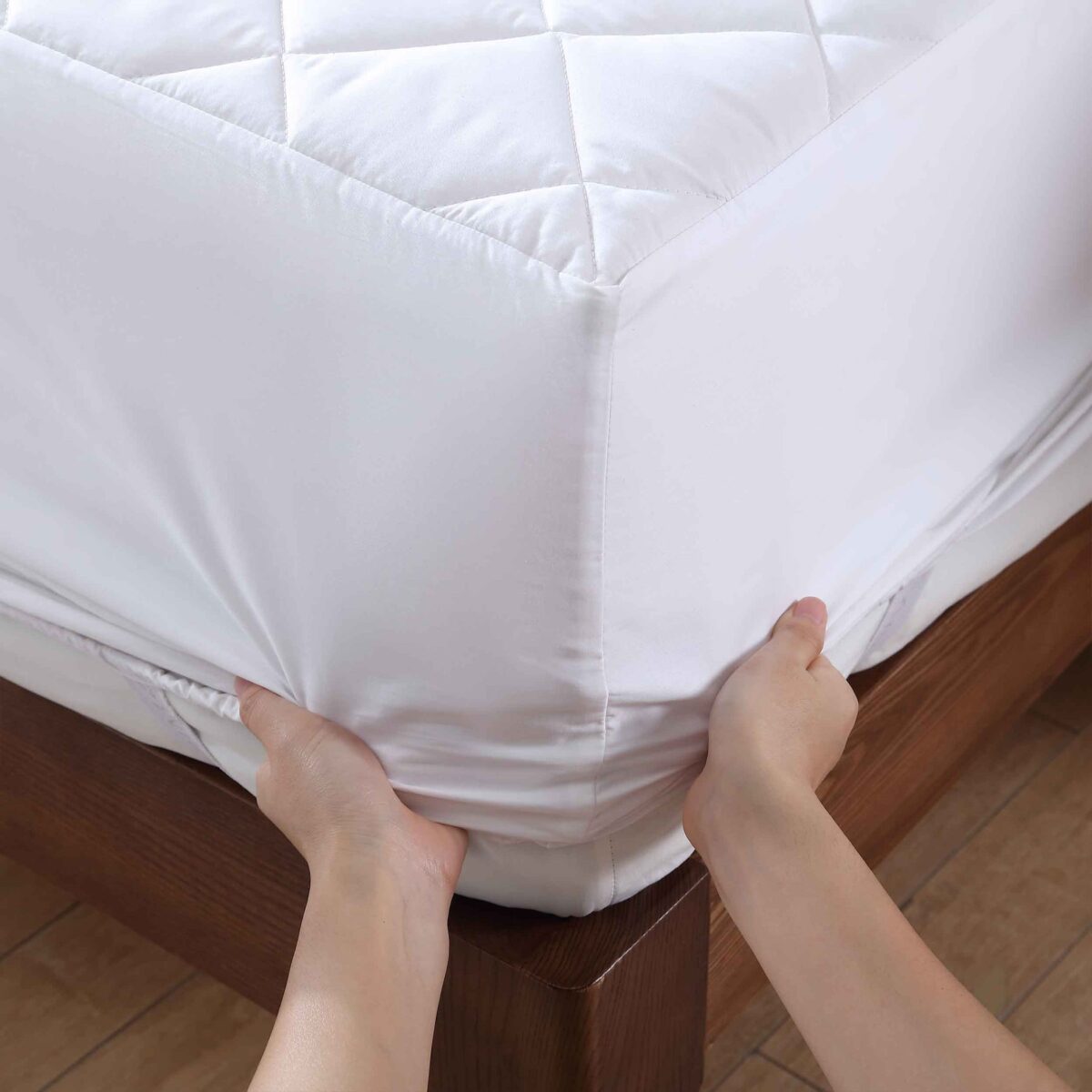
Quick answer: A mattress pad is usually a relatively thin, removable layer that adds a little cushioning above your mattress. Some pads also provide a waterproof barrier, but many do not. For spill protection, look for an explicit waterproof claim; for a substantial change in feel, compare a thicker topper.
Names overlap across brands, so the construction and features on the label matter more than whether a seller calls it a pad, protector or topper.
What does a mattress pad do?
Most mattress pads fit over the top of the bed like a fitted sheet, with a quilted or padded sleep surface and a stretchy skirt. They can soften the immediate surface slightly and provide a washable layer between sheets and mattress. They do not reliably fix a sagging mattress or replace its support core.
If you like your mattress but want a little extra softness, a pad can be useful. If your bed feels substantially too firm or too soft, a pad’s thin fill may make only a modest difference.
Mattress pad vs. mattress protector vs. topper
| Layer | Main job | Before buying |
|---|---|---|
| Mattress pad | Add light cushioning and a washable layer. | Check whether it is actually waterproof; not all pads are. |
| Mattress protector | Protect against everyday dirt and, on specified products, liquid. | Water resistance, waterproof coverage and allergens vary by design. |
| Mattress topper | Change surface feel more noticeably with a thicker layer. | Consider thickness, feel, added heat, fit and return rules. |
| Mattress encasement | Enclose the mattress, usually with a zipper. | Check coverage, zipper design and any specific pest or allergen claims. |
A product can combine these jobs: a quilted pad may have a waterproof backing, while a thin protector can have minimal cushioning. Even protectors are not all waterproof. The Sleep Foundation’s comparison explains these overlapping categories.
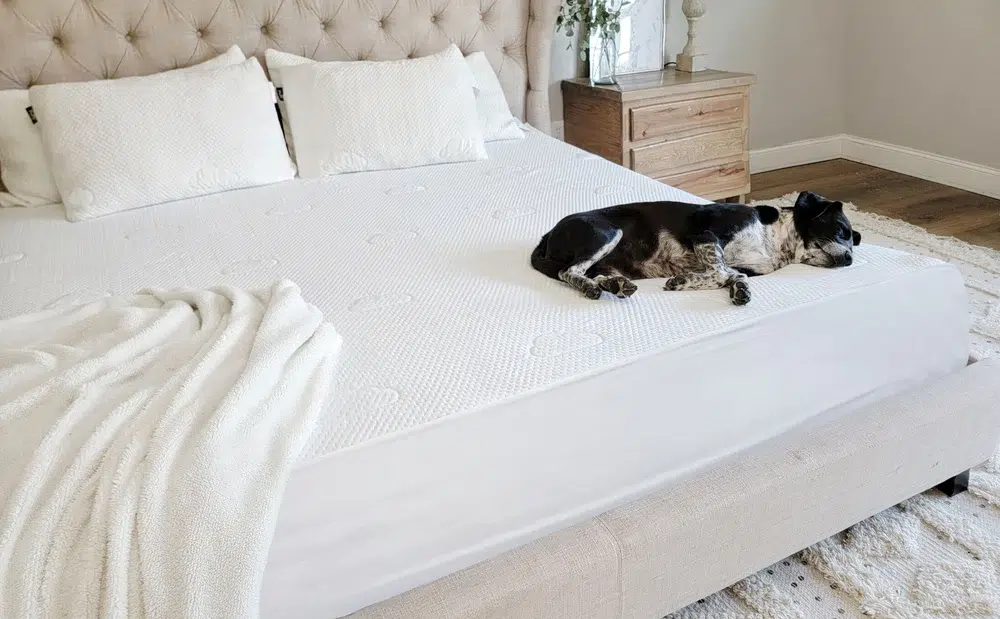
Which layer should you buy?
You want a touch of softness: Compare a quilted cotton or fiber-filled pad. Ask whether it has enough loft to feel different on your mattress.
You want protection from spills or accidents: Choose a product explicitly labeled waterproof, and check whether the top, sides and seams are covered. A standard quilted pad alone is not a dependable liquid barrier.
Your bed feels much too firm: A thicker foam or latex topper can produce a more noticeable change. Compare the material’s feel and the seller’s return policy; thickness is not a guarantee of comfort. See our mattress topper guide.
Your mattress sags or lacks support: Inspect the mattress and base first. A pad cannot repair worn materials or a broken foundation. Review the mattress warranty and the manufacturer’s instructions for measuring impressions.
How to choose fit and materials
- Measure mattress depth. Include any topper, then compare the total with the pad or protector’s stated pocket depth.
- Choose the correct size. Twin and Twin XL differ in length. For a split king, check whether two Twin XL layers suit your base and mattress.
- Compare feel. Cotton, polyester and other fills vary in softness and loft; no fiber is automatically best for every sleeper.
- Check noise and heat. Waterproof membranes vary. Cooling claims and breathable fabrics do not guarantee a cool night for everyone.
- Read allergy claims carefully. A material described as hypoallergenic is not a medical guarantee. For dust mites or bed bugs, check the specific encasement and coverage claims.
Care, layering and mattress protection
Follow the product’s washing and drying label. High heat, bleach or fabric softener may damage some waterproof membranes. Confirm that your washer has enough capacity for the selected size and dry fully before replacing it.
Layering depends on the products and what you want protected. A waterproof protector directly over the mattress can help protect the mattress; placing a waterproof layer over a topper may also help protect that topper if the manufacturer permits it. Add a fitted sheet on top and check that the combined layers fit securely without restricting an adjustable base.
Many mattress warranties exclude stains or damage, and a waterproof layer can help reduce that risk. No layer guarantees a warranty claim will be approved. Read the mattress warranty and care instructions.
Practical layering examples
For light cushioning: Place a quilted pad directly on the mattress, then add your fitted sheet. This keeps the setup simple when the mattress already feels supportive and you only want a modest change at the surface. Check the pad's care label and whether its skirt stays in place when you move.
For a topper and spill protection: If the topper maker allows it, place the topper on the mattress and a waterproof protector over both, followed by a fitted sheet. The protector must be deep enough for the combined stack, and its waterproof area should cover the part you want protected. Some fitted protectors have waterproof tops but non-waterproof fabric sides; read the description rather than assuming all-around coverage.
For six-sided coverage: A zippered encasement surrounds the mattress itself. Check the stated dimensions and any specific claims for the zipper and seams. You can add a separate pad above it for cushioning, but that pad is then outside the encasement. Follow each manufacturer's instructions, especially when combining products intended for pest or allergen protection.
Measure the whole stack before ordering
Measure from the bottom of the mattress to the highest point of the topper or pad you intend to cover. For example, a 12-inch mattress plus a 2-inch topper makes a roughly 14-inch stack before adding any other layers. Compare that measurement with the protector's and sheet's stated pocket depths, allowing for their construction and elastic. A pocket that only just reaches the bottom may pull loose, while an overly large one can bunch.
On an adjustable base, raise and lower the bed after making it. Watch for corners slipping, fabric pulling tight or a topper shifting. A properly sized skirt and enough sheet depth can help, but check that the products are designed for your base.
When a new pad is not the answer
A thin pad is a small surface adjustment. If you wake in a visible dip, check the foundation and measure the mattress according to its warranty instructions; a new pad will follow the contours underneath. If your mattress is still within its trial, review the exchange deadline before spending money on extra layers. Compare the total cost and return terms of a pad, protector and topper with the cost of addressing the underlying fit or support problem.
Frequently asked questions
Is a mattress pad waterproof?
Some are and some are not. Look for a clear waterproof claim and check exactly which surfaces it covers.
Can a mattress pad make a mattress firmer?
Most pads add modest surface cushioning. They are unlikely to transform a very soft mattress into a firm one or repair inadequate support.
Do I need both a pad and protector?
Not always. A padded waterproof product may meet both needs. If using separate layers, confirm their fit and care requirements.
Can a pad help with back pain?
It may change how the surface feels, but it is not a treatment and comfort varies. Persistent or worsening pain warrants discussion with a healthcare professional.
Will a pad protect against bed bugs?
A standard fitted pad does not fully enclose the mattress. If you need bed-bug protection, look for a purpose-built encasement and check its specifications.
For product options, compare our mattress pad guide. If you want to discuss a new mattress, contact the Yawnder showroom.