I am Ben Trapskin, founder of Yawnder. I have reviewed mattresses and sleep products for more than a decade and have personally tried every mattress o... Full Bio
A regular schedule, enough time for sleep, a comfortable room and a calming wind-down can support good sleep. These habits are a starting point, not a guaranteed cure for insomnia or a substitute for medical evaluation.
Yawnder’s original infographic
Ben shared this infographic in 2015. It is preserved as a historical resource; use the updated guidance below and check the original source for context.
Check out this sleep infographic. I would suggest printing this out and putting it somewhere in your bedroom so you can refer to it if you’re ever confused as to why you’re not getting enough sleep. There are all sorts of sleep infographics out there and I have collated dozens of sleep infographics on my Pinterest page here as well.
Practical habits for better rest
Allow enough time for sleep. Most adults need at least seven hours, though individual needs vary.
Keep a consistent schedule where possible. Try to go to bed and wake at similar times on weekdays and weekends.
Make the room comfortable. A quiet, dark, cool space can help; use a dim light if needed for safety.
Plan a wind-down. Reading, quiet music or another relaxing activity can help signal that the day is ending. Reduce bright light or stimulating screen use if it keeps you awake.
Notice caffeine and alcohol. Caffeine can interfere with sleep for hours, and alcohol can make sleep lighter or more interrupted. Individual sensitivity varies.
Get outside and move during the day. Fit light and activity around your schedule and health needs.
These suggestions follow NIH healthy-sleep guidance. Shift work, caregiving, pain and other constraints can make a perfect routine impossible, so choose changes that are realistic for your situation.
If you wake during the night
Brief awakenings can happen. If you feel alert or frustrated, consider a quiet activity in dim light and return to bed when sleepy, without watching the clock. Our guide to falling back asleep explains the approach and when to seek advice.
When sleep habits are not enough
Speak with a healthcare professional about persistent trouble sleeping, daytime impairment, loud snoring, breathing pauses or gasping. For long-term insomnia, NIH guidance describes cognitive behavioral therapy for insomnia (CBT-I) as a usual first treatment. Sleep habits alone may not resolve an underlying sleep disorder.
Keep exploring
More sleep guidance
Browse Yawnder’s sleep education, research explainers, and practical guides.
Transform your napping experience with these 15 must-have accessories that promise to elevate your rest, boost your mood, and supercharge your productivity. Say goodbye to restless snoozes and hello to peaceful, blissful shut-eye!
On this page Quick answer 2015 study What it means Practical steps FAQ Quick answer Sleep and sexual desire may be related, but desire has many influences, including physical health, medications, stress and relationships. Getting enough sleep supports general well-being; it is not a guaranteed way to change anyone’s interest in sex. Yawnder’s original 2015 … Read more
Silk comforter material pictured in Yawnder's earlier coverage.
Quick verdict
A mulberry silk-filled comforter can appeal to sleepers who like a light, draping duvet. The right choice depends on fill weight, shell, construction and care—not the word “silk” alone.
Best for: Shoppers seeking a lightweight, close-draping alternative to down who are comfortable checking the care label. Consider another fill if: easy frequent washing or maximum loft is your priority.
Our perspective: Yawnder's older review described a snug, close-draping feel. That observation is historical and does not establish how every current product performs.
Check the label for mulberry silk percentage, strand description, fill weight and any blends.
Shell
Can be cotton, silk or another fabric; a silk shell is not the same as silk fill.
Warmth
Compare fill weight for the same size and the maker's warmth designation.
Care
Varies by product: follow the sewn-in label and use a washable duvet cover when appropriate.
Price
Varies substantially with fill, shell, size, brand and seller; verify current price and return policy.
Reasons to consider silk—and what to watch
Potential advantages
Many silk-filled duvets have a flatter, close-draping feel than a lofty down comforter.
Warmth levels can be selected by choosing different fill weights.
Silk fill avoids down and feathers for people who prefer another material.
Consider before buying
Silk bedding can cost more than common synthetic alternatives.
Care instructions vary; do not assume every silk insert is machine washable or dry-clean only.
No fill guarantees an allergy-free or temperature-controlled night's sleep.
Fill weight, shell and room conditions affect comfort as much as a marketing label.
Fill, shell and momme explained
Fill: Long-strand mulberry silk is commonly described as layered silk fibers. Ask whether the fill is entirely mulberry silk, a blend or another material, and how the layers are secured. A vague listing is a reason to ask the seller, not proof of inferior fill.
Shell: A cotton-covered silk duvet and a silk-covered silk duvet can both contain silk fill. Cotton and silk shells feel different and may have different care requirements. Look for dimensions, corner loops and a return policy.
Momme: This is a measure of fabric weight and can describe a silk shell; it is not a warmth rating for the finished comforter. A cotton shell may not list momme at all. Compare the shell specification separately from the silk filling.
How to choose a warmth level
Start with room temperature, whether you share a bed and whether you tend to add blankets. A lighter fill weight may suit a warm room; a heavier version may feel warmer. Compare the same size because a king insert naturally contains more material than a twin. Brand labels such as “summer” and “all-season” are not standardized across sellers.
For example, DaisySilk's listing specifies silk fill, a silk shell and different fill weights by size. That illustrates the details to compare; its availability, pricing and conditions should be checked before ordering. We have not assigned it a test score or established it as the best model.
Silk vs. down and down alternative
Fill
What shoppers may like
What to check
Silk
Often relatively flat and draping.
Fill weight, shell and model-specific care.
Down
Lofty, compressible fill with varied warmth options.
Fill weight, fill power, sourcing and care.
Down alternative
Often widely available with a range of prices and feels.
Fiber, warmth and whether the complete insert is washable.
Wool
A different natural-fiber feel and weight.
Construction, warmth and cleaning instructions.
For more on down, see our goose vs. duck down guide. Choose by the finished product and your preferences, not a universal warmth claim.
Care and buying checklist
Confirm the fill composition and weight in your preferred size.
Check the shell material, dimensions, corner ties and compatible cover.
Read the exact care label: some products permit careful washing while others require different treatment.
Compare shipping, return eligibility and exclusions before opening or using the insert.
Check any certification on the finished product and understand what it covers.
A removable duvet cover can reduce direct soiling. When storing, follow the maker's instructions and ensure the insert is dry. Do not assume dry cleaning, heat or machine washing is appropriate without checking the product label.
Frequently asked questions
Does silk keep everyone cool?
No. Warmth depends on the fill weight, cover, room and sleeper. A lighter insert may be a better fit for a warm room, but individual comfort varies.
Is a silk comforter always hypoallergenic?
No bedding can guarantee the absence of allergic reactions. Review materials and seek medical advice about persistent symptoms.
Does higher momme mean a warmer duvet?
Not necessarily. Momme describes a silk fabric's weight; fill and construction also affect the warmth of the finished duvet.
Can I wash a silk-filled comforter?
Some products allow specified washing; others require different care. Follow the specific insert's label.
Buying guidance checked October 26, 2026; original Yawnder coverage dates to 2015.
Quick take: ASMR describes a pleasant tingling sensation some people experience in response to certain sounds or visuals. Others simply find the content relaxing—or do not enjoy it at all. It may be a helpful bedtime ritual, but it is not an established treatment for insomnia.
Whispering, gentle tapping and the sound of pages turning have inspired an enormous community of videos designed for relaxation. The appeal is individual: one person’s favorite sound might be distracting to someone else. Here is how ASMR works as an experience, what the research can and cannot tell us, and how to try it without letting a screen take over your bedtime.
What does ASMR mean?
ASMR stands for autonomous sensory meridian response. People who experience it often describe a tingling sensation beginning around the scalp or neck, sometimes spreading down the back. It can be accompanied by a sense of calm. Not everyone feels tingles, and enjoying quiet audio without them is perfectly normal.
The term emerged from online communities; creators now make everything from short sound clips to elaborate role-play videos. The biology is still being studied. Claims that ASMR necessarily releases a specific hormone or works the same way for everyone go beyond what we can conclude.
Common ASMR triggers
Soft speech or whispering: a quiet voice, storytelling or a gentle guided activity.
Tapping and scratching: light, repetitive sounds made with everyday objects.
Page turning and writing: slow, familiar paper sounds.
Personal-attention scenarios: a simulated haircut, facial or careful explanation.
Visual movements: slow hand motions or watching someone complete a methodical task.
Volume, pace and the creator’s style matter as much as the category. Explore our guide to common ASMR triggers for more ideas. If a sound makes you uncomfortable, skip it.
Can ASMR help you sleep?
Some listeners use ASMR to wind down or redirect attention from a busy day. That does not mean it reliably induces sleep. A review of auditory stimulation and sleep discusses early ASMR studies but notes limitations in the quality of the evidence. More robust sleep research is needed.
ASMR and binaural beats are different things. ASMR refers to a subjective response to a trigger; binaural beats involve presenting slightly different tones to each ear. A recording can combine them, but one does not require the other, and neither guarantees better sleep.
A simple way to try ASMR at bedtime
Pick a short recording with a sound you already find pleasant; try a whisper, pages or soft tapping.
Set a comfortable low volume and a sleep timer so playback does not continue all night.
Dim the screen or listen with it off if you do not need the visuals. Turn off autoplay to avoid a sudden loud video.
Notice whether you feel calmer or more alert. Switch to another sound—or silence—if it becomes distracting.
A small speaker may be more comfortable than sleeping in earbuds. Keep volume low and ensure you can hear necessary alarms. You might also enjoy a quiet routine such as yoga nidra or gentle breathing.
An ASMR video from our original post
This video appeared in the original Yawnder article. Try it briefly and decide for yourself whether the sounds are relaxing.
Frequently asked questions
What if I don’t feel tingles?
That is common. You can still enjoy the sounds, or choose a different relaxation technique if they do nothing for you.
Is ASMR a cure for insomnia?
No. If sleep trouble persists or affects daytime life, speak with a health professional. CBT-I is an established treatment option for chronic insomnia.
Do I need headphones?
No. Headphones can make subtle sounds easier to hear, while a quiet speaker may be more comfortable in bed.
On this page Quick answer The research Sleep by age Adjusting the routine When to ask for help FAQ Quick answer Some preschoolers who nap fall asleep later at night, while others still need daytime rest to get enough sleep. Look at your child’s sleep over a full 24 hours and how they feel during … Read more
Image from Yawnder's earlier Snuggle-Pedic coverage. Product construction may have changed.
Quick verdict
Snuggle-Pedic's shredded memory foam pillow is worth considering if you prefer a moldable foam feel and want to experiment with loft. Confirm that the exact version you buy has an accessible, adjustable fill compartment; covers and designs have changed over time.
Best for: People who like to shape a pillow and are willing to adjust or fluff it. Consider another option if: you want a uniform solid-foam contour or dislike the feel or initial smell of foam.
Our perspective: Yawnder first covered a Snuggle-Pedic pillow in 2015. This update discusses the older review and current shopping considerations; it is not a new hands-on test.
Snuggle-Pedic pillow at a glance
Pillow type
Shredded memory foam; features vary by model and seller.
Loft
Adjustable on versions with a fill-access zipper; check the specific listing.
Feel
Foam pieces can be shaped and fluffed; preferences and firmness vary.
Sizes and care
Confirm the dimensions, removable-cover instructions and whether the inner pillow can be washed for your exact model.
Price, trial and warranty
Check the current seller and terms. A 90-day guarantee referenced in the historical review is not a current promise.
Reasons to consider it—and what to watch
What may work well
Shredded fill can be moved into a shape that feels comfortable under your head and neck.
Versions with accessible fill let you experiment with loft instead of accepting one fixed height.
A removable, washable cover can make routine care easier when the model provides one.
Consider before buying
Adjusting loose fill can be messy and may require some trial and error.
Some sleepers notice an initial foam smell; duration and sensitivity vary.
Shredded foam can shift or form clumps and may need fluffing.
Do not assume a foam pillow will feel cool all night or prevent neck pain.
Feel, fill and adjustment
Shredded foam behaves differently from a single molded block: individual pieces can be moved around and compressed. That makes it easier to bunch the pillow under the neck or redistribute fill when changing position, but the surface may feel less uniform than solid foam.
If your model has an inner zipper designed for fill adjustment, remove a small amount at a time, close the pillow and try it for a few nights. Keep the removed fill in a clean bag so you can add it back. Do not cut open a sealed liner; check the manufacturer's instructions first. A zip-off outer cover does not by itself prove that the fill can be adjusted.
Earlier Yawnder product imagery; verify the current model before ordering.
Choosing the right loft for your sleep position
Side sleepers: Start with enough height to fill the space between shoulder and head without pushing the head upward. Shoulder width and how far your mattress lets the shoulder sink both matter.
Back sleepers: A moderate loft often makes a useful starting point. If the chin is pushed toward the chest, try removing some fill if your version permits it.
Stomach sleepers: A lower pillow may feel more comfortable; remove fill only when the design allows. There is no single correct pillow height for every person, and persistent neck pain deserves a clinician's attention.
How it compares with other pillows
Type
Why choose it
Trade-off
Shredded foam
Moldable; some versions allow fill adjustments.
May need fluffing and can feel less uniform.
Solid contour foam
Consistent shape and defined neck contour.
Less adaptable if its height or curve does not fit you.
Down alternative
Soft, familiar hotel-style feel on many models.
Support and loft vary and may compress differently.
Shredded latex
Another moldable fill with a different, often springier feel.
Can feel heavier or more responsive than foam.
See our Coop pillow review for another adjustable-fill option. Compare dimensions, fill access, care and seller terms rather than assuming the pillows feel alike.
Cleaning, lifespan and buying
Follow the care label for the exact pillow. A washable cover does not automatically mean that the foam and inner liner are machine washable. If washing the fill is allowed, follow its directions and dry it completely before use; damp foam can retain moisture. A pillow protector may reduce everyday soiling.
Replace a pillow when it no longer recovers its shape or is uncomfortable, damaged or difficult to keep clean. There is no universal expiration date. Price, shipping, returns and warranty vary by retailer and can change; compare the total and save the terms before buying.
Our original video reviews
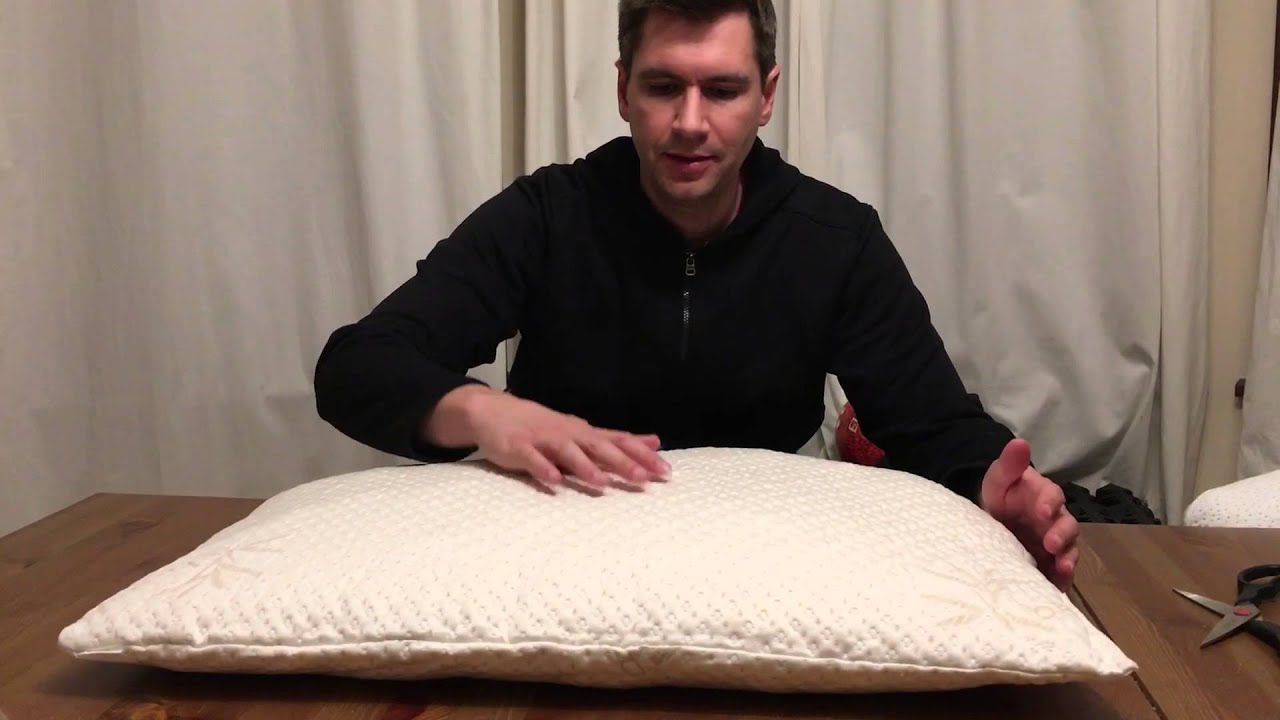
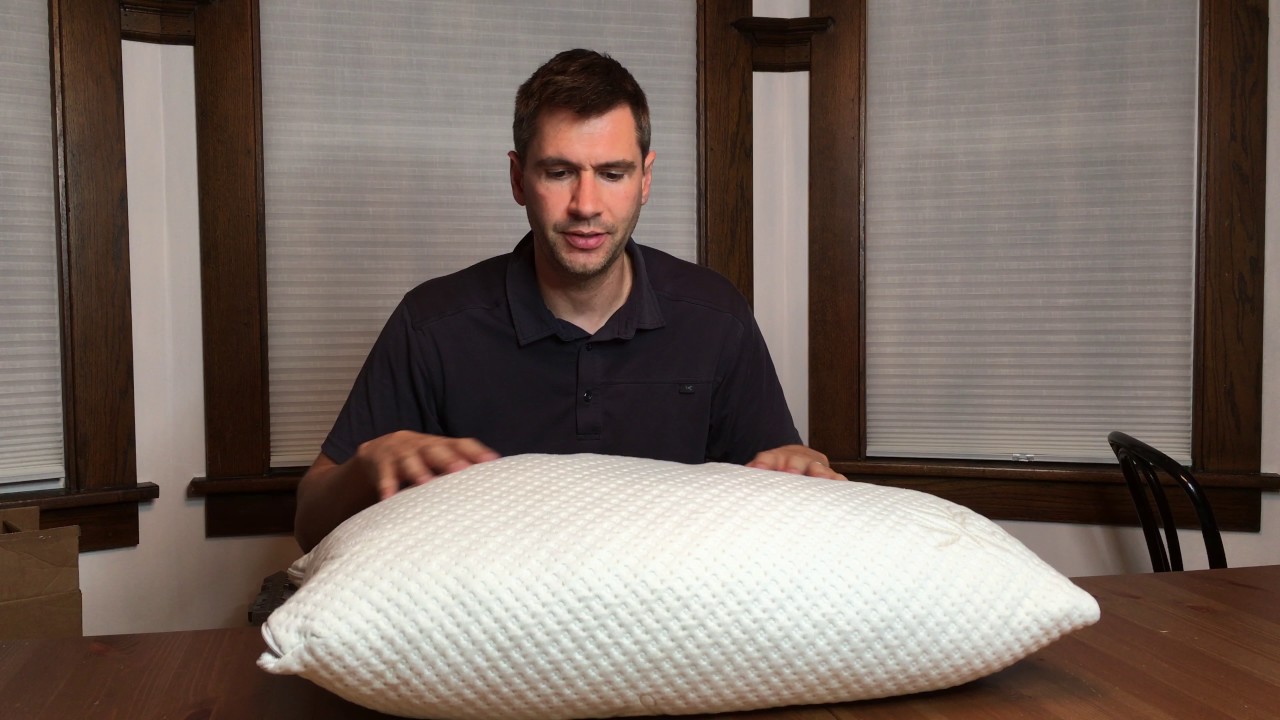
Ben reviewed earlier Snuggle-Pedic pillows in these 2016 and 2017 videos. The current model may differ.
2016 review
2017 review
Frequently asked questions
Is every Snuggle-Pedic pillow adjustable?
No blanket assumption is safe. Some versions advertise adjustable fill; check that your selected model has an inner fill-access zipper.
Is it good for hot sleepers?
Shredded fill can create space between pieces, but comfort depends on the cover, room and sleeper. We cannot guarantee a cooler night.
Can I wash the whole pillow?
Care instructions differ by model. Check its sewn-in label and the current seller's instructions rather than assuming all foam pillows can be washed.
Does it have a 90-day trial?
A 90-day period appeared in historical coverage. Verify the actual return window and conditions with the seller before buying.
Original coverage: 2015. Buying guidance updated October 26, 2026; no new hands-on test is claimed.
Ready to buy?
See today’s best sleep deals
Live pricing and current promotions on the mattresses, bases, and sleep tech we recommend.
Practical tips for a short nap during a permitted work break, including timing, comfort and waking up.
Verify your identitySave 10% — Military, First Responders, Teachers, Nurses, Students & Government employees
Powered by Yawnder Verify. Your information is encrypted and only used to confirm your eligibility.
Don't have a work or school email? Upload your ID instead ›
Upload a photo of your ID, badge, orders, pay stub or enrollment letter. We review submissions by hand, usually the same business day, and email your 10% off code once approved.