XOcomfort Pillow Review

XOcomfort Pillow Review

Frequently Asked Questions About XOcomfort Pillow Review

Is the XOcomfort Pillow worth it for its price?

The XOcomfort Pillow offers good value at its discounted price of $69.99 (currently $20 off), especially with its customizable features and CertiPUR-US certified foam. It includes free two-day shipping for Amazon Prime members and a 30-day money-back guarantee, allowing you to try it risk-free.

Who is the XOcomfort Pillow best for?

The XOcomfort Pillow is best for sleepers who need customizable support, particularly side sleepers, due to its shredded memory foam that allows for height and firmness adjustments. Its innovative heat channels also make it suitable for those who prefer a cool sleep experience without an icy feel.

What are the downsides of the XOcomfort Pillow?

One minor downside of the XOcomfort Pillow is a slight off-gassing odor upon unboxing, which our unboxing experience confirmed. It is recommended to air out the pillow before initial use to dissipate this smell.

Is the XOcomfort Pillow good for side sleepers?

Yes, the XOcomfort Pillow is particularly good for side sleepers because its customizable shredded memory foam allows you to adjust the loft and support to match your specific needs. Our hands-on testing at Yawnder found it provided firm but comfortable support beneficial for side sleeping.

How does the XOcomfort Pillow stay cool without being icy?

The XOcomfort Pillow stays cool through innovative heat channels and its unique foam composition, designed to dissipate heat away from your body. Unlike some cooling pillows, it avoids an uncomfortable icy sensation while still promoting a more restful night's sleep.

Where can I try the XOcomfort Pillow in person?

Currently, the article indicates the XOcomfort Pillow is purchased online through Amazon, with no mention of physical retail locations like our Yawnder showroom in Encinitas, CA. However, it does come with a 30-day money-back guarantee, allowing for a home trial.

Want to test this in person? Visit our Encinitas showroom or call 858-232-5760.

Adjustable and specialty pillows explained

Adjustable pillows let you add or remove fill so the loft matches your shoulder width and mattress firmness. That flexibility is the main reason they suit people who have bought several pillows and never found the right height.

A softer mattress lets your shoulder sink further, which usually means you need a lower pillow than you would on a firm bed. Adjust the pillow after you change the mattress, not before.

Getting the fit right

Lie in your usual position and have someone check your neck from the front: your nose should stay in line with the centre of your chest, with no upward or downward tilt.

Change fill in small amounts and sleep on each setting for a couple of nights before judging it.

Materials and care

Shredded foam and down-alternative fills are easy to redistribute and breathe reasonably well. Latex shreds are springier and hold loft longer.

Use a protector, wash covers monthly, and keep spare fill in a sealed bag so you can top up as the pillow compresses.

FAQs

How much fill should I remove first?

Start by taking out about a cup at a time; small changes are easier to judge than large ones.

Do adjustable pillows work for stomach sleepers?

Yes, and they are one of the few options that go thin enough, since most stomach sleepers need very little loft.

Can I mix fill types?

You can, and combining shredded foam with a little down-alternative often softens the surface without losing support.

See current deals

How to Use Melatonin for Sleep

How Long Does Melatonin Last

The growing popularity of melatonin may be due to several factors, including the increasing prevalence of sleep disorders, the rise of natural and alternative medicine, and the ease of access to melatonin supplements.

[Tagline]

With sleep disorders rising around the world with every passing day, people are more interested in sleep aids than ever. Sleep aids come in various forms. They come as liquids and as pills, and sometimes even as a supplement in the form of powder. To make sleep aids easily accessible, most of them are available over-the-counter and don’t even require a prescription. Sleep aids used to be an easy way for people to commit suicide, but modern sleeping pills no longer have the potential to kill. If you overdose on sleeping pills, you’re only going to sleep for a long time and in the worst case scenario get very sick.

Modern sleep aids also incorporate natural ingredients to help people sleep without resorting to chemicals always. Although sleep aids are not a cure for sleep disorders and should not be consumed on a regular basis, they are popular everywhere because they are a fast and easy means of falling and staying asleep. To make sleeping pills safer, there are now the kinds that are made of melatonin, the sleep hormone. Because melatonin is a natural part of our body, consuming melatonin sleep aids are believed to have fewer side effects than regular sleep aids.

But melatonin can also make it hard for you to wake up on time every morning if you don’t know when to time its consumption. In this post, we discuss melatonin production, melatonin sleep aids, and the right time to take it.

What Is Melatonin?

Like all bodily functions, sleep is also controlled by hormones. The hormone for alertness is serotonin, and the hormone for sleep is melatonin. While sunshine and bright lights aid in the production of serotonin, darkness aids in the production of melatonin. Melatonin is normally produced only after sundown.

But hormonal imbalances are common in every individual, and if your melatonin production is not normal, you are going to have sleep issues. Being exposed to bright lights also hinders melatonin production and makes it hard for sleep to come at night. Blue light is one of the worst enemies of melatonin production. If you are exposed to electronic devices most of the time, you are more at risk for suffering from sleep disorders. This is because the blue light emitted from backlit electronic devices significantly hinders melatonin production.

For a healthy sleep-wake cycle, the serotonin and melatonin productions should be in balance. Lack of melatonin causes sleep disorders like insomnia whereas a lack of serotonin causes depression and low energy. Melatonin is produced by the part of the brain called the hypothalamus.

Melatonin Sleep Aid

Sleep aids are known to have various side effects. This led to the development of sleep aids made with melatonin, a hormone that’s naturally present in our bodies. However, melatonin sleep aids aren’t a solution to low melatonin production. They only help you fall asleep by increasing the amount of melatonin in your brain. If you don’t take it, your melatonin levels will go back to their previous state.

Melatonin sleep aids usually come in the form of a pill and should be taken before bedtime. Melatonin supplements are available over-the-counter and don’t require prescriptions. Melatonin supplements are either pure or compounded and added to other products. Pure melatonin supplements are always available as pills or capsules, but when they are mixed to other products, they are also available as liquids or sprays.

Because melatonin supplements are very potent and fast-acting, they should be taken only before bedtime.

Melatonin Supplement Dosage

melatonin dosageGenerally, melatonin supplements are available as over-the-counter drugs in most pharmacies. But they don’t require a prescription, are not regulated by the FDA, and have no fixed dosage. The appropriate dosage is usually mentioned on the pack but can also be misleading in many cases.

Before taking a melatonin supplement, it is important to consult a healthcare practitioner for the right dosage. Melatonin is more potent and faster acting than most other sleep aids and should be used judiciously to avoid side effects. Unlike other sleep aids, even the lowest dose of melatonin has been found effective in treating sleep issues. You don’t always have to take the highest dose for the maximum effect. To be on the safe side, it’s best to start with the lowest dosage.

There have so far been no adverse effects reported from melatonin supplements. However, the timing is everything in taking melatonin supplements. More important than the dose is the time when you are taking the supplement.

 How Long Does Melatonin Last?

A lot of people new to melatonin supplements experience excessive sleepiness during the day after taking sleep aid at night. This is because of wrong timing.

The effects of melatonin last according to the dosage. A dosage of 0.5 mg will last only an hour while a 10 mg dosage will last more than seven hours. It all depends on how severe your condition. If you have infrequent episodes of sleeplessness, then a dosage of one or two milligrams should help you fall asleep. If you’re a chronic insomniac or suffer from the delayed onset of sleep, you need a dosage of 10mg or higher.

The effects of melatonin are also quick to go away. Taking higher doses isn’t the solution here. You simply have to time it right. If you simply want to get better sleep and don’t suffer from a sleep disorder, you should take the supplement no sooner than 30 minutes before going to bed. If you suffer from delayed sleep onset, you should take it at least an hour before going to bed.

If you have been diagnosed with a sleep disorder and also take other sleep aids, you should not start taking a melatonin supplement without consulting a doctor. Melatonin supplements are usually known to be safe and can also be given to children. However, dependence on any sleep aid isn’t recommended.

Although melatonin supplements are considered safer than most other sleep aids, they should be taken only if recommended by a doctor. Consuming the wrong supplements or medications can make your condition grow worse.

If you are looking for a sleep supplement that will keep you asleep, try Sleep Relief. It is biphasic which means different ingredients will kick in at different times so that you stay asleep all night and wake up well-rested. One drawback of this supplement is that the pills are a bit large so may be a turn off if you don’t like swallowing pills. Another option is Olly Sleep Gummies which are chewable and taste great. While they aren’t quite as strong as Sleep Relief, they have other natural ingredients that keep you asleep more than melatonin alone.

Melatonin Dosage Chart:

  • Children aged 0-5 years old: Consult with a doctor before giving melatonin to children in this age range.
  • Children aged 6-12 years old: 1-3 mg of melatonin per day.
  • Adults aged 13 years and above: 3-10 mg of melatonin per day.

It’s important to note that the ideal dosage of melatonin can vary depending on a person’s individual needs, so it’s best to consult with a doctor before taking melatonin or any other supplements. Additionally, melatonin should only be taken for a short-term period to help with sleep issues, and not as a long-term solution.

Can You Overdose on Melatonin?

Yes, it is possible to overdose on melatonin. Taking too much melatonin can lead to several side effects, including:

  • Headaches
  • Dizziness
  • Nausea
  • Irritability
  • Daytime sleepiness
  • Confusion
  • Hormonal fluctuations

In rare cases, extremely high doses of melatonin can lead to more serious symptoms, such as seizures or a decreased ability to regulate body temperature.

It’s important to follow the recommended dosage guidelines and to not exceed the recommended dose without consulting a doctor first. If you experience any negative side effects after taking melatonin, it’s important to stop taking it and seek medical attention if necessary.

Is it OK To Take Every Night?

Melatonin is generally safe for short-term use, but it’s not recommended to take it every night on a long-term basis. This is because your body may become dependent on melatonin to fall asleep, which can make it difficult to sleep without it. Additionally, taking melatonin every night can cause your body to stop producing its own melatonin naturally, which can further disrupt your sleep cycle.

It’s best to use melatonin for short-term periods to help with sleep issues, such as jet lag or occasional insomnia. If you’re experiencing ongoing sleep issues, it’s important to address the underlying causes with the help of a healthcare professional, rather than relying on melatonin as a long-term solution.

Can I Take Melatonin After Drinking?

It is not recommended to take melatonin if you have been drinking alcohol. Alcohol can interfere with the way melatonin is metabolized in the body, which can affect its effectiveness and potentially cause negative side effects.

Additionally, combining melatonin with alcohol can increase the sedative effects of both substances, which can lead to excessive drowsiness, dizziness, and impaired coordination. This can be dangerous, especially if you’re planning to drive or operate heavy machinery.

If you have been drinking and are experiencing sleep issues, it’s best to avoid taking melatonin and instead, try other methods to promote sleep, such as relaxation techniques or a warm bath before bed. It’s important to give your body time to metabolize the alcohol before taking any supplements or medications.

Is Melatonin Addictive?

Melatonin is not considered addictive, as it doesn’t cause physical dependence or withdrawal symptoms when you stop taking it. However, as mentioned earlier, your body can become dependent on melatonin to fall asleep if you take it every night for a long period of time. This can make it difficult to sleep without melatonin, but it’s not the same as addiction.

It’s important to use melatonin as directed and only for short-term periods to avoid developing a dependence on it.

Most Popular Brands of Melatonin

There are many different brands of melatonin available on the market, but some of the most popular ones include:

  1. Natrol Melatonin
  2. Nature Made Melatonin
  3. NOW Melatonin
  4. Source Naturals Melatonin
  5. Sundown Naturals Melatonin
  6. Life Extension Melatonin
  7. Solgar Melatonin
  8. Garden of Life Melatonin
  9. Puritan’s Pride Melatonin
  10. GNC Melatonin

It’s important to note that the quality and effectiveness of melatonin can vary depending on the brand and formulation, so it’s important to choose a reputable brand and to follow the recommended dosage guidelines.

Melatonin Alternatives

If you’re looking for alternatives to melatonin for sleep support, there are several options to consider. Here are some common alternatives:

  1. Valerian root: Valerian root is a natural herb that can help promote relaxation and improve sleep quality.

  2. Chamomile: Chamomile tea is a popular natural remedy for sleep issues, as it has calming and soothing properties that can help you relax.

  3. Lavender: Lavender essential oil is known for its calming effects and can be used in aromatherapy or as a natural sleep aid.

  4. Magnesium: Magnesium is a mineral that can help relax the body and mind, making it easier to fall asleep.

  5. L-theanine: L-theanine is an amino acid that can help reduce stress and promote relaxation, making it easier to fall asleep.

  6. 5-HTP: 5-HTP is a natural supplement that can help increase serotonin levels in the brain, which can improve mood and promote better sleep.

Why Do I Wake Up A Few Hours After Taking Melatonin?

There could be several reasons why you’re waking up a few hours after taking melatonin. Here are a few possibilities:

  1. Timing: Melatonin is most effective when taken about 30 minutes to an hour before bedtime. If you take melatonin too early or too late, it may wear off before you’re ready to wake up, leading to disrupted sleep.

  2. Dosage: Taking too much or too little melatonin can also disrupt your sleep. If you’re taking too little, it may not be enough to help you stay asleep, while taking too much can cause drowsiness the next day or interfere with your sleep cycle.

  3. Individual differences: Everyone’s body chemistry is different, so melatonin may work differently for different people. Some people may find that melatonin helps them fall asleep but doesn’t keep them asleep, while others may find that it has no effect on their sleep.

  4. Underlying issues: If you’re experiencing ongoing sleep issues, there may be underlying issues that need to be addressed. This could include stress, anxiety, or other medical conditions that are affecting your sleep.

How Do You Take Melatonin?

Melatonin is available in various forms, including pills, liquids, gummies, and even sprays. Whether a pill or liquid form is better for you may depend on personal preference and convenience.

Pills are a convenient and easy way to take melatonin, as they’re portable and don’t require any measuring or mixing. They’re also available in different strengths and formulations, making it easier to find the right dose for your needs.

Liquid melatonin, on the other hand, can be absorbed more quickly by the body, making it a good option for people who have difficulty swallowing pills or need faster-acting relief. It can also be easier to adjust the dosage of liquid melatonin as needed.

Ultimately, the choice between pill or liquid melatonin may come down to personal preference and convenience. It’s important to choose a reputable brand and to follow the recommended dosage guidelines for whichever form you choose. If you have any questions or concerns about taking melatonin, it’s best to consult with a healthcare professional.

Can Melatonin Help Prevent Covid?

There has been some research suggesting that melatonin may have potential in the treatment and prevention of COVID-19. COVID-19 is a viral respiratory illness caused by the SARS-CoV-2 virus that has resulted in a global pandemic.

One study published in the journal Life Sciences found that melatonin may be effective in reducing the severity of COVID-19 symptoms and preventing complications, particularly in elderly patients who are at higher risk of developing severe illness. The study suggests that melatonin may have immunomodulatory effects that can regulate the immune response to the virus and reduce inflammation.

Another study published in the journal Antioxidants found that melatonin can help protect against the oxidative stress and inflammation caused by COVID-19, which may contribute to the development of severe illness.

However, it’s important to note that more research is needed to fully understand the potential benefits of melatonin in the treatment and prevention of COVID-19.

Is it Illegal in Certain Countries?

The legal status of melatonin can vary depending on the country. In some countries, melatonin is available over-the-counter and is considered a dietary supplement, while in others it may be available only with a prescription or may be restricted or prohibited altogether.

For example, in the United States, melatonin is available over-the-counter and is considered a dietary supplement, which means it’s not regulated by the Food and Drug Administration (FDA) in the same way that prescription drugs are. However, in other countries like Canada, melatonin is only available with a prescription.

In some countries, like Australia and New Zealand, melatonin is classified as a prescription medicine and is only available with a doctor’s prescription.

It’s important to check the legal status of melatonin in your country before purchasing or using it, and to follow any applicable regulations or guidelines.

How Soon To Take Before Going to Bed?

Melatonin is typically taken about 30 minutes to an hour before bedtime. This allows enough time for the melatonin to be absorbed by the body and start working to promote sleep.

It’s important to follow the recommended dosage guidelines for melatonin and to take it at the same time each night to help regulate your sleep cycle. Taking melatonin earlier or later than the recommended time may not be as effective, and could potentially disrupt your sleep cycle.

Is it Safe to Buy on Amazon?

It is generally safe to buy melatonin from reputable online retailers like Amazon. However, it’s important to be cautious when purchasing any supplements online, as the quality and authenticity of the product can vary depending on the seller.

When purchasing melatonin or any other supplements from Amazon, it’s important to choose a reputable seller with positive reviews and to check the expiration date and ingredients list before making a purchase. It’s also a good idea to research the brand and manufacturer to ensure that they have a good reputation and follow safe manufacturing practices.

Additionally, it’s important to follow the recommended dosage guidelines and to not exceed the recommended dose without consulting a healthcare professional first.

Our Recommended Melatonin Brand:

Nature Made

Nature Made is a reputable brand of melatonin that is well-known for producing high-quality supplements. They offer a variety of melatonin products in different strengths and formulations, including tablets, gummies, and liquid softgels.

Nature Made is a trusted brand in the supplement industry and has a reputation for following strict manufacturing standards and using high-quality ingredients. They also undergo third-party testing to ensure the purity and potency of their products.

However, it’s important to note that individual experiences with melatonin can vary, and what works well for one person may not work as well for another.

Recent Research on Melatonin

Here are a few recent studies and current research on melatonin:

  1. Melatonin and COVID-19: A study published in the journal Life Sciences found that melatonin may have potential in the treatment and prevention of COVID-19 due to its ability to regulate the immune system and reduce inflammation.

  2. Melatonin and sleep quality: A systematic review and meta-analysis published in the journal Sleep Medicine Reviews found that melatonin can significantly improve sleep quality in people with insomnia, particularly in older adults.

  3. Melatonin and cancer: A study published in the journal BMC Cancer found that melatonin may have potential as an adjunct therapy for breast cancer, as it can enhance the effectiveness of chemotherapy and reduce the side effects.

  4. Melatonin and heart health: A review published in the journal Current Pharmaceutical Design found that melatonin may have potential in the prevention and treatment of cardiovascular diseases, as it has antioxidant and anti-inflammatory properties that can protect against oxidative stress and inflammation.

  5. Melatonin and fertility: A study published in the journal Reproductive Biology and Endocrinology found that melatonin can improve sperm quality and may have potential as a treatment for male infertility.

It’s important to note that while these studies suggest potential benefits of melatonin, more research is needed to fully understand its effects on different health conditions.

Frequently Asked Questions About How to Use Melatonin for Sleep

How long do the effects of melatonin typically last?

The duration of melatonin's effects generally depends on the dosage, with a 0.5 mg dose lasting about an hour and a 10 mg dose extending beyond seven hours. It is recommended to take melatonin 30 minutes to an hour before bedtime for optimal effectiveness. If you're near our San Diego mattress showroom in Encinitas, our sleep experts can further discuss sleep-aid timing and its impact on your rest.

Who is melatonin best for?

Melatonin is best for individuals experiencing occasional sleeplessness or those looking for a temporary aid to help them fall asleep. It is not a cure for underlying chronic sleep disorders but can be helpful when your natural sleep rhythm is disrupted, for instance, by blue light exposure. Our team at Yawnder has noted that many customers find it a useful, short-term solution for adjusting sleep schedules.

What are the downsides of using melatonin?

The primary downside of using melatonin is the potential for dependence, as nightly use might hinder your body's natural melatonin production over time. While generally safe for short-term use, relying on it consistently could worsen sleep problems in the long run. We often discuss with our San Diego customers the importance of natural sleep habits alongside any sleep aids.

Is melatonin good for people with chronic insomnia?

For chronic insomnia, a higher dose of melatonin may be necessary, but it's crucial to understand that it serves as a temporary aid rather than a cure. Consulting a healthcare professional for personalized advice is always recommended for persistent sleep issues. Our sleep specialists have heard from many shoppers in our Encinitas showroom that while melatonin can help, addressing the root cause of chronic insomnia is key.

What is the recommended dosage guideline for melatonin supplements?

Melatonin dosage guidelines are less regulated than prescription medications, with packages often providing general suggestions, but it is always wise to consult a healthcare professional for personalized advice. Many users find that lower doses are effective, and starting low is advisable to avoid potential side effects. At Yawnder, we encourage our San Diego community to discuss any supplement use with their doctors.

Where can I try or learn more about natural sleep aids in person?

While you cannot 'try' melatonin, you can visit the Yawnder mattress showroom in Encinitas, CA, to discuss sleep health and discover how a supportive mattress can complement natural sleep aids. Our sleep experts are available to provide insights into improving sleep hygiene and creating a conducive sleep environment. We find that a comfortable sleep surface is just as important as good sleep practices.

Want to test this in person? Visit our Encinitas showroom or call 858-232-5760.

Ready to buy?
See today’s best sleep deals

Live pricing and current promotions on the mattresses, bases, and sleep tech we recommend.

Shop current deals

Food and Sleep: Exclusive Tips for Best Rest Tonight

Alkaline foods and sleep

Frequently Asked Questions About Food and Sleep: Exclusive Tips for Best Rest Tonight

What kind of foods should I avoid to improve my sleep?

To improve your sleep, you should avoid common acidic foods such as grains, refined sugars, fish, dairy products, fast foods, sugary drinks, alcohol, high-protein supplements, and certain fruits and vegetables, especially close to bedtime. These items can contribute to an overly acidic bodily environment, disrupting your sleep cycle and making it harder to rest effectively. Our sleep experts at Yawnder understand the intricate link between diet and sleep quality.

How does an acidic diet impact sleep quality?

An acidic diet impacts sleep quality by overworking your digestive system, diverting energy away from the brain's natural process of preparing for sleep. This makes it harder to fall asleep and reduces the quality of the sleep you do get, often leading to morning fatigue. Consuming heavy, acidic meals before bed forces your body to focus on digestion rather than restorative rest.

What is considered an acidic diet?

An acidic diet is characterized by a predominance of foods with a pH level of 4.6 or lower, which create excess acid in the body, unbalancing its natural state. This dietary pattern can lower overall blood pH, leading to digestive problems and poor sleep quality. Understanding food pH levels is crucial for optimizing your health and nightly rest.

Is it important to understand pH levels when thinking about diet and sleep?

Yes, understanding pH levels is crucial because different body systems require varying pH levels, and an imbalanced diet can disrupt this. Consistently eating acidic foods can lower your overall blood pH, which can lead to various health issues including compromised sleep. A neutral pH of 7 like distilled water contrasts with highly acidic substances like battery acid at pH 0.

Who is most affected by the link between food and sleep?

The link between food and sleep affects anyone, but particularly those who experience frequent fatigue or difficulty sleeping, as their dietary choices might be a contributing factor. Many individuals unknowingly consume diets that disrupt sleep, often leading to restless nights. Reevaluating your diet can be a key step towards better rest, a topic we discuss with customers at our San Diego showroom.

What are the downsides of eating heavy meals before bed?

Eating heavy meals before bed can prevent you from falling asleep easily and reduce your sleep quality because your digestive system will be working overtime. The brain requires significant energy to initiate sleep, but if your body is busy processing a heavy, acidic meal, that energy is diverted, making restful sleep difficult. This often leaves individuals feeling exhausted upon waking, despite having slept.

Want to test this in person? Visit our Encinitas showroom or call 858-232-5760.

Ready to buy?
See today’s best sleep deals

Live pricing and current promotions on the mattresses, bases, and sleep tech we recommend.

Shop current deals

How eating patterns interact with sleep

Food will not cure insomnia, but timing and composition measurably change how easily you fall asleep and how often you wake. The reliable levers are simpler than most diet advice suggests:

  • Finish large meals two to three hours before bed. Lying down soon after eating raises reflux risk and keeps core temperature elevated when it should be falling.
  • Cut caffeine early. Caffeine has a half-life of roughly five to six hours in most adults, so an afternoon coffee is still active at bedtime. Sensitivity varies widely and is partly genetic.
  • Be honest about alcohol. It shortens sleep onset and then fragments the second half of the night, suppresses REM, and worsens snoring.
  • Do not go to bed hungry either. A small carbohydrate-and-protein snack — yogurt, a banana with nut butter, oatmeal — is a reasonable option if hunger wakes you.
  • Front-load fluids. Hydrate through the day and taper in the last hour or two to reduce nighttime bathroom trips.

What the research does and does not support

Diets higher in fiber, vegetables and unsaturated fats and lower in refined carbohydrates are associated with better sleep quality in observational studies, while high-glycemic evening meals are associated with more awakenings. These are associations, not proof of cause. Claims about specific "sleep foods" — tart cherry juice, kiwifruit, alkaline diets — rest on small trials at best, and none replaces consistent timing, light exposure and a regular wake time. We do not make medical claims about any food changing a diagnosed sleep disorder.

A workable evening pattern

  1. Last caffeine by early afternoon.
  2. Dinner at a consistent time, finished at least two hours before bed.
  3. Alcohol limited, and not in the hour before sleep.
  4. Optional light snack if genuinely hungry.
  5. Fluids tapered in the final hour.

Does a glass of wine help you sleep?

It helps you fall asleep and hurts the rest of the night. Net effect on sleep quality is negative.

Is eating before bed always bad?

A heavy meal is a problem; a small snack usually is not, and can help people who wake from hunger.

Can supplements fix poor sleep?

Supplements are lightly regulated and effects are modest at best. Discuss anything ongoing with a clinician instead of stacking products.

See current mattress and bedding deals →

Mattress Tags: Must-Have Insights for Safe Bedding Choices

Can you remove mattress tags

What the "do not remove" mattress tag actually is

The tag stitched into the side of your mattress is usually called a law tag. It is not a warranty sticker and it is not a legal trap for the person sleeping on the bed. It is a disclosure label required so that anyone buying a mattress can see what is inside it and who made it before they hand over money.

Law tags exist because of a real problem. Before labeling rules, some manufacturers stuffed mattresses with rags, straw, animal hair and salvaged bedding, and there was no way for a shopper to know. Requiring a sealed, printed tag made the filling and the manufacturer traceable, and made it much harder to pass a rebuilt mattress off as new.

Can you remove it? Yes — once you own it

The wording on older tags ("Do not remove under penalty of law") is the reason for the confusion. Most tags produced in the last few decades finish that sentence with "except by the consumer". The prohibition is aimed at manufacturers, wholesalers and retailers, not at the household that bought the mattress. Once the mattress is yours, cutting the tag off is legal.

That does not make it a good idea. Before you reach for the scissors, know what you are throwing away.

Why we tell customers to leave the tag on

  • Warranty claims. Most manufacturers ask for the law tag — or a clear photo of it — to validate a warranty claim. The tag carries the model name and manufacture date that identify your exact unit. Without it, a sagging-mattress claim can be refused outright.
  • Proving the model. Retail names change between stores and between years. The tag is often the only place the real model designation appears once the packaging is gone.
  • Fire-safety compliance. Mattresses sold in the United States must meet federal flammability standards. The tag is where that compliance is recorded.
  • Resale and disposal. Recyclers and second-hand buyers use the tag to confirm age and materials. In California, mattress recycling is handled through a statewide program, and an identifiable mattress is easier to hand off.

If the tag genuinely bothers you, tuck it under the mattress instead of cutting it, and photograph both sides so you keep the model number and date.

How to read a law tag

Tags vary by manufacturer, but you can usually find:

  • The manufacturer or importer name and address
  • A registry or licence number identifying that manufacturer
  • The date of manufacture
  • The filling materials, listed by percentage — foam, fibre, latex, cotton
  • Whether the materials are new or, in the case of a rebuilt unit, previously used
  • Care instructions and the model or SKU

The line worth reading twice is the filling list. It tells you whether the "plush pillowtop" in the sales pitch is mostly polyurethane foam, mostly fibre, or genuinely latex.

A missing tag is a warning sign

If you are looking at a mattress with no tag at all, treat it with suspicion. A missing tag can mean the unit is a return that was cleaned and resold, a rebuilt mattress presented as new, or a knock-off of a brand-name model. None of those are what you want to pay new-mattress money for. In a legitimate store the tag is present, intact, and matches the model on the price ticket.

The same goes for a tag that has clearly been re-sewn, or one whose model name does not match the label on the mattress cover.

What about pillows, toppers and furniture?

Labeling rules cover more than mattresses. Pillows, mattress toppers, comforters, upholstered chairs and sofas carry the same style of filling disclosure. The rules are the same: the seller must leave it on, and you may remove it once you own the item — with the same warranty consequences.

Checking a tag before you buy

When you are on a showroom floor, it takes ten seconds:

  1. Find the tag, usually on the side seam near a corner.
  2. Confirm the model name matches the tag on display and the quote you are given.
  3. Check the manufacture date so you are not buying old stock that has been compressed in a warehouse.
  4. Read the filling percentages and ask the salesperson to explain anything vague.
  5. Photograph the tag once the bed is delivered and keep it with your receipt.

That photo, together with your invoice, is what a warranty department will ask for years later.

Frequently Asked Questions About Mattress Tags: Must-Have Insights for Safe Bedding Choices

Can I remove the tag from my new mattress?

Yes, you can legally remove the tag from your own mattress once it has been purchased and is in your possession. The warning "Do Not Remove Under Penalty of Law" primarily applies to manufacturers and retailers before the point of sale, ensuring product integrity for the consumer.

Why do mattress tags have a scary legal warning?

The legal warning on mattress tags was initially implemented to prevent manufacturers and retailers from deceptively selling unhygienic or misrepresented bedding. This measure, dating back to the late 1800s, aimed to protect consumers from mattresses made with unsanitary recycled materials, like hospital linens.

What information can I find on a mattress tag?

A mattress tag typically provides crucial details including the manufacturer's name, the materials used in the mattress construction, its place of production, and important care instructions. This information helps consumers understand their purchase and ensures compliance with hygiene standards.

What should I do if a mattress I'm considering buying doesn't have a tag?

If you encounter a mattress without its required tag, it's a significant red flag that suggests the product might be counterfeit or made with questionable materials. You should report such instances to the appropriate authorities, as manufacturers or retailers selling tag-less mattresses can face substantial fines.

Are mattress tags really important for consumer safety?

Yes, mattress tags are vital for consumer safety because they certify that the mattress is new, hygienic, and made from approved materials. They were introduced to combat historical practices of selling mattresses filled with unsafe, recycled waste, thereby protecting public health.

Where can I find a reputable mattress retailer that provides clear product information?

You can visit reputable retailers like Yawnder, our Encinitas, CA showroom, to ensure you receive a mattress with accurate labeling and high-quality materials. We prioritize transparency and can discuss all details, including what you'll find on your mattress tag, to help you make an informed decision.

Want to test this in person? Visit our Encinitas showroom or call 858-232-5760.

Ready to buy?
See today’s best sleep deals

Live pricing and current promotions on the mattresses, bases, and sleep tech we recommend.

Shop current deals
Lunesse Comforter Review (2026): Ideal for Winter?

Pacific Coast Lunesse Comforter Review

Overview of the Lunesse Comforter

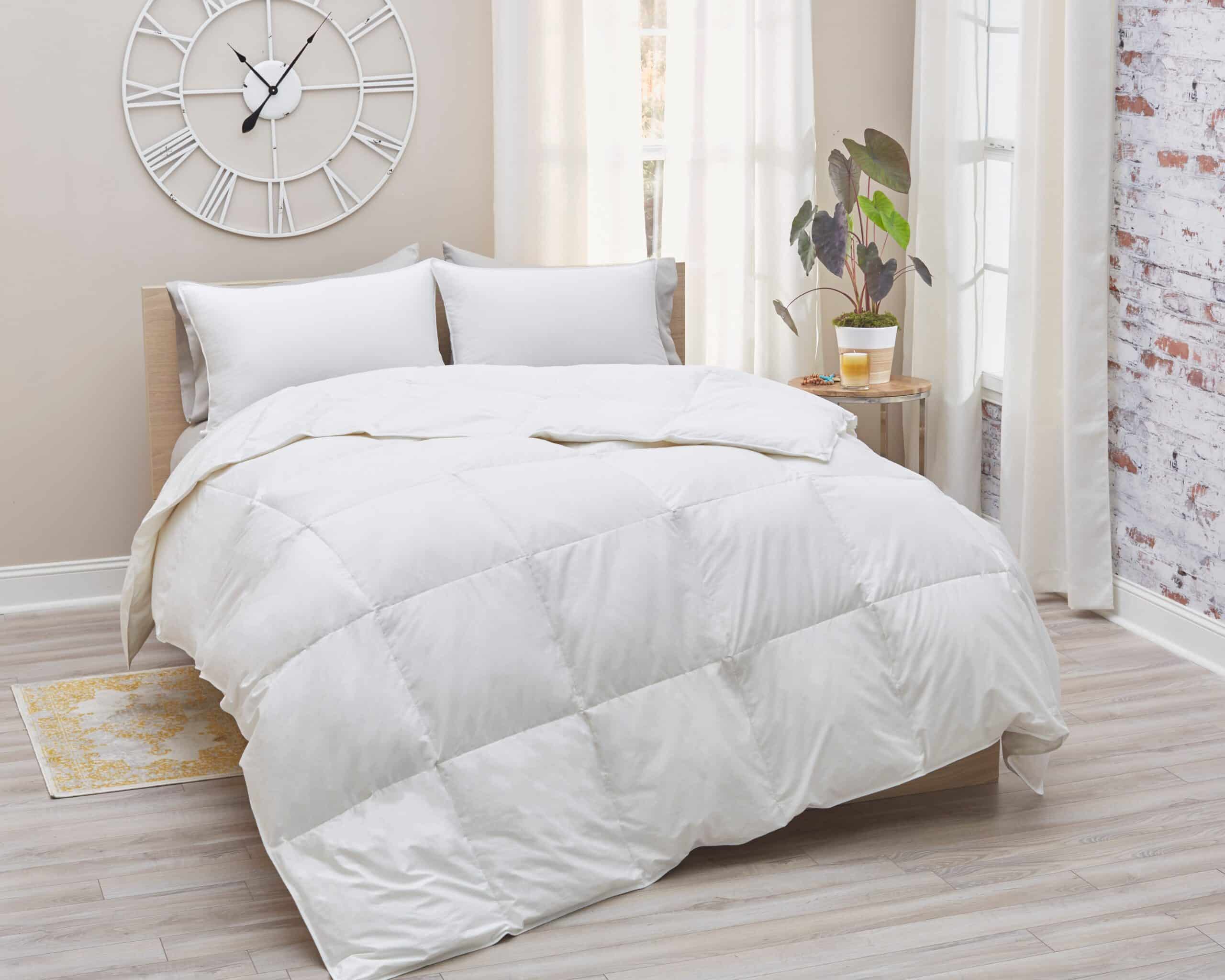
The Lunesse Comforter is a mid-range White Goose Down comforter made by Pacific Coast, a company who understands that the devil is in the details. The company gives you a 30 Night Comfort Guarantee to make sure that you absolutely love the comforter and honestly, it’s difficult not to. The purchase includes an Allergy Free Limited Warranty as well as a 10 Year Limited Warranty. With 600 Fill Power, it’s more than adequate for cold, winter days and the batiste cotton, that’s known to be one of its most distinguishing features, is one of the lightest fabrics in the industry, allowing for a comforter that isn’t heavy and one that can maintain it’s poof with ease. The goose down is also sourced responsibly which is a nice plus.

lunesse goose down comforter on bed

Construction of the Lunesse Comforter

The Lunesse comforter is available in two sizes: Queen and King. The measurements are as follows:

Full/Queen: 90” x 98”

King/CalKing: 108” x 98”

The comforter’s most essential ingredient, the goose down, is sewn into a barrier weave down proof fabric that keeps feathers from flying. Also, to be more specific, goose down doesn’t refer to traditional feathers, (such as quills, which would be the main wing or tail feathers) but the soft material found on the breast of a goose. Down clusters are described to be light, soft and fluffy. They have no hard elements. It’s known for all of this as well as it’s unbelievable (aka magical) insulating properties.

This goose down comforter has been sewn with 370 thread count batiste cotton fabric which is known to be 30% lighter than other comparable fabrics. Batiste is defined as “a fine cloth made from cotton, wool, polyester, or a blend, and is the softest of the lightweight opaque fabrics.” Aside from preventing you from feeling like your blanket weighs too much, or is suffocating somehow, fabric like this allows the down feathers to breathe and maintain their loft. In this case, the fabric is utilized to literally not weigh things down.

opaque batiste cotton fabric in comforter

Moving on to the inside, the duvet consists of 600 fill power of Hyperclean® white goose down. One person mentioned in their review of the product, on the company page, that the comforter was “noisy,” further explaining that, “it is crinkly sounding and is annoying while sleeping or even just lounging in bed. Also the loft is very thin. It is not fluffy at all. Very flat and thin.”

But this individual was just unfortunately uninformed and besides, my out-of-the-box experience was much different. The company wrote back explaining that as a result of the nature of down proof fabric, that the material can be stiff when new, which can result in the noise this person was experiencing. The same remedy to soften the fabric is one that would also open up the down clusters to give it the decadent feel (and loft) it was missing from out-of-the-box. Pacific Coast Bedding recommends the following:

If you have access to a large dryer, place your comforter with a couple of clean tennis balls (or dryer balls), a fabric softener sheet, and lightly damp washcloth. Tumble your comforter on low heat until the washcloth is dry, for most dryers 15-20 minutes. The steam from the washcloth will open up the down clusters, while the fabric softener sheet will soften the fabric without adhering to the down.

As consumers, something we must keep in mind is that companies need to do a lot of different things to deliver their products to us in a way that is feasible for all parties. Pillows are often compressed and the same goes for bedding. It will always come folded. Figuring out how the product should perform best is reliant upon our own investigation.

My Lunesse Comforter Findings

When you touch the comforter by hand, or when you feel it above you, it’s evident that this is a high quality product. That’s because you can FEEL only softness. There are no quills, no roughness, no hard spots, nothing that appears to not belong. It’s of quality because of its consistency.

I saw a tiny little cluster of down in the air only once, about 1 cm in size, and that was it. The manner in which the batiste cotton fabric was sewn must be meticulous to allow air to circulate but to not allow any of the down to escape from it. It’s actually really quite impressive when you think about how much goose down, how many clusters had to be used, in a single comforter.

lunesse comforter digital drawing

The sewn through box design and the comfort lock border is a must and I can’t imagine a manufacturer creating a product like this without it. I have seen comforters made of synthetic materials sewn in a different manner but this grid-like compartment system is key because the down wouldn’t stay in place otherwise and it also works to keep it evenly distributed, which works well not only in terms of aesthetics but also in terms of efficiency.

pacific coast comforter duvet loop corner

Their printed duvet loops were a real treat. This type of comforter is not one you just throw on top of your bed. It belongs in a duvet cover, to protect it and to dress it as you like. Without these duvet loops, the comforter would absolutely not have stayed in place throughout the night. My partner moves around in bed and it’s frustrating enough to find pillows on the floor or the bed sheets all pulled to one side but it’s always nice to see that the duvet hasn’t moved (because it can’t, yay!)

SUITABLE FOR WINTER USE ONLY?

One comment that I made in the video was that I would not recommend this comforter for any season except for winter but that might have been far too quick of an assumption. I do heat my home considerably and didn’t initially factor this in when trying out the comforter. Goose down duvet regulates temperature itself and you heating up your home or heating it up too much may make this sort of comforter feel excessive.

It’s not labeled to be an all-season comforter but it is said to be good for varying climates. Apparently all-season duvet comforters come in a set of 2, one which is lighter, the other thicker, so be mindful to read everything when you’re shopping around. In this case, the comforter is only a single layer.

My Pacific Coast Lunesse Comforter Recommendation

In comparison to duck down, goose down is definitely the better option and not because it’s traditionally the more POPULAR option. In fact, it’s been the more popular option because goose down is harvested in larger clumps and makes for a lighter and more efficient insulator in comparison to duck down, which can only be harvested in smaller clumps. There are also a lot more ducks than geese, typically resulting in lower production costs but goose down is still the more premium material.

I love this comforter. The Lunesse Goose Down Comforter is exactly the kind of luxury that’s been missing from my life. Winter is not my favorite season and getting through it always comes with some struggle.

lunesse comforter construction

While I’m from Europe, Poland specifically, and while goose down pillows and comforters are the standard in Europe, I don’t remember what my experience was like sleeping with goose down products as a kid because I left the country when I was young. In America, goose down isn’t the standard here because it’s not as readily available. Because it is a more premium product in the states, the price of it can be just as exclusive. This comforter is no excuse in that regard but it’s not the highest priced I’ve seen. It’s also not just priced high for the sake of it; it legitimately comes down to quality and I feel that this is a high quality item. I’ve never felt so comforted and so warm from a comforter. I really did feel insulated as if I was in my own cocoon.

One thing that I wasn’t very impressed with and that I would change immediately is the packaging. It was really nothing special. The plastic comforter blanket storage bag was relatively cheap and plain. It was difficult to unzip as one of the zippers were defective but I was happy there were two so there was no need to reach for the box cutter. The branding overall could be better and the first place I’d improve that is with their physical presentation of the product. While Pacific Coast does have affordable options as far as down comforters go, I still think there’s no reason why they can’t improve the covers they package they comforters in. It’d be nice if it was more durable and looked nicer, not just because I would like it but because if this is supposed to be perceived as high end, even if it is the more affordable end of high end, it still needs to look like the luxury good that it is.

lunesse comforter before unboxing

The unboxing experience is always the most exciting but there was something else that upset me a little. When I had opened the package, the product cover didn’t actually specify that it was in fact the Lunesse Comforter so, I had assumed that I might have gotten the wrong item. Lunesse wasn’t written anywhere. I checked the item number on the order number and compared it to the invoice that was attached and it was the same. I also called the company to check the UPC code and they confirmed that I did, in fact, receive the correct item. Shortly after, I found out that they had actually decided to discontinue the item, which could be the reason behind the uninteresting packaging and why they might have gone with something more generic. You can still find the Lunesse product page online but you’ll see that there’s no inventory and that it has been removed from the main down comforter product listing page.

I called Pacific Coast Feather Company to get a suggestion of what comforters would work best in replacement of the Lunesse Comforter and there were two I was recommended: The Deluxe Oversized Comforter and the Supima Cotton Luxury Down Comforter. I put together a table below to help you understand the similarities and differences between the three.

Overall I’m really impressed with the company, with their products and how they carry themselves overall (customer service was very gracious and informative). Packaging appearance could use an upgrade but the actual product itself is a solid one.

Frequently Asked Questions About Lunesse Comforter Review (2026): Ideal for Winter?

Is the Pacific Coast Lunesse Comforter worth it for winter use?

Yes, the Pacific Coast Lunesse Comforter is ideal for winter given its 600 fill power white goose down, designed for chilly nights. Its lightweight batiste cotton fabric also ensures breathability while providing warmth.

Who is the Lunesse Comforter best for?

The Lunesse Comforter is best for individuals who desire a luxurious, soft, and warm sleep experience, especially in colder climates. Its robust construction and ethical sourcing also appeal to conscious consumers.

What are the potential downsides of the Lunesse Comforter?

Some initial users noted the comforter felt noisy and thin, which may be due to the stiffness of new down-proof fabric. However, Pacific Coast suggests that proper care, such as tumble drying with tennis balls, helps to soften the material and expand the down clusters.

Where can I try the Lunesse Comforter in person?

You can experience the Lunesse Comforter firsthand at Yawnder's San Diego showroom, located in Encinitas, CA. This allows you to evaluate its premium feel and construction before making a purchase.

Is the Lunesse Comforter suitable for all seasons?

While primarily suited for warmth, the adaptive nature of down means it can perform well in varying temperatures, particularly in heated homes. However, a single-layer option like the Lunesse might be better for those who prefer consistent warmth rather than an all-season versatility, which usually involves multiple layers.

How does goose down in the Lunesse Comforter compare to traditional feathers?

Goose down, used in the Lunesse Comforter, is the soft, fluffy material from beneath a goose's breast, lacking the hard elements found in traditional feathers. This makes it a superior insulator and provides a softer, more luxurious feel without quills.

Want to test this in person? Visit our Encinitas showroom or call 858-232-5760.

Heavenluxe Tencel Sheets Review (2026): Value for Money?

Heavenluxe Tencel Sheets Review

I received a set of white Luxe Austrian Tencel sheets from Heavenluxe, wrapped in plastic and taped thoroughly to conform to the shape of their simplistic white box.

There was little to no information on the box aside from the company name, their website, the product name, and box contents.

I was impressed with how clean and no-nonsense the whole package was, but when I opened it up there was a quote by Eleanor Roosevelt on the underside of the top flap.

It’s a great quote, but the font was atrocious. For a company that has such a clean and professional look to their products and website, I was baffled as to why they would choose a Lucida Handwriting-esque font that you might see on a tacky Get Well Soon card from Hallmark. The juxtaposition of the clean sans-serif logo below the bubbly cursive was striking, but not as striking as the sheets.

Heavenluxe Sheets Construction

The sheets inside were so incredibly shiny and reflective, they almost seemed to emit their own light when tousled on the couch. The folds and ripples gave a kind of depth to the sheets that I have never seen before on any kind of fabric—I love shiny things, and I loved these sheets immediately.

Nailing a first impression can be hard if you’re just selling plain white sheets unless there’s something special about them, and for Heavenluxe that special something is a fabric composition that feels extraordinary. Never have I ever felt a softer set of sheets in my life.

I followed the directions on the tag to wash in cold water and dry on low heat, which only made them feel more luxurious and soft—I didn’t think that was even possible. I put the sheets on my bed and slipped in between my covers and instantly was smitten.

My Heavenluxe Findings

Sleeping on Heavenluxe Tencel Luxe sheets is like laying on a cloud made of a single whispy breath of fresh air. I’m often skeptical when manufacturers advertise their products as being “silky smooth,” because 9 times out of 10 it’s an exaggeration. I will tell you now, these sheets really truly are silky smooth. The seams are perfect and nearly invisible, making the sheets sleek and elegant.

They’re smoother and softer than the Peachskin microfiber sheets, so I had high hopes, but I also knew that with extreme softness comes a hurdle for me—they get hot. To my delight though, the sheets weren’t too hot or too cold. The Tencel fabric is warm, but definitely not as warm as the Peachskins. The Heavenluxe set is breathable, smooth, and beyond comfortable, but I did find some issues.

Costs and Benefits

Where Heavenluxe exceeds in softness and sheen, it unfortunately fails in accessibility. Honestly, I did not see the itemized list until after I opened everything and discovered for myself that they only included a fitted sheet and two pillow cases. I use a flat sheet every time I make my bed, and when I purchase a set of sheets for $297 I expect it to include a flat sheet… so I was a bit disappointed. I personally have never heard of a sheet set that doesn’t have a flat sheet, but maybe I’m not looking in the right places. I wish that I had had a flat sheet so I could have the full experience, but they don’t even have that as an option on their website—you can only order the three-piece bed set. So instead I had to improvise with mismatched sheets. $297 is a lot to spend when you have to go out and buy more sheets just to have the average number of sheets. It feels like opening a birthday present on your 8th birthday only to find that it doesn’t come with batteries.

After washing the sheets, two things stood out to me. The first was that after following the laundry instructions to a “T,” the sheets were shedding. I found threads all over the place and I have no idea where they came from or why they’re abandoning ship.

While the seams look so slick and non-existent, they do feel a bit delicate. I was almost worried that if I made my bed a little too hard one day, the seams would rip. After some research, I learned that Austrian Tencel is actually one of the most durable fabrics that sheets can be made of so I’m not worried, however the sheets did shrink. This is the first set of sheets I’ve received that has shrunk in their first wash (despite following the laundry instructions), and they did so by a whole inch and a half. Not a big deal, but I rarely see any shrinkage in my cold washes.

My Heavenluxe Recommendations

So why $297? It’s actually a reasonable price if you’re looking for authentic Tencel sheets. This 47-year-old fabric pales in comparison to the 7000 year track record of cotton, but age doesn’t mean a thing when you have the credentials of eucalyptus wood pulp fibers. Tencel is 500x thinner than cotton and 20x more moisture-wicking. What really amazes me is that this new eucalyptus fabric uses 96% less water and 30% less energy than cotton, making its environmental impact virtually zero. Heavenluxe transforms this renewable and sustainable resource into fabric through an environmentally friendly production process. They even donate a percentage of every sale to local charities that fund children’s educational programs.

So while Austrian Tencel sheets may be expensive, the night’s sleep you will get from them is worth more than the $300 you’ll spend on a fitted sheet and two pillowcases. Aside from the great zzz’s, you will be contributing to a cleaner, more sustainable world, and a future generation of well-educated kids. When it comes down to it, I’m in love with plant-based alternative sustainable materials, so ultimately despite my reservations around price and lack of variety, I think buying from Heavenluxe would be a great investment for any sleep aficionado. You can learn more about Tencel sheets here!

Frequently Asked Questions About Heavenluxe Tencel Sheets Review (2026): Value for Money?

Is a Heavenluxe Tencel sheets set worth the price tag?

Heavenluxe Tencel sheets offer exceptional softness and temperature regulation, but the value for money is questionable due to the incomplete set and high cost. For $297, the reviewer expected a complete sheet set including a flat sheet, which was not provided.

Who are Heavenluxe Tencel sheets best for?

Heavenluxe Tencel sheets are best for individuals who prioritize luxurious softness and effective temperature regulation in their bedding. Our San Diego reviewer, a self-proclaimed skeptic of 'silky smooth' claims, was genuinely impressed by their comfort and breathability.

What are the main downsides of Heavenluxe Tencel sheets?

The primary downsides of Heavenluxe Tencel sheets are their high price point for an incomplete set and some initial concerns about durability and shrinkage after washing. The reviewer noted finding loose threads after the first wash and an inch and a half of shrinkage, despite following care instructions.

Are Heavenluxe Tencel sheets good for hot sleepers?

Yes, Heavenluxe Tencel sheets are good for hot sleepers because the Tencel fabric functions as an excellent temperature regulator. Our hands-on testing found that these sheets maintain a perfect balance, offering warmth without causing overheating.

How does the texture of Heavenluxe Tencel sheets compare to other soft sheets?

The texture of Heavenluxe Tencel sheets is uniquely soft and almost luminescent, unlike anything the reviewer had previously encountered. The sheets felt incredibly soft even before washing, and remarkably, their luxurious feel was enhanced after following the care instructions.

Where can I try Heavenluxe Tencel sheets in person?

While our San Diego showroom in Encinitas, CA, offers a variety of premium bedding, it does not currently carry Heavenluxe Tencel sheets for in-person demonstration. The reviewer's experience was based on a direct purchase and home testing of the product.

Want to test this in person? Visit our Encinitas showroom or call 858-232-5760.

Amerisleep AS3 Review (2026): Medium Feel, Price & Verdict

Amerisleep AS3 Mattress Review

Yawnder Reviews · Updated September 2026

Amerisleep AS3 Review: Medium Plant-Based Foam Re-Tested

The Amerisleep AS3 is a 12-inch all-foam mattress aimed at sleepers who want a medium feel with responsive contouring. We tested the AS3 with Yawnder's standardized protocol on August 27, 2026.

Yawnder test results

Overall score8.4 / 10
Firmness6 / 10
Spine alignment8.4
Pressure relief8.8
Cooling8.2
Motion transfer8.8
Edge support7.2
Responsiveness8
Expected durability8.4
Off-gassing8.6

Standardized Yawnder test completed August 2026. See how we test and score.

Where it stands out

  • Pressure relief 8.8/10, Motion transfer 8.8/10, Off-gassing 8.6/10
  • Side and combination sleepers who want foam contouring with strong pressure relief.
  • Model-specific Yawnder record is complete and separated from manufacturer claims.

Where it is limited

  • Lowest measured categories: Edge support 7.2/10 and Responsiveness 8/10
  • Feel and score profile apply to the tested configuration; other firmness choices can feel materially different.

Current specs and terms

TypeFoam
Height / profile12 inches
Price reference$1,549 Yawnder reference price
Trial100 nights
Warranty20-year limited

Who should buy it

Side and combination sleepers who want foam contouring with strong pressure relief.

Common questions

What did Yawnder score it? 8.4/10 overall in the current standardized record.

How firm was the tested mattress? 6/10.

How long is the trial? 100 nights.

What is the warranty? 20-year limited.

Check today's Amerisleep AS3 price and promotion →

Yawnder Reviews · Disclosure: Brand links on this page may be affiliate links. If you buy through them, Yawnder may earn a commission at no additional cost to you. Test scores come from Yawnder's standardized mattress-testing record; current policies and promotional pricing are manufacturer-provided.

MagicLinen Duvet Cover Review

Magic Linen Review

I received a gray blue linen duvet set from MagicLinen in Lithuania to review. Unlike the sheets from PeachSkin and Homestead, MagicLinen did not impress me in the presentation department. The presentation was definitely reserved and modest—the sheets were neatly folded in a small package wrapped in ribbon donning the MagicLinen logo, but that was mailed in just a regular brown box.

Obviously presentation isn’t everything, so I definitely don’t put too much weight in that, especially since it had to travel so far. MagicLinen is a small, family-run company in Vilnius, Lithuania that makes high quality linen, so it’s really impressive that they are able to mail their products internationally for only $15.

MagicLinen Construction

MagicLinen’s high quality linen products are made from fibers of the European flax plant that have been stone-washed for maximum comfort. This durable textile is breathable and cool during the summer, yet warm and comfortable during the winter. Linen absorbs moisture well and releases it quickly, drying out fast.

I had heard that linen can be scratchy and irritating to sensitive skin, but upon reading more on the subject, I learned that linen actually possesses rare hypoallergenic and anti-microbial properties—it’s a natural antiseptic that kills bacteria and fungi. Amazingly, it can reduce inflammation and cure some skin diseases—from common rashes to eczema.

Right out of the box, the duvet cover and pillowcases felt distinctly different from other fabrics that I’ve tried in the past, but they were definitely not scratchy. The tail end of the duvet cover sported attractive wooden buttons, and the head end had handy tie-ins to keep the duvet in place (some don’t have them).

The instructions told me to turn all three pieces inside-out before throwing them into a cold wash followed by a gentle low heat drying cycle. Coming out of the dryer however, they were surprisingly wrinkly. Very wrinkly. And they were covered in pills.

My MagicLinen Findings

Even after putting them on my bed and pillows, they remained wrinkly. However, I absolutely do not care because when I laid down on my bed waiting for the rest of my laundry dry, I felt like I was on a wistful beach getaway on the Nantucket coast basking in the sunny seabreeze.

My house does not have a view of the ocean nor do I live on Nantucket but for some reason these sheets evoked pure relaxation on a luxurious summer vacation. Lounging on my bed, binge-watching “New Girl,” the duvet cover was warmer yet airier than the ice cold duvet that I’m used to. Curling up with the linen cover tucked under one half of my head, and a linen pillow case under the other became a kind of highlight to my evening. Sometimes it’s hard for me to fall asleep, but for the past week I have had no trouble at all.

I combined my MagicLinen bedding with my Homestead cotton sheets for a dynamic duo of solid Zzzs. It was a really nice change of pace from the sweaty and balmy experience I had in the PeachSkin sheets. I thankfully did not wake up in the middle of the night, grasping for my fan, and kicking off my duvet cover; I think I have fallen in love.

My MagicLinen Recommendation

With a price tag of $206, it’s similar to the Homestead sheets in that it is unfortunately a bit inaccessible. Online, you can find good quality 3-piece linen duvet sets anywhere from $40 to $110, but none of them are going to be like MagicLinen.

MagicLinen prides itself on being a descendant of Baltic linen growing, sewing, and weaving traditions spanning hundreds of years. Centuries of tradition and advancement in textile work has brought MagicLinen to the forefront of eco-friendly linen products. They use only European OEKO-tex certified, high-quality linen when they hand make all of their products. The fabric is cut and sewn by tailors rather than machines or children, making their supply chain more ethical than most of those cheaper brands.

So if you find yourself wishing you could enjoy a dreamy sleep-cation reminiscent of every perfect beach house stock photo you’ve ever lived vicariously through, I can honestly say that this is a duvet set to splurge on. I would love to try the sheets one day, because I have a feeling they will be just as magnificent.

Frequently Asked Questions About MagicLinen Duvet Cover Review

Is the Magic Linen duvet set worth the investment?

Yes, the MagicLinen duvet set is considered a worthwhile investment due to its unique craftsmanship and sustainable practices. While priced at $206, which is above the average for a 3-piece set, its quality and long-term benefits justify the cost. Our experience at Yawnder confirmed the exceptional comfort and luxurious feel it provides for a serene sleep environment.

Who is the Magic Linen duvet best for?

The MagicLinen duvet is best for individuals seeking breathable, comfortable, and hypoallergenic bedding for all seasons. Its natural properties make it ideal for hot sleepers, those prone to skin conditions like eczema, or anyone desiring significant improvements in their sleep quality by avoiding synthetic materials.

How does MagicLinen duvet compare to cotton sheets?

The MagicLinen duvet offers a distinctly different, softer texture compared to traditional cotton sheets. Unlike cotton, linen is renowned for unparalleled breathability, keeping you cool in summer and warm in winter, and effectively wicking away moisture throughout the night. Our testing found that it provides a superior balance of warmth and ventilation compared to typical cotton bedding.

What are the downsides of the MagicLinen duvet?

One potential downside of the MagicLinen duvet is its initial simple packaging, which lacks an elaborate unboxing experience. Additionally, linen fabric naturally wrinkles after washing, which might be a minor aesthetic consideration for some, though it adds to the fabric's characteristic charm.

Is the MagicLinen duvet good for hot sleepers?

Yes, the MagicLinen duvet is excellent for hot sleepers due to linen's exceptional breathability and moisture-wicking properties. It keeps you cool during warmer months by efficiently absorbing and releasing moisture, preventing the uncomfortable clamminess often experienced with other materials. Our firsthand account noted a tranquil warmth without overheating, suggesting it is highly effective for maintaining comfortable body temperature.

Where can I try the MagicLinen duvet in person?

Currently, Our review of the MagicLinen duvet was based on direct hands-on testing of a set ordered and received at home. However, you can visit Yawnder's Encinitas, CA showroom for expert advice and to explore other premium bedding options.

Want to test this in person? Visit our Encinitas showroom or call 858-232-5760.

Ready to buy?
See today’s best sleep deals

Live pricing and current promotions on the mattresses, bases, and sleep tech we recommend.

Shop current deals

Luxe Pillow Review

Luxe Pillow Review 1

The Luxe Pillow

The Luxe Pillow is a new approach to the traditional pillow. Its most appealing asset is its unique construction, which involves three separate chambers within the pillow. It looks like any other ordinary pillow but its central core is what allows it to provide the support that other pillows might not be able to.

Overview of The Luxe Pillow

luxe pillow packaging and unboxing

The Luxe Pillow is available in goose down, as well as in a poly-fiber gel, a high-quality goose down alternative. Both pillow types are available in standard and king sizes. Luxe Pillow offers free shipping and returns on their items, a 100-night no risk sleep trial, and they use responsibly sourced goose down. This matters because responsibly sourced isn’t just an indication of company values but of a higher quality product overall.

Construction of The Luxe Pillow

luxe pillow unboxing and review

The Luxe Poly FiberGel Down Alternative Pillow is available in both Standard and King sizes.

For it’s construction, there is a dedicated core that’s been chiseled out, along with two additional chambers. This core provides stability, not allowing it to fall flat like other pillows might. It is also much more subtle in design than I realized and practically speaking, this is a plus as it’s not something distracting. I tried pushing down on the pillow hoping to find it but couldn’t exactly. I think the subtlety matters. It’s not supposed to be noticeable, it’s just supposed to be effective. That’s the point!

My Luxe Pillow Findings

luxe pillow detail

Luxe Pillow uses sustainably sourced white goose down and small-game waterfowl feather. The way they’ve designed it, to give you the best bang for your buck, is they filled the supportive core with high-quality waterfowl feather, which refers typically to ducks or similar animals, waterfowl are animals that like and live by the water. These types of feathers are either denser or more affordable so they can use larger quantities of it to create that internal support. The two external chambers are filled with goose down to provide the unique softness it’s known for. Despite the feathers, these pillows are certified to be hypo-allergenic and there is a 300 Thread Count Pillow Protector included.

For their down alternative pillows, they use Poly Fiber Gel which is an absolutely wonderful substitute. As someone who regularly sleeps with down pillows, I wouldn’t exaggerate.

To see my thoughts on the Down Alternative Pillow by Luxe Pillow, and to see me compare it to a Goose Down (and only Goose Down) Pillow, take a look at the video below that debuted on the Yawnder YouTube Channel.


The Luxe Pillow® vs The Pillow Guy: Construction, Price & Packaging Comparison

I consider the Pillow Guy company to be a direct competitor because of how similar these price points are, as well as because both cater their marketing to those interested in luxury living and therefore those looking to purchase luxury goods.

In terms of price, Pillow Guy is definitely the more expensive brand. Luxe Pillow, on the other hand, is still trying to bring value to its customers. The biggest differentiating factor in terms of price between these two brands lies in the price of their goose down pillows. I’m including the chart below to help you better understand these costs more clearly.

PILLOW TYPETHE LUXE PILLOWPILLOW GUY PILLOW
Standard Goose Down Pillow$129$189
King Goose Down Pillow$149$239
Set of 2 Standard Down Pillows

$229

(Saves you $29)

$329

(Saves you $49)

Set of 2 King Down PillowsNot available in King size

$449

(Saves you $29)

Standard Poly-Fiber Gel Pillow$79$79
King Poly-Fiber Gel Pillow$99$99
Set of 2 Standard Poly Fiber Pillows

$139

(Saves you $19)

$149

(Saves you $9)

Set of 2 King Poly Fiber PillowsNot available in King size

$179

(Saves you $19)

The reason for these price differences in the goose down products can vary. I’m assuming that it can come down to either quantity/weight of goose down, the quality of the goose down, advertising costs or simply a matter of brand perception.

With the Luxe pillow, the core of their down pillows does contain small-game waterfowl feather. This difference in composition might be what cuts cost for Luxe Pillow, allowing them to charge less for it. Goose-down in the states certainly falls on the higher end of the spectrum, typically of which consumers are well aware of.

The way I see it is if you’re particular about how you like things and you “MUST HAVE GOOSE DOWN,” I’m assuming you’ll disregard the price in exchange for getting what you want. If you, however, want to keep an open mind and are looking to save a little bit of money then the Luxe Pillow is a great alternative. We are talking about a $100 difference for a set of 2 Standard Down Pillows, for example.

luxe pillow branding

Both companies charging the same price for their down alternative pillows makes a lot of sense, being that they’re both constructed with the same material, poly-fiber gel. Their costs for this must be close to identical depending on the quantities it’s being purchased in but I’ll tell you first hand, poly-fiber gel feels amazing. It felt amazing with the Pillow Guy Pillow and it feels amazing with the Luxe Pillow too. I think that both companies offer these at reasonable rates considering these are higher end products that are beautifully constructed.

One thing that stood out tremendously to me is the difference in packaging, referring to the initial experience a consumer has with a company’s product. The Pillow Guy packaging was rather plain but Luxe Pillow went all out and something like this makes all the difference for me. Check out my review of the Pillow Guy Pillow to see what I’m referring to.

My Luxe Pillow Recommendation

luxe pillow letter from founder

Overall I’m quite impressed with the Luxe Pillow and it’s creators. The one thing that’s missing is their company story. I’m curious to learn what it is. Their website doesn’t have an “about” section and that’s a great place where a company can gradually build rapport with consumers. In this time and age brand loyalty is gained not just through the creation of great products but by sharing the WHY of what they do. Simon Sinek elaborates greatly on this topic in his Ted Talk entitled, “How great leaders inspire action.” Companies that are willing to share the story behind who they are and what they make are more likely to provoke an emotional reaction from their customers. Right now, Luxe Pillow, to me, does not have a face and I think it should be wearing someone’s. In my opinion, that’s all they need.

Learn more about the Luxe Pillo

Frequently Asked Questions About Luxe Pillow Review

Is the Luxe Pillow worth the price, especially compared to its competitors?

The Luxe Pillow offers significant value, providing a high-quality, innovative design at a more competitive price point than some luxury alternatives like The Pillow Guy, particularly for its goose down options. While The Pillow Guy’s goose down pillows are generally more expensive, Luxe Pillow aims to deliver premium comfort without the higher cost. The brand also offers free shipping, returns, and a 100-night sleep trial, further enhancing its value proposition.

Who is the Luxe Pillow best suited for?

The Luxe Pillow is ideal for individuals seeking a supportive yet soft pillow with a unique multi-chamber design to prevent flattening. It caters to those who prioritize ethically sourced materials, as it uses responsibly sourced goose down. With both goose down and poly-fiber gel options, it accommodates preferences for traditional down luxury or a hypoallergenic alternative.

How does the Luxe Pillow's construction compare to typical pillows?

Unlike typical pillows that often lose their shape, the Luxe Pillow features an innovative multi-chamber construction with a dedicated core for stability and two surrounding chambers for plushness. The core is filled with denser waterfowl feathers for support, while the outer chambers contain soft goose down. This design ensures the pillow maintains its shape and support throughout the night.

What are the potential downsides of the Luxe Pillow?

The primary potential downside might be that the core uses waterfowl feathers instead of pure goose down, which, while supportive and affordable, may feel different to those accustomed to 100% goose down. However, the external chambers are filled with plush goose down, and both types are certified hypoallergenic. The article also notes the poly-fiber gel alternative effectively replicates down's softness without the associated issues.

Is the Luxe Pillow good for someone who usually prefers a pure down pillow?

Yes, based on hands-on testing, the Luxe Pillow’s blend of sustainably sourced white goose down and waterfowl feathers, or its poly-fiber gel alternative, performed exceptionally well even for those accustomed to pure down. The reviewer noted that the poly-fiber gel alternative surprisingly held its own against pure goose down. This suggests a seamless transition for down enthusiasts.

Where can I try the Luxe Pillow in person?

While the article does not explicitly state the Luxe Pillow is available to try in person at Yawnder, our San Diego showroom in Encinitas, CA, is a great place to explore various high-quality sleep products. We recommend contacting Yawnder directly to inquire about specific product availability for in-person testing. The brand does offer a 100-night no-risk sleep trial if you decide to purchase online.

Want to test this in person? Visit our Encinitas showroom or call 858-232-5760.

Best Rollaway Guest Beds

Best Rollaway Beds
Short answer

A rollaway bed is a type of foldable bed designed for easy storage and portability. It typically features a metal frame that folds in half when not in use and often comes with caster wheels for effortless movement. These beds provide a convenient and affordable sleeping solution for guests or temporary accommodations, offering a practical alternative to traditional beds.

Best Rollaway Guest Beds: quick answers

What is a rollaway bed?

A rollaway bed is a foldable sleeping solution with a metal frame, designed for easy storage and portability. It serves as a convenient and affordable option for temporary use, such as accommodating guests or in small living spaces.

What are the advantages of rollaway beds?

Rollaway beds are highly advantageous for their affordability and portability. They are much cheaper than traditional beds, take up little storage space, and can be easily moved or transported, making them ideal for guests or frequent movers.

What are the types of rollaway beds?

There are three main types of rollaway beds: standard, cabinet, and ottoman. Standard beds have a simple metal frame. Cabinet beds hide the mattress and frame inside a cabinet, while ottoman beds resemble an ottoman when folded.

Are rollaway beds comfortable?

Rollaway beds offer a comfortable surface for sleeping, especially when paired with a suitable mattress. While generally not as luxurious as traditional beds, they provide a practical and convenient solution for temporary sleeping arrangements.

When we think of a bed, the first image that comes to mind is that of a wooden frame with four legs, topped with a mattress, sheets, and pillows. Although this is the type of bed that most of us would prefer in the ideal circumstances, the truth is that in urban settings there is often not enough space to accommodate a big bed. Traditional beds are also expensive and cannot be packed and transported on the fly. So if you’re moving from place to another, you often need to sell off your bed and buy another one in your new home — the result: rising expenses.

When a traditional bed is inconvenient and expensive, you must resort to other options. The rollaway bed is one such option that provides you with the comfort of a conventional bed but also the portability and convenience that you find in no other bed. Not only is a rollaway bed much cheaper than a traditional bed, but it can also be assembled and disassembled easily and transported on the fly. But the problem is since rollaway beds are cheap, the market is flooded with them. In this guide, we discuss the features of a rollaway bed and talk about the best options today.

How Rollaway Bed is Different than a Conventional Bed?

A rollaway bed is essentially a foldable bed. It can be folded in half when not in use and opened up to make a full-size bed. Rollaway beds are usually made of metal. The sturdy metal frame is capable of handling the weight of one to two persons. At the bottom of the four legs of the frame are caster wheels that are used in easily moving the bed from one place to another. When the metal frame is folded in half, it takes very little space for storage. Some rollaway beds come with a foldable mattress, but even if they don’t, you can easily purchase a compatible mattress later.

Because rollaway beds are much lighter than traditional beds, take little storage space, and are easily portable, they can be used for extra guests, for a trip far from home, or if space is short in your new apartment. The only downside is that a foldable bed may not be capable of handling the weight of a 300-pound person. It is best for people of average weight.

Advantages and Disadvantages of Rollaway Beds

Although foldable beds offer many advantages to those who cannot get a stationary bed, there are also certain downsides that must be considered. Here we take a look at both:

Advantages

Affordability: The primary reason why rollaway beds are popular is their affordability. Stationary beds are often exorbitant, and also take up a lot of space in the room. For someone going through a tight situation, neither is possible. That’s when a foldable bed saves the day. It’s the fraction of the cost of a stationary bed, doesn’t take up much space, and is far better than sleeping on the floor.

Portability: Even if you have a stationary bed, you might want to have one or two foldable beds in storage. That’s because they are easily portable, and can accommodate one or two people if there’s not enough room. If you’re going for a long trip away from home, you may also carry a rollaway bed in the car, so you can have your own bed to sleep on. If you move houses often, investing in a portable rollaway bed can save you the hassle of moving heavy furniture. The caster wheels also make it convenient to move the bed from one location to another.

Disadvantages

Unattractive: Even though it gives you a comfortable surface to sleep on, a rollaway bed doesn’t offer anything in terms of aesthetic appeal. There are cabinet-style rollaway beds that look slightly better than the metal ones, but they are not as attractive as a stationary bed. Rollaway beds are typically used for convenience, not for enhancing the room decor.

Durability: As already mentioned above, foldable beds are not designed to handle the kind of weight that is usually handled by a stationary bed. The region where the bed folds is usually the weakest and can get damaged with regular wear and tear. Regardless of how you use it, a rollaway bed will never last as long as a stationary bed.

Types of Rollaway Beds

There are three types of rollaway beds, and all of them have their own upsides and downsides. They are:

Standard: The standard foldable bed usually consists of a tubular steel or metal frame and a mattress platform made out of polypropylene and wire spring mesh. Standard rollaway beds work well with both foam and innerspring mattresses, and they are also the cheapest.

Cabinet: This type of rollaway beds looks like a cabinet when folded, and also has fayed doors! When folded, a cabinet style rollaway bed hides the mattress and the bed frame — one of the panels of the cabinet functions as the platform for the mattress. Caster wheels are present in all models, and headboards and footboards may also be present in more expensive models.

Ottoman: Although this type of rollaway bed is much like the standard metal frame ones, the only difference is that this one also doubles as an ottoman. This bed doesn’t fold in half, but in a third, and converts into an ottoman. All you need is a cushion and a cover to make it a proper ottoman. Some of these ottoman style beds are shaped like boxes from which you have to pull out the mattress platform.

Factors to Consider While Buying A Rollaway Bed

Given that there are a huge variety of rollaway beds all over the market, you will want to take your time in picking one that’s right for you. A bed is one of the most used pieces of furniture in the house and should also be comfortable. Just because you do not have the convenience to get a full-size stationary bed does not mean that you must sacrifice comfort and durability. Rollaway beds are generally cheap, so you should be able to find something of good quality without exceeding your budget. But regardless of whether you choose a standard, cabinet or ottoman-style bed, the following factors should always be considered.

Construction and Durability: Rollaway beds are cheap, but it does not necessarily mean that you have to buy one every three months. Therefore, the bed should be durable, particularly if you are going to put it to regular use. Rollaway beds are usually constructed either out of steel or wood. Steel and aluminum beds are less expensive than the wooden ones but are not as durable. Because these types of beds can be folded, the maximum wear and tear happen to the joint where the bed folds. The best materials for the pivot are steel and wood, the latter being stronger but more expensive. If you want the joints of the bed to hold up well, you may choose a metal construction with a wooden pivot. If the entire bed is made of wood, it becomes heavier and does not remain as portable. Metal rollaway beds are also prone to developing creaking noises as they grow older. The rule of thumb when buying rollaway beds is that the cheaper it is, the shorter it will last.

Size of Rollaway Bed: The most commonly available size of a rollaway bed is a twin. This size is capable of comfortably accommodating one person. You also get full and queen sizes, but they are not as commonly found. The full and queen sizes can accommodate two people, but they are heavier and not very portable. If portability is not a concern, then you can try looking for a queen size rollaway bed. However, the bigger the bed, the more it will cost.

Mattress in Rollaway Bed: Rollaway beds come with and without a mattress. It comes down to your personal preference. If you already have a mattress, you can choose a foldable bed that doesn’t have a mattress. If you want something cheap, beds that come without a mattress will better suit your budget, even though you will have to buy a separate mattress. Rollaway beds that come with a mattress are a little expensive, but you are spared of the trouble of searching for a compatible mattress.

Rollaway beds can be paired with memory foam, innerspring, or polyurethane foam mattresses. But regardless of the mattress that you choose, it should be foldable. Otherwise, it will be broken in the middle soon enough.

Brand: Most reputed bedding companies manufacture rollaway beds and comfortable mattresses. But before choosing one brand over the other, make sure to read customer reviews to find out what is better. Often when buying a bed online, the customer tends to get swayed by the claims made by the company. But only reviews from real customers will help you know how the bed performs.

Top 6 Rollaway Beds of 2019

Best Overall Rollaway Bed: Milliard Premium Folding Rollaway Bed

When people buy a folding bed, they have resigned themselves to the fact that it can never match up to the softness and comfort of an actual mattress. And it’s true because it’s hard to find a foldable bed that offers the same comfort and plushness of a memory foam mattress. The Milliard Premium Folding Rollaway Bed is a rare find that, despite being a standard foldable bed, offers superior softness and comfort. While other memory foam rollaway beds are quite hard, the comfort and plush feel of this one has been vouched for by customers.

What makes this bed even more bouncy and comfortable is the mattress platform made of the trampoline, instead of wire mesh or slats. The mattress is four-inch thick, enough support for a foldable bed. Besides edge support, the foam also contours to your body and provides support to the pressure points. Sleeping on this bed, you will not be waking up with a sore back or still shoulders.

The entire construction of this bed is also pretty durable. The frame is made from double reinforced steel with a Clamshell folding style, ensuring that the bed retains its shape under any circumstance. Although the bed is not much of a looker, it does its job very well, providing support with a good mattress and durability with a strong frame. The weight of the bed is only 52 pounds, so it’s easy to move from place to place. Assembling it for the first time is also easy and doesn’t require tools– you simply have to attach the wheels, and you’re done. The assisted folding mechanism makes it convenient to open and fold the bed.

Pros

  • One of the best and softest mattresses
  • Strong, double reinforced construction
  • Easy to assemble and unfold
  • Not too heavy

Cons

  • A little expensive

Check the latest price on the Milliard rollaway bed

Best Budget Rollaway Bed: Symple Stuff Folding Bed

Budget rollaway beds usually come with a number of shortcomings and shoppers need to look past them in order to find quality. That’s because, despite the shortcomings, budget rollaway beds also offer plenty of advantages. The Symple Stuff Folding Bed is one such rollaway bedding that features an affordable price tag and a no-frills design but makes up with other perks.

This foldable bed comes with a 5-inch foam mattress on a bed base made of rigid slats. Although the mattress is thick enough to provide support, it is not too soft. In fact, many customers have commented that the mattress was a bit too hard for their liking.  This isn’t surprising because most foldable beds that boast of a foam mattress aren’t as soft or comfortable as an actual memory foam mattress. The maximum capacity of the bed is 250 pounds, but you should not attempt to test it out– most metal frame rollaway beds are pretty frail at handling anything above 200 pounds. In general, this is a bed that’s best for a small or average sized person or a child. This is again where the maximum capacity of the bed comes into play — most budget rollaway beds are best for people who don’t weigh much, and it isn’t such a surprising or unique downside for any foldable budget bed.

If you’re on a budget and want a portable bed for one person, this affordable option from Symple Stuff is one of the most popular choices. But it’s most suited for occasional use than regular use as a stationary bed.

Pros

  • Affordable and easily available
  • No-frills design
  • Five-inch mattress

Cons

  • Mattress not too comfortable
  • Construction could be more durable

Check the latest prices on the Symple Stuff rollaway bed

Best Rollaway Innerspring Bed: Serta® Folding Bed with Mattress

If you prefer the feel of an innerspring mattress over a memory foam one, then there are innerspring options also available among rollaway beds. Just because you’re buying a portable bed doesn’t mean you have to sacrifice all your preferences. One of the most popular innerspring rollaway beds is the Serta Folding bed. The mattress it comes with has a traditional innerspring construction, so it replicates the feel of an actual innerspring bed.

Serta is a well-known name in the bedding industry, and all the quality and reputation of their other offerings come through in this folding bed. The bed is 73 inches long and 39 inches wide, the same width ad that of an XL Twin bed. The extra width is a nice addition since it allows the sleeper enough room to adjust position and roll over during the night. Those sleeping on the bed will also enjoy the comfort and support provided by the 12-gauge wound helical springs in the four-inch mattress. They manage to replicate the feel of a traditional innerspring mattress, so this rollaway bed by Serta isn’t a bad choice. Another significant feature of this bed is the height. It’s just 18 inches from the floor, which makes it easy for older people or those with mobility issues to get on and off the bed.  The frame is made of angular steel, and the four caster wheels allow the bed to be easily moved from one room to another.

Pros

  • Affordable
  • Great innerspring design
  • Comfortable and supportive
  • Extra width
  • Medium weight

Cons

  • No information on warranty available

Check the latest prices on the Serta folding bed mattress

Best Rollaway Bed for Small Spaces: iBed Memory Foam Rollaway Guest Bed

Buying furniture for a small space can be tough. You want comfort and convenience without sacrificing the little floor space you have. This problem is more evident in urban settings, where small apartments are the most common living space. Thankfully, furniture is also made keeping the space constraints in mind. If you’re short on space and need a slim rollaway guest bed, your best bet is the iBed Memory Foam Rollaway Guest Bed. The benefit of this ultra slim design is that the bed folds to just 5 inches of thickness and can be stored anywhere from a closet to an attic. But just because it’s slim and trim does not mean it compromises on comfort or durability.

The bed is so small when folded that it also comes with a storage bag. You can fold it and leave it in the corner of the cupboard in the storage bag. Most rollaway beds are between 12 and 15 inches when folded, which makes this one the winner. The bed has a 3-inch memory foam mattress, which may not be the plushest but manages to provide the support that’s expected from a guest bed. The memory foam is resistant to dust mites, fungus, and odor, so you can store it safely without damage to the mattress. You also don’t need to turn the mattress because it doesn’t lose shape. It’s also great at regulating temperature and keeping the sleeper comfortable.

Pros

  • Great for small spaces
  • Solid steel construction
  • Easy to fold and store

Cons

  • Mattress, not the most comfortable
  • Cannot be used as a regular bed

Check the latest prices on the iBed rollaway guest bed

Best Rollaway Bed for Tall people: Edward Rollaway Bed with Box Spring Mattress

Tall individuals are familiar with the challenge of finding a comfortable bed to sleep on. When it comes to rollaway beds, they are almost always too short for tall people. Even if you find a good folding bed, you find that your legs stick out. That doesn’t make for a very comfortable night’s sleep. This is where the Edward Rollaway Bed is a winner. It’s 79 inches long, which isn’t gigantic but still big enough for taller individuals. It’s also the longest folding bed on the market today.

Although the width is a little narrow at 36 inches, it’s still plenty for the average sleeper. It’s hard to find a bed that fits your space and budget requirements and still provides comfort and support, but the Edward Rollaway Bed is a good choice. The box spring mattress is 5.5 inches, which may not be too thick but provides better support than 3-inch mattresses. There is an optional mattress cover available. Some users have said that the bed is a little too firm, and others have praised this very feature because it can handle even a 300-pound sleeper. The bed is also easy to assemble—you simply must put the bolts and nuts and wheels in place. It folds nicely in place and is convenient to store. One of the biggest downsides is the price—at $500, it’s one of the priciest rollaway beds on the market.

Pros

  • Great for taller sleepers
  • Sturdy metal construction
  • Supportive mattress

Cons

  • Expensive

Check prices on the Edward rollaway bed

Best Rollaway Bed for Durability: Sleep Revolution Resort Folding Guest Bed

If you want a bed that looks attractive and offers more durability than a standard cot-style rollaway bed, look no further than the Sleep Revolution Resort Folding Guest Bed. The fabric frame cover is matched with the mattress cover, giving a more appealing look to the bed. The quality and comfort of the bed is also much better than standard rollaway beds.

This bed looks and feels more like a twin-sized bed rather than a typical folding bed. Measuring 38 inches by 75 inches, the mattress has a four-inch layer of support foam topped with a one-inch layer of memory foam. The construction is sturdy and doesn’t budge when the wheels are locked into place. The capacity of the bed is also great– 250 pounds.

The downside is that the bed takes more effort to fold up and move around. If portability is the biggest requirement, then this bed may not be the ideal choice. But if your requirement is for a folding bed that will last a long time, then the lack of portability is not a big deal. The construction of the bed is superior, but the price tag is still affordable.

Pros

  • Superior construction
  • Appealing design
  • Highly durable
  • Mid-range pricing

Cons

  • Not very portable

The market is flooded with a variety of rollaway beds. They are affordable, convenient, and fit into small spaces. But before making a purchase, read what other customers have to say and also consider if the features meet your requirements.

Check prices on the Sleep Revolution Resort folding guest bed

Conclusion

Keep in mind the suggestions while choosing the perfect rollaway bed of your choice. Ensure that it fits your requirements and budget. Rollaway beds may not durable and comfortable like conventional beds, but they do meet specific requirements. In case of questions, reach out to team of Yawnder, we would be happy to help.

Frequently Asked Questions About Best Rollaway Guest Beds

Is a rollaway bed worth it for occasional guests?

Yes, rollaway beds are a cost-effective and convenient solution for accommodating occasional guests without investing in traditional bedroom furniture. They offer a comfortable alternative to sleeping on the floor and can be easily stored when not needed, making them ideal for urban living. The portability also makes them suitable for temporary accommodations or road trips.

Who are rollaway beds best for?

Rollaway beds are best for individuals needing a flexible sleeping solution, such as those with limited space, frequent movers, or hosts accommodating occasional guests. They are particularly suited for those of average weight, as many models are not designed to support heavier individuals. Their lightweight and portable design cater to a transient lifestyle.

How do rollaway beds compare to conventional beds?

Rollaway beds differ from conventional beds primarily in their portability, affordability, and design intended for temporary use rather than permanent placement. Unlike cumbersome traditional beds, rollaway beds can be folded and stored, freeing up space, but they generally lack the aesthetic appeal and long-term durability of conventional options. They are a more practical choice for unexpected needs or space constraints.

What are the downsides of rollaway beds?

The primary downsides of rollaway beds include their generally utilitarian aesthetic and their limited durability compared to traditional beds. They are not designed for heavy, long-term use, and the folding hinges can weaken over time. Additionally, most models are best suited for individuals of average weight.

Is a rollaway bed good for heavy people?

No, rollaway beds are generally not recommended for heavier individuals, as many models are designed to support those of average weight. Their construction and the folding mechanism are typically not built for the stress of heavier loads. For optimal comfort and safety, it is best to check the weight capacity of specific models.

Where can I try a rollaway bed in person in San Diego?

While the article focuses on types and benefits, for hands-on experience, you could visit mattress retailers in the San Diego area, includingYawnder's Encinitas, CA showroom, to inquire about available rollaway bed options and compare their comfort and portability directly. This allows you to evaluate the different mattress types and frame stability for yourself. Be sure to call ahead to confirm their stock.

Want to test this in person? Visit our Encinitas showroom or call 858-232-5760.

Serta — product photo
Serta — product photo — photo via Serta.
Ready to buy?
See today’s best sleep deals

Live pricing and current promotions on the mattresses, bases, and sleep tech we recommend.

Shop current deals

Alcohol and Sleep: Risky Effects You Must Know

How Alcohol Impacts Sleep

Why a nightcap feels like it works

Alcohol is a sedative, so it shortens the time it takes to fall asleep and deepens sleep early in the night. That first-half effect is real, and it is why the habit persists. The problem is the second half.

What happens after it clears

As your body metabolises the alcohol, the sedative effect reverses into a lighter, more fragmented sleep. Three consequences are well documented:

  • REM suppression early, rebound later. REM sleep is pushed out of the first half of the night and returns in the second, often with vivid or unsettling dreams and easier waking.
  • More awakenings after roughly 3 or 4 a.m., frequently with a racing heart, feeling warm, or needing the bathroom — alcohol is a diuretic.
  • Worse breathing during sleep. Alcohol relaxes the muscles of the upper airway, which increases snoring and can worsen obstructive sleep apnea. This is the effect that matters most if you already snore heavily.

The net result is that total sleep time may look normal while sleep quality is measurably worse, which is why people wake unrefreshed after a night that felt like it started well.

Practical harm reduction

  • Leave a gap. Finishing your last drink at least three to four hours before bed lets most of it clear before you are asleep.
  • Fewer drinks matters more than which drink. The effect scales with the amount of alcohol, not the type.
  • Water alongside, not instead. Hydration helps the dehydration side of the hangover, not the sleep fragmentation.
  • Do not combine it with sleep medication or other sedatives. That combination is genuinely dangerous, especially for breathing.
  • Keep the room cool. Alcohol interferes with temperature regulation, which is part of why the second half of the night feels sweaty and restless.

If you are using it to get to sleep

Alcohol used as a sleep aid tends to escalate, because tolerance to the sedative effect builds while the disruption to the second half of the night does not go away. If falling asleep without a drink feels impossible, the effective treatment for chronic insomnia is behavioural — consistent wake times, getting out of bed when you are awake, and limiting time in bed to the time you actually sleep — and it is worth asking a clinician about cognitive behavioural therapy for insomnia. People who drink heavily and daily should not stop abruptly without medical advice; withdrawal can be serious.

The bedroom side of it

None of this is a bedding problem, but a warm room and a mattress that traps heat make the restless second half worse. Cooling the room, breathable bedding and a surface that does not sleep hot will not undo alcohol's effect, though they do remove one compounding factor.

Frequently Asked Questions About Alcohol and Sleep: Risky Effects You Must Know

What are the downsides of using alcohol as a sleep aid?

The primary downside is that alcohol disrupts your natural sleep cycles and overall sleep quality, despite initially making it easier to fall asleep. It compromises restorative sleep stages like REM and deep sleep, leading to fragmented rest and morning grogginess.

How does alcohol affect your sleep stages?

Alcohol can help you fall asleep quickly but it improperly balances delta and alpha brain waves, which disrupts the natural progression through light, deep, and REM sleep stages. This imbalance means you miss out on the restorative benefits of deep sleep, leaving you feeling tired when you wake up.

Is alcohol good for people with breathing problems during sleep?

No, alcohol is not good for people with breathing problems during sleep because it acts as a muscle relaxant. This relaxation can worsen issues such as snoring and sleep apnea by obstructing airflow, further disrupting sleep patterns.

How does alcohol impact memory and concentration?

Alcohol negatively impacts memory and concentration by blocking REM sleep, which is the most restorative sleep phase for vital cognitive functions. Missing out on sufficient REM sleep can lead to disorientation and fatigue, making it harder to focus and retain information.

Where can I find solutions for better sleep without alcohol?

Finding healthy sleep solutions without relying on alcohol involves addressing underlying sleep disorders and retraining your body to fall asleep naturally. You can explore various sleep aids and mattresses, and if you're in the area, consider visiting the Yawnder showroom in Encinitas, CA for hands-on advice and testing.

What happens to your body's internal clock when you drink alcohol before bed?

Alcohol's impact on your body's internal clock, or circadian rhythm, is short-lived; it makes you fall asleep faster due to increased adenosine, but these levels quickly drop, causing abrupt awakenings. This disruption prevents the deep, restorative sleep necessary for waking up refreshed.

Want to test this in person? Visit our Encinitas showroom or call 858-232-5760.

Ready to buy?
See today’s best sleep deals

Live pricing and current promotions on the mattresses, bases, and sleep tech we recommend.

Shop current deals
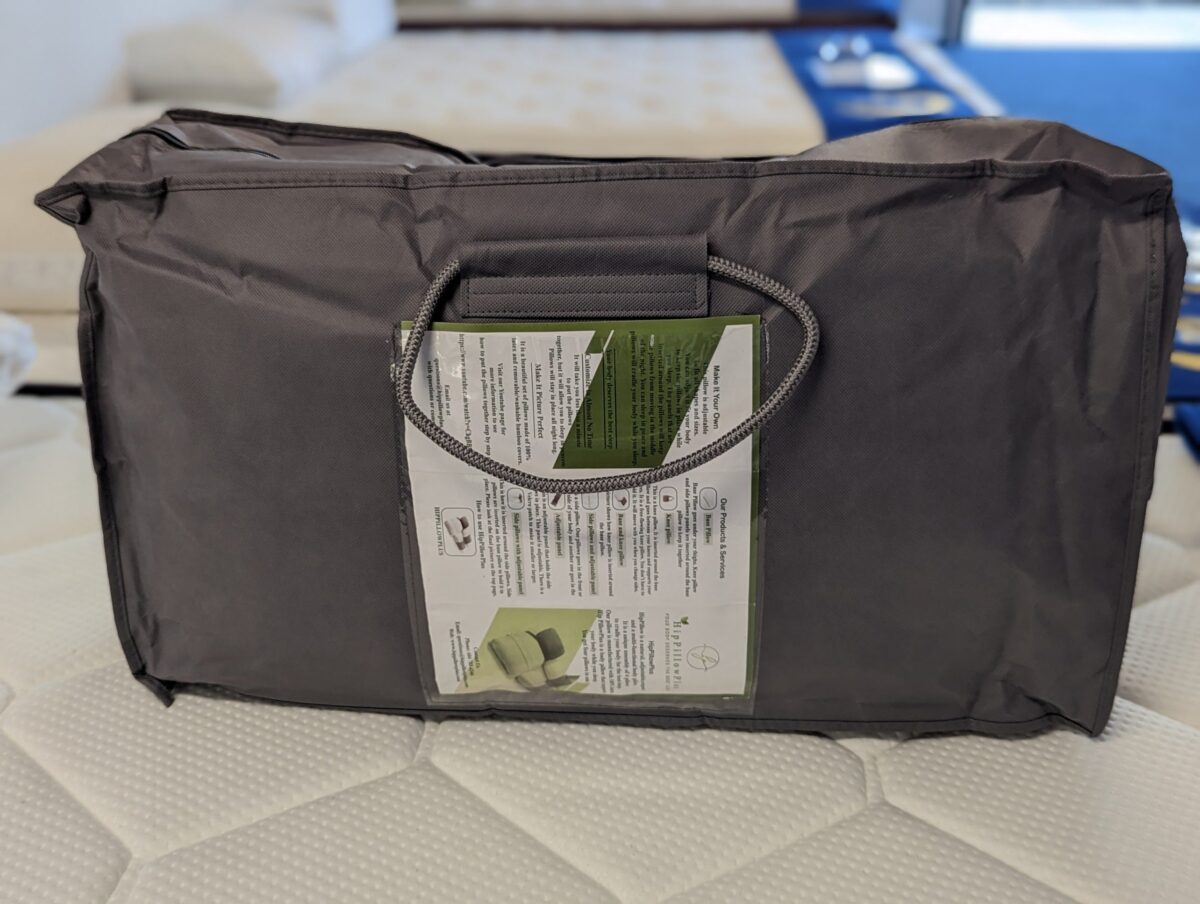
Menopause & Insomnia: Tips for Better Sleep

Can Menopause Affect Your Sleep

Frequently Asked Questions About Menopause & Insomnia: Tips for Better Sleep

Is maintaining a consistent sleep schedule worth it for menopausal insomnia?

Establishing a consistent sleep schedule is a foundational and highly effective strategy for managing insomnia during menopause. By going to bed and waking up at the same time every day, including weekends, you help regulate your body's natural sleep-wake cycle. This consistency can significantly improve sleep quality and reduce the frequency of sleep disturbances experienced during this transitional phase.

Who is consistently experiencing night sweats during menopause best for when it comes to sleep strategies?

Women experiencing night sweats and hot flashes are best served by addressing these symptoms directly to improve their sleep. These hormonal changes are a primary disruptor of sleep quality, causing discomfort and frequent awakenings. While the article notes that we don't carry specific cooling mattresses, optimizing bedroom temperature and selecting breathable bedding materials can offer some relief.

What are the downsides of hormonal fluctuations on sleep during perimenopause?

Hormonal fluctuations during perimenopause, specifically declining estrogen and progesterone, significantly disrupt sleep by increasing anxiety and impacting the sleep-wake cycle. These hormones are integral for relaxation and stress management, and their reduction can lead to heightened emotional distress and difficulty falling or staying asleep. This makes the transitional phase particularly challenging for restful nights.

How does sleep during menopause compare to sleep before perimenopause?

Sleep during menopause is often more challenging and disrupted compared to before perimenopause due to significant hormonal shifts and associated symptoms. The decline in estrogen and progesterone during menopause can lead to increased anxiety, night sweats, and irregular periods. These factors contribute to a greater likelihood of insomnia and overall poorer sleep quality than what was typically experienced in younger years.

Is declining libido during menopause good for sleep?

Declining libido itself does not directly impact sleep; however, it is one of several symptoms of menopause that collectively contribute to poor sleep quality. The array of symptoms, including night sweats, headaches, and trouble concentrating, creates an environment where achieving restful sleep becomes increasingly difficult. Addressing the broader range of menopausal symptoms can indirectly support better sleep.

Where can I try mattresses that might help with sleep issues during menopause in person?

You can try mattresses that may support better sleep during menopause at the Yawnder showroom in Encinitas, CA. While the article primarily focuses on lifestyle changes, experiencing different mattress comforts firsthand can help you find one that minimizes discomfort and promotes rest. Our staff can guide you through options that might be more comfortable if symptoms like general aches or discomfort are contributing to your sleeplessness.

Want to test this in person? Visit our Encinitas showroom or call 858-232-5760.

Ready to buy?
See today’s best sleep deals

Live pricing and current promotions on the mattresses, bases, and sleep tech we recommend.

Shop current deals

Why sleep gets harder around menopause

Sleep complaints rise sharply during the menopause transition, and there is usually more than one cause working at once:

  • Vasomotor symptoms. Hot flashes and night sweats often wake people directly, and the temperature swing afterwards makes it hard to settle again.
  • Hormonal shifts. Changing estrogen and progesterone levels affect both sleep architecture and temperature regulation.
  • Mood changes. Anxiety and low mood are common in this window and both fragment sleep.
  • Age-related sleep disorders. The risk of obstructive sleep apnea and restless legs both rise after menopause, and each is frequently missed because the symptoms get attributed to menopause itself.

Practical steps that help with night sweats

  • Build a cool sleep surface. Breathable percale or linen sheets, a wool or lightweight down-alternative duvet, and a mattress protector that is not a plastic film. Layer bedding so you can shed a layer without getting up fully.
  • Drop the room temperature. A cooler room shortens the recovery time after a flash. A fan moving air across the bed helps more than lowering the thermostat alone.
  • Keep a dry change nearby. Moisture-wicking sleepwear and a spare top within reach means a sweat does not turn into 40 minutes of wakefulness.
  • Watch alcohol and late heavy meals. Both commonly trigger flashes and both worsen second-half-of-night sleep.
  • Keep the wake time fixed. A consistent rise time stabilizes the body clock faster than a consistent bedtime does.

When to get evaluated

Insomnia that persists for months, loud snoring, witnessed pauses in breathing, morning headaches, or heavy daytime sleepiness are reasons to be assessed rather than managed with bedding changes. Cognitive behavioral therapy for insomnia has the strongest evidence base for chronic insomnia, and hormone therapy and non-hormonal medications are discussions to have with a clinician who knows your history. Nothing here is medical advice, and supplements are not a substitute for an evaluation.

Do cooling mattresses stop night sweats?

No. A cooler sleep surface can reduce how disruptive a flash feels and speed recovery, but it does not prevent the underlying vasomotor symptom.

Is waking at 3 a.m. normal in menopause?

Early-morning waking is a very common pattern. If it happens most nights for more than a few weeks, treat it as insomnia worth addressing rather than something to wait out.

Which bedding materials handle sweat best?

Percale cotton, linen and wool manage moisture well. Dense sateen, heavy flannel and vinyl-backed protectors trap it.

See current mattress and bedding deals →

Keto Insomnia: How to Sleep Better on the Keto Diet

Ketosis and Sleep

Frequently Asked Questions About Keto Insomnia: How to Sleep Better on the Keto Diet

What is keto insomnia?

Keto insomnia refers to the sleep disturbances some individuals experience when they begin a ketogenic diet. This can happen because the changes in diet significantly impact the body's natural sleep cycle, often due to altered nutrient intake.

What dietary changes can cause keto insomnia?

The primary dietary change causing keto insomnia is the drastic reduction in carbohydrate intake. Carbohydrates play a role in the production of L-tryptophan, an amino acid vital for creating serotonin, which helps with relaxation and conversion to melatonin for sleep.

Who is most likely to experience keto insomnia?

Individuals who are new to the ketogenic diet and are in the initial phase of transitioning into ketosis are most likely to experience keto insomnia. While not everyone will have sleep issues, it is a frequently reported challenge during this adjustment period.

What is the ketogenic diet and how does it relate to sleep?

The ketogenic diet is a low-carbohydrate, high-fat, moderate-protein eating plan that shifts the body's energy source from glucose to ketones. This metabolic change can disrupt the production of sleep-regulating hormones like serotonin and melatonin, leading to insomnia for some.

Are there other initial side effects of the keto diet besides insomnia?

Yes, beyond insomnia, the initial phase of the ketogenic diet can also bring about side effects such as diarrhea, fatigue, muscle cramps, and a decreased appetite. These symptoms are part of the body adjusting to the new metabolic state of ketosis.

How does reduced carbohydrate intake affect sleep on the keto diet?

Reduced carbohydrate intake on the keto diet diminishes the brain's access to L-tryptophan, an amino acid crucial for producing serotonin, which promotes relaxation and converts to melatonin for sleep. This disruption in the serotonin-melatonin pathway can lead to difficulties sleeping.

Want to test this in person? Visit our Encinitas showroom or call 858-232-5760.

Ready to buy?
See today’s best sleep deals

Live pricing and current promotions on the mattresses, bases, and sleep tech we recommend.

Shop current deals

Why a keto diet can wreck your sleep at first

Plenty of people start a very low-carbohydrate diet and hit a wall of restless nights in the first week or two. It is common enough to be part of the informal "keto flu" cluster, alongside headaches, fatigue and irritability. Several things are usually happening at once:

  • Electrolyte losses. Cutting carbs drops insulin, and lower insulin makes the kidneys excrete more sodium — taking potassium and magnesium along with it. Low magnesium in particular is associated with cramps, restlessness and lighter sleep.
  • Dehydration. Glycogen holds water. Burning through it means losing fluid, which feeds the same electrolyte problem.
  • A stress-hormone shift. During the transition, cortisol and adrenaline can run higher, which is the opposite of what a nervous system winding down for sleep wants.
  • Blood sugar swings. Until fat metabolism takes over efficiently, dips overnight can trigger 2–4 a.m. awakenings with a racing heart or hunger.
  • Caffeine creep and late eating. Fatigue in week one drives extra coffee, and heavy late fat-dense meals sit badly.

What usually fixes it

Replace electrolytes deliberately. Salt your food, and consider magnesium- and potassium-rich choices (leafy greens, avocado, nuts, seeds). If you are thinking about supplements, run it by a clinician — potassium in particular is not something to guess at, especially with kidney issues or blood pressure medication.

Drink more than feels necessary in the first two weeks, front-loaded earlier in the day so you are not up at 3 a.m. for the bathroom.

Don't crash carbs to zero overnight. A gradual taper over a couple of weeks blunts the whole transition, sleep included.

Move the last real meal earlier — roughly three hours before bed — and keep it moderate. Some people sleep better with a small amount of carbohydrate at dinner rather than all of it at breakfast.

Cap caffeine by early afternoon and be honest about alcohol: it shortens sleep latency but fragments the second half of the night.

Keep the basics tight while your body adapts: same wake time daily, morning light, cool dark room, no screens in the last hour. A transition period is exactly when sleep hygiene stops being optional.

The other side of the story

Not everyone sleeps worse. A number of people report the opposite after adaptation — fewer overnight awakenings and steadier energy, likely because blood sugar stops swinging. Research on ketogenic diets and sleep is mixed and mostly small; some studies in specific clinical populations show improvements in sleep quality, others show reduced REM early on with a return toward normal over weeks. Treat your own two- to four-week window as the real experiment and keep a short log of bedtime, awakenings and how you feel at 10 a.m.

When it isn't the diet

See a clinician if insomnia persists past about a month, if you are waking with headaches or gasping, if you snore loudly, or if you have heart, kidney, liver or diabetes-related conditions — ketogenic diets interact with several medications, insulin among them, and dose changes belong with a doctor. Persistent insomnia also responds well to CBT-I regardless of what you eat. This is general information, not medical advice.

FAQ

How long does keto insomnia last?

For most people who report it, days to a couple of weeks — roughly the length of the adaptation period. Beyond a month, look for another cause.

Does magnesium help?

It can if you are low, and low magnesium is common on very low-carb diets. Ask a clinician about form and dose rather than stacking supplements.

Should I eat carbs before bed on keto?

Some people sleep better shifting a small portion of their carb allowance to dinner. It is worth testing for a week before assuming the diet itself is the problem.

Can keto help sleep apnea?

Weight loss of any kind can reduce apnea severity, but apnea needs diagnosis and treatment on its own — a diet is not a substitute for a sleep study or therapy.

Dream Water Sleep Aid Review

Dream Water Review

Frequently Asked Questions About Dream Water Sleep Aid Review

Is Dream Water worth trying as a sleep aid?

Dream Water is worth trying as a natural sleep aid, especially if you are looking for alternatives to traditional sleeping pills. It combines GABA, Melatonin, and 5-HTP to promote relaxation and restful sleep, with a money-back guarantee if you try it for at least two weeks.

Who is Dream Water best for?

Dream Water is best for individuals experiencing sleep difficulties due to lifestyle factors, irregular schedules, or those seeking a natural remedy with minimal side effects. It is also suitable for people looking for an easy-to-consume alternative to herbal teas or warm milk for sleep support.

How does Dream Water compare to over-the-counter sleeping pills?

Dream Water is presented as a natural sleep aid with fewer potential side effects compared to many over-the-counter sleeping pills. It uses GABA, Melatonin, and 5-HTP, which are naturally occurring compounds, as opposed to the synthetic ingredients often found in traditional sleep medications.

What are the downsides of using Dream Water?

The primary downside of Dream Water is that individual results may vary, and it requires consistency for best effects. Users are encouraged to try it for a minimum of two weeks to allow the ingredients to take effect. Always consult a healthcare professional, especially if you have underlying health issues, before starting any new sleep remedy.

Is Dream Water good for someone struggling with anxiety-related sleeplessness?

Yes, Dream Water can be beneficial for anxiety-related sleeplessness due to its inclusion of Gamma-Aminobutyric Acid (GABA). GABA helps relax the central nervous system by inhibiting nerve transmission, which can help alleviate anxiety and promote a sense of calm conducive to sleep. The 5-HTP also encourages relaxation by promoting serotonin and melatonin production.

Where can I try natural sleep remedies in person near San Diego?

While Dream Water is a drink, you can explore other natural sleep support options and discuss holistic approaches to sleep at Yawnder's showroom located in Encinitas, CA. Our experts can help you understand how sleep environment factors, like bedding comfort, contribute to overall sleep quality. We focus on natural solutions to improve your rest.

Want to test this in person? Visit our Encinitas showroom or call 858-232-5760.

Ready to buy?
See today’s best sleep deals

Live pricing and current promotions on the mattresses, bases, and sleep tech we recommend.

Shop current deals
Sleep shots and drinks: how they differ from pills

Liquid sleep aids are the same category as capsules — dietary supplements — delivered in a small sweetened shot. The convenience is real, but the active doses and the evidence behind them are what matter, and both are usually identical to a tablet version.

Check the sugar or sweetener content and the melatonin dose per bottle. Many shots contain more melatonin than most people need, and higher doses raise the chance of morning grogginess without improving results.

What to check on the bottle

Milligrams of each active ingredient per serving, servings per bottle, and whether anything is in a proprietary blend. Also look for third-party testing marks, since supplements are not pre-approved for safety or effectiveness by the FDA.

Watch for added caffeine-adjacent ingredients in 'relax' blends, and for alcohol in some tinctures, which fragments sleep later in the night.

Building the habit that does the work

Anchor your wake time seven days a week, get daylight within an hour of waking, and stop caffeine at least eight hours before bed. These changes outperform any shot in the research literature.

Try one product at a time, note how you feel the next morning, and stop if you wake groggy. Trouble sleeping that lasts more than a few weeks deserves a clinical conversation, not a stronger dose.

Sleep supplements and sleep aids are not medical treatments. Nothing here is medical advice — talk to a clinician before starting any supplement, especially if you are pregnant, breastfeeding, taking medication, or you suspect a sleep disorder such as sleep apnea or chronic insomnia.

FAQs

Is a liquid faster than a capsule?

Liquids may absorb somewhat faster, though the practical difference for sleep onset is small.

Can I take one every night?

Long-term nightly use has not been well studied for most ingredients; discuss ongoing use with a clinician.

Do they cause dependence?

Melatonin is not considered addictive, but relying on any aid can mask an underlying problem.

Deja Vu: Understanding Its Connection to Dreams

Deja vu and dreaming Is there a connection
Sleep remains a mystery to even to the scientific community. We have been able to build spaceships and send a man to the moon, but when it comes to sleep, much of it is still a mystery. Why? Because sleep is a state of unconsciousness and we don’t yet have the ability to wake up and recount what happened while we were sleeping. Science has been able to find out a lot of things about the mechanism behind sleep over the years, but there is a lot more that needs to be understood about this nightly phenomenon. The need for sleep has also been quite a mystery. Why exactly do we need sleep? Today it is believed that we need sleep because the brain needs to recharge and store energy for the next day. But sleep came about not because of rest but because of safety. The ancient man needed to be safe from wild animals after the sun went down. With nothing else to do, they chose to go to their caves and sleep, even if they did not feel tired. A few centuries ago, when electricity had not been invented, sleep was chosen because it helped save oil and gas. Besides, there was nothing else to do after the sun went down. The duration of sleep has also changed over the years. Man did not always need 8 hours of sleep. The early man slept for as long as 12 hours with a break in between. Today, science has found that man needs 7 to 8 hours of sleep because that’s the time to brain takes to recharge for the next day completely. However, some people need more or less than that amount to function normally. Although science has been successful in interpreting much of the sleep mechanism, there is one aspect that still needs a lot more research: dreaming. And if you have ever experienced Deja Vu – the feeling of familiarity with something that’s not supposed to be familiar – it may have something to do with your dreams.

Why Do We Dream?

Everyone dreams, including babies and animals (if your dog howls in his sleep, he’s probably dreaming of confronting other members of his species). But even though sleep is such a common phenomenon, no one fully understands the reason behind them. The father of psychoanalysis, Sigmund Freud, had written a famous book interpreting dreams, but there’s still so much that needs to be answered. Some believe that dreams express hidden feelings and desires, while others believe that dreams can also predict the future. But despite the several advancements made by science, when it comes to decoding the mechanism of dreams , it is still a long way off. Dreams occur in the final stage of sleep, also called the REM stage. In this stage, the brain slowly begins to become active, but the body is still inactive. This is unlike what happens in previous stages when the brain is inactive, and the body works to heal and recharge. The REM stage sleep is important for cognitive functioning and memory forming. In this stage, the brain consolidates thoughts and memories, boosts productivity and concentration, and becomes alert. When REM sleep isn’t sufficient, cognitive functioning can be affected. Dreams occur in the REM stage and not in other stages. That’s because the brain becomes active in this stage, right before waking up. Besides that, the heartbeats rise, and the body temperature also starts to become normal. It is believed by scientists that a conscious part of the sleeping brain is responsible for dreams. This conscious part of the brain has cognitive, sensory and emotional occurrences, leading to dreams. Dreams are usually life-like, complete with people objects themes voices and color. These things can often have a close resemblance to waking life. But dreams can also be about unfamiliar things. Some dreams can seem real because they are very vivid. Such dreams are usually remembered for a long time. Nightmares are also dreams, but only frightening or traumatic.

Deja Vu and Dreaming

confusedWe have all had the feeling of Deja Vu at some point. Deja Vu (French for “already seen”) is a sense of familiarity about something unfamiliar. For instance, you go to a place for the first time but feel like you have already been there before because it feels familiar. Why does that happen? Even science doesn’t have the answer to that. However, there is a possibility that the sense of Deja Vu has something to do with dreaming. A dream plays out just like real life, full of people and objects, colors, sounds, and voices. Sometimes dreams are about things, places or people we are unfamiliar with. But dreams can also be about things and events we are familiar with. When we dream of familiar people, places or events, they are actually bits and pieces of memories that are stored in our subconscious. Deja Vu is different from a vision. A vision is when something seems familiar because you remember having seen or experienced it before. But in Deja Vu, you have no idea why something seems familiar because you don’t remember seeing or experiencing it before. The dreams that we don’t remember might be the ones that appear as Deja Vu. However, there hasn’t yet been any fundamental proof to establish why we experience Deja Vu.

Is Deja Vu Precognitive?

Deja Vu is often assumed to be precognitive, in that they may be capable of predicting the future. However, there is no evidence to prove that dreams or feelings of Deja Vu are precognitive. If anything, then it’s purely coincidence. But dreams are called precognitive if you experience the same thing later in real life, even though you may not recall it. There is no evidence yet to prove that dreams can predict significant future events, but when it comes to déjà Vu, it could be something that our dreams tell us from beforehand.

New Theories About DejaVu

There are several new theories about DejaVu that have emerged in recent years:
  1. Dual processing theory: According to this theory, deja vu occurs when there is a momentary delay between the processing of information in the two hemispheres of the brain. This delay causes a feeling of familiarity, as though the information has been experienced before.
  2. Memory processing theory: This theory suggests that deja vu occurs when the brain has difficulty distinguishing between past and present experiences, leading to a feeling of familiarity.
  3. Hologram theory: Some researchers have proposed that deja vu is a result of the brain processing information in a way that creates a hologram-like image, which can create a sense of familiarity.
  4. Neurological disorder theory: Some studies have suggested that people with certain neurological disorders, such as epilepsy, are more likely to experience deja vu. This has led some researchers to speculate that deja vu may be related to abnormal brain activity in these individuals.
  5. Multiverse theory: This theory suggests that deja vu may be a result of experiencing parallel universes, where a similar event has occurred in another universe, leading to a feeling of familiarity in the current universe.
It is important to note that while these theories are intriguing, they are still being researched and are not yet widely accepted in the scientific community. Deja vu remains a mysterious and fascinating phenomenon that continues to be studied and explored.

Deja vu in Popular Culture

Déjà vu is a phenomenon that has captured the imagination of many people and has been featured in various forms of popular culture, including movies, TV shows, and music. Here are a few examples:
  1. The Matrix (1999): In this science fiction movie, the protagonist, Neo, experiences a feeling of déjà vu when he sees a black cat walk by twice in the same way. This leads him to realize that he is living in a simulated reality.
  2. The X-Files (TV series, 1993-2002): In this popular TV show, the main characters encounter many strange and paranormal phenomena, including episodes that explore the concept of déjà vu. For example, in the episode “Monday,” a character experiences a time loop that repeats itself over and over, creating a feeling of déjà vu.
  3. Inception (2010): In this movie, the characters use a device to enter the dreams of others and manipulate their subconscious. One of the characters describes the feeling of déjà vu as a sign that the dreamer is starting to become aware of the manipulation.
  4. Lost (TV series, 2004-2010): This popular TV show features many mysterious and unexplained phenomena, including episodes that explore the concept of déjà vu. For example, in the episode “Flashes Before Your Eyes,” the main character, Desmond, experiences vivid flashbacks that seem to be a form of déjà vu.
  5. Beyoncé – Deja Vu (2006): This popular song by Beyoncé uses the concept of déjà vu as a metaphor for a strong sense of attraction and familiarity between two people.

What is Jamais Vu?

Jamais vu is a phenomenon that is characterized by a feeling of unfamiliarity or unfamiliarity with a familiar situation, person, or place. In other words, it is the opposite of déjà vu. Instead of feeling like you have experienced something before, you feel like you are encountering something completely new, even though it is something you should be familiar with. Jamais vu is often described as a feeling of disorientation, confusion, or detachment. For example, a person may suddenly find themselves feeling like their own home is unfamiliar to them, or they may not recognize a close friend or family member. Jamais vu is not as well studied as deja vu, but it is thought to be related to disruptions in the brain’s processing of information. Some research suggests that it may be associated with certain neurological conditions or medications that affect the brain. While it is not clear what causes jamais vu, it is generally considered to be a relatively rare experience. It can be unsettling or distressing for those who experience it, but it is usually a temporary and harmless phenomenon.

Other Forms of DejaVu

Presque Vu

Presque vu is a phenomenon that refers to the feeling of being on the verge of remembering or discovering something, but not quite being able to do so. It can also be described as the feeling of almost achieving an insight or a solution to a problem, but not quite being able to grasp it. The term “presque vu” comes from the French language and translates to “almost seen.” It is similar to the feeling of tip-of-the-tongue phenomenon, where you are unable to recall a word or a name that you know you know. Presque vu is a common experience that most people have had at some point in their lives. It can be frustrating and can lead to a sense of mental block or difficulty in problem-solving. However, it is generally considered to be a normal variation in cognitive function and is not a cause for concern. Research suggests that presque vu may be related to the brain’s process of retrieving memories. When we try to remember something, the brain goes through a series of steps, including encoding, storage, and retrieval. Presque vu may occur when the brain is able to partially retrieve a memory but is not able to fully access it.

L’esprit de l’escalier

L’esprit de l’escalier is a French term that translates to “staircase wit.” It refers to the phenomenon of thinking of a clever or witty remark or comeback too late, after the opportunity to use it has passed. The term comes from the idea of someone leaving a social gathering or a conversation and, on the way down the stairs, suddenly coming up with the perfect response to something that was said earlier. This experience is also sometimes called “afterwit” or “afterthought.” It is a common phenomenon that most people have experienced at some point in their lives. It can be frustrating or embarrassing to think of the perfect response too late, especially if the conversation or situation was important or high-stakes. Research suggests that l’esprit de l’escalier may be related to the brain’s process of forming and retrieving memories. When we are in a conversation or social situation, the brain is constantly processing and storing information, including words, gestures, and facial expressions. L’esprit de l’escalier may occur when the brain is not able to retrieve a memory quickly enough to use it in the moment, but is able to retrieve it later, after the conversation has ended.

Tip of the Tongue

Tip of the tongue (TOT) is a phenomenon that refers to the feeling of being unable to recall a specific word or name that you know you know. It is a common experience that most people have had at some point in their lives. During a TOT experience, you may feel like the word is just out of reach or on the tip of your tongue, but you are unable to recall it. You may be able to remember some details about the word, such as the first letter or the number of syllables, but not the word itself. Research suggests that TOT experiences may be related to the brain’s process of retrieving words from memory. When we try to remember a word, the brain goes through a series of steps, including searching through the memory network and accessing the word’s phonological representation. A TOT experience may occur when the brain is not able to access the full phonological representation of a word, but is able to access some partial information about it. While TOT experiences can be frustrating, they are generally considered to be a normal variation in cognitive function and are not a cause for concern. Strategies for overcoming TOT experiences include taking a break from trying to remember the word, engaging in a distracting task, or using cues or hints to help trigger the memory.

Presque Entendu

Presque entendu is a French term that translates to “almost heard.” It is a phenomenon that refers to the feeling of almost hearing a sound or a piece of music, but not quite. It can also be described as the feeling of almost remembering a tune or melody, but not quite being able to recall it. Presque entendu is a common experience that most people have had at some point in their lives. It can be frustrating or distracting to feel like you are almost hearing something but not quite being able to hear it fully. Research suggests that presque entendu may be related to the brain’s process of retrieving memories. When we try to remember a sound or a piece of music, the brain goes through a series of steps, including searching through the memory network and accessing the auditory representation of the sound. Presque entendu may occur when the brain is able to partially retrieve the auditory representation, but is not able to fully access it. While presque entendu experiences can be frustrating, they are generally considered to be a normal variation in cognitive function and are not a cause for concern. Strategies for overcoming presque entendu experiences include taking a break from trying to remember the sound or music, engaging in a distracting task, or using cues or hints to help trigger the memory.

Capgras delusion

Capgras delusion is a rare psychiatric disorder in which a person holds the belief that a close family member, friend, or pet has been replaced by an imposter or a double. The person experiencing Capgras delusion may believe that the imposter is identical in appearance to the real person or animal, but is somehow “off” or different in some way. Capgras delusion is named after Joseph Capgras, a French psychiatrist who first described the condition in 1923. It is thought to be related to a disruption in the brain’s ability to process information about familiar faces and objects, leading to a sense of confusion or detachment. Capgras delusion is typically associated with underlying psychiatric or neurological conditions, such as schizophrenia, dementia, or traumatic brain injury. It is usually treated with a combination of medications and psychotherapy, although treatment can be challenging and outcomes can vary. While Capgras delusion is a rare condition, it can be distressing and disruptive for those who experience it, as well as for their loved ones.

Frequently Asked Questions About Deja Vu: Understanding Its Connection to Dreams

What is the primary scientific theory behind why we need sleep?

Current scientific belief suggests sleep allows our brain to recharge and rejuvenate for the next day, though its origins likely stem from a survival tactic for early humans.

Is everyone able to experience dreams, or do some people not dream?

Dreaming is a universal phenomenon; everyone experiences dreams, including infants and even pets.

How does REM sleep contribute to our daily cognitive function?

REM sleep is crucial for cognitive performance and memory consolidation, enhancing productivity and focus.

What is the connection between déjà vu and our dreams?

Many theories suggest déjà vu may be linked to dreams, as dreams often recreate familiar scenes, leading to a sense of recognition when encountering new-but-familiar experiences in waking life.

What is the optimal duration of sleep according to modern science?

Modern science advocates for 7 to 8 hours of sleep as optimal for full brain recharge, though individual needs can vary.

Where in San Diego can I learn more about sleep and mattress options?

You can visit the Yawnder showroom in Encinitas, CA, to explore various mattress options and discuss sleep ergonomics with our experts.

Want to test this in person? Visit our Encinitas showroom or call 858-232-5760.

Ready to buy?
See today’s best sleep deals

Live pricing and current promotions on the mattresses, bases, and sleep tech we recommend.

Shop current deals

How to Overcome Sleep Inertia & Morning Grogginess

Sleep Inertia The Morning Grogginess and How to Overcome It

What sleep inertia is

Sleep inertia is the groggy, slow, mildly incompetent state between waking and functioning. It is a normal part of waking up, not a disorder. During it, reaction time, short-term memory, arithmetic and decision-making all measurably worsen, and subjectively you feel as though you are working through fog.

The reason it exists is that waking is not a switch. Brain activity does not return uniformly — regions that support alertness and higher-level thinking take longer to come fully online than the systems that get your eyes open. Until they catch up, you are awake but not yet capable.

How long it lasts

For most people, the worst of it clears within 15 to 30 minutes and full performance returns inside an hour. It runs longer and hits harder when:

  • you are woken out of deep, slow-wave sleep rather than light sleep;
  • you are already short on sleep, so pressure for sleep is high;
  • you wake during the low point of your body clock, in the small hours;
  • you took a long nap that reached deep sleep rather than a short one.

Alcohol, sedating medication and irregular schedules all lengthen it too.

Why hitting snooze makes it worse

Snoozing gives you fragments of light, low-quality sleep and repeatedly restarts the wake-up process. Each cycle re-triggers inertia without giving you meaningful rest. If you are setting three alarms and using all of them, the useful change is to set one alarm for the time you actually intend to get up.

What reliably shortens it

  1. Bright light, immediately. Daylight is best; open the curtains or step outside. Light is the strongest signal your body clock responds to, and it advances alertness faster than anything else you can do for free.
  2. Move. A few minutes of walking or stretching raises heart rate and core temperature, both of which track with alertness.
  3. Water and something to eat. Overnight fluid loss is real and mild dehydration is enough to keep you foggy.
  4. Caffeine, then wait. It takes roughly 20 to 30 minutes to be useful, so drink it and do something undemanding while it works.
  5. Do not schedule anything important for the first fifteen minutes. If you must make decisions early, put them after the fog rather than into it.

Napping without paying for it

The practical rule is to keep naps to about 20 minutes so you stay in lighter sleep and wake without heavy inertia. Naps of 60 to 90 minutes reach deep sleep and produce a much rougher wake-up, though a full 90-minute cycle can leave you clearer than a 45-minute nap that is interrupted mid-cycle. Nap early in the afternoon, not in the evening, or you borrow from the night.

Regular schedules do most of the work

The single biggest lever is consistency. Waking at roughly the same time every day, including weekends, lets your body start the wake-up process before the alarm rather than after it. Getting enough sleep in the first place matters just as much — chronic short sleep is the most common reason mornings feel brutal, and no morning routine fixes it.

When to take it seriously

Inertia that lasts hours every day, extreme confusion on waking, or daytime sleepiness severe enough to affect driving or work are worth discussing with a doctor. Persistent grogginess despite adequate time in bed can point to a sleep disorder such as sleep apnea, and that is a medical question, not a bedding one.

Frequently Asked Questions About How to Overcome Sleep Inertia & Morning Grogginess

What is sleep inertia and is it normal to experience it?

Sleep inertia is the disorienting feeling of grogginess and sluggishness immediately after waking, and it is a common phenomenon many people experience. It's the transition phase where parts of your brain are still in sleep mode, sometimes making you feel impaired similar to being intoxicated. Even after a good night's sleep, you can still feel this disorientation, especially if you wake from a deep sleep stage.

How does sleep inertia compare to just being tired?

Sleep inertia is a specific state of disorientation right after waking, distinct from general tiredness or fatigue. Research suggests that the cognitive impairment during sleep inertia can be comparable to having a blood alcohol content of 0.05%, making simple tasks challenging. This is different from chronic fatigue, which is an ongoing feeling of tiredness.

What are the downsides of experiencing frequent sleep inertia?

Frequent sleep inertia can significantly impair cognitive function and reaction times, potentially making activities like driving dangerous. When the prefrontal cortex, responsible for decision-making, takes longer to activate, you can feel disoriented and struggle with critical thinking. This impairment is why it's recommended to take steps to mitigate its effects each morning.

Who is most affected by sleep inertia?

Anyone can experience sleep inertia, but it can be exacerbated by irregular sleep patterns, oversleeping, or insufficient sleep. Waking during the deep sleep stages (Stage 3 and 4) often leads to a more profound experience of grogginess and disorientation. Yawnder understands the importance of consistent sleep schedules to reduce morning sluggishness.

How can I reduce my morning grogginess and overcome sleep inertia?

Reducing morning grogginess can be achieved by understanding your sleep cycles and implementing strategies to mitigate sleep inertia. Waking up during lighter sleep stages generally results in less disorientation, and recognizing your personal sleep patterns is key. Yawnder emphasizes that establishing a regular sleep routine helps in naturally aligning your body's waking process.

Where can I learn more about sleep cycles and improving my sleep for less grogginess?

You can learn more about sleep cycles and strategies to improve your sleep by visiting resources that discuss the stages of sleep and how to optimize them. Understanding how non-REM and REM sleep phases impact your morning alertness can help you adjust your routines. While we focus on mattresses, Yawnder's San Diego showroom staff can discuss general sleep wellness that contributes to better mornings, even though overcoming sleep inertia is primarily a biological process.

Want to test this in person? Visit our Encinitas showroom or call 858-232-5760.

Ready to buy?
See today’s best sleep deals

Live pricing and current promotions on the mattresses, bases, and sleep tech we recommend.

Shop current deals
Sleep Habits: How They’ve Evolved Through History

The Evolution of Sleep How Sleep Has Changed Through History

Frequently Asked Questions About Sleep Habits: How They’ve Evolved Through History

How have sleep patterns changed throughout history?

Throughout history, sleep patterns have shifted from early bedtimes dictated by the setting sun to later schedules influenced by artificial light sources. Before electricity, especially in the 16th and 17th centuries, people often retired after sunset due to limited light, making sleep an energy-saving solution. The advent of electric light allowed people to engage in activities later into the night, significantly altering sleep habits and dinner times.

What were the earliest forms of beds, and how have they evolved?

Early humans likely slept on simple beds of grass, often curled in a fetal position, which evolved into more structured sleeping arrangements over centuries. Ancient civilizations like the Egyptians and Romans had designated sleeping areas, with the Egyptians equating sleep to death and Romans preferring compact bedrooms. By the Middle Ages, families shared large beds for warmth, and decorative bed frames began to emerge, particularly in China, marking a move toward more sophisticated accommodations.

When did modern mattress innovations like metal springs and memory foam become available?

Metal bed springs were introduced in the 19th century, with waterbeds and Murphy beds gaining popularity by the late 1800s. Memory foam became more affordable and revolutionized sleep toward the end of the 20th century. Today, companies like Yawnder in San Diego offer a wide range of advanced mattress technologies for modern sleep needs.

What impact has technology had on our sleep habits?

Technology has both enhanced and detrimentally affected our sleep habits by providing new products while also contributing to sleep deprivation. While products designed to improve sleep have become a multi-billion-dollar industry, devices like smartphones and laptops frequently disrupt natural sleep cycles. This creates a paradox where advancements aimed at better sleep can also be significant obstacles.

How did ancient civilizations view and practice sleep?

Ancient civilizations had diverse views and practices regarding sleep; for instance, the Egyptians revered sleep, associating it with death. The Romans generally opted for compact bedrooms and simpler beds, contrasting with earlier humans who used basic beds of grass. Despite varying customs, the fundamental need for rest remained constant across all ancient societies.

Where can I learn more about modern sleep solutions and mattress technology?

You can explore modern sleep solutions and mattress technology at specialized retailers. For example, Yawnder has a showroom in Encinitas, CA, where you can experience the latest advancements in sleep products. This allows you to compare and contrast various mattress types and technologies in person.

Want to test this in person? Visit our Encinitas showroom or call 858-232-5760.

Ready to buy?
See today’s best sleep deals

Live pricing and current promotions on the mattresses, bases, and sleep tech we recommend.

Shop current deals

Sleep was not always one long block

Historians of everyday life have documented that, in parts of pre-industrial Europe, nighttime rest was commonly described in two segments with a period of wakefulness between them. References to a "first sleep" and a "second sleep" appear in letters, court records and literature of the period. How universal the pattern was remains debated, but it is a useful reminder that the eight-consecutive-hours expectation is a cultural norm, not a biological constant.

What changed the schedule

  • Artificial light. Cheap lighting pushed bedtimes later and compressed the night into a single block.
  • Industrial work hours. Fixed shifts made a consolidated night necessary and made segmented rest impractical.
  • Clock time. Scheduling life by the clock rather than by daylight decoupled sleep from sunset and sunrise.
  • Screens and shift work. Both push light exposure into the evening and delay the internal clock.

Practices that persist across cultures

Afternoon rest remains normal in many parts of the world, communal and shared sleeping arrangements are common, and sleep surfaces range from firm floor mats to deep pillow tops depending on local convention. Bedding preference is largely learned, which is one reason firmness advice is so subjective — people adapt to what they grew up on.

What this means for your own sleep

Waking once in the night and returning to sleep within a short stretch is common and not evidence of a disorder. The practical modern habits that hold up are unremarkable: a consistent wake time, bright light early in the day, dim light in the evening, and a cool, dark, quiet bedroom. If you are regularly awake for long stretches, sleepy during the day, or snoring heavily, that is worth an evaluation rather than a history lesson.

Was biphasic sleep the historical norm everywhere?

The evidence is strongest for parts of pre-industrial Europe. Historians disagree about how widespread it was, so treat it as documented in some contexts rather than universal.

Should I try segmented sleep?

There is no good evidence it improves outcomes for people with ordinary schedules, and it conflicts with most work and school hours.

Is waking up at night a problem?

Brief awakenings are normal. Long awakenings most nights, plus daytime impairment, are what warrant attention.

Giesswein Slippers Review (2026): Comfort & Durability

Giesswein Slippers Review

Giesswein is an Austrian footwear company that makes its products sustainable using primarily renewable materials such as wool and latex. I received a free pair of the Abend (indoor) slippers to review. The slippers currently retail for $90 and can be purchased through their website. I have been wearing these slippers for a couple months before writing this review and although these are primarily meant for indoor use, I have taken them outside many times to get the mail or drop off kids at the bus and the work great. Read this Giesswein Slippers review for more insights.

Overview of Giesswein

The video below is my impression of the slippers after wearing them for over 2 months.


Giesswein isn’t an overnight company, they grew slowly and perfected their craft over time. Here’s a brief history of the company according to the website:

In 1954, Walter and Elisabeth launched Giesswein to share their passion for wool with the world. Three generations later, the Giesswein family hasn’t lost sight of the Austrian heritage that informs and inspires each unique design to this day. All Giesswein wool is crafted in the scenic Alpine village of Brixlegg overlooking the Inn River. No matter what you select from Giesswein today, know that it was made with the same dedication to craftsmanship that Walter and Elisabeth knit in to the very first garments they made only for family and friends.

All of their footwear has a timeless look so investing a little more is definitely worth it as they style won’t age.

Ordering Your Giesswein Slippers

There are a few ways to order your slippers. You can order direct through their website. There is a shipping charge that will be calculated at checkout. Or, you can find them in a store. I was able to find them at some retail stores in Minnesota which is a good option if you want to try them out in person. They discourage purchasing from Amazon because they cannot guarantee the authenticity of the product sold from third-party sellers.

My slippers arrived in about a week after my order was placed. They arrived in a box like this:

Giesswein SlippersConstruction Details and Highlights of the Giesswein Abend

Below are the construction details of the Abend slipper according to the website.

  • high-level arch support (metatarsal and medial)
  • removable natural rubber/natural jute/recycled carbon footbed
  • moisture-wicking, breathable, 100% natural boiled wool upper naturally regulates body temperature
  • never itchy, scratchy, or sweaty
  • natural latex-dipped outsole with vegetable dyes is non-marking, flexible, and water-resistant
  • patented outsole uses no synthetic chemicals or glues
  • accommodates third-party orthotics
  • seam-free interior hugs the foot with no irritation or chafing
  • made in Austria

My Giesswein Slipper Findings

These slippers felt broken in right out of the box. Here’s a picture of them upon opening the box.

slippers in box

What makes these slippers “worth it” is their construction. They are made with boiled wool which is a process the wool goes through to make it softer, not scratchy and lightweight. Wool is a naturally breathable material so you get superior temperature regulation.

giesswein logo

The other main feature is the sole of the slipper which is dipped in latex. This creates an excellent seal without the need for glues. The latex provides extra cushioning, grip and waterproofing so if you want to take the slippers for a quick mail run, no worries.

giesswein sole

My Giesswein Recommendation

Aside from this model they make other slippers that are are of the same high quality and craftsmanship. I have been occasionally been using my cheaper slippers at times to compare against these and what is most noticeable is the arch support that these slippers provide. My feet get less fatigued at the end of the day. And now that we are starting off January my feet are also less cold! At $90 they certainly aren’t cheap but they are made to last and I expect to have these for years to come.  Learn more about Giesswein

Frequently Asked Questions About Giesswein Slippers Review (2026): Comfort & Durability

Is buying Giesswein slippers directly from Amazon a good idea?

Giesswein advises against purchasing from Amazon due to concerns about authenticity from third-party sellers. It's recommended to buy directly from their website or select retail locations in Minnesota to ensure you receive a genuine product.

What unique comfort features do Giesswein Abend slippers offer?

Giesswein Abend slippers feature high-level arch support, a seamless interior, and a moisture-wicking boiled wool upper for exceptional comfort. The natural boiled wool keeps feet comfortable in various temperatures, as noted in our comprehensive review after months of wear.

Are Giesswein Abend slippers suitable for people who use custom orthotics?

Yes, the Giesswein Abend slippers are designed to accommodate third-party orthotics thanks to their removable footbed. This feature adds to their versatility and ensures a personalized fit for users with specific support needs.

What materials are used in the Giesswein Abend slippers, highlighting sustainability?

The Giesswein Abend slippers are crafted from primarily renewable and natural materials, including 100% natural boiled wool for the upper and a natural latex-dipped outsole. The removable footbed is also made from natural rubber, jute, and recycled carbon, demonstrating Giesswein's commitment to sustainability.

Where can I physically try on Giesswein slippers before buying them?

While our San Diego showroom at Yawnder does not carry Giesswein slippers, select retail locations in Minnesota carry the brand for those who prefer to try them on in person. Otherwise, ordering through the Giesswein website is a convenient option, as I found the ordering process to be seamless during my personal experience.

How does the Giesswein Abend slipper perform in terms of foot support?

The Giesswein Abend slipper provides high-level arch support, specifically designed for metatarsal and medial arch comfort. After wearing them for several months, I found this feature contributed significantly to overall comfort during prolonged wear.

Want to test this in person? Visit our Encinitas showroom or call 858-232-5760.

Sleep Texting: Must-Have Tips to Avoid Embarrassing Moments

sleep texting

What is Sleep Texting?

Sleep texting is exactly what it sounds like. It’s is a phenomenon when people send or reply to text messages – you guessed it, in their sleep. Sleep texting has arisen and has become increasingly more common in the last decade, with the advance and the increasing prevalence of smartphones in our lives. If you’ve ever woken up to find a text you sent to a friend you have no memory of writing, you know what it is.

How is it possible to text someone in your sleep? If this scenario seems wild to you, that’s a sign that texting is just not an integral part of your life as it is for many people, and your relationship with your phone is not as automatic.

Sleep texting is not that different from other parasomnias – a kind of sleep disorders when a person performs movements and behaviours during their sleep that they might perform automatically during the day but that shouldn’t happen during sleep. The more known parasomnias include sleepwalking, sleep talking, sleep eating, groaning, night terrors,  teeth grinding, jaw clenching – and occasionally more dangerous ones like sleep driving. All these have been around for a while, and as technology adds new dimensions and new regular behaviours to our lives, things like sleep texting (and even sleep shopping) are becoming common because texting and shopping online are just regular things we do during the day.

The reason that parasomnias in general happen is that while you might be sleeping, parts of your brain may still be awake, so you’re engaging in the same behaviors you engage while you’re awake.

Sleep Texting and Smartphone Use

phone addcitionUsing technology in your sleep is not entirely new either. What seems to be the first documented case of sleep emailing took place nearly 10 years ago and was reported in a Journal of Sleep Medicine. In that case, the patient reported sleep emailing after taking an increased dose of sleep medication.

But in a matter of 10 years, sleep texting has turned from sensational to a pretty common phenomenon. Researchers from the Villanova University recently conducted a study surveying sleeping habits of college students. In an article published in the Journal of American College Health, they report that as much as 25% of college students surveyed report sleep texting, and the majority of them (72%) do not remember doing so afterwards.

The rise of sleep texting is of course not surprising given the prevalence of phones in our lives. According to Deloitte’s 2018 Global Mobile Consumer Survey, 85% of Americans now own a smartphone, and they check it on average 52 times a day (that’s up from 47 times the year before). In addition, 60% of the respondents aged 18-to-34-year-olds admitted they’re hooked on their devices.

For instance, one of the respondents in the Villanova college students study commented that she resorted to wearing mittens to bed to prevent sleep texting, because “moving the phone from being in my bed to next to the bed is not an option, I have to keep my phone with me.”

Of course with many of us attached to our phones for the large part of the day and responding to each notification as soon as it arrives, it is not surprising that our phones have become an extension of ourselves like our arms and legs. As a consequence, our reaction to the sound of a text notification on our phone has become automatic: we grab the phone and immediately begin to text back.

As a matter of fact, people who sleep text usually do so in response to the sound of a text notification on their phone. It’s quite rare for people to actually initiate a text conversation in their sleep although it does happen too.

Also, as with sleep talking, most of the time the texts people send in their sleep are a total gibberish, but occasionally they can have logical conversations in their sleep.

Of course, unlike sleep talking where you’re embarrassing yourself in front of only one or at most a couple of people who know you well, sleep texting is an opportunity to embarrass yourself in front of a much wider audience. Just imagine what would happen if sleep texting turned into sleep tweeting!

Causes of Sleep Texting

While the immediate danger of sleep texting is embarrassing yourself in front of your friends, relatives and co-workers, it is possibly a sign of a bigger problem, your inability to relax and get into a deep sleep.

Stress, poor sleep quality and excess daytime activity are all factors that affect your sleep quality and may all be possible causes of sleep texting. The Villanova sleep-texting study specifically linked students’ sleep-texting to the quality of sleep and the level of exhaustion and stress the students had during the day. It makes sense, of course. If you’re stressed, or overly active during the day, and don’t take time to unwind, you’re less likely to be able to relax and fall into deep sleep come nighttime.

Sleep deprivation is another factor that makes you more likely to sleep text. If you’re already sleep deprived, it might be harder for you to fall into deep sleep, and you’re more likely to respond to outside auditory stimuli like a phone notification.

Parasomnias may also be hereditary, even if it’s not necessarily sleep texting. So if your mom used to sleepwalk, you’re more likely to exhibit parasomnias, and if you’re used to regularly text during the day and have your smartphone nearby at night, this might manifest as sleep texting.

Other factors that may contribute to parasomnias in general and sleep texting in particulal are the use of certain medications, alcohol and sleep breathing disorders, such as obstructive sleep apnea.

How to Prevent Sleep Texting

nightstandLuckily, sleep texting is a highly preventable disorder.

The first and most logical thing to do to ensure it does not happen is to not keep your phone in your bedroom, or to turn it off entirely. But that might not be possible for everybody. For instance you might have to keep your phone on and close to you because of a work commitment or a family circumstance. Or maybe you’re legitimately using an app that helps you fall asleep or tracks your sleep, or listening to a guided sleep meditation on your phone. In that case the solution is to simply put your phone somewhere you can’t reach it easily. There is no guarantee of course that you won’t get up during your sleep and walk to get your phone, but it will make it a lot less harder and therefore less likely for you to do so.

Even better, put in a Do Not Disturb mode. This will allow only the most important phone calls to come in while silencing all other notifications.

Remember that the effects of sleep deprivation are a lot more far reaching than a few embarrassing text messages. Mood swings, poor concentration and longer term effects such as hormonal changes, compromised immunity and poor memory are some of the longer term effects of not getting enough sleep. Chronic sleep deprivation also makes you more susceptible to health issues such as high blood pressure, risk of heart disease, depression.

Make sure to get enough exercise, eat right and make sure you have the right environment in your bedroom, the right mattress for your body, the right pillow and other things to help you sleep soundly.

Avoiding screen time before bed will also make a significant difference. Exposure to blue light from screens at night time suppresses the production of melatonin, a hormone produced by the pineal gland that regulates our sleep-wake cycles. Melatonin rises when it’s darker outside signaling our body that it’s time to relax. When melatonin production is suppressed by exposure to blue light our brains and bodies think they should be awake and alert.

Finally, improve your screen habits during the day. Are you sure you really need to respond to every beep and ring of your phone as soon as the notification arrives? If you get into the habit of not responding to every text immediately, it is less likely to become an impulsive behaviour that you will engage in even when you’re sleeping.

While sleep-texting in itself is not necessarily a sign of phone addiction (especially since it’s not always clear what we mean by phone addiction) it might be a sign to some people that they might want to cut back on their phone use, take back control and make it less of an impulsive behaviour. If you’re truly serious about being more conscious about your phone use and improving your overall health and wellbeing, turn your phone grayscale, delete or limit particularly addictive apps from your phone, and follow other excellent tips from Tristan Harris, the founder of the Time Well Spent movement, to take control of your relationship with your phone.

By claiming back deep sleep, you will be doing your body and brain a favor that reaches far beyond avoiding a couple of embarrassing text messages.

Frequently Asked Questions About Sleep Texting: Must-Have Tips to Avoid Embarrassing Moments

What are the downsides of sleep texting?

The primary downside of sleep texting is the potential for embarrassing exchanges, but it can also indicate underlying issues with sleep health. Factors like stress, poor sleep quality, and excessive daytime activity contribute to this parasomnia, and it might be a symptom of more significant sleep deprivation or even a genetic predisposition to sleep disorders. It's often a sign that your body isn't getting the restorative rest it needs.

Who is sleep texting most common for?

Sleep texting is particularly common among smartphone users, especially younger demographics like college students. A Villanova University study found that approximately 25% of college students reported sleep texting, with most having no memory of the event. The high frequency of smartphone use and dependence contributes significantly to this phenomenon.

Is sleep texting dangerous?

While sleep texting itself isn't directly dangerous, it is a type of parasomnia, a category of sleep disorders that can sometimes lead to dangerous situations. Other parasomnias include sleepwalking or even sleep driving, highlighting the potential for unconscious actions to have serious consequences. It also often points to deeper issues with sleep quality or general well-being.

How does technology contribute to sleep texting?

The ubiquity of smartphones and our dependence on them are major contributors to the rise of sleep texting. With constant exposure and frequent daily checks, texting has become an automatic behavior, making it more likely to occur even when the brain is partially asleep. The article notes that 85% of Americans own a smartphone, checking it about 52 times daily, underscoring this pervasive influence.

What causes sleep texting?

Sleep texting is caused by specific areas of the brain remaining active during sleep, prompting familiar behaviors like texting without full awareness. Contributing factors include stress, poor sleep quality, sleep deprivation, and a genetic predisposition to sleep disorders. Medications, alcohol consumption, and sleep-related breathing disorders such as obstructive sleep apnea can also play a role.

Where can I find more information on improving my sleep quality to avoid parasomnias like sleep texting?

While Yawnder does not specifically test for sleep texting, improving overall sleep quality is key to reducing parasomnias, and our San Diego showroom in Encinitas, CA, offers a range of mattresses and sleep accessories designed to promote better rest. We can help you find a sleep surface that supports deeper, more restorative sleep, which can lessen the likelihood of sleep texting and other sleep disturbances. Our comfort specialists can guide you through options that address common sleep disruptors.

Want to test this in person? Visit our Encinitas showroom or call 858-232-5760.

Ready to buy?
See today’s best sleep deals

Live pricing and current promotions on the mattresses, bases, and sleep tech we recommend.

Shop current deals
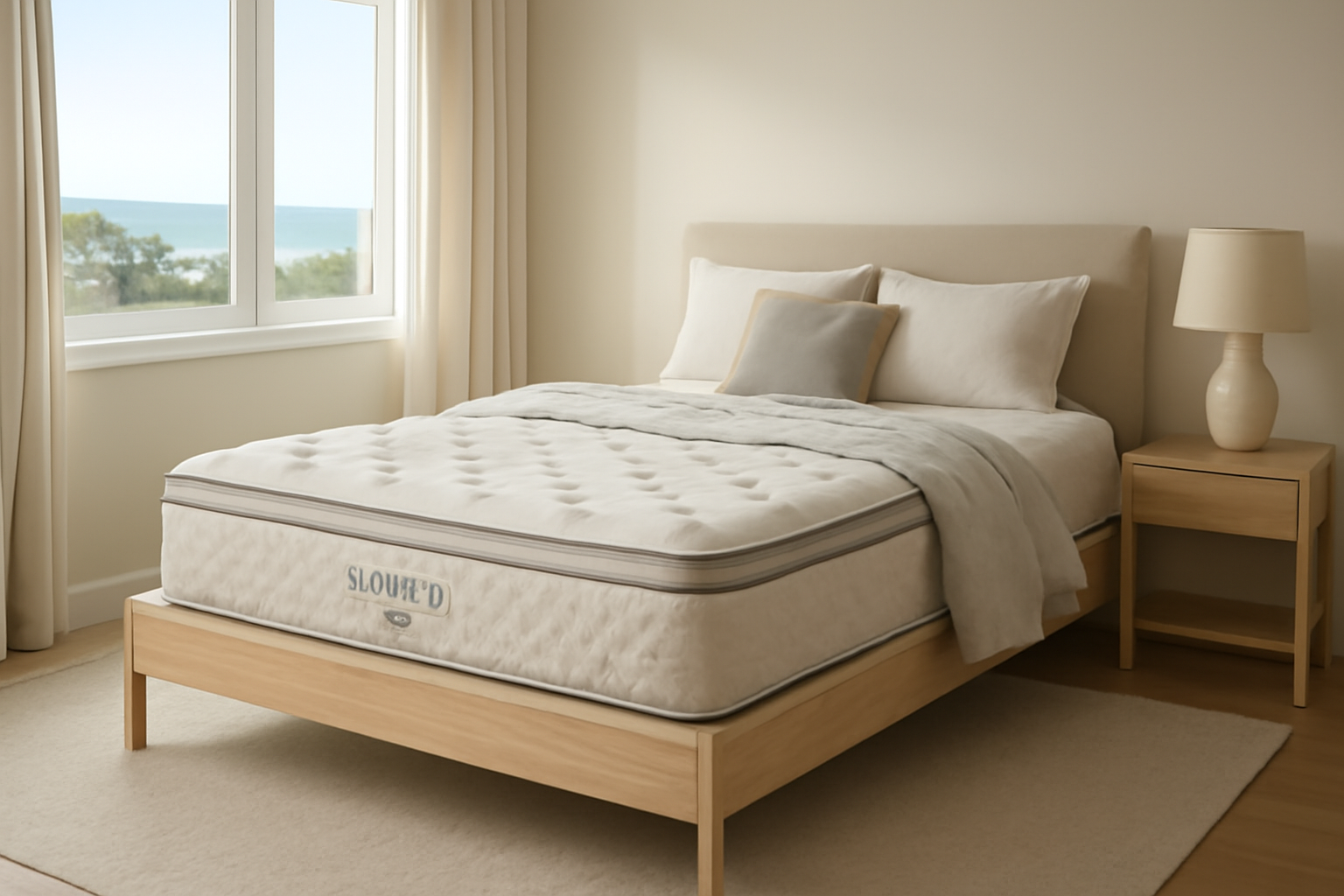
Is It Better to Sleep Without a Pillow?

sleep with pillow

Who actually sleeps better without a pillow

The honest answer is: a minority of people, and almost all of them are stomach sleepers. The purpose of a pillow is to fill the gap between your head and the mattress so the neck stays in line with the rest of the spine. How big that gap is depends entirely on the position you sleep in.

  • Stomach sleepers have almost no gap to fill. Adding loft rotates the head back and twists the neck for hours. Going pillow-free, or using a very thin one, is a reasonable experiment here.
  • Back sleepers have a small gap at the base of the skull. Removing all support lets the head drop back, which can leave the throat and jaw in an awkward position. A low pillow usually beats none.
  • Side sleepers have the largest gap — roughly the width of your shoulder. Sleeping flat on your side without a pillow bends the neck sideways all night. This is the group least likely to benefit.

What going pillow-free does and does not do

Two claims get repeated a lot and deserve separating. Comfort and posture claims are reasonable: if your pillow is the wrong height for your position, removing it can genuinely feel better, and people often notice less morning stiffness within a week or two. Claims about permanently fixing posture, curing neck pain, or improving skin are not established, and we would not make them.

The allergy argument has a grain of truth but the wrong conclusion. Pillows do accumulate dust mite allergen over years of use. The fix is a zippered allergen-barrier cover and washing on a hot cycle, not sleeping directly on a mattress that collects the same debris.

How to test it without wrecking a week of sleep

  1. Start on a weekend, not before a demanding Monday.
  2. Step down gradually — swap to a thin, squashable pillow for a few nights before removing it entirely. An abrupt change usually produces one bad night and a premature verdict.
  3. Give it seven to ten nights. Necks adapt slowly.
  4. Watch for warning signs: waking with numbness or tingling in an arm, a headache at the base of the skull, or pain that is worse in the morning than at night. Any of those means stop.

A better first move for most people

Most people who feel better without a pillow were simply using one that was too tall. Before abandoning pillows altogether, try matching loft to position: low (around 3 inches) for stomach and many back sleepers, medium to high (4 to 6 inches) for side sleepers, and adjustable shredded fill if you switch positions during the night. That single change solves the problem for the majority of people who arrive at this question.

If neck or arm pain has been going on for weeks, or it wakes you, that is a conversation for a clinician rather than a bedding decision.

Frequently Asked Questions About Is It Better to Sleep Without a Pillow?

Is sleeping without a pillow really worth it?

Yes, sleeping without a pillow can offer surprising benefits such as improved spinal health, reduced allergies, and healthier skin.

Who is sleeping without a pillow best for?

Sleeping without a pillow is particularly beneficial for individuals prone to allergies, those experiencing frequent neck or back pain, and anyone looking to improve skin health.

How does sleeping without a pillow compare to using a memory foam pillow?

Sleeping without a pillow allows your head and neck to stay in a completely neutral position, unlike memory foam pillows which still elevate the head to some degree.

What are the downsides of sleeping without a pillow?

The main downside is that the transition can be challenging, as your body may need time to adjust to a new sleeping posture.

Is sleeping without a pillow good for neck pain?

Yes, sleeping without a pillow can significantly decrease neck pain by allowing your neck to remain in a neutral position.

Where can I get advice on transitioning to pillow-free sleep in San Diego?

You can visit our Yawnder showroom in Encinitas, CA, for personalized advice on optimizing your sleep environment.

Want to test this in person? Visit our Encinitas showroom or call 858-232-5760.

Ready to buy?
See today’s best sleep deals

Live pricing and current promotions on the mattresses, bases, and sleep tech we recommend.

Shop current deals
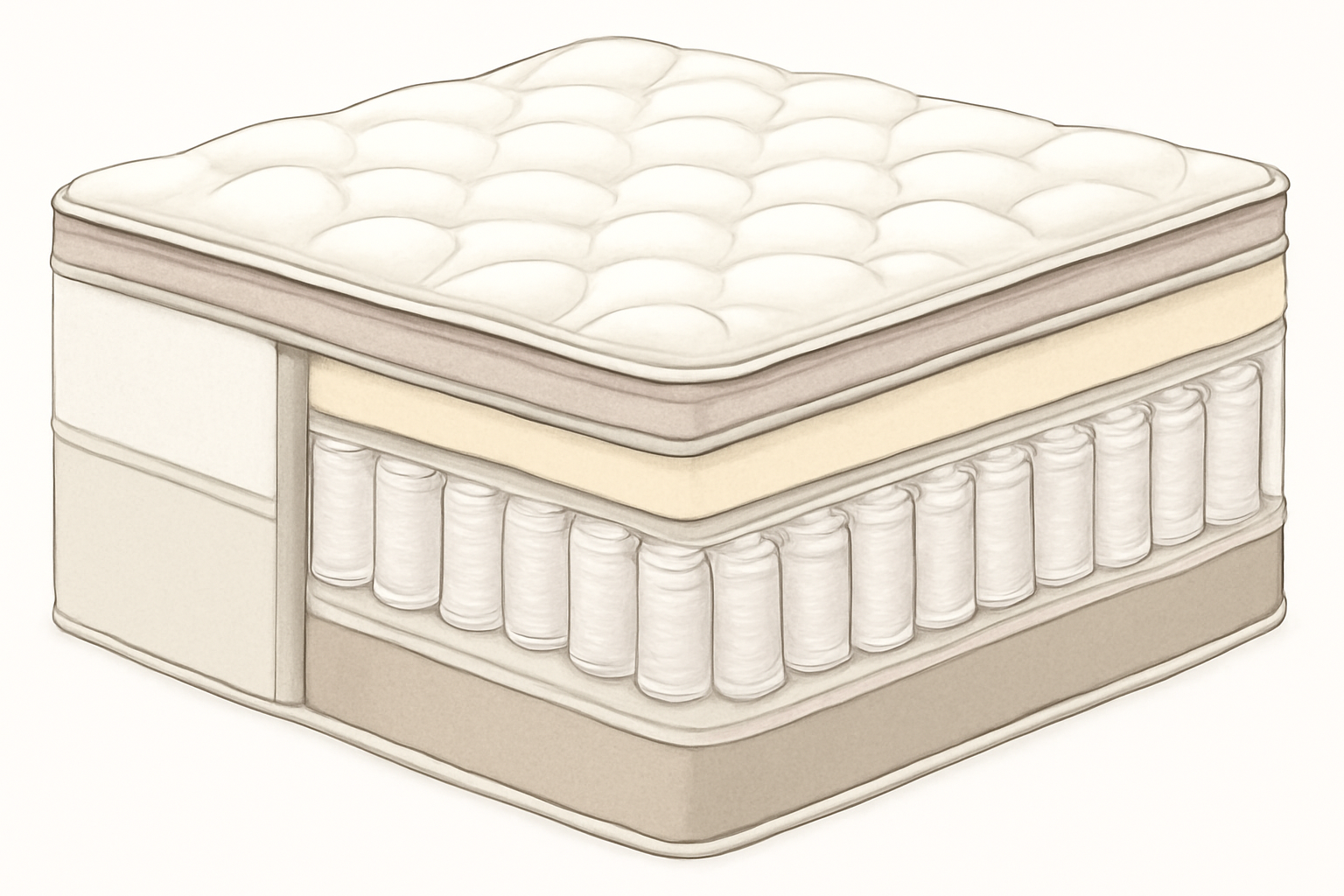
Do Not Sell or Share My Personal Information Privacy Policy
Y

Yawnder

We typically reply in a few minutes

👋 Hi there!

Have a question about mattresses, deliveries, or your order? We're here to help.