Layla Bamboo Sheets Review: Original Hands-On Test

layla bamboo sheets

[Tagline]

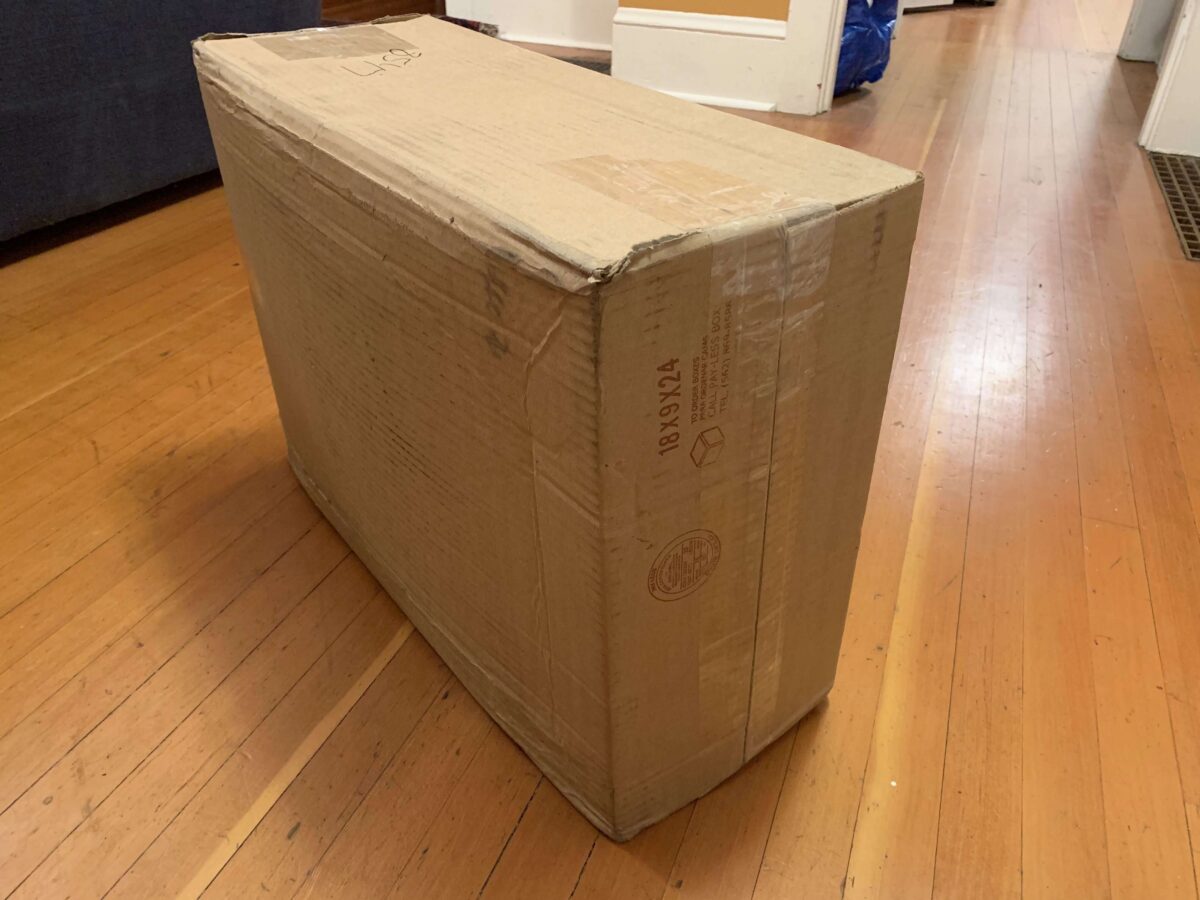
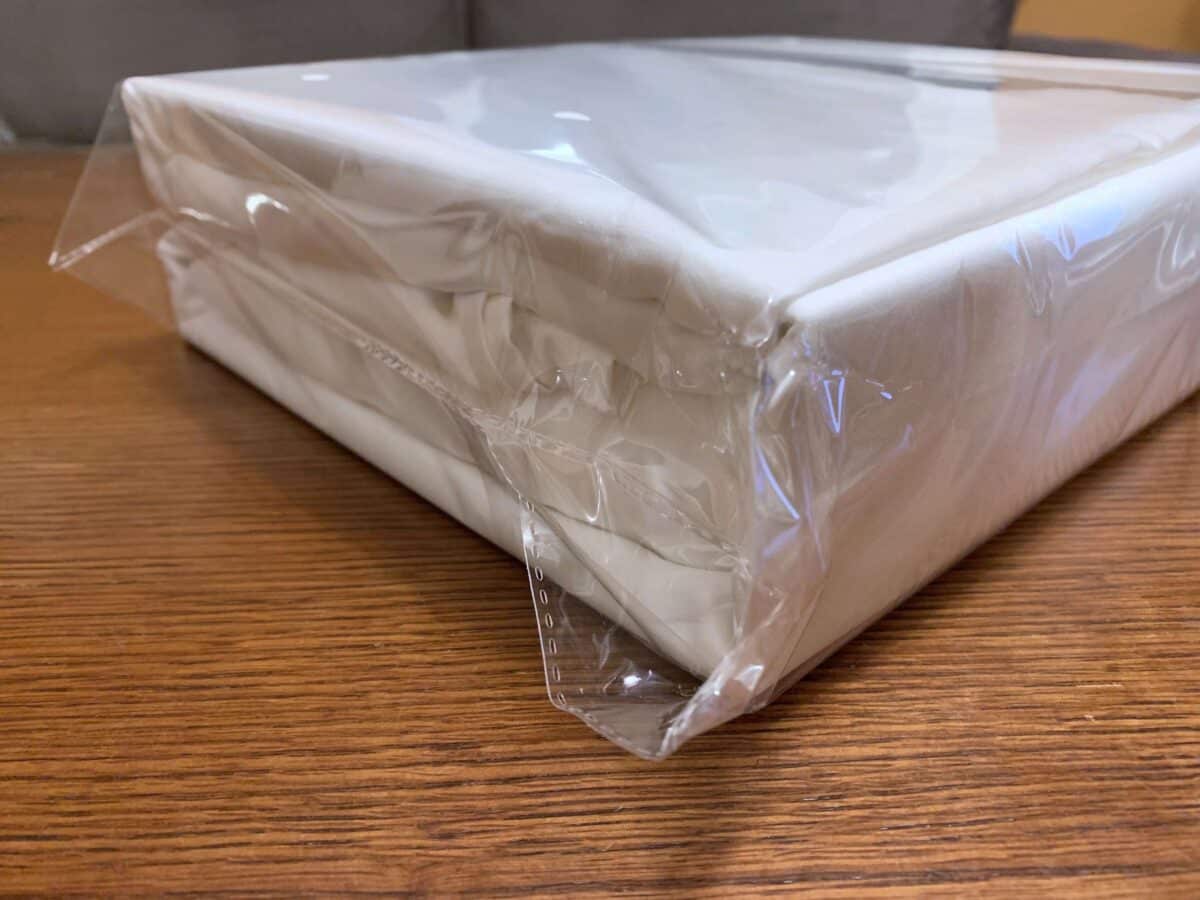
I received a set of white sheets from Layla, but I thought that I had received a bedside table from a furniture retailer. When my roommates asked me what I could’ve possibly gotten that was so large, we all found ourselves a bit bewildered when the answer was “sheets.”

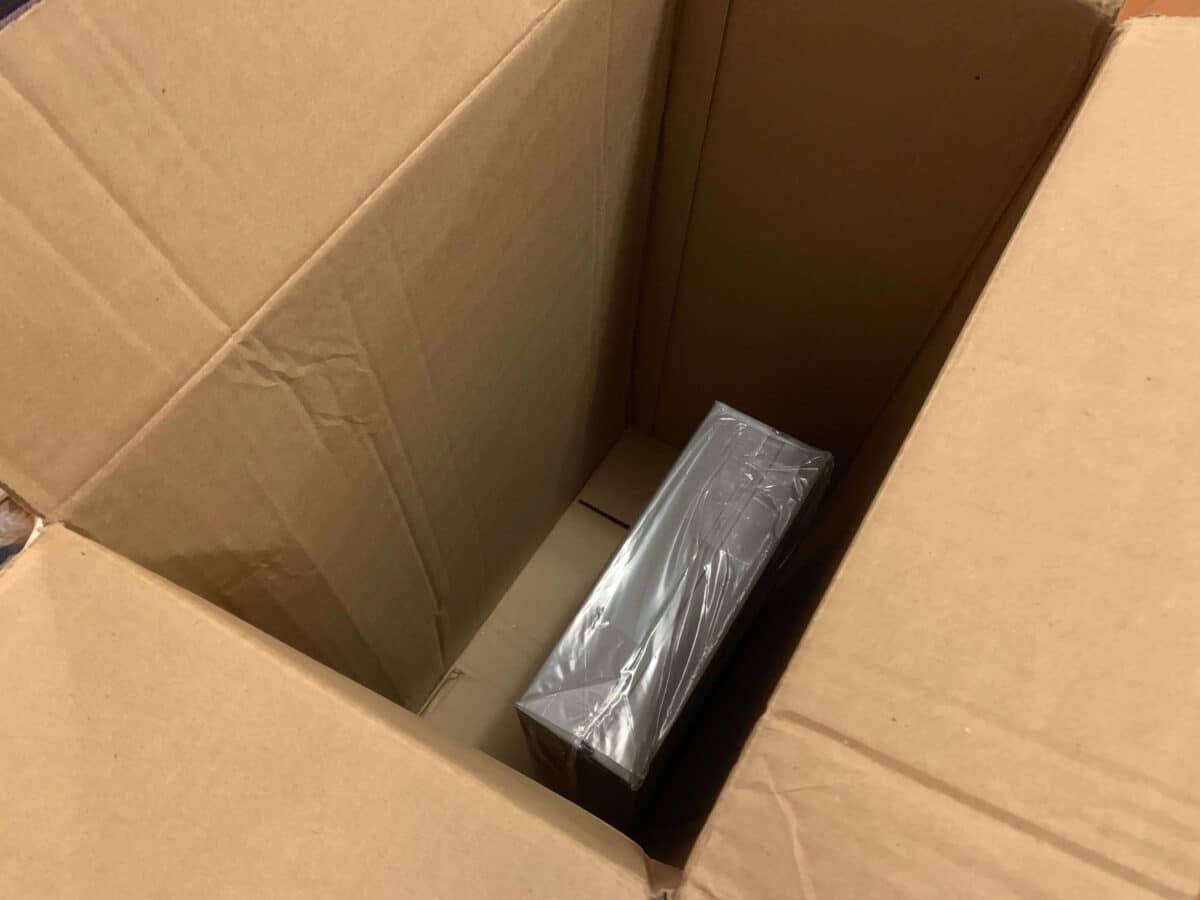
I opened the box and found… mostly nothing except for some industrial plastic wrap. At the very very bottom of the box, in a distant corner, was a dense box tightly sealed in more plastic. After retrieving the box from the abyss.

I’ve gotten some overzealous packaging from Amazon, but never have I ever received something in a box 12 times the size of the actual object. I think they wanted the box in pristine condition which may explain the bix box. I don’t think this will be the case goine forward.

This is a very new product so as of this writing there isn’t too much information about the product on the website but that will change.

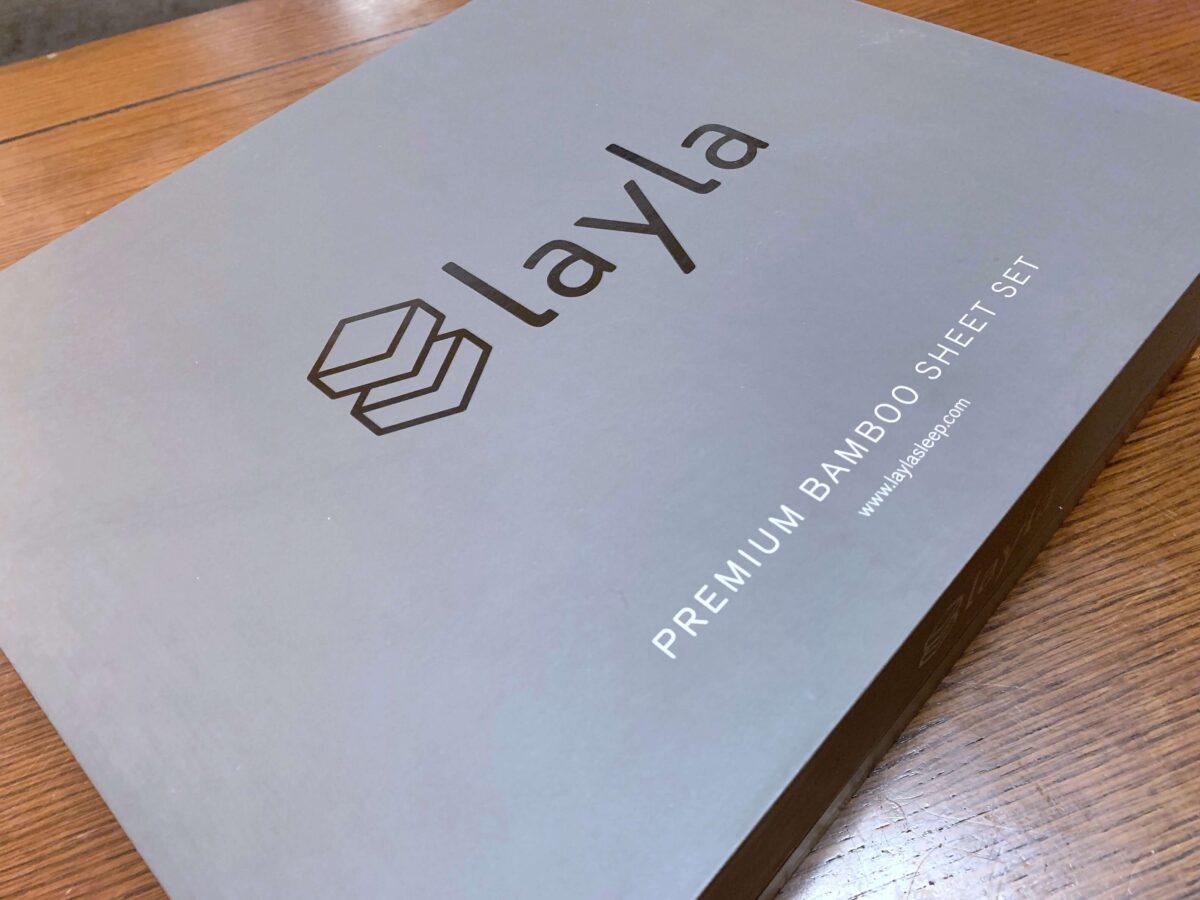
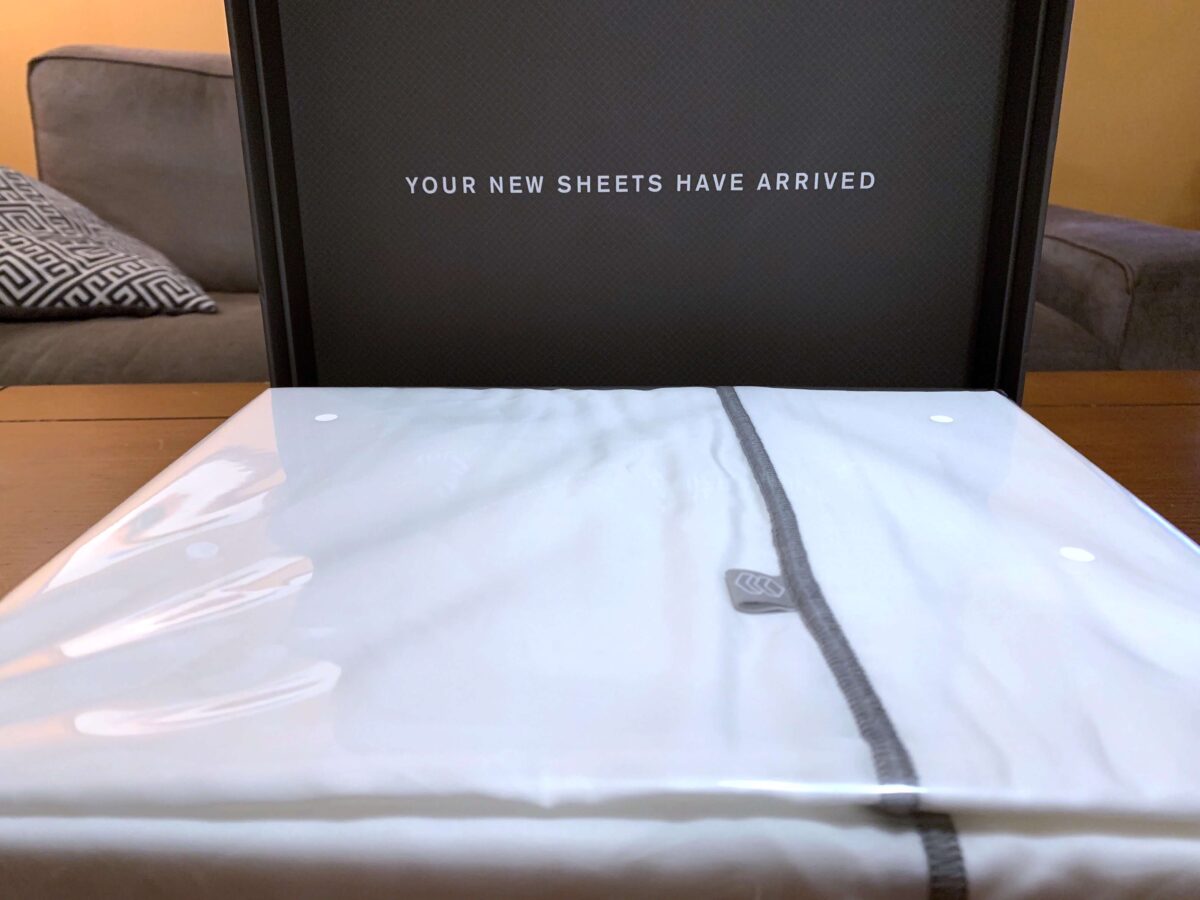
The product box was breathtaking. This was not just any cardboard box, they somehow managed to make this box look like the Mercedes-Benz of boxes. The corners and seams were sturdy and perfect. The clamshell mechanism fit like a dream, and slid over the edge perfectly. All parts of the cardboard box were covered in fancy, smooth, matte gray paper. The box looked like it was made of two pieces, but the hinge was made so well that it opened to only 90°. The graphic design was impeccable—the fonts and colors were perfect, and the inner flap donned a two-tone gray gingham pattern that complemented the whole package so well. The inner flap read “YOUR NEW SHEETS HAVE ARRIVED,” which made the aesthetic experience all the more real. These were my sheets and I was ready to love them.

After opening the clamshell I found yet more plastic wrap, but the dense pile of folded sheets looked so perfect I didn’t want to disturb the chic package. After revelling in its glory, I broke down and opened the inner package.

Layla Bamboo Construction

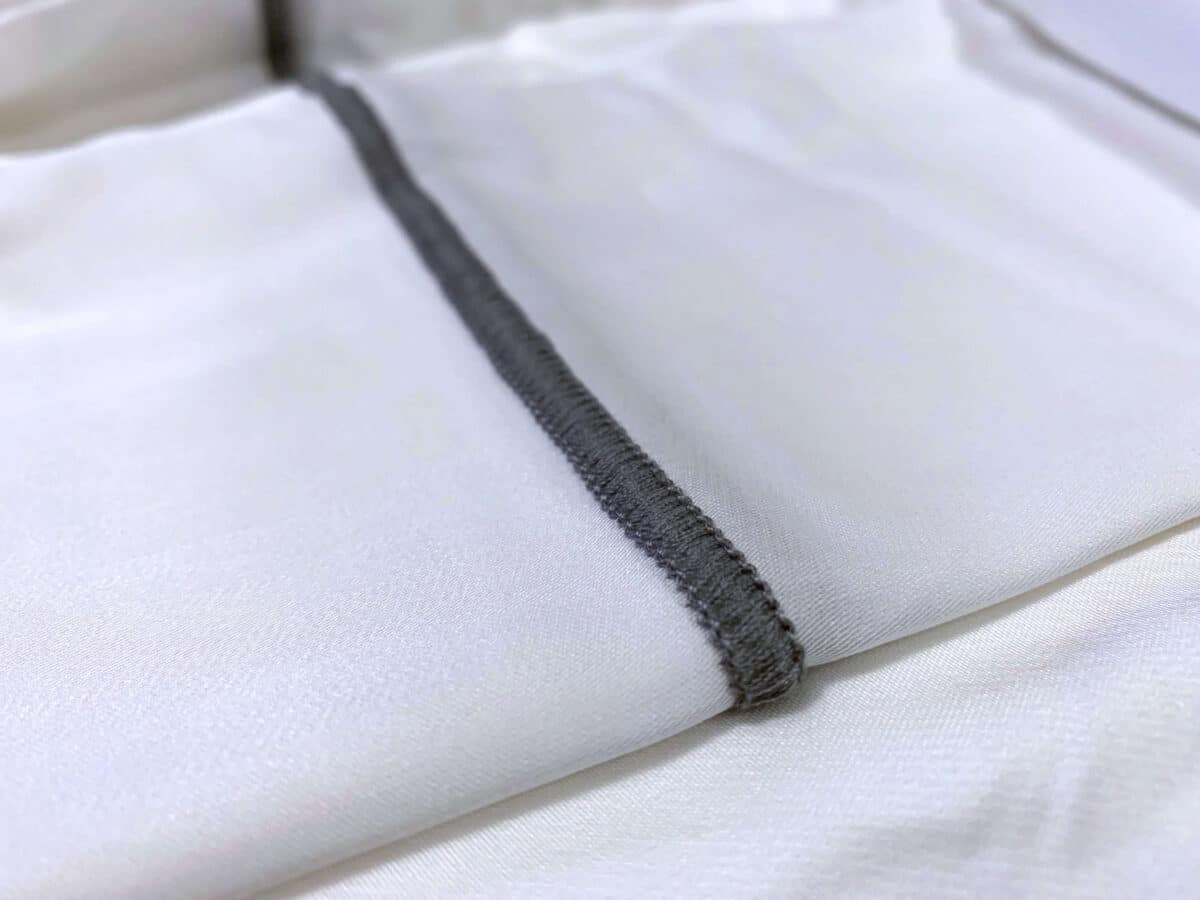
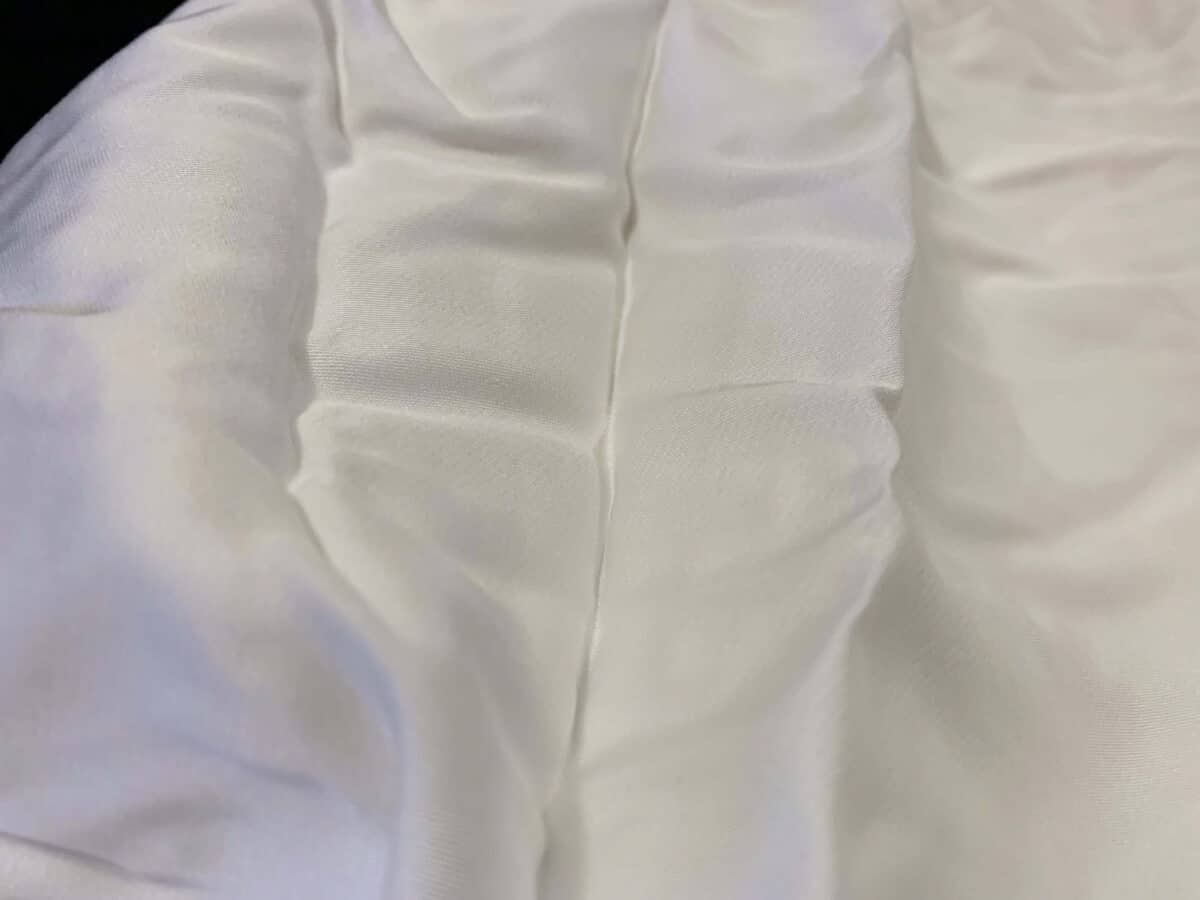
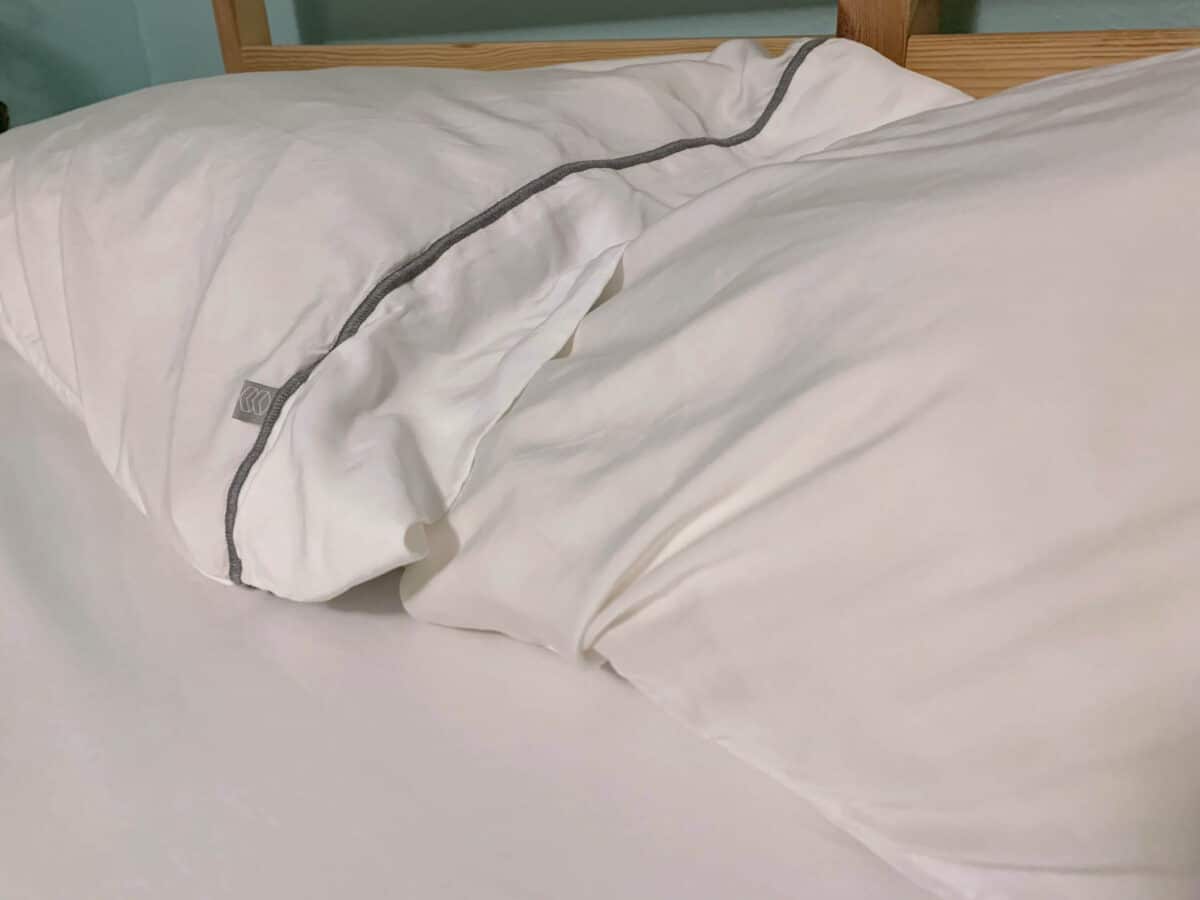
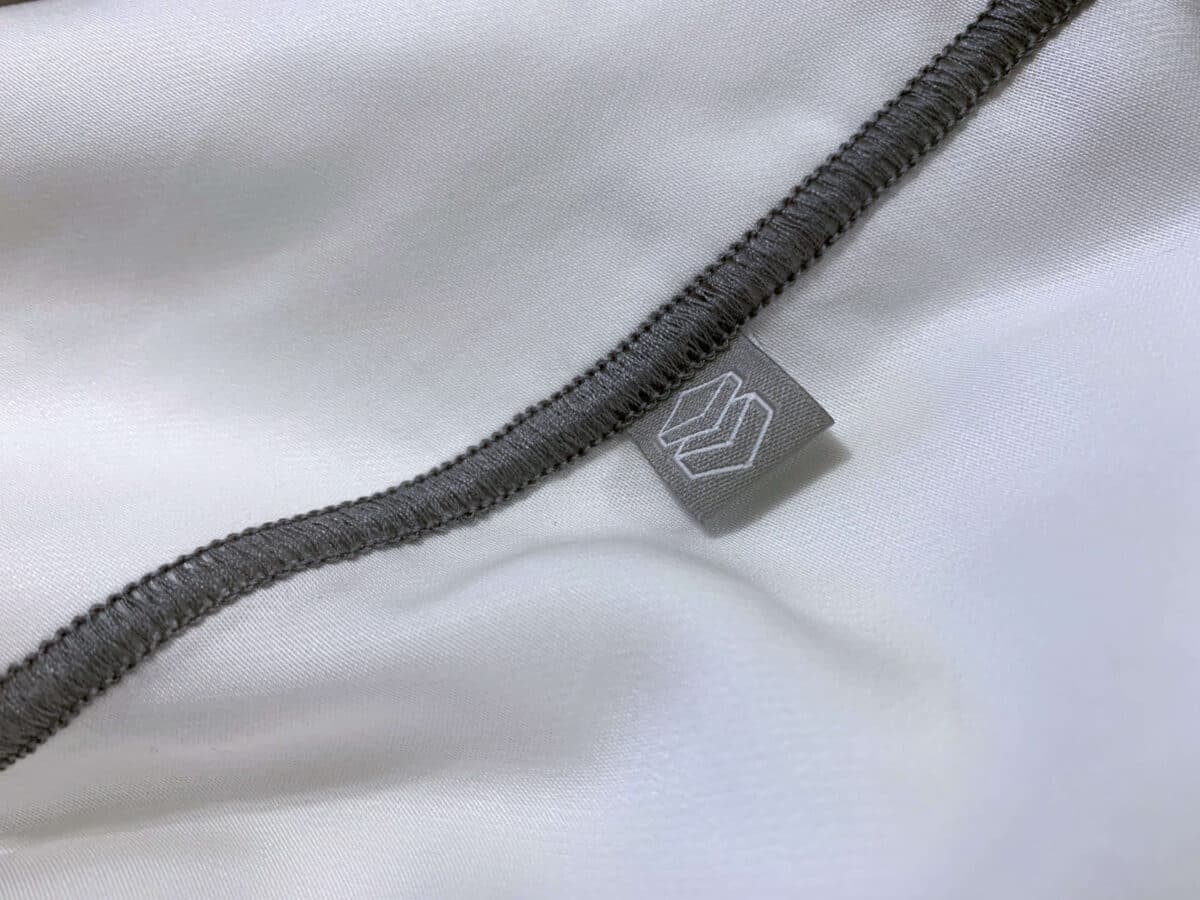
The sheets were shiny, but not as reflective as the Heavenluxe set. Most of the seams were neat and hidden well, but some of the seams were boldly emblazoned in the very same dark gray that was used on the box.

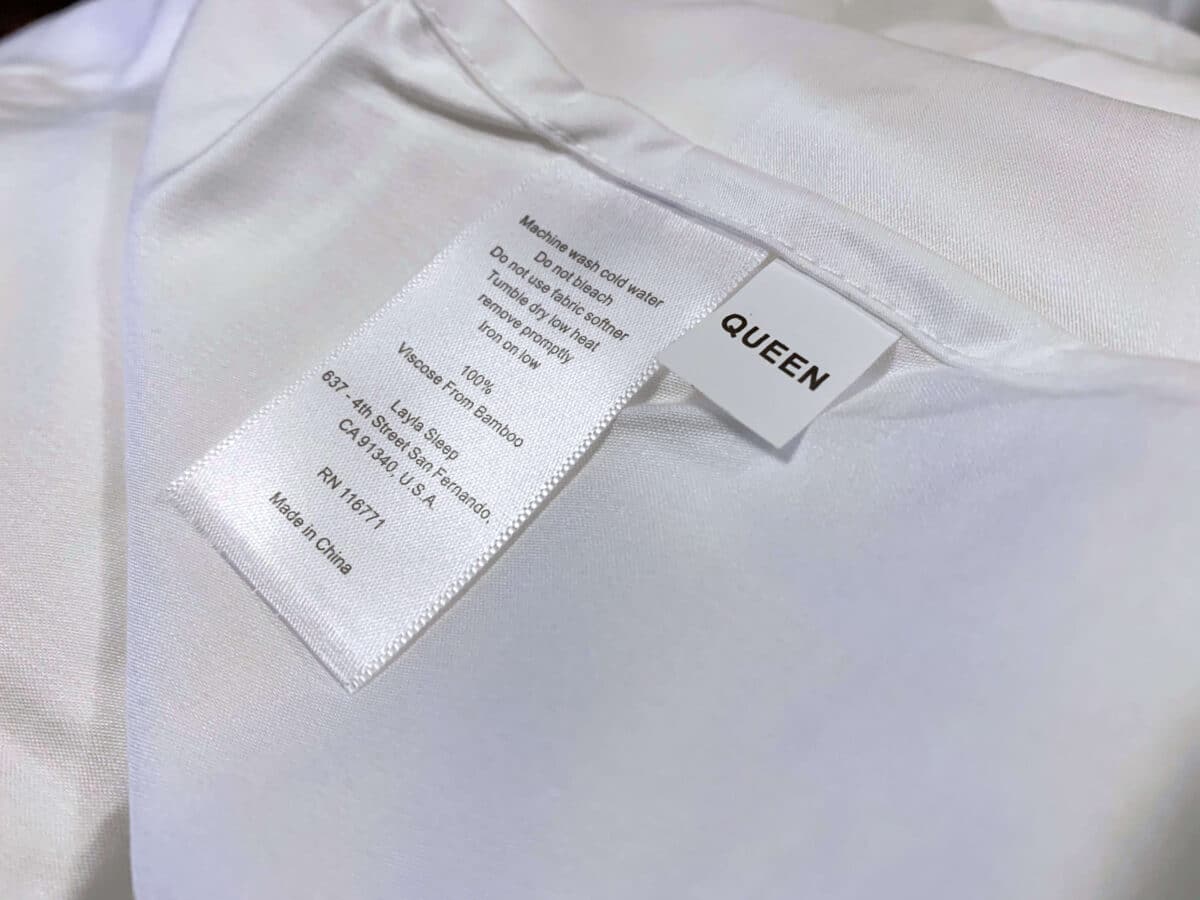
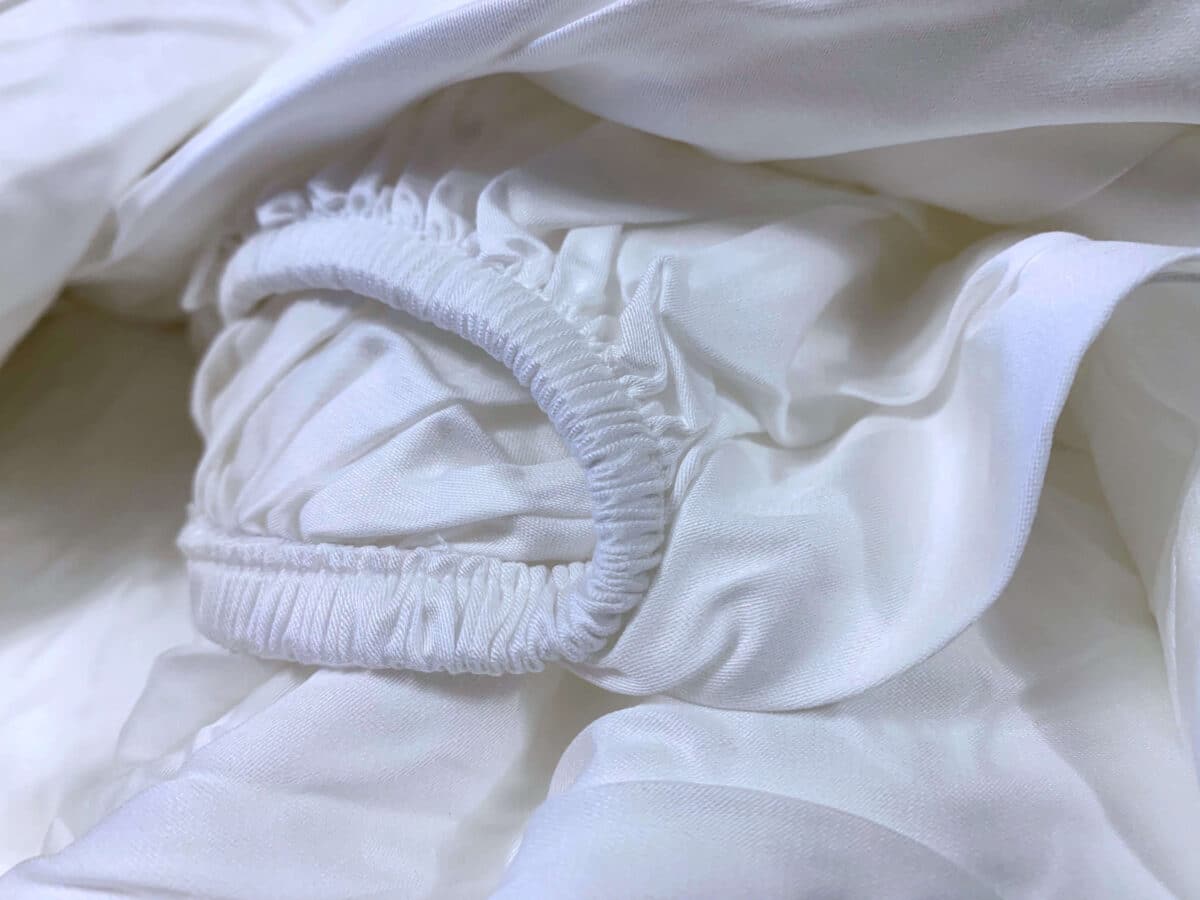
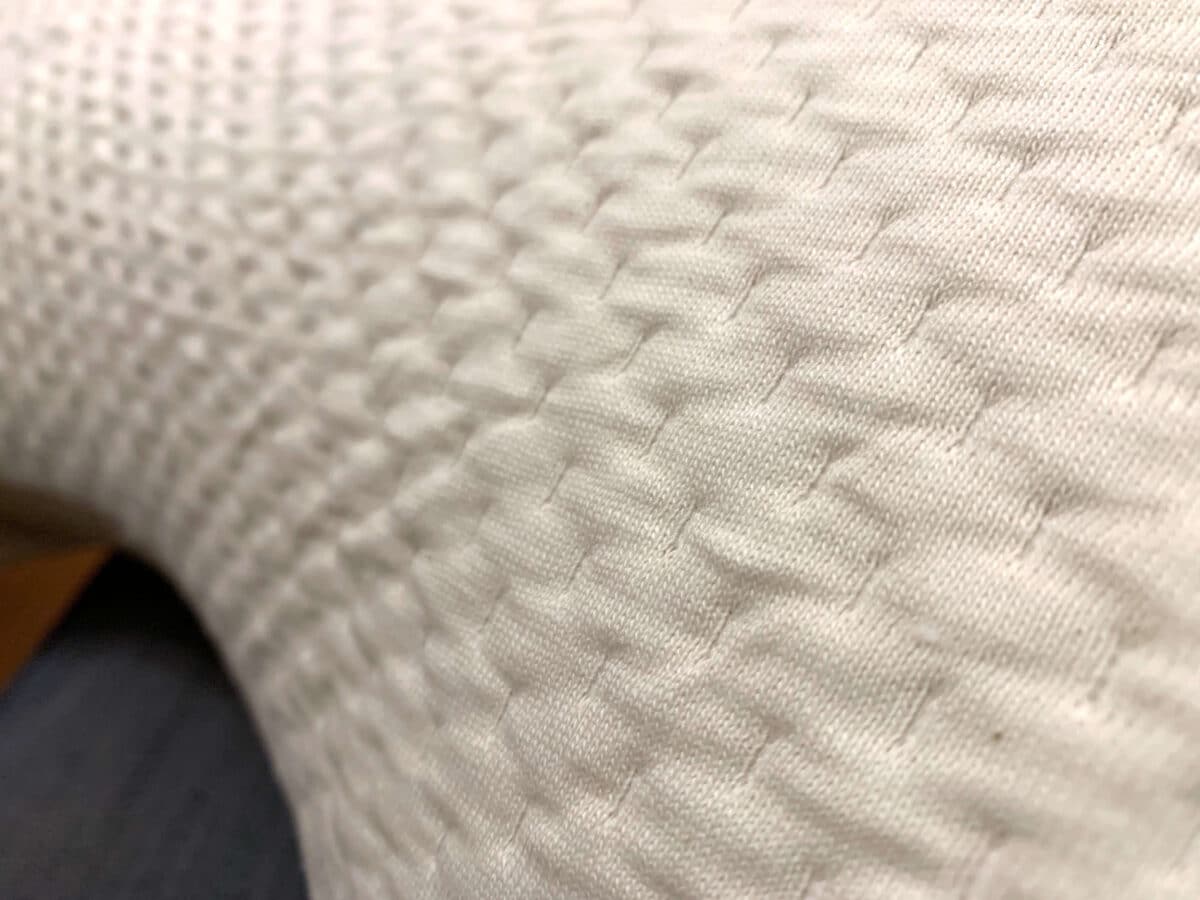
The sheets were soft and smooth, living up to all the good things I’ve heard about bamboo sheets. I ran the sheets through a cold wash and a tumble dry on low and they came out even softer. There was some minor shrinkage, but nothing too concerning—the pocket depth started at 14.5in (15.25in with the elastic band) and ended at 13in (14.5in with the elastic band).

When I brought the sheets up to my room to make my bed, I noticed they felt abnormally hefty. When I shook them out against my mattress, they made a thunderous noise unlike any sound I’ve heard a fabric make—it sounded like muffled clapping. The fitted sheet fit snugly without any ripples, and the flat sheet sat on top smoothly. By this point it was 3am and I was still awake for some reason, so after making my bed I really needed a perfect set of sheets to help me doze off as fast as possible.

My Layla Bamboo Findings

When those sheets touched my skin, they didn’t even feel like they were made of fabric—they felt so delicate and liquid like in a strange indescribable way. The sheets definitely felt heavier and more durable than the Heavenluxe sheets, but somehow they had a kind of ethereality about them that surpasses every experience I’ve ever had with any fabric. Sometimes all I think about at night is how amazing it will feel to pass out sandwiched between those gentle bamboo sheets. I want to say that I’m in love, but like every product, there are some hangups.

I was really shocked by the shipping waste and I really hope that is not how Layla intends to distribute their products, but I didn’t want that to cloud my judgement of the sheets themselves. I love these sheets, but I find myself wondering if I love Layla’s sheets, or I love bamboo sheets. There are a few more bamboo sheet sets in the pipeline, so I want to make it very clear that this is my first set of sheets made of this fabric and I have no referent.

My Layla Bamboo Recommendation

Since there isn’t much information on Layla’s website, I don’t know how their fabric composition or production differs from any other kind of bamboo sheet, so I don’t feel like I can adequately make a judgement on the company itself. Bamboo is a very promising agricultural alternative to cotton, but like hemp, the miracle textile crop of your dreams isn’t always sustainable. Ultimately whether you buy these sheets or not comes down to how important your carbon footprint is to you. Off the bat, while bamboo and hemp grow quickly and function more efficiently as textile crops, farms are often established on land that was deforested specifically for the cultivation of these crops, which is ironic and dangerous.

Frequently Asked Questions About Layla Bamboo Sheets Review (2026): Comfort & Packaging

What are the main drawbacks of Layla Bamboo Sheets?

The primary drawbacks of Layla Bamboo Sheets are their excessive and environmentally concerning packaging, and a noticeable shrinkage after washing. The review noted concerns about the sustainability of Layla's distribution methods due to the amount of plastic used in packaging.

Are the Layla Bamboo Sheets soft and comfortable?

Yes, the Layla Bamboo Sheets are exceptionally soft and smooth, providing an ethereal and enveloping comfort. After a cold wash and low tumble dry, they emerged even softer, enhancing their luxurious feel.

How does the packaging of Layla Bamboo Sheets compare to other brands?

The packaging for Layla Bamboo Sheets is notably oversized and elaborate, described as the 'Mercedes-Benz of cardboard' due to its stylish design. However, it involves excessive plastic wrap, which raises concerns about sustainability.

Are Layla Bamboo Sheets good for hot sleepers?

The article doesn't explicitly state if Layla Bamboo Sheets are ideal for hot sleepers, but it does highlight their soft, subtle sheen, and dense quality. The unique softness and comfortable feel are mentioned as key features.

What is the pocket depth of Layla Bamboo Sheets after washing?

After laundering, the Layla Bamboo Sheets settled into a snug pocket depth of 13 inches, or 14.5 inches with elastic. This is a slight decrease from their initial depth of 14.5 inches (15.25 inches with elastic).

Can I experience Layla Bamboo Sheets in person?

While the review details hands-on testing, it does not confirm if Layla Bamboo Sheets are available for in-person trial at the Yawnder San Diego showroom. The article focuses on the unboxing and comfort experience from a personal perspective.

Want to test this in person? Visit our Encinitas showroom or call 858-232-5760.

Ready to buy?
Check current Layla pricing and promos

Live pricing, current promotions, and full manufacturer warranty through our affiliate partner. Buying through this link supports Yawnder’s independent testing at no extra cost to you.

Shop Layla

How to Get Rid of Bed Bugs Fast

Bug proofing your bed

Confirm it is bed bugs first

Bites alone are not proof — they look like a lot of other things. Look for physical evidence: live insects about the size and colour of an apple seed, pale shed skins, tiny dark ink-dot faecal spots, and small rust-coloured smears on sheets. Check the mattress piping, the seams and underside of the box spring, the headboard, the frame joints, and the edge of carpet along the wall. A credit card run along a seam and a bright torch find more than a casual glance.

What actually kills them

  • Heat. Wash bedding and clothing hot and, more importantly, tumble dry on high for at least 30 minutes — the dryer, not the wash, does the killing. Items that cannot be washed can go through the dryer alone or be bagged and heat-treated.
  • Thorough vacuuming of seams, frame, baseboards and carpet edges. Empty into a sealed bag outside immediately.
  • Encasements. A zippered, bed-bug-rated cover over both mattress and box spring traps anything inside and removes most of the hiding places. Leave it on for at least a year.
  • Steam along seams and upholstery, applied slowly enough for the heat to penetrate.
  • Professional treatment. For anything beyond a very early, very localised problem, a licensed pest control operator is the realistic path — usually two or more visits, sometimes whole-room heat treatment. Resistance to over-the-counter sprays is common, so consumer insecticides frequently disappoint.

Things that make it worse

  • Throwing the mattress out early. Bed bugs live in frames, headboards and walls too, so a new mattress in an untreated room becomes infested. Treat first, replace later if you want to.
  • Moving to the sofa or a spare room. That spreads the infestation instead of escaping it.
  • Fogger cans. They scatter bugs deeper into walls and rarely reach where the insects hide.
  • Anything involving flammable liquids or unlabelled pesticides. Only use products labelled for bed bugs and follow the label.

Containing it while you treat

Pull the bed slightly away from the wall, remove skirts and bedding that touch the floor, and keep clutter off the floor around the bed so there are fewer harbourages. Bag treated laundry and keep it sealed until the room is clear. Expect the process to take several weeks and to need a follow-up — eggs hatch on their own schedule, which is why a single treatment often is not enough.

When replacing the mattress is reasonable

If the mattress is heavily infested, damaged, or already near the end of its life, replacing it after treatment is fair enough. Wrap it in plastic before carrying it out so you are not seeding the hallway, and do not bring the new one in until the room has been treated and monitored.

Frequently Asked Questions About How to Get Rid of Bed Bugs Fast

Is it really necessary to replace my mattress if I have bed bugs?

While replacing your mattress offers ultimate peace of mind and eliminates lingering risks, it's not strictly necessary if other methods are used diligently. You can effectively bug-proof your existing mattress with a specialized cover and thorough cleaning.

How can I effectively clean my bedding if I suspect bed bugs?

To effectively clean your bedding, strip all sheets and coverings, place them in a tightly sealed garbage bag, and wash them in hot water. High heat is crucial for killing both bed bugs and their eggs.

What are the first steps I should take if I discover bed bugs in my home?

The immediate first steps involve preparing your bedding by washing it in hot water and meticulously vacuuming your mattress, disposing of the vacuum bag outside. Swift action is essential to prevent the infestation from spreading.

Are bed bug infestations a sign of an unclean home?

No, bed bug infestations are not necessarily a sign of an unclean home, as these pests can hitch a ride on clothing or luggage from anywhere. Their presence simply indicates an infestation that needs to be addressed.

How can I prevent bed bugs from returning after an initial clear-out?

To prevent bed bugs from returning, ensure any kept mattress is encased in a bed bug-proof cover for at least a year, addressing the bed frame, and being vigilant about checking second-hand furniture or luggage after travel. Our Yawnder showroom in Encinitas, CA provides insight into mattress encasements that can help.

Where can I find bed bug-proof mattress covers that have been tested for effectiveness?

While the article suggests that bed bug-proof covers are effective, you can visit local retailers like Yawnder in Encinitas, CA to discuss options for mattress protection and learn more about effective encasements. Our local San Diego store provides expert advice on sleep essentials.

Want to test this in person? Visit our Encinitas showroom or call 858-232-5760.

Ready to buy?
See today’s best sleep deals

Live pricing and current promotions on the mattresses, bases, and sleep tech we recommend.

Explore sleep guides

Best Weighted Sheets

Do Weighted Sheets Help Keep Bedding In Place

Weighted sheets, and what problem they actually solve

A weighted sheet is a top sheet or thin blanket with weight built in — usually glass micro-beads quilted into pockets, sometimes simply dense fabric. It sits between a normal flat sheet and a full weighted blanket. People buy them for two different reasons, and it is worth knowing which one is yours before you spend anything.

Reason one: you want the pressure without the heat. A 15 to 20 lb quilted weighted blanket is an insulating layer. A weighted sheet delivers a milder version of the same drape at a fraction of the loft, so it works far better in a warm bedroom or in summer.

Reason two: your bedding will not stay put. Light, slippery bedding — sateen, satin, some microfibres — slides off the bed overnight. Extra weight anchors it.

Practical 2026 check: If sheets come loose, try deep-pocket fit and secure corner elastic before purchasing a weighted sheet. Added weight may not be appropriate for children, people who cannot lift it independently, or anyone with breathing or mobility limitations. Treat claims of better sleep as personal comfort reports, not a treatment for insomnia. Compare sheet materials before upgrading.

If your problem is slipping bedding, start cheaper

You do not need a specialty product to solve bedding that will not stay on the bed. In order of cost:

  1. Change the fabric. Linen, flannel and cotton percale grip each other. Sateen and satin do not. Swapping the top sheet alone often fixes it.
  2. Deep-pocket fitted sheet with sewn-in elastic all the way round. Corner-only elastic is the usual culprit behind a fitted sheet that pops off.
  3. Sheet suspenders or straps under the mattress — a few dollars, and they hold a fitted sheet better than any amount of added weight.
  4. A heavier top layer — a cotton coverlet or quilt weighing 5 to 8 lb will hold everything down without any of the cost of a beaded product.
  5. A weighted sheet, if you want the anchored feel as well as the tidiness.

How much weight to buy

The 10%-of-body-weight rule that gets quoted for weighted blankets is a ceiling, not a target, for a sheet. Weighted sheets are typically sold from about 8 to 15 lb, and most people who want a sheet rather than a blanket are happier at the lower end. Go lighter if you move a lot in your sleep, share the bed, or run warm.

Sizing matters as much as weight. Weight should sit on the sleeper, not hang off the mattress edge. A weighted layer sized for the mattress will slowly drag itself onto the floor; one sized for the person will not.

Materials and cooling

  • Cotton percale — crisp, breathable, grips other bedding, the safest default.
  • Bamboo-viscose — cool to the touch and the best pick for hot sleepers, though it is more slippery.
  • Linen — heaviest hand for its weight, exceptional in warm weather, and it grips well.
  • Microfibre — cheapest, and the fabric most likely to trap heat and slide.

Whatever the fill, look for small quilted pockets. Large pockets let beads migrate, and migrated beads mean uneven weight and lumps within a year.

Who should skip them

Not for infants, toddlers, or anyone who cannot push the layer off unaided. If you have a respiratory or circulatory condition, or diagnosed sleep apnea, ask your clinician before adding weight over your chest. Couples who disagree about weight should buy two single-size layers rather than one shared one.

Living with one

Check the care label before you buy. Some weighted sheets are machine washable on cold; heavier ones want a commercial machine, and a soaked 12 lb sheet can overload a domestic drum. Air-dry flat where possible. Expect it to take up more space in a linen cupboard than the sheet it replaces.

If you are unsure whether you like weight on you at all, the cheapest test is not a purchase: fold a heavy quilt or coverlet over yourself for a few nights and see whether you sleep better or shove it off.

Frequently Asked Questions About Best Weighted Sheets

Do weighted sheets really prevent bedding from slipping?

Yes, weighted sheets can effectively keep bedding in place due to their added heft and gravitational pull. This extra weight helps to anchor the entire bedding ensemble, reducing the need for constant adjustments throughout the day and night.

Who are weighted sheets best for?

Weighted sheets are best for anyone looking to keep their bedding tidy and secure, especially those frustrated by sheets and blankets that frequently slip out of place. They are also beneficial for individuals who find traditional bedding too light or who prefer a more anchored feel.

How do weighted sheets compare to regular sheets for keeping bedding in place?

Weighted sheets offer a significant advantage over regular sheets in preventing slippage because their added weight provides a natural anchor. Traditional sheets, especially those made from slippery materials like satin, lack this gravitational pull and are more prone to moving around.

What are the downsides of using weighted sheets?

One potential downside is that weighted sheets can be heavier to lift and manage during bed making or washing. Additionally, while helpful for stability, they might not be everyone’s preferred feel if they are accustomed to lighter bedding.

Is a simple heavy blanket as good as a specialty weighted sheet for securing bedding?

Yes, a simple heavy blanket or even a top sheet that is significantly heavier than your other bedding can work just as effectively as a specialty weighted sheet for keeping everything in place. You don’t necessarily need to invest in a specific weighted product if you have a heavy blanket available. We've seen this work in our Encinitas showroom when demonstrating bedding setups.

Where can I try weighted bedding materials in person?

You can explore various bedding materials that offer good weight and texture by visiting a local mattress retailer. Our Yawnder showroom in Encinitas, CA offers a selection of materials like cotton, linen, and flannel, allowing you to feel their practical qualities firsthand.

Want to test this in person? Visit our Encinitas showroom or call 858-232-5760.

Ready to buy?
See today’s best sleep deals

Live pricing and current promotions on the mattresses, bases, and sleep tech we recommend.

Shop current deals

Eli & Elm Side Sleeper Pillow Review (2026)

Eli and Elm Side Sleeper Pillow
Looking for similar pillows on Amazon? Compare side-sleeper cutout pillows. Alternatives may differ from the reviewed product; prices and availability can change.

[Tagline]

Eli & Elm Profile

Eli & Elm entered the bedding world in January 2019 with a goal to create high quality bedding for the average sleep enthusiast. Based in New Haven, CT, their name is an homage to Eli Whitney—the inventor of the cotton gin; and Elm City—the home of Whitney before its name was changed to New Haven. Three Connecticut men were inspired by Eli Whitney’s innovation with the plant, so they took to improving the world of cotton bedding, with aspiring dreams to make the bed a better place for sleep. There hasn’t been much innovation in the textile industry, so Eli & Elm made it their mission to create luxurious and durable sheets for affordable prices. Their work with researchers and engineers has paved the way for eco-friendly advancements in the field while also focusing their resources on making fair trade products that are ethically sound.

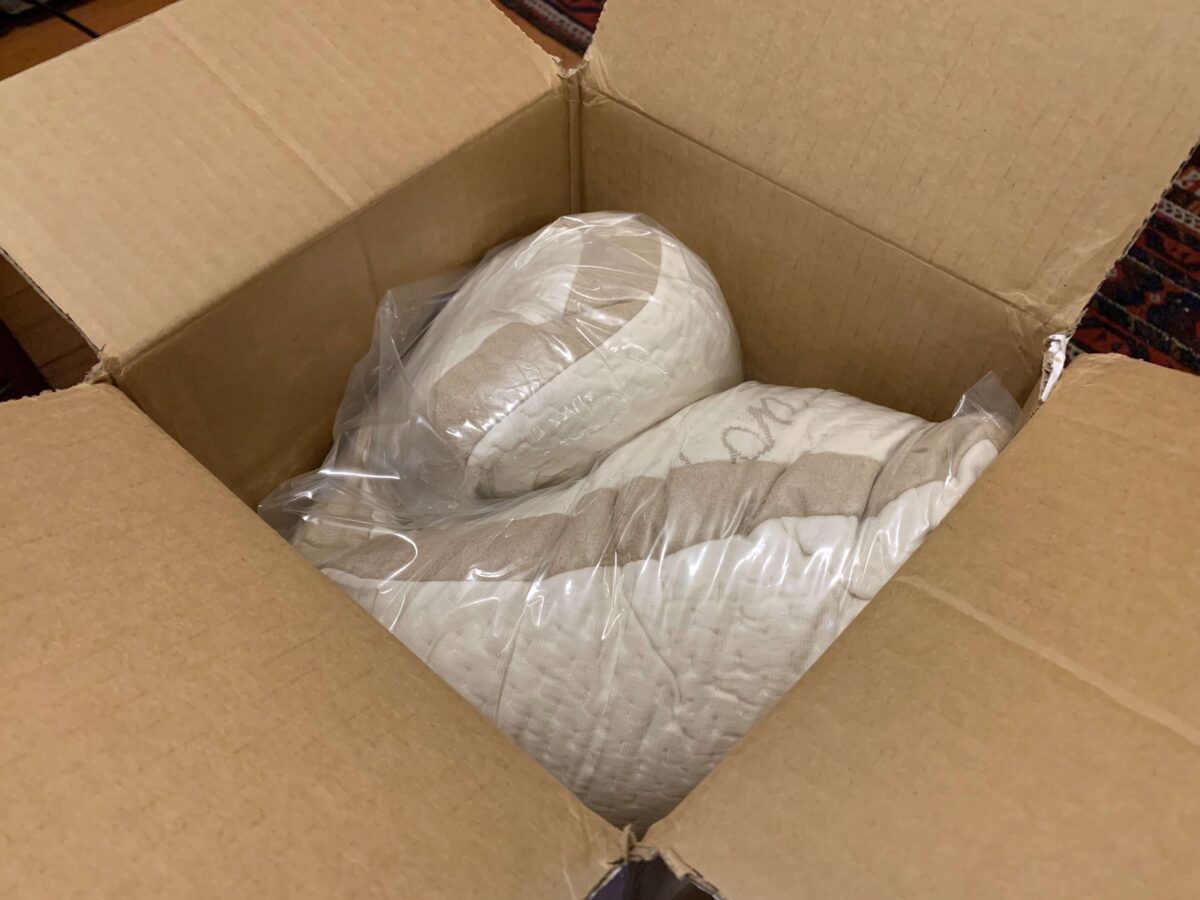
Eli & Elm sent me their king-size organic cotton Side Sleeper pillow. The large cushion was rolled up and stuffed inside its long, white shipping box.

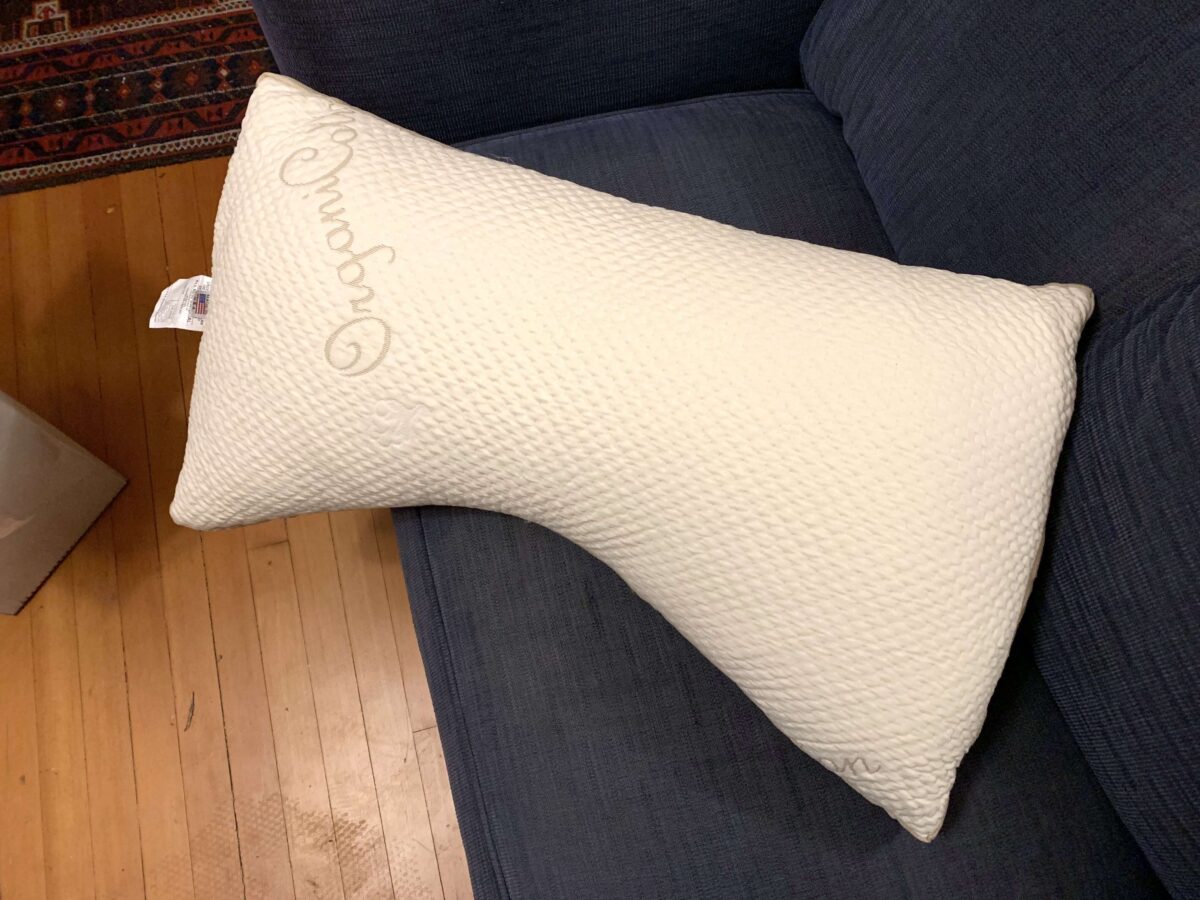
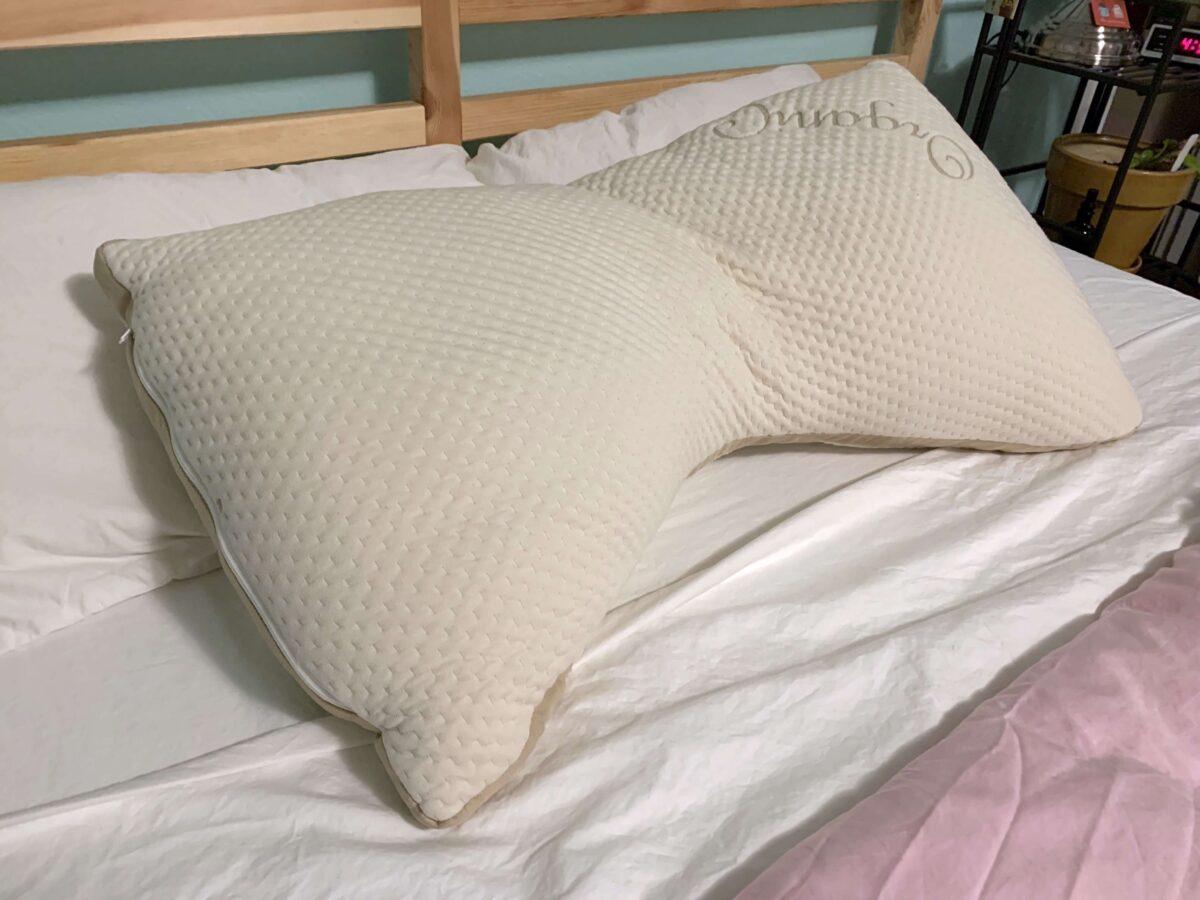
I pulled it out and cut away the bag and tape to reveal a gold and ivory pillow shaped like half of a fingertip bandage.

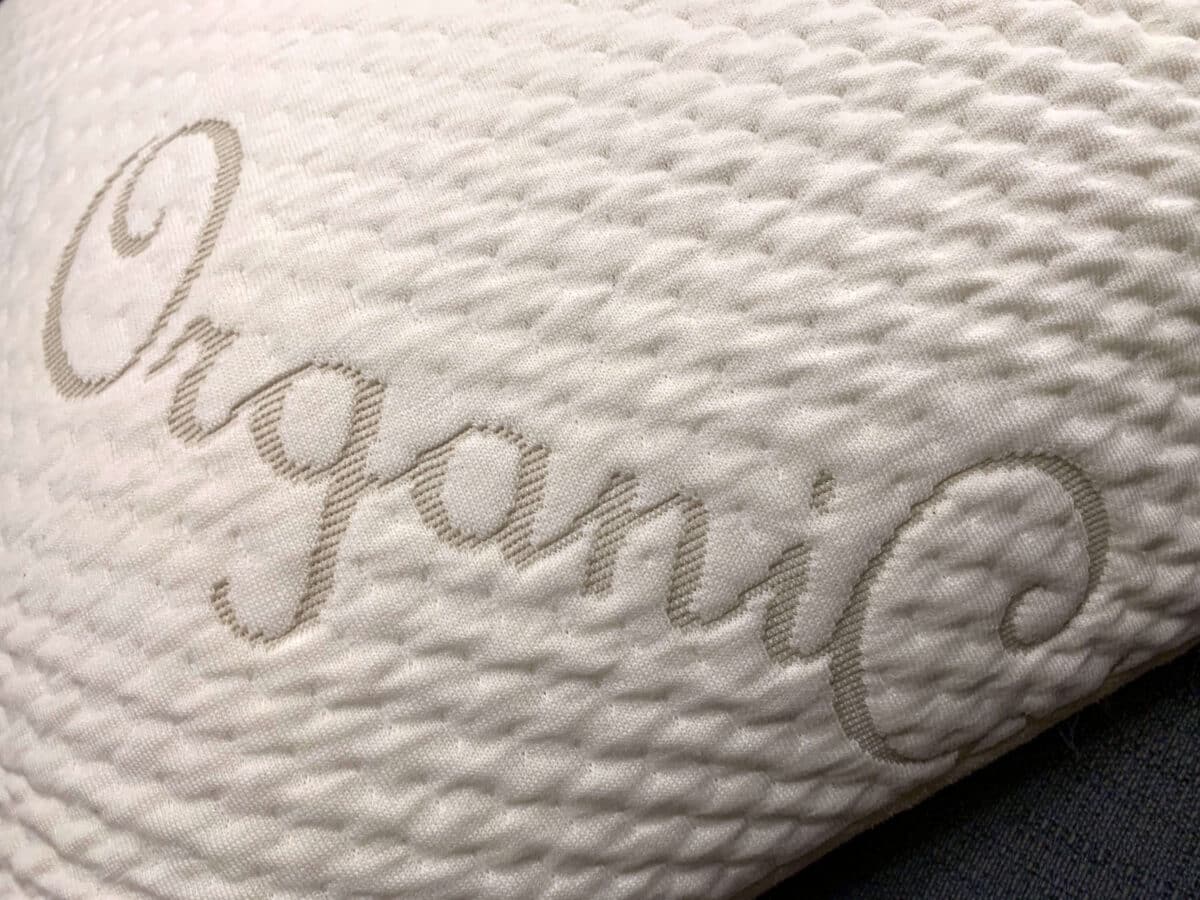
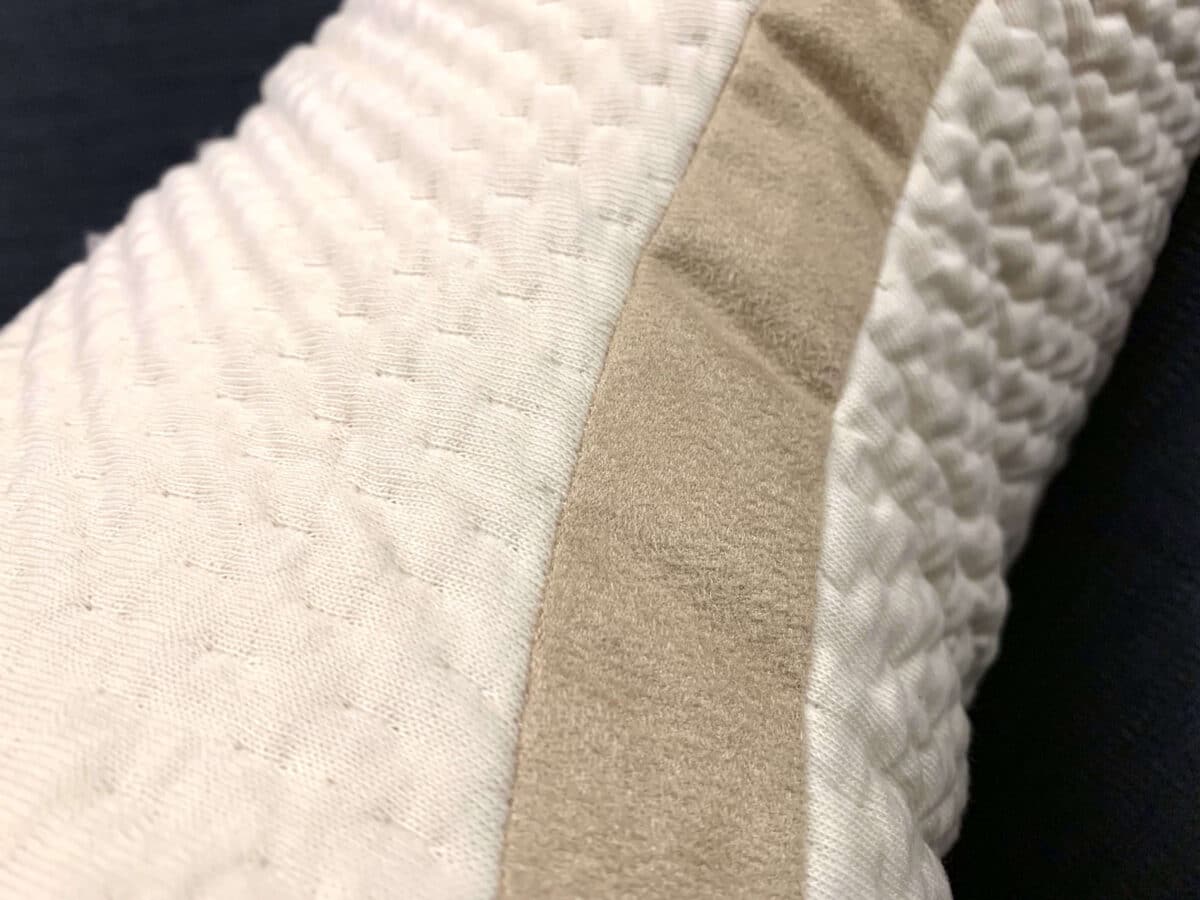
The quilted pillow fabric is extremely soft, and the filling is especially plush and squishy. The front and back of the pillow have “Organic” written stylistically across the pleats, and are joined by a gold suede band.

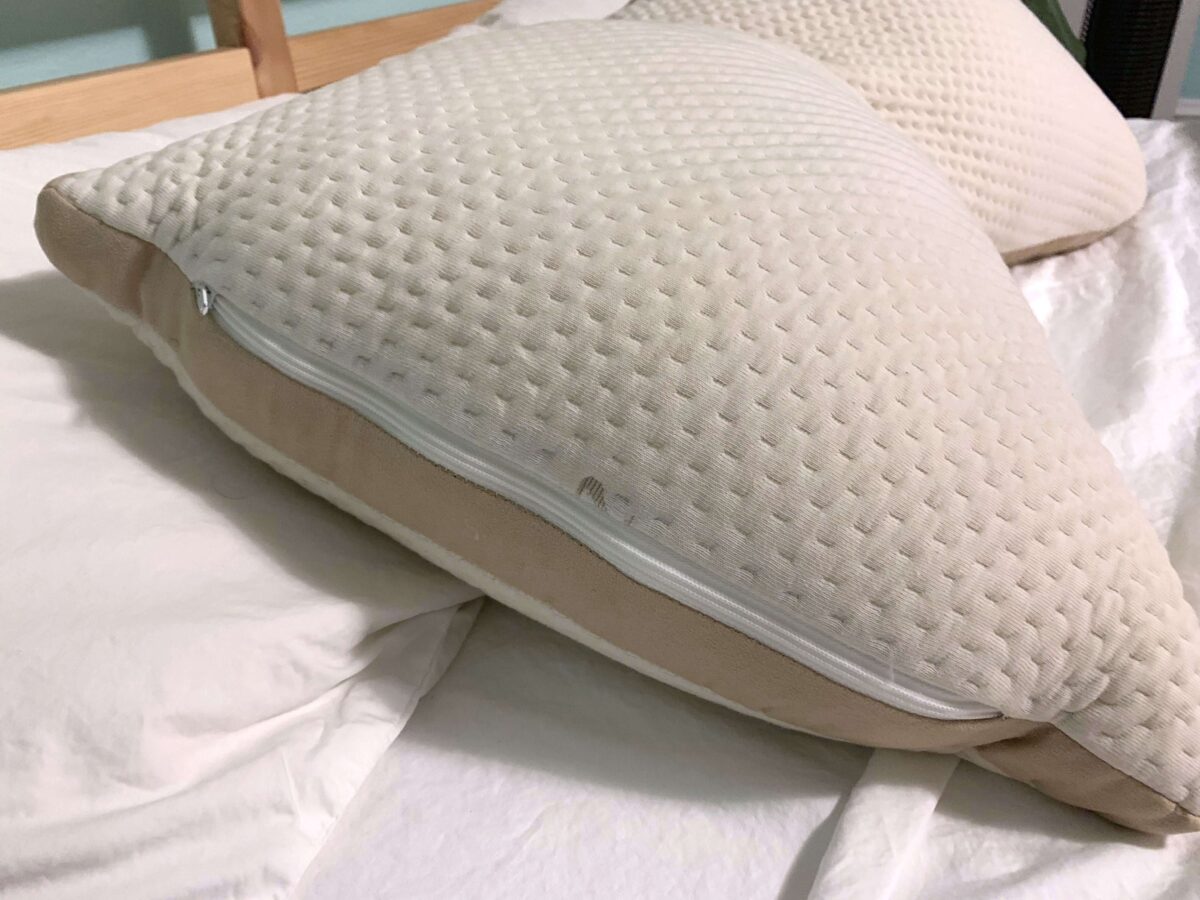
The seams are hidden and seem durable enough to withstand even the roughest of sleepers. I really appreciate the placement of the zipper, as many zippers that go from corner to corner often get jammed with the interior fabric. When I unzipped the portal to coziness, I was met with tiny noodles of cotton stuffing, which Eli & Elm explains can be removed to adjust height, support, and cushiness for a fully customizable experience.

Side Sleeper Construction

Eli & Elm’s pillow design is not only customizable for all sleepers, but it’s specially designed to benefit side-sleepers. The unique shape gives the head and neck the support they need, which is often not provided by flat pillows. I have two flat pillows that have lost every ounce of support and comfort that they once had, so this has been a long time coming. I couldn’t find any information on how I was supposed wash it, and I’ve had issues in the past with damp pillows, so I gave it an extra hour for good measure totaling 120 minutes on low heat. Once out of the dryer, I could start enjoying the pillow without having to smell the factory in which it was made.

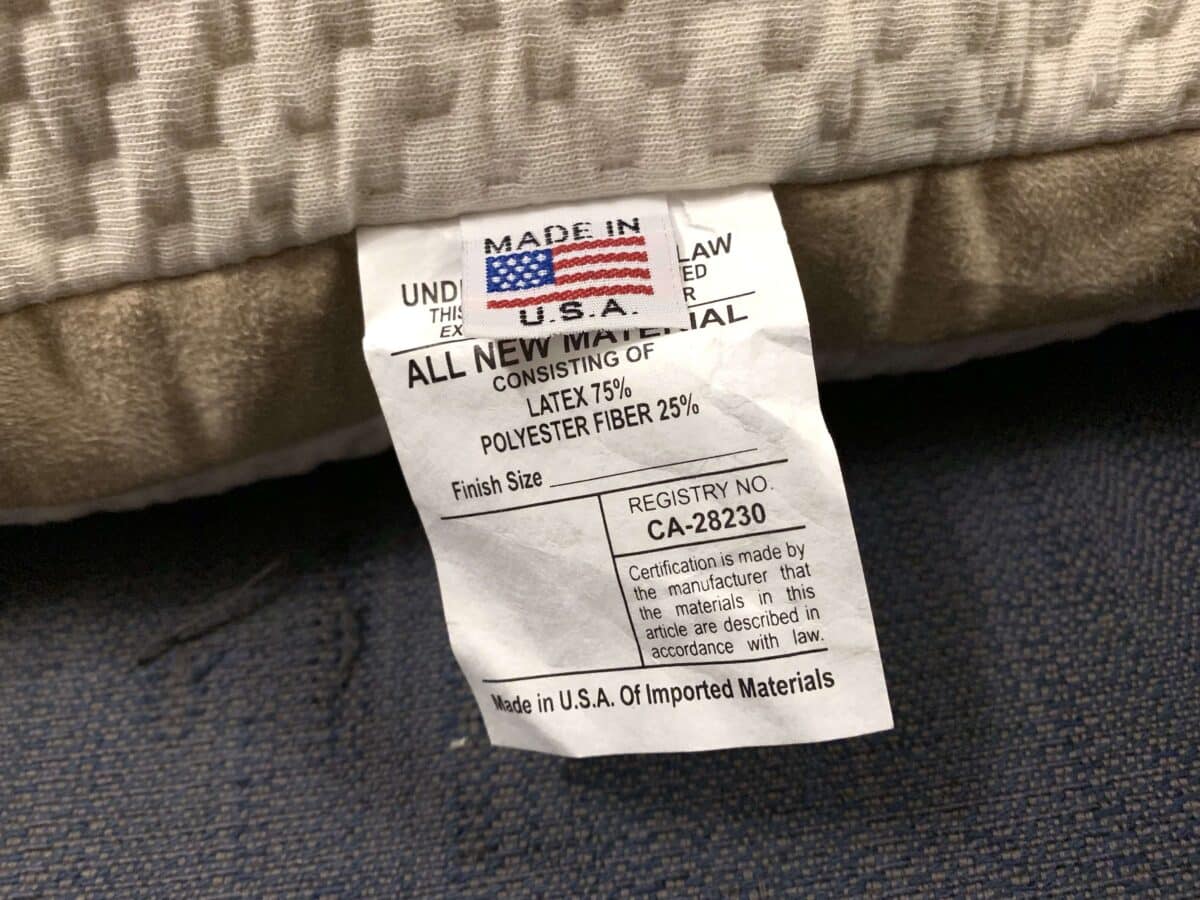
The pillow fabric is comprised of 37% organic cotton, 2% spandex, and 61% polyester; and the fill is made of 75% latex and 25% polyester fiber. Eli & Elm claim that their cotton fabric is breathable, hypoallergenic, eco-friendly, and temperature modulating, so I was intrigued to try it alongside Eli & Elm’s Cooling Whitney Collection. Unlike the Whitney Collection, the Side Sleeper does not utilize Phase Changing Materials in its construction, so experiencing the cooling effects side-by-side would give me an ideal comparison test. In the end, it really did do what they said it would.

My Side Sleeper Findings

The pillow is heavy and kind of unwieldy—if you hold it with one hand, you feel like it will stretch into oblivion, but if you hold it with two hands, it still figures out a way to spill over your arms. When moving the pillow, it feels as though it’s caught somewhere between liquid and solid despite very clearly just being a fabric pillow stuffed with little squishy noodles. When placed on an immovable surface—like a bed—the pillow takes on a whole different personality. The noodles compress under the weight of your head allowing the half-fingertip-bandage shape to conform to your neck. The Side Sleeper feels like a luxury neck pillow made of pizza dough, and I love it. It can be hard to find a pillow that meets all of your greatest expectations, but Eli & Elm got it right this time. No matter which way I slept or rolled, the pillow was always there, giving me the best cushion experience for all sides of my head. It was both supportive and forgiving, which makes it a perfect pillow for literally anyone.

When used simultaneously with Eli & Elm’s Whitney Collection, I found myself in one of the most breathable and temperature consistent sleeping environments ever. Sure, getting into the bed was a bit chilly (my house thermostat is pretty consistently set between 55F and 62F morning and night), but once inside, all the high tech cooling fabric started doing its thing and the sheets and pillow quickly adjusted to my body temperature. After a few days of usage, I was curious what the other side of the pillow felt like since the undersides of pillows are always colder—this one was very cold. In a sleepy daze, I strangely couldn’t tell if the pillow was cold because it was damp or just cold—turns out by perching the Side Sleeper on top of my other pillows (covered with the Whitney pillowcases), I created a kind of black hole for heat in between the two cooling fabrics.

My Side Sleeper Recommendation

Eli & Elm’s Side Sleeper is a magnificent pillow for sleeping, to which I have found no comparison. That said, pillows are generally very versatile and practical, but I don’t think the Side Sleeper shares those traits. Due to its shape, it wouldn’t make for a back or head cushion while playing cards or writing your next novel, and its weight and Jell-O-esque feel make me think traveling with it would be a hassle—its true element is on a bed. The only thing that I’m unsure about at this moment is the stiffness of the pillow. This of course is just a personal problem, because Eli & Elm recommends removing or adding noodles as you go to get the perfect firmness, which I haven’t gotten around to doing. So for all of you prospective buyers and readers out there, if you’re looking for a pillow that is more squishy than firm, make sure you extract some noodles first before deciding it’s not for you! In the off chance the Side Sleeper is just not for you, Eli & Elm has a 45-day risk free trial period so you never have to invest in something you don’t actually like. For me? This is a real keeper and paces miles ahead of the comparable $100 solid bamboo pillow I got online.

Shop the Eli and Elm Side Sleeper Pillow

Frequently Asked Questions About Eli and Elm Side Sleeper Pillow: Must-Have for Best Sleep

Is the Eli & Elm Side Sleeper Pillow worth the investment for a better night's sleep?

Yes, its unique design and adjustable filling make it a strong contender for improving sleep, especially for side sleepers. The pillow's support for the head and neck, along with the ability to customize its height, addresses common issues found in traditional pillows, as our San Diego team found during testing. This personalized approach to comfort suggests its value.

Who is the Eli & Elm Side Sleeper Pillow best suited for?

This pillow is specifically engineered for side sleepers who need targeted support for their head and neck. Its distinctive half-fingertip bandage shape is designed to cradle the head and provide stability, which was a noticeable benefit during hands-on testing. The adjustable filling further allows side sleepers to fine-tune its firmness and loft to their preference.

How does the Eli & Elm Side Sleeper Pillow compare to traditional memory foam pillows?

The Eli & Elm Side Sleeper Pillow offers a unique feel with its cotton stuffing noodles, allowing for adjustable loft and a balance between liquid and solid textures, unlike the more consistent density of most memory foam. While memory foam often conforms to shape, this pillow's customizable fill provides a different kind of adaptable support that our testers found distinct. Its organic cotton and latex-polyester blend also contribute to a different material experience compared to synthetic memory foam.

What are the potential downsides of the Eli & Elm Side Sleeper Pillow?

The pillow can be somewhat heavy and unwieldy, making it a bit challenging to manage with one hand according to our hands-on experience. While it offers adjustable filling for personalized support, this feature might also require some initial trial and error to find the ideal comfort level. The unique shape, while beneficial for side sleepers, might also take some getting used to for those accustomed to traditional pillow forms.

Is the Eli & Elm Side Sleeper Pillow good for hot sleepers?

Eli & Elm claims their organic cotton fabric is breathable and capable of temperature modulation, suggesting potential benefits for hot sleepers. While direct cooling effects were not solely attributed to the pillow in our initial assessment, its breathability as an organic cotton product could contribute to a cooler sleep environment compared to less airflow-friendly materials. Further testing in conjunction with the Cooling Whitney Collection indicated a harmonious cooling experience.

Where can I try the Eli & Elm Side Sleeper Pillow in person in the San Diego area?

You can experience the Eli & Elm Side Sleeper Pillow firsthand at our Yawnder showroom in Encinitas, CA. While the excerpt doesn't explicitly state the pillow is on display, as a retailer of this brand, we encourage you to visit to feel its unique texture and assess its support for yourself. Our team can also answer any further questions you may have about its features.

Want to test this in person? Visit our Encinitas showroom or call 858-232-5760.

Ready to buy?
Check current Eli & Elm pricing and promos

Live pricing, current promotions, and full manufacturer warranty through our affiliate partner. Buying through this link supports Yawnder’s independent testing at no extra cost to you.

Shop Eli & Elm

Primary Goods Bedding Review: Percale Feel and the Snap System

primary goods sheets

Original 2019 review · Layout updated October 2026

Review verdict

The Primary Goods set stood out for its snap-connected top sheet and duvet cover, plus a fitted sheet that gripped the mattress securely. The original reviewer found the percale crisp and the Lilac Snow color noticeably pink in ordinary lighting. The first wash showed no shrinkage, but drying took two cycles.

Reviewed setFive-piece queen set in Lilac Snow
Signature featureTop sheet snaps to the duvet cover
FeelCrisp percale; an adjustment at first
Wash findingsNo shrinkage; two drying cycles

Questions about this review

How did the snap system work?

The flat sheet attached to the duvet cover so the two moved together. The reviewer said that connected feel took some getting used to.

Can the flat sheet be tucked in on its own?

The reviewed flat sheet covered the bed but was not large enough to make hospital corners. It was intended to work with the matching duvet cover.

What did Lilac Snow look like?

The reviewer and others who saw the sample described it as ballet-slipper pink under ordinary lighting, despite its more lilac appearance online.

Did it shrink in the wash?

The reviewer reported no shrinkage after the first wash, but needed two low-heat dryer cycles to get the bedding dry.

Yawnder may earn a commission from qualifying purchases.

Sleep Paralysis: Causes, Symptoms & What to Know

Infographic Sleep Paralysis Decoded

Evidence update: Sleep paralysis is a temporary mismatch between waking awareness and the muscle immobility associated with REM sleep. If episodes are frequent, distressing or accompanied by severe daytime sleepiness, discuss them with a clinician.

Sleep is one of the most mysterious phenomena in living beings, and it has intrigued since the dawn of civilization. Although science has been able to understand much of the processes in living beings, sleep is still mostly a mystery. Much of this is because we aren’t conscious when sleep happens and it’s impossible to tell what happened while we were sleeping after we wake up. For years, scientists have been studying sleep and associated phenomenons like sleep paralysis and have also managed to figure out a lot about what happens in the brain and the body when a person is asleep. However, some aspects of sleep are yet to be demystified, and one of them is the REM stage.

The final of the four stages of sleep is called the Rapid Eye Movement stage because the brain is active in this phase and the eyes move rapidly behind closed eyelids. Many interesting things happen during this stage. Dreams, for instance, have intrigued both scientists and the common man for the longest time, and they happen during the REM phase. When dreams happen, the brain is active, but the body is still inactive, in a state of paralysis, to prevent it from acting out the dreams. Another mysterious phenomenon is linked to the REM stage, and this is sleep paralysis.

Decoding Sleep Paralysis?

Have you ever woken up from sleep, only to find that you couldn’t move or talk or get out of bed for a few moments? That’s what is sleep paralysis. In ancient times, it was linked to supernatural creatures.  When the episode occurs, everyone thought that is supernatural creature had possessed him. This made sleep paralysis a very scary phenomenon for everyone.

The condition was also termed a type of nightmare. But after a lot of scientific research, it is now known that the condition is nothing but being mentally aware while still asleep. This can happen either during falling asleep or waking up. The REM stage is the most complicated phenomenon associated with sleep, mainly because the brain becomes active and is conscious enough to experience life-like visions in the form of dreams, but the body is still inactive. Although the cause of sleep paralysis has been learned, the reason behind it still remains unclear.

What Causes Sleep Paralysis?

Although science is still unsure about the exact cause of sleep paralysis, global folklore has had explanations for centuries. These include visits from supernatural beings like ghosts, witches, and demons. In recent cases in the US, sleep paralysis has also been called “alien abductions.”

These associations to supernatural activity make sense because during sleep paralysis many people experience pressure on the chest, the feeling of being secretly watched by an intruder, and other hallucinations. However, none of these actually happen. These are only sensory perceptions because the brain is still in the REM phase and the body is inactive. This means the person has woken up when he is not supposed to be awake.

Because sleep paralysis is a complex phenomenon, it has been widely studied by scientists. The most common cause is waking up in the middle of REM stage sleep. When a person wakes up when the REM stage is still active, he is able to see, hear and feel because the brain is awake, but is unable to move because the body has not yet come out of the REM stage. Although this sounds scary, it lasts only a few seconds because the body realizes that the brain is already awake and slowly begins to move again.

In the number of studies conducted over the years to find out more about sleep paralysis, the most common cause has been identified as sleep deprivation. When a person is deprived of the normal sleep cycle, he is more likely to wake up in the middle of the REM stage. Usually, we are supposed to wake up at the end of the REM stage, but if we don’t have a normal sleep cycle, the possibility of waking up in the middle of the REM stage increases. This is when sleep paralysis is most likely to happen.

Sleep paralysis is also common in narcolepsy patients, according to sleep experts at the Sleep-Wake Disorders Center at the Montefiore Health System, New York. Because narcolepsy is the result of a disrupted sleep cycle, sleep paralysis is more likely to happen, in combination with hallucinations. Napping also increases the possibility of sleep paralysis because it disrupts the natural sleep pattern. If you oversleep while napping, you may experience sleep paralysis.

Young age also is likely to be a cause behind sleep paralysis. The Mayo Clinic says that sleep paralysis is most common in the age range of 10 and 25. This means even children can be affected by this disorder and also get very frightened.

In people with anxiety disorder, post-traumatic stress disorder, or panic disorder, sleep paralysis is very likely, according to a 2017 report published by the National Institutes of Health. Since these emotional disorders result in nightmares and insomnia, they also increase the possibility of sleep paralysis.

According to a 2011 study by Pennsylvania State University, nearly eight percent of the general population experienced sleep paralysis. Among them, about 31 percent of people suffer from mental disorders such as depression, anxiety, or PTSD. Although this was a small study, it does go a long way in proving that mental disorders are associated with sleep paralysis to a certain extent. However, this doesn’t mean that every person with anxiety or PTSD will get sleep paralysis.

Genetics may also have a role to play in sleep paralysis. According to the findings of a 2015 sleep study involving 862 twins and siblings by the University of Sheffield, genetics could influence sleep paralysis is some people.  Although this study was also preliminary, the researchers added that it does provide a basic idea about the involvement of circadian rhythms in sleep paralysis.

Symptoms of Sleep Paralysis

Those who have experienced sleep paralysis find it to be scary. It almost seems like you were having a stroke, where your entire body was paralyzed, and you couldn’t move or speak. These are the most important symptoms of sleep paralysis. People are unable to move any part of their bodies or speak right after waking up or right when falling asleep. According to the Mayo Clinic, this can last a few seconds or up to a minute. Along with paralysis of the body, people may also experience tightness or pressure on their chest, as well as a choking feeling.

Hallucinations are also not uncommon during an episode of sleep paralysis. This is because the brain is still in a dream-state and hasn’t fully woken up. These visions or hallucinations can be an extension of an ongoing dream. Aside from these, there are no other symptoms of sleep paralysis. The person is awake and aware during sleep paralysis episodes and can later recount the experience.

Sleep Paralysis Prevention and Treatment sleep paralysis treatment

There are no short or long term effects of sleep paralysis. Hence, there is no treatment for it. What can be treated is an underlying cause that could be contributing to sleep paralysis. Rather than treatment, this is an effort to prevent sleep paralysis.

Sleep experts suggest that medical help is not required after only one rare episode of sleep paralysis. What is important is to check your sleep hygiene. Often, sleep paralysis is a sign of sleep deprivation.  If you have experienced sleep paralysis only once or twice, you should make sure to get enough sleep daily, limit caffeine, alcohol, nicotine and all other drugs, and stop using electronics at bedtime.

Medical help might be needed to treat underlying causes if the above doesn’t help and sleep paralysis episodes keep becoming more frequent. A sleep specialist is a person to see if you have recurrent sleep paralysis episodes.

Although sleep paralysis is not dangerous, if you experience extreme episodes, you may be prescribed a short course of antidepressants. This helps to treat any underlying stress or mental disorder that might be the reason.

Sleep experts suggest that during a sleep paralysis episode, it is important to remain calm and keep telling yourself that it will soon pass. There’s not much else that you can do. No one has ever remained in a sleep paralysis forever, so it’s important to understand that it’s only temporary and pass very soon. However, this is possible only when you’ve experienced an episode or two before. The first time, such episodes can really be frightening.

Risk Factors of Sleep Paralysis

Sleep paralysis is a fairly common phenomenon and can affect anyone in any age group. It is most likely to begin between age 14 and 17 years and decreases after the age of 30. A person is more likely to experience it if there someone in the family with the disorder.

Some of the risk factors are:

  • Bipolar disorder
  • Anxiety, depression or PTSD
  • Sleeping on your back
  • Excessive stress
  • The use of certain medications

Interesting Facts About Sleep Paralysis

In the past, before science could explain everything, it used to be believed that ghosts and demons caused sleep paralysis by pinning people down by sitting on their chest. However, these visions were mere hallucinations, a common symptom of sleep paralysis. In fact, most people who report seeing apparitions actually had sleep paralysis.

People also use different methods to shake themselves out of the episode. Some wiggle their toes while others cough. However, it isn’t possible to wake oneself up from an episode of sleep paralysis, until it passes.

If you, or someone you know has episodes of sleep paralysis, share the following infographic. It lucidly explains what sleep paralysis is, what causes it, and finally how to treat sleep paralysis.

Frequently Asked Questions About Sleep Paralysis: Must-Have Insights on This Risky Condition

What are the downsides of experiencing sleep paralysis?

The primary downside of sleep paralysis is the temporary inability to move or speak, which can be a terrifying experience for sufferers. Episodes often involve sensations of chest pressure, choking, and vivid hallucinations, blurring the lines between reality and dreams. These experiences can lead to significant fear and distress, even though they are typically brief.

Who is sleep paralysis most likely to affect?

Sleep paralysis is most likely to affect individuals who experience irregular sleep patterns, those with narcolepsy, and people who sleep on their backs. It is also linked to mental health disorders like anxiety and PTSD, with roughly 31% of affected individuals reporting such challenges. Waking during the REM sleep phase is a common trigger.

Is sleep paralysis a sign of a serious underlying health condition?

While sleep paralysis itself is not typically a sign of a serious underlying health condition, it is often associated with sleep deprivation and certain predispositions. Disruptions in sleep cycles, common in those with irregular sleep patterns, increase the likelihood of experiencing this condition. It can also be a symptom related to narcolepsy or heightened anxiety levels.

How does sleep paralysis compare to a nightmare?

Sleep paralysis differs from a nightmare because individuals are fully conscious during an episode, even though they cannot move. During a nightmare, a person is still asleep and often unaware they are dreaming until they wake up. With sleep paralysis, the brain is awake but the body is still in a dream-like state, leading to a unique blend of awareness and immobilization.

Is sleep paralysis good for anything?

Sleep paralysis is not considered beneficial; instead, it is a disconcerting phenomenon where awareness returns before the body has fully awakened. It can be a frightening and disorienting experience, often accompanied by chest pressure or hallucinations. The focus is typically on prevention and management rather than finding any positive aspects.

Where can I learn more about healthy sleep habits to prevent sleep paralysis?

You can learn more about healthy sleep habits to prevent sleep paralysis by focusing on good sleep hygiene, which is critical for prevention. Establishing regular sleep patterns and avoiding sleep deprivation are key methods discussed in the provided article. While Yawnder's showroom in Encinitas, CA, specializes in mattresses, their focus on quality sleep environments can contribute to better sleep hygiene overall.

Keep exploring
More sleep guidance

Browse Yawnder’s sleep education, research explainers, and practical guides.

Explore sleep guides

How to Buy a Mattress Online: Complete Guide

Best place to buy a mattress

Frequently Asked Questions About How to Buy a Mattress Online: Complete Guide

Is buying a mattress online worth it?

Yes, buying a mattress online is worth it due to convenience, wider selection, easier price comparisons, and risk-free sleep trials. Online retailers allow you to browse many options from home, often delivering and installing the mattress for you.

What are the downsides of buying a mattress online?

The primary downside of buying a mattress online is the inability to physically try the mattress before purchase, though sleep trials mitigate this risk. While the vast selection offers many choices, it can also make the decision-making process more time-consuming because of the sheer volume of options.

How do online mattress purchases compare to traditional showroom shopping?

Online mattress purchases offer greater convenience, a wider selection, and easier price comparisons compared to traditional showroom shopping. You can explore thousands of mattresses and compare prices from home, eliminating the need for exhausting trips to multiple stores.

Who is Tuft & Needle best for?

Tuft & Needle is best for shoppers looking for a value-driven foam mattress designed for comfort and excellent pressure relief. Founded in 2012, this brand offers a solid option for those working within a strict budget, with mattresses generally priced between $300 and $1200.

Can I try a Purple mattress in person before buying online?

While the article highlights the benefits of online purchasing, you might want to call our San Diego showroom in Encinitas, CA to see if we have Purple mattresses available for hands-on testing. Many online brands like Purple, which uses foam, also partner with physical retailers for display.

What is a sleep trial and why is it important when buying online?

A sleep trial is a period, typically around 100 nights, during which you can test a mattress in your home and return it for a full refund if unsatisfied. This policy is crucial when buying online because it offers a risk-free way to ensure the mattress meets your expectations, which is not an option available in traditional showrooms.

Want to test this in person? Visit our Encinitas showroom or call 858-232-5760.

Ready to buy?
See today’s best sleep deals

Live pricing and current promotions on the mattresses, bases, and sleep tech we recommend.

Shop current deals

Why buying a mattress online works — and where it doesn't

Online mattress buying solved two real problems: opaque pricing and pushy showrooms. You get a fixed price, a sleep trial measured in months instead of minutes, and delivery to your door. What it cannot do is tell you how a bed feels under your own hips at 3 a.m. That is the trade you are making, and the whole game is structuring the purchase so the trade costs you nothing.

Know your specs before you shop

Three things narrow the field faster than any list of "best" beds:

  • Your main sleep position. Side sleepers generally need more pressure relief at the shoulder and hip; back and stomach sleepers need more support and less sink at the waist. Combination sleepers usually do best on something responsive enough to turn on.
  • Firmness, described honestly. Most beds sold as "medium" land around 5 to 7 on a 10-point scale. Body weight changes how firm a bed feels: heavier sleepers experience the same mattress as softer, lighter sleepers as firmer.
  • Whether you sleep hot. All-foam beds insulate more than coil-based hybrids. If overheating is your issue, that single structural difference matters more than any cooling cover claim.

Beyond that: mattress height (relevant to your sheets and your bed frame), motion isolation if you share the bed, edge support if you sit on the side, and certifications like CertiPUR-US for foams or GOLS/GOTS for latex and organic materials.

Read the fine print, not the marketing

The policy is the product when you cannot lie on the bed first.

  • Trial length and the minimum break-in. Most brands ask for 21 to 30 nights before a return, which is reasonable — new beds genuinely feel different in week three.
  • Return cost. Ask whether returns are free, whether there is a pickup or restocking fee, and who hauls the mattress away. A "100-night trial" with a fee attached is a different offer than one without.
  • Warranty terms. Look for the sag depth that qualifies as a defect, whether it is prorated, and the requirement that you use a supportive foundation — using the wrong base voids more warranties than any other single thing.
  • Delivery method. Compressed box shipping versus white-glove delivery with setup and old-mattress removal. If you cannot carry an 80-pound box up a staircase, pay for the service.
  • Who you contact. A phone number and a real address beat a chat widget when something goes wrong.

Sales timing and pricing reality

Mattress prices are promotional by design. The largest discounts cluster around Presidents Day, Memorial Day, Fourth of July, Labor Day and Black Friday, and most brands run something most months. Compare the same size across brands, factor in bundled pillows or sheets at their real value rather than the stated one, and check whether a foundation or adjustable base is required for the warranty before you call it a deal.

Setup that avoids the common mistakes

Measure the doorways and stair turns first. Have the old bed and any removal arranged before delivery day. Unbox a compressed mattress on the frame it will live on, cut the plastic carefully, and give it a day or two to fully expand — and air the room out if there is an off-gassing smell, which usually fades within a few days. Put a breathable, washable protector on it before the first night; it protects the warranty as much as the mattress. And confirm the foundation matches: slats generally need to be no more than about three inches apart, and a memory foam bed on a box spring designed for innersprings is a support problem waiting to happen.

The hybrid approach

The most reliable method is not purely online: try similar constructions in person to learn which category your body wants — foam versus hybrid versus latex, and roughly how firm — then buy the specific model with the trial and price you want. Twenty minutes lying on three different constructions teaches you more than three hours of reading, and it costs nothing.

See current mattress deals →

FAQ

Is it safe to buy a mattress online?

Yes, if the trial, return cost and warranty are clear before you pay. Those three terms are the real protection.

How long does a mattress take to expand?

Most compressed mattresses are usable within hours and fully expanded within 24 to 72 hours. Give the feel a couple of weeks before judging it.

Do I need a new foundation?

Check the warranty requirements. Many foam and hybrid beds require a solid or closely slatted platform, and using the wrong base can void coverage.

When are mattresses cheapest?

Major holiday weekends generally bring the deepest discounts, with Labor Day and Black Friday typically the strongest.

What if I don't like it?

Start the return inside the trial window and after the required break-in period, and expect to arrange pickup. Confirm before buying whether a fee applies.

Best Microfiber Bed Sheets

Microfiber Sheets Are they any good

Frequently Asked Questions About Best Microfiber Bed Sheets

Are microfiber sheets a good value for their price?

Yes, microfiber sheets generally offer a good value due to their affordability compared to cotton alternatives. They provide a soft feel and practical benefits at a lower cost, making them an accessible option for many shoppers.

Who are microfiber sheets best for?

Microfiber sheets are best for individuals who prioritize a silky, soft feel and tend to feel cold at night. Their ability to retain body heat makes them an excellent choice for winter months or for those who prefer warmer bedding.

How do microfiber sheets compare to cotton in terms of breathability?

Microfiber sheets generally offer less breathability than cotton, especially premium cotton or percale-woven sheets. While microfiber sheets are lighter and trap air for warmth, they do not provide the refreshing breeziness that cotton offers, which is better for warmer nights or hot sleepers.

What are the main downsides of microfiber sheets?

Polyester microfiber can trap warmth or feel clingy to some sleepers and may pill or retain odors over time. Construction and care matter more than generic claims that premium microfiber will suddenly tear.

Are microfiber sheets good for hot sleepers?

No, microfiber sheets are generally not ideal for hot sleepers because they retain body heat and are less breathable than cotton. If you are prone to night sweats, cotton would be a better option as it is more effective at wicking away moisture.

Where can I try microfiber sheets in person in the San Diego area?

You can experience the feel of various bedding options, including potentially microfiber sheets, at the Yawnder showroom in Encinitas, CA. Visiting our store provides an opportunity to compare different materials firsthand and decide what best suits your comfort preferences.

Want to test this in person? Visit our Encinitas showroom or call 858-232-5760.

Ready to buy?
See today’s best sleep deals

Live pricing and current promotions on the mattresses, bases, and sleep tech we recommend.

Shop current deals

What microfiber sheets actually are

2026 material-check note: Microfiber typically means finely spun synthetic polyester, not a uniform measure of quality. Compare fabric weight, weave, fitted-pocket depth, pill resistance and wash instructions. Very soft polyester can still trap heat for some sleepers; see cotton sheet alternatives.

Microfiber is not a weave — it is a fiber size. The term refers to synthetic filaments (usually polyester, sometimes a polyester-nylon blend) finer than one denier, which is thinner than a strand of silk. Those ultra-fine filaments are what give the fabric its soft, slightly slick hand and its very low price. Because it is a plastic fiber, quality is described in grams per square meter (GSM) rather than thread count. Anything advertised as microfiber with a "1,800 thread count" is marketing, not a spec: treat GSM in the 90–120 range as light, and 120–150+ as more substantial.

Where microfiber wins

  • Price. A full set often costs a fraction of comparable cotton, which makes it easy to own several sets.
  • Wrinkle resistance. It comes out of the dryer nearly smooth and does not need ironing.
  • Durability against pilling in the seams and shrinkage. Polyester holds its dimensions, so fitted sheets keep fitting.
  • Stain release and fast drying, which is why it is popular in kids' rooms, guest beds, RVs and dorms.
  • Softness immediately, with no break-in period.
  • Tight construction that can be less hospitable to dust mite allergens than a loose weave, though a proper zippered allergen encasement does far more.

Where it loses

Breathability. This is the big one. Polyester does not absorb moisture the way cotton does; it wicks and traps heat. If you sleep hot or deal with night sweats, microfiber is usually the wrong choice — percale cotton, linen, TENCEL lyocell or bamboo viscose move heat and moisture better.

Pilling over time. Cheaper, low-GSM microfiber develops fuzz balls, especially where a duvet rubs.

Static and odor retention. Synthetics hold body oils and can keep a smell after washing if you overuse fabric softener or wash cool.

Feel. Some people love the buttery slickness; others describe it as clingy or plasticky. It never gets the crisp, dry hand of percale.

Environmental footprint. It is petroleum-based and sheds microplastics in the wash. A microfiber-catching laundry bag reduces that.

Microfiber vs the alternatives

vs cotton percale: percale is cooler, crisper and breathes better; microfiber is cheaper and softer out of the package.

vs cotton sateen: similar silky look; sateen breathes better, microfiber resists wrinkles better.

vs brushed cotton flannel: flannel is warmer and more absorbent for winter; microfiber is lighter and dries faster.

vs bamboo viscose or TENCEL: both are noticeably cooler and more moisture-managing at a higher price.

Care that makes them last

Wash warm (not hot) on a normal cycle with a modest amount of detergent. Skip fabric softener and dryer sheets entirely — they coat the fibers, kill the softness and lock in odor. Skip bleach, which weakens polyester. Tumble dry low or line dry; high heat is what causes pilling and can glaze the surface. Wash separately from towels and anything with hooks or zippers, and pull them out promptly so they stay smooth.

Who should buy them

Microfiber is a smart pick for guest rooms, kids' beds, bunk beds, RVs, cabins and anyone who wants several cheap, wrinkle-free sets in rotation. Cool sleepers and people who dislike the crisp feel of percale often prefer it year-round. Hot sleepers, night-sweat sufferers and anyone with a heat-retaining foam mattress should spend the extra money on a breathable natural or cellulosic fiber instead — the sheet layer is the cheapest place to fix a hot bed.

See current bedding and mattress deals →

FAQ

Are microfiber sheets hot to sleep on?

They are warmer than cotton percale, linen or lyocell because polyester traps heat and does not absorb moisture. Cool sleepers usually find them comfortable; hot sleepers usually don't.

Does thread count matter for microfiber?

No. Judge it by GSM. Very high advertised thread counts on synthetic sheets are meaningless.

Why do my microfiber sheets pill?

Low GSM plus high dryer heat and fabric softener. Wash warm, dry low, skip softener.

Are microfiber sheets good for allergies?

The tight construction can help, but a zippered allergen-proof mattress and pillow encasement plus weekly hot washing does far more.

How long do they last?

A well-made set treated properly typically gives a few years; bargain sets often start pilling within a year.

XOcomfort Pillow Review: Adjustable Foam and Support

XOcomfort Pillow Review

Yawnder Reviews · Updated October 2026

XOcomfort Pillow Review

Experience the ultimate in sleep comfort with the XOcomfort Pillow, where innovative materials science meets customizable support, ensuring you stay cool and cozy all night long. This is a historical hands-on pillow review. Any past discount, listed price or return promise must be verified before buying.

XOcomfort Pillow Review
XOcomfort Pillow Review.

Frequently Asked Questions About XOcomfort Pillow Review

Is the XOcomfort Pillow worth it for its price?

My original XOcomfort review covers adjustable shredded foam and the pillow's support feel. The older $69.99 price, $20 discount, Prime shipping and 30-day return terms are not verified current offers.

Who is the XOcomfort Pillow best for?

The XOcomfort Pillow is best for sleepers who need customizable support, particularly side sleepers, due to its shredded memory foam that allows for height and firmness adjustments. Its innovative heat channels also make it suitable for those who prefer a cool sleep experience without an icy feel.

What are the downsides of the XOcomfort Pillow?

One minor downside of the XOcomfort Pillow is a slight off-gassing odor upon unboxing, which our unboxing experience confirmed. It is recommended to air out the pillow before initial use to dissipate this smell.

Is the XOcomfort Pillow good for side sleepers?

Yes, the XOcomfort Pillow is particularly good for side sleepers because its customizable shredded memory foam allows you to adjust the loft and support to match your specific needs. Our hands-on testing at Yawnder found it provided firm but comfortable support beneficial for side sleeping.

How does the XOcomfort Pillow stay cool without being icy?

The XOcomfort Pillow stays cool through innovative heat channels and its unique foam composition, designed to dissipate heat away from your body. Unlike some cooling pillows, it avoids an uncomfortable icy sensation while still promoting a more restful night's sleep.

Where can I try the XOcomfort Pillow in person?

Currently, the article indicates the XOcomfort Pillow is purchased online through Amazon, with no mention of physical retail locations like our Yawnder showroom in Encinitas, CA. The original review mentioned a 30-day return policy; check the current seller and product listing for the applicable terms.

Want to test this in person? Visit our Encinitas showroom or call 858-232-5760.

Adjustable and specialty pillows explained

Adjustable pillows let you add or remove fill so the loft matches your shoulder width and mattress firmness. That flexibility is the main reason they suit people who have bought several pillows and never found the right height.

A softer mattress lets your shoulder sink further, which usually means you need a lower pillow than you would on a firm bed. Adjust the pillow after you change the mattress, not before.

Getting the fit right

Lie in your usual position and have someone check your neck from the front: your nose should stay in line with the centre of your chest, with no upward or downward tilt.

Change fill in small amounts and sleep on each setting for a couple of nights before judging it.

Materials and care

Shredded foam and down-alternative fills are easy to redistribute and breathe reasonably well. Latex shreds are springier and hold loft longer.

Use a protector, wash covers monthly, and keep spare fill in a sealed bag so you can top up as the pillow compresses.

FAQs

How much fill should I remove first?

Start by taking out about a cup at a time; small changes are easier to judge than large ones.

Do adjustable pillows work for stomach sleepers?

Yes, and they are one of the few options that go thin enough, since most stomach sleepers need very little loft.

Can I mix fill types?

You can, and combining shredded foam with a little down-alternative often softens the surface without losing support.

See current deals

How Long Does Melatonin Last? Timing, Dose & Safety

How Long Does Melatonin Last

Updated October 18, 2026. This guide covers melatonin duration, formulation, timing and dose questions. It is general education, not a personal dosing plan.

How long does melatonin last? The quick answer

There is no guaranteed number of hours for everyone. Immediate-release and extended-release products differ, and effects depend on timing, age, medicines and individual sensitivity. Feeling awake again does not prove you need another serving.

There is no single melatonin dose that is right for everyone. For occasional trouble falling asleep, Johns Hopkins sleep guidance discusses 1 to 3 mg about two hours before bedtime and emphasizes that “less is more.” Timing, age, medications, the reason you are using melatonin, and the product formulation all matter.

Important: This is general education, not individualized medical advice. The American Academy of Sleep Medicine does not recommend melatonin as a routine treatment for chronic insomnia, and parents should talk with a pediatric health professional before giving melatonin to a child or teen. People who are pregnant or breastfeeding, have seizure disorders, or take medications—especially blood thinners—should discuss melatonin with a clinician or pharmacist first.

QuestionEvidence-based takeaway
Typical adult amountJohns Hopkins discusses 1–3 mg for occasional sleep difficulty; this is not a universal prescription.
When to take itAbout two hours before bedtime in the Johns Hopkins guidance; circadian-rhythm problems can require different timing.
5 mg or 10 mg?Higher is not automatically better and may increase next-day drowsiness or other side effects.
ChildrenNo universal pediatric dose; AASM advises involving a pediatric health professional.
Long-term nightly useLong-term safety is not well established; persistent insomnia deserves evaluation rather than automatic dose escalation.

What Melatonin Actually Does

Melatonin is a hormone your body naturally produces in response to darkness. It helps regulate circadian timing—your internal day-night clock. A melatonin supplement does not work exactly like a traditional sedative, and its usefulness depends heavily on why you are taking it and when you take it.

That is why melatonin can make more sense for some circadian-timing problems, such as jet lag or delayed sleep timing, than for chronic insomnia. Bright light in the evening can also shift circadian timing, so sleep schedule and light exposure are part of the same picture.

Immediate-release versus extended-release melatonin

How long melatonin feels active varies by formulation, dose, age, metabolism, and individual sensitivity. Immediate-release products generally act for a shorter window than extended-release products, but a larger dose should not be treated as a way to force longer or better sleep. Next-day grogginess can occur, particularly when the amount is too high for the individual or taken too late.

For chronic insomnia, higher doses are not the answer by default. NCCIH notes that major clinical guidelines have recommended against routine melatonin treatment for chronic insomnia because the evidence is limited. Persistent insomnia is better evaluated as a sleep disorder rather than managed by repeatedly increasing a supplement dose.

Timing matters at least as much as the milligram number. For occasional sleep difficulty, Johns Hopkins guidance discusses taking melatonin about two hours before bedtime. Jet lag and circadian-rhythm disorders can require different timing because the goal is to shift the body clock, not simply create drowsiness.

What Is a Typical Melatonin Dose for Adults?

There is no FDA-approved standard melatonin dose for sleep in the United States. Johns Hopkins sleep specialist guidance for occasional sleep difficulty discusses 1 to 3 mg about two hours before bedtime and emphasizes that a larger dose is not automatically more effective.

Is 5 mg of melatonin a lot?

Five milligrams is above the 1–3 mg amount discussed in that general Johns Hopkins guidance. That does not mean 5 mg is automatically unsafe for every adult, but it is a reason not to assume that the biggest dose on the shelf is the best starting point. Higher amounts may increase next-day sleepiness, headache, dizziness, nausea, or vivid dreams.

What about 10 mg?

Ten milligrams is well above the 1–3 mg amount commonly discussed for occasional sleep difficulty. Rather than treating 10 mg as a routine starting dose, repeated high-dose use is worth discussing with a clinician or pharmacist—especially if you take other medications or have an ongoing sleep problem.

Safety, Side Effects and Interactions

NCCIH says short-term melatonin use appears relatively safe for many people, but long-term safety has not been established. Commonly reported short-term side effects include daytime sleepiness, headache, dizziness, and nausea.

Melatonin can also interact with medications. NCCIH specifically advises medical supervision for people with epilepsy and those taking blood thinners. People who are pregnant or breastfeeding should also discuss melatonin with a health professional because safety data are limited.

Alcohol can worsen drowsiness and impair alertness, so combining alcohol with a sleep-promoting supplement is not a good way to judge whether the supplement is helping. If you feel groggy the next day, do not drive or operate machinery until you are fully alert.

Children, Older Adults and Chronic Insomnia

Children and teens: The American Academy of Sleep Medicine advises parents to talk with a pediatric health professional before giving melatonin. There is no universal pediatric dose, and supplement content can vary widely.

Older adults: NCCIH notes that melatonin may remain active longer in older people and contribute to daytime drowsiness, so extra caution is sensible—especially when other medications or fall risk are involved.

Chronic insomnia: Major sleep guidelines have recommended against routine melatonin treatment for chronic insomnia because the evidence is limited. Cognitive behavioral therapy for insomnia (CBT-I) is the better-supported first-line approach for persistent insomnia.

Why the Label May Not Equal the Actual Dose

Melatonin is sold as a dietary supplement in the United States, which means the FDA does not approve individual supplements for safety and effectiveness before they are sold. NCCIH and AASM both note that measured melatonin content has varied substantially from the amount printed on some labels. That makes product quality part of the dosage question, not just the number of milligrams on the bottle.

Frequently Asked Questions

How much melatonin should I take to sleep?

There is no single correct dose for everyone. Johns Hopkins general guidance for occasional sleep difficulty discusses 1–3 mg about two hours before bedtime. Your age, medications, health history, formulation, and the reason for taking melatonin can change what is appropriate.

Is 3 mg of melatonin considered a high dose?

Three milligrams falls within the 1–3 mg range discussed in Johns Hopkins guidance for occasional sleep difficulty, but that range is not a universal prescription and some people can experience side effects even at lower amounts.

Can I take melatonin every night?

Short-term use appears relatively safe for many adults, but long-term safety is not well established. If you are using melatonin night after night for an ongoing sleep problem, discuss the underlying issue with a qualified health professional rather than automatically continuing or increasing the dose.

How long before bed should I take melatonin?

Johns Hopkins guidance for occasional sleep difficulty discusses about two hours before bedtime. The best timing can differ for jet lag and circadian-rhythm disorders.

Can children take melatonin?

Melatonin is used in some children, but the AASM recommends involving a pediatric health professional. There is no universal pediatric dose, and accidental ingestion is a significant safety concern.

Compare the product label before buying

Our Lemme Sleep review, OLLY Sleep review and Kin Dream Light review show why serving size and additional ingredients matter. Their different melatonin amounts are label facts, not a dose recommendation. For the broader evidence, read what melatonin does and when it may help.

Sources

Editorial note: Yawnder publishes sleep information for education and does not diagnose or treat medical conditions. Persistent insomnia, significant daytime sleepiness, medication interactions, or questions about melatonin for a child should be discussed with a qualified clinician or pharmacist.

Compare sleep gummy labels and precautions

Food and Sleep: How Diet Can Affect Rest

Alkaline foods and sleep

Frequently Asked Questions About Food and Sleep: Exclusive Tips for Best Rest Tonight

What kind of foods should I avoid to improve my sleep?

To improve your sleep, you should avoid common acidic foods such as grains, refined sugars, fish, dairy products, fast foods, sugary drinks, alcohol, high-protein supplements, and certain fruits and vegetables, especially close to bedtime. These items can contribute to an overly acidic bodily environment, disrupting your sleep cycle and making it harder to rest effectively. Our sleep experts at Yawnder understand the intricate link between diet and sleep quality.

How does an acidic diet impact sleep quality?

An acidic diet impacts sleep quality by overworking your digestive system, diverting energy away from the brain's natural process of preparing for sleep. This makes it harder to fall asleep and reduces the quality of the sleep you do get, often leading to morning fatigue. Consuming heavy, acidic meals before bed forces your body to focus on digestion rather than restorative rest.

What is considered an acidic diet?

An acidic diet is characterized by a predominance of foods with a pH level of 4.6 or lower, which create excess acid in the body, unbalancing its natural state. This dietary pattern can lower overall blood pH, leading to digestive problems and poor sleep quality. Understanding food pH levels is crucial for optimizing your health and nightly rest.

Is it important to understand pH levels when thinking about diet and sleep?

Yes, understanding pH levels is crucial because different body systems require varying pH levels, and an imbalanced diet can disrupt this. Consistently eating acidic foods can lower your overall blood pH, which can lead to various health issues including compromised sleep. A neutral pH of 7 like distilled water contrasts with highly acidic substances like battery acid at pH 0.

Who is most affected by the link between food and sleep?

The link between food and sleep affects anyone, but particularly those who experience frequent fatigue or difficulty sleeping, as their dietary choices might be a contributing factor. Many individuals unknowingly consume diets that disrupt sleep, often leading to restless nights. Reevaluating your diet can be a key step towards better rest, a topic we discuss with customers at our San Diego showroom.

What are the downsides of eating heavy meals before bed?

Eating heavy meals before bed can prevent you from falling asleep easily and reduce your sleep quality because your digestive system will be working overtime. The brain requires significant energy to initiate sleep, but if your body is busy processing a heavy, acidic meal, that energy is diverted, making restful sleep difficult. This often leaves individuals feeling exhausted upon waking, despite having slept.

Keep exploring
More sleep guidance

Browse Yawnder’s sleep education, research explainers, and practical guides.

Explore sleep guides

How eating patterns interact with sleep

Food will not cure insomnia, but timing and composition measurably change how easily you fall asleep and how often you wake. The reliable levers are simpler than most diet advice suggests:

  • Finish large meals two to three hours before bed. Lying down soon after eating raises reflux risk and keeps core temperature elevated when it should be falling.
  • Cut caffeine early. Caffeine has a half-life of roughly five to six hours in most adults, so an afternoon coffee is still active at bedtime. Sensitivity varies widely and is partly genetic.
  • Be honest about alcohol. It shortens sleep onset and then fragments the second half of the night, suppresses REM, and worsens snoring.
  • Do not go to bed hungry either. A small carbohydrate-and-protein snack — yogurt, a banana with nut butter, oatmeal — is a reasonable option if hunger wakes you.
  • Front-load fluids. Hydrate through the day and taper in the last hour or two to reduce nighttime bathroom trips.

What the research does and does not support

Diets higher in fiber, vegetables and unsaturated fats and lower in refined carbohydrates are associated with better sleep quality in observational studies, while high-glycemic evening meals are associated with more awakenings. These are associations, not proof of cause. Claims about specific "sleep foods" — tart cherry juice, kiwifruit, alkaline diets — rest on small trials at best, and none replaces consistent timing, light exposure and a regular wake time. We do not make medical claims about any food changing a diagnosed sleep disorder.

A workable evening pattern

  1. Last caffeine by early afternoon.
  2. Dinner at a consistent time, finished at least two hours before bed.
  3. Alcohol limited, and not in the hour before sleep.
  4. Optional light snack if genuinely hungry.
  5. Fluids tapered in the final hour.

Does a glass of wine help you sleep?

It helps you fall asleep and hurts the rest of the night. Net effect on sleep quality is negative.

Is eating before bed always bad?

A heavy meal is a problem; a small snack usually is not, and can help people who wake from hunger.

Can supplements fix poor sleep?

Supplements are lightly regulated and effects are modest at best. Discuss anything ongoing with a clinician instead of stacking products.

See current mattress and bedding deals →

Mattress Tags: What They Mean and Can You Remove Them?

Can you remove mattress tags

What the "do not remove" mattress tag actually is

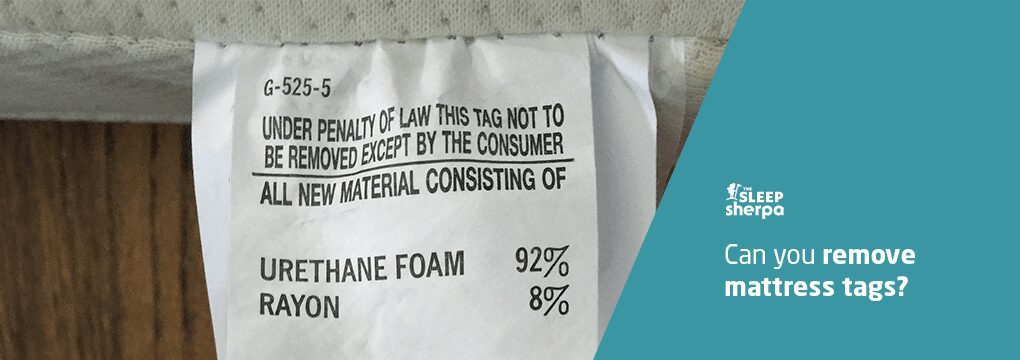
The tag stitched into the side of your mattress is usually called a law tag. It is not a warranty sticker and it is not a legal trap for the person sleeping on the bed. It is a disclosure label required so that anyone buying a mattress can see what is inside it and who made it before they hand over money.

Law tags exist because of a real problem. Before labeling rules, some manufacturers stuffed mattresses with rags, straw, animal hair and salvaged bedding, and there was no way for a shopper to know. Requiring a sealed, printed tag made the filling and the manufacturer traceable, and made it much harder to pass a rebuilt mattress off as new.

Can you remove it? Yes — once you own it

The wording on older tags ("Do not remove under penalty of law") is the reason for the confusion. Most tags produced in the last few decades finish that sentence with "except by the consumer". The prohibition is aimed at manufacturers, wholesalers and retailers, not at the household that bought the mattress. Once the mattress is yours, cutting the tag off is legal.

That does not make it a good idea. Before you reach for the scissors, know what you are throwing away.

Why we tell customers to leave the tag on

Practical owner guidance: Even though the familiar law-tag wording is directed at sellers rather than the final consumer, leaving the original identification label attached helps if you later need to identify the manufacturer, model, materials, production run or warranty terms. Retailers may have their own return-condition requirements. Keep purchase proof and photograph the label before removing anything; see mattress-care advice.

  • Warranty claims. Most manufacturers ask for the law tag — or a clear photo of it — to validate a warranty claim. The tag carries the model name and manufacture date that identify your exact unit. Without it, a sagging-mattress claim can be refused outright.
  • Proving the model. Retail names change between stores and between years. The tag is often the only place the real model designation appears once the packaging is gone.
  • Fire-safety compliance. Mattresses sold in the United States must meet federal flammability standards. The tag is where that compliance is recorded.
  • Resale and disposal. Recyclers and second-hand buyers use the tag to confirm age and materials. In California, mattress recycling is handled through a statewide program, and an identifiable mattress is easier to hand off.

If the tag genuinely bothers you, tuck it under the mattress instead of cutting it, and photograph both sides so you keep the model number and date.

How to read a law tag

Tags vary by manufacturer, but you can usually find:

  • The manufacturer or importer name and address
  • A registry or licence number identifying that manufacturer
  • The date of manufacture
  • The filling materials, listed by percentage — foam, fibre, latex, cotton
  • Whether the materials are new or, in the case of a rebuilt unit, previously used
  • Care instructions and the model or SKU

The line worth reading twice is the filling list. It tells you whether the "plush pillowtop" in the sales pitch is mostly polyurethane foam, mostly fibre, or genuinely latex.

A missing tag is a warning sign

If you are looking at a mattress with no tag at all, treat it with suspicion. A missing tag can mean the unit is a return that was cleaned and resold, a rebuilt mattress presented as new, or a knock-off of a brand-name model. None of those are what you want to pay new-mattress money for. In a legitimate store the tag is present, intact, and matches the model on the price ticket.

The same goes for a tag that has clearly been re-sewn, or one whose model name does not match the label on the mattress cover.

What about pillows, toppers and furniture?

Labeling rules cover more than mattresses. Pillows, mattress toppers, comforters, upholstered chairs and sofas carry the same style of filling disclosure. The rules are the same: the seller must leave it on, and you may remove it once you own the item — with the same warranty consequences.

Checking a tag before you buy

When you are on a showroom floor, it takes ten seconds:

  1. Find the tag, usually on the side seam near a corner.
  2. Confirm the model name matches the tag on display and the quote you are given.
  3. Check the manufacture date so you are not buying old stock that has been compressed in a warehouse.
  4. Read the filling percentages and ask the salesperson to explain anything vague.
  5. Photograph the tag once the bed is delivered and keep it with your receipt.

That photo, together with your invoice, is what a warranty department will ask for years later.

Frequently Asked Questions About Mattress Tags: Must-Have Insights for Safe Bedding Choices

Can I remove the tag from my new mattress?

Yes, you can legally remove the tag from your own mattress once it has been purchased and is in your possession. The warning "Do Not Remove Under Penalty of Law" primarily applies to manufacturers and retailers before the point of sale, ensuring product integrity for the consumer.

Why do mattress tags have a scary legal warning?

The legal warning on mattress tags was initially implemented to prevent manufacturers and retailers from deceptively selling unhygienic or misrepresented bedding. This measure, dating back to the late 1800s, aimed to protect consumers from mattresses made with unsanitary recycled materials, like hospital linens.

What information can I find on a mattress tag?

A mattress tag typically provides crucial details including the manufacturer's name, the materials used in the mattress construction, its place of production, and important care instructions. This information helps consumers understand their purchase and ensures compliance with hygiene standards.

What should I do if a mattress I'm considering buying doesn't have a tag?

If you encounter a mattress without its required tag, it's a significant red flag that suggests the product might be counterfeit or made with questionable materials. You should report such instances to the appropriate authorities, as manufacturers or retailers selling tag-less mattresses can face substantial fines.

Are mattress tags really important for consumer safety?

Yes, mattress tags are vital for consumer safety because they certify that the mattress is new, hygienic, and made from approved materials. They were introduced to combat historical practices of selling mattresses filled with unsafe, recycled waste, thereby protecting public health.

Where can I find a reputable mattress retailer that provides clear product information?

You can visit reputable retailers like Yawnder, our Encinitas, CA showroom, to ensure you receive a mattress with accurate labeling and high-quality materials. We prioritize transparency and can discuss all details, including what you'll find on your mattress tag, to help you make an informed decision.

Want to test this in person? Visit our Encinitas showroom or call 858-232-5760.

Ready to buy?
See today’s best sleep deals

Live pricing and current promotions on the mattresses, bases, and sleep tech we recommend.

Explore sleep guides

Pacific Coast Lunesse Comforter Review: Warmth, Loft and Duvet Loops

Pacific Coast Lunesse Comforter Review

Original 2019 review · Layout updated October 2026

Review verdict

The original reviewer loved the Lunesse comforter’s soft feel, warmth and duvet loops, and reported only one small escaped down cluster. Packaging was the weak point, including a defective storage-bag zipper. The account also records Pacific Coast confirming the product’s identity and later reporting its discontinuation.

Original specification600 fill power white goose down
Shell described370-thread-count batiste cotton
Practical highlightDuvet loops kept the insert in place
Original status noteDiscontinuation reported in the review

Original review video

Questions about this review

Was it only suitable for winter?

The reviewer initially said so in the video, then reconsidered because the home was heavily heated. The written account makes clear that room temperature affected that impression.

Did the filling escape?

The reviewer noticed one small cluster of down and otherwise praised the shell’s containment and soft feel.

Did the duvet stay in place?

Yes. The reviewer specifically praised the duvet loops for holding the insert in its cover despite a partner moving around at night.

Does this review establish current availability?

No. It preserves the original Lunesse experience and the discontinuation reported at the time. The comparison chart and suggested replacements are historical too.

Yawnder may earn a commission from qualifying purchases.

Heavenluxe Tencel Sheets Review: Softness, Shrinkage and Set Contents

Heavenluxe Tencel Sheets Review

Original 2019 review · Layout updated October 2026

Review verdict

The original reviewer praised the silky softness, sheen and comfortable sleeping temperature of the Heavenluxe set. But the review also documented loose threads and roughly 1½ inches of shrinkage after washing. The sampled set included a fitted sheet and two pillowcases, with no flat sheet.

Sampled setFitted sheet and two pillowcases
FeelVery soft, smooth and glossy
Wash findingsLoose threads and reported shrinkage
Missing for this reviewerA matching flat sheet

Questions about this review

Did the set include a flat sheet?

No. The original sample contained one fitted sheet and two pillowcases. Check the contents of any current listing separately.

Did the sheets shrink?

The reviewer reported about 1½ inches of shrinkage after following the cold-wash and low-heat instructions, along with loose threads.

Did they sleep hot?

The reviewer found them neither too hot nor too cold and less warm than the PeachSkin sheets previously tried. This is a personal observation, not a measured cooling test.

Are the quoted prices current?

No. Prices and product options in the original account reflect the 2019 review.

Yawnder may earn a commission from qualifying purchases.

Amerisleep AS3 Review (2026): Medium Feel, Price & Verdict

Amerisleep AS3 Mattress Review
Amerisleep AS3 Mattress Review.

Yawnder Reviews · Updated September 2026

Amerisleep AS3 Review: Medium Plant-Based Foam Re-Tested

The Amerisleep AS3 is a 12-inch all-foam mattress aimed at sleepers who want a medium feel with responsive contouring. We tested the AS3 with Yawnder's standardized protocol on August 27, 2026.

Yawnder test results

Overall score8.4 / 10
Firmness6 / 10
Spine alignment8.4
Pressure relief8.8
Cooling8.2
Motion transfer8.8
Edge support7.2
Responsiveness8
Expected durability8.4
Off-gassing8.6

Standardized Yawnder test completed August 2026. See how we test and score.

Where it stands out

  • Pressure relief 8.8/10, Motion transfer 8.8/10, Off-gassing 8.6/10
  • Side and combination sleepers who want foam contouring with strong pressure relief.
  • Model-specific Yawnder record is complete and separated from manufacturer claims.

Where it is limited

  • Lowest measured categories: Edge support 7.2/10 and Responsiveness 8/10
  • Feel and score profile apply to the tested configuration; other firmness choices can feel materially different.

Current specs and terms

TypeFoam
Height / profile12 inches
Price reference$1,549 Yawnder reference price
Trial100 nights
Warranty20-year limited

Who should buy it

Side and combination sleepers who want foam contouring with strong pressure relief.

Common questions

What did Yawnder score it? 8.4/10 overall in the current standardized record.

How firm was the tested mattress? 6/10.

How long is the trial? 100 nights.

What is the warranty? 20-year limited.

Check today's Amerisleep AS3 price and promotion →

Yawnder Reviews · Disclosure: Brand links on this page may be affiliate links. If you buy through them, Yawnder may earn a commission at no additional cost to you. Test scores come from Yawnder's standardized mattress-testing record; current policies and promotional pricing are manufacturer-provided.

MagicLinen Duvet Cover Review: Feel, Wrinkles and First-Wash Pilling

Magic Linen Review

Original 2019 review · Layout updated October 2026

Review verdict

The original reviewer loved the airy, textured feel of this gray-blue linen duvet set and found it comfortable paired with cotton sheets. The trade-offs were visible: pronounced wrinkles and pilling after the first wash. The wooden buttons and duvet ties were practical highlights.

Reviewed setGray-blue duvet cover and pillowcases
FeelTextured, airy; not scratchy to the reviewer
Useful detailsWooden buttons and duvet ties
Main drawbacksWrinkles and first-wash pilling

Questions about this review

Was the linen scratchy?

The original reviewer said it felt distinctly different from other fabrics but was not scratchy.

Did it wrinkle or pill?

Yes. The account describes substantial wrinkles and pilling after a cold wash and low-heat drying cycle.

Was this a sheet set review?

The tested products were a duvet cover and pillowcases. The reviewer paired them with Homestead cotton sheets and had not tested MagicLinen’s sheets.

What kept the duvet in place?

The cover had tie-ins at the head end and wooden buttons at the opening.

Yawnder may earn a commission from qualifying purchases.

Luxe Pillow Review: Down-Alternative Feel and Three-Chamber Design

Luxe Pillow Review 1

Original 2019 review · Layout updated October 2026

Review verdict

The original reviewer liked the poly-fiber gel fill and found the supportive core subtle rather than intrusive. The account compares the down-alternative feel and packaging with Pillow Guy, while explaining the different construction of Luxe’s down-and-feather version.

Hands-on focusPoly-fiber gel down alternative
ConstructionThree chambers with a supportive core
Reviewer highlightSoft fill and subtle internal structure
ComparisonPillow Guy feel and packaging

Original review video

Questions about this review

Which version was reviewed firsthand?

The account and video discuss the Luxe down-alternative pillow. The article also describes the separate down-and-feather version; those descriptions should not be read as a separate new test.

Could the reviewer feel the core?

The reviewer tried pressing down to locate it but found its presence subtle and appreciated that it was not distracting.

Is the down version all goose down?

The original description lists waterfowl feathers in the supportive center and goose down in the two outer chambers.

Are the comparison prices current?

No. The preserved Pillow Guy comparison table contains prices from the original review.

Yawnder may earn a commission from qualifying purchases.

Best Rollaway Guest Beds

Best Rollaway Beds
Short answer

A rollaway bed is a type of foldable bed designed for easy storage and portability. It typically features a metal frame that folds in half when not in use and often comes with caster wheels for effortless movement. These beds provide a convenient and affordable sleeping solution for guests or temporary accommodations, offering a practical alternative to traditional beds.

Best Rollaway Guest Beds: quick answers

What is a rollaway bed?

A rollaway bed is a foldable sleeping solution with a metal frame, designed for easy storage and portability. It serves as a convenient and affordable option for temporary use, such as accommodating guests or in small living spaces.

What are the advantages of rollaway beds?

Rollaway beds are highly advantageous for their affordability and portability. They are much cheaper than traditional beds, take up little storage space, and can be easily moved or transported, making them ideal for guests or frequent movers.

What are the types of rollaway beds?

There are three main types of rollaway beds: standard, cabinet, and ottoman. Standard beds have a simple metal frame. Cabinet beds hide the mattress and frame inside a cabinet, while ottoman beds resemble an ottoman when folded.

Are rollaway beds comfortable?

Rollaway beds offer a comfortable surface for sleeping, especially when paired with a suitable mattress. While generally not as luxurious as traditional beds, they provide a practical and convenient solution for temporary sleeping arrangements.

Rollaway-bed buying checklist (2026): Before buying, compare the manufacturer’s stated sleeper weight limit, unfolded length and width, included mattress thickness, locking casters, storage dimensions and current return terms. Foldaway beds should be evaluated as a complete frame-and-mattress system, not on mattress comfort alone.

When we think of a bed, the first image that comes to mind is that of a wooden frame with four legs, topped with a mattress, sheets, and pillows. Although this is the type of bed that most of us would prefer in the ideal circumstances, the truth is that in urban settings there is often not enough space to accommodate a big bed. Traditional beds are also expensive and cannot be packed and transported on the fly. So if you’re moving from place to another, you often need to sell off your bed and buy another one in your new home — the result: rising expenses.

When a traditional bed is inconvenient and expensive, you must resort to other options. The rollaway bed is one such option that provides you with the comfort of a conventional bed but also the portability and convenience that you find in no other bed. Not only is a rollaway bed much cheaper than a traditional bed, but it can also be assembled and disassembled easily and transported on the fly. But the problem is since rollaway beds are cheap, the market is flooded with them. In this guide, we discuss the features of a rollaway bed and talk about the best options today.

How Rollaway Bed is Different than a Conventional Bed?

A rollaway bed is essentially a foldable bed. It can be folded in half when not in use and opened up to make a full-size bed. Rollaway beds are usually made of metal. The sturdy metal frame is capable of handling the weight of one to two persons. At the bottom of the four legs of the frame are caster wheels that are used in easily moving the bed from one place to another. When the metal frame is folded in half, it takes very little space for storage. Some rollaway beds come with a foldable mattress, but even if they don’t, you can easily purchase a compatible mattress later.

Because rollaway beds are much lighter than traditional beds, take little storage space, and are easily portable, they can be used for extra guests, for a trip far from home, or if space is short in your new apartment. The only downside is that a foldable bed may not be capable of handling the weight of a 300-pound person. It is best for people of average weight.

Advantages and Disadvantages of Rollaway Beds

Although foldable beds offer many advantages to those who cannot get a stationary bed, there are also certain downsides that must be considered. Here we take a look at both:

Advantages

Affordability: The primary reason why rollaway beds are popular is their affordability. Stationary beds are often exorbitant, and also take up a lot of space in the room. For someone going through a tight situation, neither is possible. That’s when a foldable bed saves the day. It’s the fraction of the cost of a stationary bed, doesn’t take up much space, and is far better than sleeping on the floor.

Portability: Even if you have a stationary bed, you might want to have one or two foldable beds in storage. That’s because they are easily portable, and can accommodate one or two people if there’s not enough room. If you’re going for a long trip away from home, you may also carry a rollaway bed in the car, so you can have your own bed to sleep on. If you move houses often, investing in a portable rollaway bed can save you the hassle of moving heavy furniture. The caster wheels also make it convenient to move the bed from one location to another.

Disadvantages

Unattractive: Even though it gives you a comfortable surface to sleep on, a rollaway bed doesn’t offer anything in terms of aesthetic appeal. There are cabinet-style rollaway beds that look slightly better than the metal ones, but they are not as attractive as a stationary bed. Rollaway beds are typically used for convenience, not for enhancing the room decor.

Durability: As already mentioned above, foldable beds are not designed to handle the kind of weight that is usually handled by a stationary bed. The region where the bed folds is usually the weakest and can get damaged with regular wear and tear. Regardless of how you use it, a rollaway bed will never last as long as a stationary bed.

Types of Rollaway Beds

There are three types of rollaway beds, and all of them have their own upsides and downsides. They are:

Standard: The standard foldable bed usually consists of a tubular steel or metal frame and a mattress platform made out of polypropylene and wire spring mesh. Standard rollaway beds work well with both foam and innerspring mattresses, and they are also the cheapest.

Cabinet: This type of rollaway beds looks like a cabinet when folded, and also has fayed doors! When folded, a cabinet style rollaway bed hides the mattress and the bed frame — one of the panels of the cabinet functions as the platform for the mattress. Caster wheels are present in all models, and headboards and footboards may also be present in more expensive models.

Ottoman: Although this type of rollaway bed is much like the standard metal frame ones, the only difference is that this one also doubles as an ottoman. This bed doesn’t fold in half, but in a third, and converts into an ottoman. All you need is a cushion and a cover to make it a proper ottoman. Some of these ottoman style beds are shaped like boxes from which you have to pull out the mattress platform.

Factors to Consider While Buying A Rollaway Bed

Given that there are a huge variety of rollaway beds all over the market, you will want to take your time in picking one that’s right for you. A bed is one of the most used pieces of furniture in the house and should also be comfortable. Just because you do not have the convenience to get a full-size stationary bed does not mean that you must sacrifice comfort and durability. Rollaway beds are generally cheap, so you should be able to find something of good quality without exceeding your budget. But regardless of whether you choose a standard, cabinet or ottoman-style bed, the following factors should always be considered.

Construction and Durability: Rollaway beds are cheap, but it does not necessarily mean that you have to buy one every three months. Therefore, the bed should be durable, particularly if you are going to put it to regular use. Rollaway beds are usually constructed either out of steel or wood. Steel and aluminum beds are less expensive than the wooden ones but are not as durable. Because these types of beds can be folded, the maximum wear and tear happen to the joint where the bed folds. The best materials for the pivot are steel and wood, the latter being stronger but more expensive. If you want the joints of the bed to hold up well, you may choose a metal construction with a wooden pivot. If the entire bed is made of wood, it becomes heavier and does not remain as portable. Metal rollaway beds are also prone to developing creaking noises as they grow older. The rule of thumb when buying rollaway beds is that the cheaper it is, the shorter it will last.

Size of Rollaway Bed: The most commonly available size of a rollaway bed is a twin. This size is capable of comfortably accommodating one person. You also get full and queen sizes, but they are not as commonly found. The full and queen sizes can accommodate two people, but they are heavier and not very portable. If portability is not a concern, then you can try looking for a queen size rollaway bed. However, the bigger the bed, the more it will cost.

Mattress in Rollaway Bed: Rollaway beds come with and without a mattress. It comes down to your personal preference. If you already have a mattress, you can choose a foldable bed that doesn’t have a mattress. If you want something cheap, beds that come without a mattress will better suit your budget, even though you will have to buy a separate mattress. Rollaway beds that come with a mattress are a little expensive, but you are spared of the trouble of searching for a compatible mattress.

Rollaway beds can be paired with memory foam, innerspring, or polyurethane foam mattresses. But regardless of the mattress that you choose, it should be foldable. Otherwise, it will be broken in the middle soon enough.

Brand: Most reputed bedding companies manufacture rollaway beds and comfortable mattresses. But before choosing one brand over the other, make sure to read customer reviews to find out what is better. Often when buying a bed online, the customer tends to get swayed by the claims made by the company. But only reviews from real customers will help you know how the bed performs.

Top 6 Rollaway Beds of 2019

Best Overall Rollaway Bed: Milliard Premium Folding Rollaway Bed

When people buy a folding bed, they have resigned themselves to the fact that it can never match up to the softness and comfort of an actual mattress. And it’s true because it’s hard to find a foldable bed that offers the same comfort and plushness of a memory foam mattress. The Milliard Premium Folding Rollaway Bed is a rare find that, despite being a standard foldable bed, offers superior softness and comfort. While other memory foam rollaway beds are quite hard, the comfort and plush feel of this one has been vouched for by customers.

What makes this bed even more bouncy and comfortable is the mattress platform made of the trampoline, instead of wire mesh or slats. The mattress is four-inch thick, enough support for a foldable bed. Besides edge support, the foam also contours to your body and provides support to the pressure points. Sleeping on this bed, you will not be waking up with a sore back or still shoulders.

The entire construction of this bed is also pretty durable. The frame is made from double reinforced steel with a Clamshell folding style, ensuring that the bed retains its shape under any circumstance. Although the bed is not much of a looker, it does its job very well, providing support with a good mattress and durability with a strong frame. The weight of the bed is only 52 pounds, so it’s easy to move from place to place. Assembling it for the first time is also easy and doesn’t require tools– you simply have to attach the wheels, and you’re done. The assisted folding mechanism makes it convenient to open and fold the bed.

Pros

  • One of the best and softest mattresses
  • Strong, double reinforced construction
  • Easy to assemble and unfold
  • Not too heavy

Cons

  • A little expensive

Check the latest price on the Milliard rollaway bed

Best Budget Rollaway Bed: Symple Stuff Folding Bed

Budget rollaway beds usually come with a number of shortcomings and shoppers need to look past them in order to find quality. That’s because, despite the shortcomings, budget rollaway beds also offer plenty of advantages. The Symple Stuff Folding Bed is one such rollaway bedding that features an affordable price tag and a no-frills design but makes up with other perks.

This foldable bed comes with a 5-inch foam mattress on a bed base made of rigid slats. Although the mattress is thick enough to provide support, it is not too soft. In fact, many customers have commented that the mattress was a bit too hard for their liking.  This isn’t surprising because most foldable beds that boast of a foam mattress aren’t as soft or comfortable as an actual memory foam mattress. The maximum capacity of the bed is 250 pounds, but you should not attempt to test it out– most metal frame rollaway beds are pretty frail at handling anything above 200 pounds. In general, this is a bed that’s best for a small or average sized person or a child. This is again where the maximum capacity of the bed comes into play — most budget rollaway beds are best for people who don’t weigh much, and it isn’t such a surprising or unique downside for any foldable budget bed.

If you’re on a budget and want a portable bed for one person, this affordable option from Symple Stuff is one of the most popular choices. But it’s most suited for occasional use than regular use as a stationary bed.

Pros

  • Affordable and easily available
  • No-frills design
  • Five-inch mattress

Cons

  • Mattress not too comfortable
  • Construction could be more durable

Check the latest prices on the Symple Stuff rollaway bed

Best Rollaway Innerspring Bed: Serta® Folding Bed with Mattress

If you prefer the feel of an innerspring mattress over a memory foam one, then there are innerspring options also available among rollaway beds. Just because you’re buying a portable bed doesn’t mean you have to sacrifice all your preferences. One of the most popular innerspring rollaway beds is the Serta Folding bed. The mattress it comes with has a traditional innerspring construction, so it replicates the feel of an actual innerspring bed.

Serta is a well-known name in the bedding industry, and all the quality and reputation of their other offerings come through in this folding bed. The bed is 73 inches long and 39 inches wide, the same width ad that of an XL Twin bed. The extra width is a nice addition since it allows the sleeper enough room to adjust position and roll over during the night. Those sleeping on the bed will also enjoy the comfort and support provided by the 12-gauge wound helical springs in the four-inch mattress. They manage to replicate the feel of a traditional innerspring mattress, so this rollaway bed by Serta isn’t a bad choice. Another significant feature of this bed is the height. It’s just 18 inches from the floor, which makes it easy for older people or those with mobility issues to get on and off the bed.  The frame is made of angular steel, and the four caster wheels allow the bed to be easily moved from one room to another.

Pros

  • Affordable
  • Great innerspring design
  • Comfortable and supportive
  • Extra width
  • Medium weight

Cons

  • No information on warranty available

Check the latest prices on the Serta folding bed mattress

Best Rollaway Bed for Small Spaces: iBed Memory Foam Rollaway Guest Bed

Buying furniture for a small space can be tough. You want comfort and convenience without sacrificing the little floor space you have. This problem is more evident in urban settings, where small apartments are the most common living space. Thankfully, furniture is also made keeping the space constraints in mind. If you’re short on space and need a slim rollaway guest bed, your best bet is the iBed Memory Foam Rollaway Guest Bed. The benefit of this ultra slim design is that the bed folds to just 5 inches of thickness and can be stored anywhere from a closet to an attic. But just because it’s slim and trim does not mean it compromises on comfort or durability.

The bed is so small when folded that it also comes with a storage bag. You can fold it and leave it in the corner of the cupboard in the storage bag. Most rollaway beds are between 12 and 15 inches when folded, which makes this one the winner. The bed has a 3-inch memory foam mattress, which may not be the plushest but manages to provide the support that’s expected from a guest bed. The memory foam is resistant to dust mites, fungus, and odor, so you can store it safely without damage to the mattress. You also don’t need to turn the mattress because it doesn’t lose shape. It’s also great at regulating temperature and keeping the sleeper comfortable.

Pros

  • Great for small spaces
  • Solid steel construction
  • Easy to fold and store

Cons

  • Mattress, not the most comfortable
  • Cannot be used as a regular bed

Check the latest prices on the iBed rollaway guest bed

Best Rollaway Bed for Tall people: Edward Rollaway Bed with Box Spring Mattress

Tall individuals are familiar with the challenge of finding a comfortable bed to sleep on. When it comes to rollaway beds, they are almost always too short for tall people. Even if you find a good folding bed, you find that your legs stick out. That doesn’t make for a very comfortable night’s sleep. This is where the Edward Rollaway Bed is a winner. It’s 79 inches long, which isn’t gigantic but still big enough for taller individuals. It’s also the longest folding bed on the market today.

Although the width is a little narrow at 36 inches, it’s still plenty for the average sleeper. It’s hard to find a bed that fits your space and budget requirements and still provides comfort and support, but the Edward Rollaway Bed is a good choice. The box spring mattress is 5.5 inches, which may not be too thick but provides better support than 3-inch mattresses. There is an optional mattress cover available. Some users have said that the bed is a little too firm, and others have praised this very feature because it can handle even a 300-pound sleeper. The bed is also easy to assemble—you simply must put the bolts and nuts and wheels in place. It folds nicely in place and is convenient to store. One of the biggest downsides is the price—at $500, it’s one of the priciest rollaway beds on the market.

Pros

  • Great for taller sleepers
  • Sturdy metal construction
  • Supportive mattress

Cons

  • Expensive

Check prices on the Edward rollaway bed

Best Rollaway Bed for Durability: Sleep Revolution Resort Folding Guest Bed

If you want a bed that looks attractive and offers more durability than a standard cot-style rollaway bed, look no further than the Sleep Revolution Resort Folding Guest Bed. The fabric frame cover is matched with the mattress cover, giving a more appealing look to the bed. The quality and comfort of the bed is also much better than standard rollaway beds.

This bed looks and feels more like a twin-sized bed rather than a typical folding bed. Measuring 38 inches by 75 inches, the mattress has a four-inch layer of support foam topped with a one-inch layer of memory foam. The construction is sturdy and doesn’t budge when the wheels are locked into place. The capacity of the bed is also great– 250 pounds.

The downside is that the bed takes more effort to fold up and move around. If portability is the biggest requirement, then this bed may not be the ideal choice. But if your requirement is for a folding bed that will last a long time, then the lack of portability is not a big deal. The construction of the bed is superior, but the price tag is still affordable.

Pros

  • Superior construction
  • Appealing design
  • Highly durable
  • Mid-range pricing

Cons

  • Not very portable

The market is flooded with a variety of rollaway beds. They are affordable, convenient, and fit into small spaces. But before making a purchase, read what other customers have to say and also consider if the features meet your requirements.

Check prices on the Sleep Revolution Resort folding guest bed

Conclusion

Keep in mind the suggestions while choosing the perfect rollaway bed of your choice. Ensure that it fits your requirements and budget. Rollaway beds may not durable and comfortable like conventional beds, but they do meet specific requirements. In case of questions, reach out to team of Yawnder, we would be happy to help.

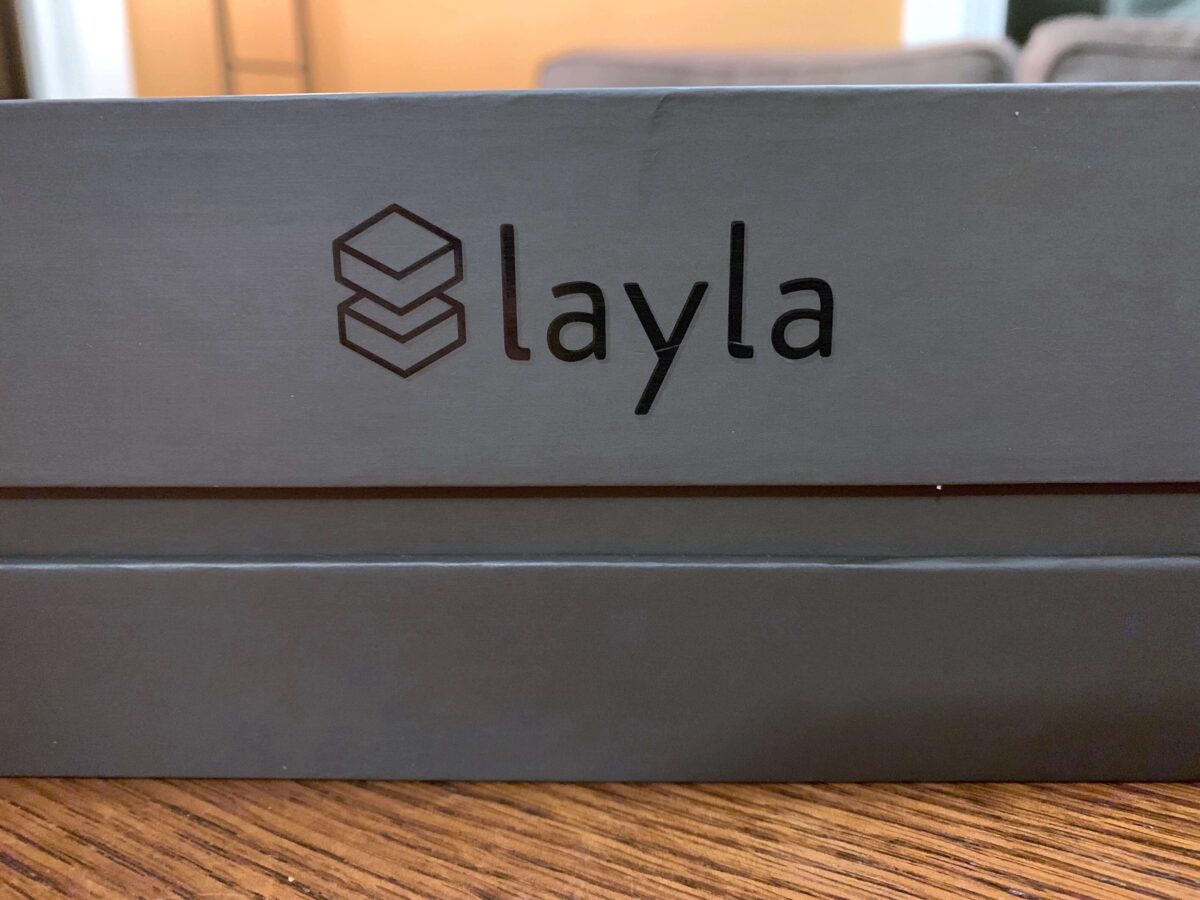
Frequently Asked Questions About Best Rollaway Guest Beds

Is a rollaway bed worth it for occasional guests?

Yes, rollaway beds are a cost-effective and convenient solution for accommodating occasional guests without investing in traditional bedroom furniture. They offer a comfortable alternative to sleeping on the floor and can be easily stored when not needed, making them ideal for urban living. The portability also makes them suitable for temporary accommodations or road trips.

Who are rollaway beds best for?

Rollaway beds are best for individuals needing a flexible sleeping solution, such as those with limited space, frequent movers, or hosts accommodating occasional guests. They are particularly suited for those of average weight, as many models are not designed to support heavier individuals. Their lightweight and portable design cater to a transient lifestyle.

How do rollaway beds compare to conventional beds?

Rollaway beds differ from conventional beds primarily in their portability, affordability, and design intended for temporary use rather than permanent placement. Unlike cumbersome traditional beds, rollaway beds can be folded and stored, freeing up space, but they generally lack the aesthetic appeal and long-term durability of conventional options. They are a more practical choice for unexpected needs or space constraints.

What are the downsides of rollaway beds?

The primary downsides of rollaway beds include their generally utilitarian aesthetic and their limited durability compared to traditional beds. They are not designed for heavy, long-term use, and the folding hinges can weaken over time. Additionally, most models are best suited for individuals of average weight.

Is a rollaway bed good for heavy people?

No, rollaway beds are generally not recommended for heavier individuals, as many models are designed to support those of average weight. Their construction and the folding mechanism are typically not built for the stress of heavier loads. For optimal comfort and safety, it is best to check the weight capacity of specific models.

Where can I try a rollaway bed in person in San Diego?

While the article focuses on types and benefits, for hands-on experience, you could visit mattress retailers in the San Diego area, includingYawnder's Encinitas, CA showroom, to inquire about available rollaway bed options and compare their comfort and portability directly. This allows you to evaluate the different mattress types and frame stability for yourself. Be sure to call ahead to confirm their stock.

Want to test this in person? Visit our Encinitas showroom or call 858-232-5760.

Serta — product photo
Serta — archived product illustration; confirm the exact model and availability before buying.
Ready to buy?
See today’s best sleep deals

Live pricing and current promotions on the mattresses, bases, and sleep tech we recommend.

Shop current deals

Alcohol and Sleep: How Drinking Changes Sleep Quality

How Alcohol Impacts Sleep

Why a nightcap feels like it works

Alcohol is a sedative, so it shortens the time it takes to fall asleep and deepens sleep early in the night. That first-half effect is real, and it is why the habit persists. The problem is the second half.

What happens after it clears

As your body metabolises the alcohol, the sedative effect reverses into a lighter, more fragmented sleep. Three consequences are well documented:

  • REM suppression early, rebound later. REM sleep is pushed out of the first half of the night and returns in the second, often with vivid or unsettling dreams and easier waking.
  • More awakenings after roughly 3 or 4 a.m., frequently with a racing heart, feeling warm, or needing the bathroom — alcohol is a diuretic.
  • Worse breathing during sleep. Alcohol relaxes the muscles of the upper airway, which increases snoring and can worsen obstructive sleep apnea. This is the effect that matters most if you already snore heavily.

The net result is that total sleep time may look normal while sleep quality is measurably worse, which is why people wake unrefreshed after a night that felt like it started well.

Practical harm reduction

  • Leave a gap. Finishing your last drink at least three to four hours before bed lets most of it clear before you are asleep.
  • Fewer drinks matters more than which drink. The effect scales with the amount of alcohol, not the type.
  • Water alongside, not instead. Hydration helps the dehydration side of the hangover, not the sleep fragmentation.
  • Do not combine it with sleep medication or other sedatives. That combination is genuinely dangerous, especially for breathing.
  • Keep the room cool. Alcohol interferes with temperature regulation, which is part of why the second half of the night feels sweaty and restless.

If you are using it to get to sleep

Alcohol used as a sleep aid tends to escalate, because tolerance to the sedative effect builds while the disruption to the second half of the night does not go away. If falling asleep without a drink feels impossible, the effective treatment for chronic insomnia is behavioural — consistent wake times, getting out of bed when you are awake, and limiting time in bed to the time you actually sleep — and it is worth asking a clinician about cognitive behavioural therapy for insomnia. People who drink heavily and daily should not stop abruptly without medical advice; withdrawal can be serious.

The bedroom side of it

None of this is a bedding problem, but a warm room and a mattress that traps heat make the restless second half worse. Cooling the room, breathable bedding and a surface that does not sleep hot will not undo alcohol's effect, though they do remove one compounding factor.

Frequently Asked Questions About Alcohol and Sleep: Risky Effects You Must Know

What are the downsides of using alcohol as a sleep aid?

The primary downside is that alcohol disrupts your natural sleep cycles and overall sleep quality, despite initially making it easier to fall asleep. It compromises restorative sleep stages like REM and deep sleep, leading to fragmented rest and morning grogginess.

How does alcohol affect your sleep stages?

Alcohol can help you fall asleep quickly but it improperly balances delta and alpha brain waves, which disrupts the natural progression through light, deep, and REM sleep stages. This imbalance means you miss out on the restorative benefits of deep sleep, leaving you feeling tired when you wake up.

Is alcohol good for people with breathing problems during sleep?

No, alcohol is not good for people with breathing problems during sleep because it acts as a muscle relaxant. This relaxation can worsen issues such as snoring and sleep apnea by obstructing airflow, further disrupting sleep patterns.

How does alcohol impact memory and concentration?

Alcohol negatively impacts memory and concentration by blocking REM sleep, which is the most restorative sleep phase for vital cognitive functions. Missing out on sufficient REM sleep can lead to disorientation and fatigue, making it harder to focus and retain information.

Where can I find solutions for better sleep without alcohol?

Finding healthy sleep solutions without relying on alcohol involves addressing underlying sleep disorders and retraining your body to fall asleep naturally. You can explore various sleep aids and mattresses, and if you're in the area, consider visiting the Yawnder showroom in Encinitas, CA for hands-on advice and testing.

What happens to your body's internal clock when you drink alcohol before bed?

Alcohol's impact on your body's internal clock, or circadian rhythm, is short-lived; it makes you fall asleep faster due to increased adenosine, but these levels quickly drop, causing abrupt awakenings. This disruption prevents the deep, restorative sleep necessary for waking up refreshed.

Keep exploring
More sleep guidance

Browse Yawnder’s sleep education, research explainers, and practical guides.

Explore sleep guides

Menopause & Insomnia: Tips for Better Sleep

Can Menopause Affect Your Sleep

Frequently Asked Questions About Menopause & Insomnia: Tips for Better Sleep

Is maintaining a consistent sleep schedule worth it for menopausal insomnia?

Establishing a consistent sleep schedule is a foundational and highly effective strategy for managing insomnia during menopause. By going to bed and waking up at the same time every day, including weekends, you help regulate your body's natural sleep-wake cycle. This consistency can significantly improve sleep quality and reduce the frequency of sleep disturbances experienced during this transitional phase.

Who is consistently experiencing night sweats during menopause best for when it comes to sleep strategies?

Women experiencing night sweats and hot flashes are best served by addressing these symptoms directly to improve their sleep. These hormonal changes are a primary disruptor of sleep quality, causing discomfort and frequent awakenings. While the article notes that we don't carry specific cooling mattresses, optimizing bedroom temperature and selecting breathable bedding materials can offer some relief.

What are the downsides of hormonal fluctuations on sleep during perimenopause?

Hormonal fluctuations during perimenopause, specifically declining estrogen and progesterone, significantly disrupt sleep by increasing anxiety and impacting the sleep-wake cycle. These hormones are integral for relaxation and stress management, and their reduction can lead to heightened emotional distress and difficulty falling or staying asleep. This makes the transitional phase particularly challenging for restful nights.

How does sleep during menopause compare to sleep before perimenopause?

Sleep during menopause is often more challenging and disrupted compared to before perimenopause due to significant hormonal shifts and associated symptoms. The decline in estrogen and progesterone during menopause can lead to increased anxiety, night sweats, and irregular periods. These factors contribute to a greater likelihood of insomnia and overall poorer sleep quality than what was typically experienced in younger years.

Is declining libido during menopause good for sleep?

Declining libido itself does not directly impact sleep; however, it is one of several symptoms of menopause that collectively contribute to poor sleep quality. The array of symptoms, including night sweats, headaches, and trouble concentrating, creates an environment where achieving restful sleep becomes increasingly difficult. Addressing the broader range of menopausal symptoms can indirectly support better sleep.

Where can I try mattresses that might help with sleep issues during menopause in person?

You can try mattresses that may support better sleep during menopause at the Yawnder showroom in Encinitas, CA. While the article primarily focuses on lifestyle changes, experiencing different mattress comforts firsthand can help you find one that minimizes discomfort and promotes rest. Our staff can guide you through options that might be more comfortable if symptoms like general aches or discomfort are contributing to your sleeplessness.

Keep exploring
More sleep guidance

Browse Yawnder’s sleep education, research explainers, and practical guides.

Explore sleep guides

Why sleep gets harder around menopause

Sleep complaints rise sharply during the menopause transition, and there is usually more than one cause working at once:

  • Vasomotor symptoms. Hot flashes and night sweats often wake people directly, and the temperature swing afterwards makes it hard to settle again.
  • Hormonal shifts. Changing estrogen and progesterone levels affect both sleep architecture and temperature regulation.
  • Mood changes. Anxiety and low mood are common in this window and both fragment sleep.
  • Age-related sleep disorders. The risk of obstructive sleep apnea and restless legs both rise after menopause, and each is frequently missed because the symptoms get attributed to menopause itself.

Practical steps that help with night sweats

  • Build a cool sleep surface. Breathable percale or linen sheets, a wool or lightweight down-alternative duvet, and a mattress protector that is not a plastic film. Layer bedding so you can shed a layer without getting up fully.
  • Drop the room temperature. A cooler room shortens the recovery time after a flash. A fan moving air across the bed helps more than lowering the thermostat alone.
  • Keep a dry change nearby. Moisture-wicking sleepwear and a spare top within reach means a sweat does not turn into 40 minutes of wakefulness.
  • Watch alcohol and late heavy meals. Both commonly trigger flashes and both worsen second-half-of-night sleep.
  • Keep the wake time fixed. A consistent rise time stabilizes the body clock faster than a consistent bedtime does.

When to get evaluated

Insomnia that persists for months, loud snoring, witnessed pauses in breathing, morning headaches, or heavy daytime sleepiness are reasons to be assessed rather than managed with bedding changes. Cognitive behavioral therapy for insomnia has the strongest evidence base for chronic insomnia, and hormone therapy and non-hormonal medications are discussions to have with a clinician who knows your history. Nothing here is medical advice, and supplements are not a substitute for an evaluation.

Do cooling mattresses stop night sweats?

No. A cooler sleep surface can reduce how disruptive a flash feels and speed recovery, but it does not prevent the underlying vasomotor symptom.

Is waking at 3 a.m. normal in menopause?

Early-morning waking is a very common pattern. If it happens most nights for more than a few weeks, treat it as insomnia worth addressing rather than something to wait out.

Which bedding materials handle sweat best?

Percale cotton, linen and wool manage moisture well. Dense sateen, heavy flannel and vinyl-backed protectors trap it.

See current mattress and bedding deals →

Do Not Sell or Share My Personal Information Privacy Policy
Y

Yawnder

We typically reply in a few minutes

👋 Hi there!

Have a question about mattresses, deliveries, or your order? We're here to help.