Best Mattress for Sleep Apnea (2026)

Best Mattresses for Sleep Apnea
Compare options carefully
Mattress and base shopping guidance

A mattress or adjustable base may affect comfort and sleep position, but neither treats obstructive sleep apnea. Use this buying guidance alongside clinician-recommended care.

See mattress & base guides

What a mattress can and cannot do for sleep apnea

Obstructive sleep apnea is an airway problem, and no mattress treats it. What your bed can do is make the positions that reduce airway collapse comfortable enough to hold all night, and keep CPAP therapy tolerable. If you have been diagnosed, the mattress is a support act for your prescribed therapy; if you suspect apnea — loud snoring, witnessed pauses in breathing, morning headaches, heavy daytime sleepiness — get evaluated before you shop for bedding.

Position is the lever

Back sleeping is the position most associated with airway collapse, because gravity lets the tongue and soft palate fall backward. Two setups help:

  • Sleeping on your side. This requires a surface that lets the shoulder and hip sink in — generally medium to medium-firm with a real comfort layer. A too-firm bed pushes side sleepers back onto their spine within an hour.
  • Elevating the head of the bed. Raising the upper body reduces the gravitational load on the airway for many people. An adjustable base is the practical way to do it, because stacking pillows bends the neck forward and often makes things worse. Head elevation of a few inches is where most people start.

For that reason, an adjustable base plus a compatible mattress is usually a better investment for an apnea household than a premium mattress alone. Confirm the mattress is base-friendly: most all-foam, latex and flexible-coil hybrids are, while rigid-perimeter innersprings often are not.

If you use CPAP

Comfort failures, not therapy failures, are what usually end CPAP use. A few bedroom fixes:

  • Choose a surface with low motion transfer so a mask adjustment or hose tug does not wake your partner.
  • Pick a mattress that sleeps cool. Mask leaks and heat go together, and warm foam makes both worse. Coil-based hybrids, latex, and covers with phase-change fabric move heat better than dense memory foam.
  • Use a CPAP pillow or a pillow with cutouts if you side sleep in a full-face mask, so the frame is not levered off your face.
  • Run the hose over the headboard or use a hose lift so it does not pull as you turn.
  • Keep the humidifier below the mask level so condensation drains away from you.

Choosing feel and materials

There is no single "apnea mattress". Aim for the softest surface that still holds your spine level in the position you need: side sleepers under about 130 pounds usually want medium-soft, average weights medium, and over roughly 230 pounds a firmer hybrid with reinforced coils so the hips do not sink and rotate the torso. Reflux is common alongside apnea, and it is another argument for an adjustable base. If a partner is a light sleeper, prioritise motion isolation and a quiet base motor.

Frequently asked questions

Will an adjustable bed cure my apnea?

No. Elevation can reduce symptoms for some people and makes CPAP more comfortable, but it is not a treatment and does not replace a prescribed therapy or a clinician's follow-up.

Are wedge pillows a cheaper alternative?

They can work if the wedge is long enough to support the whole torso. Short wedges bend you at the waist or push the chin toward the chest, which can narrow the airway rather than open it.

What firmness should I buy if I have to stay off my back?

Medium to medium-soft for most side sleepers, firmer as body weight increases. The test is whether you are still on your side at 3 a.m., not how the bed feels in the first five minutes.

Does memory foam make snoring worse?

Not directly, but a deeply contouring, warm surface can encourage back sleeping and disrupt sleep through overheating. Cooler hybrids and latex are the safer default.

Can I try this setup before buying?

Yes — our Encinitas showroom has adjustable bases on the floor, so you can feel head elevation on a real mattress rather than guessing from a spec sheet.

Pink Noise vs White Noise for Sleep: Differences & Evidence

Pink Noise The Best Sound for Sleep
Yawnder Sound Guide · Updated September 24, 2026

Pink Noise vs White Noise for Sleep

Pink noise sounds lower and softer than white noise. It may be pleasant for sleep masking, but ordinary playback should not be confused with laboratory sound stimulation timed to brain waves.

Evidence note: Medically reviewed sleep guidance updated in 2026 describes pink noise research as promising but still limited. Some benefits in studies use precisely timed acoustic stimulation during specific sleep stages, which is different from leaving a pink-noise track running all night.

What pink noise actually is

Both pink and white noise contain energy across a broad range of audible frequencies. White noise distributes energy evenly by frequency, which gives it a brighter hiss. Pink noise reduces power as frequency rises, so it sounds fuller and lower-pitched—often compared with steady rain, wind or distant water.

White noiseBrighter, hissier and often effective for masking voices and higher-pitched environmental noise.
Pink noiseMore low-frequency emphasis and a softer tonal balance that many people find less sharp.
Brown noiseDeeper still, with more low-frequency rumble. Preference matters more than the color label.

Can pink noise help sleep?

Possibly, for two different reasons. First, steady background sound can mask sudden environmental changes such as doors, traffic or a partner moving around. Second, researchers have experimented with pink-noise stimulation synchronized to slow-wave sleep.

The second category is where headlines about deeper sleep or memory often come from. Those experiments may use sleep-stage monitoring and precisely timed pulses. That is not the same intervention as selecting a continuous “pink noise” track in an app or sound machine.

Practical interpretation: Try pink noise because you like the sound and it masks disturbances—not because a consumer speaker has been proven to increase deep sleep or memory.

Pink vs white noise: which should you choose?

If white noise feels harsh, try pink. If voices, televisions or higher-frequency noise are the main disturbance, white noise may mask them more effectively. If you prefer a deeper rumble, brown noise may be more comfortable. There is no universal winner.

How to use it sensibly

  • Use the lowest volume that masks the noise you are trying to cover.
  • Place a speaker away from your head rather than directly beside the pillow.
  • Choose seamless audio without obvious loop points or sudden nature sounds.
  • If you use a phone, silence notifications and make sure ads cannot interrupt playback.
  • If the sound itself becomes something you focus on, turn it off or try a different profile.

What pink noise will not fix

Sound masking does not address a room that is too warm, an uncomfortable mattress, chronic insomnia, or a partner’s possible sleep apnea. Loud habitual snoring with gasping or breathing pauses deserves a medical conversation rather than simply increasing the masking volume.

Do you need a dedicated machine?

No. An app or existing speaker is enough to learn whether you like pink noise. Buy hardware when you want physical bedside controls, reliable all-night playback or a phone-free routine. Our Best White Noise Machines for Sleep 2026 guide includes digital and fan-based options.

Further reading

Bottom line: Pink noise is a lower-pitched alternative to white noise that many people simply find more comfortable. Research is interesting, but the most defensible everyday use is sound masking at a modest volume.

Best Bed Risers for Extra Storage

Best Bed Risers

Frequently Asked Questions About Best Bed Risers for Extra Storage

Are bed risers worth it for small bedrooms?

Yes, bed risers are absolutely worth it for small bedrooms as they create invaluable extra storage space beneath your bed. By elevating your bed, you can neatly store seasonal clothing, boxes, or other items, transforming clutter into an organized area. This makes them a practical solution for maximizing every square inch of your bedroom.

Who are bed risers best for, considering accessibility?

Bed risers are best for individuals with limited mobility who find it challenging to get in and out of a low bed. They elevate the mattress to a more comfortable height, making daily routines easier and reducing physical strain. This feature can significantly improve independence and daily comfort.

How do bed risers improve airflow compared to a bed directly on the floor?

Bed risers improve airflow by creating a significant gap between the bottom of your bed and the floor, enhancing air circulation. This improved airflow is crucial for preventing the buildup of mold and mildew, especially beneficial in humid climates like San Diego. Maintaining proper ventilation beneath your bed contributes to a healthier sleeping environment.

What are the main downsides to using bed risers?

The main downsides of using bed risers include potential stability risks, weight limit concerns, and possible floor damage. Incorrect installation can lead to a wobbly bed, exceeding weight limits can cause collapse, and certain materials like metal risers might scratch hardwood floors. It is important to choose compatible risers and ensure proper setup.

Are bed risers good for people with acid reflux?

Yes, bed risers can be good for people with acid reflux because elevating the head of the bed can help alleviate symptoms. By raising specific bed legs, you can create an incline that helps prevent stomach acid from flowing back into the esophagus. This offers a simple and effective method for relief without needing an adjustable bed.

Where can I see different types of bed risers in person?

While Yawnder specializes in mattresses, you can research various bed riser types and their features online to understand your options before purchasing. Our team can help discuss how different bed heights might affect mattress feel. Most home goods stores in the San Diego area will also display a selection of bed risers.

Want to test this in person? Visit our Encinitas showroom or call 858-232-5760.

Ready to buy?
See today’s best sleep deals

Live pricing and current promotions on the mattresses, bases, and sleep tech we recommend.

Shop current deals
yawnder-guide-bed-risers

Bed risers: sizing, weight limits and stability

Work out the height you actually need

Measure the gap you want to create, not the height you like the sound of. For under-bed storage, measure the tallest box or suitcase you plan to slide underneath and add a couple of inches of clearance. If you are raising a bed to make getting in and out easier, measure from the floor to the top of the mattress and aim for a height where your feet rest flat with knees roughly level with hips. Raising a bed too far is a fall risk, particularly for older sleepers.

Check weight rating against the real load

Manufacturers quote a rating per riser, and the load is not evenly spread — the risers under the head end of a bed carry more when two adults sit up to read. Add mattress weight, bed frame weight and occupants, then leave a wide margin. Plastic risers are fine for light frames and dorm beds; steel or solid wood is the safer choice for heavy hybrid or latex mattresses and for platform beds with a headboard.

Match the socket to your bed's feet

Risers work by capturing the existing leg or caster in a recessed socket. Square posts, round tapered legs and wheeled casters all need different socket shapes, and a caster sitting loose in a socket will roll out. Measure the leg's width and shape before buying, and remove casters entirely where possible so the leg seats fully.

Stability and floor protection

Raising a bed raises its centre of gravity, so every riser must sit flat on a level surface — never stack risers or shim them with books. On hard floors, choose risers with a rubber or felt base to stop the bed creeping and to protect the finish; on carpet, wide bases spread the load and prevent sinking. Re-check that all four are seated after the first week of use.

Frequently asked questions

How much weight can bed risers hold?

Ratings vary widely by material, from modest plastic units to heavy-duty steel. Add up your mattress, frame and occupants and choose risers rated well above that total.

Can you stack bed risers?

No. Stacking makes the bed unstable and voids most weight ratings. Buy a taller riser instead.

Will bed risers work with casters?

Only if the socket holds the caster securely. Where possible, remove the caster so the leg itself sits in the riser.

Do bed risers damage floors?

A riser with a rubber or felt base protects hard flooring. Bare hard plastic on wood can scuff, especially if the bed shifts.

ReST Bed Review: Legacy Smart Air-Chamber Mattress

rest mattress review scaled

The original ReST smart air-chamber mattress is not confirmed as currently available for purchase. This article preserves Yawnder’s first-hand testing, rather than recommending it as a new purchase. Check out Eight Sleep Instead. 

The Rest Bed is a performance mattress that can dynamically change firmness as you sleep in order for you to get optimal support and pressure relief as you change positions at night, it is unlike any mattress I have previously reviewed. This is achieved through the use of air chambers that inflate and deflate throughout the night in specific areas of the mattress based on the feedback received from a pressure-sensing fabric. You also have the option to manually set firmness throughout the mattress.

Completely different than any other mattress we have previously reviewed. Automatically adjust firmness throughout the night as you move and change positions. Yes, there are other brands that offer this but only ReST, as far as I know, allows you to change the pressure in distinct zones.

Unboxing and Overview of the ReST Mattress

Below is a video overview of the mattress from delivery, setup, and my thoughts about sleeping on it. Please note that ReST no longer supplies the 2 tablets. Instead you can use your phone to control it which I found to be more convenient. It also takes up much less space on your nightstand.

The Mattress comes in a large box. Inside you will find all the pumps and hoses as well as the mattress itself which is folded in half.

Rest mattress box

Here’s what you will find inside the box.

inside rest box

Here’s everything out of the box.

rest out of the box

How Much Does the ReST Mattress Cost?

Below are the current prices of the ReST mattress. When the original ReST was sold, the brand advertised a 90-day trial without return or restocking fees. Those terms are historical, not a current offer. Should you decide to keep it you are backed by a 10-year warranty that covers not only the mattress but also the mechanical components such as the air pumps and hoses.

Legacy price table removed. Check the current manufacturer or retailer page for today’s pricing and promotions.

Construction of the Rest Bed

The cover is made of a polyester fabric that feels like athletic wear. ReST calls this layer, “Sleep Skin”. It’s stretchy and allows the foam underneath to fully conform to your body.

rest cover

rest sinkage

Underneath that is a 4-inch layer of cooling gel foam which I found to be extra soft. Sort of like dough. If this was on a traditional foam or hybrid mattress, it probably wouldn’t work but since you can adjust the firmness underneath I appreciated the extra pressure relief on the top layer.

rest foam layer

Underneath the foam layer is a sensor system knitted into an antimicrobial fabric. This, “Smart Sensor” has 1,000 data points per side that deliver pressure data to the pump and connected app.

Underneath the Smart Sensor are 5 medical-grade polyurethane air chambers that make up the different zones of the mattress. All of this is encased in border made of rigid foam for optimal edge support.

rest zones

How to Setup your ReST Mattress

The setup process is a bit more involved than your typical mattress. Once you place the mattress on your bed you find that it looks like a deflated air mattress.

setting up rest mattress

Next you’ll need to connect the hoses to the air pumps. Connecting the hoses is easy. Each group of hoses gets connected to a separate pump and the hoses are labeled for each zone of the mattress. At this point, Don’t worry about which is right or left.

rest pumps

Once the hoses are connected and the pumps are plugged in, the mattress will start inflating. The motor is very quiet and you will hardly hear it working. It took about 15 minutes for the mattress to fully inflate.

connecting rest hoses

While you are waiting for the mattress to inflate, you can begin setting up the app on your phone or tablet.

rest app

My ReST Bed Findings

Since this mattress can be adjusted for firmness, it can be both soft and firm. That said, I found the top layer of foam to be extra soft. The top layer needs to be super soft because it allows you to get the full effect of the zone chambers underneath.

rest sinkage

I tried the mattress at all settings and really enjoyed the lumbar support and the ability to drop the pressure in the zone where my shoulders are. I also tried the automatic setting which can take some getting used to since you will feel the mattress inflate and deflate as you move. Long term I would probably use a specific setting that’s optimal for me which would prevent me from having to move around in the first place.

edge support

I found the app to be rough around the edges. The experience of setting it up the first time was a little tiring. When you first launch the app you’ll have to update it and you will find yourself connecting to your wifi network multiple times to get the mattress working with the app. The app starts out in automatic mode which means it automatically responds to how your weight is distributed across the mattress. It gets these readings from a pressure-sensitive matt built inside the mattress. The app does a great job of showing off pressure points in real-time and which zones are inflated more than the others. The app also lets you switch to manual mode to control the amount of air in each zone by sliding them up and down.

Conclusion

If you have tried multiple mattresses with different constructions and still aren’t finding the right balance of support and pressure relief, it may be time to consider the ReST Mattress. It probably wouldn’t be the first mattress I would try given the price but if you have tried multiple brands and constructions and are still not getting the right feel, then the ReST would certainly be worth a shot. It is unlike any other mattress I have tried. There are other mattresses on the market that will adjust firmness with an air chamber but the ReST mattress is the only mattress I know of that has distinct zones and that’s where this mattress and the technology really shines. When I sleep on my side, my shoulders often get sore and I enjoyed being able to firm up my lumbar area while decreasing pressure towards my shoulders. This is something that no other mattress offers and for that reason alone it is an excellent choice for side sleepers.

ReST Smart Air-Chamber Mattress: Historical Review FAQ

Is the Rest Bed worth the investment?

The original ReST mattress is a historical product, not a verified current purchase option. Its former 90-day trial and 10-year warranty were terms from the original review, not policies shoppers can rely on today. Its independent firmness zones remain interesting from a design perspective.

Who is the Rest Bed best for?

The Rest Bed is best for individuals who desire personalized firmness levels and dynamic support throughout the night. Its ability to adjust firmness across different zones makes it ideal for sleepers with varying comfort preferences or specific pressure relief needs, as observed during our testing.

How does the Rest Bed compare to traditional mattresses?

The Rest Bed significantly differentiates itself from traditional mattresses by offering dynamic, adjustable firmness and personalized zonal support. Unlike static traditional options, it uses air chambers and pressure-sensing fabric to continuously adapt to your body while you sleep, a feature we found revolutionary in our hands-on review.

What are the downsides of the Rest Bed?

The main downside of the Rest Bed is its more intricate setup process compared to a standard mattress. You will need to connect labeled hoses to pumps for each zone, which requires a bit more patience than simply unboxing and unrolling. However, the personalized benefits often outweigh this initial effort.

Is the Rest Bed good for people with back pain?

The original ReST was engineered to alter air-chamber firmness across body zones, which let the reviewer experiment with shoulder and lumbar support. This is a comfort observation, not evidence that ReST treats back pain or guarantees proper alignment. Persistent back pain warrants professional assessment.

Where can I try the Rest Bed in person?

The original ReST smart bed is not confirmed as available to test at Yawnder's Encinitas showroom. Contact the store about current adjustable mattresses and bases before visiting; the technology reviewed here is historical.

Comparing currently available mattresses? Visit our Encinitas showroom or call 858-232-5760.

CBD Oil Benefits: Evidence, Risks & Marketing Claims

Blog CBD Oil Benefits

By Ben Trapskin, founder of Yawnder. Updated October 18, 2026. This is an evidence guide, not a personal treatment plan or a claim of medical review.

CBD is marketed for sleep, anxiety, pain, recovery, skin health and many other outcomes. The evidence is much narrower than those marketing claims suggest, and consumer CBD products are not equivalent to an FDA-approved prescription medicine.

The most important distinction: prescription CBD vs consumer CBD

The FDA has approved one cannabis-derived prescription drug containing purified cannabidiol, Epidiolex, for seizures associated with specific rare disorders. FDA has not approved other consumer CBD products as treatments for sleep disorders, anxiety, pain, diabetes, cancer, heart disease or other conditions. FDA regulation of cannabis and CBD.

CBD and sleep

A randomized pilot trial in 30 people with primary insomnia found 150 mg nightly CBD similar to placebo on most sleep outcomes. This is a study dose, not a recommendation. For the fuller evidence and label-reading discussion, see our CBD oil for sleep guide.

CBD is frequently marketed as a sleep aid, but evidence does not justify treating ordinary CBD oils, gummies or tinctures as established insomnia treatments. NCCIH notes that a review of cannabinoid therapies found insufficient evidence to support their use for treating sleep disorders. NCCIH: Sleep disorders and complementary approaches.

CBD and anxiety

Small human studies have explored CBD for anxiety-related outcomes, but findings from a particular dose or controlled study cannot be generalized to every retail CBD product. Product concentration, formulation, THC content, contaminants and labeling accuracy vary.

CBD and pain

Cannabinoids have been studied for chronic pain, but much of that research involves cannabis preparations containing THC, prescription-style formulations or products very different from a typical retail CBD oil. NCCIH describes the evidence as limited and notes that adverse effects are more common with cannabinoid treatment than placebo in some reviews. NCCIH: Cannabis and cannabinoids.

Which CBD benefit claims need the most caution?

Claim category How to assess it
Prescription seizure treatment Evidence and approval apply to a specific medicine and indications, not to every retail CBD oil.
Sleep, anxiety or pain Check the exact formulation, population and outcome. Do not transfer results from THC-containing preparations to CBD alone.
Preventing cancer, dementia or heart disease The evidence cited here does not establish these benefits for retail CBD products.
Skin health, weight loss or broad “anti-inflammatory” benefits Marketing, laboratory mechanisms and individual reports are not proof of a clinically useful outcome from a consumer product.

Safety and drug interactions

FDA identifies real CBD safety concerns, including potential liver injury, drug interactions and sedation. NCCIH also notes changes in alertness, mood, appetite and gastrointestinal symptoms, along with possible label inaccuracies and contamination in over-the-counter products.

Product quality matters

  • A CBD amount printed on a label does not guarantee the product contains exactly that amount.
  • THC or contaminants may be present even when consumers do not expect them.
  • “Full spectrum,” “broad spectrum,” “hemp extract” and similar terms do not prove effectiveness.
  • Third-party testing can improve transparency, but it does not prove a health benefit.

What this means before you buy

CBD is an active compound with legitimate pharmaceutical research behind it, but that does not validate the sweeping health claims used to market consumer CBD oils. If you are considering CBD for a health or sleep problem—especially if you take medications—discuss it with a qualified healthcare professional and rely on current evidence rather than an affiliate product claim.

Common questions about CBD benefits

Does a public lab report establish a health benefit?

No. A certificate of analysis provides information about the tested sample, not proof that the product improves sleep or treats a condition.

Can CBD products interact with medicines?

Yes. Check with a clinician or pharmacist before use; FDA identifies drug interactions, liver injury and sedation among CBD risks.

Can “THC-free” guarantee a negative drug test?

No. Marketing language and testing limits cannot guarantee a particular test result.

Sources and related reading

Research context includes the CBD insomnia pilot trial, FDA’s CBD safety overview and the NCCIH sources linked above. For specific labels, see our Charlotte’s Web review and Slumber review.

Read the sleep evidence before comparing products

Learn what current studies show and how to evaluate product labels and lab reports.

Read the CBD Sleep Guide

Mend Sleep Mattress Review: Original Soft Hybrid

Mend Mattress Review

Yawnder Reviews · Original review material restored September 2026

Mend Sleep Mattress Review: Original Soft Hybrid & Layer-Swap Testing Restored

The Mend page had lost the original first-hand review of its unusually soft hybrid and swappable comfort-layer system.

Soft out of the box

The reviewed Mend felt distinctly soft, with four inches of comfort foam creating a pillow-top-like surface over the spring core.

Swappable comfort layer

The upper cover had its own zipper, allowing the comfort foam to be accessed and exchanged for a different firmness rather than replacing the entire mattress.

Side-sleeper pressure relief

Yawnder found strong shoulder and hip relief, particularly useful for broad-shouldered side sleepers.

Hybrid support

Nearly 1,000 individually wrapped coils in larger sizes supplied deeper support and stronger perimeter stability beneath the soft comfort stack.

Sinkage

Bowling-ball and body photos showed substantial compression through the upper foam while the coil system kept the mattress from bottoming out.

Mend Sleep construction
Original construction image.
Mend Sleep sinkage
Original 14-pound bowling-ball test.
Mend Sleep side contouring
Original side-sleeper image.
Mend Sleep zippered comfort layer
Original zipper/access image.

Watch original review video →

Current-shopping note

Mend Sleep’s current product/policy status may differ from the model reviewed here. The restored page documents the original soft hybrid and comfort-exchange design.

Yawnder Reviews · Disclosure: Some links may be affiliate links. Current specifications and policies can change.

Idle Sleep Mattress Review (Archived): Company Closed

idle sleep

Idle Sleep Review FAQ

Is Idle Sleep still in business?

No. Idle Sleep is no longer operating. Yawnder keeps this review online for historical reference because we previously tested the product.

Can I still use old Idle Sleep coupon codes or trial terms?

No. Any old coupon, trial, warranty or pricing language on archived material is historical and should not be treated as a current offer.

Is this still a current mattress recommendation?

No. The hands-on observations can still be useful for owners or secondhand shoppers, but we do not present Idle Sleep as a current company to buy from.

Historical fit notes for the Idle flippable hybrid

A two-sided mattress solves one specific problem: you are not certain which firmness you want, and you do not want to gamble a return on it. One side is built medium, the other luxury firm, so a change of preference — a new sleeping position, a pregnancy, a partner moving in, shoulder pain that develops over a year — is a matter of flipping the bed rather than buying a new one.

It also buys you longevity in a mechanical sense. Rotating and flipping distributes compression over two surfaces instead of wearing a single comfort layer in the same hip and shoulder zones night after night.

Who should skip it

  • Anyone who cannot physically flip a heavy mattress. A flippable queen or king is a two-person job. If flipping is not realistic for your household, the whole benefit disappears and you are better off buying a single-sided bed in the firmness you want.
  • Sleepers who want plush, deep-sinking memory foam. Neither side of a dual-firmness hybrid is built to feel like a pillow-top.
  • Heavier sleepers who want a firm feel. Firmness ratings assume average body weight; the same surface reads noticeably softer above roughly 230 lb, so buy the firmer side as your baseline.
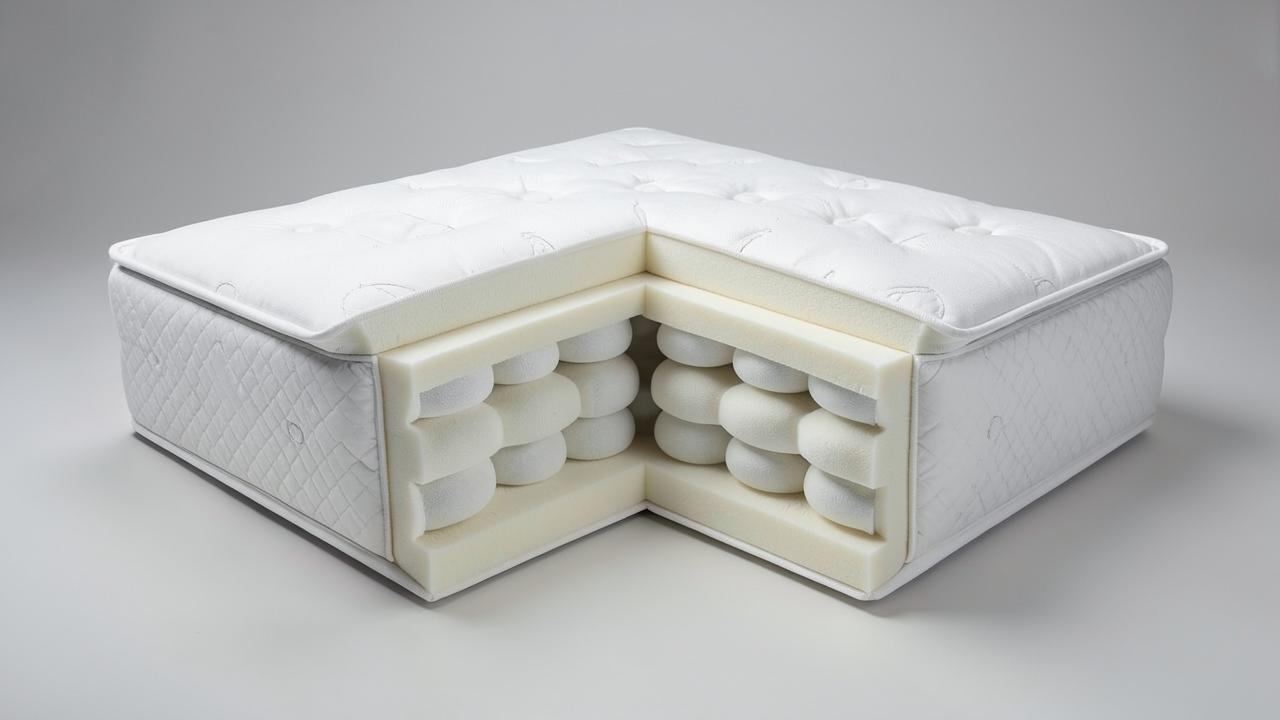
Cutaway of a two-sided hybrid mattress showing pocketed coils between foam layers
Illustrative: a flippable hybrid puts a comfort layer on each face of a single pocketed-coil core.

Setup, foundation and flipping schedule

  • Give a compressed hybrid 24 to 72 hours to fully expand before judging firmness, and air the room during that window.
  • Use a slatted base with roughly 3-inch gaps or a solid platform. Slat gaps that are too wide are the most common cause of denied sagging warranty claims.
  • Rotate head-to-foot every 3 months for the first year, then twice a year. Flip sides only when you actually want the other firmness — there is no benefit to alternating for its own sake.
  • Use a thin, breathable protector. A thick waterproof pad on a hybrid undoes the airflow you paid coils for.
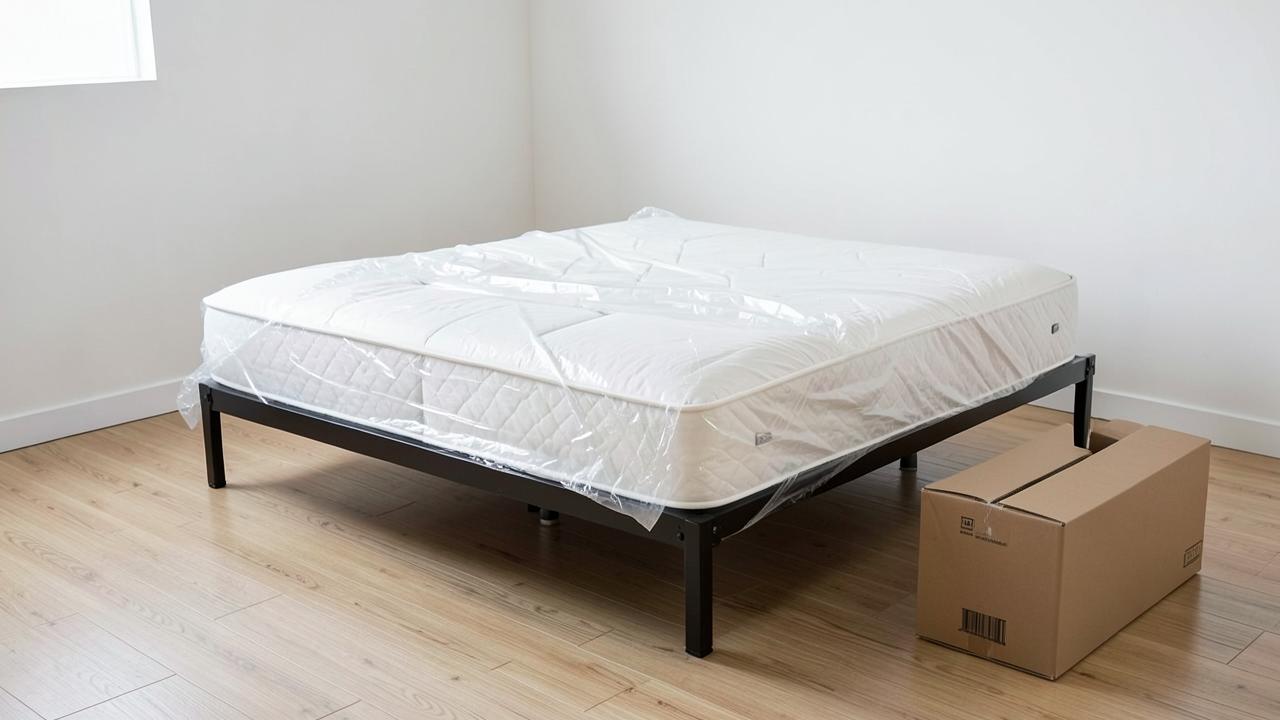
Compressed mattress unrolled in plastic wrap on a bed frame beside its box
Plan the unboxing for a room you can leave alone for a day or two while the foam decompresses.

How to use the trial period properly

Sleep on one side for at least three weeks before deciding. Foam and your own proprioception both need time; most people who return a mattress in week one are reacting to newness rather than fit. If the first side is wrong, flip and give the second side another two to three weeks — that is the entire point of the design, and it should happen well inside the trial window. Confirm current trial length, return fees and warranty impression thresholds with the retailer before you buy, since these terms change.

More questions, answered

Is a flippable mattress actually more durable?

In principle yes, because compression is shared across two comfort surfaces instead of one. Real-world durability still comes down to foam density and coil gauge, so treat two-sidedness as a bonus rather than a guarantee.

Can you put a flippable hybrid on an adjustable base?

Most hybrids flex fine, but check the mattress warranty and the base's weight rating first. Hybrids are heavy, and repeated articulation at the coil edge is where cheap builds fail.

How firm is 'luxury firm' really?

It usually lands around medium-firm on the industry 1–10 scale — supportive with a thin cushioning layer. It is not the same as a true firm or orthopedic surface.

What if both sides feel wrong?

Try a topper before starting a return: 2 to 3 inches of foam or latex over the firmer side is cheaper than replacing the mattress and often solves side-sleeper shoulder pain outright.

Comparing flippable and dual-firmness options?

If a two-sided build appeals but you want more shopping options, Brooklyn Bedding and Nolah both run frequent promotions on hybrid lines, and our own clearance page lists what is discounted right now.

Price Brooklyn Bedding →Price Nolah →See current deals →

Disclosure: some links in this article are affiliate links. If you buy through them we may earn a commission at no extra cost to you. It does not change what we recommend.

Brooklyn Bedding Propel Review: Original Hybrid Model

Propel Mattress

Yawnder Reviews · Original review material restored September 2026

Propel Mattress Review: Original Brooklyn Bedding Hybrid Testing Restored

The Propel page had lost the hands-on review of this earlier Brooklyn Bedding hybrid, including sinkage, edge-support and construction observations.

Foam-forward hybrid

Although Propel used pocketed coils, it felt more like a foam mattress because several inches of comfort/transition foam sat above the spring unit.

Medium feel

Yawnder’s 14-pound bowling ball showed good contouring, and the mattress landed close to a true medium rather than firm or ultra-plush.

Responsive comfort layers

The comfort stack included CopperFlex-style foam, responsive Energex and memory foam above the coils, giving it pressure relief without especially slow recovery.

Edge support

The hybrid structure gave the mattress enough perimeter stability to use more of the sleeping surface.

Why the old wellness claim is omitted

The original cover was marketed around infrared/recovery concepts. Those therapeutic-style claims are not necessary to assess the mattress’s actual feel and construction, so they are not restored as facts.

Propel mattress construction
Original construction graphic.
Propel mattress sinkage
Original 14-pound bowling-ball test.
Propel mattress edge/foam response
Original response image.

Watch original review video →

Current-shopping note

Propel has changed since this review and Brooklyn Bedding now sells different models under similar value/performance positioning. Treat this as a historical hands-on review.

Yawnder Reviews · Disclosure: Some links may be affiliate links. Current specifications and policies can change.

Polysleep Origin Mattress Review: Original vs. Origin 2.0

Origin

 Activate Here

Polysleep a popular online mattress brand from Canada recently introduced a new model called the Origin. The Origin mattress is a foam mattress designed for people on a budget. A queen was listed at CAD $650 when I originally reviewed it. Polysleep’s newer Origin 2.0 has different construction, pricing and purchase terms, so do not treat that price as current. This mattress is an excellent choice for college students, people who may be in temporary housing or move often or just want a good mattress at a great price.

Ordering the Origin Mattress

Right now, the Origin mattress is only available for purchase in Canada. When you place your order, the mattress should arrive in about 5 business days. It will come in a box like the one below. It comes with a 100-night trial where if you aren’t happy with it you can return it for free. It also has a 5-year warranty. A bit shorter than the standard 10-year warranty but the price is also significantly less than competing brands.

Overview of the Polysleep Origin

This mattress is one of the most aggressively priced mattresses for the money. Here’s a video overview explaining the features and what sets it apart.


How Much Does the Polysleep Origin Cost?

Below are the prices as of this writing and before any discounts are applied. The old SHERPA coupon code is not a verified current offer for the Origin mattress.

Legacy price table removed. Check the current manufacturer or retailer page for today’s pricing and promotions.

Construction of the Origin Mattress

Below are the specs as listed on their website. What stood out to me when opening the mattress is that it is relatively light. For people that move frequently, this is a bonus. This is a rather basic construction, being 2 layers of foam but still does a great job with pressure relief.

polysleep origin inside

Measurements & dimensions (W x L x D)

Twin

39” x 75” x 8” 33 lbs

Twin XL

39” x 80” x 8” 35 lbs

Full

54” x 75” x 8” 44 lbs

Queen

60” x 80” x 8” 50 lbs

King

76” x 80” x 8” 64 lbs

Cal King

72” x 84” x 8” 64 lbs

Materials

The Origin Mattress is made of 2 horizontal layers of hybrid foam. The top layer is a 2 1/2” viscolastic hybrid foam. The base layer is 5 1/2” high-density support foam.

Moisture Absorbent Cover: Polyester 70%, Viscose 30%
Top Layer – Antimicrobial Viscoelastic Hybrid foam 3.0lb / ft3 – Certified ISO 20743
Base Layer – Foam 1.8lb / ft3

Country of origin

Our mattresses are handcrafted in Montreal, Canada. Our suppliers were carefully chosen to have the lowest possible carbon footprint, even our boxes are made in Canada using recycled material.

Our mattresses are also entirely recyclable.

My Origin mattress findings

This mattress is just slightly on the softer end of the spectrum. Here’s a picture of my 16 lb. bowling ball on the mattress to illustrate sinkage.
 
Polysleep Origin Sinkage
 
Here’s another shot with me pushing into the mattress. This mattress is only 8 inches thick so if you are a heavier person I wouldn’t advise jumping into bed as you could bottom out on it.


My Polysleep Origin Recommendation

 
The Origin is a great choice for the budget shopper. Even though it is less expensive than the competition, you are still getting high-quality foam that has antimicrobial properties. It is also relatively breathable for a foam mattress as they incorporate open-cell foam that will help with airflow and is more responsive than traditional foam.
 
The purple cover is also machine washable so you could even sleep right on the mattress without sheets if need be, but I wouldn’t advise it as you will want to keep the mattress clean with sheets and a mattress protector.
 
If you are someone who tends to move every few years or maybe going away to college, this is a great choice. It will be easy to move from place to place and feels great without a high price tag.
 
Shop the Polysleep Origin Mattress
 

Frequently Asked Questions About Polysleep Origin Mattress: Must-Have for Budget Sleepers

Is the Polysleep Origin mattress a good value for budget shoppers?

My original Origin sample was a relatively affordable foam mattress. Its old CAD $650 queen price and SHERPA discount are historical and not current offers. Compare the present Origin 2.0 specifications and pricing on Polysleep's website.

Who is the Polysleep Origin mattress best suited for?

The Polysleep Origin mattress is best suited for college students, frequent movers, and anyone seeking an economical yet comfortable sleep solution, particularly light to average weight sleepers who prefer a softer mattress.

What are the main downsides of the Polysleep Origin mattress?

Polysleep markets Origin 2.0 on its Canadian site. Confirm delivery eligibility outside Canada before buying. The more important comparison caveat is that this hands-on article tests the older Origin mattress.

Is the Polysleep Origin mattress good for side sleepers?

Yes, based on testing, the Polysleep Origin mattress leans toward the softer end of the spectrum, providing good pressure relief which is beneficial for side sleepers.

Can I try the Polysleep Origin mattress in person in San Diego?

No, you cannot try the Polysleep Origin mattress in person in San Diego or at the Yawnder Encinitas showroom, as it is exclusively available for Canadian customers and is primarily an online purchase.

How does the Polysleep Origin mattress construction contribute to its comfort?

Those two-layer, 8-inch specifications describe the original mattress I reviewed. Polysleep currently lists the Origin 2.0 as a 10-inch mattress with three supportive layers. My original test is not a hands-on evaluation of the newer generation.

Want to test this in person? Visit our Encinitas showroom or call 858-232-5760.

BedStory 12-Inch Hybrid Mattress Review (Original Model)

BedStory 12 Inch Mattress 9by16
BedStory 12 Inch Mattress 9by16.

Yawnder Reviews · Original review material restored September 2026

BedStory Hybrid Mattress Review: Original Amazon Hybrid Testing Restored

The BedStory page had been reduced to a generic lineup summary even though Yawnder had an actual 12-inch hybrid sample and first-hand unboxing/comfort observations.

What we tested

Yawnder reviewed a 12-inch BedStory hybrid combining foam comfort layers with a seven-inch individually wrapped coil unit.

Firmness

The mattress felt in the low-to-mid firmness range to the reviewer and his wife. Concentrated weight produced substantially more sink, so heavier sleepers could experience it as softer than average.

Construction

The reviewed model used charcoal/gel memory foam, support foam and pocketed coils, with stronger perimeter springs to improve edge support.

Value proposition

The remarkable part was how much hybrid hardware BedStory delivered at an Amazon-level budget price. It was not a luxury mattress, but it offered features often reserved for more expensive hybrids.

First-time reviewer context

The original review was written by a Yawnder contributor doing his first mattress review, which is useful context for interpreting the subjective firmness observations.

Watch original review video →

Current-shopping note

BedStory sells many similarly named Amazon models. Verify the exact thickness and construction on the current listing rather than assuming every BedStory hybrid matches this review.

Yawnder Reviews · Disclosure: Some links may be affiliate links. Current specifications and policies can change.

Revel Mattress Review: Our Original Foam Mattress Test

Revel Mattress Review

Yawnder Reviews · Original hands-on review: June 2019

Revel Mattress Review: Construction, Feel & Our Verdict

We tested the original 12-inch Revel foam mattress sold through Amazon. Its medium feel balanced contouring with support, and the faster-response middle layer made it feel less slow-moving than traditional memory foam. Here is what we found when we slept on it and opened the cover.

Three-layer foam build

The reviewed Revel used three inches of cooling gel foam, two inches of faster-response LiftTex-style transition foam and a seven-inch support base.

Balanced medium feel

Yawnder found a useful compromise between softness and support. It contoured enough for side sleeping without feeling as slow or deep as denser traditional memory foam. Ben still preferred a softer surface for his own side sleeping. He also noticed the transitions between the foam layers more than on some pricier mattresses; that was the main comfort tradeoff in the original test.

Low off-gassing and fast expansion

The mattress came to shape quickly and produced relatively little odor compared with many compressed foam beds of the era.

Inside the mattress

Yawnder opened the mattress and photographed the actual layers, confirming the listed three-layer construction.

Sinkage

The 14-pound bowling-ball photo showed moderate contouring rather than an ultra-plush sink.

Revel mattress construction
Original Revel construction graphic. Marketing and warranty statements shown are historical, not verified current terms.
Inside Revel mattress
Our Revel review sample with the cover opened, showing all three foam layers.
Revel mattress sinkage
Our 14-pound bowling ball on the Revel mattress, illustrating surface contouring.

Watch original review video →

Our verdict and shopping considerations

Our original verdict was favorable for a budget foam mattress: the balanced feel, quick expansion and relatively little initial odor stood out. It was less appealing for someone seeking a very plush surface or a smoother transition between layers. The reviewed bed used foam throughout, with no coil support unit, despite the historical use of the word “hybrid” in some descriptions. Revel’s current availability and return terms are unverified. Before buying an older listing, confirm the exact model and seller policies. To compare other models, browse our mattress reviews.

Yawnder Reviews · Disclosure: Some links may be affiliate links. Current specifications and policies can change.

Buffy Breeze Comforter Review: Lightweight Feel and Duvet Loops

buffy breeze review

Original 2019 review · Layout updated October 2026

Review verdict

In the original test, the Buffy Breeze felt light and soft, adding cozy warmth without much weight. The reviewer liked it for summer nights with air conditioning and appreciated the corner loops for securing a duvet cover. Those hands-on observations remain useful, but the current model’s materials should be checked separately.

Original test2019 firsthand review
FeelLight, soft and comfortably draped
Useful detailCorner loops for a duvet cover
Current material noteBuffy lists lyocell shell and fill

Original review video

Questions about this review

How did it feel in the original test?

Light and soft, with enough warmth for summer nights when air conditioning made a top sheet insufficient.

How did the duvet cover stay attached?

The comforter had loops at each corner. The reviewer preferred tying the cover to these loops because clips can come loose.

What materials does Buffy list now?

Buffy’s current Breeze listing describes TENCEL lyocell in both the shell and fill. This differs from the recycled-polyester description in the old review; this update is not a new hands-on test.

Can the current Breeze be machine washed?

Buffy’s current guidance says to spot clean or dry clean the comforter and use a washable duvet cover. Follow the label on your particular model.

Current materials and care checked against Buffy’s Breeze product page, October 2026. Compare our duvet insert reviews.

Yawnder may earn a commission from qualifying purchases.

Alterra Pure Sheets Review: Percale Feel, Shrinkage and Fit

Alterra Pure Sheets

Original 2019 review · Layout updated October 2026

Review verdict

The original reviewer came to love Alterra Pure’s slick percale feel and found it breathable and comfortable. The fitted sheet still gripped the mattress well after its pockets shrank almost two inches. Persistent wrinkles were the main visual drawback; the coconut buttons and reusable packaging were appreciated details.

Reviewed bundleSheets, two pillowcases and duvet cover
FeelSlick, slightly slippery percale
Wash findingsWrinkles and nearly 2-inch pocket shrinkage
Fit afterwardFitted sheet still gripped well

Questions about this review

Did the sheets shrink?

The reviewer reported that the fitted-sheet pockets shrank almost two inches after washing, but the sheet still fit the mattress securely.

Did washing change the texture?

Very little in the first wash. The reviewer described the same parachute-like feel afterward and eventually liked the slippery texture.

Did the wrinkles come out?

The reviewer said the set stayed quite wrinkly, even after trying a damp washcloth in the dryer.

What was included?

The reviewed bundle contained a fitted sheet, flat sheet, two pillowcases and duvet cover.

Yawnder may earn a commission from qualifying purchases.

CBD vs. Melatonin for Sleep: Evidence & Safety Compared

CBD vs melatonin

Updated October 18, 2026. CBD and melatonin are different substances, with different evidence and safety issues. Neither is a universal answer to poor sleep, and this comparison does not recommend replacing prescribed treatment.

CBD versus melatonin: the quick comparison

QuestionMelatoninCBD
What is it?A hormone involved in the body's day-night timing; also sold as a supplement.Cannabidiol, a cannabinoid from cannabis.
Sleep evidenceMay help particular timing problems, including jet lag and delayed sleep timing.Sleep evidence remains limited and mixed. A product's calming claims do not establish insomnia treatment.
Chronic insomniaNot routinely recommended by major guidelines cited by NCCIH.Not established as a treatment. Neither replaces a sleep assessment or CBT-I.
Notable concernsNext-day sleepiness, headache, dizziness, nausea and medicine interactions.Sleepiness, medicine interactions and possible liver injury.
U.S. regulatory distinctionRegulated as a dietary supplement; no premarket FDA approval of each product.FDA says CBD cannot lawfully be marketed as a dietary supplement. An approved prescription CBD medicine for certain seizures does not validate retail CBD sleep products.

Match the question to the evidence

A difficulty sleeping at the desired time can differ from repeatedly waking or lying awake despite adequate opportunity. Melatonin's usefulness depends partly on timing and the underlying problem. Trouble sleeping does not establish a hormone deficiency.

CBD is sometimes marketed for anxiety-related sleeplessness, but that is not enough to recommend it for a racing mind, pain or an anxiety disorder. Assess those symptoms on their own merits. Do not use this article to stop prescribed medicines or substitute a retail cannabinoid product.

What does CBD sleep research show?

A small randomized pilot trial compared nightly 150 mg CBD with placebo in 30 people with insomnia. Most sleep outcomes were similar, although some secondary measures differed. The trial was short and small; it does not establish a recommended retail dose or validate gummies containing additional CBN, THC or melatonin. See the published trial.

Changes in a testimonial may reflect expectations, changing habits or normal variation. A higher dose or a longer ingredient list does not prove stronger sleep benefits.

What does melatonin evidence support?

NCCIH distinguishes circadian timing uses from chronic insomnia. It reports possible benefits for jet lag and delayed sleep-wake phase disorder, while major guidelines find insufficient strong evidence to recommend routine use for chronic insomnia. Long-term safety is uncertain.

For formulation, duration and timing questions, read our melatonin timing guide. This comparison does not supply a universal dose or a middle-of-the-night redosing plan.

Interactions, impairment and drug tests

The FDA warns that CBD can cause liver injury and interact with medicines. Alcohol and other substances that slow brain activity can increase sedation and injury risk. Discuss the exact product with a pharmacist or clinician.

CBD itself differs from intoxicating THC, but retail CBD products may contain THC or other active ingredients. Do not rely on a CBD label, “isolate” claim or “THC-free” marketing to guarantee no impairment or a negative drug test. Do not drive while impaired or drowsy.

Melatonin also has interactions; people with epilepsy or taking blood thinners need medical supervision. Review either product before use during pregnancy or breastfeeding, with medical conditions or in children. Keep gummies securely away from children and pets.

Can you take CBD and melatonin together?

Combination products exist, but that does not prove the combination is effective or suitable for you. Additional ingredients complicate judging benefit and side effects. Do not stack products or increase exposure simply because one did not help. A pharmacist should review the complete labels and medicines.

How to read a sleep product label

  • Check the amount per serving and the number of gummies, capsules or droppers in that serving.
  • Identify every active ingredient, including THC, CBN, melatonin and sedating herbs.
  • For CBD, request a current report matching the batch and inspect cannabinoid and contaminant results. A lab-directory link alone does not verify your bottle.
  • Compare subscription terms, serving count and one-time price; price is not a measure of clinical effectiveness.

Our Hemp Bombs, Sunday Scaries and Charlotte’s Web reviews illustrate formula differences. Our Lemme Sleep review covers a different, non-CBD formula. These are label comparisons, not interchangeable treatment recommendations.

What to do for ongoing sleep trouble

Ask about CBT-I for chronic insomnia and assess other possible causes of disturbed sleep. Loud snoring, gasping or breathing pauses warrant evaluation; neither product should be used to delay it. Medication decisions should weigh the benefits and risks of the specific medicine, rather than treating all prescription sleep treatments as the same.

Frequently asked questions

Which is better for jet lag?

Melatonin has more directly relevant evidence for jet lag. Timing and personal suitability still matter; CBD is not an established substitute.

Is CBD a safer natural alternative?

“Natural” does not establish safety. CBD has meaningful liver and medicine-interaction risks.

Can either guarantee that I stay asleep?

No. Neither a label nor an ingredient list guarantees an uninterrupted night.

Sources

Explore melatonin alternatives and their limitations

Puffy Pillow Review (2026): Comfort & Support Analysis

puffy pillow filling 1024x

Yawnder Reviews · Updated October 2026

Puffy Pillow Review (2026): Comfort & Support Analysis

Discover the Puffy Pillow, designed to adapt to your sleeping style while offering incredible support and a refreshing coolness all night long! Plus, every purchase helps provide mattresses to children in need, making sleep even sweeter.

puffy pillow filling 1024x
puffy pillow filling 1024x.

Frequently Asked Questions About Puffy Pillow Review (2026): Comfort & Support Analysis

Is the Puffy Pillow worth the price?

The originally reviewed Puffy Pillow used removable foam fill for adjustable loft. Puffy also currently lists its Signature Pillow with adjustable AdaptFill foam, but the exact product generation, materials and price should be checked before comparing value. Its medium-firm feel and robust support make it particularly suitable for those who prioritize neck alignment. The ability to adjust the foam filling allows for a personalized sleep experience, which adds to its overall worth.

Who is the Puffy Pillow best for?

The Puffy Pillow is best for side sleepers and individuals who prefer a medium-firm pillow with adjustable loft. Its capacity to retain shape and provide substantial support helps maintain proper neck alignment. People who appreciate the option to customize their pillow's firmness will find this a suitable choice.

What are the downsides of the Puffy Pillow?

Some downsides of the Puffy Pillow include initial off-gassing, a pillowcase that may not fully meet aesthetic expectations from its online representation, and a somewhat messy foam adjustment process. While the cleaning up after adjusting the foam isn't a deal-breaker, it's something to consider. The off-gassing is common with foam products but requires some airing out time.

Is the Puffy Pillow good for hot sleepers?

Yes, the Puffy Pillow is designed to be good for hot sleepers due to its Bamboo Rayon outer pillowcase which has thermoregulating and moisture-wicking properties. A breathable cover may feel more comfortable to warm sleepers, but it cannot guarantee prevention of overheating or night sweats.

Where can I try the Puffy Pillow in person?

While the article mentions a 365-night sleep trial for pillows purchased directly from Puffy's online store, it does not specify any physical locations like Yawnder's Encinitas showroom to try the Puffy Pillow in person. Puffy's generous sleep trial through their website allows customers to test the pillow in their own home. Yawnder focuses on mattresses in its showroom, not pillows.

How does the Puffy Pillow cater to customizable comfort?

The Puffy Pillow caters to customizable comfort by allowing users to adjust the amount of foam filling to achieve their ideal loft and firmness. This unique feature means the pillow can be tailored to various sleeping preferences and positions. Removing or adding foam helps achieve a personalized comfort level, although it can be a bit messy.

Want to test this in person? Visit our Encinitas showroom or call 858-232-5760.

yawnder-guide-puffy-pillow

How to get the most out of the Puffy Pillow

Set the loft before you judge it

The Puffy Pillow ships over-filled on purpose so you can subtract rather than add. Unzip the inner cover, pull out a handful of the shredded foam, lie down in your normal sleeping position and check whether your ears line up over your shoulders. Side sleepers usually keep most of the fill; back sleepers typically remove a small amount so the head is not pushed forward; stomach sleepers remove a lot. Give each adjustment two or three nights before changing it again, because your neck needs time to adapt to a new angle.

Off-gassing and break-in

A new memory foam pillow can have a noticeable smell for the first few days. Unzip the cover and let it air out in a well-ventilated room before the first night, and wash the removable cover before use. The foam also feels firmer straight out of the box than it does after a week of body heat and pressure.

Who it suits and who should look elsewhere

The adjustable shredded-foam design is easiest to recommend to side and combination sleepers, and to anyone who has previously bought a fixed-loft pillow that turned out to be wrong. Strict stomach sleepers are usually better served by a genuinely thin pillow, and sleepers who dislike the slightly loose, shifting feel of shredded fill may prefer a solid foam or latex core.

Care and replacement

Machine wash the outer cover and keep the foam fill dry — soaking shredded foam is the fastest way to ruin it. Add a breathable pillow protector if you use skincare products at night. Most shredded-foam pillows start to flatten in the middle after a few years of nightly use; if you find yourself adding fill back constantly, that is the signal to replace it rather than re-adjust it.

Frequently asked questions

Can you add filling back to the Puffy Pillow?

Yes, as long as you keep the foam you removed. Store it in a sealed bag so it stays clean and dry, and add it back a handful at a time rather than all at once.

Is the Puffy Pillow machine washable?

The outer cover is removable and washable. The shredded foam fill should not go in a washing machine — spot clean it and let it dry fully if it ever gets damp.

What loft should side sleepers use?

Side sleepers generally need the highest loft of any position because the shoulder creates a bigger gap between the mattress and the head. Start with the pillow as shipped and remove fill only if your head is tilted upward toward the ceiling.

Does the pillow sleep hot?

Shredded foam breathes better than a solid memory foam block because air moves through the gaps, but it still retains more heat than latex or down alternative. A percale or Tencel pillowcase helps more than most people expect.

Brentwood Home Cedar Mattress Review (Archived): Discontinued

brentwood home cedar natural luxe

Yawnder Reviews · Legacy review restored September 2026

Brentwood Home Cedar Mattress Review: Archived Original Construction Restored

The Cedar was discontinued, but the original review contained extensive construction detail that was more useful than the short replacement notice.

Natural-material hybrid

The Cedar Luxe combined organic cotton, wool, latex and individually wrapped coils in a hand-tufted construction. The optional topper added additional latex and natural-fiber cushioning.

Zoned support

The mattress used zoned latex and a pocketed-coil system with firmer lumbar and perimeter support. That created a more structured feel than an all-latex mattress.

Plush but responsive

In the original hands-on review, the Cedar felt relatively plush while retaining the quick response of latex and coils. It was designed to contour without the slow recovery of memory foam.

Why it is archived

Brentwood Home discontinued the Cedar as its lineup evolved. The page is kept as a historical review rather than redirecting all of its original content into a different mattress.

Watch original review video →

Current-shopping note

The Cedar is discontinued. Current shoppers looking for a similar natural-material hybrid should compare today’s Brentwood Home/Avocado offerings, but should not assume they are identical to the Cedar.

Yawnder Reviews · Disclosure: Some links may be affiliate links. Current specifications and policies can change.

8Hours Adjustable Pillow Review: MemHex Foam, Loft and Feel

8hours pillow review

Original 2019 review · Layout updated October 2026

Review verdict

The original reviewer was surprised by how large the 8Hours pillow became after unrolling, yet found it comfortable without removing any fill. It felt supportive while remaining soft. The main practical detail is to distribute the large foam pieces evenly and fluff the pillow before judging its feel.

FillRemovable honeycomb-shaped MemHex foam
Original listed size18 × 27.5 inches; 2-inch gusset
Reviewer impressionSupportive and soft, even at full fill
Setup detailDistribute the foam pieces evenly

Original review video

Questions about this review

Did the reviewer remove any fill?

No. The original account says the pillow was comfortable without removing foam, despite its unexpectedly large loft after unpacking.

Why might the pillow feel uneven?

The account describes relatively large foam pieces and recommends spreading them evenly and fluffing the pillow so they settle together.

Was there a noticeable odor?

The reviewer reported no unusual odor during the original unboxing. That is an observation about that sample.

Was the firmness measured?

No standardized firmness measurement appears in this account. Support and softness are the original reviewer’s subjective impressions.

Yawnder may earn a commission from qualifying purchases.

Night Terrors: Strategies to Understand and Avoid Episodes

Night Terror

Frequently Asked Questions About Night Terrors: Strategies to Understand and Avoid Episodes

What is the difference between night terrors and nightmares?

Night terrors are a sleep disorder where a child appears awake and distressed but is still partially asleep and unaware, while nightmares are simply bad dreams that a person typically remembers upon waking.

Who is most affected by night terrors?

Night terrors primarily affect children under the age of 12, though a smaller percentage of adults can also experience them.

What are some common causes of night terrors?

Common causes of night terrors include sleep deprivation, excessive stress, and an unstable home environment with anxiety or conflict for children. In adults, underlying mental health issues like anxiety, extreme stress, PTSD, or drug abuse can be contributing factors.

How can I help my child if they are experiencing night terrors?

Providing comfort and reassurance is crucial during a night terror episode by keeping calm, holding your child, and using soft words to soothe them. Observing patterns in your child's behavior and consulting a doctor if episodes are recurrent or escalating is also advisable.

Is professional help necessary for treating night terrors?

For children, professional intervention is often not necessary as night terrors typically aren't linked to underlying medical conditions, but for adults, professional treatment is frequently required to address the root causes. Our Yawnder sleep experts understand the role a restful environment plays in managing sleep disorders like night terrors.

What are the common symptoms of a night terror episode?

Key indicators of a night terror include sudden awakening from sleep, excessive crying or screaming, profuse sweating, rapid heartbeats, an aversion to returning to sleep, and labored breathing.

Keep exploring
More sleep guidance

Browse Yawnder’s sleep education, research explainers, and practical guides.

Explore sleep guides

What a night terror actually is

A night terror is not a bad dream. It is a partial awakening out of deep, non-REM sleep, usually in the first third of the night. The sleeper may sit up, scream, sweat, breathe fast, thrash or even bolt out of bed, yet their eyes look glassy and unfocused and they do not truly wake. Afterward they typically remember nothing. That amnesia is the clearest way to tell a night terror from a nightmare: after a nightmare, a child wakes up frightened and can describe the story.

Night terrors are most common in children roughly between ages 3 and 12, and most kids outgrow them by adolescence. Adults can have them too, though episodes that begin in adulthood are worth mentioning to a doctor because they can travel with other sleep disorders.

Common triggers

  • Not enough sleep. Sleep debt deepens non-REM sleep, and deeper non-REM means more chances for a partial arousal. This is the single most common trigger in kids.
  • Irregular bedtimes. Late nights, dropped naps, time-zone changes and school-night/weekend swings all raise the odds.
  • Fever and illness. Parents often notice a cluster of episodes during a virus.
  • Anything that fragments sleep. Obstructive sleep apnea, enlarged tonsils, restless legs, reflux, a full bladder, a too-warm room or noise from the street can all nudge someone out of deep sleep.
  • Stress and big transitions. A new school, a move or a new sibling can coincide with a run of episodes.
  • Some medications and alcohol in adults, particularly sedatives and anything that changes sleep architecture.

What to do in the moment

Do not try to wake the person. Waking someone mid-episode usually makes it longer and more confusing. Instead:

  1. Stay nearby and speak calmly and quietly, or say nothing at all.
  2. Keep them safe rather than still — block the stairs, move a lamp or a hard-edged nightstand, guide them gently back toward bed.
  3. Do not restrain them unless they are about to hurt themselves; being held can escalate the thrashing.
  4. Wait it out. Most episodes run 30 seconds to a few minutes, then the sleeper settles back into deep sleep on their own.
  5. Skip the debrief the next morning. There is nothing to remember, and interrogating a child about it usually just creates bedtime anxiety.

How to have fewer of them

The prevention that actually moves the needle is boring and structural.

Add sleep, then protect the schedule. Move bedtime 20 to 30 minutes earlier for two weeks and keep wake time within about an hour on weekends. In many children, closing a chronic sleep gap dramatically reduces episodes.

Make the room hard to wake up in. Cool, dark, quiet and boring. A steady sound source can mask a barking dog or a sibling's door. A firm, supportive mattress and breathable bedding cut down on the overheating and tossing that fragment deep sleep.

Try scheduled awakenings. If episodes happen at a predictable time, log them for a week or two, then gently rouse the sleeper about 15 to 30 minutes before the usual episode — enough to shift them out of that deep-sleep window — and let them fall back asleep. Families often run this for a few weeks and then taper it. It is worth discussing with your pediatrician first.

Handle the safety layer. If there is sleepwalking alongside the terrors, add a bed rail, a door chime or a gate at the stairs, keep car keys and knives out of easy reach for adult sleepwalkers, and clear the floor near the bed.

When to call a doctor

Bring it up with a clinician if episodes happen most nights, continue past the early teen years, start in adulthood, involve injury or leaving the house, or come with loud snoring, gasping or long breathing pauses. Snoring plus night terrors is a common pairing worth evaluating, because treating the breathing problem often quiets the episodes. A doctor can also review medications and, when the picture is unclear, order a sleep study. This article is general information, not medical advice.

FAQ

Are night terrors dangerous?

The episodes themselves are not harmful, but the movement can be. Injuries come from falls, stairs and furniture, so childproofing the path around the bed matters more than trying to stop the episode.

Should I wake my child during a night terror?

No. Waking them tends to prolong the confusion. Keep them safe, stay calm and let it pass.

Do night terrors mean my child is anxious or traumatized?

Usually not. They are far more often a byproduct of sleep loss, schedule chaos or a fever than of emotional distress.

Will my child outgrow them?

Most do, typically by the early teen years, as the balance of deep sleep shifts with age.

Can adults get night terrors?

Yes, though it is less common. Adult-onset episodes deserve a medical look, especially alongside snoring, alcohol use or new medications.

Do Not Sell or Share My Personal Information Privacy Policy
Y

Yawnder

We typically reply in a few minutes

👋 Hi there!

Have a question about mattresses, deliveries, or your order? We're here to help.