GOTS vs GOLS: What’s the Difference?
GOTS certifies organic textiles; GOLS certifies organic latex. What each threshold means, which layers they cover, and why most organic mattresses need both.
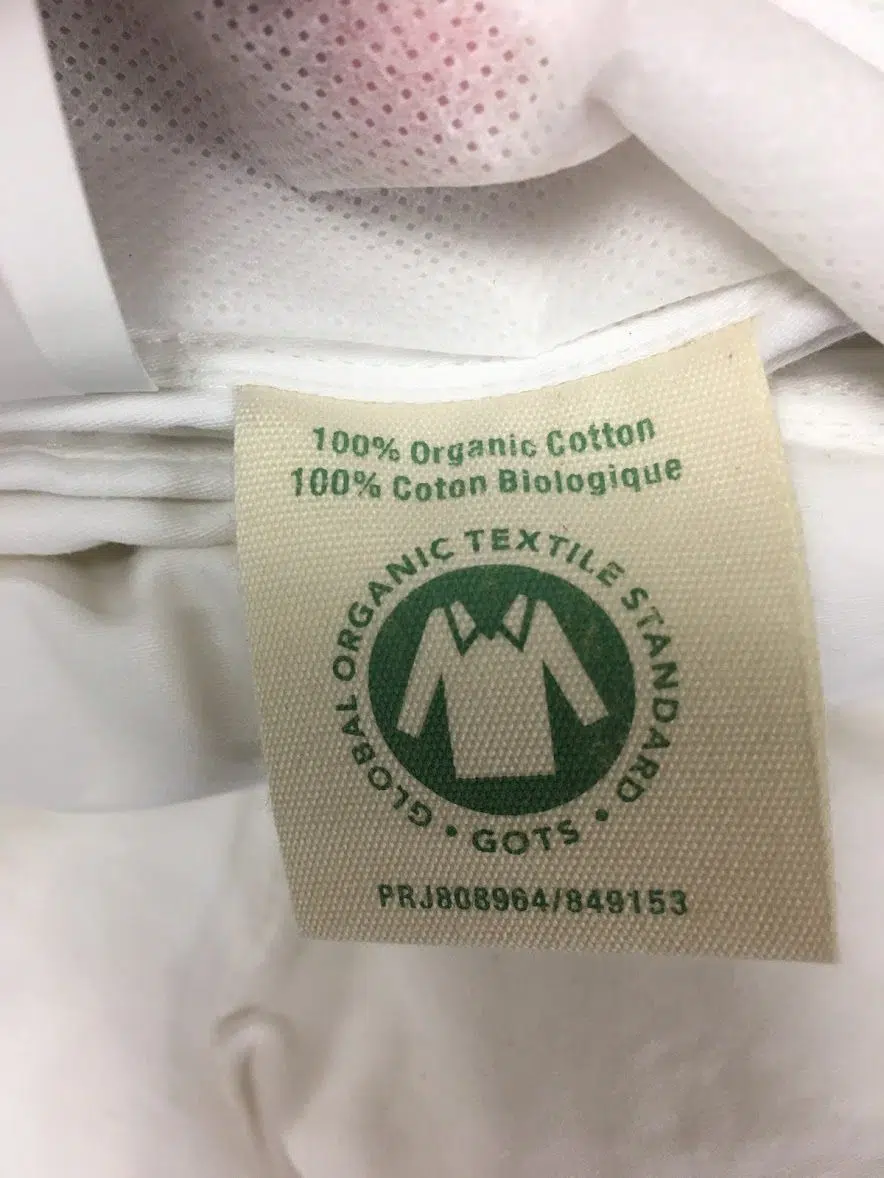
An organic mattress usually carries two certifications because it contains two very different organic materials. GOTS — the Global Organic Textile Standard — governs textiles made from organic fibers such as cotton and wool. GOLS — the Global Organic Latex Standard — governs latex made from organic natural rubber. Neither one covers the other’s territory, so a bed with only one of them has an uncertified half.
| GOTS | GOLS | |
|---|---|---|
| Material | Textiles from organic fibers (cotton, wool) | Latex from organic natural rubber |
| Typical mattress parts | Cover, quilting, wool fire barrier, ticking | Latex comfort and support layers |
| Certified grades | “Organic” and “made with organic” tiers by fiber content | Organic latex content threshold for the finished latex |
| Beyond materials | Includes processing, chemical inputs and social criteria | Includes chemical inputs and supply-chain traceability |
| Scope of certificate | The certified facility and product, not the whole mattress | The latex, not the whole mattress |
What GOTS covers
GOTS applies to textile products containing organic fibers and covers far more than fiber origin: permitted chemical inputs during processing, wastewater treatment, and social criteria at certified facilities. It has tiers based on organic fiber content, which is why the wording matters — “GOTS organic” and “made with organic materials” are different claims. In a mattress, GOTS typically appears on the cover, the quilting, and wool used as a fire barrier.
What GOLS covers
GOLS applies to latex produced from organic natural rubber, with a content threshold for the finished latex and traceability back through the supply chain. It is the certification to ask about on a latex or latex-hybrid bed. It does not tell you whether the latex is Talalay or Dunlop — that is a manufacturing process, not an organic claim, and the two behave differently in a mattress.
Why both usually appear together
A typical certified-organic bed has a GOTS cotton cover, GOTS wool quilting, and GOLS latex layers. If you see only GOTS, ask what the comfort and support layers are made of; a certified organic cover can sit above conventional polyfoam. If you see only GOLS, the cover is uncertified. This is the most common source of confusion we hear in the Encinitas showroom.
What neither certification promises
Neither is an emissions test, so pair them with GREENGUARD Gold if indoor air is your concern. Neither certifies durability, firmness, or how the bed sleeps. And neither makes a mattress “non-toxic” — that phrase has no regulated definition at all.
How to verify
Both programs issue scope certificates naming the certified entity, the products covered and a validity period, and both maintain public databases. Ask for the certificate rather than the logo, then check that the product you are buying is on it. Certified organic beds we have documented include Avocado, Birch and My Green Mattress; each review states which certifications we could confirm.
Related guides
Back to the Mattress Certifications & Safety guide.
Frequently asked questions
Is GOLS the same as GOTS for latex?
No. GOTS covers textiles from organic fibers; latex is not a textile fiber, so organic latex is certified under GOLS.
Can a mattress be 100% organic?
Not in practice. Coils, adhesives and some components fall outside any organic program, so certifications apply to specific layers.
Does organic mean no flame retardants?
Not automatically, though organic beds commonly use wool as the barrier. Ask about barrier material specifically.
Which is more important for a latex bed?
GOLS, because it covers the latex that makes up most of the mattress. GOTS still matters for the cover and any wool.
Sources
Certification descriptions reflect each program’s published requirements at the time of writing; programs update their criteria, so verify a current certificate before purchase. Yawnder does not issue or administer any certification.