Mattress Certifications & Safety Guide
What CertiPUR-US, GREENGUARD Gold, GOTS, GOLS and OEKO-TEX actually certify, how mattresses meet federal flammability rules, and how to verify a claim.
Mattress Education · Construction & Materials · Care & Ownership
Certification logos are the most quoted and least understood part of mattress shopping. Each program tests a specific thing — a foam sample, an emissions chamber, a fiber supply chain, a finished textile — and none of them certifies “a healthy mattress” as a whole. This hub explains, program by program, what is covered, what is not, and how to confirm a certificate is real and current before you buy.
| Program | What it applies to | Core claim | What it does not cover |
|---|---|---|---|
| CertiPUR-US | Flexible polyurethane foam | Emissions, content and durability criteria for the foam | Non-foam components, the finished mattress, organic status |
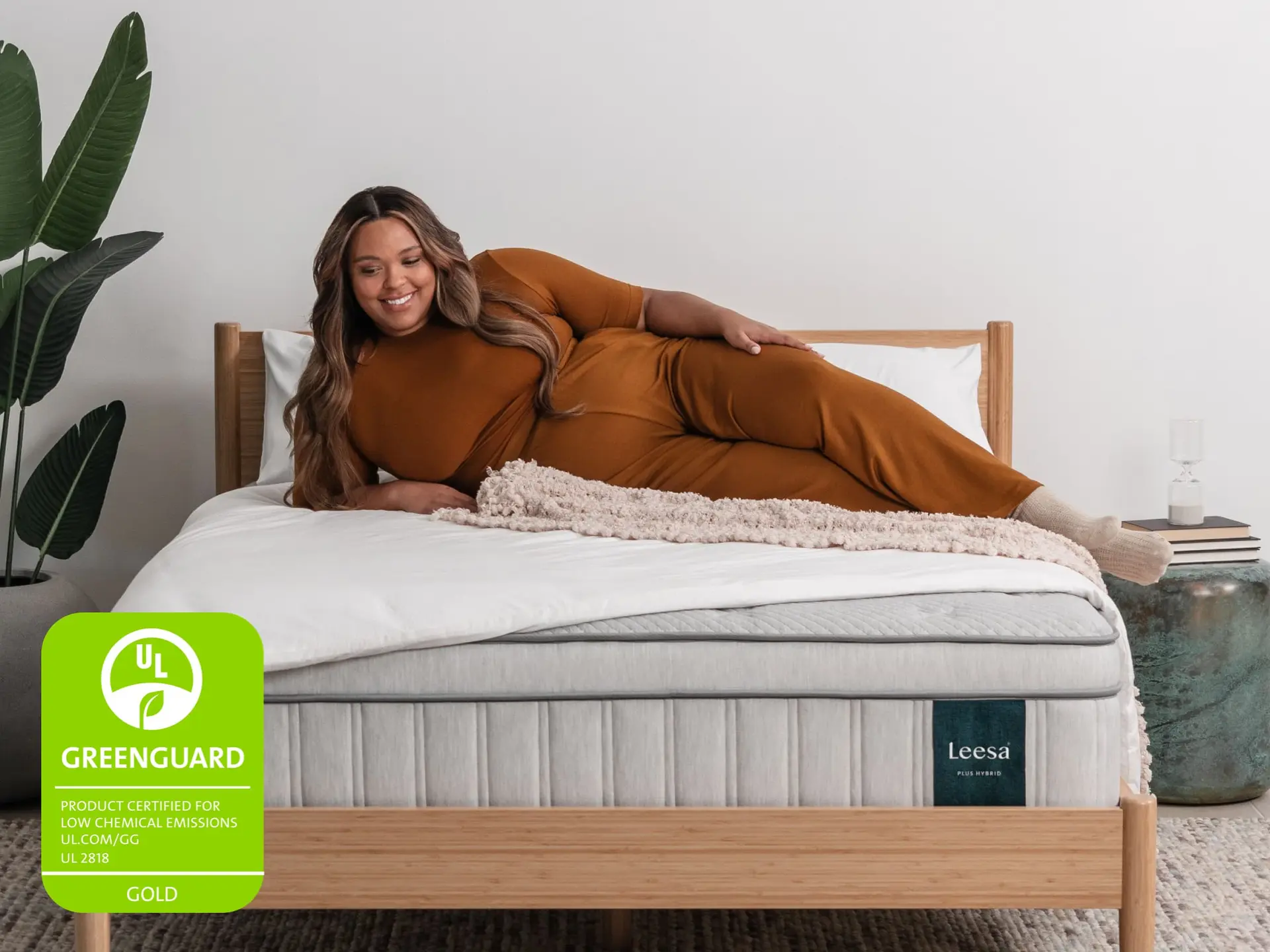
| GREENGUARD Gold | Finished products and materials | Chemical-emissions limits for indoor air | Whether materials are organic or natural |
| GOTS | Textiles with organic fibers | Organic fiber content plus processing and social criteria | Latex cores, foams, coils |
| GOLS | Latex made from organic natural rubber | Organic latex content and supply chain | Covers, foams, coils |
| OEKO-TEX STANDARD 100 | Textiles and components | Tested limits on harmful substances by use class | Organic status, emissions in a room |
| 16 CFR 1632 / 1633 | All mattresses sold in the US | Mandatory flammability performance | Which barrier material the maker chose |
Start here: a certification is a scope, not a verdict
The single most useful habit is asking what was certified. A mattress can advertise a certified foam layer while its cover, quilting and fire barrier were never in scope. Another can hold a certified organic cover over conventional polyfoam. Neither company is lying; the logo simply covers one part. Every guide below states its program’s scope in the first paragraph, and how to read a spec sheet shows where to look for the components that were left out.
Emissions programs vs content programs
Two different questions get confused constantly. Emissions programs (GREENGUARD Gold, and the emissions portion of CertiPUR-US) put a product or material in a test chamber and measure what comes off it into air. Content programs (GOTS, GOLS, OEKO-TEX) look at what a material is made of and what substances it may legally contain. A bed can pass an emissions test while containing nothing organic, and a certified-organic fiber can still be worth checking for emissions once assembled.
Flammability is a law, not a badge
Every mattress sold in the United States must pass federal flammability performance testing. Manufacturers choose how: an inherently flame-resistant fiber, wool, a treated non-woven barrier, silica-based fabrics, or in some cases a fiberglass-containing sock. The rule dictates performance, not material — which is exactly why fire-barrier material has become its own shopping question. Mattress flame barriers explained covers the options and lists brand-by-brand status from our stored evidence records.
How Yawnder verifies a certification claim
We record the certifier’s own documentation, the brand’s published statement, or a law tag one of our staff read in the Encinitas showroom — and we label which of the three it was. Marketing copy on a product page is not treated as verification of a component the brand did not name. Where a brand has not published anything, we store “not disclosed” rather than filling the gap. That is also why our fiberglass-free picks list is shorter than most: a mattress qualifies only when documentation exists.
Certifications are not test scores
None of these programs measures how a mattress sleeps. Firmness, pressure relief, motion isolation, cooling and edge support come from our own testing, which is separate from any certificate. See our testing methodology for the split between instrument readings and hands-on evaluation, and use the comparison tool to line up scored beds.
The guides
- CertiPUR-US
What the foam program tests for, and what it does not cover.
- GREENGUARD Gold
Indoor-emissions testing, and how to confirm a certificate is current.
- GOTS vs GOLS
Organic textiles vs organic latex — two different standards, two different scopes.
- OEKO-TEX
Harmful-substance limits for textiles, tested by product class.
- Flame barriers
How mattresses meet federal flammability rules, and the brand fiberglass database.
- “Non-toxic” mattress
An unregulated marketing phrase — here is what to ask instead.
Related guides
Back to the Mattress Certifications & Safety guide.
Frequently asked questions
Which mattress certification matters most?
It depends what you are worried about. For indoor air, look at GREENGUARD Gold or CertiPUR-US emissions criteria. For organic content, GOTS covers textiles and GOLS covers latex. For harmful-substance limits in fabrics, OEKO-TEX STANDARD 100.
Does a certification mean the whole mattress is certified?
No. Most certifications apply to a specific material or component. Ask which layers were in scope.
Can a brand claim a certification it does not hold?
It happens, which is why the certifying bodies publish searchable directories. Each guide below links to the relevant directory so you can check a certificate number yourself.
Is an uncertified mattress unsafe?
Not necessarily. Certification is voluntary and costs money, so some small manufacturers skip it while still using documented materials. Federal flammability requirements apply either way.
Sources
- CertiPUR-US program requirements
- UL GREENGUARD certification program
- Global Organic Textile Standard (GOTS)
- Global Organic Latex Standard (GOLS)
- OEKO-TEX STANDARD 100
- 16 CFR Part 1633 (open-flame)
- CPSC mattress flammability business guidance
Certification descriptions reflect each program’s published requirements at the time of writing; programs update their criteria, so verify a current certificate before purchase. Yawnder does not issue or administer any certification.