I am Ben Trapskin, founder of Yawnder. I have reviewed mattresses and sleep products for more than a decade and have personally tried every mattress o... Full Bio
Quick answer: For many adults, a nap of roughly 10–20 minutes is a useful starting point when time is limited. A longer nap can provide more sleep but may leave you groggy. The best length depends on your schedule, sleep needs and how you feel after waking.
An afternoon slump does not always require an elaborate sleep setup. A short rest can make it easier to finish the day, while a longer planned nap may fit better before a night shift or after a very short night. Neither is a reliable substitute for regularly getting enough sleep.
How long should you nap?
10–20 minutes: a practical starting point
Short naps are often used for a quick alertness boost and can reduce the chance of waking from deeper sleep. Set aside a little more time than the desired sleep duration if you usually need time to fall asleep. Even then, you may feel groggy, especially if you are very sleep deprived.
Around 30–60 minutes: more sleep, possible grogginess
A longer rest gives you more opportunity to sleep, but it can also increase the chance of waking from deeper sleep. People differ in how quickly they fall asleep and which stages they reach. Schedule extra time to wake up before you need to perform demanding work.
Around 90 minutes: a longer opportunity for sleep
A longer nap may be useful when your schedule permits, particularly before a night shift. The CDC’s NIOSH guidance discusses roughly 20 and 90 minutes as points at which sleep inertia may be less pronounced. Sleep cycles vary, however: setting a 90-minute alarm does not guarantee a complete cycle or a clear-headed awakening.
Why you may feel groggy afterward
Sleep inertia is the temporary period of reduced alertness after waking. It can follow any nap and may last longer when you are sleep deprived or wake from deeper sleep. Give yourself time to become fully alert before driving, operating equipment or making safety-critical decisions. A walk or light can be part of your transition back to activity, but do not treat them as a guarantee that impairment has passed.
If you are already drowsy while driving, pull over to a safe place. Napping or caffeine can be temporary countermeasures; they do not make continued driving safe if you still feel sleepy. Arrange another way home or rest longer if needed.
When is the best time to nap?
For a conventional daytime schedule, early afternoon often works well. Napping close to bedtime can make it harder for some people to fall asleep at night, but there is no universal cutoff: try a shorter, earlier nap if your evenings are affected. Shift workers may need a different schedule; planned naps before or during a shift can be useful when their workplace and duties allow.
If you have ongoing insomnia, discuss napping with a clinician or CBT-I provider. Depending on your situation, they may suggest limiting naps while you rebuild a consistent nighttime sleep schedule.
Make a short nap easier
Choose a safe, quiet place and a comfortable position that supports your neck.
Use an alarm you can hear, and allow a few minutes to fall asleep.
Reduce light and noise if they bother you; an eye mask or earplugs can help.
Build in time to wake up rather than scheduling a nap right up to an important task.
If you cannot sleep, a quiet break can still be pleasant, though it is not the same as sleep.
No. It may work well for you, though some people wake groggy. Try a shorter nap if you need to be alert quickly.
Does a nap replace a full night of sleep?
No. Naps can supplement sleep but should not become a workaround for chronic sleep deprivation.
When should I talk to a professional?
If you often feel excessively sleepy despite enough time in bed, or you snore loudly, gasp or have breathing pauses during sleep, ask a clinician for an evaluation. Drowsiness that affects driving deserves prompt attention.
In the original review the Modway Anya bed frame was discussed at $171; that historical price is not a verified current offer. The low-profile design and upholstered headboard remain appealing; compare the exact model and seller before buying. The Anya includes platform slats and a center support; some currently listed Anya versions have 3.7-inch slat gaps, so verify your exact SKU and mattress warranty's maximum permitted gap.
Yawnder Reviews · Updated October 2026
Overview
Discover the Modway Anya Bed, a stylish and affordable addition to any bedroom, available in multiple colors on Amazon! With easy setup and solid construction, this bed promises a cozy retreat that doesn’t break the bank.
Modway Anya Bed.
Mattress support and slat spacing
Modway describes the Anya as a slatted platform bed with a center beam and support legs, so a separate box spring is not required by the frame. That does not automatically mean every mattress is compatible. Modway's listing for the white queen fabric model, MOD-5420-WHI, specifies 3.7 inches between slats. Check the exact size and SKU you are considering, then compare that measurement and center-support design with your mattress maker's foundation and warranty requirements.
Measure the open space between neighboring slats, rather than the distance from one slat's center to the next. If the gap is too wide, ask the mattress maker and frame seller which support solution they approve before adding a bunkie board or other surface; an unapproved fix may affect airflow or warranty coverage.
Size, height and room fit
Measure the frame's outside length and width, not just the mattress size, and leave room to walk around it and open nearby drawers. Modway lists the white queen fabric version at 86 inches long by 66 inches wide, with a 36.5-inch headboard and 5 inches from floor to underside. Other sizes and versions can differ. The modest clearance limits the height of storage bins, and center legs may take up some of that space.
For your finished bed height, check the height of the mattress-support surface in the exact listing and add your mattress thickness. A thicker mattress can cover more of the headboard. If you plan to use an adjustable base, confirm its dimensions, leg clearance and compatibility with the frame and seller first.
Assembly and upkeep
Lay out the hardware and follow the instructions supplied with your exact model. Align the rails and headboard before fully tightening fasteners, install the center support and slats as directed, and make sure the support legs contact the floor. Having a second person hold the pieces can make alignment easier. After assembly, check for movement or loose fasteners and recheck periodically; do not overtighten hardware.
For upholstered surfaces, follow the care instructions for the specific fabric or vinyl version. Vacuum gently as appropriate and test any cleaner in an inconspicuous spot first.
Value and alternatives
The $171 mentioned in the original review is a historical price, not a current quote. Compare the delivered price, assembly requirements, return shipping or restocking charges, warranty, and any compatible support accessories before deciding. A lower-priced frame may cost more overall if it needs an additional approved support surface.
Choose Anya if the upholstered, low-profile look and its dimensions suit your room and mattress. A different platform may be a better fit if you need taller storage clearance, a specified narrower slat gap, or a confirmed adjustable-base setup. Compare individual models rather than assuming all frames from one brand use the same slats.
Frequently asked questions
Is the Modway Anya bed frame a good value?
Anya may be good value at a competitive current price, but the price in my earlier review is historical. Confirm slat spacing and the delivered total before buying. It provides a simple, no-frills design that is both stylish and functional, appealing to those looking for budget-friendly furniture.
Who is the Modway Anya bed frame best for?
The Modway Anya bed frame is best for shoppers seeking an affordable, stylish, and easy-to-assemble bed with a mid-century modern aesthetic. Its straightforward design and competitive price make it suitable for a primary bedroom or a guest room.
How does the Modway Anya bed frame compare to Zinus bed frames?
The original review noted no performance decline from the bowed slats on the Anya it discussed. Both brands offer platform frames, but slats and support vary by model; compare the exact frames' spacing, center support, delivered price and return terms.
What are the downsides of the Modway Anya bed frame?
One potential downside of the Modway Anya bed frame is the need for precision during assembly due to limited room for error, which can slightly prolong setup time. Handle the bowed slats carefully during installation and verify that their spacing meets your mattress maker's requirements.
Is the Modway Anya bed frame good for supporting various mattress types?
The frame has platform slats, but mattress compatibility depends on the mattress maker’s support requirements. A currently listed Anya version specifies 3.7-inch spacing. Verify your own model and mattress-maker requirements before placing foam, latex or hybrid mattresses directly on its slats.
What is the clearance underneath the Modway Anya bed frame for storage?
The Modway Anya bed frame offers approximately 5 inches of clearance underneath, which is consistent with its modern, low-profile design. This allows for limited under-bed storage, aligning with contemporary minimalist aesthetics.
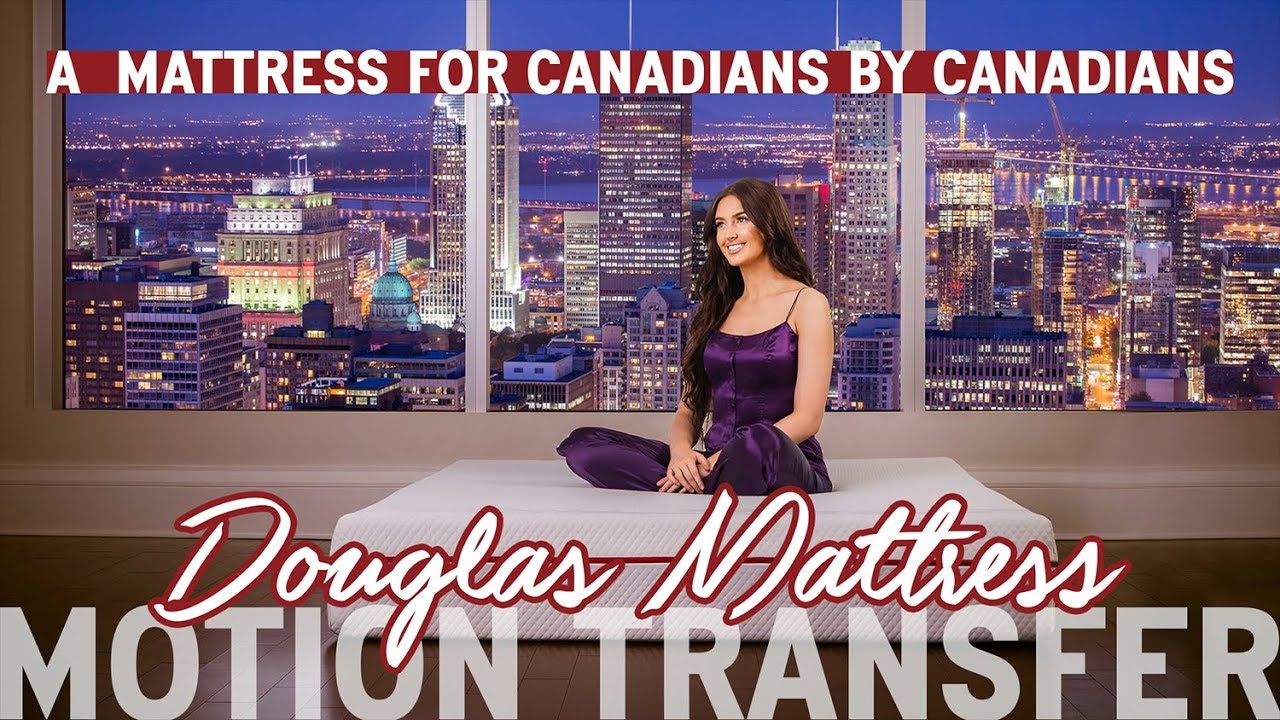
Our original Douglas foam mattress had a soft initial contour with a quicker recovery than slow memory foam. It isolated motion well in our test, and we particularly liked the pressure relief for side sleeping. These findings apply to the earlier Canadian model; Douglas now sells a wider range of foam and hybrid mattresses.
What we found in the original test
The top layer conformed readily, while the next layer gave the surface a more responsive feel. In our original evaluation, the mattress cushioned the shoulder and hip without the deeply slow sensation associated with some memory foams. It also contained movement well when compared with a bouncier sleep surface.
We used a 14-pound bowling ball to illustrate how the surface compresses. That visual shows one type of load; it cannot predict how every person will feel on the mattress. Our observations are about the tested sample, not a new test of every current Douglas model.
The reviewed construction
The earlier Douglas was a Canadian-market all-foam mattress with three layers: a gel-infused comfort foam, a more responsive transition foam and a dense foam support base. The original review described Canadian-sourced foams and fabrics. Materials, covers and dimensions can change, so refer to the exact current model before ordering.
Original photos and videos
Our original 14-pound bowling-ball demonstration.
Watch our original Douglas mattress review This 2018 review shows the earlier Canadian foam model; current models may differ.
More original test videos
These are Yawnder’s original videos of the product reviewed at the time. Current models may differ.
Douglas currently lists Original, Alpine and Summit in both foam and hybrid versions, plus RV sizes. Its Canadian lineup gives model-specific information. The following is a manufacturer-described comparison, not a head-to-head test by Yawnder.
Current range
What to check
Original foam
Douglas’s entry foam model; check its current height and specifications.
Alpine / Summit foam
Additional or deeper foam layers and different covers; compare price and dimensions.
Hybrid versions
Foam combined with pocketed coils; do not assume they feel like our earlier all-foam sample.
Check availability, Canadian shipping restrictions, current price, trial and warranty with Douglas. Terms can change and may differ by location or seller.
Who should consider it?
May appeal to
Canadian shoppers seeking foam contouring, especially side sleepers who like a softer initial feel.
Compare alternatives if
You prefer a firmer surface, coil bounce, a different delivery market or a model with an in-person trial.
Comfort depends on body size and sleeping position. Browse our mattress reviews for other constructions.
Frequently asked questions
Is this a test of the current Douglas Alpine or Summit?
No. The original test predates those current model comparisons.
Did the tested mattress have coils?
No. Our sample used an all-foam construction. Douglas now also lists hybrids.
Does the bowling-ball test prove pressure relief for everyone?
No. It illustrates the surface under one load, while comfort varies by sleeper.
Is Douglas sold in the United States?
Our reviewed model was aimed at Canada. Confirm current delivery areas directly with the manufacturer.
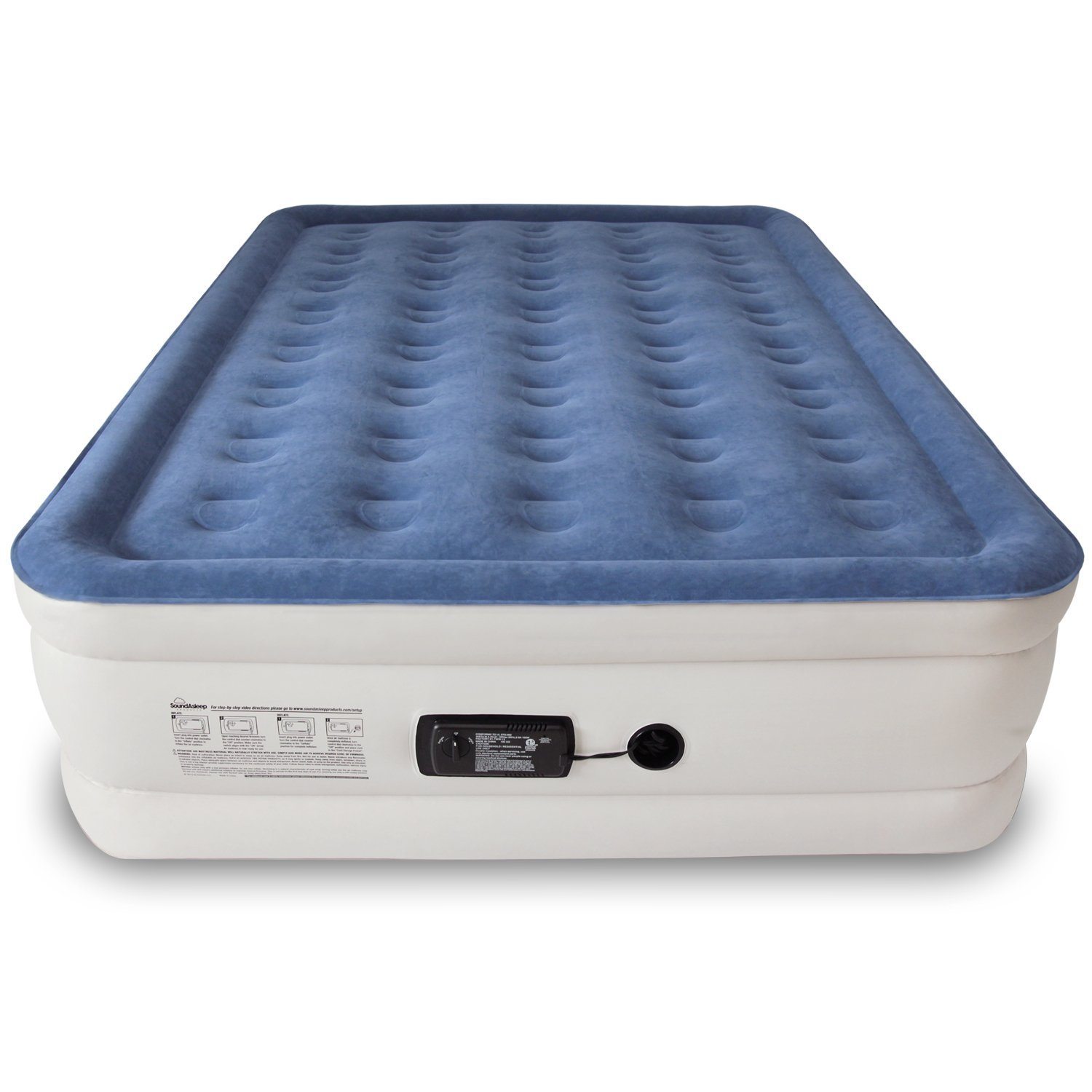
SoundAsleep Dream Series queen air mattress. Photo: SoundAsleep.
Quick answer
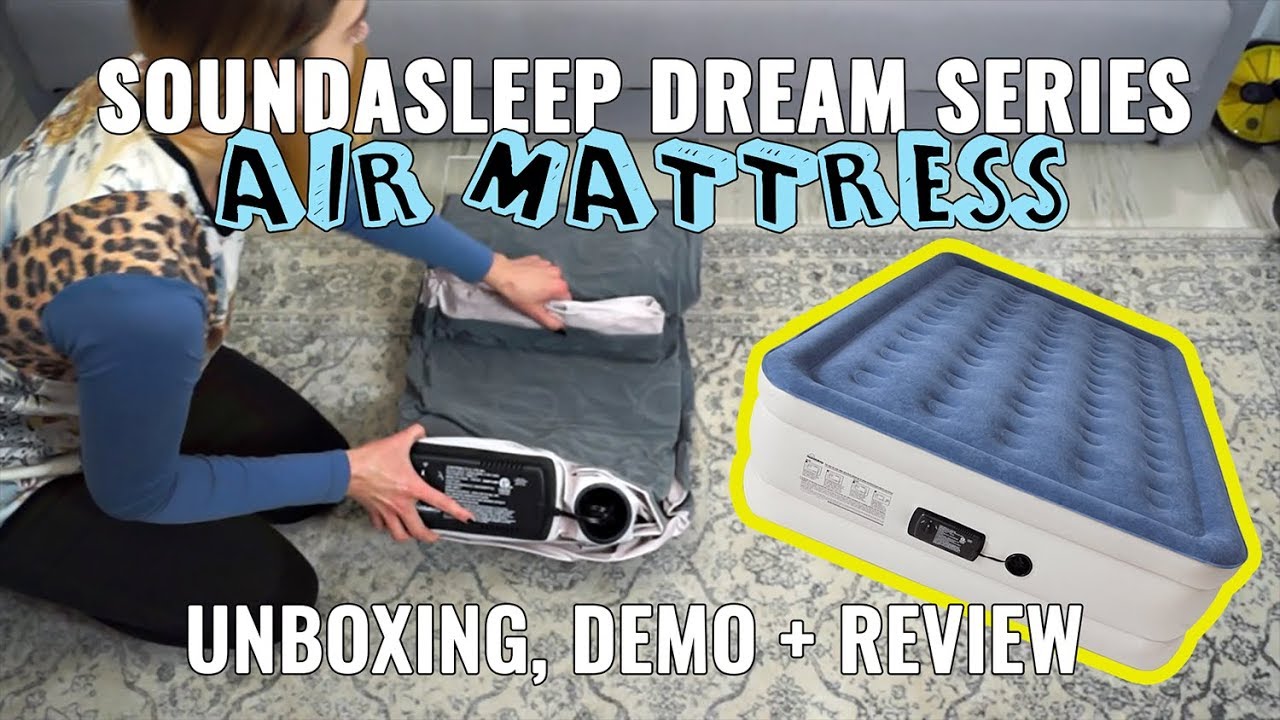
The SoundAsleep Dream Series is a raised air mattress with a built-in electric pump, designed as a convenient temporary bed. It may suit guests when storage space is limited, but inflation, an electrical outlet and potential air loss are practical trade-offs. Our original video shows the Dream Series we reviewed in 2018; the specifications below use current manufacturer information and do not represent a new test.
SoundAsleep describes a raised PVC air mattress with a flocked top, a built-in pump and internal ComfortCoil air chambers. The manufacturer’s queen listing gives an inflated size of 80 × 60 × 19 inches and 40 internal chambers. Specifications vary by size and may change; confirm the exact version, weight limit, pump requirements and dimensions on the current product page.
Feature
What it means for a buyer
Raised height
Can make the surface easier to reach than a low camping pad, depending on the guest.
Built-in electric pump
Convenient when an appropriate electrical outlet is available; check voltage and cord requirements.
Internal air chambers
Part of the mattress’s support design; comfort still varies with inflation and the user.
Deflatable
Saves space between uses, though the packed bed still has weight and bulk.
Who might it suit?
Occasional guests
A raised, stored-away bed may be useful in a room that serves another purpose most of the year.
Limited storage
Deflation can free floor space, but measure the packed dimensions and consider the weight before buying.
Travel or camping
The manufacturer describes this as an indoor air mattress. Check the intended use and power requirements of the exact model; a camping-specific bed may be more appropriate outdoors.
Regular long-term use
Compare comfort, maintenance and durability with a conventional mattress or folding guest bed.
Setup for a guest
Clear a level floor of sharp objects and follow the manufacturer’s setup directions.
Use the correct power source and inflate to the firmness recommended by the maker; do not overinflate.
Check the sleeping surface and seams before use. New materials may stretch, so follow instructions if the mattress needs topping up.
Use fitted bedding that matches the inflated dimensions and height.
Keep clear of heaters, flames and sharp pet claws, and follow the product’s weight and usage limits.
Infant safety: Air mattresses are not safe sleep surfaces for infants. The CPSC warns against placing infants to sleep on them; use an appropriate firm, flat infant sleep surface instead.
Making a guest bed comfortable
Measure the room first. SoundAsleep lists the queen at 80 by 60 inches and 19 inches high when inflated. Mark that footprint on the floor and allow room for guests to get in and out, open a door and reach an outlet. The queen measurements do not apply to every size; check your selected version.
Check the bedding depth. A fitted sheet needs enough pocket depth for the inflated height and enough fabric to stay tucked underneath. Deep-pocket sheets may fit a raised air bed better than a standard shallow set, but compare the actual measurements. A mattress pad can change the feel of the flocked surface; make sure it and the sheet fit without pulling off the corners.
Set it up before your guest arrives. Inflating the bed in advance gives you time to check firmness, find bedding that fits and listen for any noticeable air loss. Follow the instructions for inflation and adjustment. If the surface feels softer after setup, temperature and the stretching of new material are possible explanations; inspect the valve and seams before concluding there is a puncture.
Think about getting in and out. The raised profile may be easier to reach than a floor-level camping pad, but an air mattress can move or compress under concentrated weight. A guest who needs a particularly stable edge or help standing may prefer a conventional guest bed with a sturdy frame. Keep walkways clear and choose a location that is convenient for the person using it.
Use the right setting. SoundAsleep describes the Dream Series as an indoor air mattress. For camping or any outdoor use, check the manufacturer’s instructions for the exact model and consider an air bed designed for camping, especially when outlet access or a protected floor is uncertain. Never assume that an electrical pump can be used with an incompatible power source.
Plan for storage and repairs. Follow the manufacturer’s instructions for cleaning, drying, deflation and folding. Store the bed where it cannot be punctured, and keep any included instructions or repair supplies with it. Before purchase, compare the full delivered cost, seller-specific return rules and warranty requirements; those details can vary between sellers.
Air mattress vs. other guest beds
Option
Strength
Trade-off
Raised air mattress
Compact when deflated; adjustable inflation
Needs inflation and can lose air
Rollaway bed
Frame and mattress can fold for storage
Folded unit may be bulky and heavy
Tri-fold foam mattress
No pump or electric outlet needed
Often lower to the floor and bulkier than a deflated bed
Some softening after inflation can have several causes, including temperature changes, material stretch or a leak. Check the valve and follow the maker’s leak-testing and repair guidance. Do not assume a mattress has a puncture after one change in firmness.
Clean and dry the product as directed before folding. Store it away from extreme heat and sharp objects. Check warranty coverage and return terms with the actual seller; older prices or policies may no longer apply.
Frequently asked questions
Does the pump work without an outlet?
The Dream Series has an electric pump. Confirm the model’s power requirements and any supported alternatives before taking it somewhere without mains power.
Is it suitable for camping?
SoundAsleep describes the Dream Series as an indoor air mattress. For outdoor trips, check the instructions for the exact model and consider a bed designed for camping and the available power source.
Can an infant sleep on it?
No. Use a firm, flat sleep surface designed for infants.
Does this page establish how long it holds air?
No. It summarizes the product and practical considerations; it does not report a documented overnight pressure-retention test.
Image preserved from the earlier Leesa sheets review.
My verdict
I liked the smooth sateen feel of these Leesa sheets, and the earlier review records that they kept that smoothness after the first wash with minimal shrinkage. They felt lightweight and breathable to me. The reviewed set was the older Leesa and Third collaboration; the specifications and bundled extras below belong to that set.
Sateen weave with a subtle sheen
500-thread-count historical specification
First-wash observations preserved
Leesa and Third collaboration
My preserved earlier review
This account was recovered from an earlier WordPress revision. Its prices, extras and specifications describe that period. Leesa’s current Cotton Blend Sheet Set combines cotton with bamboo-derived rayon, rather than the older Leesa-and-Third set discussed here. Leesa lists the current set as fitting mattresses up to 17 inches and offers a 30-night trial for sheets; verify the seller and current terms before buying.
If you're on the hunt for quality bed sheets, Leesa has recently launched their own line of sheets, and I took the plunge to see how they stack up against other online brands. The verdict? These sheets are incredibly smooth, breathable, and versatile enough to complement not just your Leesa mattress, but virtually any online mattress brand.
Overview of the Leesa Sheets
The Leesa Sheets are designed with versatility in mind. Crafted from a luxurious sateen weave, these sheets boast a remarkable 500-thread count. Fit depends on fitted-sheet dimensions and pocket depth, rather than thread count; measure your mattress before buying. To bring these sheets to life, Leesa has partnered with Third, a brand known for quality craftsmanship.
The price tag for a queen size set is $155, and once you place your order, expect them to arrive within a week or less. They come neatly packaged in a box, adding an element of anticipation to your unboxing experience.
Upon opening the box, you'll find surprises that elevate the overall purchasing experience.
Delightful Extras
One of the first elements that catch your eye is a stylish zippable pouch. Inside, you’ll discover a calming lavender spray that you can spritz on your sheets post-wash or use to freshen up your bedroom atmosphere. Additionally, a couple of soothing tea bags are included to help you unwind and facilitate restful sleep. The lavender spray features a minimal ingredient list, showcasing Leesa’s commitment to simplicity and quality.
The sheets are also carefully packaged in plastic sleeves, ensuring they remain clean and protected during transport, a thoughtful touch that many brands overlook.
My Findings on Leesa Sheets
The smoothness of the Leesa Sheets is evident from the first touch, thanks to their sateen weave, which gives them a luxurious hand feel, unlike the crisper percale options. You'll also appreciate the subtle sheen they provide, enhancing the overall aesthetic of your bedding.
Another notable feature is the signature Leesa strip on the tag, alongside the Third label, which highlights the partnership. This collaboration reflects the high standards upheld by both brands, ensuring you receive quality sheets.
Here’s a closer look at the fitted sheet:
Leesa Sheet Construction
As shared on Leesa's website, here are the key construction details that make these sheets stand out:
Native Egyptian Gossypium Barbadense cotton: Renowned for its exceptional quality.
Long-staple cotton fibers: Ensuring strength and durability.
Strong single-ply yarn: Offering a smooth texture without the bulk.
Sateen weave: For that ultra-soft finish.
High-quality 500-thread count: Balancing luxury and durability.
Certified STANDARD 100 by Oeko-Tex®: The original listing described this certification; STANDARD 100 concerns testing for specified harmful substances, not a blanket environmental certification.
My Recommendation for Leesa Sheets
The queen set was $155 when I reviewed it. The earlier listing advertised a 75-night trial; prices and policies may have changed, so check the exact seller’s current terms before ordering.
From my experience, the sheets maintained their smoothness after the first wash, exhibiting minimal shrinkage, which is often a concern with high-thread-count fabrics. They are breathable and lightweight, and their pocket depth is designed to fit most online mattresses comfortably, accommodating those in the typical 10-12 inch range.
Conclusion
In conclusion, the Leesa Sheets are a worthy investment for anyone seeking comfort and quality in their bedding. Their unique construction, delightful extras, and a customer-friendly return policy enhance the overall experience. Whether you're a proud owner of a Leesa mattress or any other brand, these sheets elevate your sleep environment.
Explore how the Leesa Sheets can transform your bedding experience—it might just be the upgrade you've been looking for.
Disclosure: We aim to highlight products and services you might find interesting, and if you buy them, we may earn a small share of the revenue. I have an affiliate relationship with Leesa.
What matters when comparing this set
The feel was the main reason I liked it
The useful distinction in my account is the smooth, slightly lustrous sateen surface. If you prefer a crisp sheet, that is a different preference from the softness I enjoyed here. A thread-count number alone does not tell you which feel you will prefer.
The wash observation has a specific scope
The recovered account describes the first wash: smoothness remained and shrinkage was minimal. It does not document years of repeated laundering. Keep that distinction in mind when assessing durability.
Check the exact set and pocket depth
The earlier review discussed fit on mattresses around 10 to 12 inches thick. Measure your mattress with any topper in place and compare it with the fitted-sheet specification for the exact set. The Leesa name alone does not establish that another generation has the same fabric, fit or accessories.
Questions about this review
Were these percale sheets?
No. The reviewed set was described as sateen, with a smooth feel and subtle sheen.
What happened after washing?
The earlier account says they retained their smoothness after the first wash and showed minimal shrinkage.
Did the package include lavender spray and tea?
Yes, those extras appear in the preserved account. They are historical package details, not a promise about a current order.
Is $155 the current queen price?
That is the price recorded in the older account. This restoration does not establish today’s price or availability.
Review by Ben Trapskin. Yawnder has an affiliate relationship with Leesa and may earn a commission from qualifying purchases.
Quick answer: “Text neck” is an informal name for neck discomfort associated with device use. Changing position regularly, adjusting your screen and keeping movements comfortable may help, but neck pain has many causes and posture alone does not diagnose one.
Looking down at a phone or working at a computer does not inevitably damage your spine. If your neck feels stiff after a long session, use the discomfort as a cue to change activities or position rather than trying to hold one “perfect” posture all day.
What is text neck?
People use the term to describe neck or shoulder soreness they associate with prolonged phone or computer use. It is not a specific diagnosis. Stress, sleep, physical activity, an injury and other health factors can also play a role. A stiff neck alone does not mean you have spondylitis or another serious spinal condition.
Practical ways to reduce discomfort
Vary your position: Take short movement breaks and alternate tasks when possible. There is no single posture you must maintain continuously.
Adjust your setup: Raise your phone or screen toward a comfortable viewing height, support your arms, and avoid reaching awkwardly for long periods.
Move gently: Comfortable neck and shoulder movement may ease stiffness. Avoid forcing a stretch into pain; stop if symptoms worsen.
Build activity gradually: Regular movement and an individualized exercise program may help. A physical therapist can tailor exercises to your needs.
The NHS guide to neck pain offers additional self-care advice. Reminders and voice controls may be useful tools, but an app cannot diagnose the cause of pain.
Can your pillow make a difference?
A pillow that feels comfortable and supports your head in your usual sleeping position may reduce awkward positioning. Mattress firmness and pillow loft are personal preferences; no pillow is proven to fix every cause of neck pain. Avoid making repeated purchases instead of seeking an assessment for persistent symptoms.
When to seek medical help
Speak with a clinician if pain persists, worsens, interrupts sleep or is accompanied by tingling, numbness or weakness. Seek urgent medical advice for neck pain after a significant injury, severe pain with fever or feeling very unwell, or new neurological symptoms. Sudden facial droop, speech difficulty or one-sided weakness warrants emergency services.
Frequently asked questions
Is looking down at a phone guaranteed to damage my neck?
No. Some people develop discomfort during prolonged activity, but pain and its causes vary.
Do I need a special pillow?
Not necessarily. Choose one that feels comfortable; seek help if symptoms persist.
Should I keep my neck completely still?
Usually not for ordinary stiffness. Gentle, comfortable movement can help, but follow a clinician’s advice after an injury or when warning signs are present.
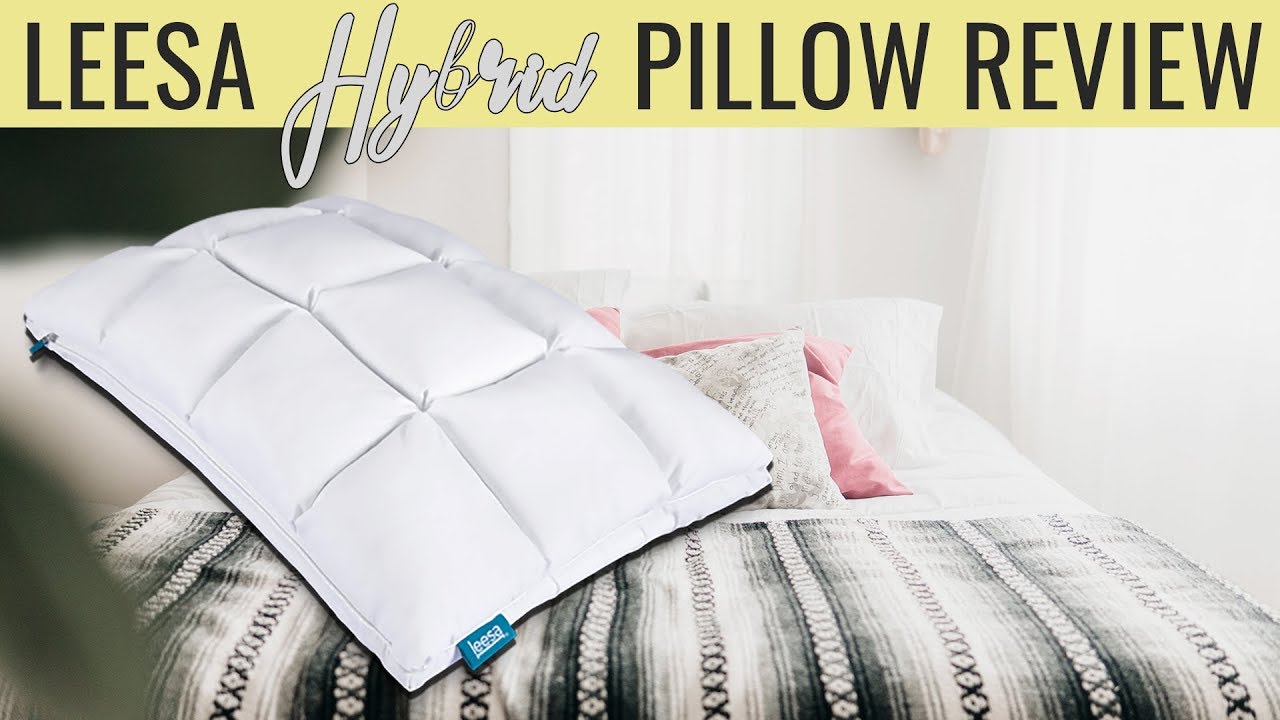
The older Leesa Hybrid Pillow paired a quilted, soft side with a gel side and an adjustable insert. That design can appeal to someone who wants two different surface feels and some control over height. The key trade-off is that adjusting layers is less granular than adding or removing handfuls of fill.
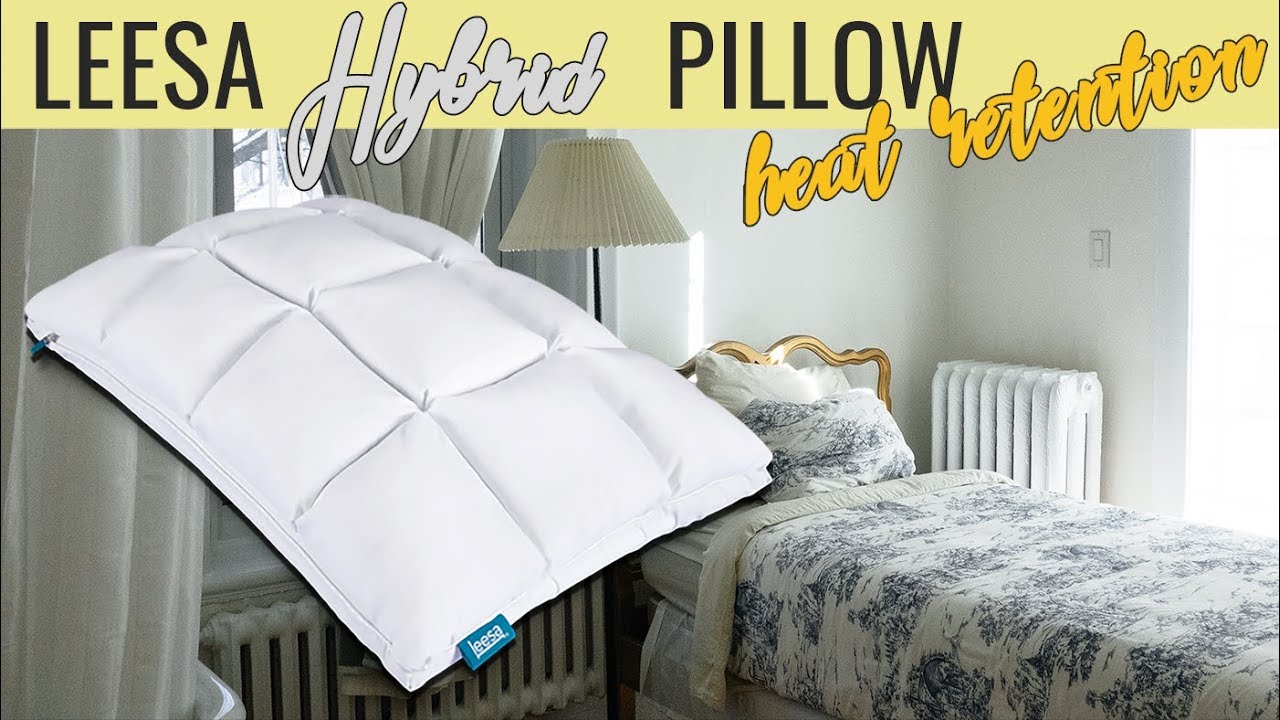
Leesa's current pillow lineup includes differently named products with different constructions. The earlier page does not document a controlled overnight cooling test, so this guide does not promise continuous cooling or claim a new test.
Original Leesa Hybrid design
Watch our original Leesa Hybrid Pillow review Our 2018 video shows the earlier Hybrid Pillow; current designs may differ.
The earlier article described a quilted side, gel side and removable insert for loft adjustment. Leesa has also described the Hybrid as reversible and adjustable. These details refer to the older design; verify the construction of the exact pillow you are considering.
A gel surface can feel cool initially, but surface temperature changes with contact, room conditions and bedding. No pillow can guarantee a particular temperature all night, and the earlier page does not support a numerical comparison with competing pillows.
My original heat-retention demonstration shows one sample under the conditions of that test; it does not establish all-night cooling or compare current models.
Original Leesa Hybrid Pillow heat-retention demonstration
Check whether the version you buy uses a removable insert or loose fill.
Surface
The historical design offered quilted and gel sides with different feels.
Sizes and price
Old prices are not current offers. Confirm dimensions and pricing for the specific listing.
Warranty
Leesa's bedding warranty currently lists the Hybrid Pillow with one year of limited coverage, subject to terms and eligibility.
Choosing loft and feel
Your shoulder width, mattress firmness and sleep position all affect the space your pillow needs to fill. Side sleepers often prefer more height than stomach sleepers, while many back sleepers favor a middle range. The important measurement is how the pillow supports you when compressed, not just its height on a shelf.
Try each available configuration on the mattress you normally use. If your head tilts sharply up or down, the height may not suit you. Comfort is individual; a dual-sided pillow will not automatically fit every sleeper.
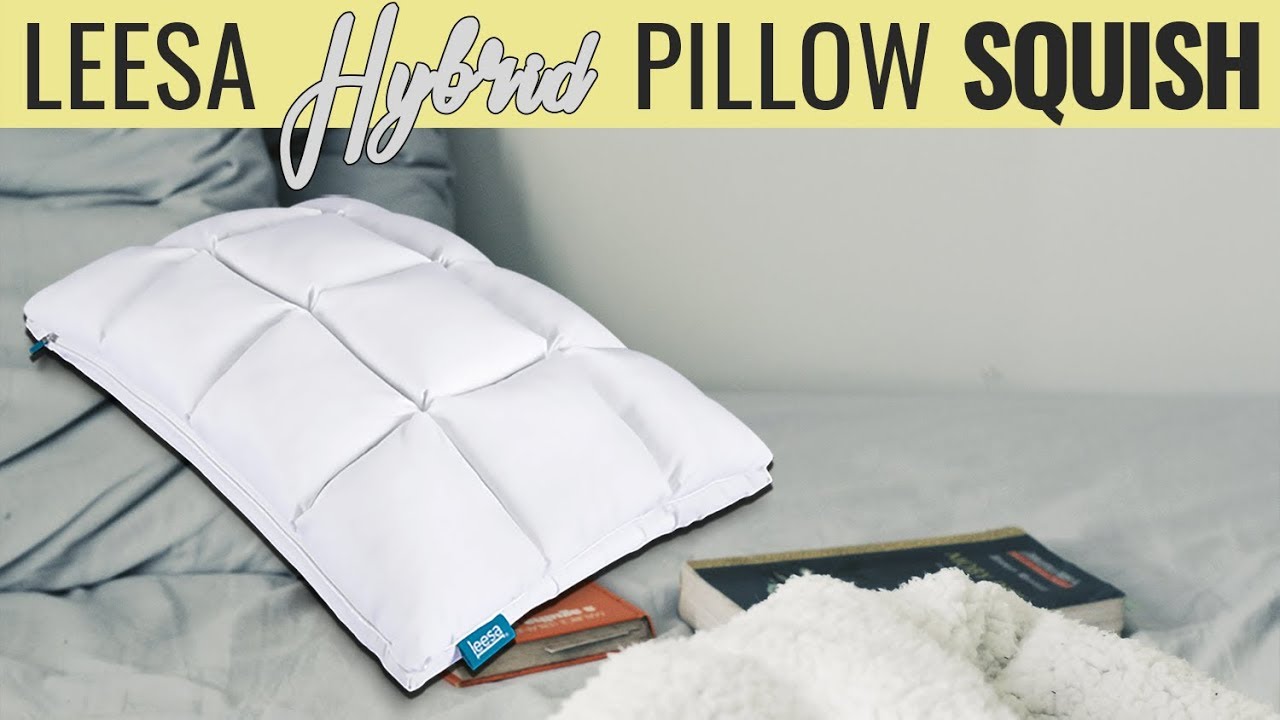
Here is my original demonstration of how the reviewed pillow responds to compression.
Original Leesa Hybrid Pillow compression demonstration
Check the sewn label and wash only components designated washable. Foam inserts and outer covers can require different care. Confirm size, price, availability, return conditions and the warranty for the exact pillow and seller before buying; the older article's prices and warranty duration may no longer apply.
If you want to compare pillows in person, contact the Yawnder showroom first to ask what is on display.
Frequently asked questions
Does the gel side cool all night?
The older page does not establish that. Gel may feel cool to the touch initially, but temperature experience varies.
Is the current Adjustable Chill the same pillow?
No. Leesa describes it as an adjustable foam-and-fiber fill pillow; check the current listing for its specific design.
Is the Hybrid's old three-year warranty still valid?
Do not assume it. Leesa's current warranty page lists one-year limited coverage for the Hybrid, subject to its terms; older purchases may have different documents.
Can I wash the whole pillow?
Only if the care label for the particular model says so. Covers and foam inserts often need different care.
Updated October 18, 2026. This page distinguishes the older 12-inch eLuxury Supply review from a separately listed 10-inch ELUX Signature. It is an editorial availability update; no complete model-specific standardized score is attached.
Disclosure: Some links on Yawnder may earn a commission.
Image associated with earlier eLuxury 12-inch mattress coverage; the current ELUX Signature is a different model.
eLuxury mattress review: check the model before buying
The important question today is whether you can buy the exact mattress an older review describes. Our original URL refers to a 12-inch gel-foam mattress. The current manufacturer listing we verified is a 10-inch ELUX Signature, and all its size options showed sold out. Those products should not be treated as interchangeable.
We would not choose remaining inventory solely because an old review looks favorable. Verify the construction, seller, condition, delivery estimate and return terms for the item actually offered.
Our original eLuxury 12-inch hybrid videos
In these older videos, Yawnder reviews an eLuxury Supply 12-inch gel memory foam and latex innerspring hybrid. The clips document that earlier model, not the 10-inch ELUX Signature discussed below. We have not verified that every detail of the original written article refers to the same sample. Prices and policies mentioned in the videos are historical.
These demonstrations illustrate the earlier sample under specific conditions; they do not establish an overnight cooling result or a standardized score for any current mattress.
What we could verify
Product
Current check
Older 12-inch review subject
Current exact-match direct inventory not verified
ELUX Signature 10-inch Gel Memory Foam
Official listing exists; all listed sizes showed sold out
Displayed Signature price
$337.99, not a verified available Queen offer
Source: official ELUX Signature listing, checked October 18. An indexed product page and a displayed price do not establish available inventory. Ask eLuxury whether restocking is planned rather than assuming the product is permanently discontinued.
Foam feel: Ask for the full layer specification, not simply a gel-foam label. Height alone does not tell you how far your shoulder or pelvis will settle.
Side sleepers: Assess cushioning and waist support. Back and stomach sleepers: Check whether your pelvis remains comfortably supported. Couples: Compare movement and edge sitting using the exact model.
We have not verified new cooling, motion-transfer or durability measurements for the listed Signature mattress. Gel branding is not proof of cooler sleep, and the archived review should not be read as testing of this different model.
Do not carry forward the old 120-night policy
Older eLuxury articles describe a 120-day mattress return arrangement and a 10-year limited warranty. The verified Signature listing currently displays “30 Day Returns” messaging. We have not resolved which complete terms would govern a new mattress order if stock returns.
Before ordering any eLuxury mattress, request written confirmation of opened-mattress eligibility, trial deadline, pickup arrangements, fees and warranty coverage for the exact item and seller. A general site banner is not enough to establish an at-home comfort trial.
Existing owners should retain the original invoice and terms, identify the model and purchase date, and contact the original seller. A later product listing does not necessarily replace the agreement that came with an earlier purchase.
Alternatives with clearer current listings
Compare our Novilla guide for current foam options and seller checks. If you are open to coils, our Vaya Hybrid review provides another construction to consider. Neither is an exact substitute for the older eLuxury.
Use the same mattress size and include any required foundation, delivery and disposal costs. A lower starting price for a smaller size is not a fair comparison.
Frequently asked questions
Is the 10-inch Signature the same as the 12-inch review subject?
No. The names and profiles differ; we have not verified identical construction.
Can I order the Signature at the displayed price?
All listed sizes showed sold out during our check. Confirm stock and a size-specific quote with eLuxury.
Does the old 120-night trial apply today?
We have not verified that for a new order. Ask for the applicable written mattress policy.
Our recommendation: Confirm availability and complete seller terms before purchasing. Keep older review material tied to the model it actually describes.
Quick answer: Back and side sleeping can both be comfortable for people with neck pain. Choose a pillow that supports your head and neck without pushing them sharply up, down or sideways. There is no single position or pillow that works for everyone.
Waking with a stiff neck can make the whole morning harder. Your sleep position and pillow may contribute to discomfort, but neck pain has many possible causes. An adjustment can be worth trying; it is not a diagnosis or a guaranteed cure.
Back, side or stomach: what to try
Back sleeping
Try a pillow that fills the space beneath your neck without pushing your chin toward your chest. A very tall stack can tilt the head forward. Some people like a small rolled towel inside the pillowcase for gentle neck support, while others prefer a single contoured or adjustable pillow.
Side sleeping
Fill the gap between the mattress and your head so the neck is not noticeably tilted toward either shoulder. Shoulder width, pillow compression and mattress firmness all affect the height you need. If your shoulder sinks deeply into the bed, you may need less loft than you would on a firmer surface.
Stomach sleeping
This often requires turning the head for long periods, which may be uncomfortable for some people. If you want to change positions, try moving gradually and using a body pillow for support. If stomach sleeping is your only comfortable option, a low pillow—or none under the head—may feel better. Stop any change that worsens symptoms.
The NHS neck-pain guidance suggests trying back or side sleeping with the head and neck supported in line with the spine.
How to choose pillow height and feel
Lie in your usual position for several minutes, not just a few seconds.
Notice whether your head is tipped up or down, or whether you feel pressure beneath the neck or shoulder.
Adjust the amount of fill or try a different height. An adjustable pillow can make small changes easier.
Check comfort again after a few nights. If pain worsens, stop using the new setup.
Memory foam, latex, down and other fills can all be comfortable; there is no universally best material. A pillow that supports one sleeper may feel too high or soft for another. See our pillow reviews and check return terms before purchasing.
Does the mattress matter?
Your mattress affects how far your shoulder and torso sink, which changes the height a pillow needs to fill. A mattress that feels comfortable and supportive can make it easier to rest, but no mattress or pillow can promise to treat the cause of neck pain. If your bed is sagging or uncomfortable, assess the whole setup before buying a replacement.
At Yawnder’s Encinitas showroom, you can try different mattress and pillow combinations. A comfortable trial is useful, but it does not replace medical evaluation for persistent or concerning symptoms.
Look beyond bedtime
Neck discomfort may be affected by injury, stress, prolonged positions, joint changes or other conditions. Change position and take comfortable movement breaks during the day. A physical therapist or clinician can suggest exercises appropriate to your symptoms; avoid forcing a stretch that increases pain.
When to seek care
Contact a healthcare professional if pain persists, worsens, follows an injury, or is accompanied by numbness, tingling or weakness. Seek urgent evaluation for significant injury, new or progressive weakness, or severe symptoms. A high fever with headache and a stiff neck is an emergency warning sign; see MedlinePlus emergency guidance.
Frequently asked questions
Is back sleeping always best?
No. Side sleeping can also be comfortable. Choose a supported position that works for you and does not worsen symptoms.
Should I use a hard or soft pillow?
Neither is automatically best. Height and how the pillow compresses in your position matter as much as firmness.
Can a new pillow cure neck pain?
No. It may improve comfort for some people, but ongoing or concerning pain needs appropriate assessment.
Yawnder originally tested the Idle Sleep Dual Firmness mattress, an all-foam design with a softer side and a firmer side. This page is a record of that test. Idle Sleep is reported to be out of business, so do not assume its old direct-sale trial, returns or warranty can be honored; ask any seller for written support terms before buying an older or resold product.
In the original test, Ben described the softer side as medium firm, preferred it to the firmer side, and observed less motion on the softer side. Comfort and durability vary by sleeper and by mattress condition.
Historical test: The original account below describes the model, prices and manufacturer policies at the time of testing. These offers should not be treated as current.
At the time of this review, Idle Sleep was an online mattress brand that has multiple mattress models that have one thing in common, they can all be flipped. This means you can sleep on either side. This is a construction that harkens back many decades when you could maximize the lifespan on your mattress by wearing each side evenly. This was true then and is true now with Idle Sleep.
Their Dual Firmness mattress is a little different in that each side is a different firmness. This gives you the option of sleeping on a firm or soft side. At the time, the queen was listed at $1,199
Overview of the Idle Sleep Dual Firmness Mattress
The reviewed offer included a 120-night trial at the time. That means you can try out the mattress in your house for 120 days and if you don’t like it, you can return it for a full refund. There’s no need to ship it back either, Idle will work with you to take care of the return.
The brand then advertised U.S. manufacturing and a lifetime warranty; availability of support today is unverified.
Here’s a quick overview of the mattress. In the video, I show you how easy it is to flip as it comes with handles on each side that are stitched into the mattress.
Construction of the Idle Dual Firmness Mattress
Construction illustration from the original Idle Sleep review.
Below are the construction details of the mattress as listed on the Idle Sleep website.
Queen size) 112lbs
Materials: Super Soft Quilting foam, IDLE buoyancy foam Foam core Comfort foams on BOTH sides
• MEDIUM-FIRM SIDE Cover ALL-NATURAL Organic Cotton all the way around 1. .5” quilting foam on each side1.512 density 2. 2” IDLE buoyancy Foam 3.5lb 3. 2” transition poly layer 1.828 lb 4. 4” High Density Foam Core 1.835lb
• FIRM SIDE 1. .5” quilting foam on each side1.512 density 2. IDLE buoyancy Foam 3.5lb 3. .5” quilting foam on each side1.512 density
My Idle Sleep Findings
Below is a photo of my 14 lb. bowling ball on the soft side of the Idle Sleep Mattress. On a firmness scale I would say this is a medium firm feel.
Ben’s bowling-ball test on the softer side of the original mattress.
The other side felt more firmly supportive to me.
In this test, I observed relatively little motion transfer. Below is a video illustrating motion transfer on the soft side. The soft side absorbs more motion than the firm side.
Here’s a video of the firm side of the mattress. There isn’t that much difference between the two but I noticed the soft side absorbed a little more motion.
Dual firmness mattresses are excellent guest bedroom mattresses because they give you two choices in one. But this mattress is also great for your bedroom every night. I prefer the softer side as I generally like a softer mattress but people on the lookout for a firm mattress will appreciate the firm side of the Idles Sleep.
At the time, I considered the two-sided design useful for a guest bedroom or a mattress for an Airbnb!
Frequently asked questions
Was the reviewed Idle Sleep mattress flippable?
Yes. This specific Dual Firmness sample had two sleeping surfaces; the original test describes a softer side and a firmer side. Other models can differ.
Can I rely on the original trial or warranty?
The original offer is historical. Idle Sleep is reported to be out of business, so verify in writing whether any seller or third party will provide support before buying.
Which side did Ben prefer?
In the original review, Ben preferred the softer side and described it as medium firm. The firmer side felt distinctly firmer to him.
Ready to buy?
See today’s best sleep deals
Live pricing and current promotions on the mattresses, bases, and sleep tech we recommend.
The original Mint mattress reviewed by Yawnder. Today’s Mint II is a different generation.
Review scope: Ben’s original hands-on observations and 2018 video concern the earlier Mint mattress. Current Mint II information below comes from the manufacturer; Yawnder has not established a new Mint II test score on this page.
Disclosure: Yawnder may earn a commission if you purchase through a link, at no extra cost to you.
Our verdict
Ben found the original Mint softer and more hugging than the original Tuft & Needle, while still responsive when changing positions. That makes this review useful historical context for shoppers who like cushioning. The current Mint II is described by Tuft & Needle as medium-firm, so don’t assume the older bed’s feel carries over.
Ben’s original Mint experience
Ben purchased the original in a twin size. His review described a softer surface than the original Tuft & Needle, with noticeable contouring and a responsive feel. The review also described the older Mint as a three-layer foam mattress. These observations are specific to that earlier sample, not a measurement of the current generation.
Watch Ben’s original review for the mattress’s feel and appearance at the time:
Original Mint vs. current Mint II
What our original review covers and what the manufacturer lists today
Feature
Original Mint reviewed
Mint Mattress II
Evidence
Ben’s historical hands-on review
Manufacturer information; not newly tested for this review
Feel
Ben described a soft, contouring feel
Manufacturer describes medium-firm
Construction
Original three-layer foam design
Foam support with Adaptive foam and gel memory foam
Height
Historical model; verify your own mattress
Manufacturer lists 13.5 inches
Cooling
Older model observations should not be transferred
Manufacturer lists a cooling cover and graphite- and gel-infused foam; individual experience varies
Consider the Mint II if you want an all-foam mattress with a manufacturer-described medium-firm feel and some contouring. People who prefer coils or an especially plush surface should compare alternatives in person when possible.
Look elsewhere or try before buying if you need a particularly soft bed like Ben described in the original review, or prefer the feel of a coil-supported hybrid. Body size, sleeping position and personal preference affect comfort; we cannot infer how the current Mint II will feel to you from the 2018 test.
Price, trial and warranty
Tuft & Needle’s product page lists a 100-night trial and a 10-year limited warranty for the Mint II. Prices and promotions vary by size and date. Check the current Mint II listing and its terms before ordering; retailer policies may differ.
No. Ben’s video and comfort observations cover an earlier Mint mattress. Current Mint II details are based on manufacturer information.
Is the Mint II soft or firm?
Tuft & Needle describes the current all-foam Mint II as medium-firm. Personal comfort varies.
Is the Mint II a hybrid?
The Mint Mattress II discussed here is all foam. The Mint Hybrid is a separate model with coils.
Can I return it?
The manufacturer advertises a 100-night trial for its mattress. Confirm eligibility, return conditions and seller-specific terms before purchase.
Manufacturer model information and direct-purchase terms checked November 9, 2026. The original mattress review and video are historical; no new Mint II score is claimed. How Yawnder tests mattresses.
Frequently Asked Questions About Tuft and Needle Mint Mattress
Where can I try the Tuft & Needle Mint mattress in person?
This is a historical hands-on review of the original Tuft & Needle Mint mattress, which I purchased in a twin size. Tuft & Needle now sells the Mint Mattress II, with updated construction and a slightly firmer feel than the older version according to the manufacturer. Do not assume the original mattress photos, measurements, prices or comfort impressions describe the current Mint II. For an in-person tryout, check current participating retailers; this article does not confirm the model is displayed at Yawnder.
Is the Tuft & Needle Mint mattress good for people who want a soft feel?
Yes, the Tuft & Needle Mint mattress is a great choice if you prefer a soft mattress that you can quickly sink into. Yawnder's testing found it considerably softer than the original Tuft & Needle, with a noticeable hugging sensation.
How does the Tuft & Needle Mint compare to the original Tuft & Needle mattress?
The Tuft & Needle Mint is significantly softer and thicker than the original Tuft & Needle mattress. It features a three-layer foam construction compared to the original's two layers, offering a more plush sleeping experience.
What are the downsides of the Tuft & Needle Mint mattress?
A potential downside at the time of the article's publication was its limited availability, as it had not yet been released for sale. Also, its considerable softness might not appeal to sleepers who prefer a very firm mattress.
Is the Tuft & Needle Mint mattress responsive?
Yes, the Tuft & Needle Mint mattress is surprisingly responsive despite its softness. Yawnder's review noted that it felt responsive like a Leesa mattress, but with a softer overall feel.
Who is the Tuft & Needle Mint mattress best for?
The Tuft & Needle Mint mattress is best for individuals who desire a soft, plush sleeping surface they can really sink into. Yawnder's findings suggest it provides good support and minimal motion transfer due to its thicker construction.
Want to test this in person? Visit our Encinitas showroom or call 858-232-5760.
Watch our original review Ben’s 2018 review shows the original Mint mattress. The newer Mint II may differ.
Simple all-foam beds: who they suit
Two- and three-layer foam beds keep costs down by using one comfort layer over a high-density core. The result is usually a balanced medium feel with light contouring, aimed at people who want a straightforward bed rather than a specific pressure-relief profile.
They suit back and combination sleepers, guest rooms, teens moving up from a smaller bed, and anyone replacing a worn innerspring on a budget.
Where the compromises show
Edge support is the usual weak point on all-foam beds, so the perimeter feels softer when you sit to put on shoes. Motion isolation, by contrast, is typically strong.
Heavier sleepers and dedicated side sleepers often need either a thicker comfort layer or a hybrid build to avoid bottoming out onto the support core.
Getting the base right
Foam beds need continuous or closely slatted support. Slats over three inches apart cause sag between them and commonly void warranty coverage.
Most compress and fit adjustable bases well; check the maker's confirmation before pairing them, since a few thicker builds are not rated for articulation.
FAQs
How firm is a typical medium foam bed?
Around six out of ten, which most back sleepers and many combination sleepers find comfortable.
Do I need to rotate it?
Yes, head to foot every three to six months. Do not flip unless the bed is designed to be double-sided.
How long is the break-in period?
Two to four weeks for the foam and your body to settle.
I liked the neutral, reversible look of the Infinity Blanket I received for review. After more than a month using it while reading and watching TV, it felt similar to an ordinary blanket of comparable construction; I did not feel the Celliant technology working. Its appearance and feel are better-supported reasons to consider it than an assumed health benefit.
The reviewed blanket was provided free. This is a 2018 firsthand review; the exact product's current availability and terms have not been verified.
My original experience
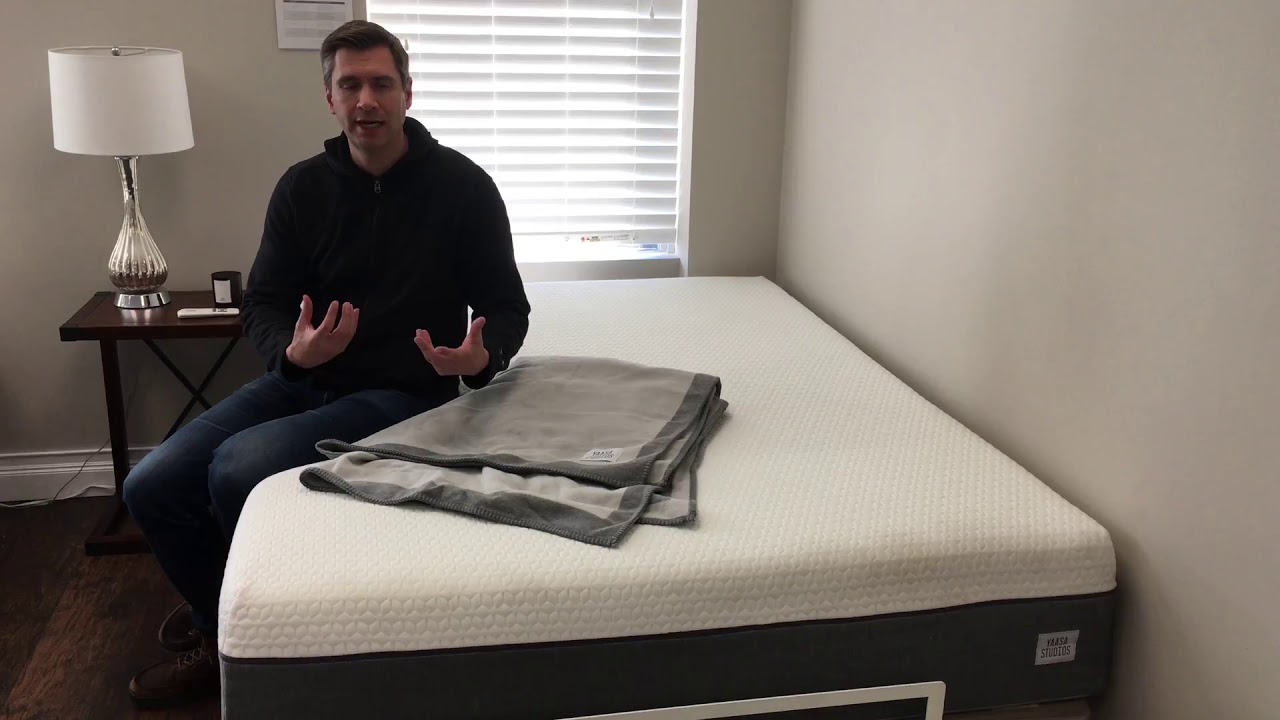
Yaasa sent me the blanket for review. The throw I received had a dark side with a light border and a light side with a dark border. It nearly covered a queen mattress and worked well as a couch throw. Its neutral colors made it easy to use in a bedroom or living room.
The darker side and contrasting border of the original throw.
After using it for more than a month, I did not perceive a difference attributable to the Celliant fibers. The original review expressed hope that the technology might help; I did not measure sleep, recovery, circulation or body temperature. My original video is embedded below.
The original model was described as organic cotton with Celliant fibers. Check the label for the precise blend.
Offer
Prices and the old coupon were historical, not a verified current deal.
Measure where you want the blanket to sit: a throw for a sofa does not necessarily provide full mattress coverage or drape on both sides. Check the current care label and seller's return terms if you find a listing.
What can we conclude about Celliant?
Celliant is marketed as a textile technology that converts body heat to infrared energy. The manufacturer has described potential effects on circulation, recovery and sleep, but this review did not test those outcomes. Do not treat the earlier page’s claims as proof that this blanket improves health. CELLIANT states that its FDA correspondence is not approval or endorsement of claimed benefits.
Research on a fiber or a different product does not automatically establish the same effect for a specific blanket and user. If you are considering the product, judge its fabric, size, comfort, care and price on their own merits.
How to choose a blanket
Option
Why consider it
Trade-off
Cotton throw
A familiar, washable fabric in many weights.
Feel and warmth vary by weave and construction.
Fleece or plush throw
Soft texture and a cozy feel.
Some people find heavier synthetic throws warm.
Wool blanket
Useful for layering in cooler conditions.
Texture and care requirements vary.
Weighted blanket
For people who like added pressure.
Heavier to move and wash; choose a suitable weight and check safety guidance.
Frequently asked questions
Did you feel the Celliant working?
No. I did not notice a distinct sensation from the fibers during more than a month of casual use.
Does it improve recovery or sleep?
My review did not measure either outcome and cannot establish those benefits.
Is the old $230 price current?
No. It was the historical throw price in the review; verify any present-day offer directly.
Was the blanket provided for review?
Yes. Yaasa supplied the original review sample free.
I have personally tested this product. This review reflects my direct experience; verify current model specifications, availability, and terms before purchasing.
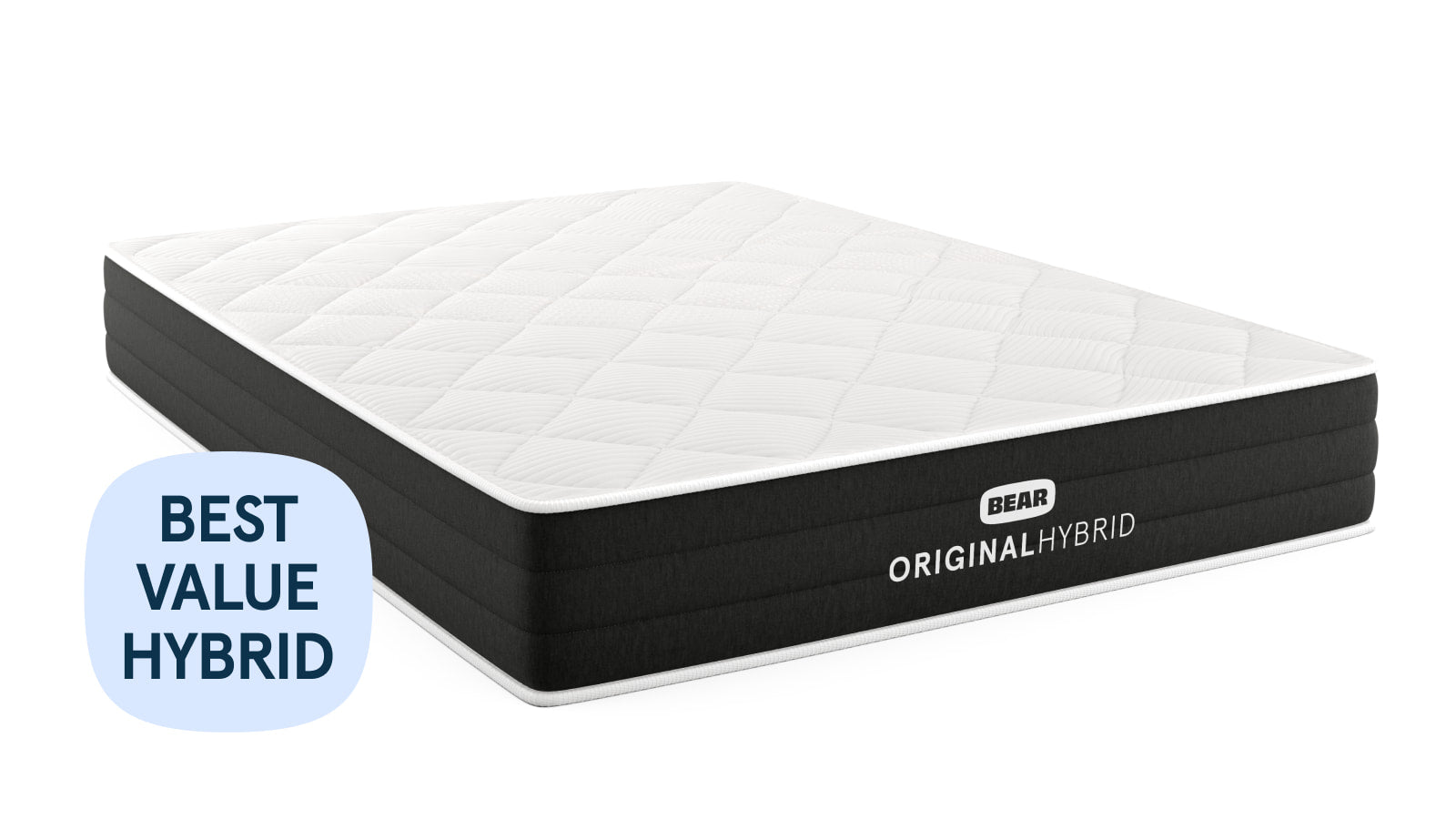
Bear Original Hybrid Mattress Review — Personally Tested by Yawnder
Unlock a better night’s sleep with the Bear Hybrid Mattress! Enjoy a plush, supportive feel and a Celliant cover, which Bear markets for recovery—all while checking current offers directly on Bear's site; the historical SHERPA100 code is not independently verified for October 2026.
Bear Mattress.
Verdict
The Bear Original Hybrid is a medium-firm foam-and-coil mattress worth considering if you want a balanced hybrid feel. Review the test record and compare the current model with the earlier generation described below.
Best for
People wanting more bounce than the Bear Original foam bed
Combination sleepers
Shoppers comparing current Bear hybrids
Skip if
You are researching the Elite Hybrid
You want the broad Bear lineup
You assume old Celliant claims describe every current cover
Quick facts
Yawnder score
8.4/10
Construction
Hybrid
Firmness
6.5/10
Queen price
Check current price
Trial
365 nights (brand-direct)
Warranty
Verify current exact-model terms
Record status
Complete standardized record
Current model versus earlier Bear Hybrid generations
Bear Original Hybrid is a current coil-and-foam model. Earlier Bear Hybrid construction and Celliant positioning are preserved below but labeled historical.
Who the Original Hybrid is for
The current Original Hybrid combines foam comfort layers with individually wrapped coils and is listed by Bear as medium-firm. Yawnder's recorded sample scored 6.5/10 for firmness and 9.2/10 for pressure relief. Side sleepers should check shoulder and hip comfort; back and stomach sleepers should check that the hips do not sink farther than they prefer. Feel changes with body weight and the exact model generation.
Couples can use the recorded 8.7/10 motion score and 7.8/10 edge score as starting points. Lie down together and try changing positions; a score cannot predict what each partner will feel. The sample's 8.5/10 temperature score is comparative, not a promise of cool sleep.
Construction, cover and setup
Bear currently lists the Original Hybrid at 11 inches, with quilt foam, gel memory foam, six-inch coils and a Celliant cover. A CoolForce layer is an optional upgrade. Features and prices can change; verify the exact configuration on Bear's product page. The 2018 Bear Hybrid material and older photos on this page describe an earlier generation and should not be treated as specifications of today's model.
Bear markets Celliant for recovery. That is a manufacturer claim, not a proven guarantee of faster recovery for an individual. Judge comfort, support and temperature for yourself. The brand recommends a firm, flat foundation, an adjustable base or slats less than 5.5 inches apart; it does not recommend a traditional box spring for this model.
Price, trial and returns
Check the current price for your size and cooling option. Bear's current direct mattress policy lists 365 nights with a 30-night break-in before a return request; eligibility and retailer terms vary. Purchases from Yawnder follow Yawnder's own policy. The automatic test-data panel below still lists an older 120-night trial and a historical price, so use the seller's current terms and checkout price.
Manufacturer specifications were last checked September 14, 2026. Yawnder standardized scores, hands-on observations, and manufacturer claims are identified separately.
Earlier Yawnder review notes
The original review continues below for historical context. Current lineup and policy details above take precedence where the manufacturer has changed them.
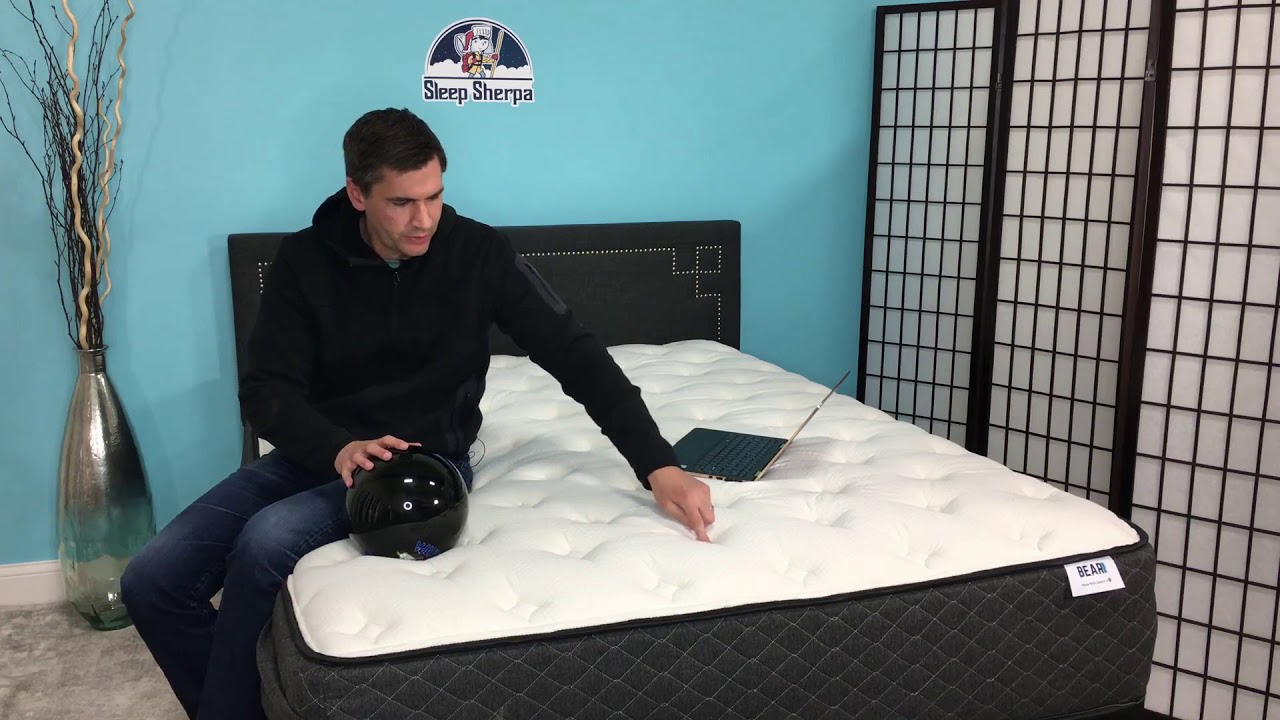
Our original Bear Hybrid video review
Our 2018 video shows an earlier Bear Hybrid. Its construction, cover, pricing and policies may differ from the current Original Hybrid described above.
Frequently Asked Questions About Bear Hybrid Mattress Review
Is the Bear Hybrid Mattress worth it for its price?
Value depends on the size, current sale and whether you like its medium-firm feel. Check the current price for your size and selected options. Compare the total price and return terms before ordering.
Who is the Bear Hybrid Mattress best for?
The current Original Hybrid may suit shoppers who prefer a medium-firm hybrid and some cushioning. The current model combines foam and coils; its Celliant cover is marketed by Bear for recovery, but individual results are not established. The recorded motion-isolation score is a useful comparison point, but sensitivity varies by sleeper.
How does the Bear Hybrid Mattress compare to all-foam mattresses?
The Bear Hybrid uses coils instead of the all-foam support core of the Bear Mattress, and may feel more responsive. Its foam layers still contour; compare the two in person if possible.
What are the downsides of the Bear Hybrid Mattress?
A medium-firm feel may be too firm for some side sleepers or too soft for others. The recorded edge-support score is 7.8/10, so try the perimeter if you sit or sleep near the edge. Contact the seller to confirm which configuration is available to try.
Is the Bear Hybrid Mattress good for hot sleepers?
The recorded temperature score is 8.5/10, a comparative result rather than a promise of cool sleep. Earlier thermal-camera observations indicated heat did not linger long on the older reviewed sample; they do not establish the current model's overnight temperature. The optional cooling layer, bedding and room conditions also matter.
Where can I try the Bear Hybrid Mattress in person?
Contact the Yawnder Encinitas showroom to confirm whether the exact model and configuration are available to try. You can also compare other hybrid mattresses there.
Want to test this in person? Visit our Encinitas showroom or call 858-232-5760.
"Recovery" mattresses are marketed at people who train, but the useful part of that pitch is fairly ordinary: a supportive coil unit, a comfort layer that relieves pressure at the shoulders and hips, and a surface that does not trap heat. Those three things help anyone who wakes up sore, athlete or not.
Support: pocketed coils flex independently, which keeps the spine aligned and limits the transfer of movement across the bed.
Pressure relief: side sleepers need enough give at the shoulder; back and stomach sleepers usually want less.
Temperature: coil layers move air. Cover fabrics and phase-change finishes affect the first few minutes of contact more than the whole night.
Edge support: a reinforced perimeter matters if you sit on the edge of the bed or sleep near it.
Terms: trial length, minimum break-in period, return fees and what the warranty counts as a defect.
About fabric claims
Some performance mattresses use infrared-reflective or mineral-infused fabrics and describe recovery benefits. Treat those as comfort features rather than proven outcomes: the evidence base is thin, effects vary between people, and a mattress is not a medical device. Judge the bed on support, pressure relief and temperature, which you can actually feel.
Are hybrids better than all-foam mattresses for athletes?
Not by category. Hybrids tend to be easier to move on and have stronger edges, which many active sleepers prefer, but the comfort layer decides how it feels.
How firm should a mattress be if I wake up sore?
Firm enough that the hips stay level with the shoulders, soft enough that the shoulder can sink when you are on your side. That balance shifts with body weight and build.
Does a mattress need a special foundation?
Most hybrids need a flat base with closely spaced slats or a solid platform. Check the warranty language before using an older box spring.
SOL Organics comforter image from the original review archive.
Yawnder reviews · Original 2017 firsthand account · Updated October 2026
My verdict
I liked the SOL Organics comforter’s light, insulating feel and found it easy to put inside a duvet cover. The original review compared the listed Summer and All Season options and documented the fill-power and organic-cotton labels. Those photos and my original account are restored below.
Original 2017 account
Summer and All Season options
Organic-cotton shell listing
Light feel and easy cover fit
My original firsthand review
My original observations and photos are preserved below. Prices, ordering terms and quoted specifications describe the product at the time of that review.
Sol Organics is well known for their Fair Trade, Organic Cotton sheets. They have recently added an organic cotton and down comforter to their bedding collection. You can choose from two options, the summer which is a lower fill power at 600 loft or all season with a higher fill power at 700 loft. A queen size all season comforter retails for $350. This down duvet is the perfect addition to your organic bedroom.
Ordering your SOL Organic Cotton Down Comforter
You can order this comforter direct from the SOL Organics website. After placing your order the comforter should arrive in about a week. The comforter will arrive in a zippered package that keeps it clean and can be used to store it when not in use. At the time of the review, SOL described a 30-day trial and a $9.99 processing fee for used bedding. Those are historical terms; verify the seller’s current return policy before ordering.
Construction of the Organic Down Comforter
You can choose from two types of comforters on their website. The original Summer model was listed at 600 fill power, with less fill by weight than the All Season. Fill power describes loft; warmth also depends on fill weight and construction. I would recommend this one for people living in more temperate climates. If you live in a northern state like me, I would go with the All Season. The original All Season was described as 700 fill power with more down by weight, which may suit a cooler room; warmth preferences vary.
Here are more details as listed on the SOL Organics Website:
• 100% Canadian Duck Down
• 100% GOTS Certified Organic Cotton Shell
• Baffle Box Construction
• Made in Canada
• Lifetime Warranty
Size Guide
Product Size
Season
Dimensions
Fill
Weight
Twin / Twin XL
Summer
64” x 90”
600 Loft
14 oz.
Twin / Twin XL
All Season
64” x 90”
700 Loft
18 oz.
Full / Queen
Summer
88” x 90”
600 Loft
19 oz.
Full / Queen
All Season
88” x 90”
700 Loft
25 oz.
King / Cal King
Summer
104” x 90”
600 Loft
23 oz.
King / Cal King
All Season
104” x 90”
600 Loft
31 oz.
My SOL Organics Comforter Findings
For the quality and money, you will be hard-pressed to find a better comforter. You may be able to find something comparable made in China but this ethically sourced down that is traceable. The down used in this comforter is part of a program called the Canada Goose Down Transparency Standard. This standard ensures that the down is sourced from animals that have not been subjected to any unfair practices, willful mistreatment or undue harm, and materials are fully traceable throughout the supply chain.
The outer cover of the comforter is made with GOTS (Global Organic Textile Standard) certified cotton. This is in keeping with SOL's mission of providing sustainable, ethically sourced products.
The comforter feels wonderful. Because both the all season and summer versions are a high fill power they are light but insulate well. They fit easily into a duvet cover. At the time of the review, SOL offered a bedding bundle; check the current listing for available sets and prices. It's the perfect way to make complete your organic bedroom.
Shop SOL Organics
Summer vs. All Season: what to compare
The original review listed different down quantities for each warmth option. These are historical specifications, not a new measurement or a promise about today’s products.
Original option
Full/Queen fill
What to consider
Summer
19 oz.; 600 fill power
Less fill by weight in the old size chart; consider your room and preferred bedding layers.
All Season
25 oz.; 700 fill power
More fill in the old chart; may be preferable in a cooler room. Compare current specifications.
Fill power describes loft per ounce, while fill weight tells you how much down is inside. Together with the shell and construction, both affect warmth.
Questions about this review
What did I notice about the feel?
The comforter felt wonderful to me: light but insulating, and easy to fit into a duvet cover. These observations come from my original review.
Does higher fill power automatically mean a warmer comforter?
Fill power describes down’s loft, while fill weight describes how much down is used. Consider both, along with construction and your room, rather than treating fill power alone as a warmth rating.
Why do the old specifications differ in one row?
The original table lists the King All Season as 600 loft, while the surrounding description says All Season is 700. That inconsistency is retained as part of the historical record; verify the exact model’s label before relying on it.
Are the old prices and certifications current?
The prices, sourcing descriptions and certification references below belong to the original review and its photographed labels. For the current SOL down comforter, the product listing identifies all-season as 700 fill and summer as 600 fill, with twin, full/queen and king/cal king sizes. Check the selected size, price, availability and return terms before buying; the original review is not a test of a newly purchased model.
Review by Ben Trapskin. Yawnder may earn a commission from qualifying purchases.
Delayed sleep-wake phase disorder is a circadian rhythm disorder in which a person’s sleep timing is persistently later than desired or required and causes difficulty with daily responsibilities or functioning. They may have trouble falling asleep and waking at conventional times, yet sleep more easily when allowed to follow their preferred schedule.
Being a night owl alone is not a diagnosis. An individual assessment considers timing, sleep opportunity, symptoms and other possible causes.
Common signs
Difficulty falling asleep at the time needed for school or work.
Difficulty waking at the required time and sleepiness after a short night.
A tendency to fall asleep and wake later on days without an early obligation.
Better sleep when the later schedule is permitted, although another condition can coexist.
The pattern and impact vary. Adolescents and adults can be affected; a later schedule does not mean someone is lazy or has caused the condition through social activity.
Delayed timing vs. insomnia
Question
Delayed sleep-wake phase
Insomnia
Main difficulty
Sleep timing conflicts with required schedule
Difficulty initiating or maintaining sleep despite adequate opportunity
When allowed a preferred schedule
Sleep may be easier and more regular
Difficulty may persist
Can they overlap?
Yes. A clinician can evaluate both and other contributors.
The older article claimed people with insomnia cannot sleep at any time. That is not an accurate definition.
How is it assessed?
A clinician may review your sleep and wake times, light exposure, work or school schedule, medications and symptoms. A sleep diary, and sometimes a wearable activity monitor, can help show patterns over time. The clinician can also assess other disorders and the effect on daily life.
Record your actual sleep times on workdays and days off, plus naps and daytime sleepiness. This gives the appointment a useful starting point without assuming a diagnosis.
What can help?
Treatment is individualized. A clinician may recommend a consistent schedule, appropriately timed light exposure or, in some cases, melatonin. The National Heart, Lung, and Blood Institute describes these options and notes that timing matters.
Do not guess at high-dose melatonin or light-therapy timing: the wrong timing can shift the clock in an unwanted direction, and supplements can have side effects or interact with medications. Discuss a plan with a healthcare professional, particularly for children or people with other health conditions.
Frequently asked questions
Is every night owl affected?
No. A late preference is not automatically a disorder; distress or impairment and the overall pattern matter.
Can adults have it?
Yes. It is not limited to teenagers.
Is it the same as insomnia?
No, although they can coexist. Delayed sleep primarily concerns the timing of sleep.
Should I take melatonin at bedtime?
Do not assume bedtime is the correct timing for a circadian shift. Discuss timing and suitability with a clinician.
Sleep talking, or somniloquy, is speaking or making speech-like sounds during sleep. It can range from a few words to mumbling or shouting. Occasional sleep talking is often harmless, and the sleeper may not remember it. Sleep loss, stress, fever, alcohol or other sleep disruption can be associated with episodes, but the cause is not always clear.
Talking alone does not establish a sleep disorder or reveal a person’s true thoughts. Seek medical advice if episodes are new and concerning, frequent, disruptive or accompanied by potentially dangerous movements.
Possible triggers and related conditions
Sleep talking occurs in children and adults, sometimes running in families. Irregular or insufficient sleep, stress, illness, alcohol and some medications can coincide with episodes. An association does not mean any one factor caused an episode.
Talking can also occur alongside other sleep behaviors, such as sleepwalking or dream enactment. Snoring, breathing pauses, daytime sleepiness or new medications are useful details to mention to a clinician rather than reasons to diagnose yourself.
Can someone talk in any sleep stage?
Sleep talking can occur during both non-REM and REM sleep. It may be understandable or nonsensical, and the person might not recall it later. You cannot reliably identify a sleep stage or diagnose a disorder from the clarity of the words alone.
The older article divided sleep talking into four fixed stages and implied its meaning depended on how clear the speech was. Sleep stages and parasomnias are more complicated; unusual speech alone is not enough to determine what is happening.
What may help
Allow enough time for sleep and keep a reasonably consistent schedule.
Notice whether episodes coincide with sleep loss, illness, alcohol or schedule changes.
Keep a brief record of frequency, timing and associated movements if episodes are disruptive.
Discuss medication concerns with the prescriber; do not stop prescribed medication on your own.
For a disturbed bed partner, consider a comfortable sound or earplugs only if necessary alerts remain audible.
When to talk with a clinician
Seek an evaluation if sleep behaviors cause injury, involve punching, kicking, leaving the bed or acting out dreams, begin suddenly or significantly disrupt sleep. A clinician can review the history, medications and possible sleep disorders and decide whether testing is appropriate.
The American Academy of Sleep Medicine notes that dream enactment warrants assessment; it is not diagnosed from sleep talking alone. Make the sleeping area safer while seeking advice if movements pose a risk.
Frequently asked questions
Does sleep talking mean someone is dreaming?
Not necessarily. Talking can occur in different stages, and the content does not reliably identify a dream.
Is it dangerous?
Occasional speech by itself is usually not dangerous. Movement, injury or severe disruption deserves evaluation.
Does it require medication?
Not usually for occasional isolated talking. A clinician can assess associated symptoms or underlying causes.
Can stress trigger it?
Stress and disrupted sleep may be associated with episodes, but the exact cause can be unclear.
Many mattresses are assessed for replacement around seven to ten years, but that is a guideline, not an expiration date. Look for lasting sagging, damage or a sustained loss of comfort, and check the foundation before buying a replacement.
Best next step: Inspect the bed, review its care and warranty terms, then compare new mattresses if the surface no longer suits you.
Persistent depressions, uneven support, damaged components and comfort changes.
Check first
Foundation and frame, model-specific care instructions and warranty terms.
Rotation and flipping
Follow the manufacturer. Many one-sided mattresses should not be flipped.
Warranty
Coverage for qualifying defects is not a guarantee of comfort for the entire warranty period.
Quick answer: how long should a mattress last?
There is no guaranteed lifespan. Many mattresses are replaced around the seven-to-ten-year mark, but a well-made model may remain comfortable longer and a low-quality or poorly supported model may wear out sooner. Construction, sleeper weight, use, humidity, and bed-frame support all matter.
Foam and hybrid: Watch for lasting body impressions, softened comfort layers and a loss of support rather than judging by age alone.
Latex: Durable materials can be long-lived, but check the entire build, not just the latex layer.
Innerspring: Persistent sagging, noise or pressure points can signal wear; the foundation can also be the problem.
Rotate the mattress only if its maker recommends doing so; not all models should be flipped. A warranty period is not a promise of comfort for that many years. Our guides on replacement warning signs and foundation compatibility help distinguish mattress wear from support issues.
Mattresses are expensive. Whether you are buying a regular mattress or a bed-in-a-box, you are not only investing a lot of money into it, but also expecting it to offer value for money. But to be able to offer full value for your money, the mattress has to last. So how long exactly does a mattress last?
Unfortunately, there is no one answer to this. The lifespan of a mattress varies depending on the type of mattress, quality of material, kind of use and care. By lifespan we mean how long the mattress can retain most of its original support and comfort. In case you didn’t know, the lifespan of a mattress affects us in a number of ways. A recent research on back pain found that worn-out mattresses can make the condition worse, while another research by the Oklahoma State University found sleep quality to be better when an old mattress is replaced with a new one.
What is the average lifespan of a mattress?
Mattresses usually last long enough before needing to be replaced. Depending upon the material, some mattresses may wear out sooner than others. However, when the mattress is made of high quality material, it tends to last anywhere between 7 and 10 years, and proper care can increase its lifespan well beyond ten years. Mattresses should usually be replaced every ten years if they get worn out.
Numerous factors contribute to the lifespan of a mattress, such as its construction, materials used, usage patterns, and maintenance. Higher-quality mattresses made with durable materials and superior craftsmanship tend to last longer than their lower-quality counterparts. Additionally, mattresses subjected to regular and proper maintenance, such as rotating when recommended by the manufacturer, can experience prolonged lifespans.
However, it is essential to note that the lifespan of a mattress is not solely determined by a specific time frame. Individual factors, such as body weight, sleeping habits, and personal comfort preferences, can also impact a mattress’s longevity. Heavier individuals or those who frequently engage in activities like jumping on the bed may experience accelerated wear and tear, reducing the mattress’s lifespan.
Furthermore, mattresses are subject to wear and tear over time due to factors beyond user control, such as the natural aging of materials and exposure to environmental conditions. Therefore, even with careful maintenance, it is recommended to assess the condition of a mattress regularly and consider replacing it if signs of sagging, discomfort, or diminished support are evident.
Investing in a high-quality mattress can provide individuals with a comfortable and restorative sleep experience for an extended period. By understanding the average lifespan of a mattress and considering personal factors, individuals can make informed decisions when purchasing a new mattress, ensuring they receive the best value for their investment in a good night’s sleep.
How mattress construction affects longevity
There is no reliable expiration date for a category. Materials, the quality of each layer, foundation, body weight and nightly use all matter. These are broad considerations, not guarantees:
All-foam: Comfort layers can soften or form lasting impressions. Foam density and the rest of the construction matter; most one-sided models should not be flipped.
Hybrid: Coils support the bed, while foam or latex comfort layers can still wear. Look at the complete build, not just the coil count. See how hybrid mattresses are constructed.
Innerspring: Check for uneven support, persistent impressions and broken or noisy components, as well as a damaged foundation.
Latex: Latex can be durable, but the cover and other layers also affect lifespan. Some modular beds have replaceable components; that is not true of every latex mattress.
Airbeds and waterbeds: Chambers, pumps, hoses or liners may need attention. Availability of replacement parts can matter as much as the mattress age.
There are several factors that influence mattress longevity. They are:
Use: The more a mattress is used, the shorter it will last. Similarly, mattresses that are occasionally used (like a guest bed) will have a longer lifespan. The types of activities the mattress is used for also determine its lifespan to a certain extent. For instance, putting heavy objects on the bed can make it sag sooner than normal. Spills and moisture can damage materials and make warranty claims harder; follow the manufacturer’s cleaning directions.
Weight: The pressure applied on a mattress affects its lifespan. Heavier people exert more pressure on a mattress, leading to sinkage and sagging, whereas lighter people exert less pressure, extending the lifespan of a mattress.
Care: A washable protector, routine cleaning, keeping the mattress dry and a suitable foundation can help care for it. None guarantees a particular lifespan.
Check the foundation before replacing your mattress
Remove the bedding and look for lasting depressions, tears or exposed components.
Inspect the frame, center support and slats. Compare their spacing with the mattress manufacturer’s foundation requirements.
If you suspect a defect, photograph it and review the warranty’s measurement method, exclusions and claim process. Normal softening is not necessarily a covered defect.
Follow your model’s rotation instructions; do not flip a one-sided mattress. A topper may change surface feel but cannot repair a failed support core.
There are some telltale signs that a mattress needs to be replaced. Some of the most common ones are sagging, bumps, lumps, and tears. Aside from that, there are physical signs that let you know it is time to change your mattress. Sleeping on an old, worn-out mattress deprives your body of support and comfort, resulting in aches and pains. Mattresses also tend to attract allergens, and it happens more when a mattress becomes old. Dust and allergens can accumulate over time, but symptoms have many possible causes. Consult a clinician about persistent allergy or asthma symptoms.
On average, a quality mattress lasts 5 to 10 years. But with proper cleaning and care, the lifespan can be extended for a few more years.
How can I tell if I need a new mattress?
There isn’t a universally applicable life expectancy for a mattress because it largely depends on the quality, type, and the amount and type of use it gets. However, most experts suggest replacing your mattress every 7-10 years. But knowing when to say goodbye to your old mattress can be a tricky task. Here are some indicators that it might be time for an upgrade.
You’re Not Sleeping Well: One of the most telltale signs is a decline in the quality of your sleep. If you’re tossing and turning throughout the night or waking up tired and achy, your mattress might not be offering the support and comfort you need. Everyone has an occasional restless night, but if it becomes a consistent pattern, it’s time to consider a new mattress.
Visible Signs of Wear and Tear: Over time, a mattress can develop visible signs of aging like lumps, sagging, or even springs poking through the surface. If you notice any of these signs, it is definitely time for a replacement. Your mattress should maintain a consistent shape and firmness across its entire surface.
Allergies or Asthma Worsening: Over time, mattresses can become home to dust mites, mold, and other allergens. If you’ve noticed a recent increase in allergy symptoms or asthma attacks and you’ve ruled out other potential causes, your mattress might be to blame.
Your Body Has Changed: Changes in your health or weight might necessitate a new mattress. For example, body weight and sleep position can change how a mattress feels. Heavier sleepers may need a more supportive construction, but the right firmness is individual.
You’re More Comfortable Elsewhere: If you find that you sleep better in a hotel bed or even on a friend’s couch, it could be an indication that your mattress is no longer comfortable.
It’s More Than 7-10 Years Old: While there’s no exact expiry date, seven to ten years is a useful point to assess its condition; age alone does not dictate replacement. This timeline can vary depending on how well you care for your mattress and how often you use it, but it’s a good baseline to keep in mind.
Keep in mind that a good mattress is key to good sleep, and good sleep is key to overall health. So, investing in a new mattress when needed is not just an investment in your comfort, but also in your wellness.
Frequently asked questions
Should I replace a mattress every seven years?
No. Seven to ten years is a useful time to assess condition, but a comfortable, supportive mattress may last longer, while damage can justify replacement sooner.
Does latex always last 15 years?
No. Latex can be durable, but construction, other layers, usage and care affect the whole bed. Replaceable layers are available only on some models.
Can a topper fix a sagging mattress?
A topper can change the surface feel but cannot repair a failed mattress core. Check the foundation and warranty before deciding what to replace.
Should I flip a memory foam or hybrid mattress?
Only if its maker specifically says it is flippable. Many have a designated top and bottom; rotate only as directed.
Does a warranty cover ordinary wear?
Terms vary. Review the manufacturer’s definition of a covered defect, required support, indentation measurement, exclusions and claim process.
Ben examining the adjustable pillow in the original review video.
My verdict
I liked how the original Eight Sleep pillow balanced a traditional, fluffy feel with solid memory-foam support. It had enough loft for my broad shoulders when side sleeping, and I could flip it for a firmer feel or remove an insert to lower it.
Review basis2017 firsthand account
Reviewed designThree removable inserts
Notable detailLoft suited my broad shoulders
TakeawayTwo different sleeping surfaces
Original adjustable pillow image preserved in Yawnder’s media library.
My original firsthand review
My original observations and opinions are preserved below. Prices, ordering terms, availability and quoted manufacturer specifications describe the product at the time of the original review.
The Eight Sleep pillow is a pillow that you can adjust to your specific preferences. It has three layers inside the shell that can be switched around or removed to get the perfect amount of loft and comfort. A standard size Eight Sleep pillow retails for $75 and can be purchased direct through their website.
Overview of the Eight Sleep Pillow
The original listing offered a 30-day guarantee and estimated delivery in about a week. Check the current seller's terms and delivery times.
Construction of the Eight Sleep Pillow
Below are the construction details of the pillow as listed on the Eight Sleep website.
Pillow Cover
Made from breathable cotton.
Includes sewn-in layer of shredded polyester for extra cushioning.
Has a side zipper so it can easily be removed and cleaned.
1” Memory foam
The dense material prevents your neck from bending, keeping your spine aligned.
It molds to the shape of your head
The manufacturer described contouring at the neck; the original review did not establish pain prevention.
2” Cushion and 1" Cushion
The insertable cushions contain shredded pieces of foam.
They provide the pillow with a fluffy and cloud-like feel without sacrificing support.
Shredded foam lets you form the pillow to your needs.
Stays cool at night by increasing airflow and breathability throughout.
Made in China
My Eight Sleep Pillow Findings
This pillow should have broad appeal. When you sleep on the shredded foam side, it feels like a down pillow. I found it to have a good amount of loft for side sleeping. I have broad shoulders and this still supported my head adequately. People with smaller frames can take out the memory foam layer or the other shredded foam layer to reduce the loft.
If you prefer more of a solid memory foam feel, you can just flip the pillow to the side which has the solid piece of memory foam for a firmer feel.
Below is a video that shows how each of the three layers respond.
Here's a side view with the cover unzipped to show you each of the layers.
My Eight Sleep Pillow Recommendation
I think Eight sleep has done a good job of striking a balance between a traditional and foam pillow feel. People interested in trying a foam pillow but are still attached to the feel of a traditional down or even polyester feel will be able to easily adapt to this one.
This pillow is very breathable and light for a memory foam pillow. The original offer included a 30-day trial; verify any current return policy. Most companies will design their pillows to work well with their mattress and this one is no exception. This pillow works great with the compliment of mattresses offered by Eight sleep. Just like this pillow, their mattresses incorporate next generation memory foam that is responsive and more breathable so pairing the two will give you a consistent feel from head to toe.
The pillow had enough loft to support my head despite my broad shoulders. I liked the shredded-foam side’s more traditional feel.
How did I change the feel?
Flipping the pillow put the solid memory-foam layer closer to my head for a firmer feel. Removing a layer lowered the pillow instead of requiring me to remove loose handfuls of fill.
Which Eight Sleep pillow is this?
This is the original three-insert pillow reviewed in 2017. The quoted price, trial and mattress references belong to that earlier product generation.
Review by Ben Trapskin. Yawnder may earn a commission from qualifying purchases.
Historical stay: Ben spent one night at The Langham, Chicago in 2017. The room, mattress, amenities and price described here reflect that visit, not a claim about today’s accommodations.
Our verdict
Ben enjoyed the spacious, clean room and relaxing bath, and found the curtains dark enough to sleep until 9 a.m. The main drawback was the mattress: as a side sleeper who prefers a softer surface, he found it a little too firm. A quiet HVAC system helped, although indicator lights and occasional city noise were noticeable.
Best fit from this stay: guests who appreciate a spacious room, a bath and a firmer bed. Ask before booking if: mattress softness, pillow choices or a very dark room are priorities.
The room Ben stayed in
Ben booked a Deluxe Premier room with a king bed. He liked its high ceilings and spacious feel. The room had a Nespresso machine, a desk, a television and a bathroom with a soaking tub and separate shower. He found the bath relaxing before bed.
The room cost about $500 per night during that 2017 visit; this is not a current rate. Room categories and amenities may have changed, so confirm them directly when booking.
Ben’s room during the original visit.
What was the hotel mattress like?
Ben found the bed a bit firm for his side-sleeping preference. The label on that room’s mattress identified it as Beautyrest. That observation is specific to the mattress in his room in 2017; it does not establish the hotel’s current mattress brand or the feel of every room.
He noticed a mattress encasement and an extra polyester-fill pillow in the closet. He understood that other pillow options could be requested, but availability and the current pillow menu should be confirmed with the hotel.
The mattress encasement in the room in 2017.The spare pillow Ben found during the stay.
Noise, light and temperature
The room felt quiet for its central-city location, with occasional sirens and horns. Ben used a white-noise app on his phone and found the HVAC quiet and the thermostat easy to use. The curtains blocked enough daylight for him to sleep in.
After the main lights were off, LEDs from the television equipment and bedside controls were brighter than he preferred. A bedside speaker was present, but a missing connector charger prevented him from using it for white noise during the stay.
What worked and what did not
Worked well
Worth considering
Dark curtains and spacious room
Some illuminated controls remained visible
Quiet HVAC and relaxing bath
Occasional downtown noise
Central location for walking
Bed felt too firm for Ben’s preference
What to check before booking
Ask the hotel about the current room category, accessibility, mattress and pillow options, noise preferences and available amenities. Rates and cancellation rules vary by date and booking channel. If you prefer a softer mattress, ask whether a topper or alternative room is available rather than assuming the 2017 setup is unchanged.
Frequently asked questions
Did Ben stay at The Langham Chicago?
Yes. This review describes his one-night 2017 stay in a Deluxe Premier room.
What mattress did he find?
The label on his room’s mattress said Beautyrest. We have not verified the hotel’s current mattress.
Was the room dark and quiet?
He found the curtains effective and the room generally quiet, though he noticed indicator lights and occasional city sounds.
Is the $500 rate current?
No. It was the approximate price of his historical stay. Check live rates for your dates.
Microsleep is a brief, involuntary episode of sleep when you are trying to stay awake. It is a warning sign of dangerous sleepiness, especially while driving or using equipment; it is not a planned power nap or a reliable way to recover from fatigue.
If you feel drowsy while driving, stop in a safe place. Do not continue until you are alert and have a safe plan for the rest of the trip.
What is microsleep?
The CDC’s NIOSH guidance describes microsleeps as brief sleep episodes lasting from a fraction of a second up to about 30 seconds. A person may not realize an episode occurred. Losing attention for even a few seconds can be dangerous when driving.
A planned nap is deliberately taken in a safe place. Microsleep is involuntary and can happen during a task when a person intends to stay awake.
Warning signs of drowsiness
Heavy eyelids, frequent yawning, difficulty focusing, missing turns, drifting in a lane or not remembering the last stretch of road can signal dangerous fatigue. These signs do not prove that a microsleep occurred, and an episode can happen without an obvious warning.
If you notice them while driving or doing safety-sensitive work, stop the activity and move to a safe location. Opening a window or turning up music is not a reliable way to remain awake.
What to do if you are sleepy while driving
Pull over somewhere safe, stop driving and arrange adequate rest or an alternative driver or ride. CDC guidance discusses caffeine and a short nap as temporary countermeasures, but warns that they may not be enough when severely sleep deprived. If you remain sleepy, do not resume driving.
Plan ahead for long trips, avoid driving during your normal sleep period when possible, and schedule breaks. No technique reliably lets a severely sleep-deprived person force themselves to stay awake.
What can contribute?
Not getting enough sleep, long or irregular work hours, medications, alcohol and some sleep or medical disorders can contribute to sleepiness. Monotonous tasks can make it harder to stay alert. A clinician can help assess the underlying cause; microsleep alone does not diagnose sleep apnea or insomnia.
When to seek help
Discuss recurrent or unexplained daytime sleepiness with a healthcare professional, especially if you fall asleep unintentionally or have loud snoring, pauses in breathing during sleep or difficulty functioning during the day. Bring information about your sleep schedule, medications and when episodes happen.
Until the cause is addressed, avoid driving or other safety-sensitive activities whenever you feel sleepy.
Frequently asked questions
Is microsleep the same as a nap?
No. A nap is planned; microsleep is an involuntary episode when someone is trying to stay awake.
How long does it last?
NIOSH describes episodes from a fraction of a second up to about 30 seconds.
Can caffeine make a sleepy driver safe?
It may temporarily increase alertness, but it is not reliable when someone is severely sleep deprived. Stop and arrange safe rest or transportation.
Does microsleep mean I have sleep apnea?
No. Sleepiness has several possible causes and warrants evaluation when recurrent.
Verify your identitySave 10% — Military, First Responders, Teachers, Nurses, Students & Government employees
Powered by Yawnder Verify. Your information is encrypted and only used to confirm your eligibility.
Don't have a work or school email? Upload your ID instead ›
Upload a photo of your ID, badge, orders, pay stub or enrollment letter. We review submissions by hand, usually the same business day, and email your 10% off code once approved.