CBD vs. Melatonin for Sleep: Evidence & Safety Compared

CBD vs melatonin

Updated October 18, 2026. CBD and melatonin are different substances, with different evidence and safety issues. Neither is a universal answer to poor sleep, and this comparison does not recommend replacing prescribed treatment.

CBD versus melatonin: the quick comparison

QuestionMelatoninCBD
What is it?A hormone involved in the body's day-night timing; also sold as a supplement.Cannabidiol, a cannabinoid from cannabis.
Sleep evidenceMay help particular timing problems, including jet lag and delayed sleep timing.Sleep evidence remains limited and mixed. A product's calming claims do not establish insomnia treatment.
Chronic insomniaNot routinely recommended by major guidelines cited by NCCIH.Not established as a treatment. Neither replaces a sleep assessment or CBT-I.
Notable concernsNext-day sleepiness, headache, dizziness, nausea and medicine interactions.Sleepiness, medicine interactions and possible liver injury.
U.S. regulatory distinctionRegulated as a dietary supplement; no premarket FDA approval of each product.FDA says CBD cannot lawfully be marketed as a dietary supplement. An approved prescription CBD medicine for certain seizures does not validate retail CBD sleep products.

Match the question to the evidence

A difficulty sleeping at the desired time can differ from repeatedly waking or lying awake despite adequate opportunity. Melatonin's usefulness depends partly on timing and the underlying problem. Trouble sleeping does not establish a hormone deficiency.

CBD is sometimes marketed for anxiety-related sleeplessness, but that is not enough to recommend it for a racing mind, pain or an anxiety disorder. Assess those symptoms on their own merits. Do not use this article to stop prescribed medicines or substitute a retail cannabinoid product.

What does CBD sleep research show?

A small randomized pilot trial compared nightly 150 mg CBD with placebo in 30 people with insomnia. Most sleep outcomes were similar, although some secondary measures differed. The trial was short and small; it does not establish a recommended retail dose or validate gummies containing additional CBN, THC or melatonin. See the published trial.

Changes in a testimonial may reflect expectations, changing habits or normal variation. A higher dose or a longer ingredient list does not prove stronger sleep benefits.

What does melatonin evidence support?

NCCIH distinguishes circadian timing uses from chronic insomnia. It reports possible benefits for jet lag and delayed sleep-wake phase disorder, while major guidelines find insufficient strong evidence to recommend routine use for chronic insomnia. Long-term safety is uncertain.

For formulation, duration and timing questions, read our melatonin timing guide. This comparison does not supply a universal dose or a middle-of-the-night redosing plan.

Interactions, impairment and drug tests

The FDA warns that CBD can cause liver injury and interact with medicines. Alcohol and other substances that slow brain activity can increase sedation and injury risk. Discuss the exact product with a pharmacist or clinician.

CBD itself differs from intoxicating THC, but retail CBD products may contain THC or other active ingredients. Do not rely on a CBD label, “isolate” claim or “THC-free” marketing to guarantee no impairment or a negative drug test. Do not drive while impaired or drowsy.

Melatonin also has interactions; people with epilepsy or taking blood thinners need medical supervision. Review either product before use during pregnancy or breastfeeding, with medical conditions or in children. Keep gummies securely away from children and pets.

Can you take CBD and melatonin together?

Combination products exist, but that does not prove the combination is effective or suitable for you. Additional ingredients complicate judging benefit and side effects. Do not stack products or increase exposure simply because one did not help. A pharmacist should review the complete labels and medicines.

How to read a sleep product label

  • Check the amount per serving and the number of gummies, capsules or droppers in that serving.
  • Identify every active ingredient, including THC, CBN, melatonin and sedating herbs.
  • For CBD, request a current report matching the batch and inspect cannabinoid and contaminant results. A lab-directory link alone does not verify your bottle.
  • Compare subscription terms, serving count and one-time price; price is not a measure of clinical effectiveness.

Our Hemp Bombs, Sunday Scaries and Charlotte’s Web reviews illustrate formula differences. Our Lemme Sleep review covers a different, non-CBD formula. These are label comparisons, not interchangeable treatment recommendations.

What to do for ongoing sleep trouble

Ask about CBT-I for chronic insomnia and assess other possible causes of disturbed sleep. Loud snoring, gasping or breathing pauses warrant evaluation; neither product should be used to delay it. Medication decisions should weigh the benefits and risks of the specific medicine, rather than treating all prescription sleep treatments as the same.

Frequently asked questions

Which is better for jet lag?

Melatonin has more directly relevant evidence for jet lag. Timing and personal suitability still matter; CBD is not an established substitute.

Is CBD a safer natural alternative?

“Natural” does not establish safety. CBD has meaningful liver and medicine-interaction risks.

Can either guarantee that I stay asleep?

No. Neither a label nor an ingredient list guarantees an uninterrupted night.

Sources

Explore melatonin alternatives and their limitations

Puffy Pillow Review (2026): Comfort & Support Analysis

puffy pillow filling 1024x
Puffy Signature adjustable pillow
Current Puffy Signature Pillow. Manufacturer photo.

Puffy’s Signature Pillow uses adjustable memory-foam fill, so you can change its height to suit your sleeping position. This update distinguishes the current model from the older pillow pictured in Yawnder’s original coverage; we have not performed a new standardized test of the current version.

Our verdict: Consider the Puffy Signature if you want to experiment with pillow height rather than choose a fixed loft. The tradeoffs are the time and mess of adjusting loose fill and the feel of foam. A breathable cover is not a guarantee that it will sleep cool for everyone.

How adjustable fill works

Puffy describes the current Signature Pillow as having adjustable AdaptFill memory foam. Remove a small amount at a time, close the pillow and try it in your usual sleep position. Keep the removed fill clean and dry in a sealed bag so you can add it back.

Yawnder’s older coverage noted that removing foam could be messy and that a new pillow could have an initial odor. Those observations concern the earlier pillow and should not be treated as fresh testing of the current Signature model.

Foam filling in the previously reviewed Puffy Pillow
Yawnder’s original photograph of the earlier Puffy Pillow’s filling.

Who is it best for?

Sleep positionStarting pointWhat to check
SideTry enough loft to fill the space between shoulder and head.Your shoulder width and mattress give affect the height you need.
BackTry a moderate height, removing some fill if needed.Check that your chin is not pushed uncomfortably toward your chest.
StomachTry a lower loft or compare a thin pillow.Even adjusted, a foam-filled pillow may feel too thick for some sleepers.
CombinationChoose a height that works in your most common positions.Check whether you like the feel of loose fill as you move.

Loft and support are personal. If discomfort persists, a pillow change is not a substitute for medical advice. People who prefer a uniform, solid surface may prefer a molded foam or latex pillow.

Will it sleep cool?

Puffy markets a breathable cover, but the result depends on the room, pillowcase and individual. Foam can feel warmer to some sleepers. We have not measured the current pillow’s overnight temperature, so we cannot promise it will prevent overheating or night sweats.

Care and adjustment tips

  • Read the label: confirm washing and drying instructions for the exact generation and cover before laundering.
  • Keep foam dry: do not assume the loose fill or inner insert can go in a washing machine.
  • Change gradually: try a small adjustment and spend some time in your normal sleeping positions before removing more.
  • Protect it: a correctly sized pillow protector can help keep the cover cleaner, but may change the feel.

Price, trial and returns

Puffy offers standard and king sizes on its current product page. Prices and promotions change, so compare the current total for the size you want.

For eligible purchases made directly from Puffy on or after February 23, 2026, the published return policy describes a 365-night trial. For an opened bedding accessory, Puffy says the customer arranges a donation and provides a receipt, or follows the company’s donation-form instructions. Earlier purchases retain their original trial terms. Check the exact policy before ordering; a retailer’s policy may differ.

Puffy lists a lifetime limited warranty for the Signature Pillow. Read its conditions and exclusions; a warranty addresses eligible defects rather than promising a particular feel or lifespan. Yawnder’s pillow and bedding sales have their own terms, so confirm the seller before relying on a brand-direct offer.

Frequently asked questions

Can I add fill back?

Yes, if you retained the clean, dry fill you removed. Adjust in small amounts until the height feels comfortable.

Can I wash the whole pillow?

Check the care label for your model. A removable cover and loose foam insert may have different instructions; do not assume the fill is machine washable.

Does the 365-night trial apply to an older purchase?

Not necessarily. Puffy’s current policy says purchases before February 23, 2026 retain their original trial terms.

Is this the same pillow as the one in the older Yawnder photo?

The photo documents an earlier Puffy Pillow. Verify the current Signature’s materials and construction with Puffy before assuming they are identical.

Our take: Adjustable loft is useful when a fixed-height pillow has been difficult to fit, provided you are comfortable handling the fill. Check current Puffy Pillow pricing. Yawnder may earn a commission from qualifying purchases.

Related reading: Puffy Royal Mattress Review.

Brentwood Home Cedar Mattress Review (Archived): Discontinued

brentwood home cedar natural luxe
Quick verdict: The Brentwood Home Cedar was a latex-and-coil hybrid with a responsive, cushioned feel. Brentwood discontinued it, so this review is a historical reference rather than a current product listing.

Yawnder Reviews · Legacy review restored September 2026

Archived original construction

The Cedar was discontinued, but the original review contained extensive construction detail that was more useful than the short replacement notice.

Watch our original Brentwood Home Cedar mattress review
Our 2019 video covers the discontinued Cedar Natural Luxe mattress.

Yawnder original Brentwood Home Cedar mattress review

Natural-material hybrid

The Cedar Luxe combined organic cotton, wool, latex and individually wrapped coils in a hand-tufted construction. The optional topper added additional latex and natural-fiber cushioning.

Zoned support

The mattress used zoned latex and a pocketed-coil system with firmer lumbar and perimeter support. That created a more structured feel than an all-latex mattress.

Plush but responsive

In the original hands-on review, the Cedar felt relatively plush while retaining the quick response of latex and coils. It was designed to contour without the slow recovery of memory foam.

Why it is archived

Brentwood Home discontinued the Cedar as its lineup evolved. The page is kept as a historical review rather than redirecting all of its original content into a different mattress.

Watch original review video →

Current-shopping note

The Cedar is discontinued. For a current natural-material hybrid to research, see our Avocado mattress reviews. Current shoppers looking for a similar natural-material hybrid should compare today’s Brentwood Home/Avocado offerings, but should not assume they are identical to the Cedar.

Yawnder Reviews · Disclosure: Some links may be affiliate links. Current specifications and policies can change.

Frequently asked questions

Is the Cedar mattress still sold?

Brentwood Home says it discontinued the Cedar. Check a seller’s current terms and product condition before buying remaining inventory.

Is a current latex hybrid identical to the Cedar?

Not necessarily. Compare the exact latex layers, coil system, firmness, dimensions and warranty.

Is latex the same as memory foam?

They generally feel different: latex tends to recover more quickly, while memory foam often has a slower contouring response. Individual products vary.

8Hours Adjustable Pillow Review: MemHex Foam, Loft and Feel

8hours pillow review
8Hours adjustable pillow
8Hours pillow image from the original review archive.

Review verdict

The original reviewer was surprised by how large the 8Hours pillow became after unrolling, yet found it comfortable without removing any fill. It felt supportive while remaining soft. The main practical detail is to distribute the large foam pieces evenly and fluff the pillow before judging its feel.

FillRemovable honeycomb-shaped MemHex foam
Original listed size18 × 27.5 inches; 2-inch gusset
Reviewer impressionSupportive and soft, even at full fill
Setup detailDistribute the foam pieces evenly

Original review video

Questions about this review

Did the reviewer remove any fill?

No. The original account says the pillow was comfortable without removing foam, despite its unexpectedly large loft after unpacking.

Why might the pillow feel uneven?

The account describes relatively large foam pieces and recommends spreading them evenly and fluffing the pillow so they settle together.

Was there a noticeable odor?

The reviewer reported no unusual odor during the original unboxing. That is an observation about that sample.

Was the firmness measured?

No standardized firmness measurement appears in this account. Support and softness are the original reviewer’s subjective impressions.

Yawnder may earn a commission from qualifying purchases.

Night Terrors: Strategies to Understand and Avoid Episodes

Night Terror

Quick answer: A sleep terror is an episode of distress during a partial awakening from non-REM sleep. Stay calm, prevent injury and let the episode pass. Recurrent, dangerous or unusual episodes deserve a conversation with a healthcare professional.

Seeing someone sit up screaming while seemingly unaware of you can be frightening. Sleep terrors are more common in children, and many outgrow them, but adults can experience them too. Understanding the difference from a nightmare can help you respond calmly.

What does a sleep terror look like?

A person may sit up, cry or shout, appear frightened, sweat, breathe rapidly or move around. Their eyes may be open, but they may not fully respond or recognize you. Episodes often occur in the first part of the night and the person usually has little or no memory afterward. These are patterns, not a way to diagnose an individual episode.

Sleep terrors are a type of non-REM parasomnia. Sleepwalking can occur too. The MedlinePlus guide describes common features and when to contact a provider.

Night terror vs. nightmare

FeatureSleep terrorNightmare
AwarenessMay appear awake but be hard to fully rouseUsually wakes and can respond
RecallOften little or no memoryMay remember the frightening dream
Usual timingOften earlier in the nightOften later, but timing varies

Not every event fits neatly into a table. If an episode is unusual, a clinician can evaluate whether it is a parasomnia or something else.

What to do during an episode

  1. Stay nearby, remain calm and keep the environment quiet.
  2. Move nearby hazards and block access to stairs or other dangers. Gently guide the person away from danger if necessary.
  3. Avoid trying to wake or restrain them unless needed for immediate safety; attempts to wake them can increase confusion or distress.
  4. Wait for the episode to pass. If they wake fully and are upset, offer reassurance.

The NHS guidance recommends staying calm, keeping the person safe and not trying to wake them during a typical episode. Breathing difficulty, serious injury or an episode that looks like a seizure requires prompt medical assessment.

Can you reduce episodes?

Sleep deprivation, an irregular schedule, fever or stress can coincide with episodes. Give the person enough opportunity for sleep and keep a consistent bedtime and wake time where practical. A sleep diary can help: record bedtime, episode timing and duration, symptoms, illness and any unusual schedule changes.

If episodes happen at a predictable time, ask a pediatrician or sleep professional whether scheduled awakenings are appropriate. Do not stop or change medications without speaking with the prescriber. If loud snoring or breathing pauses disrupt sleep, mention them to a clinician.

When to speak with a professional

Contact a clinician when episodes are frequent, worsening, lead to injury, disrupt family sleep, cause daytime problems or begin in adulthood. Seek assessment for unusual movements or uncertainty about what is happening. Video recorded safely, with appropriate privacy and consent, and a sleep diary can help describe an episode.

Seek emergency help for serious breathing problems, severe injury, a prolonged seizure or other immediate danger. A sleep terror should not be assumed to explain every alarming nighttime event.

Frequently asked questions

Are sleep terrors a sign of bad parenting?

No. They can occur for many reasons and do not establish a problem with a child’s home or family.

Should I wake my child?

For a typical episode, focus on safety and allow it to pass. Seek urgent help if there is a medical emergency.

Do adults get sleep terrors?

Yes. New or disruptive episodes in adults should be discussed with a clinician.

Layla Bamboo Sheets Review: Original Hands-On Test

layla bamboo sheets
Close-up of the Layla bamboo sheets from the original review
The original Layla sheets sample.
Our verdict

Our reviewer loved the smooth, substantial feel of the original Layla bamboo sheets and found them even softer after a wash. The caveats were a surprisingly large amount of packaging and measurable shrinkage in the fitted sheet. This is an assessment of the 2019 sample; check today’s specifications and care label before buying.

Check Layla sheets

Affiliate link: Yawnder may earn a commission.

What our reviewer experienced

The original white set felt soft and smooth, with a subtle sheen and a noticeably substantial hand. The reviewer described the fabric as unusually fluid against the skin, and the fitted sheet lay snugly on the mattress without obvious ripples. This was the reviewer’s first bamboo-derived sheet set, so the review did not establish how it compared with every competing bamboo sheet.

The unboxing was memorable for a less useful reason: a large outer shipping carton contained a much smaller presentation box and substantial plastic packaging. The inner box was neatly designed, but the reviewer considered the extra packaging wasteful. That observation applies to the sample received, not necessarily to Layla’s packaging today.

Fit and laundering: the original measurements

After a cold wash and low tumble dry, the reviewer found the fabric softer and measured some shrinkage in the fitted sheet. These measurements describe one sample and method, not a guarantee for a current set:

MeasurementBefore washingAfter washing
Pocket depthAbout 14.5 inchesAbout 13 inches
Including the elastic edgeAbout 15.25 inchesAbout 14.5 inches

Measure your own mattress and any topper, and check the current listing and care instructions. Shrinkage and fit can vary.

What “bamboo sheets” means

Layla’s current product listing describes the sheets as viscose from bamboo. Viscose is a regenerated cellulose fiber, not the same as mechanically processed bamboo fiber. The FTC explains why the fiber name and production method matter. A bamboo source alone does not prove a finished sheet has a particular environmental impact or cooling performance.

How they compare

Layla sample

Smooth, fluid feel with some heft; our reviewer noticed shrinkage after laundering.

Cotton percale

Often crisp and matte, for people who prefer less drape and sheen.

Cotton sateen

Often smooth and drapey; texture and weight vary by set.

Linen

Typically more textured and relaxed, with wrinkles many shoppers expect.

These are general fabric comparisons, not claims of head-to-head testing. See our lyocell guide and linen guide.

Original review photos

Our reviewer photographed the original unboxing, fabric and fit. Packaging and details can change.

What to check before buying

As of October 2026, Layla lists 15-inch fitted-sheet pockets, 100% viscose from bamboo, and a cold wash followed by low tumble drying; avoid bleach and fabric softener. Its general bedding policy offers 30 nights after a two-week minimum, but the current page states that flash-deal items are not returnable. Check the exact listing and promotion before ordering. The original review’s observations do not establish how a current set performs after years of use. Ask about availability before visiting a showroom.

Frequently asked questions

Did the original sheets shrink?

Our reviewer measured a smaller pocket after one cold wash and low tumble dry; results can vary.

Are they cool for every sleeper?

Our review focused on feel and fit, not a controlled temperature test. Bedding, mattress and room conditions matter.

Are viscose sheets made directly from bamboo fibers?

Viscose is a regenerated cellulose fiber made from a plant source; check the product label for its exact composition.

Are the sheets still sold?

Layla has a bamboo-sheet product page, but sizes, pricing and stock can change. Verify the current listing.

How to Get Rid of Bed Bugs Fast

Bug proofing your bed

Quick answer: Confirm the pest, contain belongings and start a coordinated treatment plan. A high-heat dryer can treat suitable fabrics, but a mattress or one spray alone will not eliminate an infestation. Professional help and follow-up are often needed.

Bed bugs can hide in mattress seams, bed frames, furniture and nearby cracks. Finding them is stressful, but an organized plan helps prevent spreading them through your home. Treatment may require repeated inspections and visits; nobody can promise an immediate fix.

First, confirm it is bed bugs

Bites alone do not prove bed bugs. Look for live insects, shed skins, dark spotting and rusty marks. Inspect mattress seams and tags, the box spring, bed frame joints, headboard and nearby furniture with a flashlight. Adult bed bugs are roughly apple-seed sized, but young bugs are smaller and harder to see.

Save a specimen in a sealed container or take clear photos for a qualified pest professional or local extension office. The EPA identification guide shows where to look and what signs to check.

Contain belongings and prepare

  1. Contact the right people. Renters should notify the landlord or property manager promptly; neighboring units may need inspection. Arrange a licensed pest professional when possible.
  2. Bag items before moving them. Keep potentially infested laundry and loose items in sealed bags until they can be treated. Avoid moving unbagged items between rooms.
  3. Use a dryer for suitable fabrics. The EPA recommends 30 minutes on high heat for items that can withstand it. Washing alone might not kill all bugs and eggs. Follow garment and dryer instructions.
  4. Protect clean items. Put treated items in fresh, sealed bags or clean containers until they are needed.
  5. Reduce clutter. Make hiding places easier to inspect without discarding everything or carrying pests through the building.

Treatment options

Vacuum carefully. Vacuum accessible seams, frame joints and floor edges. Afterward, seal and discard the vacuum bag or collected debris outdoors; clean the vacuum according to the equipment instructions. Vacuuming removes some bugs but does not reliably remove every egg.

Use encasements and interceptors. Bed-bug-rated zippered encasements for mattress and box spring can trap bugs inside and make inspection easier. Keep them intact and follow product and professional guidance on duration. Interceptor traps beneath bed legs can help monitor activity; keep the bed away from walls and bedding off the floor.

Coordinate professional treatment. An experienced, licensed operator may use a combination of inspection, heat or carefully selected pesticides. Follow preparation and reentry instructions and plan for follow-up. A mattress cover or consumer spray is not a complete treatment plan.

What not to do

  • Do not use rubbing alcohol, gasoline, kerosene or other flammable liquids to kill pests.
  • Do not apply outdoor pesticides indoors or use a product on a mattress unless its label specifically permits that use. Follow the label.
  • Do not rely on bug bombs alone. The EPA warns against using foggers as the sole control method.
  • Do not try to heat a room with an oven, space heater or improvised equipment. Whole-room heat treatment requires appropriate professional equipment and monitoring.
  • Do not move untreated belongings or furniture into other rooms; ask your pest professional how to avoid spreading the infestation.

Do you need a new mattress?

Not always. A sound mattress may be treatable or suitable for an encasement. Replacing it before addressing the room can expose the new mattress to the same infestation. If disposal is necessary, coordinate with your pest professional and local waste service, wrap the item before moving it and clearly mark it so it is not reused.

Frequently asked questions

How long does treatment take?

It varies with the extent of the infestation, treatment method and follow-up findings. Ask for a written plan and monitoring schedule.

Can I get rid of bed bugs by washing sheets?

Laundering treats suitable fabrics, especially with the EPA’s high-heat dryer guidance, but bugs can remain elsewhere in the room.

Should I sleep in another room?

Moving bedding or belongings can spread bugs. Ask your pest professional for guidance specific to your home rather than moving items without containment.

Related: Signs of bed bugs on pillows.

Best Weighted Sheets

Do Weighted Sheets Help Keep Bedding In Place

Quick answer: A weighted sheet or light weighted blanket can add a gentle, anchored feel to bedding. Designs and weights vary, so compare the actual product rather than assuming every “weighted sheet” is cooler or lighter than a weighted blanket.

Some people like a little extra pressure; others simply want the top layer to stay in place. Those are different goals, and a specialty product is not always necessary. Start with what bothers you about your current bedding.

What is a weighted sheet?

The term is not standardized. A retailer may use it for a beaded, quilted cover, a weighted top layer or a denser fabric sheet. A conventional weighted blanket is usually marketed specifically for distributed pressure and may use beads, knitted fabric or other fill. Compare the stated dimensions, total weight and construction instead of relying on the name.

Some people find gentle pressure comforting, while others feel confined or warm. A trial in adults with insomnia studied weighted blankets, but that does not prove every weighted sheet improves sleep or treats insomnia. Consider it a comfort preference, not medical treatment.

How to choose weight and size

Check the listed total weight, dimensions and return policy. A smaller weighted layer concentrates its weight over a smaller area; a larger one may distribute it differently and be harder to move or wash. The right feel depends on both the user and the product.

Some manufacturers suggest a percentage of body weight, but a rule of thumb is not a universal safety limit or prescription. Choose a weight you can easily lift and remove independently; start conservatively and stop if the pressure feels restrictive. For couples, consider whether each person wants the same weight and whether separate smaller layers would be more comfortable.

Materials, warmth and cleaning

  • Fabric: Cotton, linen, rayon blends and synthetics can feel different against the skin. Weave and construction matter as well as fiber.
  • Fill: Beads or other fill are often contained in stitched pockets; check seams and weight distribution. Knitted weighted covers may use dense fabric instead.
  • Temperature: A thinner layer may feel less insulating, but a label alone cannot guarantee cooling. Consider your room, other bedding and the return policy.
  • Care: Check whether the whole product is washable or has a removable cover. Its wet weight may exceed a home washer’s capacity; follow the manufacturer’s instructions.

Who should be careful?

Do not use weighted blankets, sheets or sleep products for infants; the CDC says weighted sleep products are not safe for infants. Keep adult weighted bedding away from babies and young children. Anyone who cannot independently remove a weighted layer should not use one.

If you have breathing, circulation or mobility concerns, including sleep apnea, ask a clinician whether weighted bedding is appropriate. Avoid covering the face or head, and discontinue use if breathing, movement or comfort is affected. For children, seek pediatric guidance instead of adapting an adult product.

If your sheets keep slipping

Identify which layer moves. For a fitted sheet that pops off, measure mattress depth including any topper, then try a fitted sheet with adequate pocket depth or compatible sheet straps. If a top sheet slides, a differently textured fabric, a light coverlet or a better fit may help. These options let you address the problem without committing to a heavy layer.

See our sheet materials guide for more on choosing bedding.

Frequently asked questions

Are weighted sheets cooler than weighted blankets?

Some are lighter or thinner, but warmth depends on construction, fill, fabric and the rest of your bedding. Check details rather than relying on the product name.

Will weight keep my fitted sheet on?

Not necessarily. Pocket depth and elastic fit are usually more relevant for a fitted sheet that comes off the corners.

Can a weighted layer cure insomnia?

No. It may feel comfortable for some people; persistent insomnia deserves evaluation and evidence-based treatment.

Eli & Elm Side Sleeper Pillow Review: Original Test and Current Options

Eli and Elm Side Sleeper Pillow
The Eli and Elm Side Sleeper pillow from Yawnder’s original review
The pillow from our original hands-on review.

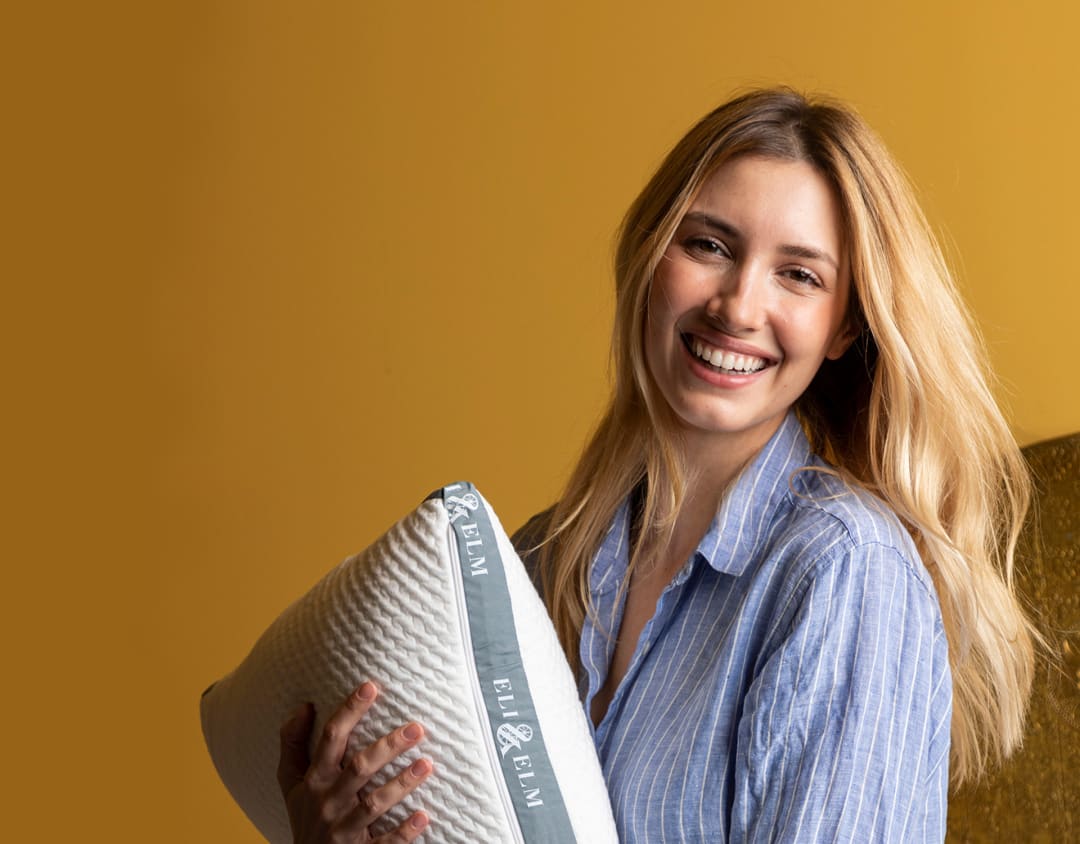
The Eli & Elm Side Sleeper has a curved shoulder cutout and adjustable fill. Our original reviewer received a king-size sample and wrote the firsthand account below; current fill choices and care details may differ from that earlier pillow.

Disclosure: Yawnder may earn a commission from qualifying purchases through our affiliate links, at no extra cost to you. Eli & Elm supplied the original review sample.

Our verdict

The Side Sleeper is worth considering if you sleep on your side and want a shaped pillow whose height you can adjust. Our reviewer enjoyed the soft cover and squishy, supportive feel of the original sample. Its bulk and unusual shape were less convenient for travel or using it as a general-purpose cushion, and the reviewer wanted to remove some fill to soften it.

Check current Eli & Elm pillow options →

Our original hands-on experience

The sample arrived rolled in a long box. Once unpacked, the reviewer described its gold-and-ivory shape as resembling half of a fingertip bandage. The quilted fabric felt soft and the fill plush and squishy. A zipper made it possible to remove fill and change the loft.

On the bed, the fill compressed under the reviewer’s head while the curved edge accommodated the neck and shoulder. The reviewer liked its combination of support and give while changing positions, but found it heavy and unwieldy to carry. The original recommendation was to remove some fill if it initially felt too stiff.

The reviewer also tried it with Eli & Elm’s Whitney cooling bedding in a cool room and found the combination comfortable. That is a personal impression, not an isolated temperature measurement or a guarantee that the pillow stays cool all night.

Design, fill and sizing

Eli and Elm Side Sleeper Pillow with curved shoulder cutout
The Side Sleeper’s curved shape. Photo: Eli & Elm.

Eli & Elm’s current product page lists two fill choices: latex noodles with polyester fiber, or shredded memory foam with polyester fiber. Both are adjustable by adding or removing fill. The current cover is a cotton, polyester and spandex blend; do not assume every version has the same organic-cotton claim as the earlier review sample.

The brand currently lists queen at approximately 18 × 28 × 6 inches and king at 18 × 32 × 6 inches. Height changes when you remove fill, so measure how the pillow supports your head once compressed. A shaped pillowcase is sold separately or in a bundle; verify what is included before checkout.

FillWhat to consider
Latex blendSpringier, responsive fill; avoid if latex is unsuitable for you.
Shredded memory-foam blendA more contouring foam feel; comfort and heat perception vary.

How to adjust the pillow

  1. Start with the pillow on your usual mattress and lie in your normal position.
  2. If your head is pushed upward or the pillow feels too firm, remove a small amount of fill and set it aside.
  3. Try it again for several nights; add fill back if the pillow no longer supports the space between your head and mattress.
  4. Recheck after changing mattresses or adding a topper, because shoulder sink can change the loft you need.

The shoulder cutout can help some side sleepers position the pillow, but it does not guarantee a particular spinal alignment or relieve pain for everyone.

Care, price and returns

The current product instructions say to remove the cover and wash it cool, then tumble dry low. The fill should not go in the washer or dryer; the inner liner is spot cleaned and air dried. Follow the care label for the version you receive. The original reviewer described putting an older pillow in a dryer, but that is not a recommendation for the current fill.

Prices vary with size, fill, bundles and promotions. Eli & Elm advertises a 45-night direct trial and a five-year warranty for qualifying defects; its FAQ asks customers to sleep on the product for at least two weeks before starting a return. Confirm the current terms and any exclusions for your specific seller. Contact Yawnder’s Encinitas showroom to ask what is available to view.

Original review photos

These photographs show the earlier king-size sample and its packaging. The current product may look different.

Frequently asked questions

Can I change the loft?

Yes. The zippered liner lets you remove or add fill. Adjust gradually and keep unused fill in a clean container.

Is it suitable for back sleepers?

Some back sleepers may find a comfortable configuration, but the cutout is designed around side sleeping. Personal fit matters more than the label.

Can I wash the entire pillow?

The manufacturer’s current instructions say not to wash or dry the fill. Wash the removable cover as directed and spot clean the liner.

Does the pillow come with a fitted pillowcase?

Not necessarily. The current listing offers pillow-only and pillowcase bundle options, so check what your selection includes.

Is the current fill the same as the original sample?

Not necessarily. Current latex and memory-foam versions each include polyester fiber. Verify the materials in the selected listing.

Related: How to choose pillow height.

Primary Goods Bedding Review: Percale Feel and the Snap System

primary goods sheets
Primary Goods cotton percale label on the pink sample
The Primary Goods sample from our original review.

Review verdict

The Primary Goods set stood out for its snap-connected top sheet and duvet cover, plus a fitted sheet that gripped the mattress securely. The original reviewer found the percale crisp and the Lilac Snow color noticeably pink in ordinary lighting. The first wash showed no shrinkage, but drying took two cycles.

Reviewed setFive-piece queen set in Lilac Snow
Signature featureTop sheet snaps to the duvet cover
FeelCrisp percale; an adjustment at first
Wash findingsNo shrinkage; two drying cycles

Questions about this review

How did the snap system work?

The flat sheet attached to the duvet cover so the two moved together. The reviewer said that connected feel took some getting used to.

Can the flat sheet be tucked in on its own?

The reviewed flat sheet covered the bed but was not large enough to make hospital corners. It was intended to work with the matching duvet cover.

What did Lilac Snow look like?

The reviewer and others who saw the sample described it as ballet-slipper pink under ordinary lighting, despite its more lilac appearance online.

Did it shrink in the wash?

The reviewer reported no shrinkage after the first wash, but needed two low-heat dryer cycles to get the bedding dry.

Yawnder may earn a commission from qualifying purchases.

Sleep Paralysis: Causes, Symptoms & What to Know

Infographic Sleep Paralysis Decoded

Quick answer

Sleep paralysis is a temporary inability to move or speak while falling asleep or waking. It can feel frightening, particularly if it comes with dream-like sights, sounds or a sense of pressure. Episodes generally end on their own.

Occasional isolated sleep paralysis is usually harmless. If it happens often, causes fear of sleeping or comes with substantial daytime sleepiness, speak with a healthcare professional.

What does sleep paralysis feel like?

Someone may be aware of their surroundings but unable to move or speak for a short period. Some people sense a presence, hear or see things, or feel pressure on the chest. These experiences can be intense, but they do not establish that an intruder is present. Breathing continues, even though the sensation may be unsettling.

According to MedlinePlus, episodes typically last seconds to a minute or two; the NHS notes they can last several minutes. A person’s perception of time may differ from the measured duration.

What is associated with it?

Sleep paralysis occurs during a transition between sleep and wakefulness, when awareness and the reduced muscle movement associated with REM sleep overlap. The exact reason is not fully understood.

Irregular or insufficient sleep, stress and sleeping on the back have been associated with episodes. Sleep paralysis can also occur with conditions such as narcolepsy, but an episode does not by itself mean someone has narcolepsy.

What may help

  • During an episode, remind yourself if you can that it is temporary and will pass.
  • Allow enough time for sleep and keep a reasonably consistent schedule when possible.
  • If back sleeping seems to be associated with your episodes, consider a comfortable alternative position.
  • Discuss persistent insomnia, anxiety or other sleep symptoms with a clinician rather than relying on a product or supplement.

When to get help

Contact a healthcare professional for repeated episodes, fear of going to sleep, significant daytime sleepiness or other concerning symptoms. They can assess possible causes and whether a sleep specialist is needed.

Sudden weakness or paralysis while fully awake, especially if one-sided or accompanied by difficulty speaking, may be an emergency. Call 911 or the local emergency number rather than assuming it is sleep paralysis.

See our guide to sleep stages for more on REM and non-REM sleep.

Frequently asked questions

Is sleep paralysis dangerous?

Isolated episodes are usually harmless, though they can be frightening. Repeated or distressing episodes deserve a medical conversation.

Can I breathe during sleep paralysis?

Breathing continues, although some people feel chest pressure. Seek urgent help for actual breathing difficulty or symptoms that are not clearly a brief sleep-wake episode.

Does sleep paralysis mean I have narcolepsy?

No. It can occur on its own or alongside other conditions. Significant daytime sleepiness is worth discussing with a clinician.

How long does an episode last?

Usually seconds to a couple of minutes, although some episodes can last several minutes.

Keep exploring
More sleep guidance

Browse Yawnder’s sleep education, research explainers, and practical guides.

Explore sleep guides

How to Buy a Mattress Online

Best place to buy a mattress

Why buying a mattress online works — and where it doesn't

Online mattress buying solved two real problems: opaque pricing and pushy showrooms. Online listings make it easy to compare models and prices from home, and some sellers offer home trials and delivery. Return fees, exclusions and installation services vary, so check the written terms before paying.

Know your specs before you shop

Three things narrow the field faster than any list of "best" beds:

  • Your main sleep position. Side sleepers generally need more pressure relief at the shoulder and hip; back and stomach sleepers need more support and less sink at the waist. Combination sleepers usually do best on something responsive enough to turn on.
  • Firmness, described honestly. Most beds sold as "medium" land around 5 to 7 on a 10-point scale. Body weight changes how firm a bed feels: heavier sleepers experience the same mattress as softer, lighter sleepers as firmer.
  • Whether you sleep hot. Foam and coil constructions can feel different, but materials alone do not establish a temperature result. Consider the cover, bedding and room as well as the mattress.

Beyond that: mattress height (relevant to your sheets and your bed frame), motion isolation if you share the bed, edge support if you sit on the side, and certifications like CertiPUR-US for foams or GOLS/GOTS for latex and organic materials.

Read the fine print, not the marketing

The FTC’s online-shopping guidance recommends comparing the seller’s return terms and who pays return shipping before ordering.

The policy is the product when you cannot lie on the bed first.

  • Trial length and the minimum break-in. Some sellers require a break-in period before a return. Check both the earliest request date and the end of the trial.
  • Return cost. Ask whether returns are free, whether there is a pickup or restocking fee, and who hauls the mattress away. A "100-night trial" with a fee attached is a different offer than one without.
  • Warranty terms. Look for the sag depth that qualifies as a defect, whether it is prorated, and the requirement that you use a supportive foundation — an unsuitable base can affect warranty eligibility.
  • Delivery method. Compressed box shipping versus white-glove delivery with setup and old-mattress removal. If you cannot carry an 80-pound box up a staircase, pay for the service.
  • Who you contact. A phone number and a real address beat a chat widget when something goes wrong.

Sales timing and pricing reality

Mattress prices are promotional by design. Promotions often appear around major holidays, but the percentage off alone does not prove a good deal. Compare the same size across brands, factor in bundled pillows or sheets at their real value rather than the stated one, and check whether a foundation or adjustable base is required for the warranty before you call it a deal.

Setup that avoids the common mistakes

Measure the doorways and stair turns first. Have the old bed and any removal arranged before delivery day. Unbox a compressed mattress on the frame it will live on, cut the plastic carefully, and give it a day or two to fully expand — and air the room out if there is an off-gassing smell, which usually fades within a few days. Put a breathable, washable protector on it before the first night; it protects the warranty as much as the mattress. And confirm the foundation matches: check the exact model’s maximum slat spacing and foundation requirements.

The hybrid approach

The most reliable method is not purely online: try similar constructions in person to learn which category your body wants — foam versus hybrid versus latex, and roughly how firm — then buy the specific model with the trial and price you want. Twenty minutes lying on three different constructions teaches you more than three hours of reading, and it costs nothing.

See current mattress deals →

FAQ

Is it safe to buy a mattress online?

Yes, if the trial, return cost and warranty are clear before you pay. Those three terms are the real protection.

How long does a mattress take to expand?

Most compressed mattresses are usable within hours and fully expanded within 24 to 72 hours. Give the feel a couple of weeks before judging it.

Do I need a new foundation?

Check the warranty requirements. Many foam and hybrid beds require a solid or closely slatted platform, and using the wrong base can void coverage.

When are mattresses cheapest?

Holiday sales can be useful, but prices vary. Compare the total delivered cost of the same size and model over time.

What if I don't like it?

Start the return inside the trial window and after the required break-in period, and expect to arrange pickup. Confirm before buying whether a fee applies.

Frequently asked questions

Is buying a mattress online worth it?

Buying online can make comparison convenient, but installation and home-trial terms vary by seller. Check delivery, return fees and eligibility before purchasing.

What are the downsides of buying a mattress online?

The primary downside of buying a mattress online is the inability to physically try the mattress before purchase, though sleep trials mitigate this risk. While the vast selection offers many choices, it can also make the decision-making process more time-consuming because of the sheer volume of options.

How do online mattress purchases compare to traditional showroom shopping?

Online mattress purchases offer greater convenience, a wider selection, and easier price comparisons compared to traditional showroom shopping. You can explore thousands of mattresses and compare prices from home, eliminating the need for exhausting trips to multiple stores.

Who is Tuft & Needle best for?

Tuft & Needle offers foam and hybrid mattresses at different price points. Compare the exact model, current price, feel and terms before deciding.

Can I try a Purple mattress in person before buying online?

While the article highlights the benefits of online purchasing, you might want to call our San Diego showroom in Encinitas, CA to see if we have Purple mattresses available for hands-on testing. Some online brands also partner with physical retailers for display; call ahead to verify the model.

What is a sleep trial and why is it important when buying online?

A sleep trial is a seller-defined period to evaluate a mattress at home. Windows, minimum-use requirements, fees and exclusions vary, and some physical retailers also offer comfort exchanges.

Want to test this in person? Visit our Encinitas showroom or call 858-232-5760.

Ready to buy?
See today’s best sleep deals

Live pricing and current promotions on the mattresses, bases, and sleep tech we recommend.

Shop current deals

Best Microfiber Bed Sheets

Microfiber Sheets Are they any good
Quick answer

Microfiber sheets can be a good value if you want a soft, easy-care set, especially for a guest room or a tight budget. Many are polyester, and some sleepers find them warm or clingy. Compare the actual fabric, fit and return terms; a high marketing number does not guarantee a better sheet.

What are microfiber sheets?

“Microfiber” describes a very fine fiber rather than a particular weave or guarantee of quality. Many microfiber sheet sets are made from polyester; blends also exist. Brushing can create a soft surface, but the finished texture depends on the yarn, fabric and finish.

Read the fiber-content label to see what is in the specific set. The FTC’s textile-labeling guidance explains how covered products disclose fiber content.

Microfiber vs. cotton, linen and lyocell

MaterialTypical feelWhat to consider
Polyester microfiberOften soft and smooth, sometimes brushedMay feel warm or clingy; quality and pilling vary
Cotton percaleOften crisp and matteCan wrinkle; actual weight and weave affect comfort
Cotton sateenOften smooth and drapeyNot every set has the same weight or sheen
LinenTextured and relaxedTypically wrinkles and may cost more
LyocellOften smooth and fluidFeel and care vary by construction and blend

These are general tendencies, not controlled comparisons of particular products. See our linen guide and TENCEL guide.

Do microfiber sheets sleep hot?

They can feel warm to some sleepers, but fiber alone does not determine temperature. Fabric weight, weave, finish, mattress protector, blankets, room temperature and personal preference all matter. If you often overheat, try a lighter-feeling fabric with a reasonable return policy rather than relying on a universal cooling claim.

What to check before buying

Fiber and finish

Check the percentage of each fiber and whether the fabric is brushed. Avoid treating “luxury” as a measurable specification.

Weight

GSM describes fabric mass per area when provided. Higher weight can feel more substantial, but does not guarantee softness, durability or cooler sleep.

Fit

Measure your mattress including any topper and compare it with the fitted sheet’s stated pocket depth.

Set contents

Confirm whether a flat sheet and how many pillowcases are included; compare the actual size and total price.

Thread-count-style marketing on some microfiber sets can be confusing. Ask how the number is measured and compare the feel and construction rather than assuming a larger number means higher quality.

Care, pilling and longevity

Follow the care tag. Some sets can be washed and dried easily, but high heat can damage certain synthetic fabrics. Friction, washing conditions and fabric construction all affect pilling; no weight or fiber guarantees a pill-free set. Inspect elastic and seams after washing, and avoid products that the manufacturer says not to use.

Synthetic textiles can shed microfibers during washing. Consider washing only when needed and following the garment and washing-machine makers’ instructions; no single laundry change eliminates shedding.

Frequently asked questions

Is microfiber always polyester?

No. Many sheet sets are polyester, but check the actual fiber content and percentages.

Are microfiber sheets good for hot sleepers?

Some people find them warm or clingy; others are comfortable. The particular fabric and bedding setup matter.

Does a high GSM mean better sheets?

Not by itself. It indicates fabric weight, not a full measure of durability or comfort.

Are microfiber sheets an allergen-proof encasement?

No. A regular sheet is not a substitute for a properly specified zippered allergen encasement.

XOcomfort Pillow Review: Adjustable Foam and Support

XOcomfort Pillow Review
Zippered cover on the XOcomfort pillow
The zippered cover provided access for adjustment.

Historical review: This article describes the XOcomfort Carbon Series pillow tested in 2019. We could not establish that the same pillow is currently offered; historical prices, guarantees and certifications should not be assumed current.

Our verdict

Our reviewer found the shredded foam soft to the touch but supportive and somewhat firm under the head. As a side sleeper, she felt it supported the space between her head and neck. Adjustable fill and a separate inner liner were practical advantages, while initial off-gassing was a drawback. We did not conduct a long-term cooling test.

Best fit: side sleepers who like adjustable, supportive foam. Think twice if: you are sensitive to new-foam odors or prefer a very soft, low pillow.

What we found in the original review

The foam was shredded and cross-chopped. Individual pieces felt light and soft, but together they made a supportive surface the reviewer described as leaning firm. The cover, zipper and foam appeared well made. A separate liner meant the outer cover could be removed without taking out loose foam.

There was some off-gassing on opening. Allowing a new foam product to air out according to its instructions can help; if odor persists or causes discomfort, consult the seller about its return policy.

Unboxing the XOcomfort pillow in the original review
Our original pillow unboxing.

Adjusting loft and support

The original pillow had a zippered cover and removable fill, allowing the user to lower its loft. The review listed a starting depth of about six inches and standard, queen and king sizes; these are historical specifications, not a promise about a current model.

Side sleepers generally need enough height to fill the space between shoulder and head. Back sleepers may prefer less loft, and stomach sleepers often need a lower profile. Adjust gradually and assess whether your neck feels comfortably aligned; shoulder width, mattress softness and preference all matter.

What about cooling?

The original product was marketed with cooling foam technology, though it was not described as cool to the touch. Our reviewer explicitly said more time was needed to evaluate cooling. We therefore cannot verify that it regulates temperature or sleeps cooler than a competing pillow.

The wider sleep setup matters too: room temperature, mattress protector, sheets and comforter can affect comfort. The original article also discussed related XOnano Smartfoam research separately; impact-sensing technology should not be confused with a tested pillow feature. Watch the video referenced in the original article.

How adjustable foam compares

TypeFitTradeoff
Adjustable shredded foamFill can be removed to alter loftAdjustment takes time; new foam can smell
Solid foamConsistent, shaped supportUsually less adjustable
Down alternativeOften soft and compressibleSupport depends on fill

Care and buying advice

Follow the specific pillow’s label: a removable cover does not mean its inner foam can be machine washed. Use a compatible pillow protector and dry fully after any permitted cleaning. The original review cited foam certification; verify current certification and the exact model rather than assuming a historical claim still applies.

We removed an old shopping link because it led to an unrelated mattress. If you find an XOcomfort listing, verify the seller, model, price, return window and instructions before purchase.

How to dial in an adjustable pillow

Start with your normal sleep setup. Put the pillow inside the pillowcase you actually use and lie on the mattress you sleep on. Mattress softness affects how far your shoulder sinks in, so a height that feels right on a display bed may not feel the same at home. Try your usual side and back positions before removing any fill.

Make small changes. If the manufacturer permits fill removal, unzip the inner liner and take out a small handful at a time. Close it, redistribute the remaining fill and try the pillow again. Keep the removed material clean and dry in a sealed bag so you can put some back if you take out too much. Follow the product's instructions and keep loose fill away from children and pets.

Check the feel in each position. A side sleeper may need more loft to fill the space between the mattress and head; a back sleeper may find a lower setting more comfortable. Look for a position that feels relaxed rather than forcing the head up or letting it drop. If you switch positions, aim for a compromise you can comfortably use in both. There is no single correct height for every body or mattress.

Give the adjustment a fair trial. A new pillow can feel different from one you have used for years. Note whether the loft remains comfortable after you settle in, whether fill shifts toward the edges and whether you wake wanting more or less support. Make one adjustment at a time and check the seller's return deadline. If a pillow causes discomfort, stop using it; persistent symptoms are a reason to speak with a healthcare professional.

Compare the whole purchase. Look for a removable, washable outer cover, the exact pillow dimensions, replacement-fill availability and the cost of returns. Some adjustable pillows use a separate inner liner, as the historical XOcomfort sample did; others expose loose fill when the cover is opened. Confirm the construction and care instructions for the model being sold today.

Frequently asked questions

Is the pillow adjustable?

The 2019 sample had removable shredded fill and a zippered cover. Verify any current listing.

Is it suitable for side sleepers?

Our side-sleeping reviewer found the sample supportive. The right loft depends on your body and mattress.

Does it stay cool?

Our reviewer did not test cooling long enough to reach a conclusion.

Can the whole pillow be washed?

Do not assume so. Check the specific instructions for the cover and foam.

How Long Does Melatonin Last? Timing, Dose & Safety

How Long Does Melatonin Last

Updated October 18, 2026. This guide covers melatonin duration, formulation, timing and dose questions. It is general education, not a personal dosing plan.

How long does melatonin last? The quick answer

There is no guaranteed number of hours for everyone. Immediate-release and extended-release products differ, and effects depend on timing, age, medicines and individual sensitivity. Feeling awake again does not prove you need another serving.

There is no single melatonin dose that is right for everyone. For occasional trouble falling asleep, Johns Hopkins sleep guidance discusses 1 to 3 mg about two hours before bedtime and emphasizes that “less is more.” Timing, age, medications, the reason you are using melatonin, and the product formulation all matter.

Important: This is general education, not individualized medical advice. The American Academy of Sleep Medicine does not recommend melatonin as a routine treatment for chronic insomnia, and parents should talk with a pediatric health professional before giving melatonin to a child or teen. People who are pregnant or breastfeeding, have seizure disorders, or take medications—especially blood thinners—should discuss melatonin with a clinician or pharmacist first.

QuestionEvidence-based takeaway
Typical adult amountJohns Hopkins discusses 1–3 mg for occasional sleep difficulty; this is not a universal prescription.
When to take itAbout two hours before bedtime in the Johns Hopkins guidance; circadian-rhythm problems can require different timing.
5 mg or 10 mg?Higher is not automatically better and may increase next-day drowsiness or other side effects.
ChildrenNo universal pediatric dose; AASM advises involving a pediatric health professional.
Long-term nightly useLong-term safety is not well established; persistent insomnia deserves evaluation rather than automatic dose escalation.

What Melatonin Actually Does

Melatonin is a hormone your body naturally produces in response to darkness. It helps regulate circadian timing—your internal day-night clock. A melatonin supplement does not work exactly like a traditional sedative, and its usefulness depends heavily on why you are taking it and when you take it.

That is why melatonin can make more sense for some circadian-timing problems, such as jet lag or delayed sleep timing, than for chronic insomnia. Bright light in the evening can also shift circadian timing, so sleep schedule and light exposure are part of the same picture.

Immediate-release versus extended-release melatonin

How long melatonin feels active varies by formulation, dose, age, metabolism, and individual sensitivity. Immediate-release products generally act for a shorter window than extended-release products, but a larger dose should not be treated as a way to force longer or better sleep. Next-day grogginess can occur, particularly when the amount is too high for the individual or taken too late.

For chronic insomnia, higher doses are not the answer by default. NCCIH notes that major clinical guidelines have recommended against routine melatonin treatment for chronic insomnia because the evidence is limited. Persistent insomnia is better evaluated as a sleep disorder rather than managed by repeatedly increasing a supplement dose.

Timing matters at least as much as the milligram number. For occasional sleep difficulty, Johns Hopkins guidance discusses taking melatonin about two hours before bedtime. Jet lag and circadian-rhythm disorders can require different timing because the goal is to shift the body clock, not simply create drowsiness.

What Is a Typical Melatonin Dose for Adults?

There is no FDA-approved standard melatonin dose for sleep in the United States. Johns Hopkins sleep specialist guidance for occasional sleep difficulty discusses 1 to 3 mg about two hours before bedtime and emphasizes that a larger dose is not automatically more effective.

Is 5 mg of melatonin a lot?

Five milligrams is above the 1–3 mg amount discussed in that general Johns Hopkins guidance. That does not mean 5 mg is automatically unsafe for every adult, but it is a reason not to assume that the biggest dose on the shelf is the best starting point. Higher amounts may increase next-day sleepiness, headache, dizziness, nausea, or vivid dreams.

What about 10 mg?

Ten milligrams is well above the 1–3 mg amount commonly discussed for occasional sleep difficulty. Rather than treating 10 mg as a routine starting dose, repeated high-dose use is worth discussing with a clinician or pharmacist—especially if you take other medications or have an ongoing sleep problem.

Safety, Side Effects and Interactions

NCCIH says short-term melatonin use appears relatively safe for many people, but long-term safety has not been established. Commonly reported short-term side effects include daytime sleepiness, headache, dizziness, and nausea.

Melatonin can also interact with medications. NCCIH specifically advises medical supervision for people with epilepsy and those taking blood thinners. People who are pregnant or breastfeeding should also discuss melatonin with a health professional because safety data are limited.

Alcohol can worsen drowsiness and impair alertness, so combining alcohol with a sleep-promoting supplement is not a good way to judge whether the supplement is helping. If you feel groggy the next day, do not drive or operate machinery until you are fully alert.

Children, Older Adults and Chronic Insomnia

Children and teens: The American Academy of Sleep Medicine advises parents to talk with a pediatric health professional before giving melatonin. There is no universal pediatric dose, and supplement content can vary widely.

Older adults: NCCIH notes that melatonin may remain active longer in older people and contribute to daytime drowsiness, so extra caution is sensible—especially when other medications or fall risk are involved.

Chronic insomnia: Major sleep guidelines have recommended against routine melatonin treatment for chronic insomnia because the evidence is limited. Cognitive behavioral therapy for insomnia (CBT-I) is the better-supported first-line approach for persistent insomnia.

Why the Label May Not Equal the Actual Dose

Melatonin is sold as a dietary supplement in the United States, which means the FDA does not approve individual supplements for safety and effectiveness before they are sold. NCCIH and AASM both note that measured melatonin content has varied substantially from the amount printed on some labels. That makes product quality part of the dosage question, not just the number of milligrams on the bottle.

Frequently Asked Questions

How much melatonin should I take to sleep?

There is no single correct dose for everyone. Johns Hopkins general guidance for occasional sleep difficulty discusses 1–3 mg about two hours before bedtime. Your age, medications, health history, formulation, and the reason for taking melatonin can change what is appropriate.

Is 3 mg of melatonin considered a high dose?

Three milligrams falls within the 1–3 mg range discussed in Johns Hopkins guidance for occasional sleep difficulty, but that range is not a universal prescription and some people can experience side effects even at lower amounts.

Can I take melatonin every night?

Short-term use appears relatively safe for many adults, but long-term safety is not well established. If you are using melatonin night after night for an ongoing sleep problem, discuss the underlying issue with a qualified health professional rather than automatically continuing or increasing the dose.

How long before bed should I take melatonin?

Johns Hopkins guidance for occasional sleep difficulty discusses about two hours before bedtime. The best timing can differ for jet lag and circadian-rhythm disorders.

Can children take melatonin?

Melatonin is used in some children, but the AASM recommends involving a pediatric health professional. There is no universal pediatric dose, and accidental ingestion is a significant safety concern.

Compare the product label before buying

Our Lemme Sleep review, OLLY Sleep review and Kin Dream Light review show why serving size and additional ingredients matter. Their different melatonin amounts are label facts, not a dose recommendation. For the broader evidence, read what melatonin does and when it may help.

Sources

Editorial note: Yawnder publishes sleep information for education and does not diagnose or treat medical conditions. Persistent insomnia, significant daytime sleepiness, medication interactions, or questions about melatonin for a child should be discussed with a qualified clinician or pharmacist.

Compare sleep gummy labels and precautions

Food and Sleep: How Diet Can Affect Rest

Alkaline foods and sleep

Can food affect sleep?

Meal timing, caffeine, alcohol and digestive symptoms can influence sleep, but no individual food or “alkaline” diet reliably cures insomnia. If you have nighttime reflux, a late heavy meal or a personal trigger may make it harder to rest.

Start with habits you can observe: when you eat, your caffeine and alcohol intake, and whether particular foods cause discomfort. Sleep problems have many possible causes, so talk with a clinician if they persist.

Caffeine and alcohol

Caffeine is a stimulant found in coffee, tea, some sodas, energy drinks and chocolate. Sensitivity and the time it remains active vary. If you struggle to fall asleep, try moving caffeine earlier or reducing it gradually; NHLBI recommends avoiding caffeine close to bedtime.

Alcohol can make some people sleepy initially, but it can disrupt sleep later in the night. Avoiding it close to bedtime is a reasonable step if you are trying to improve rest. You do not need to drink alcohol to sleep.

Dinner, snacks and nighttime reflux

Large meals close to bedtime can feel uncomfortable. For people with nighttime GERD symptoms, NIDDK suggests eating meals at least three hours before lying down or going to bed. Individual triggers vary; avoid the items that worsen your own symptoms rather than automatically eliminating an entire food group.

Going to bed hungry can also be uncomfortable. If you need a snack, a small portion of a food you tolerate may be reasonable. Consider any medical, dietary or medication instructions that apply to you.

What about an alkaline diet?

A food’s acidity is not the same as the pH of your blood. The body tightly regulates blood pH, with the lungs and kidneys playing central roles. Ordinary food choices do not simply make a healthy person’s blood “too acidic” in the way some sleep advice claims. A review of dietary acid load explains the distinction.

Eating more vegetables, fruit and other nutrient-rich foods can be part of a balanced diet, but there is no established need to avoid grains, fish, dairy or fruit simply to “alkalize” the blood for sleep. People with kidney disease or other medical conditions should follow their clinician’s individualized advice.

Fluids and a practical evening routine

Drink enough throughout the day. If nighttime bathroom trips disturb you, discuss the pattern with a clinician and consider whether large drinks right before bed contribute. Do not restrict fluids excessively, especially if a healthcare professional has given you hydration instructions.

  1. Notice when you last have caffeine and whether it affects your sleep.
  2. Give a large dinner time to digest; if you have nighttime reflux, consider the NIDDK timing guidance.
  3. Choose foods you tolerate and a small snack if you are genuinely hungry.
  4. Keep a consistent sleep schedule and note changes over several nights.

When to get help

Talk with a healthcare professional about persistent insomnia, frequent nighttime reflux, loud snoring or breathing pauses, or symptoms that affect daily life. A food diary can help identify patterns, but it cannot diagnose a sleep disorder or replace treatment.

For ongoing insomnia, ask about evidence-based treatment such as cognitive behavioral therapy for insomnia. The NHLBI treatment guide describes available approaches.

Frequently asked questions

Do acidic foods lower blood pH and cause poor sleep?

That broad claim is unsupported. Reflux triggers are individual, while blood pH is tightly regulated by the body.

Is eating before bed always bad?

No. A small snack may be comfortable for some people; a large meal or a known reflux trigger may cause discomfort for others.

Is there one food guaranteed to make me sleep?

No. Research on specific foods is not a substitute for evaluating persistent sleep problems and treating their cause.

Mattress Tags: What They Mean and Can You Remove Them?

Can you remove mattress tags

What the "do not remove" mattress tag actually is

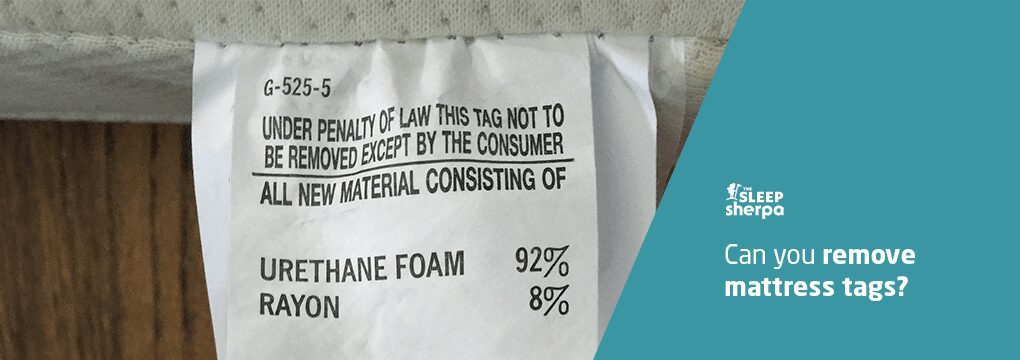
The tag stitched into the side of your mattress is usually called a law tag. It is not a warranty sticker and it is not a legal trap for the person sleeping on the bed. It is a disclosure label required so that anyone buying a mattress can see what is inside it and who made it before they hand over money.

Law tags exist because of a real problem. Before labeling rules, some manufacturers stuffed mattresses with rags, straw, animal hair and salvaged bedding, and there was no way for a shopper to know. Requiring a sealed, printed tag made the filling and the manufacturer traceable, and made it much harder to pass a rebuilt mattress off as new.

Can you remove it? Yes — once you own it

In the United States, the familiar label generally says it may be removed by the consumer. For example, Connecticut’s consumer guidance says purchasers may remove the tag while retailers must keep it attached before sale. Labeling rules vary by jurisdiction; read the label and applicable local rules.

That does not make it a good idea. Before you reach for the scissors, know what you are throwing away.

Why we tell customers to leave the tag on

Practical owner guidance: Even though the familiar law-tag wording is directed at sellers rather than the final consumer, leaving the original identification label attached helps if you later need to identify the manufacturer, model, materials, production run or warranty terms. Retailers may have their own return-condition requirements. Keep purchase proof and photograph the label before removing anything; see mattress-care advice.

  • Warranty claims. Many manufacturers ask for the original law tag or its identifying information for a warranty claim; some require it to remain attached. Check your warranty before cutting it off and retain proof of purchase.
  • Proving the model. Retail names can change between stores and years. The tag may help identify the manufacturer and production details, though not every tag includes the retail model name.
  • Fire-safety compliance. U.S. mattresses are subject to federal flammability standards. A separate required label may record compliance; consult the CPSC mattress guidance.
  • Resale and disposal. Recyclers and second-hand buyers use the tag to confirm age and materials. In California, mattress recycling is handled through a statewide program, and an identifiable mattress is easier to hand off.

If the tag genuinely bothers you, tuck it under the mattress instead of cutting it, and photograph both sides so you keep the model number and date.

How to read a law tag

Tags vary by manufacturer, but you can usually find:

  • The manufacturer or importer name and address
  • A registry or licence number identifying that manufacturer
  • The date of manufacture
  • The filling materials, listed by percentage — foam, fibre, latex, cotton
  • Whether the materials are new or, in the case of a rebuilt unit, previously used
  • Care instructions and the model or SKU

The line worth reading twice is the filling list. It tells you whether the "plush pillowtop" in the sales pitch is mostly polyurethane foam, mostly fibre, or genuinely latex.

A missing tag is a warning sign

If you are looking at a mattress with no tag at all, treat it with suspicion. A missing tag can mean the unit is a return that was cleaned and resold, a rebuilt mattress presented as new, or a knock-off of a brand-name model. None of those are what you want to pay new-mattress money for. In a legitimate store the tag is present, intact, and matches the model on the price ticket.

The same goes for a tag that has clearly been re-sewn, or one whose model name does not match the label on the mattress cover.

What about pillows, toppers and furniture?

Labeling rules cover more than mattresses. Pillows, toppers and upholstered furniture may also carry filling labels. Requirements and product categories vary by state; check your local rules and the product’s warranty.

Checking a tag before you buy

When you are on a showroom floor, it takes ten seconds:

  1. Find the tag, usually on the side seam near a corner.
  2. Confirm the model name matches the tag on display and the quote you are given.
  3. Check the manufacture date so you are not buying old stock that has been compressed in a warehouse.
  4. Read the filling percentages and ask the salesperson to explain anything vague.
  5. Photograph the tag once the bed is delivered and keep it with your receipt.

Keep the photo and receipt together, but check whether the manufacturer also requires the original label to remain attached.

Frequently asked questions

Can I remove the tag from my new mattress?

Yes, you can legally remove the tag from your own mattress once it has been purchased and is in your possession. The warning "Do Not Remove Under Penalty of Law" primarily applies to manufacturers and retailers before the point of sale, ensuring product integrity for the consumer.

Why do mattress tags have a scary legal warning?

The legal warning on mattress tags was initially implemented to prevent manufacturers and retailers from deceptively selling unhygienic or misrepresented bedding. This measure, dating back to the late 1800s, aimed to protect consumers from mattresses made with unsanitary recycled materials, like hospital linens.

What information can I find on a mattress tag?

A law tag generally identifies the manufacturer and filling materials. Details vary, and care or flammability information may appear on separate labels.

What should I do if a mattress I'm considering buying doesn't have a tag?

A missing tag is a reason to ask the seller for the manufacturer, model and filling information. It does not by itself establish that a mattress is counterfeit. If a required label is missing, consult the appropriate state regulator.

Are mattress tags really important for consumer safety?

Law tags disclose specified filling and manufacturer information; a label alone does not certify that a mattress is hygienic, chemical-free, or suitable for every sleeper. They were introduced to combat historical practices of selling mattresses filled with unsafe, recycled waste, thereby protecting public health.

Where can I find a reputable mattress retailer that provides clear product information?

You can visit reputable retailers like Yawnder, our Encinitas, CA showroom, to ensure you receive a mattress with accurate labeling and high-quality materials. We prioritize transparency and can discuss all details, including what you'll find on your mattress tag, to help you make an informed decision.

Want to test this in person? Visit our Encinitas showroom or call 858-232-5760.

Ready to buy?
See today’s best sleep deals

Live pricing and current promotions on the mattresses, bases, and sleep tech we recommend.

Explore sleep guides

Pacific Coast Lunesse Comforter Review: Warmth, Loft and Duvet Loops

Pacific Coast Lunesse Comforter Review
Reviewer sitting with the Lunesse comforter in the original video
From the original Lunesse comforter review video.

Review verdict

The original reviewer loved the Lunesse comforter’s soft feel, warmth and duvet loops, and reported only one small escaped down cluster. Packaging was the weak point, including a defective storage-bag zipper. The account also records Pacific Coast confirming the product’s identity and later reporting its discontinuation.

Original specification600 fill power white goose down
Shell described370-thread-count batiste cotton
Practical highlightDuvet loops kept the insert in place
Original status noteDiscontinuation reported in the review

Original review video

Questions about this review

Was it only suitable for winter?

The reviewer initially said so in the video, then reconsidered because the home was heavily heated. The written account makes clear that room temperature affected that impression.

Did the filling escape?

The reviewer noticed one small cluster of down and otherwise praised the shell’s containment and soft feel.

Did the duvet stay in place?

Yes. The reviewer specifically praised the duvet loops for holding the insert in its cover despite a partner moving around at night.

Does this review establish current availability?

No. It preserves the original Lunesse experience and the discontinuation reported at the time. The comparison chart and suggested replacements are historical too.

Yawnder may earn a commission from qualifying purchases.

Heavenluxe Tencel Sheets Review: Softness, Shrinkage and Set Contents

Heavenluxe Tencel Sheets Review
Close-up of white Heavenluxe sheets from the original review
A close-up of the Heavenluxe sheets we reviewed.

Review verdict

The original reviewer praised the silky softness, sheen and comfortable sleeping temperature of the Heavenluxe set. But the review also documented loose threads and roughly 1½ inches of shrinkage after washing. The sampled set included a fitted sheet and two pillowcases, with no flat sheet.

Sampled setFitted sheet and two pillowcases
FeelVery soft, smooth and glossy
Wash findingsLoose threads and reported shrinkage
Missing for this reviewerA matching flat sheet

Questions about this review

Did the set include a flat sheet?

No. The original sample contained one fitted sheet and two pillowcases. Check the contents of any current listing separately.

Did the sheets shrink?

The reviewer reported about 1½ inches of shrinkage after following the cold-wash and low-heat instructions, along with loose threads.

Did they sleep hot?

The reviewer found them neither too hot nor too cold and less warm than the PeachSkin sheets previously tried. This is a personal observation, not a measured cooling test.

Are the quoted prices current?

No. Prices and product options in the original account reflect the 2019 review.

Yawnder may earn a commission from qualifying purchases.

Do Not Sell or Share My Personal Information Privacy Policy
Y

Yawnder

We typically reply in a few minutes

👋 Hi there!

Have a question about mattresses, deliveries, or your order? We're here to help.