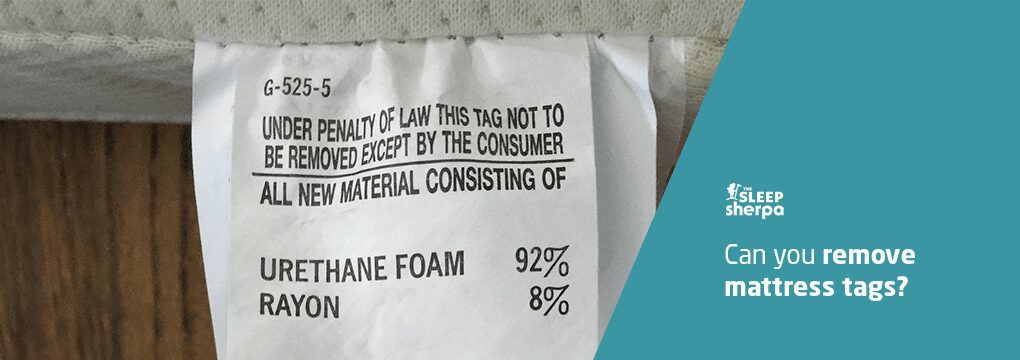
What the "do not remove" mattress tag actually is
The tag stitched into the side of your mattress is usually called a law tag. It is not a warranty sticker and it is not a legal trap for the person sleeping on the bed. It is a disclosure label required so that anyone buying a mattress can see what is inside it and who made it before they hand over money.
Law tags exist because of a real problem. Before labeling rules, some manufacturers stuffed mattresses with rags, straw, animal hair and salvaged bedding, and there was no way for a shopper to know. Requiring a sealed, printed tag made the filling and the manufacturer traceable, and made it much harder to pass a rebuilt mattress off as new.
Can you remove it? Yes — once you own it
The wording on older tags ("Do not remove under penalty of law") is the reason for the confusion. Most tags produced in the last few decades finish that sentence with "except by the consumer". The prohibition is aimed at manufacturers, wholesalers and retailers, not at the household that bought the mattress. Once the mattress is yours, cutting the tag off is legal.
That does not make it a good idea. Before you reach for the scissors, know what you are throwing away.
Why we tell customers to leave the tag on
Practical owner guidance: Even though the familiar law-tag wording is directed at sellers rather than the final consumer, leaving the original identification label attached helps if you later need to identify the manufacturer, model, materials, production run or warranty terms. Retailers may have their own return-condition requirements. Keep purchase proof and photograph the label before removing anything; see mattress-care advice.
- Warranty claims. Most manufacturers ask for the law tag — or a clear photo of it — to validate a warranty claim. The tag carries the model name and manufacture date that identify your exact unit. Without it, a sagging-mattress claim can be refused outright.
- Proving the model. Retail names change between stores and between years. The tag is often the only place the real model designation appears once the packaging is gone.
- Fire-safety compliance. Mattresses sold in the United States must meet federal flammability standards. The tag is where that compliance is recorded.
- Resale and disposal. Recyclers and second-hand buyers use the tag to confirm age and materials. In California, mattress recycling is handled through a statewide program, and an identifiable mattress is easier to hand off.
If the tag genuinely bothers you, tuck it under the mattress instead of cutting it, and photograph both sides so you keep the model number and date.
How to read a law tag
Tags vary by manufacturer, but you can usually find:
- The manufacturer or importer name and address
- A registry or licence number identifying that manufacturer
- The date of manufacture
- The filling materials, listed by percentage — foam, fibre, latex, cotton
- Whether the materials are new or, in the case of a rebuilt unit, previously used
- Care instructions and the model or SKU
The line worth reading twice is the filling list. It tells you whether the "plush pillowtop" in the sales pitch is mostly polyurethane foam, mostly fibre, or genuinely latex.
A missing tag is a warning sign
If you are looking at a mattress with no tag at all, treat it with suspicion. A missing tag can mean the unit is a return that was cleaned and resold, a rebuilt mattress presented as new, or a knock-off of a brand-name model. None of those are what you want to pay new-mattress money for. In a legitimate store the tag is present, intact, and matches the model on the price ticket.
The same goes for a tag that has clearly been re-sewn, or one whose model name does not match the label on the mattress cover.
What about pillows, toppers and furniture?
Labeling rules cover more than mattresses. Pillows, mattress toppers, comforters, upholstered chairs and sofas carry the same style of filling disclosure. The rules are the same: the seller must leave it on, and you may remove it once you own the item — with the same warranty consequences.
Checking a tag before you buy
When you are on a showroom floor, it takes ten seconds:
- Find the tag, usually on the side seam near a corner.
- Confirm the model name matches the tag on display and the quote you are given.
- Check the manufacture date so you are not buying old stock that has been compressed in a warehouse.
- Read the filling percentages and ask the salesperson to explain anything vague.
- Photograph the tag once the bed is delivered and keep it with your receipt.
That photo, together with your invoice, is what a warranty department will ask for years later.
Frequently Asked Questions About Mattress Tags: Must-Have Insights for Safe Bedding Choices
Can I remove the tag from my new mattress?
Yes, you can legally remove the tag from your own mattress once it has been purchased and is in your possession. The warning "Do Not Remove Under Penalty of Law" primarily applies to manufacturers and retailers before the point of sale, ensuring product integrity for the consumer.
Why do mattress tags have a scary legal warning?
The legal warning on mattress tags was initially implemented to prevent manufacturers and retailers from deceptively selling unhygienic or misrepresented bedding. This measure, dating back to the late 1800s, aimed to protect consumers from mattresses made with unsanitary recycled materials, like hospital linens.
What information can I find on a mattress tag?
A mattress tag typically provides crucial details including the manufacturer's name, the materials used in the mattress construction, its place of production, and important care instructions. This information helps consumers understand their purchase and ensures compliance with hygiene standards.
What should I do if a mattress I'm considering buying doesn't have a tag?
If you encounter a mattress without its required tag, it's a significant red flag that suggests the product might be counterfeit or made with questionable materials. You should report such instances to the appropriate authorities, as manufacturers or retailers selling tag-less mattresses can face substantial fines.
Are mattress tags really important for consumer safety?
Yes, mattress tags are vital for consumer safety because they certify that the mattress is new, hygienic, and made from approved materials. They were introduced to combat historical practices of selling mattresses filled with unsafe, recycled waste, thereby protecting public health.
Where can I find a reputable mattress retailer that provides clear product information?
You can visit reputable retailers like Yawnder, our Encinitas, CA showroom, to ensure you receive a mattress with accurate labeling and high-quality materials. We prioritize transparency and can discuss all details, including what you'll find on your mattress tag, to help you make an informed decision.
Want to test this in person? Visit our Encinitas showroom or call 858-232-5760.
Live pricing and current promotions on the mattresses, bases, and sleep tech we recommend.
Explore sleep guides