
Yawnder buying guide · Updated October 12, 2026
The best HomeGoods bedding buys are the ones with clear materials, correct dimensions and a real price advantage. Start with sheets and duvet covers you can evaluate from their labels. Be more cautious with an unfamiliar sleeping pillow or topper, because fit is personal and used merchandise is excluded by the standard return policy.
Editorial shopping guidance, not a live store-inventory list or a claim of new wash testing. Return terms are linked to HomeGoods; stock and individual products vary.
The bedding worth checking first


| Category | Look for | Buy when | Skip when |
|---|---|---|---|
| Cotton sheet set | Percale or sateen stated; complete fiber content; fitted-sheet depth | The weave matches your preference and the set fits your mattress | The front says cotton-rich but the fiber label reveals a blend you do not want |
| Linen sheets | Actual linen percentage; seams and full set contents | You like the texture and the complete set beats a comparable new retail offer | You are paying linen prices for a linen-look synthetic fabric |
| Duvet cover | Insert dimensions; corner ties; reliable closure | The dimensions match your insert and the shell is breathable enough for you | The cover has no usable internal ties or fits your insert poorly |
| Down or down-alternative insert | Fill type, weight or warmth level; care label | The warmth matches your room and the shell/fill information is clear | You cannot identify the fill or want a comfort trial after use |
| Bath towels | Fiber label; stitching; absorbent texture rather than surface slickness | The feel and size match your needs at a sensible comparable price | The tag promises luxury but basic specifications are missing |
| Sleeping pillows | Exact model; fill; loft; care; sealed condition | You already know the pillow or can establish fit without assuming used returns | An unknown loft is being bought mainly because the price looks good |
Inventory varies by store and visit. These are product-selection criteria, not a claim that a specific model is currently stocked at every HomeGoods.
Read the back label before the front of the package
Start with fiber content, weave, dimensions, set contents, country of origin and care. “Hotel collection,” “Egyptian quality” or a large thread-count number does not replace that information. Supima is a specific cotton designation; a generic Egyptian-cotton claim alone does not prove staple length or finished-sheet quality.
A package marked “Queen, 100% cotton, percale, fitted sheet fits up to 16 inches, one flat sheet + one fitted sheet + two pillowcases” tells you more useful buying information than “luxury 1,000 thread count.” This is an illustrative label, not a photographed HomeGoods item.
For a cotton-rich blend, identify the remaining fiber. For a “bamboo” sheet, read whether the fiber is viscose/rayon or lyocell rather than assuming untreated bamboo fabric. For a duvet insert, check whether a listed weight is total product weight or fill weight.
How to tell whether the price is actually good
- Search the exact model or item number when the label supplies one.
- Compare the same size, material and complete set—not a fitted sheet against a four-piece set.
- Use a currently purchasable price rather than the printed comparison price as your reference.
- Include shipping and the value of return flexibility.
- Inspect seams, packaging and missing pieces before paying.
Do not assume a familiar designer logo means the same construction as that brand’s full-price collection. When you cannot establish an exact match, compare the item’s specifications and usable price with another product of the same type. A bargain you cannot use is still wasted money.
Percale, sateen, linen: choose the feel you want
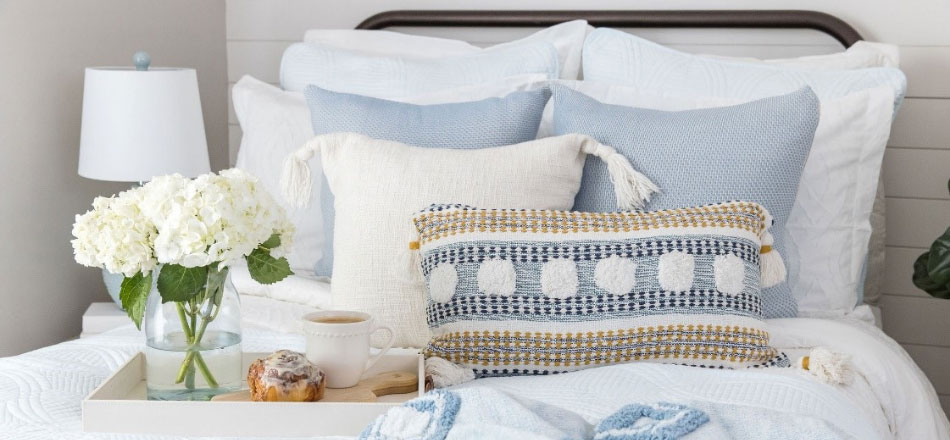
Start with cotton percale if you prefer a crisp, matte sheet. Compare sateen if you want a smoother surface and drape. Linen has a more textured, relaxed feel. None guarantees a cooler night by fiber name alone: fabric weight, weave, the mattress protector and the rest of the bedding also affect the experience.
For warm bedrooms, a lighter insert and a breathable duvet cover may be a more practical change than chasing the highest thread count. Check whether you can wash and fully dry the item at home; easy ownership matters when sheets and bedding are used weekly.
Pillows and toppers need extra care
For a sleeping pillow, match loft to your shoulder width, sleep position and mattress sink. A thick pillow that works on a firm mattress may hold your head too high on a softer one. A decorative pillow is not automatically designed for all-night support.
For a topper, choose a material and thickness to change surface feel. A topper does not repair a failing support core or a damaged frame. A washable cover can be useful, but follow its actual care instructions instead of washing a foam core.
Price is only one part of the decision. If you need to sleep on a pillow or topper to judge comfort, a seller with explicit used-product return terms may be worth paying more for. HomeGoods’ standard policy is not a sleep trial.
HomeGoods bedding returns: keep the receipt
The HomeGoods return policy describes a 30-day receipt-based refund or exchange window. Items must meet the condition requirements; used or unsellable merchandise is not accepted. Later receipt-based returns, gift-receipt returns and eligible returns without a receipt can lead to merchandise credit instead.
Keep packaging and tags while you inspect the purchase, and ask the store about any exception before opening it. Do not assume you can wash or sleep on bedding and then return it because the fit was wrong. Check current holiday terms separately rather than reusing last year’s dates.
When buying elsewhere is the better value
Buy a known collection elsewhere when you need matching replacements, a specific pocket depth, a predictable color, documented material details or a clearly stated comfort-return policy. Compare Brooklinen cotton sheets for a named weave and set, or Boll & Branch bedding when you can confirm the actual seller and collection.
Those shopping links may earn Yawnder a commission. They are alternatives, not a claim that HomeGoods carries the same item. For more fit guidance, read our pillow reviews and our Costco sheets comparison.
Your two-minute aisle checklist
- Read the fiber and care labels.
- Measure pocket depth or insert dimensions.
- Count the pieces in the package.
- Inspect seams, closures and packaging condition.
- Compare a real current price.
- Keep your receipt and understand the condition rules.
If an item fails those checks, leave it on the shelf even if the discount looks impressive.
How to check sheet fit before you buy
Measure your mattress from top to bottom at the edge, including any mattress pad or topper that will sit under the fitted sheet. Write down the width and length as well as the depth. A queen label does not tell you whether a particular fitted sheet will cover an unusually deep mattress, and a split king needs two separately fitted sheets if each side moves independently.
On the package, look for the manufacturer’s maximum mattress depth and the dimensions of the actual pieces. A pocket measurement is not always the same as the recommended mattress height; elastic and the material’s stretch affect how much of the sheet can wrap underneath. If you cannot find a clear fit range, ask a store associate whether the packaging can be inspected without affecting the return conditions.
Also count the pillowcases and check their size. A twin set often includes fewer pieces than a larger set, while a king set may contain cases that are too large for standard pillows. For a guest bed, check whether you need a top sheet; a duvet cover or fitted sheet sold separately is not equivalent to a complete set.
Three ways to build a practical bedding setup
For a warm bedroom
Start with the layers you already use. If the comforter is too warm, replacing or removing a heavy layer may help more than buying a new sheet set. Look for a fabric and weave you like, and check the cover and insert separately. A lightweight-looking package is not proof of a specific temperature benefit.
For a guest room
Prioritize a washable set that fits the actual guest mattress and an easy-to-store blanket. Inspect the package for the number of pillowcases, then keep the spare set together so the bed can be made quickly. If guests have different preferences, separate layers let them adjust the warmth.
For an adjustable bed
Confirm whether the mattress is one continuous piece, a split king or a split-head design before shopping. A conventional king fitted sheet will not allow two separate mattresses to move independently. Check the depth of each mattress with its protector, and make sure the fitted sheet has enough grip for the bed’s movement. Do not assume the store will accept bedding after it has been used.
Inspecting a discounted set in the aisle
Check the packaging for tears, moisture, missing pieces or signs that it has been opened. Compare any visible fabric with the label: mismatched pillowcases or an unexpected color can turn an apparent bargain into an incomplete set. If the package is sealed, ask an associate about the store’s inspection and return rules instead of breaking the seal yourself.
Take a photo of the label and the price for comparison. When you get home, compare the contents with the package description before washing, and keep the receipt. If the item does not fit or has an apparent defect, contact the store promptly about the applicable return process.