Online Mattress vs Trying One at Yawnder: An Honest Comparison
We break down the pros and cons of buying online versus testing a mattress in our Encinitas showroom first.
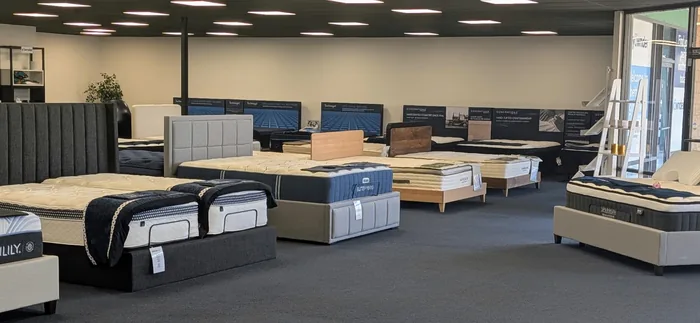
Let’s be honest. Buying a mattress online seems easy. You’re busy, maybe juggling work in Carlsbad with kids’ soccer in San Marcos. The idea of clicking a button and having a Casper, Nectar, or DreamCloud show up at your door isappealing. No traffic on the 5, no sales pitches. What’s not to love?
As a local mattress showroom here in Encinitas, we see the other side of that story every day. We talk to people from all over San Diego County who are frustrated, tired, and often sleeping on a mattress they dislike while waiting for a 30-day “break-in” period to end. The convenience of online shopping can quickly become a logistical nightmare involving a 100-pound mattress that won’t fit in your car.
This isn’t an article to bash online brands. They fill a real need. This is a frank, honest comparison to help you decide what’s truly best for you. We’ll look at where online wins, where it loses, and how trying a bed in our showroom and sleeping on it at home can each help you assess comfort.
How to compare an online mattress with a showroom purchase
Start with the exact mattress, size and seller. A home trial lets you sleep on a bed in your own room; a showroom visit lets you compare several feels before buying. Neither guarantees the mattress will suit you long term. Bring your usual pillow, spend time in your normal sleep positions, and compare the delivered total and written return terms.
- Yawnder purchase: Eligible mattresses have a 100-night trial and a 30-night minimum. An approved return carries a $200 processing fee per mattress; the fee is waived for an eligible exchange to another store mattress, with any price difference due. Household limits, exclusions and approval requirements apply; the replacement mattress is final sale. See Yawnder’s return policy.
- Manufacturer-direct purchase: Terms vary by seller and model. For example, Casper lists 100 nights with a 30-night adjustment period; Helix lists 365 nights with a 30-night minimum for returns; Saatva lists a 365-night trial without a mandatory minimum and a $99 processing fee on most mattresses. Verify exceptions and current terms directly with the seller.
- Delivery: Compare the full quote. Yawnder lists free U.S. shipping and $200 white-glove delivery per delivery, with like-for-like removal included; eligibility and additional removal charges can apply. See shipping details.
Direct-purchase examples: Casper, Helix and Saatva. Policies checked October 2026 and may change.
Where Online Brands Win: Price & The Home-Trial Promise
We have to give credit where it’s due. The direct-to-consumer online mattress model has a few clear advantages, especially at the entry-level. If you’re looking for a simple, all-foam mattress for a guest room or a first apartment, the online price can be very sharp. By cutting out showrooms, a large sales force, and traditional overhead, companies like Casper and Nectar can ship a queen-sized foam mattress for a few hundred dollars.
Many sellers offer home trials that let you evaluate the mattress in your own bedroom. This is a powerful marketing tool that provides a psychological safety net. Return eligibility, waiting periods, fees and exclusions vary by seller. This is especially comforting for first-timebuyers who are overwhelmed by options and technical jargon.
Combining a low price with a long, risk-free trial is a compelling offer. It has fundamentally changed themattress industry and forced everyone to be more transparent and customer-focused. For a subset of buyers, particularly those who are not sensitive sleepers and have a tight budget, this is a fantastic route. But as we’ll explore, that promise of a simple, risk-free experience doesn’t always match reality.
The Big Gamble: Can You Judge a Mattress From a Website?
Here is the single biggest flaw in the online-only model: you cannot judge comfort, support, or feel from a picture and a paragraph. Mattress companies use subjective terms like ‘plush,’ ‘luxury firm,’ or ‘medium-firm with a hint of softness.’ But what does that actually mean? One person’s ‘firm’ is another’s ‘soft.’ These are not standardized units of measurement.
Reading online reviews doesn’t solve the problem. A 250-pound side-sleeper will have a radically different opinion of a mattress than a 140-pound back-sleeper. Whose review should you trust? Many review sites also receive commissions, which can influence their ratings. You’re left trying to triangulate a ‘truth’ from conflicting, subjective opinions.
The Car Analogy
Think about it this way: would you buy a car without a test drive? Of course not. You want to feel how it handles, how the seat feels, and if the cabin is quiet. You’re going to spend a huge amount of time in it. Yet, we’re expected to buy a mattress—where we spend a third of our lives—based on marketing copy. A showroom visit can help you compare initial feel, while specifications, reviews and trial terms provide useful additional context. It’s about personal fit, and that can’t be outsourced to a website.
Deconstructing the Home Trial: The ‘Break-In’ Period
A long home trial can sound like the ultimate consumer protection. But there’s a critical piece of fine print most people miss: the mandatory ‘break-in’ or ‘adjustment’ period. Some sellers require 30 nights before a mattress return, while others do not. Check the terms for the seller you buy from.
Imagine this scenario. The box arrives at your downtown San Diego condo. You unwrap it, it expands, and you lie down. Instantly, you know it’s wrong. It’s far too firm, or so soft your hips sink uncomfortably. You wake up sore. But when you call to return it, you’re told you have to wait. They’ll say your body needs to ‘adjust’ to the new support. So for the next 29 days, you are stuck sleeping on a mattress you actively dislike, possibly getting poor sleep and waking up with aches.
From our showroom operations, we call this ‘break-in fatigue.’ We talk to dozens of San Diegans who are simply exhausted by the process. They were promised a risk-free experience, but they’re paying for it with a month of bad sleep. The trial isn’t just about testing a bed you might like; it’s often about enduring one you already know you don’t.
The Return Nightmare: Getting a 100lb Mattress Out of Your Home
Let’s say you’ve passed the 30-day break-in period and you’re ready to return the online mattress. Now comes the real challenge. You can’t just squish it back into the original box—that magic is a one-way street. You now have a fully expanded, heavy, and floppy king or queen mattress on your hands.
Does the company come get it? Sometimes. Often, they will try to arrange for a local charity or a third-party junk hauler to pick it up. This requires you to coordinate schedules, take time off work, and hope the pickup happens as planned. We’ve heard from customers in North Park and La Mesa who waited weeks for a pickup that was repeatedly rescheduled. In the meantime, the unwanted mattress is taking up huge amounts of space in their home.
If you live in an apartment in Little Italy or an older house in Ocean Beach with tight stairwells, the problem is even worse. Moving a floppy, 100-pound mattress is not a one-person job. Contrast this with buying from a local showroom like Yawnder. For an eligible Yawnder mattress, contact us to request an exchange or return. Written approval is required, and applicable fees, household limits and delivery arrangements depend on the order; see our return policy.
Why Hybrids & Premium Beds Demand an In-Person Test
While you might get away with ordering a simple foam mattress online, it’s a huge gamble with more complex and expensive models. Hybrid mattresses, which combine coils and foam, are a perfect example. The ‘feel’ of a hybrid is determined by dozens of variables: the gauge of the coils, the number of coils, the type of coils (pocketed vs. connected), the density of the memory foam, the responsiveness of the latex, and the stitching of the pillow top.
These components interact in ways you can only understand by lying on the mattress. Does the edge support feel solid when you sit on it to put on your shoes? When your partner rolls over, does the whole bed shake? Is the pillow top pillowy but also supportive, or just mushy? These are questions a spec sheet cannot answer.
At Yawnder, our showroom is filled with premium hybrid and pillowtop options from brands known for their complex builds. In minutes, you can compare the sturdy, cradling feel of a Tempur-Pedic hybrid against the traditional, responsive bounce of a Stearns & Foster. You can feel the difference in coil tension and foam density firsthand. This is particularly crucial for sleepers with back pain or specific support needs. For these shoppers, buying blind online is not a risk worth taking.
The Price Myth: Is Online Always the Cheaper Option?
One of the most persistent beliefs is that buying a mattress online is always cheaper. This is only partially true. Online and in-store prices vary; compare the exact model and delivered total.
However, once you start comparing apples to apples in the mid-range and premium categories, that price gap shrinks or disappears entirely. Compare actual specifications and prices for each model. Coil count alone does not establish durability or comfort.
From what we see in our delivery and sales operations, foam quality and durability vary among individual models, whether sold online or in a showroom. Durability depends on the specific mattress, its materials, support, use and care; a showroom purchase does not guarantee a longer lifespan. Don’t assume the online price is the best value. When you factor in durability, return hassles, and the quality of materials, the equation often favors the showroom.
A San Diego Consideration: Mattresses, Heat, and Our Climate
Living in San Diego County means dealing with warm weather. Whether it’s a humid summer day in coastal Encinitas or a hot, dry Santa Ana wind in Escondido, sleeping hot is a major comfort killer. This is a critical factor where the type of mattress you buy really matters.
A common complaint we hear from customers switching from an online mattress is that their all-foam bed sleeps too hot. Basic memory foam is notorious for trapping body heat. While many online brands now add cooling gels, graphite, or copper infusions to their foam, these are often passive solutions that can be overwhelmed by a warm room and body heat over the course of a night.
This is where hybrid mattresses truly shine, and it’s something you can’t appreciate from a website. The coil layer in a hybrid can allow airflow, but the sleep surface and room conditions also matter. Airflow through coils may help, but the cover, comfort layers, bedding and room temperature also affect warmth. In our showroom, you can compare different types of hybrids and feel how much more breathable they are, a feature any San Diegan who has kicked off the covers on a warm night will immediately appreciate.
Curation and Expertise Over Choice Overload
The internet offers infinite choices. A quick search for ‘best mattress’ will yield hundreds of brands, each with a slick website, thousands of five-star reviews, and a ‘can’t miss’ holiday sale. This leads to the paradox of choice: with so many options, it becomes impossible to make a confident decision. You spend weeks falling down a rabbit hole of reviews and top-10 lists, only to feel more confused than when you started.
A local showroom acts as a filter. We’ve already done the hard work for you. We don’t carry hundreds of beds; we carry a curated selection of dozens of models that we know perform. We’ve tested them, our customers have slept on them, and we trust their durability and comfort. We avoid the gimmicks and focus on what works.
Furthermore, you get to talk to a real person. Our team in Encinitas isn’t a group of anonymous call-center employees reading from a script. We’re locals who understand the products inside and out. You can explain your specific needs—’I’m a side sleeper with shoulder pain,’ or ‘my partner and I have very different weights’—and we can point you to two or three specific mattresses that are genuinely good options for you. It’s a focused, efficient process that replaces weeks of stressful online research with a simple, productive conversation.
| Feature | Online (Casper, Nectar, etc.) | Yawnder Showroom |
|---|---|---|
| Judging Feel | A guess based on marketing terms and conflicting online reviews. | Lie on the actual mattress for 5-10 minutes to feel the support, comfort, and firmness yourself. |
| The Trial Period | Varies by seller and model; check the trial length, any minimum wait and fees. | Eligible mattresses: 100 nights, with a 30-night minimum and policy exclusions. |
| The Return Process | Pickup, donation requirements and fees vary; check the seller’s terms before ordering. | Approved returns carry a $200 fee per mattress; the fee is waived for an eligible exchange. See our return policy. |
| Expertise | Often relies on online chatbots or outsourced call centers reading a script. | In-person advice from San Diego locals who have physically handled and tested every mattress. |
| Best For… | Shoppers who value convenience, detailed research and a home trial, subject to its terms. | Shoppers who want to compare mattress feels in person and ask questions before buying. |
| Heat Regulation | Cooling performance varies by mattress, bedding, room and sleeper. | Compare individual foam and hybrid models; bedding, covers and room temperature also affect warmth. |
Frequently Asked Questions
Is it really that difficult to return an online mattress?
It depends on the seller. Ask whether a minimum trial applies, who arranges pickup or donation, whether fees apply, and how long the process typically takes.
Are online mattresses always cheaper?
Prices vary by exact model and promotion. Compare the full delivered price, trial and warranty; shopping in a store does not guarantee a longer mattress life.
What’s the point of a 30-day ‘break-in’ period?
Some sellers require an adjustment period before a return; others do not. Yawnder requires 30 nights for eligible mattress trial returns or exchanges. Confirm the seller’s policy and any fees before buying.
Do I really need to try a mattress before I buy it?
Trying a mattress can help you compare firmness, pressure and edge feel. A home trial adds the chance to evaluate the bed over multiple nights; check its terms before buying.
I’m a hot sleeper. What should I look for?
Compare breathable covers and the feel of foam and hybrid models. Coils can allow airflow, but bedding, room temperature and comfort layers also influence how warm you sleep.
Where is the Yawnder showroom located?
Our showroom is at 1441 Encinitas Blvd, Encinitas, CA 92024. We’re in San Diego County and easy to get to from Carlsbad, San Marcos, Solana Beach, and surrounding areas.
Try Before You Buy at Yawnder San Diego
Compare select mattresses at 1441 Encinitas Blvd. Contact us to confirm floor availability. Standard shipping is free; white-glove delivery and setup costs $200 per delivery. See our shipping policy for service and removal details.
Let’s be honest. Buying a mattress online seems easy. You’re busy, maybe juggling work in Carlsbad with kids’ soccer in San Marcos. The idea of clicking a button and having a Casper, Nectar, or DreamCloud show up at your door is appealing. No traffic on the 5, no sales pitches. What’s not to love?
More San Diego mattress guides
Hand-written by the Yawnder San Diego showroom team.
Compare both beds against 142 tested mattresses
Sort all 142 mattresses we have tested by pressure relief, support, cooling, motion isolation, edge support, price, trial and warranty, then filter by how you actually sleep. Of those, 84 hold a complete standardized record and 41 a partial standardized record.