Best Mattress Protectors for San Diego’s Coastal Humidity
San Diego’s 60-75% coastal humidity can breed mold in your mattress. A breathable protector is your first line of defense against moisture and warranty denials.

Living in coastal San Diego is a dream. We trade snow for the marine layer, and high-rises for ocean views from Encinitas down to Coronado. But that beautiful coastal environment comes with a hidden threat to your mattress: chronic, high humidity. We’re not talking about a few muggy days in August; we’re talking about a persistent 60-75% humidity level that can turn your mattress into a giant sponge for airborne moisture.
Over months and years, this absorbed moisture can create the perfect breeding ground for mold, mildew, and other allergens deep inside the foam layers. It’s an issue we see firsthand in our delivery and service operations across San Diego County. The worst part? This kind of damage isn’t covered by your mattress warranty. In fact, it will almost certainly void it.
The solution is simple, affordable, and non-negotiable for any mattress in a coastal home: a high-quality, breathable mattress protector. This isn’t the crinkly, sweaty plastic sheet you might remember. Modern protectors are silent, comfortable, and essential for safeguarding your investment and your health.
San Diego’s Humidity Is Higher Than You Think
When you think of high humidity, you might picture the tropics or the American South. But San Diego’s coastal strip has a uniquely persistent brand of it. From our showroom in Encinitas, a quick drive north to Carlsbad or south to La Jolla reveals the same story: the Pacific Ocean regulates our temperature, but it also pumps a huge amount of moisture into the air. This is the marine layer, and it’s a defining feature of our climate.
On any given morning, even on a sunny day, the relative humidity in neighborhoods like Ocean Beach or Del Mar is often hovering between 65% and 75%. While it might burn off in the afternoon, it comes right back at night while you’re sleeping. This isn’t an occasional weather event; it’s a daily cycle. Your home’s interior is not immune. Opening your windows to catch that ocean breeze also means inviting in that moisture-laden air, which then gets trapped indoors.
Unlike the dry heat of East County, our coastal air is heavy. Over time, this chronic exposure means anything porous inside your home—upholstery, wood, and especially foam mattresses—is constantly trying to find equilibrium with the humid air, passively absorbing water vapor day after day.
How Moisture Compromises Modern Foam Mattresses
Today’s advanced memory foams and poly-foams are designed for comfort and pressure relief. Their open-cell structure is what allows them to contour to your body and isolate motion. However, this same structure makes them incredibly susceptible to moisture. Think of it like a high-tech sponge. Millions of tiny, interconnected air pockets can trap not just air, but also airborne water vapor.
When humid air circulates in your bedroom, your mattress passively absorbs that moisture. Since it’s trapped deep within the foam layers, it has nowhere to go. This creates the three ingredients mold and mildew need to thrive: darkness, a food source (dead skin cells, dust), and moisture. From our experience handling mattress issues, we’ve seen foam that has become discolored, crumbly, and developed a musty odor from years of undocumented moisture absorption.
This isn’t just about a bad smell. Mold spores can become a significant source of allergens, triggering respiratory issues, coughing, and other health problems. You could be sleeping on a bed that is actively making you sick without even realizing it, all because of the unseen moisture it has collected.
Your Mattress Warranty Depends On a Protector
This is the single most important financial reason to use a protector. Nearly every mattress warranty from every major brand is explicitly voided by the presence of stains or any signs of liquid damage. What most people don’t realize is that this includes moisture damage from humidity. If you submit a warranty claim for a significant body impression (a valid claim) but the mattress shows signs of mold, mildew, or water stains when the inspector looks at it, your claim will be denied. 100% of the time.
Manufacturers see it from a materials science perspective. Foam that has been compromised by moisture does not perform as expected. It breaks down faster and sags more easily. They cannot be held responsible for the environment the mattress is kept in, so they draw a hard line. No protector, no coverage.
At Yawnder, we’ve had the tough job of explaining this to customers who have a legitimate warranty issue but failed to protect their mattress. It’s a heartbreaking conversation. A small, one-time investment in a protector is your insurance policy on a purchase that can easily be thousands of dollars. It’s the first thing we tell anyone buying a new mattress at our Encinitas showroom.

The ‘Sweat Trap’ Problem: Why to Avoid Old-School Vinyl
When people think of mattress protectors, they often picture a thick, crinkly, vinyl sheet that feels like sleeping on a plastic bag. These are technically waterproof, but they come at a huge cost to your comfort. Vinyl is a non-porous material, meaning it doesn’t just block liquids; it blocks air and water vapor, too.
This creates a ‘sweat trap.’ Your body naturally releases heat and moisture vapor throughout the night. A vinyl protector stops this vapor from escaping, trapping it against your body. This makes you feel clammy, hot, and uncomfortable, disrupting your sleep. It’s a common reason why people who’ve tried cheap protectors swear them off, believing all protectors make you sleep hot. That’s no longer the case.
Worse yet, that trapped sweat can still saturate the top quilting foams and fabrics of your mattress, even if it doesn’t penetrate all the way through. Over time, this can lead to the same musty smells and mildew growth you were trying to avoid. Combined with the loud, disruptive noise they make every time you move, cheap vinyl protectors are a terrible choice for any premium mattress.
Breathable & Waterproof: The Modern Solution
The game-changer in protector technology is the development of advanced waterproof membranes, most commonly Thermoplastic Polyurethane (TPU). Unlike vinyl, TPU is a microporous material. This is a scientific way of saying it has microscopic holes that are large enough to let individual molecules of water vapor (your sweat and humidity) pass through, but far too small for liquid water (spills, accidents) to penetrate.
This is the key to a truly comfortable sleep experience. A protector with a TPU membrane offers complete waterproof protection while remaining fully breathable. It lets your body’s heat and moisture dissipate naturally into the mattress, which then dissipates it into the air. It doesn’t trap heat or create that clammy, swampy feeling associated with older protectors.
Furthermore, modern TPU membranes are incredibly thin, flexible, and silent. They are laminated to the underside of a soft fabric, so you never feel or hear them. A good protector shouldn’t change the feel of your bed; it should just sit there, silently protecting your investment from spills, sweat, dust mites, and San Diego’s persistent humidity.
Tencel vs. Cotton Terry: Choosing Your Fabric
While the TPU membrane handles the waterproofing, the fabric on top is what you interact with. It determines the feel and contributes to moisture management. The two best options are Tencel and Cotton Terry.
Tencel (or Lyocell)
Tencel is a brand name for a type of lyocell, a fiber derived from the wood pulp of trees like eucalyptus. It has a uniquely smooth, silky feel that is exceptionally cool to the touch. Its main superpower is moisture-wicking. Tencel fibers are hydrophilic, meaning they are very attractive to water. They actively pull moisture vapor away from your body and spread it out over a wide surface area to evaporate quickly. For hot sleepers or for homes right on the water in places like Solana Beach or Coronado, a Tencel protector is the ultimate choice for a dry, cool sleep surface.
Cotton Terry
Cotton terry is a more familiar fabric, essentially a low-profile version of what your bath towels are made of. It consists of tiny, soft loops of cotton. Instead of wicking moisture as aggressively as Tencel, its strength is absorption. It can hold a significant amount of moisture before you would ever feel damp. It provides a soft, cozy, and temperature-neutral surface. It’s a fantastic all-around choice that offers excellent comfort and protection. Both fabrics are then laminated to a silent, breathable TPU membrane to provide the actual waterproof barrier.
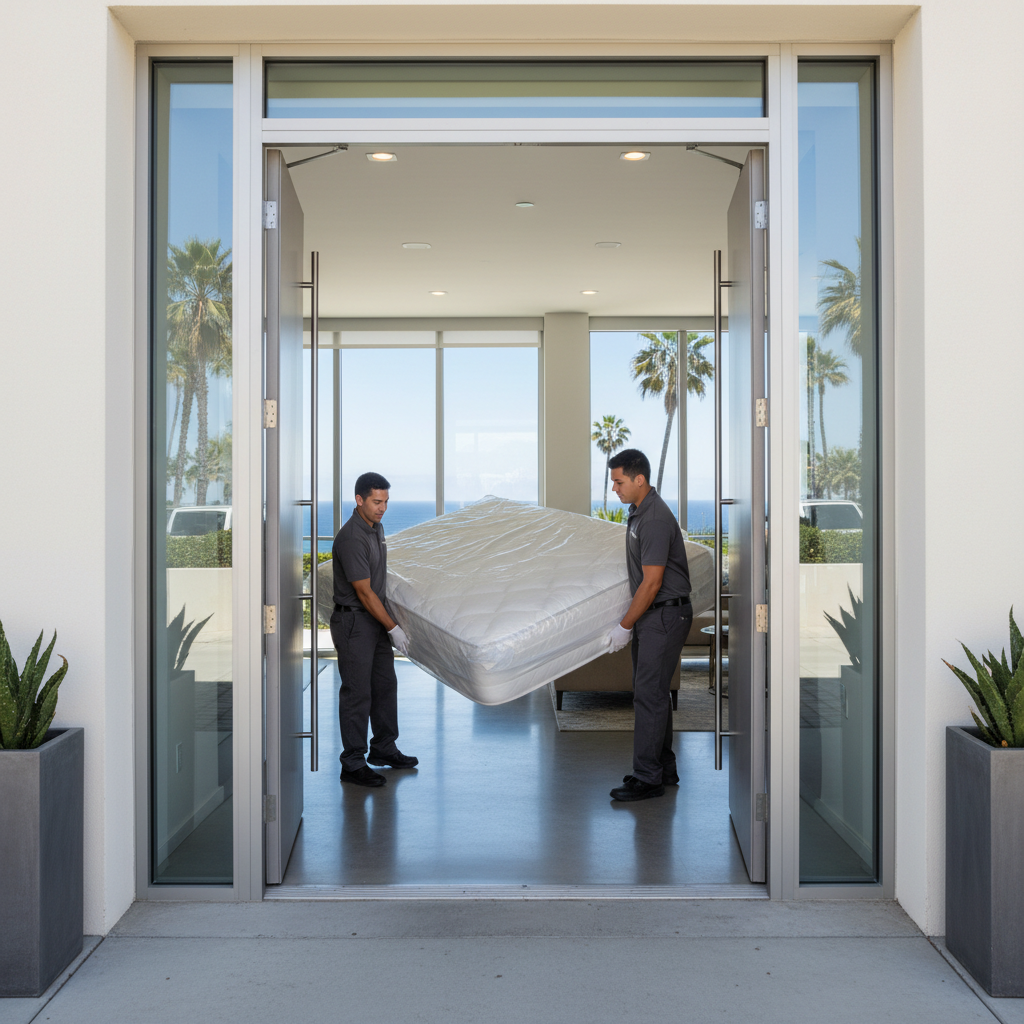
What We Carry in Our Encinitas Showroom
When you visit our showroom at 1441 Encinitas Blvd, you’ll see a curated selection of mattresses chosen for their performance and durability. We apply that same philosophy to our protectors. We focus on a curated set of protector types that work well for our customers and coastal climate; specific brands and models can change.
Our collection focuses exclusively on breathable, silent, waterproof protectors. You’ll find top surfaces made from exceptionally smooth Tencel and soft, absorbent organic cotton. The underside of each features a flexible, lab-tested TPU membrane that provides 100% waterproofing without trapping heat or making noise. We specifically avoid vinyl-backed protectors because they compromise the feel and breathability of the premium hybrid and latex mattresses we sell.
We believe in these so strongly that we often demonstrate them in person. We’ll pour water on a sample to show customers how it beads up and fails to penetrate, then we’ll have them feel the material to see how soft and flexible it is. It’s about proving that modern protection doesn’t require compromising on the comfort you’re investing in.
Washing and Care For Long-Term Protection
A mattress protector is a functional piece of bedding, and proper care is crucial to maintaining its effectiveness. While your bed sheets should be washed weekly, your mattress protector only needs to be laundered every one to two months, or as needed after a spill.
When you do wash it, the rules are simple but important. First, wash it on its own or with sheets, but avoid washing it with heavy items like towels, which can cause pilling and abrasion. Use a gentle detergent and wash with warm water—not hot. Extremely hot water can, over many cycles, degrade the lamination of the TPU waterproof membrane. High heat is the enemy of a protector’s longevity.
For drying, tumble dry on a low or medium-low heat setting. Again, avoid high heat. To ensure it dries evenly and efficiently, you can throw in a couple of wool dryer balls or tennis balls. Never use bleach or fabric softeners, as these can damage both the surface fabric and the waterproof backing. Following these simple steps will ensure your protector lasts for years, keeping your mattress clean, dry, and your warranty intact.
| Feature | Vinyl Protector | Cotton Terry w/ TPU | Tencel w/ TPU |
|---|---|---|---|
| Waterproofing | Yes | Yes | Yes |
| Breathability | Poor | Good | Excellent |
| Heat Retention | High (Sleeps Hot) | Neutral | Low (Sleeps Cool) |
| Feel | Stiff & Noisy | Soft & Quiet | Silky & Quiet |
| Coastal San Diego Fit | Not Recommended | Excellent Choice | Ideal for Hot Sleepers |
Frequently Asked Questions
Will a mattress protector make my bed feel hot?
Not if you choose a modern, breathable one. Old-school vinyl protectors trap heat, but protectors made with a TPU membrane and a Tencel or cotton surface allow air and moisture to pass through, keeping you cool and comfortable.
How often should I wash my mattress protector?
We recommend washing your sheets weekly, but the protector itself only needs to be laundered every 1-2 months, or immediately after a spill. This keeps it fresh and effective without unnecessary wear.
Can’t I just air out my mattress instead of using a protector?
Airing out your mattress is a good practice, but it’s not a substitute for a protector in San Diego’s humid climate. A protector prevents moisture from getting into the foam in the first place, which is the only guaranteed way to stop mold growth before it starts.
I have an all-latex mattress. Do I still need a protector?
Yes. While latex is naturally more resistant to mold than memory foam, it is still porous and can absorb moisture. More importantly, every mattress warranty, including those for latex beds, will be voided by stains or signs of moisture damage.
Will a protector change the feel of my memory foam mattress?
A cheap, thick plastic protector will definitely change the feel. But a high-quality protector with a thin, flexible design (like the ones we carry) is made to stretch and conform to the mattress surface, preserving the contouring feel of your memory foam.
Is a mattress pad the same as a mattress protector?
No, they serve different purposes. A mattress ‘pad’ or ‘topper’ is designed to add a layer of cushioning and change the comfort of the bed. It’s usually not waterproof. A mattress ‘protector’ is thin, doesn’t add cushioning, and its primary job is to provide a waterproof and allergen-proof barrier.
Try Before You Buy at Yawnder San Diego
Compare select mattresses at 1441 Encinitas Blvd. Contact us to confirm floor availability. Standard shipping is free; white-glove delivery and setup costs $200 per delivery. See our shipping policy for service and removal details.
Living in coastal San Diego is a dream. We trade snow for the marine layer, and high-rises for ocean views from Encinitas down to Coronado. But that beautiful coastal environment comes with a hidden threat to your mattress: chronic, high humidity. We’re not talking about a few muggy days in August; we’re talking about a persistent 60-75% humidity level that can turn your mattress into a giant sponge for airborne moisture.
More San Diego mattress guides
Hand-written by the Yawnder San Diego showroom team.
San Diego mattress resources
Local guides from Yawnder, San Diego County’s independent mattress retailer.
-
Yawnder San Diego showroom
Address, hours and what is on the floor in Encinitas. -
San Diego mattress delivery
Delivery windows, white glove setup and removal options. -
Recycle a mattress in San Diego
Drop-off sites, county rules and recycling fees. -
Donate a mattress in San Diego
Charities that accept used mattresses and what they take. -
Current San Diego mattress deals
What is discounted right now across the brands we carry. -
Shop today’s sale prices
Every mattress currently marked down, sorted by popularity.
Want to compare current availability and pricing on Amazon?
Compare mattress protectors on AmazonAs an Amazon Associate, Yawnder may earn from qualifying purchases.