Shopping for a guest bed is different. We show you how to pick a durable, comfortable mattress for any visitor, all on a practical budget.
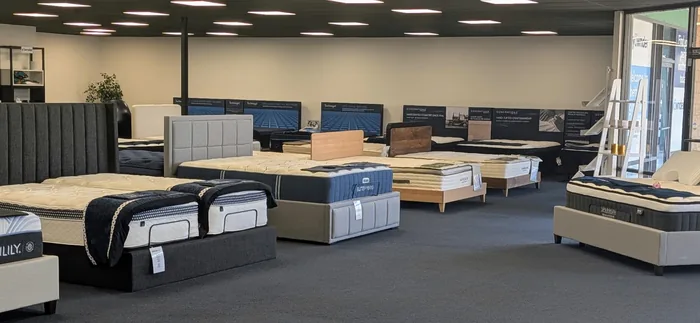
Choosing a mattress for your guest room or Airbnb is a different calculation than buying one for your own nightly use. The goal isn’t to find a perfect match for a single person’s sleep habits. The goal is to find a durable, accommodating, and budget-conscious mattress that provides a great night’s sleep to a wide variety of people, maybe 40 nights a year. Most mattress reviews focus on personal comfort, but for a guest bed, universality is king.
Your mission is to find a bed that no one will complain about. It needs to be supportive for your 250-pound uncle and comfortable for your 120-pound niece. It needs to hold its shape when people sit on the edge to put on their shoes. And in San Diego County, where many homes along the coast from La Jolla to Oceanside don’t have air conditioning, it needs to breathe.
This guide cuts through the noise. We’ll focus on the practical realities of a guest mattress, drawing from our experience helping hundreds of San Diego homeowners and short-term rental hosts. We’ll explain why a hybrid is almost always the right answer, why medium-firm is the sweet spot, and how to decide between a solid $700 option and a more premium $1,000 bed right here in our Encinitas showroom.
The Golden Rule: Durability Over Nuanced Feel
When you sleep on a mattress every single night, tiny preferences in feel become magnified. For a guest bed, the number one priority shifts from personalized comfort to long-term durability. This mattress’s main job is to not fail. It needs to resist sagging, maintain its edge support, and handle a rotating cast of body types and weights without developing dips or weak spots.
Think of it this way: a mattress used 30 nights a year for 10 years has only seen 300 nights of use, less than a single year’s worth of primary use. The foams and fabrics won’t wear out from sleep friction. Instead, failure comes from concentration of weight. Guests often sit on the edge of the bed to check their phone, tie their shoes, or chat. This is where cheap, all-foam mattresses fail first—the edges collapse, making the bed feel smaller and less stable. A hybrid with a properly reinforced edge can make sitting and getting up easier, but actual durability depends on materials, foundation, loading, usage and care; no model’s lifespan is guaranteed.
What to look for:
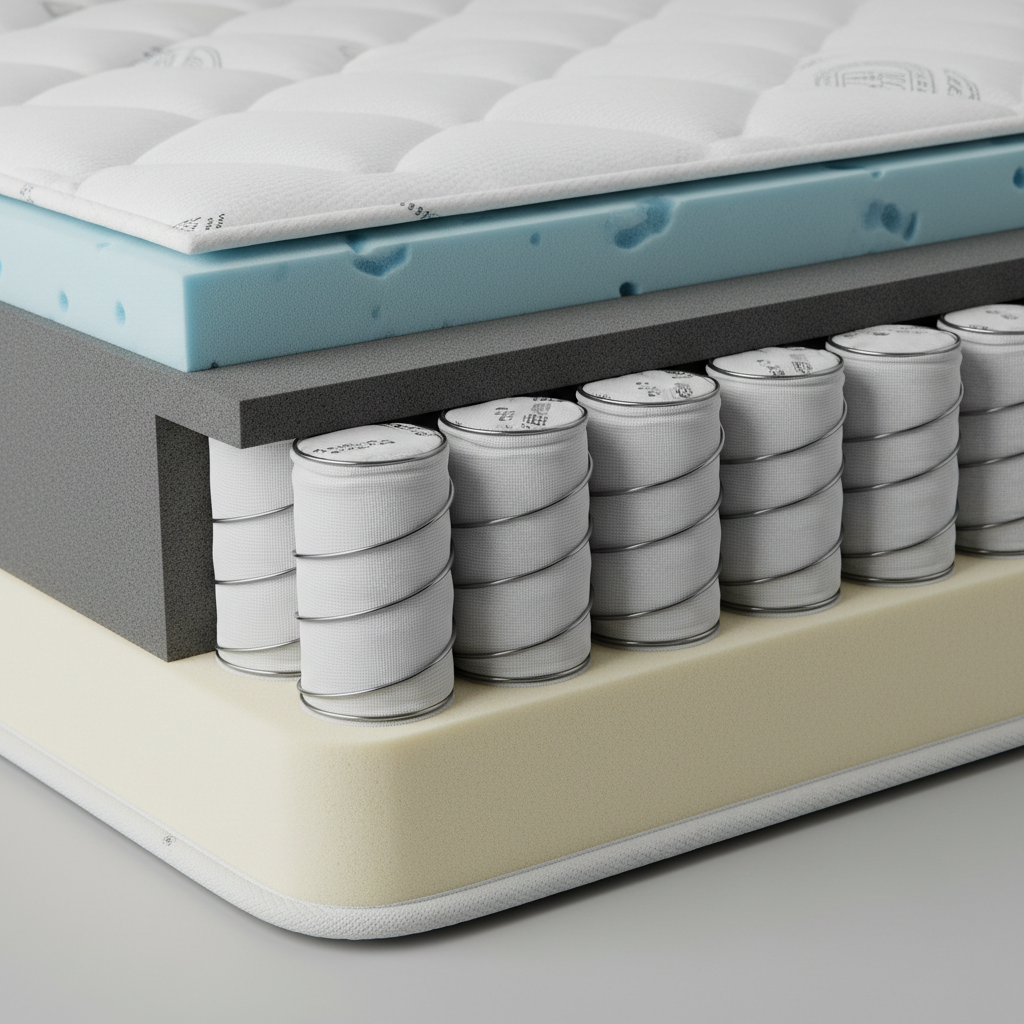
- Coil System: Look for individually pocketed coils, which provide more targeted support than old-school interconnected springs. A reinforced perimeter with higher-gauge (thicker) steel coils is a huge plus for edge support.
- Foam Density: While hard to find on a spec sheet under $1,000, higher-density foams are more durable. In our showroom, we can show you the difference a denser foam makes in how the mattress responds and supports weight.
Why ‘Medium-Firm’ is the Universal Donor for Guest Beds
If you only remember one thing from this guide, let it be this: buy a medium-firm mattress. On a firmness scale of 1 to 10, with 1 being a cloud and 10 being the floor, you want a bed in the 6-7 range. This Goldilocks firmness is the most versatile and accommodating for the widest range of people.
A mattress that’s too soft (a 3-4/10) can be a nightmare for stomach sleepers or heavier individuals, who will feel like they’re sinking into a hammock, straining their lower back. A mattress that’s too firm (an 8-9/10) will create pressure points at the hips and shoulders for side sleepers, the most common sleeping position. A true medium-firm provides enough cushioning for side sleepers while offering the solid support plane that back and stomach sleepers require.
From our showroom operations, we estimate that 80% of sleepers find a medium-firm mattress to be comfortable, even if it’s not their ideal preference. For a guest bed, “comfortably acceptable” to everyone is a huge win over “perfect” for one person and “terrible” for another. It eliminates complaints before they happen. The key is in the construction—a supportive coil base with just enough contouring foam on top is the classic recipe for a crowd-pleasing medium-firm feel.
The Queen Size Sweet Spot: Maximizing Value and Space
For guest rooms and vacation rentals, the Queen mattress is the undisputed champion. It offers the perfect balance of surface area, cost-effectiveness, and room footprint. From our delivery operations across San Diego County, we see that roughly 70-80% of all dedicated guest room mattress sales are for Queen sizes. There’s a good reason for this dominant market share.
A Queen (60″ x 80″) is large enough to comfortably accommodate a couple, which a Full size (54″ x 75″) can’t always do. It immediately makes your guest space more flexible. At the same time, it leaves enough space in an average 10′ x 11′ guest room for a nightstand and a walkway. A King size (76″ x 80″), while luxurious, is often overkill. It eats up the entire room, and more importantly, it can blow your budget. A King mattress is almost always 25-40% more expensive than its Queen counterpart, money that is better spent on higher-quality construction in a Queen.
Furthermore, bedding for Queen mattresses is abundant and affordable. You’ll have no trouble finding sheets, protectors, and duvets. A Full can sometimes have less selection, and King bedding is significantly pricier. Stick with the Queen; it’s the path of least resistance and greatest value.
Guest rooms without air conditioning: compare airflow and comfort
In San Diego, some bedrooms can become warm at night, especially without air conditioning. Pocketed-coil hybrids generally provide more open airspace in the support core than solid-foam mattresses, but cooling performance also depends on comfort-foam thickness, mattress covers, protectors, bedding and room temperature. A well-designed all-foam guest mattress can still be a good value. Avoid claims that every hybrid sleeps cooler, or that a certain material guarantees a comfortable temperature for every guest.
For guests with very different sleep habits, give priority to an accommodating medium or medium-firm feel, breathable bedding, a supportive base, and a return policy appropriate to your actual seller. A showroom test helps judge edge support and ease of movement; it does not substitute for overnight thermal testing.
Guest mattresses to compare below $1,000 — prices checked October 26, 2026
Size matters: “under $1,000” refers to an eligible specific size and checkout promotion, not every size or configuration. The following live manufacturer examples are shopping references, not Yawnder stock or guaranteed prices. Add taxes, delivery, removal, foundation and optional upgrades as applicable. Verify the price, current stock and trial terms at the actual checkout before ordering.
| Mattress / size example | Manufacturer price seen | Why consider it | Important caveat |
|---|---|---|---|
| Nectar Classic Memory Foam — Queen | About $699 advertised | 12-inch foam, medium-firm positioning and lower price | All-foam feel; Nectar’s direct 365-night trial is not automatically Yawnder’s policy |
| Bear Original — Queen | About $649 with advertised promotional code | 10-inch medium-firm foam and a compact guest-bed profile | Promotional code/size and mattress availability must be checked; direct 120-night trial |
| Helix Midnight Core — Full | About $999 advertised | Medium-feel pocketed-coil hybrid for a narrower guest room | Advertised price is for Full, not Queen; verify current Helix-direct trial at checkout |
| Brooklyn Bedding Signature Hybrid — Full | List reference $1,332; 25%-off promotions can bring Full to about $999 | Coils, choice of firmness and optional upgrades | Under $1,000 only when eligible discount applies; Queen and upgrades may exceed budget |
Not the same as a purchase recommendation for every guest: Choose the construction and firmness that fit likely visitors; a firmer mattress can be uncomfortable for lighter side sleepers, and a soft one can be a poor fit for heavier stomach sleepers. Compare Yawnder retail returns with manufacturer-direct policies. Nectar official trial · Brooklyn Bedding trial.
How to spend a $700–$1,000 guest-room budget
Prioritize the mattress size, neutral comfort, stable edges, adequate foundation and an easy-to-clean protector. Compare a supportive basic foam mattress against hybrids that actually fit your checkout budget; do not assume a coil bed under $1,000, an automatic decade-long lifespan, or that a $300 price jump always buys better durability.
For a frequently used guest room, consider how readily someone can turn over, sit near the edge, and get in and out of bed. For occasional use, the right medium-firm foam mattress may be a sensible economy purchase. Confirm the model’s warranty requirements and any optional white-glove/recycling fees before paying.
Shopping Online vs. Testing in Our Encinitas Showroom
The temptation to just click “buy” on a bed-in-a-box is powerful. The marketing is slick, and the convenience is undeniable. For a guest bed, where the stakes are lower, this can seem like a safe bet. However, there’s a hidden risk: you have no real idea what you’re getting. One company’s “medium-firm” is another’s “firm,” and a third company’s feels more like a medium-soft. Photos can’t tell you if the edge support is robust or flimsy.
This is where a quick trip to our Encinitas showroom can save you a massive headache. Driving 20 minutes from Carlsbad or 30 minutes from Scripps Ranch allows you to do something crucial: compare the feel and quality of different mattresses side-by-side. You can lie down on a $700 hybrid and then on a $1,000 hybrid and instantly understand the difference. You can push on the edge, feel the responsiveness of the foams, and talk to an expert about the specific construction.
Most importantly, it eliminates the risk of a return. While online companies tout their “risk-free trials,” the logistics of returning a 150-pound mattress that has expanded out of its box are a genuine hassle. Choosing the right bed once, in person, guarantees you get a mattress that meets your standards for your guests. You leave knowing exactly what will be delivered to your home.
Features to Skip: Don’t Pay for Guest Room Gimmicks
In the competitive mattress market, brands often load up their products with buzz-worthy features to justify a higher price. For your primary mattress, some of these can be worth it. For a guest bed under $1,000, they are usually a waste of money. The goal is to focus your budget on the core components that deliver durability and universal comfort.
Here are a few features you can safely skip:
- Exotic Cooling Fabrics: Phase-change materials and fancy mineral-infused yarns sound impressive, but their cooling effect is often temporary. In a hybrid mattress, the real cooling work is done by the airflow through the coils, not the cover. A simple, breathable fabric is all you need.
- Complex Zoning Schemes: Seven-zone support systems that promise perfect alignment are great, but they are tuned for a specific body. For a rotating cast of guests, a simple, sturdy coil system is more reliable. The one exception is perimeter zoning for edge support, which *is* a valuable feature.
- Thick Memory Foam Layers: A thick top layer of memory foam creates a very specific, slow-sinking feel that can be polarizing. Many people dislike feeling “stuck.” Plus, it’s the primary culprit for heat retention. A thinner layer of a more neutral foam is a safer, more crowd-pleasing choice.
By skipping the gimmicks, you ensure more of your money goes into the parts that matter: a strong coil unit and durable base foams.
Protecting Your Investment: Mattress Protectors are Non-Negotiable
This is the most important and least expensive accessory for your new guest mattress. A high-quality waterproof mattress protector is not optional—it’s essential. Guests are, by nature, unpredictable. A spilled glass of red wine, a child having an accident, or even just sweat and body oils can permanently stain and damage a mattress.
Here’s the critical part: stains or moisture damage can affect eligibility for a warranty claim; review the exact warranty terms. If that $800 mattress develops a sag or a defect down the road, the manufacturer will refuse the warranty claim if there is any evidence of liquid damage. A $60 protector is the cheapest insurance policy you can buy to protect your investment for its full 10-year warranty period.
Look for a protector that is waterproof yet breathable. Modern protectors use a special membrane that blocks liquids but allows air vapor to pass through, so it won’t make the mattress sleep hot like an old-school vinyl cover. It also creates a hypoallergenic barrier, protecting guests from dust mites and allergens that can accumulate in a mattress over time. It keeps the bed fresh, hygienic, and, most importantly, protects it from the one accident that could cost you the entire price of the mattress.
The Foundation Matters (But Keep it Simple)
A mattress is only as good as the foundation it rests on. A brand new hybrid mattress placed on a worn-out, sagging box spring will feel like a sagging mattress. However, you don’t need to spend a lot of money here. The goal is to provide a solid, flat, and rigid base for the mattress to do its job.
You have a few excellent, budget-friendly options:
- Platform Bed: This is the simplest solution. Most modern bed frames are “platform” style, meaning they have a built-in support surface of wooden slats. Just ensure the slats are no more than 3-4 inches apart. Any wider, and the foam layers of the hybrid can start to bulge through, causing damage and voiding the warranty.
- Basic Metal Frame + Box Spring: If you prefer a more traditional look with a bed skirt, a standard metal bed frame is very inexpensive. You will need to pair it with a new box spring (also called a foundation). Don’t reuse an old one that has lost its rigidity.
- Metal Frame + Bunkie Board: A bunkie board is a thin, rigid platform, usually made of wood or steel, covered in fabric. It’s a great, low-profile alternative to a box spring. You can place it on an older metal frame or even on top of an old, sagging box spring to give your new mattress the flat, solid surface it needs.
There’s no need for a fancy adjustable base in a guest room. Keep the foundation simple, sturdy, and supportive, and you’ll ensure your mattress performs as intended for years to come.
| Feature | Good (~$700 Range) | Better (~$1,000 Range) |
|---|---|---|
| Best For | Occasional use (20-30 nights/year) | Frequent guests or premium Airbnbs |
| Construction | Basic Hybrid (Coils + Polyfoam) | Enhanced Hybrid (Zoned Coils + Upgraded Foams) |
| Edge Support | Standard Coil Perimeter | Reinforced/Zoned Steel Perimeter |
| Cooling | Good (Inherent Airflow from Coils) | Better (Coil Airflow + More Breathable or Gel-Infused Foams) |
| Feel | Functional Medium-Firm | Plush but Supportive Medium-Firm (Euro or Pillow Top) |
| Primary Benefit | Excellent value and reliability | Noticeably better comfort, support, and durability |
Frequently Asked Questions
What’s the best mattress size for a guest room?
Queen is almost always the best choice. It comfortably fits couples, is the most common and competitively priced size, and leaves adequate space in most rooms. Bedding is also easy and affordable to find.
Can I just buy a cheap memory foam mattress for my guest room?
We strongly advise against it, especially in San Diego’s climate. All-foam mattresses, particularly with memory foam, can trap heat, which is a major issue in rooms without AC. They also tend to have poor edge support. A budget-friendly hybrid is a much safer and more comfortable choice for guests.
How important is a mattress protector for a guest bed?
It is absolutely essential and non-negotiable. A single spill or accident can stain the mattress and void its warranty. A good waterproof protector keeps the bed hygienic and protects your investment.
Do I need a box spring for a guest mattress?
Not necessarily. A modern platform bed with slats spaced less than 4 inches apart provides perfect support. If you’re using a traditional metal frame, you will need either a box spring or a bunkie board to create a solid, flat surface.
How long should a guest room mattress last?
Because it’s used so infrequently, a quality guest mattress should last a very long time, often 10-15 years. The key is to buy one built for durability from the start, focusing on a strong coil system and solid edge support.
Is a ‘bed-in-a-box’ good for an Airbnb?
It can be a convenient option, but it comes with risk. Firmness levels are not standardized between brands, so you don’t know what you’re getting. Returning a mattress is a significant hassle. We recommend testing a bed in our showroom to guarantee you know what your guests will experience firsthand.
Try Before You Buy at Yawnder San Diego
Compare select mattresses at 1441 Encinitas Blvd. Contact us to confirm floor availability. Ask Yawnder for the current delivery and optional setup charges for your actual address and order. See our shipping policy for service and removal details.
Choosing a mattress for your guest room or Airbnb is a different calculation than buying one for your own nightly use. The goal isn’t to find a perfect match for a single person’s sleep habits. The goal is to find a durable, accommodating, and budget-conscious mattress that provides a great night’s sleep to a wide variety of people, maybe 40 nights a year. Most mattress reviews focus on personal comfort, but for a guest bed, universality is king.
More San Diego mattress guides
Hand-written by the Yawnder San Diego showroom team.
Compare these picks against 142 tested mattresses
Sort all 142 mattresses we have tested by pressure relief, support, cooling, motion isolation, edge support, price, trial and warranty, then filter by how you actually sleep. Of those, 84 hold a complete standardized record and 41 a partial standardized record.