Most Common Reasons San Diego Shoppers Return a Mattress (And How to Avoid Them)
Our Encinitas showroom data reveals why people miss on their mattress purchase—and how you can get it right the first time.
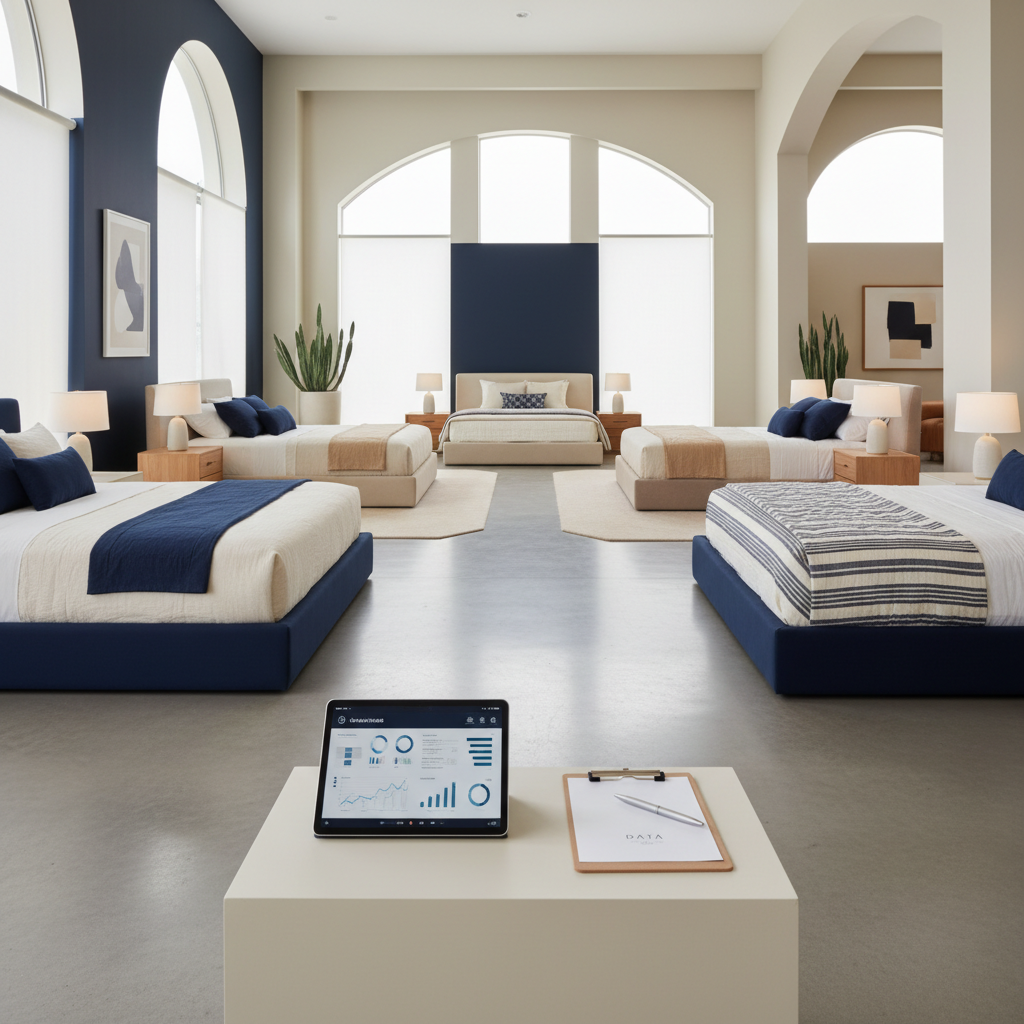
A new mattress is a major investment in your well-being. With generous online trial periods, making a choice seems risk-free. But from our experience handling deliveries and exchanges across San Diego County, we see a different story. A surprisingly high number of mattresses bought online end up being returned or exchanged, creating hassle for the customer and significant waste. The “try it for 100 nights” promise often papers over a fundamental mismatch that could have been avoided from the start.
This isn’t about a single brand or type of mattress. It’s about the process. We’ve analyzed our own data from the Yawnder showroom and our delivery operations, and the same patterns emerge. Shoppers from La Mesa to Oceanside are falling into a few common traps when they buy a mattress without truly trying it first. The good news is that every one of these mistakes is preventable.
In this article, we’ll break down the top reasons we see for mattress returns in the San Diego area. We’ll share what our operational data tells us and give you concrete, practical advice on how to avoid making the same mistakes. The goal is to help you choose the right mattress once, so you can spend the next decade sleeping on it, not arranging to have it hauled away.
Reason 1: The ‘Too Firm’ or ‘Too Soft’ Mismatch
This is, by a huge margin, the number one reason for a return. Our data from exchanges and returns suggests that over 60% of all comfort-related returns are due to a misjudgment of firmness. A customer reads reviews online, sees a mattress described as ‘luxury firm’ or a ‘6.5/10,’ and makes a purchase. When it arrives, the reality is jarringly different from their expectation. It’s either a rock-hard slab that offers no pressure relief for their shoulders and hips, or a mushy hammock that causes their lower back to ache.
The problem is that firmness is deeply subjective. There is no industry standard for what ‘medium’ means. What a 220-pound back sleeper considers perfect might feel like concrete to a 140-pound side sleeper. We see this all the time: a customer from Poway who loves hiking will have a different support need than a downtown professional who sits for much of the day. Furthermore, the feel of a mattress can be influenced by your body weight and sleeping position, factors that an online description simply cannot account for.
The Prevention Tip:
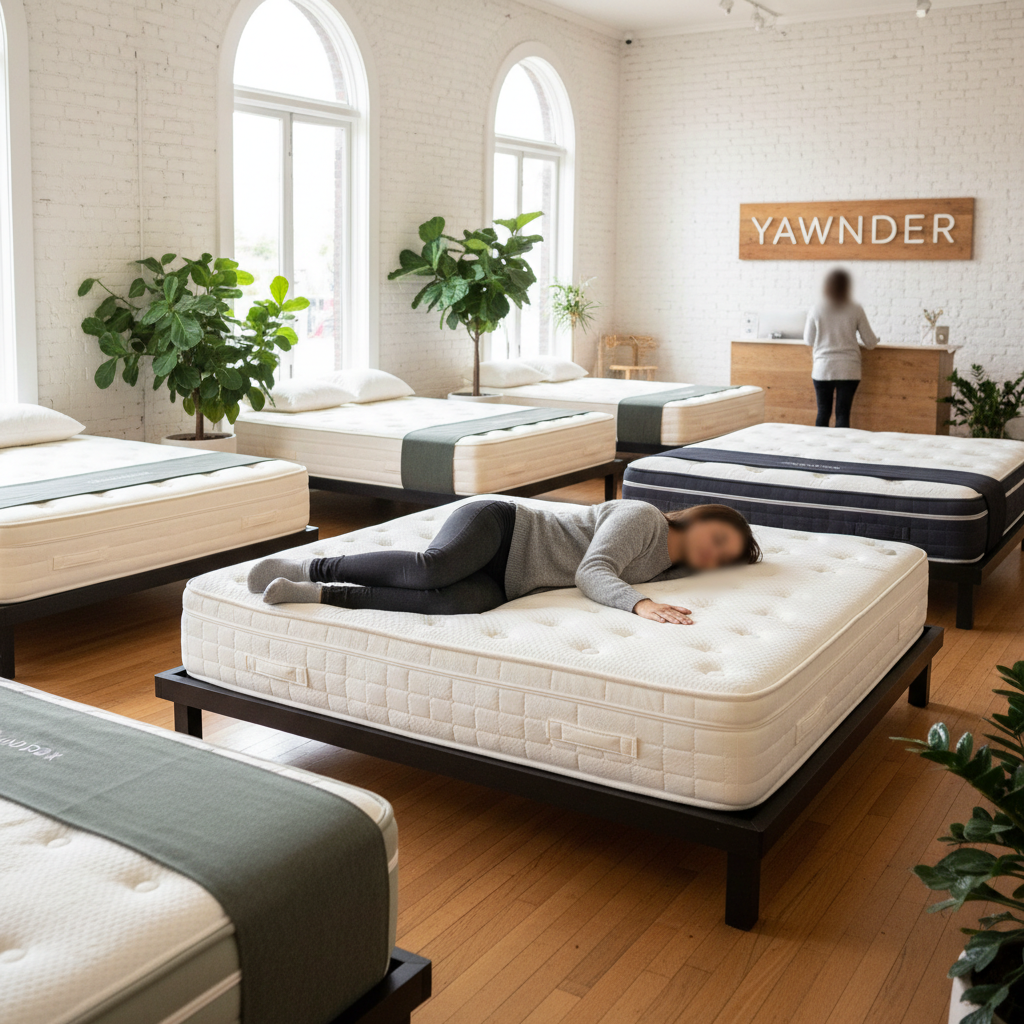
This is the easiest issue to solve. You must lie down on a mattress for at least 15 minutes in your preferred sleeping position. When you visit a real showroom, you can test multiple mattresses, from plush pillow-tops to truly firm hybrids. You can feel the difference between memory foam and latex, and you can physically experience how a mattress contours to your body’s unique curves and pressure points. This simple act of trying before you buy is the single most effective way to eliminate firmness mismatch, which is why we built our Encinitas showroom to be a comfortable, no-pressure environment for exactly this kind of testing.
Reason 2: Overheating on All-Foam Mattresses
San Diego’s climate is a unique challenge for mattresses. We have a temperate coast, but just a few miles inland, temperatures soar. We see a distinct seasonal pattern in our return data: complaints about sleeping hot, especially on all-foam beds, spike between July and October. A customer in an Eastlake condo without central AC or a family in a Santee home will experience heat retention very differently than someone in a foggy Solana Beach bungalow.
Traditional memory foam is made of dense, synthetic polyurethane. Its cells are closed, trapping body heat as you sleep. While many modern foams are ‘open-cell’ or gel-infused to mitigate this, they can still struggle to dissipate the consistent body heat generated over an 8-hour night. A bed that felt great in January can become an oven during a humid August heatwave. Our delivery teams often hear this exact feedback when picking up a return: ‘It was fine for a few months, and then summer hit.’ They were sold on the conforming feel of foam without considering the thermal consequences in our warm Southern California climate.
The Prevention Tip:
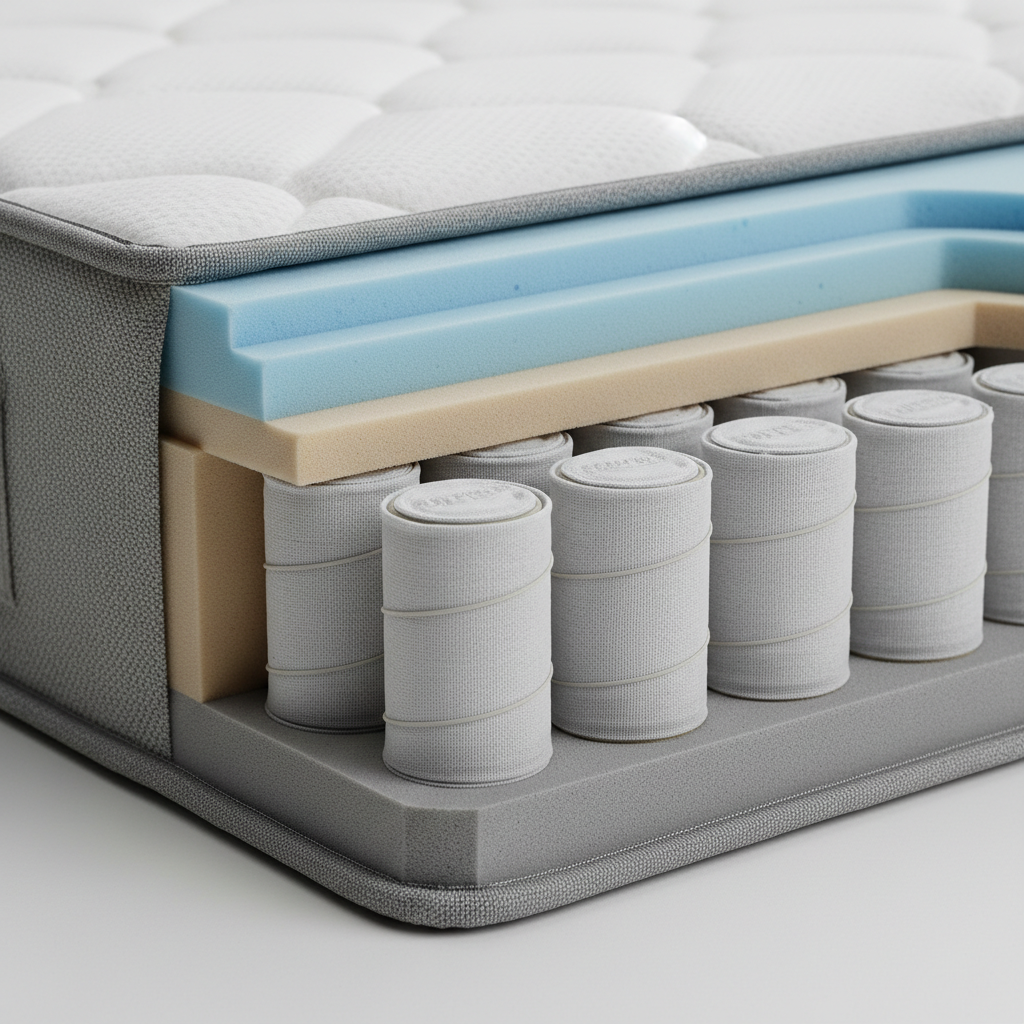
If you are a hot sleeper or live in a warmer San Diego neighborhood, you should strongly consider a hybrid mattress. Hybrid models combine the pressure relief of foam or latex top layers with a core of individually pocketed coils. This coil system allows for tremendous airflow through the core of the mattress, actively pulling heat away from your body. In our showroom, you can lie on an all-foam bed and a hybrid bed side-by-side. The difference in initial temperature is often noticeable, and an expert can explain how different cooling covers and coil technologies will impact your sleep quality over the long term.
Reason 3: Excessive Motion Transfer
A close runner-up in reasons for returns is partner disturbance. This happens when one person’s movements—tossing, turning, or getting out of bed—are transferred across the mattress, waking the other person. This is another area where online marketing can be misleading. Many bed-in-a-box brands famously show a glass of red wine not tipping over as someone jumps on the bed. This demonstrates excellent point elasticity, but it doesn’t always reflect the subtle, jarring motion that actually disrupts sleep.
From our operations, we find this is a major complaint for couples with different schedules or sleep sensitivities. Imagine a nurse from Scripps Encinitas getting up for an early shift, or a parent tending to a newborn. If their movement causes the whole bed to jiggle, it disrupts their partner’s deep sleep cycle. We’ve seen return requests where the core issue wasn’t comfort for one person, but compatibility for two. The wrong mattress core, particularly older-style Bonnell coils, can create a trampoline effect. Even some foam mattresses can have a bouncy, quick-response feel that transmits more motion than expected.
The Prevention Tip:
If you share your bed, you must test for motion transfer together. Come to a showroom with your partner. Have one person lie down with their eyes closed while the other person gets on and off the bed and changes positions. You will feel the difference instantly. Premium hybrid mattresses with individually pocketed coils are specifically designed to isolate motion, as each spring responds independently. By performing this simple, real-world test, couples can find a mattress that lets them both sleep soundly, regardless of their respective sleep schedules.
Reason 4: Edge Support Failure
Edge support might be the most overlooked feature by first-time mattress buyers, but our return data shows it’s a critical component of long-term satisfaction. We estimate that around 10-15% of comfort returns are related to weak or collapsing edges. The problem manifests in two ways: a feeling of instability when sleeping near the edge, and the inability to sit comfortably on the side of the bed.
Many direct-to-consumer, all-foam mattresses that are compressed into a box have to make a trade-off. To be roll-packed, they often lack a reinforced perimeter. This means the foam on the edge of the bed is the same density as the foam in the middle. Over time, or even right away, this edge can feel soft and unsupportive. You might feel like you’re about to roll off, forcing you to sleep closer to the center of the bed and shrinking the usable sleep surface. Furthermore, for many people, the bed is a place to sit while getting dressed or talking on the phone. A mattress with poor edge support makes this simple act feel unstable and cheap.
The Prevention Tip:
You have to physically sit on the edge of the mattress. When you visit a showroom, don’t just lie in the middle. Go to every mattress you’re considering and sit squarely on the side. Does it hold its shape? Do you feel supported, or are you sinking down dramatically? High-quality hybrid mattresses almost always feature a reinforced perimeter of higher-density foam or a system of stronger coils around the edge. You can feel this fortitude immediately. It’s a clear indicator of quality construction and a feature you simply cannot assess from a picture on a website.
Reason 5: Choosing the Wrong Size for the Room (or the Stairs)
This is a logistical issue that causes a significant number of returns and delivery refusals. A customer measures their bedroom and sees that a King or California King will technically fit. They order it, and our delivery team arrives at their classic North Park apartment or their older home in Golden Hill only to find they can’t get it up the narrow staircase or around a tight hallway corner. This is especially true for one-piece foundations or box springs. While most mattresses can be flexed, their foundations cannot.
The other side of the ‘wrong size’ coin is aesthetics and livability. A mattress might physically fit in a room, but be so large that it visually overwhelms the space, leaving no room for nightstands or a comfortable path to walk. We’ve had customers in smaller beach cottages in Leucadia exchange a new King for a Queen because the larger bed made their sanctuary feel cramped and cluttered. An online room planner can’t replicate the feeling of a bed’s true scale within your personal space. It’s not just about floor space; it’s about volume.
The Prevention Tip:
Think beyond simple length and width. Measure your hallways, stairwells, and door frames before you even start shopping. When you’re in our showroom, talk to us about your home’s layout. Our team has delivered mattresses to nearly every type of building in San Diego and can offer realistic advice. We might recommend a split box spring for that tight turn. We can also help you visualize the scale. We lay out our mattresses with proper spacing, so you can get a real sense of how much room a King bed takes up compared to a Queen, helping you choose a size that makes your bedroom feel spacious and serene, not just full.
Reason 6: The 30-Night Fallacy & Sleep Trial Misuse
The 100-night ‘risk-free’ trial has become the cornerstone of the online mattress industry. While it sounds great, it has created a culture of rapid judgment and misunderstanding about how mattresses work. A significant portion of returns we process are initiated within the first 14-21 days of delivery. The customer reports that the bed feels ‘too firm’ or ‘not like the reviews.’ They are mistaking the normal break-in period for a fundamental flaw.
Every new mattress has a break-in period, typically lasting about 30 days. The foams need time to soften and adapt, the fibers in the cover need to stretch, and most importantly, your body needs time to adjust to a new support system. After years of sleeping on a worn-out, unsupportive mattress, your body might initially resist a new, proper alignment. This can manifest as minor stiffness or discomfort. People who are quick to trigger a return are short-circuiting this crucial adjustment phase. They aren’t giving the mattress—or their own body—a fair chance.
The Prevention Tip:
First, commit to sleeping on your new mattress for at least 30 nights before making a final decision, unless you feel sharp, persistent pain. Second, and more importantly, reduce the chance of needing a return in the first place by testing beds in a showroom. When you find a mattress that feels great from the first minute, you’re more likely to have the confidence and patience to get through the initial break-in period at home, knowing that the feel you liked is just a few weeks away.
Reason 7: ‘Upgrade Remorse’ After the Purchase
This is a subtle but surprisingly common scenario we encounter. A customer does their research online and buys what they believe is a high-quality mattress, perhaps in the $1,500-$2,000 range. While they wait for their bed-in-a-box to arrive, they decide to visit our store ‘just to see.’ They lie on a truly premium, high-end hybrid or a luxurious latex bed. They feel the superior materials, the robust support, the intricate stitching, and the immediate cooling sensation. Instantly, they are filled with ‘upgrade remorse.’
They realize the mattress they ordered online, which seemed so great in isolation, is a significant compromise. Suddenly, the return process for their online purchase begins before it has even fully expanded in their home. They’ve had a glimpse of what’s possible at a higher tier and can’t un-feel it. This isn’t about being upsold; it’s about being fully educated on the spectrum of quality. Online, it’s hard to discern the tangible differences between a $1,500 mattress and a $4,000 one. In person, the difference is undeniable.
The Prevention Tip:
Before you click ‘buy’ online, test the entire spectrum of options. Come into a showroom with an open mind. Even if your budget is set, lie on a mattress that’s a tier or two above it. Understand what you’re paying for—or what you’re giving up. This allows you to make an informed decision. You might decide your initial budget is perfect, but you’ll do so with the confidence that you’re not missing out. Or, you might decide that the tangible benefits of a more premium mattress are worth the investment for a decade of better sleep. Either way, you avoid the remorse of discovering what you really wanted after it’s too late.
Why a ‘Risk-Free’ Trial Isn’t Always Free
The promise of a ‘risk-free’ return is the primary marketing tool of the online mattress world, but the reality for the customer and the environment is often far from free. First, there’s the hassle factor. Arranging for a mattress pickup requires scheduling, often taking time off work. You have to coordinate with a third-party logistics company or a local charity, and the process can take weeks. It’s a significant inconvenience that isn’t mentioned in the glossy ads.
Second, there’s the environmental cost. While many brands say they donate returned mattresses, the logistics are complex. Many charities cannot accept used mattresses due to hygiene regulations. According to our experience in the industry, a substantial number of returned mattresses, particularly from online-only retailers, end up in landfills. It’s a massive source of waste that’s hidden from the consumer. When you initiate a return, you’re not just sending a product back; you’re often creating a bulky, non-biodegradable piece of trash.
The Prevention Tip:
The most sustainable and convenient choice is to get the mattress right the first time. By investing a couple of hours in a high-quality showroom, you dramatically increase your odds of long-term satisfaction. The ‘cost’ of driving to a store like ours in Encinitas is minuscule compared to the personal and environmental cost of a failed mattress purchase. The goal should be to use the sleep trial as it was intended: as a final confirmation period for a well-researched decision, not as a substitute for doing your homework in the first place.
| Common Return Reason | The Online Shopping Pitfall | The Showroom Solution |
|---|---|---|
| Wrong Feel (Firm/Soft) | Guessing based on marketing terms like ‘luxury firm’ and paid influencer reviews. | Lie on multiple mattresses for 15+ minutes to feel true pressure relief and support. |
| Sleeps Too Hot | Buying a dense all-foam mattress without considering San Diego’s warm summer nights. | Test premium hybrids with coil systems that promote airflow and cooling covers you can feel. |
| Partner Disturbance | Watching a marketing video of a wine glass on a bed instead of feeling it yourself. | Have both partners lie down and simulate movement to feel real-world motion transfer. |
| Weak Edges | There’s no way to test how the edge holds up when sitting or sleeping near the perimeter. | Physically sit on the edge of the bed; feel the difference a reinforced perimeter makes. |
| It Doesn’t Fit | Only measuring floor space, not tight stairwells, hallways, or the room’s visual scale. | Discuss your home’s layout with an expert who knows local architecture and can advise on size. |
| Impatience | Mistaking the normal 30-day break-in period for a defective or mismatched mattress. | Choosing a bed that feels right from the start gives you the confidence to wait through the adjustment period. |
Frequently Asked Questions
How long does it really take to break in a new mattress?
Plan for about 30 days. High-quality foams need time to soften, and more importantly, your body needs time to adjust to a new, more supportive surface, especially if your old mattress was worn out. Minor aches or a ‘too firm’ feeling in the first couple of weeks are normal.
Can’t I just trust online mattress reviews?
Reviews are a helpful starting point, but they are not a substitute for your own experience. Firmness is subjective—what one person calls ‘firm,’ you might find soft. Body weight, sleep position, and personal preference all play a role. The only reviewer that matters is you.
What actually happens to returned mattresses?
It varies. While the goal is often donation, many charities cannot accept used mattresses for hygiene reasons. In the San Diego area, we coordinate with specific partners for donation when possible, but industry-wide, a significant percentage of returns from online retailers do end up in landfills.
Why does the mattress in my home feel firmer than the showroom model?
Two reasons: First, showroom models have already been broken in by other customers testing them. Your new mattress will be stiffer. Second, temperature. Your mattress arrives from a warehouse and needs to acclimate to your room’s temperature. Give it a few days and a few weeks of sleeping on it to soften up.
Is ‘medium-firm’ a safe bet if I don’t know what I want?
No, ‘medium-firm’ is mostly a marketing term with no standard definition. A ‘medium-firm’ from one brand can feel drastically different from another’s. It’s often not the best choice for strict side sleepers, who need more pressure relief, or heavier individuals who need more support.
Are San Diego’s climate and lifestyle really a factor in choosing a mattress?
Absolutely. The temperature difference between coastal neighborhoods like Del Mar and inland areas like Escondido means heat retention is a bigger issue for some. Likewise, an active lifestyle might mean you need better pressure relief for sore muscles. A local retailer understands these nuances.
Is the hassle of a return really that bad?
From what our customers tell us, yes. It typically involves multiple emails or phone calls to initiate the return, then coordinating a pickup window with a third-party service, which can take several weeks to schedule. It’s a logistical headache that testing a mattress in person helps you avoid.
Try Before You Buy at Yawnder San Diego
Compare select mattresses at 1441 Encinitas Blvd. Contact us to confirm floor availability. Standard shipping is free; white-glove delivery and setup costs $200 per delivery. See our shipping policy for service and removal details.
A new mattress is a major investment in your well-being. With generous online trial periods, making a choice seems risk-free. But from our experience handling deliveries and exchanges across San Diego County, we see a different story. A surprisingly high number of mattresses bought online end up being returned or exchanged, creating hassle for the customer and significant waste. The “try it for 100 nights” promise often papers over a fundamental mismatch that could have been avoided from the start.
More San Diego mattress guides
Hand-written by the Yawnder San Diego showroom team.
San Diego mattress resources
Local guides from Yawnder, San Diego County’s independent mattress retailer.
-
Yawnder San Diego showroom
Address, hours and what is on the floor in Encinitas. -
San Diego mattress delivery
Delivery windows, white glove setup and removal options. -
Recycle a mattress in San Diego
Drop-off sites, county rules and recycling fees. -
Donate a mattress in San Diego
Charities that accept used mattresses and what they take. -
Current San Diego mattress deals
What is discounted right now across the brands we carry. -
Shop today’s sale prices
Every mattress currently marked down, sorted by popularity.