Which Mattress Types Actually Last? Lifespan Data from Service Calls
Tired of mattresses that fail in just a few years? We crunched the numbers from our San Diego service calls to show you what to buy.
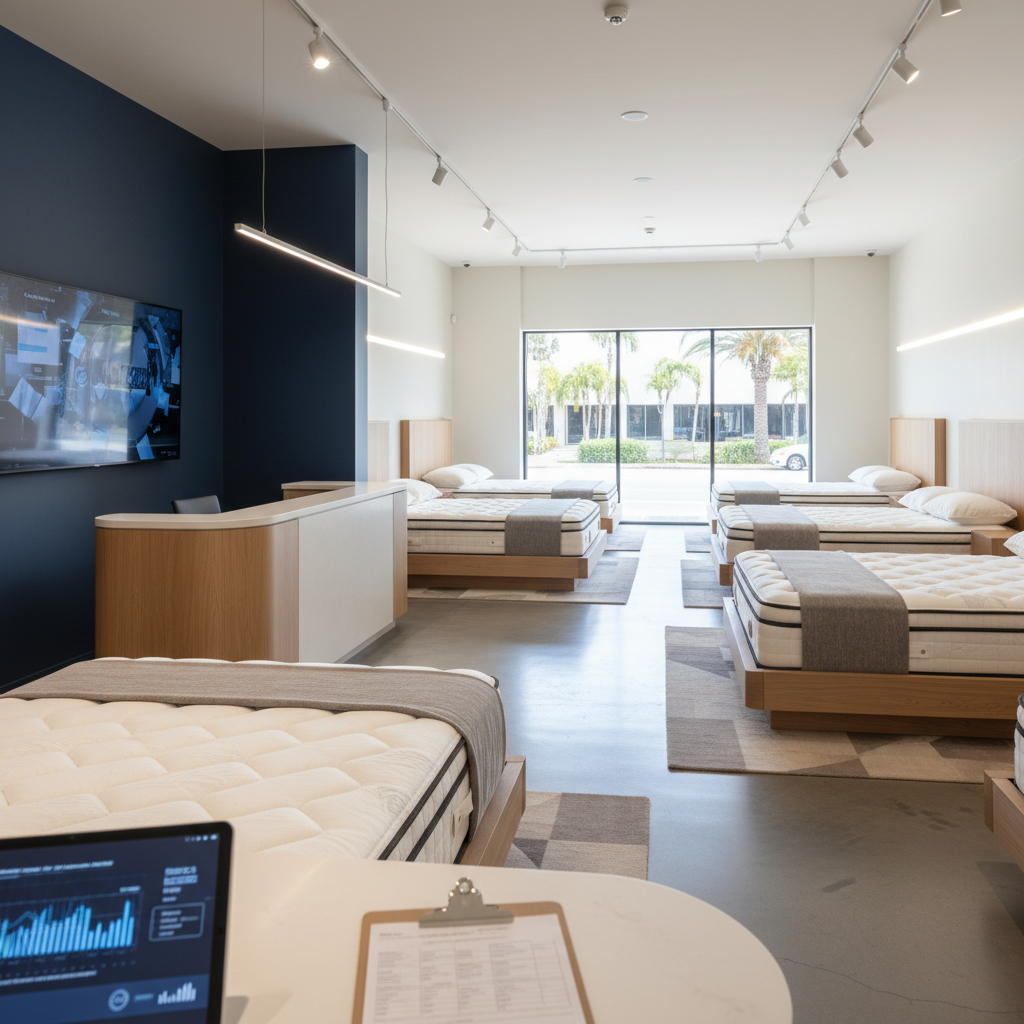
A mattress warranty card might promise 10, 20, or even “lifetime” protection. So why does your back start aching four years after you buy it? Why does a mattress that felt perfect in the showroom turn into a lumpy, unsupportive slab long before its warranty is up? There’s a huge gap between the lifespan brands advertise and the real-world performance we see every day.
This isn’t guesswork. At Yawnder, we don’t just sell mattresses; we deliver them, service them, and handle warranty claims across San Diego County. We’ve hauled away thousands of old beds from homes in Carlsbad, La Jolla, and all the way to Rancho Bernardo. This gives us a unique, data-backed perspective on why certain mattresses fail and which types consistently go the distance.
Forget the marketing hype. We’re opening up our service logs to give you the real numbers. In this article, we’ll break down the practical lifespan of each major mattress type, from basic innersprings to ultra-durable natural beds. We’ll show you the most common failure points we see in the field and teach you how to identify a mattress built for longevity, using the same specs our experts rely on.
The ’10-Year Warranty’ Myth: What We See in Real-World Service Calls
The single most misunderstood part of mattress shopping is the warranty. A 10-year warranty does not mean the mattress will provide optimal comfort and support for 10 years. In reality, a mattress warranty is a protection against manufacturing defects, not a guarantee against the natural loss of comfort over time. The number one reason we see warranty claims denied is because a mattress’s body impressions don’t meet the required depth, which is typically 1.5 inches. To be clear, that’s a dip deep enough to slide a golf ball through. Your sleep quality can be severely impacted by a 1-inch sag, but that won’t qualify for a replacement.
From our service operations across San Diego County, we see a clear pattern: customer satisfaction starts to dip around year 5 for many popular mattress types, even with 10- or 20-year warranties. The calls we get aren’t usually for catastrophic failures. They’re about subtle degradation: the foam feels softer, the support isn’t there, a sore back in the morning. These are issues of wear-and-tear, which warranties explicitly exclude.
Think of a warranty like the 100,000-mile powertrain warranty on a car. It covers the engine block cracking in half, but it doesn’t cover worn-out tires, squeaky brakes, or faded paint. Your mattress warranty works the same way. It covers a collapsed coil, but not the foam that has gradually softened over 1,500 nights of sleep. That’s why understanding the materials inside is far more important than the number on the warranty card.
Innerspring Mattresses: A 5 to 7-Year Lifespan
Traditional innerspring mattresses are the old-school standard, built with a core of interconnected steel coils (like Bonnell or offset coils) and a relatively thin layer of foam or fiber on top. Their straightforward design makes them affordable, but it’s also their primary weakness when it comes to longevity.
The most common failure mode we see on haul-aways from places like Encinitas and Oceanside is severe body impressions. The steel coil core itself is actually quite durable. What fails is the low-density polyurethane foam and polyester fiber padding layered on top. These materials are crushed under your body weight night after night, and they lack the resilience to bounce back. Within a few years, this leads to permanent valleys where you sleep. While the mattress hasn’t technically ‘broken,’ the comfort and support are gone. From our data, these mattresses generate the most replacement inquiries within the 5 to 7-year window.
Primary Failure Points:
- Foam Compression: The thin, low-density foams in the pillow top or comfort layer are the first point of failure, creating deep, permanent body impressions.
- Squeaking and Noise: The metal-on-metal design of older, continuously wired coil systems can begin to squeak over time as parts rub against each other. This is a common complaint we hear from customers ready for an upgrade.
All-Foam Mattresses: 6 to 8 Years of True Comfort
Mattresses made entirely of foam, whether memory foam or polyurethane foam, have become incredibly popular. They offer excellent pressure relief and motion isolation. However, their lifespan is 100% dependent on the density of the foams used—a detail many manufacturers are reluctant to share. Based on the mattresses our delivery teams pick up for replacement, a typical all-foam bed serves its owner well for about 6 to 8 years before a noticeable decline in performance.
The primary failure mode isn’t necessarily a deep sag. More often, the foam undergoes chemical and physical degradation. It loses its ability to contour and respond. We hear customers say their bed has developed a ‘quicksand’ feeling; it’s slow to recover, or it just feels ‘dead.’ This is especially true for foams with a density below 4.0 pounds per cubic foot (pcf). They simply can’t withstand the nightly cycle of compression and release for a decade.
In warmer San Diego areas like Santee or Escondido, this process can be accelerated. Heat is an enemy of low-density foam, causing the cell structure to break down faster. We’ve seen old foam mattresses that are literally crumbling at the edges when we haul them away. The takeaway is clear: if you’re buying an all-foam mattress, foam density is the only specification that truly predicts its lifespan.
Hybrid Mattresses: The Longevity Sweet Spot at 8 to 10 Years
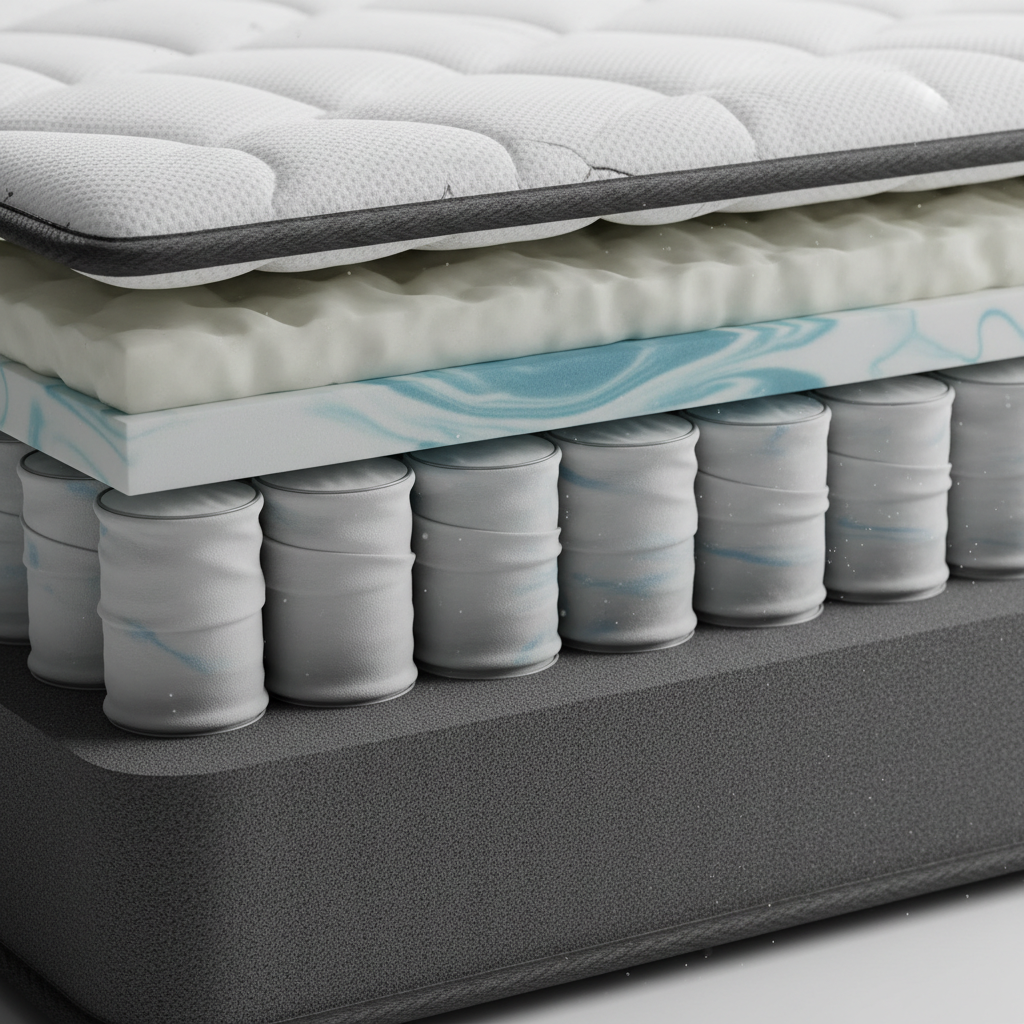
Hybrid mattresses represent a best-of-both-worlds approach, combining a support core of individually pocketed coils with substantial comfort layers made of memory foam, latex, or specialized polyfoams. This construction is why we see them consistently outlasting both innerspring and many all-foam models, with a real-world lifespan of 8 to 10 years.
The pocketed coil system is the hero here. Because each coil is wrapped in fabric and moves independently, it provides more targeted, resilient support than a basic innerspring unit. This staves off the sagging and body impressions for much longer. Furthermore, the foams used in quality hybrids are often denser and more durable than those in a standard foam mattress, because they don’t have to do all the work of providing support.
The most common failure point we see in hybrids is not the center, but the edge. ‘Edge collapse’ is a frequent complaint. This happens when a manufacturer uses lower-quality foam encasement or a weak set of coils around the perimeter to save money. When you sit on the edge of the bed to put on your shoes, the edge breaks down over time, shrinking your usable sleeping surface. When inspecting a hybrid in our showroom, we always encourage customers to sit on the edge to test its stability. A robust edge is a key sign of a well-built, durable hybrid.
Natural Latex Mattresses: The 12 to 15+ Year Durability Kings
When it comes to pure, unadulterated durability, nothing beats natural latex. Derived from the sap of the rubber tree, latex foam has a natural elasticity and resilience that polyurethane foams simply cannot replicate. Our service data confirms this: it is incredibly rare for us to process a warranty claim on a latex mattress. When we do replace them, it’s often after 15 or even 20 years, simply because the customer wants a different firmness or a newer model.
Unlike memory foam, which breaks down and sags, latex is incredibly resistant to body impressions. Its failure mode, if you can call it that, is a very slow process of firming up over a decade or more. It doesn’t create the hills and valleys that ruin sleep; it just loses a bit of its initial surface softness. We also observe that it’s highly resistant to the kind of degradation we see in foams. It’s a dense, heavy material, and our delivery teams can attest to the workout they get delivering a king-size latex bed to a home in Del Mar. That weight is a direct indicator of its dense, durable nature.
Because it’s a naturally open-celled material, latex is also more breathable than memory foam, making it a fantastic choice for the warm, humid nights common in San Diego’s coastal communities. It doesn’t rely on chemical reactions for its feel, so the performance remains consistent for its entire lifespan. For shoppers whose primary concern is longevity, a natural latex mattress is almost always the best investment.
The 20+ Year Club: Hästens-Style Natural Fiber Beds
In a class entirely their own are mattresses made in the traditional Swedish style, using an intricate layering of all-natural materials like horsehair, wool, cotton, and flax around a premium steel spring system. These beds, exemplified by brands like Hästens, are built less like disposable consumer goods and more like heirloom furniture. Their lifespan isn’t measured in years, but in decades—20, 30, or even more with proper care.
The secret to their longevity is the complete absence of foam. Foam is the weak link in nearly every modern mattress. These natural fibers, by contrast, are incredibly resilient and functional. The horsehair acts as a tiny ventilation system, wicking away moisture and springing back to its original shape. Wool serves as a natural fire barrier and temperature regulator. Cotton provides soft comfort. This combination of materials doesn’t break down, sag, or develop impressions in the same way foam does.
Owning one of these is different. We don’t get ‘failure’ calls for these mattresses. The service required is part of the ownership experience—scheduled flipping and massaging to ensure the natural fibers settle evenly. When our teams visit a home with one of these beds, it’s for maintenance, not for a warranty claim. They are a significant upfront investment, but they represent a ‘buy it for life’ philosophy. For the right person, it is the last mattress they will ever need to purchase.
Why Foam Density & Coil Specs Matter More Than Warranties
If you take one thing away from this article, let it be this: the spec sheet is more important than the warranty card. The longevity of a mattress is determined by the quality of its components, and two numbers matter most: foam density and coil count/gauge.
Foam Density, measured in pounds per cubic foot (pcf), tells you how much material is packed into the foam. More material means more durability. Less material means more air, which breaks down quickly. Based on our service history, here’s what to look for:
- Memory Foam: Anything under 3.5 pcf is a red flag for us. 4.0 pcf is good quality, suitable for average-weight adults and will resist impressions for years. 5.0 pcf or higher is premium, offering exceptional durability.
- Polyurethane Foam: In a support core or base layer, look for a density of at least 1.8 pcf. In comfort layers, anything below 1.5 pcf will soften and sag very quickly.
Coil Specifications apply to hybrid and innerspring beds. While a higher coil count can offer more precise support, it’s not the only factor. A mattress with 1,000 well-made coils is better than one with 2,000 flimsy ones. Also ask about the coil gauge—a lower number means thicker, more durable steel. A strong edge support system, either with reinforced coils or a firm foam ‘racetrack,’ is also critical for preventing edge collapse, a top complaint we see.
How to Spot a Durable Mattress in Our Encinitas Showroom
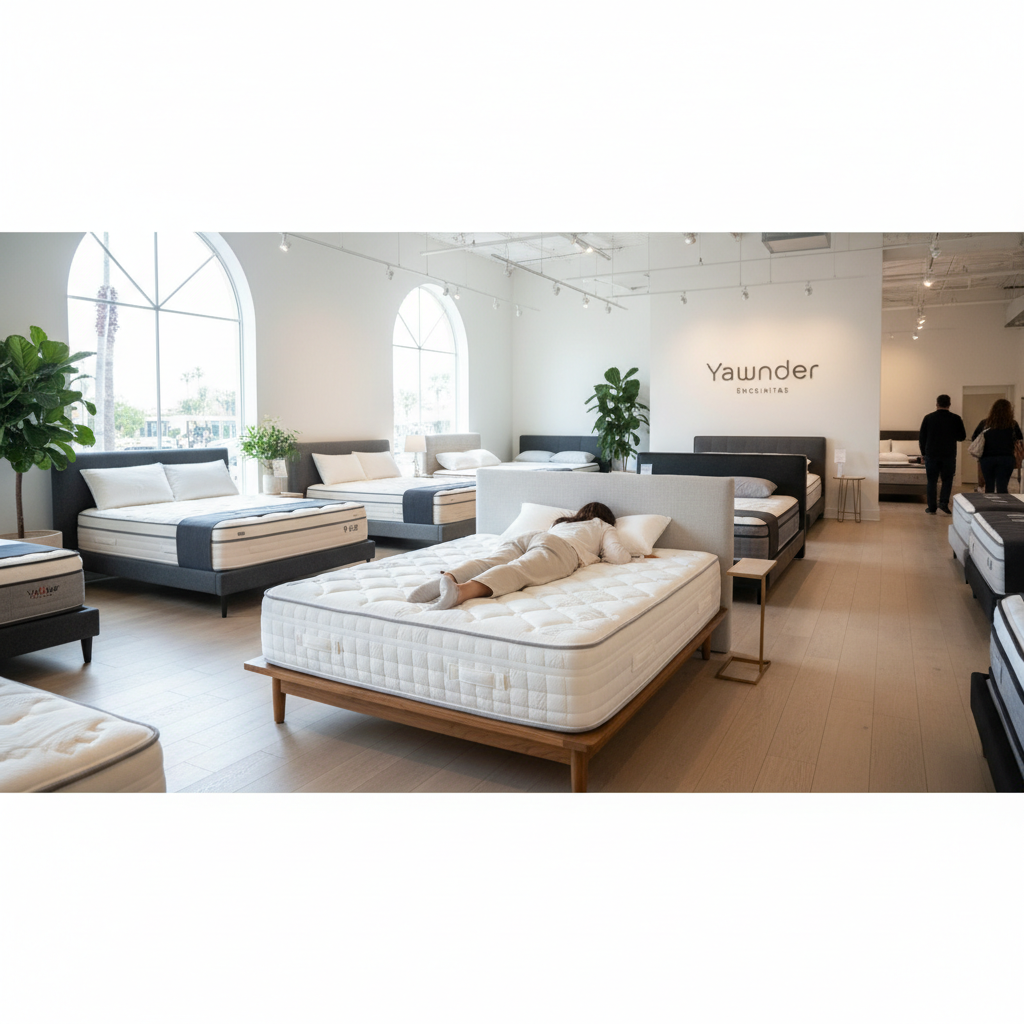
Reading specs online is one thing, but how do you identify quality in person? When you visit our showroom here in Encinitas, there are a few physical tests you can perform to vet a mattress for longevity, just like our experts do.
1. Test the Edge Vigorously. Don’t just perch lightly. Sit on the side of the mattress as you would when tying your shoes. Bounce a little. Does it hold firm, or does it collapse into a mushy mess? A solid edge is one of the biggest indicators of a quality build, as it’s an expensive feature to reinforce properly. Weak edges are a primary source of customer dissatisfaction down the road.
2. Ask For the Spec Sheet. A confident retailer will have this information ready. At Yawnder, we can provide the foam densities and coil details for our premium lineup. If a salesperson deflects the question or claims
Protecting Your Investment: The San Diego Climate Factor
A high-quality mattress is a significant investment. Protecting it is crucial, especially given San Diego’s unique microclimates. The environment in your bedroom, whether it’s in coastal La Jolla or inland Poway, plays a role in your mattress’s lifespan.
For those living near the coast, from Imperial Beach up to Oceanside, humidity is a major factor. Moisture in the air can be absorbed by a mattress, creating a friendly environment for dust mites, mildew, and bacteria. This is particularly tough on cheaper polyurethane foams, which can degrade faster when damp. This makes breathable constructions—like hybrids with good airflow or naturally moisture-wicking materials like latex and wool—a superior choice. Regardless of mattress type, a high-quality waterproof mattress protector is non-negotiable. It’s the single best tool to block moisture and sweat, which can break down foams and will instantly void any warranty if they cause a stain.
For those in hotter, drier East County neighborhoods, the enemy is often intense heat and sunlight. A bedroom that bakes in the afternoon sun can raise the temperature of the mattress itself, accelerating the aging process of foams, especially lower-density ones. While less of a concern than direct moisture, prolonged heat can make foams lose their responsiveness more quickly. Keeping the mattress out of direct sunlight and using a protector will help maintain a more stable temperature and extend its life.
| Mattress Type | Real-World Lifespan | Common Failure Modes | Key Durability Spec |
|---|---|---|---|
| Innerspring | 5-7 Years | Body Impressions, Sagging, Squeaks | Comfort Layer Quality |
| All-Foam | 6-8 Years | Loss of Responsiveness, Softening, Crumbling | Foam Density (pcf) |
| Hybrid | 8-10 Years | Edge Collapse, Foam Softening | Edge Support System & Foam Density |
| Natural Latex | 12-15+ Years | Minor Firming Over Time | Natural vs. Synthetic Latex Content |
| Natural Fiber (Hästens-Style) | 20+ Years | Fiber Settling (Correctable with Maintenance) | Quality of Natural Fibers (Horsehair, etc.) |
Frequently Asked Questions
Does a 20-year warranty mean my mattress will last 20 years?
No. A warranty covers specific manufacturing defects, most notably sagging beyond a certain depth (usually 1.5 inches). It does not cover the natural loss of comfort or support that happens with normal use. Most people find a mattress uncomfortable long before it qualifies for a warranty claim.
How often should I really replace my mattress?
You should replace your mattress based on your sleep quality, not the calendar. If you start waking up with aches and pains, find yourself tossing and turning, or feel you sleep better in other beds, it’s time to start looking. This typically happens between years 5 and 10 for most conventional mattresses.
Will rotating my mattress actually help it last longer?
Yes, absolutely. For most one-sided mattresses, rotating it 180 degrees (head-to-foot) every 6 months is the most effective way to even out wear. This prevents your body from creating permanent impressions in one area and can significantly extend the mattress’s comfort life.
Is a firm mattress more durable than a soft one?
Not necessarily. Durability comes from the quality and density of the materials inside, not the firmness level. A high-quality, high-density soft foam will easily outlast a low-quality, low-density firm foam. You can have a very durable soft mattress or a very flimsy firm one.
What is the biggest red flag when shopping for a durable mattress?
The biggest red flag is a retailer or brand that cannot or will not provide the technical specifications of their mattress. If they can’t tell you the foam densities or coil gauge, it’s often because they don’t want you to know. Transparency is a key sign of a confident, quality manufacturer.
Why do hotel mattresses sometimes feel great, but aren’t good long-term?
Hotels prioritize a consistent, plush initial feel and robust edge support for durability against guest use. However, they also replace their mattresses on a very aggressive schedule, often every 3-5 years. The mattresses are built for heavy-duty commercial use for a short period, not for a decade of nuanced comfort in a home.
Try Before You Buy at Yawnder San Diego
Compare select mattresses at 1441 Encinitas Blvd. Contact us to confirm floor availability. Standard shipping is free; white-glove delivery and setup costs $200 per delivery. See our shipping policy for service and removal details.
A mattress warranty card might promise 10, 20, or even “lifetime” protection. So why does your back start aching four years after you buy it? Why does a mattress that felt perfect in the showroom turn into a lumpy, unsupportive slab long before its warranty is up? There’s a huge gap between the lifespan brands advertise and the real-world performance we see every day.
More San Diego mattress guides
Hand-written by the Yawnder San Diego showroom team.