SEASONAL SALE — UP TO 50% OFF TOP BRANDS • Shop the Sale

Night Terrors: Strategies to Understand and Avoid Episodes

Night Terror
Bottom line

Night terrors are a sleep disorder distinct from nightmares, characterized by sudden awakenings, distress, and partial consciousness, primarily affecting children under 12. While most children outgrow them, adults often require professional support. Understanding triggers like sleep deprivation and stress, alongside providing comfort and establishing calming routines, are key to treatment.

Quick Facts · Night Terrors: Strategies to Understand and Avoid Episodes
PriceNot listed
FirmnessNot listed
TypeSleep disorder
Best forChildren under 12; adults with underlying issues
Trial / WarrantyNot listed
Yawnder verdictComprehensive guide to night terrors · 4.8/5

Frequently Asked Questions About Night Terrors: Strategies to Understand and Avoid Episodes

What is the difference between night terrors and nightmares?

Night terrors are a sleep disorder where a child appears awake and distressed but is still partially asleep and unaware, while nightmares are simply bad dreams that a person typically remembers upon waking.

Who is most affected by night terrors?

Night terrors primarily affect children under the age of 12, though a smaller percentage of adults can also experience them.

What are some common causes of night terrors?

Common causes of night terrors include sleep deprivation, excessive stress, and an unstable home environment with anxiety or conflict for children. In adults, underlying mental health issues like anxiety, extreme stress, PTSD, or drug abuse can be contributing factors.

How can I help my child if they are experiencing night terrors?

Providing comfort and reassurance is crucial during a night terror episode by keeping calm, holding your child, and using soft words to soothe them. Observing patterns in your child's behavior and consulting a doctor if episodes are recurrent or escalating is also advisable.

Is professional help necessary for treating night terrors?

For children, professional intervention is often not necessary as night terrors typically aren't linked to underlying medical conditions, but for adults, professional treatment is frequently required to address the root causes. Our Yawnder sleep experts understand the role a restful environment plays in managing sleep disorders like night terrors.

What are the common symptoms of a night terror episode?

Key indicators of a night terror include sudden awakening from sleep, excessive crying or screaming, profuse sweating, rapid heartbeats, an aversion to returning to sleep, and labored breathing.

Want to test this in person? Visit our Encinitas showroom or call 858-232-5760.

Eli and Elm Side Sleeper Pillow: Must-Have for Best Sleep

Eli and Elm Side Sleeper Pillow
Bottom line

The Eli & Elm Organic Cotton Side Sleeper Pillow offers exceptional neck support and cushioning thanks to its unique fingertip bandage shape and adjustable cotton stuffing noodles. It is best for side sleepers seeking personalized comfort, while others might find its weight and unwieldy nature challenging. The pillow's design prioritizes both support and softness for a truly restful slumber.

Quick Facts · Eli and Elm Side Sleeper Pillow: Must-Have for Best Sleep
PriceNot listed
FirmnessAdjustable
TypeAdjustable shredded latex and polyester fiber
Best forSide sleepers
Trial / WarrantyNot listed
Yawnder verdictPillow designed for individualized comfort · 4.8/5

[Tagline]

Eli & Elm Profile

Eli & Elm entered the bedding world in January 2019 with a goal to create high quality bedding for the average sleep enthusiast. Based in New Haven, CT, their name is an homage to Eli Whitney—the inventor of the cotton gin; and Elm City—the home of Whitney before its name was changed to New Haven. Three Connecticut men were inspired by Eli Whitney’s innovation with the plant, so they took to improving the world of cotton bedding, with aspiring dreams to make the bed a better place for sleep. There hasn’t been much innovation in the textile industry, so Eli & Elm made it their mission to create luxurious and durable sheets for affordable prices. Their work with researchers and engineers has paved the way for eco-friendly advancements in the field while also focusing their resources on making fair trade products that are ethically sound.

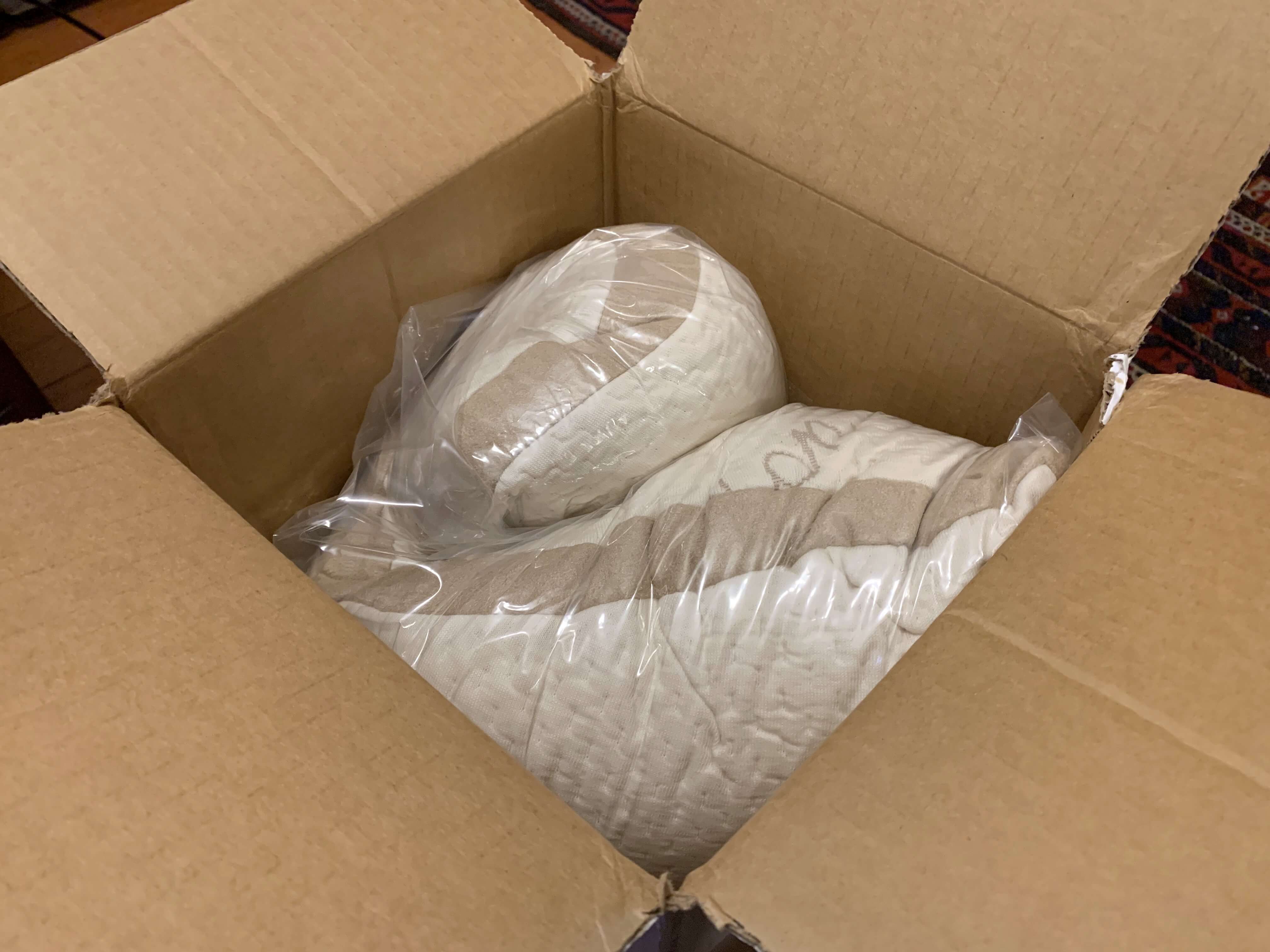
Eli & Elm sent me their king-size organic cotton Side Sleeper pillow. The large cushion was rolled up and stuffed inside its long, white shipping box.

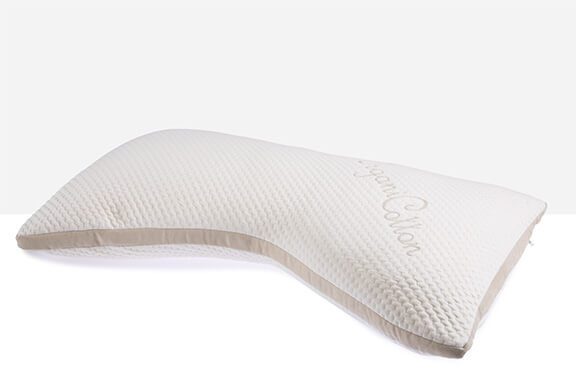
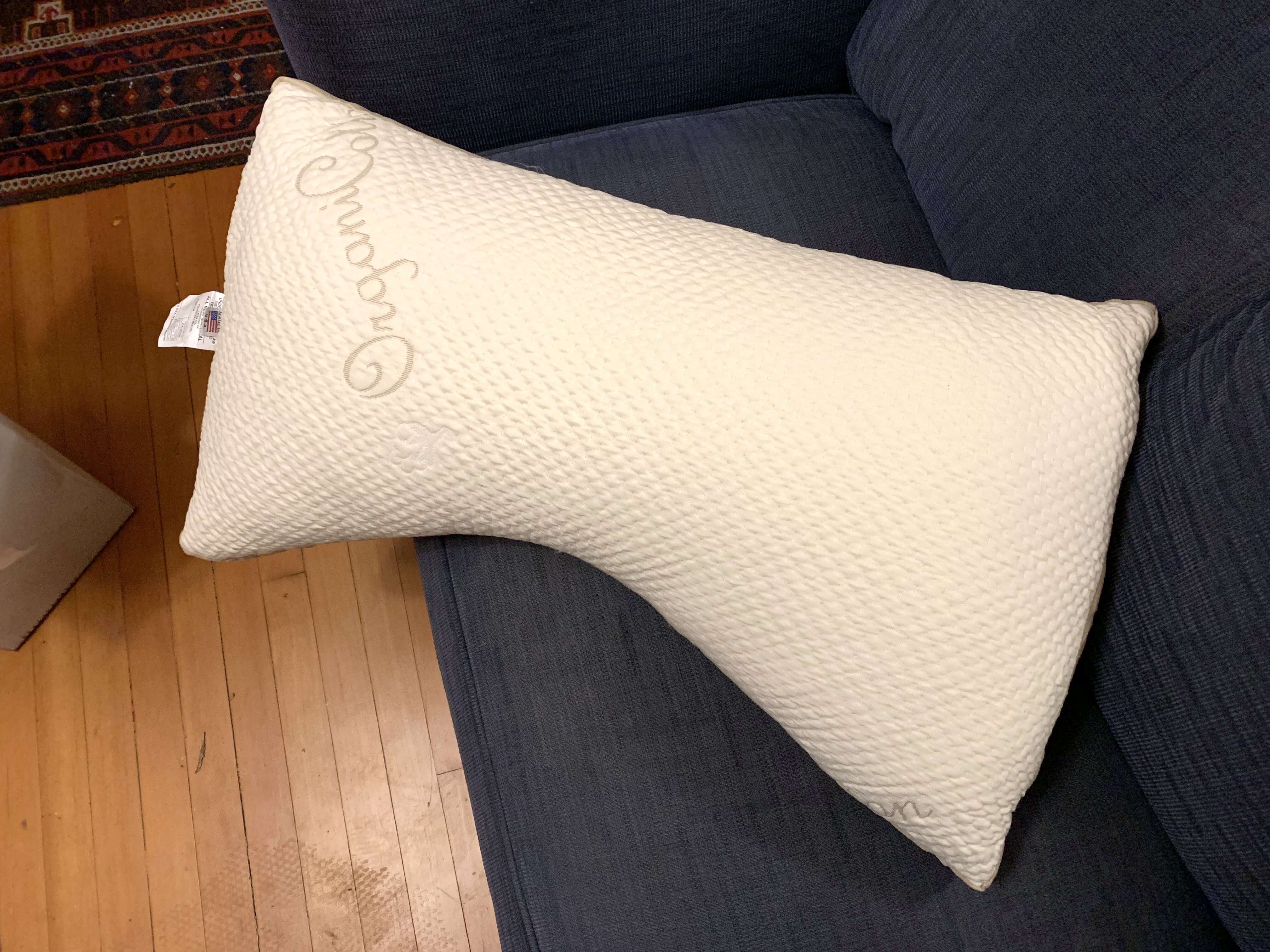
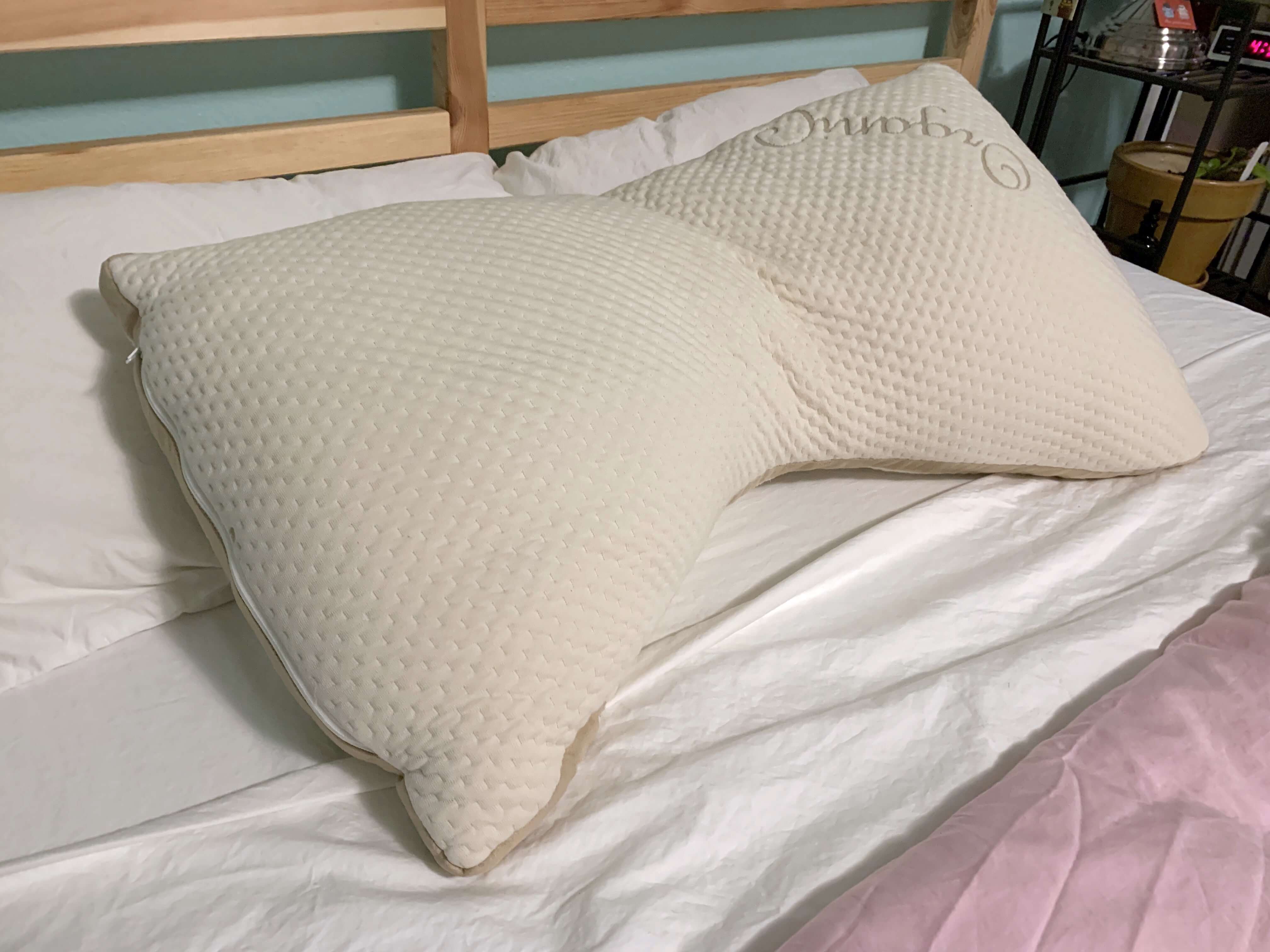
I pulled it out and cut away the bag and tape to reveal a gold and ivory pillow shaped like half of a fingertip bandage.

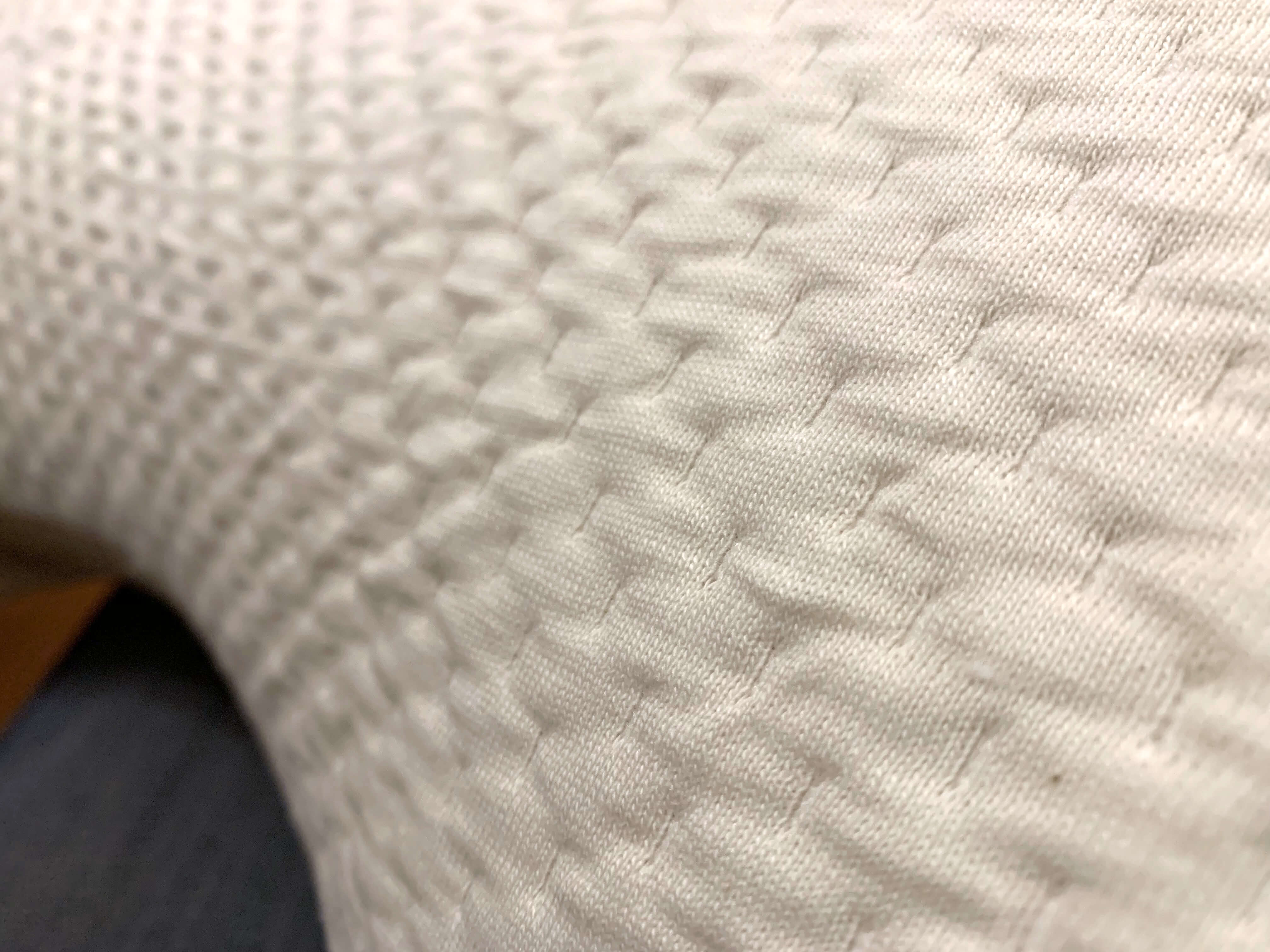
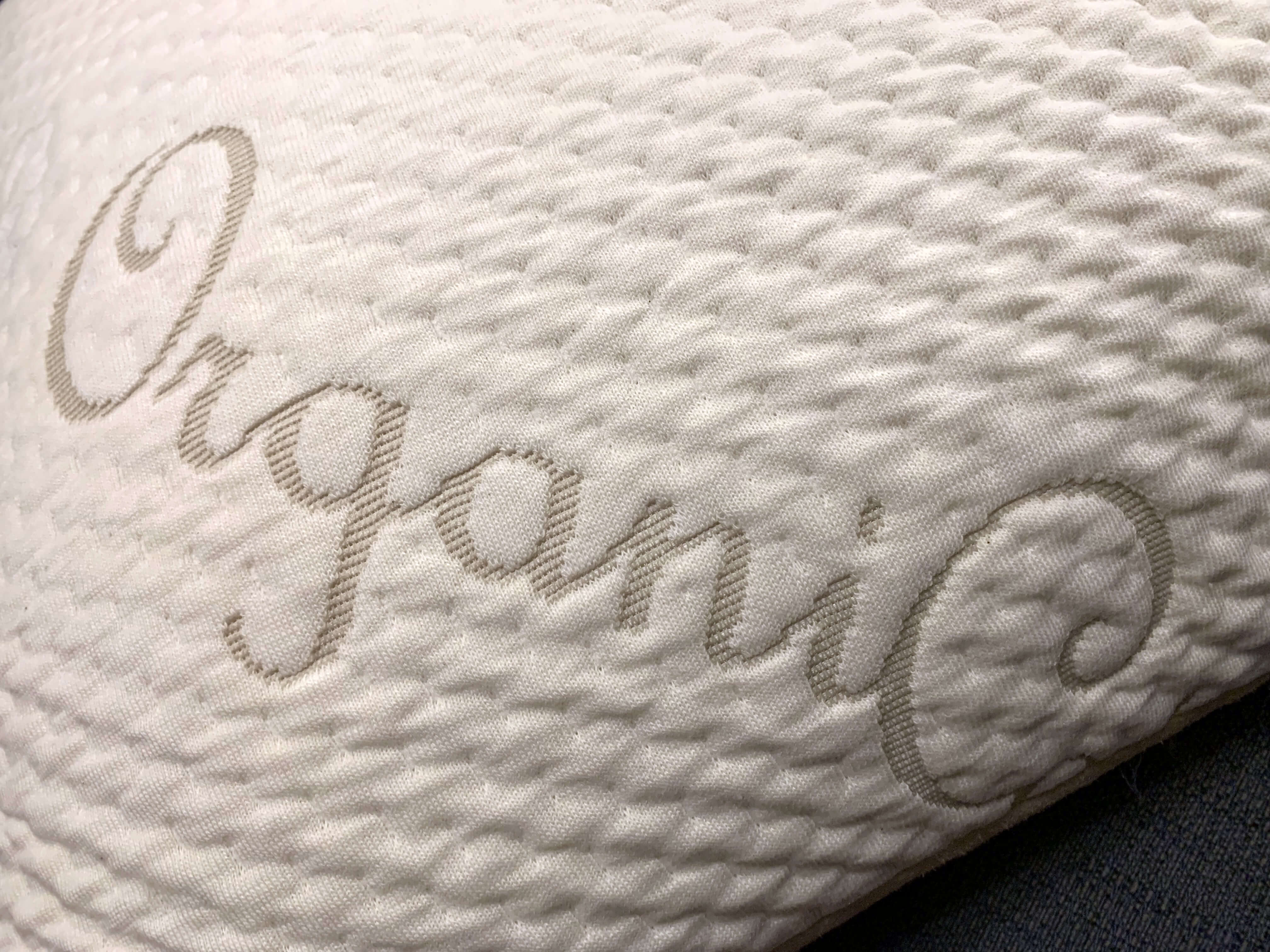
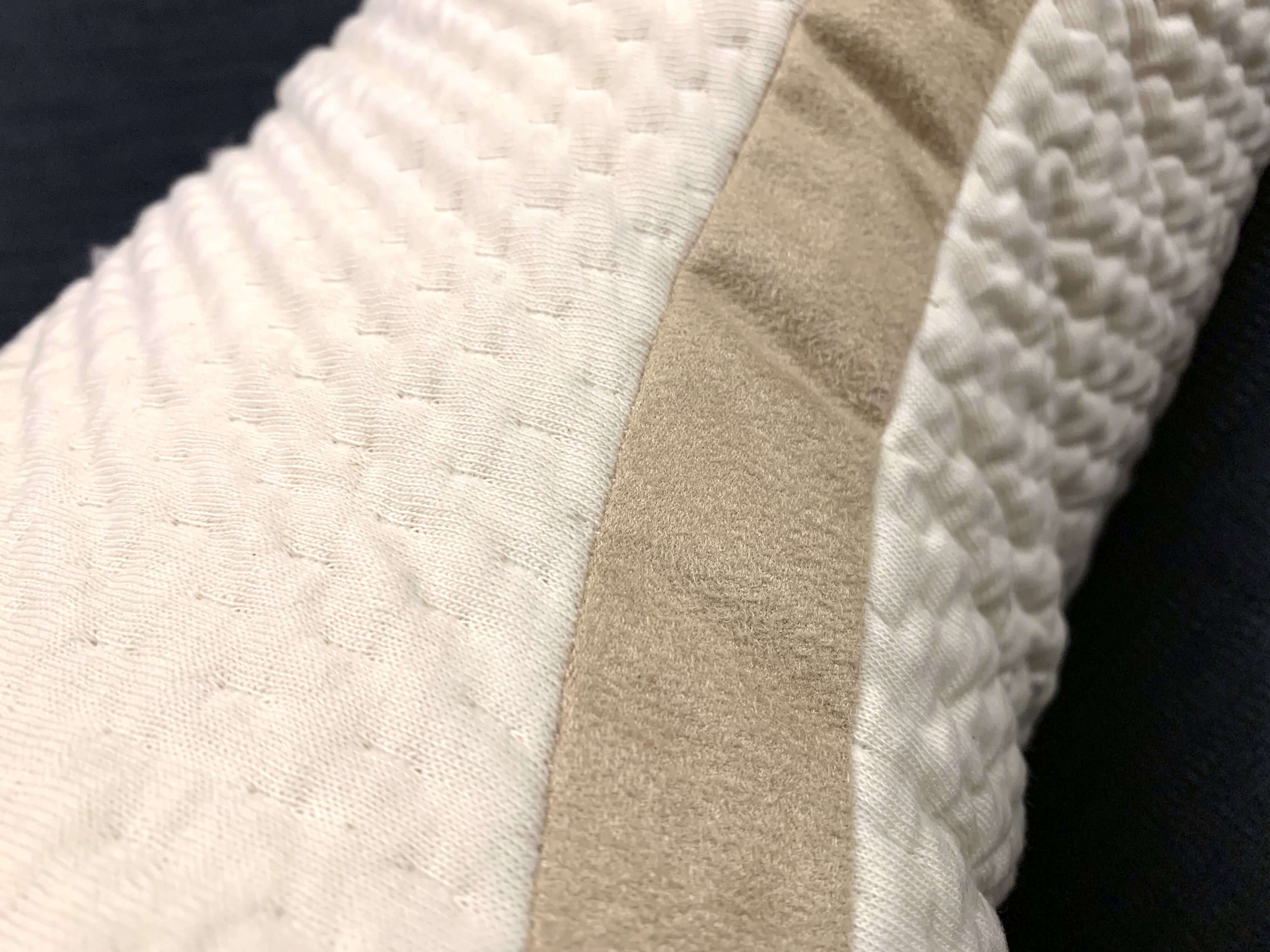
The quilted pillow fabric is extremely soft, and the filling is especially plush and squishy. The front and back of the pillow have “Organic” written stylistically across the pleats, and are joined by a gold suede band.

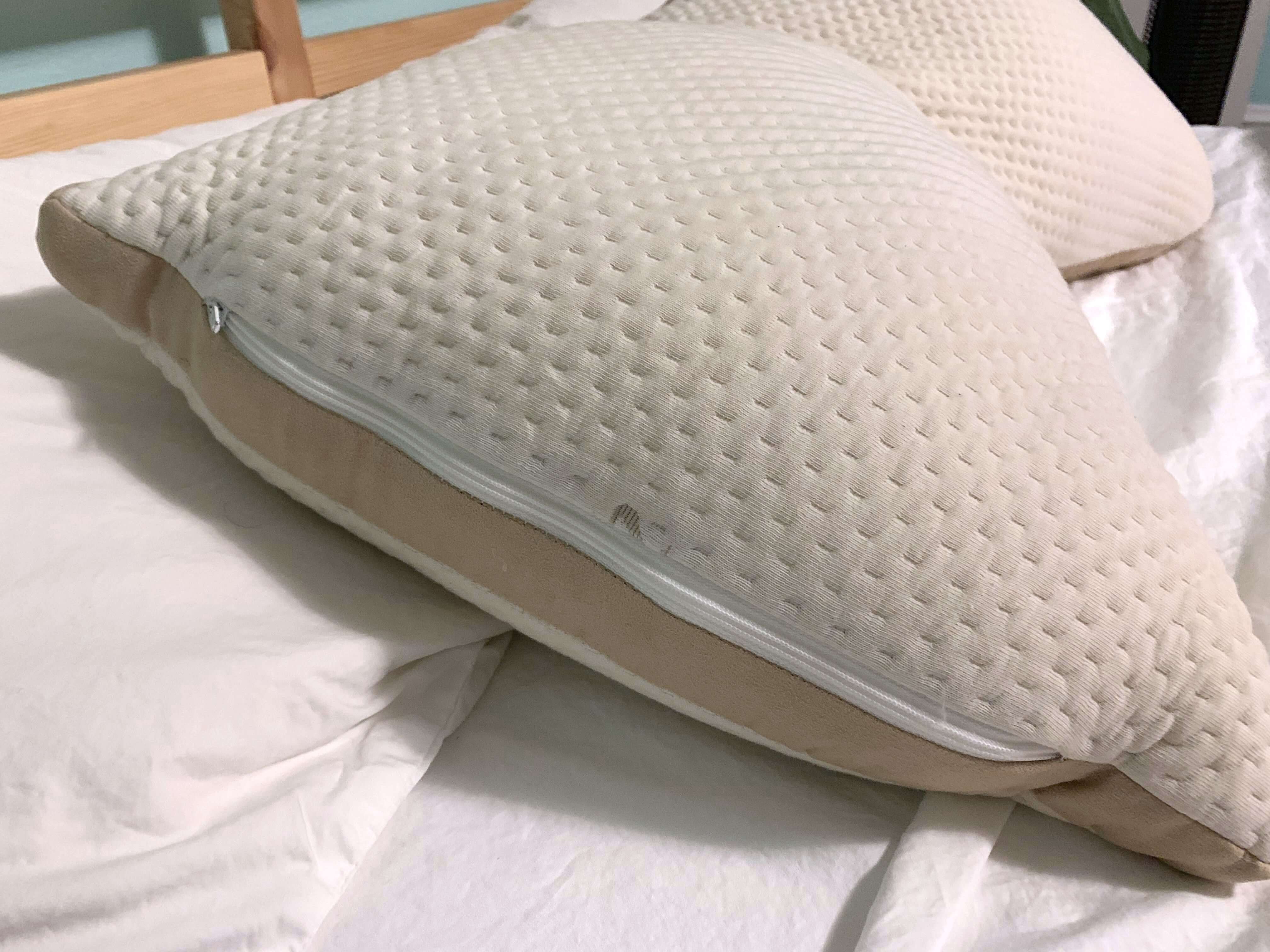
The seams are hidden and seem durable enough to withstand even the roughest of sleepers. I really appreciate the placement of the zipper, as many zippers that go from corner to corner often get jammed with the interior fabric. When I unzipped the portal to coziness, I was met with tiny noodles of cotton stuffing, which Eli & Elm explains can be removed to adjust height, support, and cushiness for a fully customizable experience.

Side Sleeper Construction

Eli & Elm’s pillow design is not only customizable for all sleepers, but it’s specially designed to benefit side-sleepers. The unique shape gives the head and neck the support they need, which is often not provided by flat pillows. I have two flat pillows that have lost every ounce of support and comfort that they once had, so this has been a long time coming. I couldn’t find any information on how I was supposed wash it, and I’ve had issues in the past with damp pillows, so I gave it an extra hour for good measure totaling 120 minutes on low heat. Once out of the dryer, I could start enjoying the pillow without having to smell the factory in which it was made.

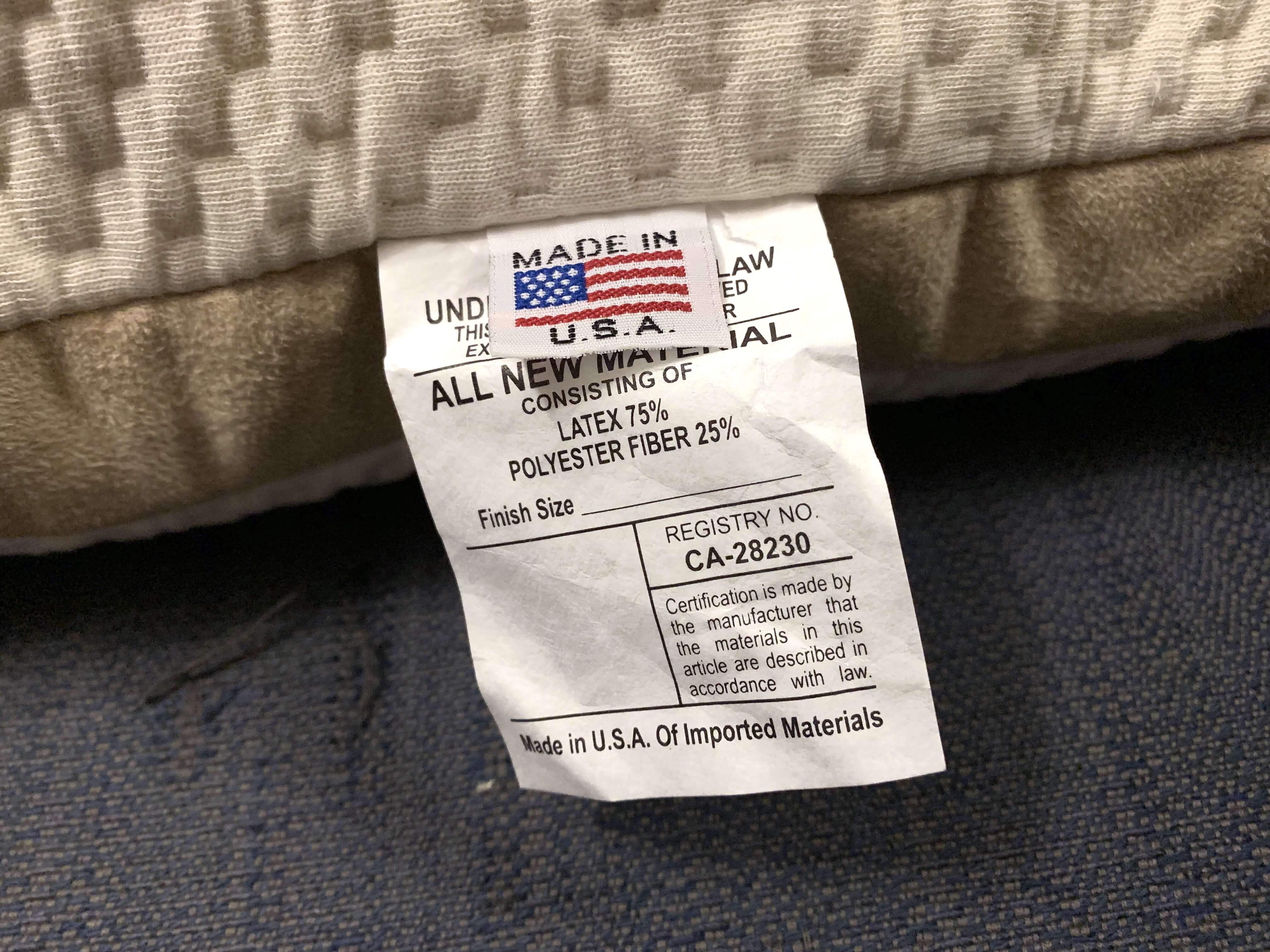
The pillow fabric is comprised of 37% organic cotton, 2% spandex, and 61% polyester; and the fill is made of 75% latex and 25% polyester fiber. Eli & Elm claim that their cotton fabric is breathable, hypoallergenic, eco-friendly, and temperature modulating, so I was intrigued to try it alongside Eli & Elm’s Cooling Whitney Collection. Unlike the Whitney Collection, the Side Sleeper does not utilize Phase Changing Materials in its construction, so experiencing the cooling effects side-by-side would give me an ideal comparison test. In the end, it really did do what they said it would.

My Side Sleeper Findings

The pillow is heavy and kind of unwieldy—if you hold it with one hand, you feel like it will stretch into oblivion, but if you hold it with two hands, it still figures out a way to spill over your arms. When moving the pillow, it feels as though it’s caught somewhere between liquid and solid despite very clearly just being a fabric pillow stuffed with little squishy noodles. When placed on an immovable surface—like a bed—the pillow takes on a whole different personality. The noodles compress under the weight of your head allowing the half-fingertip-bandage shape to conform to your neck. The Side Sleeper feels like a luxury neck pillow made of pizza dough, and I love it. It can be hard to find a pillow that meets all of your greatest expectations, but Eli & Elm got it right this time. No matter which way I slept or rolled, the pillow was always there, giving me the best cushion experience for all sides of my head. It was both supportive and forgiving, which makes it a perfect pillow for literally anyone.

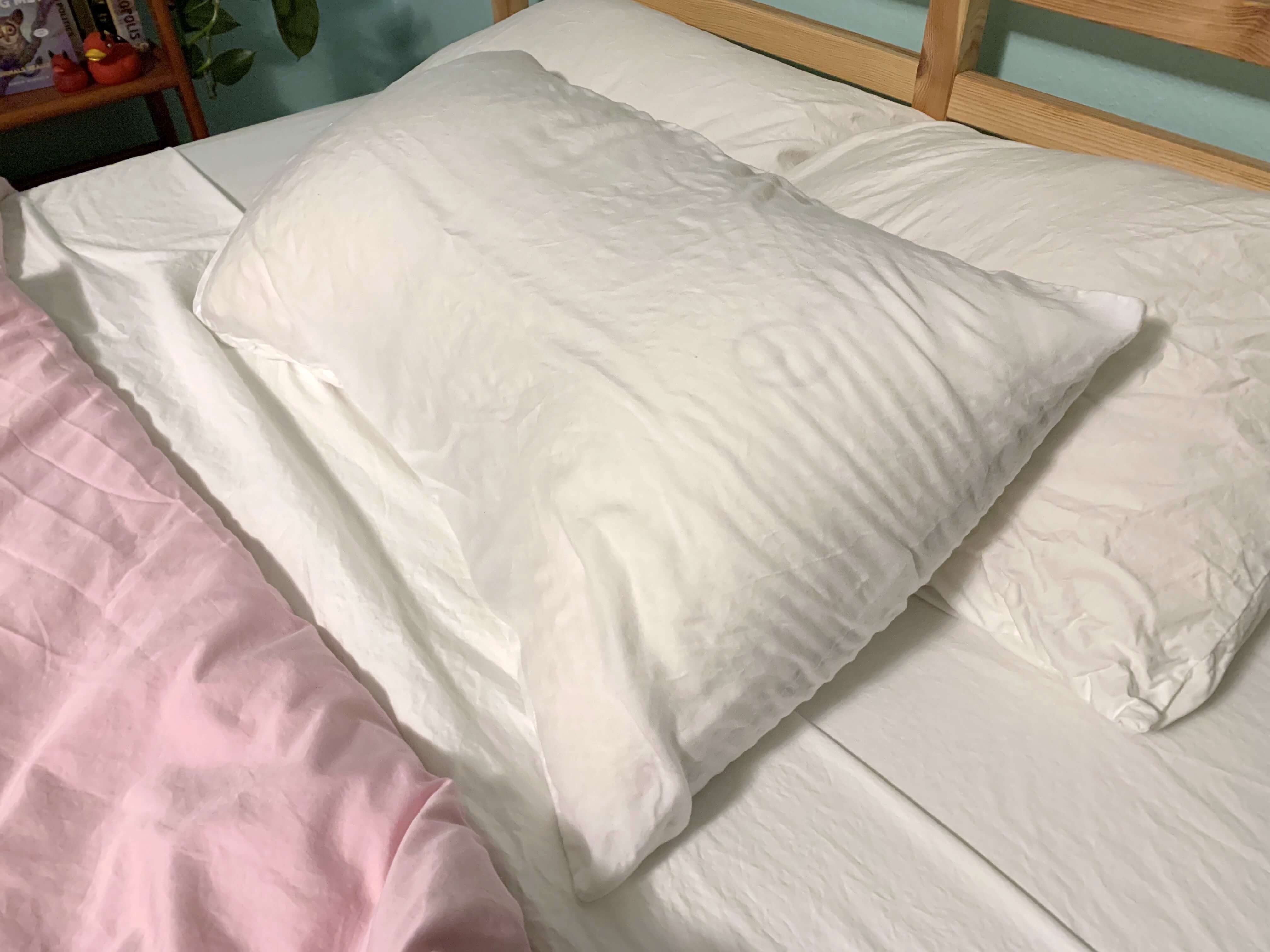
When used simultaneously with Eli & Elm’s Whitney Collection, I found myself in one of the most breathable and temperature consistent sleeping environments ever. Sure, getting into the bed was a bit chilly (my house thermostat is pretty consistently set between 55F and 62F morning and night), but once inside, all the high tech cooling fabric started doing its thing and the sheets and pillow quickly adjusted to my body temperature. After a few days of usage, I was curious what the other side of the pillow felt like since the undersides of pillows are always colder—this one was very cold. In a sleepy daze, I strangely couldn’t tell if the pillow was cold because it was damp or just cold—turns out by perching the Side Sleeper on top of my other pillows (covered with the Whitney pillowcases), I created a kind of black hole for heat in between the two cooling fabrics.

My Side Sleeper Recommendation

Eli & Elm’s Side Sleeper is a magnificent pillow for sleeping, to which I have found no comparison. That said, pillows are generally very versatile and practical, but I don’t think the Side Sleeper shares those traits. Due to its shape, it wouldn’t make for a back or head cushion while playing cards or writing your next novel, and its weight and Jell-O-esque feel make me think traveling with it would be a hassle—its true element is on a bed. The only thing that I’m unsure about at this moment is the stiffness of the pillow. This of course is just a personal problem, because Eli & Elm recommends removing or adding noodles as you go to get the perfect firmness, which I haven’t gotten around to doing. So for all of you prospective buyers and readers out there, if you’re looking for a pillow that is more squishy than firm, make sure you extract some noodles first before deciding it’s not for you! In the off chance the Side Sleeper is just not for you, Eli & Elm has a 45-day risk free trial period so you never have to invest in something you don’t actually like. For me? This is a real keeper and paces miles ahead of the comparable $100 solid bamboo pillow I got online.

Shop the Eli and Elm Side Sleeper Pillow

Frequently Asked Questions About Eli and Elm Side Sleeper Pillow: Must-Have for Best Sleep

Is the Eli & Elm Side Sleeper Pillow worth the investment for a better night's sleep?

Yes, its unique design and adjustable filling make it a strong contender for improving sleep, especially for side sleepers. The pillow's support for the head and neck, along with the ability to customize its height, addresses common issues found in traditional pillows, as our San Diego team found during testing. This personalized approach to comfort suggests its value.

Who is the Eli & Elm Side Sleeper Pillow best suited for?

This pillow is specifically engineered for side sleepers who need targeted support for their head and neck. Its distinctive half-fingertip bandage shape is designed to cradle the head and provide stability, which was a noticeable benefit during hands-on testing. The adjustable filling further allows side sleepers to fine-tune its firmness and loft to their preference.

How does the Eli & Elm Side Sleeper Pillow compare to traditional memory foam pillows?

The Eli & Elm Side Sleeper Pillow offers a unique feel with its cotton stuffing noodles, allowing for adjustable loft and a balance between liquid and solid textures, unlike the more consistent density of most memory foam. While memory foam often conforms to shape, this pillow's customizable fill provides a different kind of adaptable support that our testers found distinct. Its organic cotton and latex-polyester blend also contribute to a different material experience compared to synthetic memory foam.

What are the potential downsides of the Eli & Elm Side Sleeper Pillow?

The pillow can be somewhat heavy and unwieldy, making it a bit challenging to manage with one hand according to our hands-on experience. While it offers adjustable filling for personalized support, this feature might also require some initial trial and error to find the ideal comfort level. The unique shape, while beneficial for side sleepers, might also take some getting used to for those accustomed to traditional pillow forms.

Is the Eli & Elm Side Sleeper Pillow good for hot sleepers?

Eli & Elm claims their organic cotton fabric is breathable and capable of temperature modulation, suggesting potential benefits for hot sleepers. While direct cooling effects were not solely attributed to the pillow in our initial assessment, its breathability as an organic cotton product could contribute to a cooler sleep environment compared to less airflow-friendly materials. Further testing in conjunction with the Cooling Whitney Collection indicated a harmonious cooling experience.

Where can I try the Eli & Elm Side Sleeper Pillow in person in the San Diego area?

You can experience the Eli & Elm Side Sleeper Pillow firsthand at our Yawnder showroom in Encinitas, CA. While the excerpt doesn't explicitly state the pillow is on display, as a retailer of this brand, we encourage you to visit to feel its unique texture and assess its support for yourself. Our team can also answer any further questions you may have about its features.

Want to test this in person? Visit our Encinitas showroom or call 858-232-5760.

Sleep Texting: Must-Have Tips to Avoid Embarrassing Moments

sleep texting
Bottom line

Sleep texting is a form of parasomnia where individuals send text messages while asleep, often without recollection. It is frequently linked to smartphone overuse, poor sleep quality, and stress, with college students being a particularly affected demographic. Preventing it involves limiting phone access in the bedroom and implementing digital boundaries.

Quick Facts · Sleep Texting: Must-Have Tips to Avoid Embarrassing Moments
PriceNot listed
FirmnessNot listed
TypeParasomnia
Best forIndividuals experiencing unusual nighttime phone activity, those with poor sleep hygiene
Trial / WarrantyNot listed
Yawnder verdictInsightful guide to a modern sleep issue · 4.8/5

What is Sleep Texting?

Sleep texting is exactly what it sounds like. It’s is a phenomenon when people send or reply to text messages – you guessed it, in their sleep. Sleep texting has arisen and has become increasingly more common in the last decade, with the advance and the increasing prevalence of smartphones in our lives. If you’ve ever woken up to find a text you sent to a friend you have no memory of writing, you know what it is.

How is it possible to text someone in your sleep? If this scenario seems wild to you, that’s a sign that texting is just not an integral part of your life as it is for many people, and your relationship with your phone is not as automatic.

Sleep texting is not that different from other parasomnias – a kind of sleep disorders when a person performs movements and behaviours during their sleep that they might perform automatically during the day but that shouldn’t happen during sleep. The more known parasomnias include sleepwalking, sleep talking, sleep eating, groaning, night terrors,  teeth grinding, jaw clenching – and occasionally more dangerous ones like sleep driving. All these have been around for a while, and as technology adds new dimensions and new regular behaviours to our lives, things like sleep texting (and even sleep shopping) are becoming common because texting and shopping online are just regular things we do during the day.

The reason that parasomnias in general happen is that while you might be sleeping, parts of your brain may still be awake, so you’re engaging in the same behaviors you engage while you’re awake.

Sleep Texting and Smartphone Use

phone addcitionUsing technology in your sleep is not entirely new either. What seems to be the first documented case of sleep emailing took place nearly 10 years ago and was reported in a Journal of Sleep Medicine. In that case, the patient reported sleep emailing after taking an increased dose of sleep medication.

But in a matter of 10 years, sleep texting has turned from sensational to a pretty common phenomenon. Researchers from the Villanova University recently conducted a study surveying sleeping habits of college students. In an article published in the Journal of American College Health, they report that as much as 25% of college students surveyed report sleep texting, and the majority of them (72%) do not remember doing so afterwards.

The rise of sleep texting is of course not surprising given the prevalence of phones in our lives. According to Deloitte’s 2018 Global Mobile Consumer Survey, 85% of Americans now own a smartphone, and they check it on average 52 times a day (that’s up from 47 times the year before). In addition, 60% of the respondents aged 18-to-34-year-olds admitted they’re hooked on their devices.

For instance, one of the respondents in the Villanova college students study commented that she resorted to wearing mittens to bed to prevent sleep texting, because “moving the phone from being in my bed to next to the bed is not an option, I have to keep my phone with me.”

Of course with many of us attached to our phones for the large part of the day and responding to each notification as soon as it arrives, it is not surprising that our phones have become an extension of ourselves like our arms and legs. As a consequence, our reaction to the sound of a text notification on our phone has become automatic: we grab the phone and immediately begin to text back.

As a matter of fact, people who sleep text usually do so in response to the sound of a text notification on their phone. It’s quite rare for people to actually initiate a text conversation in their sleep although it does happen too.

Also, as with sleep talking, most of the time the texts people send in their sleep are a total gibberish, but occasionally they can have logical conversations in their sleep.

Of course, unlike sleep talking where you’re embarrassing yourself in front of only one or at most a couple of people who know you well, sleep texting is an opportunity to embarrass yourself in front of a much wider audience. Just imagine what would happen if sleep texting turned into sleep tweeting!

Causes of Sleep Texting

While the immediate danger of sleep texting is embarrassing yourself in front of your friends, relatives and co-workers, it is possibly a sign of a bigger problem, your inability to relax and get into a deep sleep.

Stress, poor sleep quality and excess daytime activity are all factors that affect your sleep quality and may all be possible causes of sleep texting. The Villanova sleep-texting study specifically linked students’ sleep-texting to the quality of sleep and the level of exhaustion and stress the students had during the day. It makes sense, of course. If you’re stressed, or overly active during the day, and don’t take time to unwind, you’re less likely to be able to relax and fall into deep sleep come nighttime.

Sleep deprivation is another factor that makes you more likely to sleep text. If you’re already sleep deprived, it might be harder for you to fall into deep sleep, and you’re more likely to respond to outside auditory stimuli like a phone notification.

Parasomnias may also be hereditary, even if it’s not necessarily sleep texting. So if your mom used to sleepwalk, you’re more likely to exhibit parasomnias, and if you’re used to regularly text during the day and have your smartphone nearby at night, this might manifest as sleep texting.

Other factors that may contribute to parasomnias in general and sleep texting in particulal are the use of certain medications, alcohol and sleep breathing disorders, such as obstructive sleep apnea.

How to Prevent Sleep Texting

nightstandLuckily, sleep texting is a highly preventable disorder.

The first and most logical thing to do to ensure it does not happen is to not keep your phone in your bedroom, or to turn it off entirely. But that might not be possible for everybody. For instance you might have to keep your phone on and close to you because of a work commitment or a family circumstance. Or maybe you’re legitimately using an app that helps you fall asleep or tracks your sleep, or listening to a guided sleep meditation on your phone. In that case the solution is to simply put your phone somewhere you can’t reach it easily. There is no guarantee of course that you won’t get up during your sleep and walk to get your phone, but it will make it a lot less harder and therefore less likely for you to do so.

Even better, put in a Do Not Disturb mode. This will allow only the most important phone calls to come in while silencing all other notifications.

Remember that the effects of sleep deprivation are a lot more far reaching than a few embarrassing text messages. Mood swings, poor concentration and longer term effects such as hormonal changes, compromised immunity and poor memory are some of the longer term effects of not getting enough sleep. Chronic sleep deprivation also makes you more susceptible to health issues such as high blood pressure, risk of heart disease, depression.

Make sure to get enough exercise, eat right and make sure you have the right environment in your bedroom, the right mattress for your body, the right pillow and other things to help you sleep soundly.

Avoiding screen time before bed will also make a significant difference. Exposure to blue light from screens at night time suppresses the production of melatonin, a hormone produced by the pineal gland that regulates our sleep-wake cycles. Melatonin rises when it’s darker outside signaling our body that it’s time to relax. When melatonin production is suppressed by exposure to blue light our brains and bodies think they should be awake and alert.

Finally, improve your screen habits during the day. Are you sure you really need to respond to every beep and ring of your phone as soon as the notification arrives? If you get into the habit of not responding to every text immediately, it is less likely to become an impulsive behaviour that you will engage in even when you’re sleeping.

While sleep-texting in itself is not necessarily a sign of phone addiction (especially since it’s not always clear what we mean by phone addiction) it might be a sign to some people that they might want to cut back on their phone use, take back control and make it less of an impulsive behaviour. If you’re truly serious about being more conscious about your phone use and improving your overall health and wellbeing, turn your phone grayscale, delete or limit particularly addictive apps from your phone, and follow other excellent tips from Tristan Harris, the founder of the Time Well Spent movement, to take control of your relationship with your phone.

By claiming back deep sleep, you will be doing your body and brain a favor that reaches far beyond avoiding a couple of embarrassing text messages.

Frequently Asked Questions About Sleep Texting: Must-Have Tips to Avoid Embarrassing Moments

What are the downsides of sleep texting?

The primary downside of sleep texting is the potential for embarrassing exchanges, but it can also indicate underlying issues with sleep health. Factors like stress, poor sleep quality, and excessive daytime activity contribute to this parasomnia, and it might be a symptom of more significant sleep deprivation or even a genetic predisposition to sleep disorders. It's often a sign that your body isn't getting the restorative rest it needs.

Who is sleep texting most common for?

Sleep texting is particularly common among smartphone users, especially younger demographics like college students. A Villanova University study found that approximately 25% of college students reported sleep texting, with most having no memory of the event. The high frequency of smartphone use and dependence contributes significantly to this phenomenon.

Is sleep texting dangerous?

While sleep texting itself isn't directly dangerous, it is a type of parasomnia, a category of sleep disorders that can sometimes lead to dangerous situations. Other parasomnias include sleepwalking or even sleep driving, highlighting the potential for unconscious actions to have serious consequences. It also often points to deeper issues with sleep quality or general well-being.

How does technology contribute to sleep texting?

The ubiquity of smartphones and our dependence on them are major contributors to the rise of sleep texting. With constant exposure and frequent daily checks, texting has become an automatic behavior, making it more likely to occur even when the brain is partially asleep. The article notes that 85% of Americans own a smartphone, checking it about 52 times daily, underscoring this pervasive influence.

What causes sleep texting?

Sleep texting is caused by specific areas of the brain remaining active during sleep, prompting familiar behaviors like texting without full awareness. Contributing factors include stress, poor sleep quality, sleep deprivation, and a genetic predisposition to sleep disorders. Medications, alcohol consumption, and sleep-related breathing disorders such as obstructive sleep apnea can also play a role.

Where can I find more information on improving my sleep quality to avoid parasomnias like sleep texting?

While Yawnder does not specifically test for sleep texting, improving overall sleep quality is key to reducing parasomnias, and our San Diego showroom in Encinitas, CA, offers a range of mattresses and sleep accessories designed to promote better rest. We can help you find a sleep surface that supports deeper, more restorative sleep, which can lessen the likelihood of sleep texting and other sleep disturbances. Our comfort specialists can guide you through options that address common sleep disruptors.

Want to test this in person? Visit our Encinitas showroom or call 858-232-5760.

Is It Better to Sleep Without a Pillow?

sleep with pillow
Bottom line

Sleeping without a pillow can offer surprising benefits for health and overall well-being, including reduced allergies and improved spinal health. This method is often best for those seeking relief from neck pain and headaches, but individuals with serious back or neck issues should consult a professional. The core advantage is maintaining natural spinal alignment and a healthier sleep environment.

Quick Facts · Is It Better to Sleep Without a Pillow?
PriceNot listed
FirmnessNot listed
TypeNot listed
Best forIndividuals prone to allergies, seeking improved spinal health, and reduced neck pain or headaches. Not recommended for those with serious back or neck issues without professional consultation.
Trial / WarrantyNot listed
Yawnder verdictPotentially transformative for sleep quality · 4.8/5

Frequently Asked Questions About Is It Better to Sleep Without a Pillow?

Is sleeping without a pillow really worth it?

Yes, sleeping without a pillow can offer surprising benefits such as improved spinal health, reduced allergies, and healthier skin.

Who is sleeping without a pillow best for?

Sleeping without a pillow is particularly beneficial for individuals prone to allergies, those experiencing frequent neck or back pain, and anyone looking to improve skin health.

How does sleeping without a pillow compare to using a memory foam pillow?

Sleeping without a pillow allows your head and neck to stay in a completely neutral position, unlike memory foam pillows which still elevate the head to some degree.

What are the downsides of sleeping without a pillow?

The main downside is that the transition can be challenging, as your body may need time to adjust to a new sleeping posture.

Is sleeping without a pillow good for neck pain?

Yes, sleeping without a pillow can significantly decrease neck pain by allowing your neck to remain in a neutral position.

Where can I get advice on transitioning to pillow-free sleep in San Diego?

You can visit our Yawnder showroom in Encinitas, CA, for personalized advice on optimizing your sleep environment.

Want to test this in person? Visit our Encinitas showroom or call 858-232-5760.

How Moon Phases Affect Your Sleep

moon and sleep
Bottom line

The moon's phases significantly influence sleep patterns and quality, with full moons notably increasing sleep onset times and reducing melatonin levels. These lunar effects suggest that our biological processes are more connected to celestial cycles than previously understood. This insight is crucial for individuals seeking to optimize their sleep environment and understand natural sleep disturbances.

Quick Facts · How Moon Phases Affect Your Sleep
PriceNot listed
FirmnessNot listed
TypeNot listed
Best forIndividuals interested in environmental factors affecting sleep
Trial / WarrantyNot listed
Yawnder verdictInsightful sleep science exploration · 4.8/5

Frequently Asked Questions About How Moon Phases Affect Your Sleep

Is attending to moon phases worth it for better sleep?

Yes, understanding lunar phases can be worthwhile because recent studies indicate a significant influence on sleep quality. While some factors like stress or medical conditions are more direct, the moon's cycle is an intriguing, often overlooked element impacting rest, as acknowledged in groundbreaking research from Swiss scientists.

How do moon phases compare to other factors affecting sleep quality?

Moon phases, while impactful, are one among many factors affecting sleep, such as environmental elements like light and noise, and medical conditions or stress. Our article highlights that while sleep disorders are prevalent due to hectic schedules, lunar cycles also contribute to why some nights yield better rest than others.

What are the downsides of ignoring the potential influence of moon phases on sleep?

Ignoring the moon's potential influence might mean overlooking a contributing factor to restless nights and daytime fatigue. Although it's a newer area of study compared to traditional sleep disruptors, acknowledging this connection could lead to more personalized sleep strategies. Chronic pain sufferers, for instance, have reported increased discomfort during certain lunar phases.

Is the full moon considered bad for sleep?

The article suggests that various moon phases can affect sleep, including the full moon, where the entire lunar disc is brightly lit. While not explicitly labeled as 'bad,' the heightened luminosity during this phase could theoretically influence sleep patterns, similar to how ambient light plays a significant role in sleep quality.

Who is most affected by moon phases when it comes to sleep?

While the impact of moon phases on sleep is still being thoroughly researched, the article specifically mentions that chronic pain sufferers often report increased discomfort during certain phases. This suggests individuals with pre-existing sensitivities or conditions might be more acutely aware of lunar influences on their rest.

Does Yawnder have any insights into how moon phases affect sleep based on customer experiences?

While Yawnder focuses on providing quality sleep solutions at our Encinitas showroom, our role as a retailer means we rely on scientific research concerning broader sleep trends. The article indicates that Swiss scientists established the intriguing connection between lunar cycles and human sleep, shedding light on why some nights are more restful than others.

Want to test this in person? Visit our Encinitas showroom or call 858-232-5760.

Best Orthopedic Pillows: Must-Have Comfort for Sleep

Malouf Shoulder Zoned Dough Pillow
Bottom line

Orthopedic pillows are specialized pillows designed to support the neck, spine, and head, promoting better alignment and reducing discomfort. They are ideal for individuals with chronic pain, snorers, or anyone seeking improved sleep quality. While regular pillows offer generic support, orthopedic options provide tailored relief and can alleviate various ailments.

Quick Facts · Best Orthopedic Pillows: Must-Have Comfort for Sleep
PriceFrom $50 to $200
FirmnessNot listed
TypeCervical/Contour, Neck, Body, Knee, Wedge
Best forImproved spinal alignment, pain relief, customizable support
Trial / WarrantyNot listed
Yawnder verdictKey to alleviating discomfort and enhancing sleep · 4.8/5

[Tagline]

Best Orthopedic Pillows

Without the right bedding, it is almost impossible to get a good night’s sleep. And without sleep, our whole life becomes bleak. Most people can survive without eating for as long as 30 days, but going without sleep easily takes a toll on us (the world record for going without sleep is of 11 days). That’s because our bodies cannot work 24-hours. It needs a few hours to rest and recharge every day.

Think of our bodies as a machine that needs to be switched off for a few hours every day else the systems will overload and result in a breakdown. However, when it comes to sleep, the proper kind of environment and bedding are crucial. Not only does the wrong bedding interfere with sleep quality but it also causes aches and pains.

Sometimes we tend to get carried away with all the options in mattresses and duvets and forget about one of the essential items of bedding – the pillows. Most people are not aware that a pillow supports seven important bones of the neck, which hold up the head. When the pillow fails to provide support, the neck is strained and so is the head. Regular pillows are usually of a typical shape, and either too soft or too firm. They do not align with the spine or the neck and can lead to strains and pain.

You not only need a mattress that aligns to the curve of your body but also a pillow that contours to the shape of your neck and spine. A regular pillow doesn’t offer this benefit. That’s why you need to use an orthopedic pillow for better support.

What Is an Orthopedic Pillow?

Contrary to perceptions, orthopedic bedding isn’t solely meant for those with medical problems like arthritis, osteoporosis or spondylosis. Anyone who wants their body to be better supported while they sleep can use orthopedic bedding. There are orthopedic mattresses and orthopedic pillows. Their purpose is the same, but for different parts of the body.

An orthopedic pillow is specially designed to provide and support to the neck spine and head while a person is sleeping or lying down. They are also often used to support other parts of the body, such as the knees, legs, and back. Normal pillows come in a very typical design; they are either rectangular or square and fluffy. They don’t really have any special shape. Orthopedic pillows are distinguishable from their design. They are designed according to orthopedic guidelines to ensure proper placement and provide support to any part of the body.

Pillows have been conventionally made with fiber (such as cotton) or foam, but orthopedic pillows are usually made with memory foam. This is because memory foam is a heat sensitive material and acquires the shape of the part of the body touching it. However, it takes a while to get its original shape back when it’s no longer in use.

Orthopedic pillows are also called therapeutic pillows because they claim to provide relief from a number of problems that interfere with sleep. From a back bad, sore knees, stiff neck, to sleep apnea and snoring, different orthopedic pillows relieve a number of ailments and sleep disorders by providing support to different parts of the body. In fact, there’s a pillow available for almost every part of the body, often used together with orthopedic mattresses and cushions.

Types of Orthopedic Pillows

There are several types of orthopedic pillows, designed according to body shape and use. Some of them are:

Cervical or Contour Pillow

This is a sleep pillow that has a curved design and meant to align to the contours of the head, neck, spine, shoulders, and back when sleeping or lying down. A cervical pillow is one of the most common types of orthopedic pillows, used to relieve different conditions like neck pain, stiff neck, frozen shoulder sore back, respiratory distress, snoring and sleep apnea.

Neck Pillow

Also called a travel pillow, this is something often seen and used on a flight. A neck pillow is shaped like a horseshoe and is designed to fit around the neck to keep the head supported during long hours of sitting up. This pillow is useful because when your head is resting against a seat, it does not get the support that it needs, which can lead to neck pain and stiff neck and shoulders.

Body Pillow

This is a long, curvy pillow designed to support the entire body. A body pillow has curves that support the head, neck, shoulders, and back. A body pillow can be used by anyone who needs better support to be able to fall asleep. However, it is highly recommended for pregnant women because of the support it provides.

Knee Pillow

This is an hourglass-shaped pillow that is placed between the legs or under the knee to support the legs and keep the spine straight. Not only does a knee pillow provide support to the lower back by aligning the spine but also prevents friction between the legs. It is often used to promote blood circulation in the legs.

Lumbar Pillow

This is a half-moon shaped pillow that’s used to support the lower back or the legs. While in a seated position, a lumbar pillow supports the lower back and provides the correct posture. While lying down, it can be used to elevate the legs, or even under the neck for support and massage.

Wedge Pillow

As the name suggests, this pillow is shaped like a wedge. It provides a sloping surface to rest any part of the body. A wedge pillow is one of the most versatile orthopedic pillows because it can be used for any part of the body. It can be used to support the leg and the knees or to support the head, neck, and shoulders in bed. Because a wedge pillow keeps the head inclined, it is often used to relieve respiratory distress, snoring, or sleep apnea, or even to relieve symptoms of acid reflux. Wedge pillows come in a single piece or can also be folded.

Water Pillow

If you want the utmost flexibility, nothing beats a water pillow. Simply fill the pillow with water, and adjust the height as needed. The water contours to the shape of the body and provide the ideal support.

How to Choose An Orthopedic Pillow?

Given the different types of therapeutic pillows, it can be difficult to make the right choice. Even if you do not suffer from any physical ailment or sleep disorder, it can be useful to have an orthopedic pillow at home, for those times when you have a sore back or stiff shoulders or want to keep your legs elevated. But regardless of what you buy it for, an orthopedic pillow should be purchased carefully, keeping certain factors in mind.

The following are a few of the factors to consider when buying an orthopedic pillow.

Budget: It goes without saying that orthopedic pillows are more expensive than ordinary pillows. They can be as low as $50 or as expensive as $200. Even before you set out to look for orthopedic pillows, it is important to have a specific budget because if you don’t, your budget will skyrocket. There are orthopedic pillows available in every price range, so it’s best to stick to a budget to avoid spending more than necessary.

Sleep position: Orthopedic pillows are designed according to the different sleep positions. It is recommended that you choose a pillow designed for the position that you usually sleep in. Side sleeping is the most common position followed by back and stomach sleeping. A body pillow is usually meant for side sleepers while a wedge pillow is better suited to back sleepers.

Support: If you are buying an orthopedic pillow because of any sleep disorder or physical condition, you need to consider which part of your body you want to support with the pillow. For instance, a neck pillow is designed to support the head neck and shoulders, while a lumbar pillow is meant to support the lower back and legs. If you end up buying a neck pillow for your lower back, it is not going to serve the right purpose.

Physical Ailments: Orthopedic pillows are designed to provide general support to the whole body or different parts of the body. But if you already have existing physical conditions, you may need the more specialized type of support. In such a case, an orthopedic expert is able to recommend the best type of pillow.

Material: Both regular pillows and orthopedic pillows are made of a variety of materials. But the most common material used to make therapeutic pillows is memory foam. Not only is memory foam soft and supportive, but their heat sensitivity makes them mold to any shape. Latex is another material used to make orthopedic pillows and is a better option for those who suffer from allergies. Like memory foam, latex also molds to the shape of the body and provides support and alignment. The outer cover of the pillow can be of cotton, viscose, or polyester.

Ease Of Cleaning: Pillows attract dust and can get very dirty if not cleaned regularly. When buying an orthopedic pillow, make sure to choose one that’s easy to clean. You should be able to vacuum clean it or wash it with water. Not all pillows allow this, so if you want to wash your pillow, you should get a suitable material.

Top 5 Orthopedic Pillows

Now that we have looked at the type of therapeutic pillows available, their uses, and the materials they are usually made of, it’s time to discuss the best orthopedic pillows that you can buy. Although there are several companies making several different types of orthopedic pillows, here we talk about the top five among them.
snuggle pedic

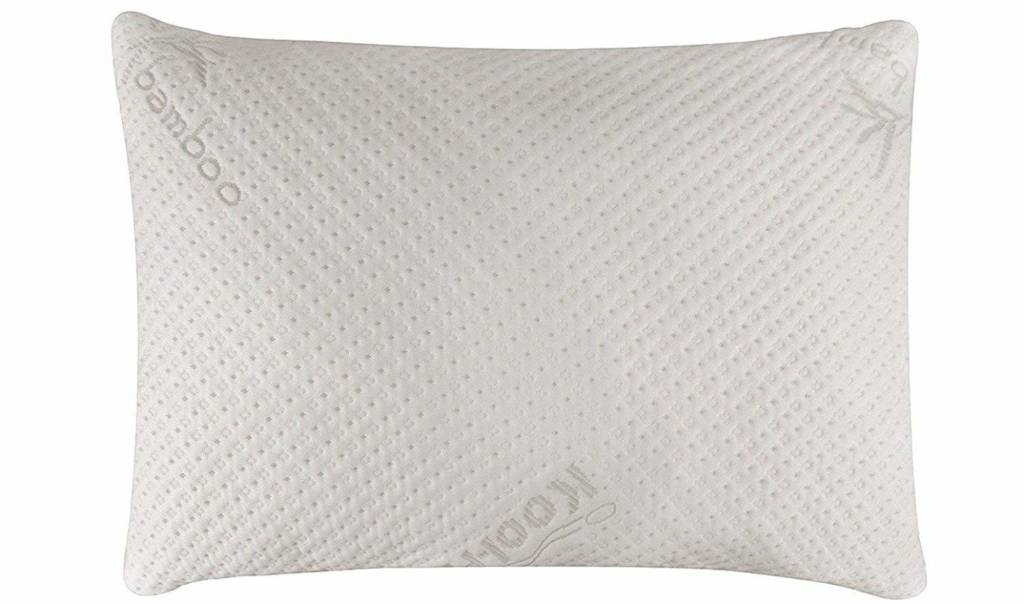
Snuggle-Pedic Ultra-Luxury Bamboo Shredded Memory Foam Pillow

The thought of orthopedic pillows brings to mind various curves that force you to sleep in positions you aren’t used to. The vast majority of orthopedic pillows have curves and contours because they are designed to keep your body in place while you sleep. But a pillow can also provide support and alignment even without being curvy. Take the example of the memory foam orthopedic pillow by Snuggle-Pedic. One of the most popular orthopedic pillows today, the Snuggle-Pedic pillow is shaped like regular pillows but has the ability to support the head, neck, and shoulders. It is filled with shredded memory foam and has a breathable, micro-vented, zipper outer cover that can be washed. The pillow is fully customizable.

Priced at $60, this is one of the most affordable orthopedic pillows out there. Don’t be misled by its shape; even though it doesn’t have any fancy curve, it is excellent at providing support and alignment because of the memory foam molds to the shape of the body. Opening the outer cover also allows you to open the pillows itself, to adjust the stuffing inside. The memory foam is hypoallergenic, so even those with allergies can safely use this pillow. What’s more, Snuggle-Pedic also offers a 90-night sleep trial and free shipping. The product is made entirely in the US and easily available on online sites like Amazon.

Pros

  • Fully customizable
  • Healthy and safe materials
  • Great for chronic pain and sleep apnea
  • Machine washable
  • 90-night sleep trial
  • Affordable

Cons

  • Off-gassing required
  • Requires re-fluffing

Nature's Guest Cervical Support PillowNature’s Guest Cervical Support Pillow

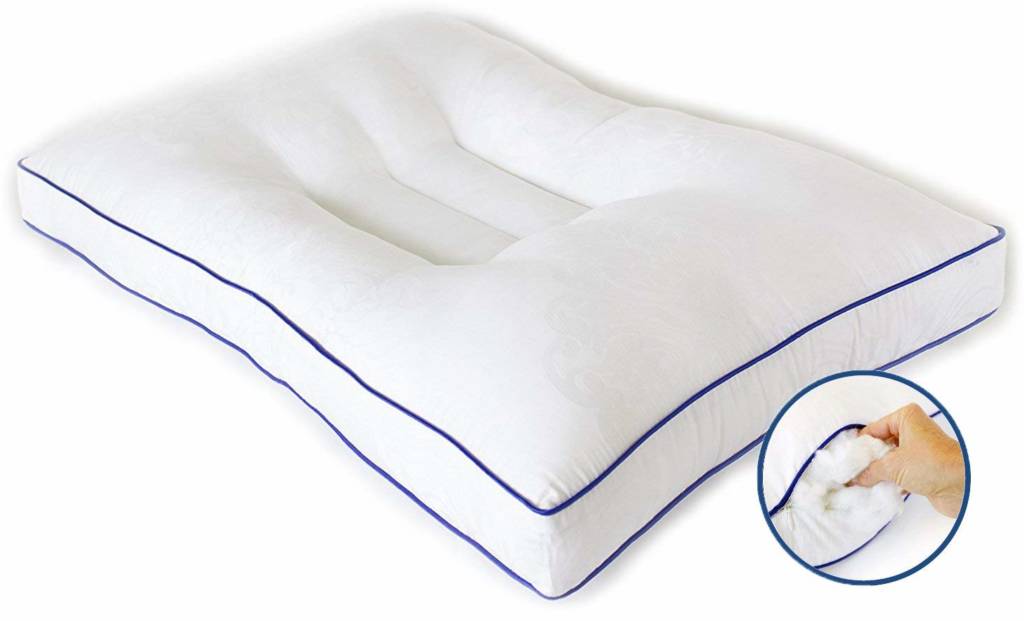
If you want a pillow for neck or shoulder pain that’s not made from foam or latex, Nature’s Guest makes this cervical pillow with microfiber. The pillow is designed like a nest with an indentation in the middle and gussets at the edges. The indentation is for the head, and the gussets are for the neck and shoulders. Nature’s Guest Cervical Support Pillow is recommended by chiropractors to those who suffer from neck and shoulder pain and is priced at around $60.

The cervical pillow has a washable cotton cover, and the filling is made of cotton and wood pulp. The firmness of the pillow can be adjusted by removing or adding filling. The cotton in the cover and in the filling helps in breathing and doesn’t make the pillow hot. The neck roll is adjustable and moves your neck back to the right spot even when you move around. Those suffering from degenerative disc problems claim to have used and benefitted from this pillow. However, it is not too suitable for side sleepers.

Pros

  • Great support for neck and spine
  • Two different heights
  • Fully natural
  • Adjustable firmness
  • Breathable

Cons

  • Not suitable for side sleepers

sleep artisan

Sleep Artisan Luxury Side Sleeper Pillow

This is a crescent-shaped pillow designed for side sleepers. It isn’t made with either memory foam or microfiber, but rather it is made with natural latex. A completely healthy and eco-friendly option, this side sleeper pillow is made in California. Like all orthopedic pillows, it is adjustable and conforms to the shape of the neck, matter which side you sleep on. If you are a back sleeper, this pillow can be placed under the head to provide support to the neck. Breathable and hypoallergenic, natural latex contours to the shape of your body, and keeps you supported throughout the night. Because natural latex is expensive, the pillow is priced at $99.

Pros

  • Completely natural and eco-friendly
  • Superior natural latex
  • Works for both side and back sleeping

Cons

  • Expensive

UTTU Adjustable Memory Foam Pillow

If you’re looking for an orthopedic pillow that’s suitable for all types of sleepers, then the UTTU Adjustable Memory foam pillow should be a great fit. Not only is this pillow great for sleeping with but also supportive when you are sitting for long hours working at your desk. Made with dynamic foam, this contoured pillow has a high density, preventing sinkage and sweating. The higher contour is for side sleepers while the lower counter is for back and stomach sleepers. Unlike memory foam, the dynamic form does not lose its firmness with use and always returns to shape despite all the molding. The cover is made of bamboo fiber that is soft and breathable, and machine washable. The UTTU Adjustable pillow is cheaper than other options on this list, at $39.

Pros

  • Breathable cover
  • Adjustable firmness
  • Soft and supportive
  • Suitable for all sleeping positions
  • 96-night sleep trial
  • Affordable

Cons

  • Could be a little too firm

Malouf Shoulder Zoned Dough PillowMalouf Z Shoulder Zoned Dough Memory Foam Pillow

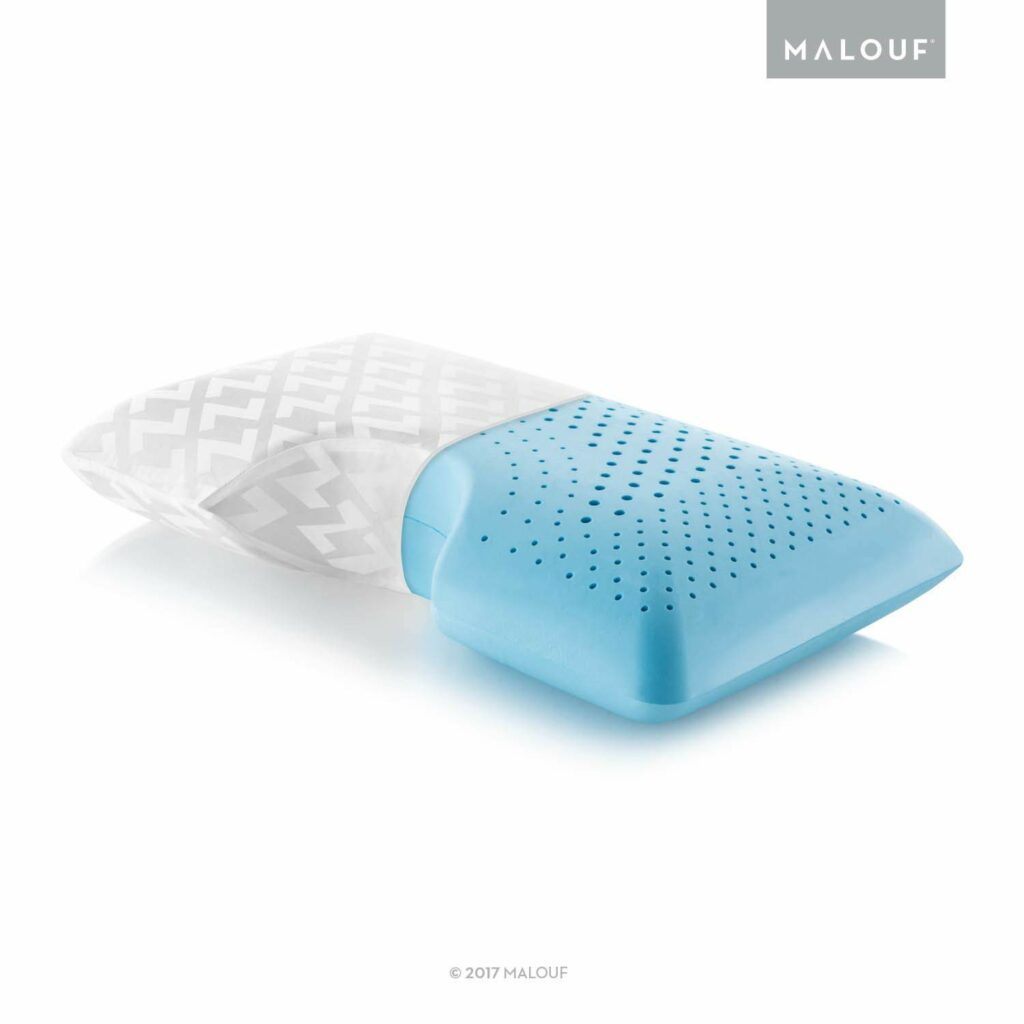
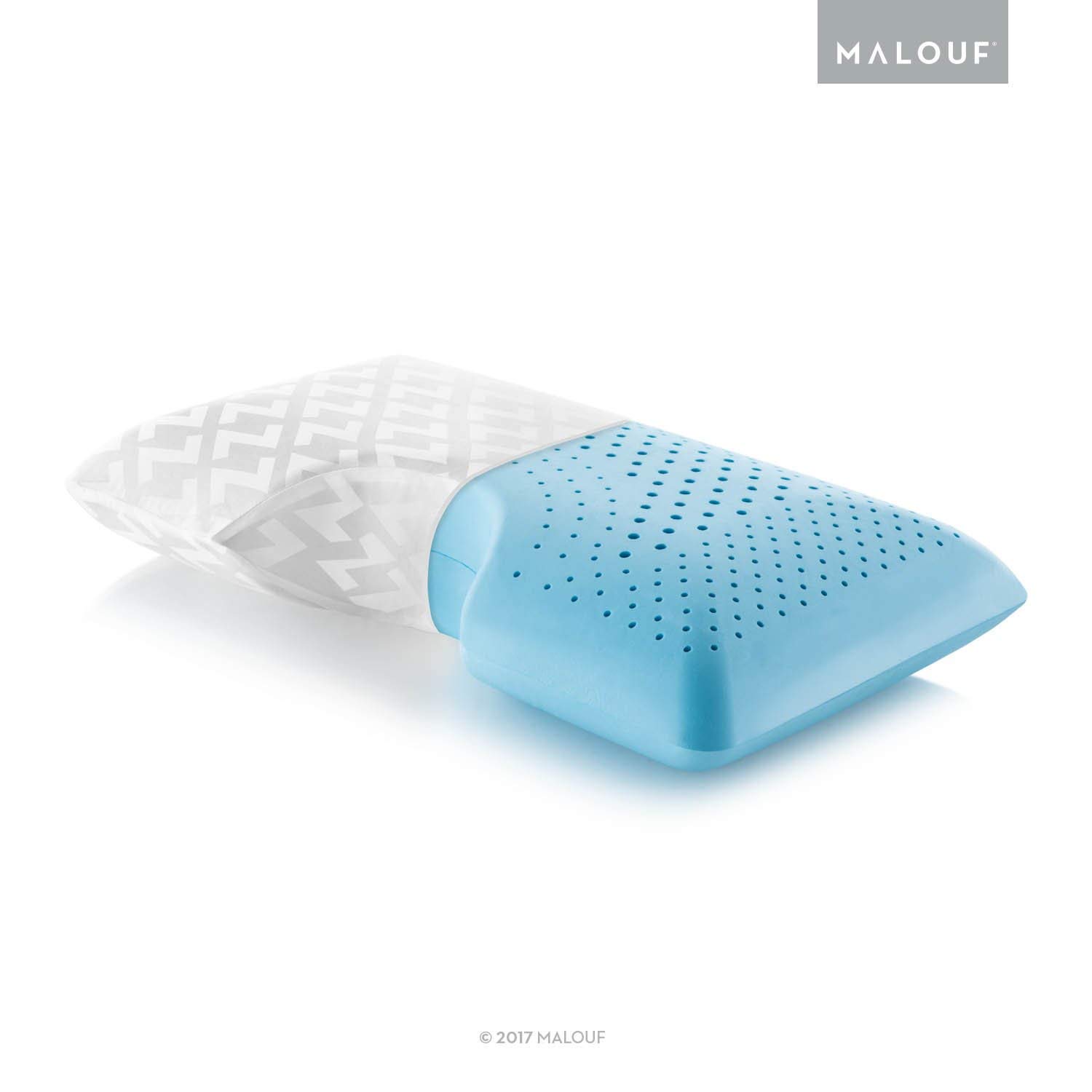
Malouf makes a variety of different orthopedic pillows, infused with gel, lavender, peppermint, etc. The Z Shoulder Zoned pillow is made of memory foam and is gel infused. This pillow is designed to provide support to the shoulder region and is made with a number of different technologies. It has a unique shoulder recess specifically designed for side sleepers to minimize tossing and turning, while the zoned technology separates the pillow in two parts, one that is made of memory foam and supports the head and neck and the other that is infused with gel and promotes airflow. The outer cover is made of breathable TENCEL, which wicks away moisture and regulates heat. The memory foam is CertiPUR-US certified, and the product comes with a 5-year warranty.

Pros

  • Gel infused memory foam
  • Specially designed for side sleepers
  • Keeps cool and wicks away moisture
  • Hypoallergenic memory foam
  • 5-year warranty

Cons

  • Off-gassing required
  • Expensive at $84

Orthopedic pillows come in different shapes, designs and pricing options. The final decision is a matter of personal preference and comfort. Remember to research from beforehand to avoid getting overwhelmed with all the different options available.

Frequently Asked Questions About Best Orthopedic Pillows: Must-Have Comfort for Sleep

Is an orthopedic pillow worth the investment for someone without chronic pain?

Yes, an orthopedic pillow is a worthwhile investment even if you do not have chronic pain, as it enhances overall sleep quality by supporting the neck and spine. These pillows maintain natural spinal alignment and can prevent discomfort from developing over time. You can experience the benefits firsthand by visiting our Encinitas, CA showroom.

Who would benefit most from using a body pillow?

A body pillow is particularly beneficial for pregnant women, as it provides full-body support for a more comfortable sleep position. These long, curvy pillows can also help other individuals seeking comprehensive support to alleviate pressure points and improve alignment.

How do orthopedic pillows compare to regular pillows in terms of support?

Orthopedic pillows offer enhanced and targeted support for the neck, spine, and head, unlike regular pillows that typically have generic shapes and fillings. They are crafted according to orthopedic guidelines to ensure better alignment and comfort, often using materials like memory foam or latex. Yawnder's selection at our San Diego area showroom allows for direct comparison of different support levels.

What are the downsides of using a wedge pillow for sleep?

The article does not explicitly list downsides for wedge pillows, but their primary function is elevation, which might not be suitable for all sleeping preferences. Wedge pillows are versatile, aiding conditions like acid reflux and sleep apnea, but some individuals might find the angled position uncomfortable for an entire night.

Is an orthopedic pillow good for side sleepers?

Yes, an orthopedic pillow can be excellent for side sleepers, as different pillows are crafted for various sleep positions, and side sleepers often require a more elevated design. Cervical or contour pillows, for instance, align with the neck's curves, which can be crucial for side sleepers to maintain proper spinal alignment. Our Encinitas showroom staff can help you find the ideal orthopedic pillow for side sleeping.

Where can I try out different types of orthopedic pillows in person?

You can try out different types of orthopedic pillows in person at Yawnder's Encinitas, CA showroom. Our showroom provides an opportunity to experience various pillow materials and designs, helping you choose the best fit for your specific support needs. Our expert staff can guide you through the options, including cervical, neck, body, knee, and wedge pillows.

Want to test this in person? Visit our Encinitas showroom or call 858-232-5760.

How to Stop Snoring Naturally

Blog Image How to Stop Snoring
Bottom line

Addressing snoring involves understanding its causes, which range from excess weight and alcohol consumption to nasal problems and sleep position. Effective remedies include lifestyle adjustments, changing sleep habits, and, in some cases, medical intervention. While anyone can snore occasionally, habitual snoring can disrupt sleep quality and lead to more serious conditions like sleep apnea.

Quick Facts · How to Stop Snoring Naturally
PriceNot listed
FirmnessNot listed
TypeNot listed
Best forIndividuals seeking natural snoring remedies and lifestyle modifications
Trial / WarrantyNot listed
Yawnder verdictComprehensive guide to natural snoring solutions · 4.8/5
Throughout the US about 70 million people suffer from unsound sleep. They don’t necessarily have to suffer from a sleep disorder; poor quality sleep or not getting the necessary hours of rest often has the same effects as a sleep disorder. Blame it on hectic work schedules or an unhealthy lifestyle, but poor sleep quality has been on the rise for the last many years. Some people suffer from chronic insomnia, some have fragmented sleep, while some people stay up because of ambient factors. Yes, believe it or not, but external factors are often responsible for causing unsound sleep. From noisy neighbors to the sound of traffic, to snoring (leading to the question how to stop snoring), various environmental factors are responsible for contributing to disturbed sleep. Sometimes the source of distraction maybe right next to us. We are talking about snoring. At the same time, snoring is both a disorder and a distraction. However, snoring is also more normal than any other sleep issue. In fact, it isn’t considered an issue at all, not until it starts to disturb the people around the snorer. Snoring is a problem that only the people around the snorer are aware of. Once the person is asleep, they do not know if they snore. In some cases, they may refuse to believe that they snore when told by others. It is often embarrassing, and not many like to admit that their snoring keeps others awake at night. Every person snores at some point. They may snore softly when in a deep sleep or when they have a cold. But it isn’t something regular or permanent. Such snoring is also quite tolerable to others around the sleeper. The problem arises when the snoring is loud enough to not only keep the people in the room awake but also disturb the others in the house even through closed doors. This is when snoring is considered a sleep disorder and needs treatment.

What Is Snoring?

Simply put snoring is the result of a blocked air passageway. It generally happens when there is an obstruction to breathing. When a person sleeps the muscles in the body relax. The problem is, in snorers, the throat muscles also relax and block the air passage. This creates obstructed air movement and does not let the person breathe freely. As a result, the strained breathing creates a noise. It is easy to simply brush aside snoring and not consider it a problem at all. But the fact is the sound of snoring can sometimes exceed 100 decibels, which is louder than the sound of a road drill. Even if the person remains unaware of the fact that he or she snores, the loud noise can cause sleep disturbances to others around him forcing them to seek remedies to stop snoring. The loudness of snoring can lead to chronic insomnia and for sleep quality in others sharing the room with the snorer. Snoring is not a problem when it is transient or because of a condition like a cold. It is also more common among men and those above middle age. Habitual snoring affects around 90 million people in the US alone. Children can also sometimes be habitual snorers, but the generally outgrow it as they get older.

What are the Most Common Causes of Snoring?

As already discussed, the primary cause of snoring is obstruction of the air passage. But the obstruction can stem from various causes. Snoring is more an annoyance than anything else. It is not readily seen as a sleep disorder or a health problem. Snoring can often remain undiagnosed, and even though it may not be dangerous for the person, it can lead to various other problems.

Most Common Causes of Snoring

Excess Weight: Overweight or obese people are more at risk for snoring. In fact, more than half of the total number of people who snore are overweight or obese. Any person with a body mass index of 29.9 or above is considered overweight, while a body mass index of 40 and above is considered obese. BMI is not always the sole yardstick for measuring excess weight. Men with a neck circumference of 17 inches or higher are also at risk for snoring. This is because overweight people have thick palates that narrow down the airway and obstruct breathing. This is not really a disorder but more of a lifestyle problem, affecting a vast number of people in the US. Alcohol: Many people are fond of consuming an alcoholic drink after dinner or before bed because they find it relaxing. Indeed, alcohol does have a relaxing effect on the body. Alcohol is known to relax all the muscles of the body including the throat muscles. When throat muscles relax, they block the airway and obstruct breathing. That is the reason why any person with sleep disorders or respiratory troubles should avoid alcohol at least two hours before bedtime. Nasal Problems: Respiratory or nasal problems can often be the reason behind loud snoring. Chronic nasal congestion and deviated nasal septum are one of the biggest physiological reasons behind snoring. Nasal congestion can have a variety of causes including allergies, common cold, sinusitis, environmental irritants, and nasal polyps. The septum is the wall between the nostrils. When it is crooked, it leads to a condition called deviated nasal septum. This causes airway obstruction and prevents normal breathing, leading to snoring. All types of nasal congestion require a medical diagnosis. Sleep Deprivation: Snoring and sleep deprivation are connected in two ways: sleep-deprived people tend to snore more, and those who snore are also usually sleep deprived. When sleep deprived people finally get to rest, they are more likely to snore than others. Sleep Position: The position in which a person sleeps is also a possible reason for snoring. Those who sleep on their back are more likely to snore than those who sleep on the sides or on the stomach. This is because when a person sleeps on the back, the air passage is narrowed down due to the relaxed throat muscles. Those who sleep on their backs and snore loudly may try changing the sleep position to see if there is any improvement.

What Habitual Snoring Can Lead To?

snoring effects Snoring may not always be the problem itself. Throat muscles relax in every person when they sleep, but when it begins to obstruct the breathing, it becomes a problem. When snoring goes undiagnosed, it can lead to other issues. Some of them are: Obstructive Sleep Apnea: In several cases, snoring is a sign of a more serious disorder called obstructive sleep apnea. Sleep apnea is of a number of types, but the most common is obstructive sleep apnea, in which the air passage is blocked by the relaxing throat muscles. This not only causes snoring but also makes the breathing stop and start abruptly throughout the night. As a result, the person fails to get proper rest, wakes up with a dry mouth and throat and feels tired throughout the day. Snoring is usually the first sign of obstructive sleep apnea. Sleep Deprivation: When a person snores it means the breathing is obstructed. And when the breathing is obstructed sleep is hampered. When a person fails to breathe normally, it wakes them up several times at night, leading to chronic sleep deprivation in the long run. Inability to Concentrate: Snoring causes sleep deprivation and excessive daytime sleepiness. As a result, concentration and productivity suffer and the risk of accidents at work and on the road also increases. Health Problems: Failing to get 7 to 8 hours of sleep every night can lead to various health problems including heart disease and the risk of strokes in heart attacks. Insufficient sleep has also been linked to hormonal imbalances and an increase in appetite and weight gain. Sleep Divorce: Relationships are often affected when one of the partners snores. In fact, it isn’t surprising to find couples who have broken up or divorced because one of them was a loud snorer. Although underestimated, snoring is a big enough reason behind the degrading of relationships.

7 Effective Remedies to Stop Snoring

snoring remedies Although snoring can lead to various problems, it isn’t the end of the world. Snoring can often be managed with a few easy remedies. Some of them are:

Changing Sleep Position

Since back sleepers are more likely to snore, the first remedy to try is changing the sleep position. If you are a back sleeper, try sleeping on your side for a change. If that seems difficult in the beginning use a body pillow for help. When you sleep on your side, your throat muscles do not relax into the air passage and do not obstruct the breathing. Many back sleepers who snore have reported a marked improvement when sleeping on the side.

Losing Weight

Most snorers are overweight, and in that case, losing weight is the only option. Although not too easy, maintaining the ideal body weight is one of the most effective ways to stop snoring. Following a proper diet and exercise is the best place to begin. A healthy BMI is between 21 and 25. Anything lower is underweight, and anything higher is overweight. Besides fat-burning exercises, strength training is also helpful in shedding fat, building muscles, and boosting metabolism.

Avoiding Alcohol and Sedatives

Alcohol and sedatives work the same way. They relax the muscles of the body, including that of the throat. When a person consumes alcohol or sedatives before bedtime, they are more likely to snore because the throat muscles relax further under the influence of the sedatives. Habitual snorers who consume alcohol or sedatives before going to bed should avoid them. This can bring about a significant improvement in snoring.

Practicing Better Sleep Hygiene

Snoring can often be a result of sleep deprivation and a lack of sleep hygiene. Maintaining a proper bedtime routine can alleviate most of the problems. Having a fixed sleep schedule, avoiding coffee and nicotine, and taking short naps are some of the ways to bring about quality sleep and reduce snoring.

Changing Pillows

Mattresses, pillows, and sheets house millions of dust mites and allergens. No matter how many times you wash them, they keep trapping dust and allergens. When a habitual snorer sleeps on such pillows and sheets, it causes allergies and adds to respiratory distress, making snoring worse. That is why pillows and sheets should be regularly changed and kept clean all the time. Also, make sure that the pillows keep your head and neck properly supported. If possible, stack two or three pillows to keep your head elevated while you sleep.

Hot Shower

Warmth helps clear blockages in the airway, removes congestion, and ease respiratory distress. Besides, a warm bath or shower will also help you sleep deeper. This could help lessen snoring that starts in the nose. You could also keep a bottle of saltwater rinse in the shower for rinsing your nose out with to open up the nasal passages. Besides taking a hot bath or shower, you may also consider buying a neti pot to clear the nasal passages with a saltwater solution.

Staying Hydrated

When the body is dehydrated, it produces thicker fluids. When your nasal secretions become thick, it blocks the airway and causes snoring. Dehydration can be one of the biggest reasons behind snoring sometimes. There are snoring sprays that prevent the nasal passages from sticking together.  Drinking enough water during the day often reduces snoring in dehydrated people. However, drinking too much water before bedtime isn’t recommended because it will only make you get up for the bathroom.

In Conclusion

The causes and treatment for snoring aren’t easy to determine without a medical diagnosis. There are anti-snoring devices such as Tongue Stabilizing Devices (or TSDs) and mandibular advancement devices that open up the airway, to prevent obstruction. These mouthpieces should always be used under the supervision of a doctor because only a healthcare practitioner will be able to determine the reason behind the snoring and suggest the right treatment options. In the meanwhile, home remedies and sleep hygiene can be tried to alleviate the distress for the snorer and others around. Snoring though may seem innocuous can be an indicator of a serious underlying health condition. It may even be affecting you in ways that might not be apparent – like affecting your sleep quality, diminishing your capabilities to concentrate on work, or even affecting your relationship with your partner. We have also created an infographic on this subject, feel free to share it with your friends and on your social networks. Happy sleeping! how to stop snoring infographic    

Our Favorite New Anti-Snoring Devices

  1. Smart Nora: Features: Contact-free snoring solution, customizable sensitivity, smart technology Unique aspect: A silent, non-invasive device that uses a gentle motion to adjust the user’s pillow in response to snoring Price: Approximately \$329

  2. SleepConnection: Features: Wrist-worn device, detects snoring and sends gentle electrical pulses to change sleeping position Unique aspect: Portable and convenient, promotes side sleeping to reduce snoring Price: Approximately $59.99

  3. Good Morning Snore Solution (GMSS): Features: Tongue stabilization device, medically tested, made of soft and comfortable BPA-free material Unique aspect: Uses tongue displacement technology to maintain open airways and reduce snoring Price: Approximately $69.95

  4. ZQuiet: Features: Mandibular advancement device, FDA-cleared, made of soft, flexible material for comfort Unique aspect: Designed to slightly advance the lower jaw to open airways and alleviate snoring Price: Approximately $79.95

  5. AirSnore: Features: Custom-fitted mouthpiece, mandibular advancement device, can be used with optional AirSnore drops for nasal congestion relief Unique aspect: Combines an easy-to-fit mouthpiece with natural essential oils to create a comprehensive snoring solution Price: Approximately \$49.95 (mouthpiece), \$89.95 (mouthpiece and drops)

Keep in mind that new devices may have been released since my knowledge cutoff date, so it’s a good idea to research the latest products and consult with a healthcare professional before making a decision.


Surgery for Snoring

Several surgical options are available for treating snoring. These procedures are typically considered when conservative methods, such as lifestyle changes or anti-snoring devices, have failed to provide relief. The type of surgery recommended usually depends on the specific cause of the snoring. Some common surgical procedures include:

  1. Uvulopalatopharyngoplasty (UPPP): This procedure involves removing excess tissue from the soft palate and pharynx, which can reduce airway obstruction and alleviate snoring. The uvula may also be removed or shortened during this procedure.

  2. Palatal implants (Pillar Procedure): This minimally invasive procedure involves inserting small polyester rods into the soft palate. The implants stiffen the soft palate, reducing vibrations that cause snoring.

  3. Laser-assisted uvulopalatoplasty (LAUP): This procedure uses a laser to remove or reshape the uvula and a portion of the soft palate. The goal is to reduce airway obstruction and decrease snoring.

  4. Radiofrequency ablation (RFA) or Somnoplasty: This procedure uses radiofrequency energy to shrink and tighten the soft palate tissue. The process helps reduce airway obstruction and alleviate snoring.

  5. Genioglossus advancement (GA): This surgical procedure involves repositioning a portion of the lower jaw forward. This helps to pull the tongue forward, opening up the airway and reducing snoring.

  6. Septoplasty: This procedure is performed to correct a deviated septum, which can contribute to snoring. By straightening the nasal septum, airflow through the nasal passages is improved, potentially reducing snoring.

  7. Turbinate reduction: This procedure aims to reduce the size of the nasal turbinates, which are structures inside the nose that can become enlarged and obstruct airflow. Reducing the size of the turbinates can improve nasal breathing and potentially reduce snoring.

It is essential to consult with a healthcare professional, such as an otolaryngologist (ear, nose, and throat specialist), to determine the best course of action based on the specific cause of your snoring. Surgery carries inherent risks, and the benefits and potential complications should be carefully considered before pursuing this treatment option.


Why Do Fat People Snore?

Snoring is often more common in people who are overweight or obese, but there are several factors that contribute to this. The primary reason is that excess body fat, particularly in the neck and throat area, can lead to increased pressure on the airways. This additional pressure can partially obstruct the airway, causing vibrations in the surrounding tissues when air is forced through during breathing. These vibrations are what produce the sound of snoring.

Here are some factors that explain why overweight individuals may be more prone to snoring:

  1. Excess fat in the neck and throat: People who are overweight may have extra fat around their neck and throat, which can narrow the airway and make it more prone to collapsing or becoming obstructed during sleep. This increases the likelihood of snoring.

  2. Lower muscle tone: Individuals who are overweight or obese may have decreased muscle tone in the throat and neck, which can lead to increased airway obstruction and vibrations when breathing during sleep.

  3. Sleep position: Overweight individuals often sleep on their back, which can cause the tongue and other soft tissues in the throat to fall back into the airway, partially blocking it and contributing to snoring.

  4. Hormonal factors: Obesity can affect hormone levels in the body, which may contribute to changes in sleep patterns and the likelihood of snoring.

  5. Sleep apnea: Obstructive sleep apnea (OSA) is more common in overweight and obese individuals. This condition is characterized by repeated episodes of partial or complete airway obstruction during sleep, leading to disrupted sleep and frequent snoring.

What Specialist Do I See About My Snoring?

It’s important to consult with qualified healthcare professionals who specialize in sleep disorders and snoring when seeking help for snoring problems. While I cannot provide you with a specific list of experts, I can offer some guidance on the types of specialists you may want to consult:

  1. Otolaryngologists (Ear, Nose, and Throat specialists): These physicians specialize in the diagnosis and treatment of disorders related to the ear, nose, and throat, including snoring and sleep apnea.

  2. Sleep Medicine Specialists: These doctors have specialized training in sleep medicine and can diagnose and treat various sleep disorders, including snoring and sleep apnea.

  3. Pulmonologists: These physicians specialize in the diagnosis and treatment of lung and respiratory disorders, and some may have additional training in sleep medicine.

  4. Dentists with expertise in sleep dentistry: Some dentists have specialized training in treating snoring and sleep apnea using dental appliances, such as mandibular advancement devices.

  5. Neurologists: Some neurologists have specialized training in sleep medicine and can help diagnose and treat sleep-related disorders, including snoring and sleep apnea.

To find a snoring expert, you can:

  • Consult with your primary care physician for a referral to a specialist
  • Contact your insurance provider for a list of covered specialists in your area
  • Search online for local sleep clinics or specialists with positive reviews
  • Consult professional organizations, such as the American Academy of Sleep Medicine, for a directory of board-certified sleep medicine specialists.

Well Known Sleep Doctors

While there are many doctors and researchers who have contributed to the field of snoring research and sleep medicine, some notable pioneers in the area include:

  1. Dr. Christian Guilleminault: Dr. Guilleminault was a renowned sleep medicine specialist and researcher who made significant contributions to the understanding of sleep apnea and its connection to snoring. He was instrumental in the development of continuous positive airway pressure (CPAP) therapy, which is a widely used treatment for sleep apnea.

  2. Dr. Colin Sullivan: An Australian physician and researcher, Dr. Sullivan is credited with inventing the first continuous positive airway pressure (CPAP) device for treating obstructive sleep apnea in 1980. This invention revolutionized the treatment of sleep apnea and snoring.

  3. Dr. Meir Kryger: A prominent sleep medicine specialist, Dr. Kryger has contributed extensively to sleep research and is the author of several books on sleep medicine, including the “Principles and Practice of Sleep Medicine.” He has conducted research on various aspects of sleep disorders, including snoring and sleep apnea.

  4. Dr. William C. Dement: Known as the “Father of Sleep Medicine,” Dr. Dement was a pioneer in the field of sleep research. He was instrumental in establishing the first sleep disorders clinic at Stanford University and was a founding member of the American Academy of Sleep Medicine. While his research focused on many aspects of sleep, his work has greatly influenced the understanding and treatment of snoring and sleep apnea.

These doctors and researchers have made significant contributions to the field of sleep medicine, helping to advance our understanding of snoring and related sleep disorders. However, it is essential to recognize that the field of sleep medicine is constantly evolving, and many other researchers and clinicians continue to contribute to this area of study.

Best Books About Snoring

There are several books available that discuss snoring and related sleep disorders, offering insights into the causes, treatments, and management strategies. Here are some books that you may find helpful:

  1. “The Sleep Doctor’s Diet Plan: Lose Weight Through Better Sleep” by Dr. Michael Breus: While not solely focused on snoring, this book discusses the connection between sleep quality, weight, and overall health, which can be relevant for individuals dealing with snoring issues.

  2. “Snoring and Sleep Apnea: Sleep Well, Feel Better” by Dr. Ralph A. Pascualy and Sally Warren Soest: This book provides a comprehensive overview of snoring and sleep apnea, discussing the causes, symptoms, diagnosis, and treatment options available for these sleep disorders.

  3. “The Sleep Solution: Why Your Sleep is Broken and How to Fix It” by Dr. W. Chris Winter: Although not exclusively about snoring, this book offers practical advice and information on various sleep issues, including snoring and sleep apnea. It helps readers understand the science behind sleep and provides guidance on how to achieve better sleep quality.

  4. “Sleep Apnea – The Phantom of the Night: Overcome Sleep Apnea Syndrome and Win Your Hidden Struggle to Breathe, Sleep, and Live” by T. Scott Marrone and Gerald A. Smythe: This book offers a comprehensive guide to understanding and managing sleep apnea, a common cause of snoring. It covers a range of topics, including diagnosis, treatment options, and lifestyle changes that can help reduce snoring and sleep apnea symptoms.

  5. “Snoring: Causes, Diagnosis, and Treatment” by K. S. Clifford Chao and Dr. Peter C. Gay: This book offers a detailed overview of snoring, including its causes, diagnosis, and various treatment options available. It aims to provide a comprehensive resource for those dealing with snoring issues.

These books can provide valuable insights into snoring and related sleep disorders. However, it’s essential to consult with a healthcare professional if you are experiencing snoring issues, as they can provide personalized guidance on the best course of action based on your specific circumstances.


Most Famous Snoring Scenes In Movies

While snoring may not be a central plot point in many movies, there are several memorable scenes where snoring is used for comedic effect or to depict the character’s personality traits. Here are a few examples:

  1. “Sleeping Beauty” (1959): In this classic Disney animated film, one of the fairy godmothers, Merryweather, is shown snoring while sleeping.

  2. “Uncle Buck” (1989): In this John Hughes comedy, John Candy’s character, Buck Russell, is depicted snoring loudly in one scene, emphasizing his larger-than-life and somewhat unkempt persona.

  3. “Hook” (1991): In this adventure film, the character of Smee, played by Bob Hoskins, is shown snoring while sleeping in his hammock.

  4. “My Cousin Vinny” (1992): In this comedy, Mona Lisa Vito, played by Marisa Tomei, has a scene where she snores loudly while sleeping, to the surprise of her partner, Vinny Gambini, played by Joe Pesci.

  5. Sleepless in Seattle” (1993): In this romantic comedy, Tom Hanks’ character, Sam Baldwin, snores loudly while asleep on the couch, which is used as a humorous moment in the film.

  6. “Shrek” (2001): In the animated movie, Princess Fiona, voiced by Cameron Diaz, is shown snoring loudly in a scene where Shrek and Donkey are trying to rescue her.

  7. “The Great Outdoors” (1988): In this comedy, Chet Ripley, played by John Candy, is shown snoring loudly in a scene where his wife, Connie, played by Stephanie Faracy, is trying to have a conversation with him.

  8. “The Santa Clause” (1994): In this holiday comedy, Scott Calvin, played by Tim Allen, snores loudly while sleeping on the couch after a long night of delivering presents as Santa Claus.

  9. “MouseHunt” (1997): In this comedy, the character of Ernie Smuntz, played by Nathan Lane, snores loudly while sleeping in the same bed as his brother, Lars, played by Lee Evans. Their snoring is so intense that it causes the bedsprings to vibrate.

  10. “Harry Potter and the Philosopher’s Stone” (2001): In this fantasy film, the character of Rubeus Hagrid, played by Robbie Coltrane, is shown snoring loudly while sleeping on a train ride to Hogwarts.

  11. “Ice Age” (2002): In this animated film, the character of Manny the mammoth, voiced by Ray Romano, snores loudly in a cave while the other characters, Sid the sloth and Diego the saber-toothed tiger, try to sleep nearby.

  12. “The Chronicles of Narnia: The Lion, the Witch, and the Wardrobe” (2005): In this fantasy film, the character of Mr. Beaver, voiced by Ray Winstone, is shown snoring while sleeping in his house. The snoring is so loud that it wakes up the Pevensie children.

  13. “The Pink Panther Strikes Again” (1976): In this comedy, Inspector Clouseau, played by Peter Sellers, snores loudly while sleeping, to the annoyance of his boss, Chief Inspector Dreyfus.

  14. “City Slickers” (1991): In this comedy, Phil Berquist, played by Daniel Stern, snores loudly while sharing a tent with Mitch Robbins, played by Billy Crystal, and Ed Furillo, played by Bruno Kirby, during their cattle drive adventure.

  15. “The Emperor’s New Groove” (2000): In this animated film, the character of Pacha, voiced by John Goodman, snores loudly while sleeping next to Emperor Kuzco, voiced by David Spade, who has been transformed into a llama.

  16. “Bride and Prejudice” (2004): In this Bollywood adaptation of Jane Austen’s “Pride and Prejudice,” Mrs. Bakshi, played by Nadira Babbar, snores loudly while sharing a bed with her husband, Mr. Bakshi, played by Anupam Kher.

  17. “Kung Fu Panda” (2008): In this animated film, the character of Po, voiced by Jack Black, is shown snoring loudly while sleeping in the Jade Palace’s barracks, much to the annoyance of the Furious Five and Master Shifu.

These scenes depict snoring as a humorous or character-defining moment, often adding a lighthearted touch to the movie.

Frequently Asked Questions About How to Stop Snoring Naturally

What are the common causes of snoring?

Common causes of snoring include excess weight, alcohol consumption, nasal problems, sleeping position, and sleep deprivation. These factors can lead to obstructed airflow during sleep, causing the characteristic snoring sound. Yawnder understands these issues and can guide you toward solutions.

Is side sleeping good for stopping snoring?

Yes, transitioning to side sleeping can often mitigate snoring. Back sleepers are more prone to snoring because gravity can cause the tongue and soft tissues in the throat to block the airway. Yawnder's Encinitas showroom has mattresses designed to support various sleeping positions, which can help reduce snoring.

How does alcohol impact snoring?

Alcohol can significantly worsen snoring by relaxing the throat muscles, further obstructing air passage. To mitigate snoring, it is advisable to avoid alcohol intake at least two hours before sleep. This simple change can make a noticeable difference in sleep quality for both you and your partner.

Can excess weight cause snoring?

Yes, excess weight, particularly around the neck, greatly increases the likelihood of snoring by narrowing the airway. Over half of snorers are overweight, making healthy weight management a proactive step toward alleviating this problem. Addressing weight can also improve overall sleep health.

What are the downsides of habitual snoring?

Habitual snoring can indicate more serious conditions like obstructive sleep apnea and lead to sleep deprivation and cognitive impairment. Frequent awakenings due to snoring can impair concentration and productivity, affecting daily life. Understanding these impacts is crucial for seeking appropriate remedies.

Can I find solutions for snoring at a local mattress store?

While a mattress store primarily focuses on sleep surfaces, the Yawnder showroom in Encinitas, CA, can discuss how mattress types and pillow choices impact breathing and sleep position. Our sleep experts can help you explore options that support better sleep posture, potentially aiding in reducing snoring. We also carry pillows that can help keep your airway open.

Want to test this in person? Visit our Encinitas showroom or call 858-232-5760.

Brave Era Silk Travel Sheet: Your Must-Have Travel Savior

brave era travel sheet
Bottom line

The Brave Era Silk Travel Sheet is a portable, luxurious silk sleeping bag liner designed to provide a clean and comfortable sleep environment for travelers. It is ideal for anyone concerned about hotel hygiene, offering protection from allergens, bed bugs, and questionable linens. Travelers prioritizing hygiene and comfort on the go will find this an essential accessory.

Quick Facts · Brave Era Silk Travel Sheet: Your Must-Have Travel Savior
Price$109.99 (includes free U.S. shipping)
FirmnessNot listed
Type100% natural mulberry silk travel sheet
Best forTravelers seeking hygienic, comfortable, and hypoallergenic bedding
Trial / WarrantyNot listed / Not listed
Yawnder verdictEssential travel hygiene accessory · 4.8/5

Frequently Asked Questions About Brave Era Silk Travel Sheet: Your Must-Have Travel Savior

Is the Brave Era Silk Travel Sheet worth the price?

Yes, the Brave Era Silk Travel Sheet is worth its price for travelers prioritizing hygiene, comfort, and compact portability. It offers peace of mind against questionable hotel bedding and potential bed bugs, making it a valuable investment for frequent travelers.

Who is the Brave Era Silk Travel Sheet best for?

The Brave Era Silk Travel Sheet is best for frequent travelers, individuals with sensitive skin or allergies, and anyone concerned about the cleanliness of hotel linens. Its hypoallergenic and critter-resistant properties make it ideal for those seeking a hygienic sleep environment on the go.

How does the Brave Era Silk Travel Sheet compare to packing regular bed sheets for travel?

The Brave Era Silk Travel Sheet is significantly more convenient than packing regular bed sheets because it is ultra-lightweight and packs down to the size of an iPhone. Traditional bed linens are bulky and heavy, taking up substantial suitcase space, whereas this silk sheet offers a compact and luxurious alternative without the bulk.

What are the downsides of the Brave Era Silk Travel Sheet?

The primary potential downside of the Brave Era Silk Travel Sheet is its price point of $109.99, which may be a consideration for budget-conscious travelers. However, this cost reflects the luxury and functional benefits of 100% natural mulberry silk.

Is the Brave Era Silk Travel Sheet good for hot sleepers?

While the article does not explicitly state its cooling properties, silk is generally known for its breathable qualities that can help regulate temperature, making it a suitable option for many sleepers. Its natural fiber construction often outperforms synthetic materials in comfort.

Where can I try the Brave Era Silk Travel Sheet in person?

The article does not specify if the Brave Era Silk Travel Sheet is available for in-person viewing at the Yawnder San Diego showroom in Encinitas, CA. It would be best to contact Yawnder directly to inquire about product availability for hands-on testing.

Want to test this in person? Visit our Encinitas showroom or call 858-232-5760.

Sound Machine: The Must-Have Solution for Better Sleep

Marpac Dohm
Bottom line

A sound machine is an effective tool for achieving better sleep by masking environmental noises. It is best for individuals in noisy environments or those suffering from fragmented sleep due to outside disturbances, but it may not address sleep issues stemming from medical conditions. Its primary benefit is creating a consistent auditory backdrop for uninterrupted rest.

Quick Facts · Sound Machine: The Must-Have Solution for Better Sleep
PriceNot listed
FirmnessNot listed
TypeSound machine
Best forUrban dwellers, individuals with noisy neighbors, light sleepers
Trial / WarrantyNot listed
Yawnder verdictA practical aid for auditory disurbances · 4.8/5

Frequently Asked Questions About Sound Machine: The Must-Have Solution for Better Sleep

What are the most common causes of restless sleep?

Restless sleep can stem from various factors including temporary physical ailments, underlying medical conditions, environmental disturbances, and psychiatric issues. Physical factors like fevers or chronic pain can disrupt sleep, while medical conditions such as sleep apnea lead to fragmented rest. Noisy surroundings or mental health challenges like anxiety further contribute to poor sleep quality.

Who is a sound machine best for?

A sound machine is best for individuals experiencing restless sleep due to environmental noise, medical conditions like sleep apnea, or psychiatric causes such as anxiety. These devices help mask disruptive sounds, promoting a more consistent and restorative sleep cycle. Many customers in our San Diego showroom find them particularly beneficial for creating a peaceful sleep environment.

What medical conditions frequently interfere with sleep?

Sleep apnea is a primary medical condition that significantly interferes with sleep, characterized by interrupted breathing and frequent awakenings. Other conditions like asthma, restless legs syndrome, nightmares, and night terrors can also hinder sleep quality. These issues often leave individuals feeling fatigued even after a full night's rest.

Is a sound machine good for someone living in a noisy neighborhood?

Yes, a sound machine is particularly good for someone living in a noisy neighborhood, as it effectively masks disruptive ambient sounds. By creating a consistent, soothing background noise, it can help block out street noise, conversations, or other disturbances. This allows for a more peaceful and uninterrupted sleep environment.

How do environmental factors impact sleep quality?

Environmental factors significantly impact sleep quality by introducing unwanted disturbances that prevent restorative rest. Noisy surroundings, such as bustling streets or shared living spaces with conversations or pets, can constantly interrupt sleep. Improving these conditions often leads to a noticeable improvement in sleep patterns, as observed by customers visiting our Encinitas showroom.

What are the downsides of relying on a sound machine for sleep?

While the article focuses on the benefits, potential downsides of relying on a sound machine could include becoming overly dependent on it to fall asleep. Some individuals might find it difficult to sleep in silence or without the specific sound they are accustomed to. However, for many, the benefits of masking disruptive noise outweigh these potential drawbacks.

Want to test this in person? Visit our Encinitas showroom or call 858-232-5760.

Fragmented Sleep: Exclusive Tips for Restful Nights

fragmented sleep

Bottom line

Fragmented sleep involves frequent nighttime awakenings, leading to daytime fatigue and other health issues. It is often caused by lifestyle choices, temporary discomforts, or underlying sleep disorders like sleep apnea. Addressing sleep-maintenance insomnia by avoiding daytime naps can be an effective remedy.

Quick Facts · Fragmented Sleep: Exclusive Tips for Restful Nights
Price Not listed
Firmness Not listed
Type Not listed
Best for Individuals experiencing chronic nighttime awakenings
Trial / Warranty Not listed
Yawnder verdict Crucial for understanding sleep health · 4.8/5

What Causes Fragmented Sleep? Understanding Causes, Treatment, and Lifestyle Changes

At the end of a long day, sleep should serve as a restorative process, yet for many, the night becomes a struggle filled with interruptions. Instead of the restful slumber we crave, many people find themselves tossing and turning, waking frequently, and grappling with the challenge of falling back asleep. This phenomenon is known as fragmented sleep, and it can have a significant impact on our well-being.

Understanding Fragmented Sleep

When discussing fragmented sleep, it’s essential to recognize its specific characteristics. Individuals experiencing this type of sleep find themselves waking up multiple times during the night. These awakenings can vary from brief moments where one may quickly drift back into slumber to prolonged periods of restlessness marked by difficulty returning to sleep. The consequences of fragmented sleep are profound; many affected individuals greet the morning feeling fatigued, which can snowball into a host of challenges throughout the day.

Common symptoms associated with fragmented sleep include persistent daytime drowsiness, morning headaches, impaired memory, and difficulties with concentration.

Why Does Fragmented Sleep Matter?

The implications of fragmented sleep extend far beyond mere tiredness. Recent studies suggest that the adverse effects of fragmented sleep can be as severe as those of not sleeping at all. This reality prompts the questions: Why does fragmented sleep often go unrecognized as a genuine issue? Many may shrug it off as a minor inconvenience but soon find themselves grappling with unwelcome symptoms like headaches and overwhelming fatigue during waking hours.

Most adults require between seven to eight hours of uninterrupted sleep each night to maintain optimal functioning. Anything less can be detrimental. Those who believe they can thrive on just four hours of sleep may not notice immediate repercussions, yet the detrimental effects of insufficient rest are insidious and cumulative.

Chronic sleep deprivation elevates stress, triggers increased hunger, and hampers our body’s ability to process calories effectively. Additionally, impaired focus can lead to workplace inefficiencies and accidents. Over time, the adverse effects of insufficient sleep may contribute to serious health complications, including elevated blood pressure, cardiovascular disease, and increased blood sugar levels.

Causes of Fragmented Sleep

Fragmented sleep can stem from diverse origins. In many cases, short-term disruptions are situational and transient. Awakening frequently during the night may be attributed to caring for a newborn or dealing with temporary discomfort from an illness, such as a cough or back pain. Once the underlying issues resolve, many can return to more stable sleep patterns.

Conversely, fragmented sleep can also be a symptom of deeper sleep disorders. Conditions such as sleep apnea, chronic snoring, and restless leg syndrome contribute to what’s known as sleep-maintenance insomnia, which involves difficulty remaining asleep. This stands in contrast to sleep-onset insomnia, characterized by challenges in falling asleep initially.

Lifestyle choices also play a critical role in sleep quality. Excessive caffeine or alcohol consumption, late-night exercise, and prolonged daytime napping can interfere with achieving restorative sleep. While there may be additional causes leading to chronic fragmented sleep, a healthcare professional can provide a comprehensive assessment and diagnosis.

Effective Remedies for Fragmented Sleep

When tackling fragmented sleep, targeting sleep-maintenance insomnia can often yield quicker results than addressing sleep-onset insomnia. One of the most straightforward strategies is to embrace tiredness and resist the urge to nap during the day. Allowing fatigue to build naturally can facilitate both falling asleep and remaining asleep during the night. Individuals who are genuinely exhausted are less likely to experience interruptions in their sleep.

Creating a sleep-friendly environment is essential. Eliminate distractions by turning off electronic devices, repairing any annoying noises (like dripping faucets), and using an eye mask to block out light. If external sounds are a factor, consider keeping windows shut during the night. Additionally, steering clear of consuming fluids close to bedtime can help mitigate those disruptive late-night bathroom trips.

If fragmented sleep persists despite these adjustments, it is wise to consult a healthcare professional. They can help identify any underlying medical conditions or sleep disorders that may require intervention.

Conclusion

Fragmented sleep can significantly hinder daily life, leading to fatigue, impaired concentration, and various health issues. Recognizing the importance of sleep and addressing the causes of fragmented sleep can lead to improved overall well-being. By making informed lifestyle choices and seeking professional guidance when necessary, individuals can work towards achieving the restful, uninterrupted sleep they deserve.

Frequently Asked Questions About Fragmented Sleep: Exclusive Tips for Restful Nights

What is fragmented sleep and why does it matter?

Fragmented sleep is characterized by waking up multiple times during the night, leading to daytime fatigue and other detrimental health effects. Studies suggest its adverse effects can be as severe as not sleeping at all, contributing to issues like elevated stress, increased hunger, and impaired focus.

What are the common causes of fragmented sleep?

Fragmented sleep can be caused by temporary disruptions like caring for a newborn or illness, deeper sleep disorders such as sleep apnea or restless leg syndrome, and lifestyle choices like excessive caffeine, alcohol, or late-night exercise. These factors interfere with maintaining continuous sleep throughout the night.

Is fragmented sleep a serious health issue or just a minor inconvenience?

Fragmented sleep is a serious health issue with profound implications beyond mere tiredness. Chronic sleep deprivation from fragmented sleep can lead to serious health complications, including elevated blood pressure, cardiovascular disease, and increased blood sugar levels over time.

How much uninterrupted sleep do most adults need to avoid fragmented sleep issues?

Most adults require between seven to eight hours of uninterrupted sleep each night to maintain optimal functioning and avoid the negative effects of fragmented sleep. Consistently getting less can lead to cumulative detrimental effects on overall health and well-being.

Can lifestyle choices really impact fragmented sleep?

Yes, lifestyle choices significantly impact sleep quality and can contribute to fragmented sleep. Excessive consumption of caffeine or alcohol, late-night exercise, and prolonged daytime napping can all interfere with achieving restorative and continuous sleep.

Where can I find more information or products to help with sleep in the San Diego area?

For more information on improving your sleep and to experience quality bedding options, you can visit the Yawnder showroom in Encinitas, CA. While this article focuses on understanding fragmented sleep, the right mattress can often be a part of improving sleep quality.

Want to test this in person? Visit our Encinitas showroom or call 858-232-5760.

Alcohol’s Risky Effect: Boost Your Sleep Quality Now!

Alcohol And Sleep

Bottom line

Alcohol significantly disrupts sleep quality by fragmenting sleep, hindering REM cycles, and interfering with circadian rhythms. While it may induce initial drowsiness, its overall effects lead to poorer, less restorative sleep. Avoiding alcohol before bed can improve sleep health and reduce the risk of sleep disorders.

Quick Facts · Alcohol’s Risky Effect: Boost Your Sleep Quality Now!
Price Not listed
Firmness Not listed
Type Not listed
Best for Individuals seeking to improve sleep quality; those with restless nights
Trial / Warranty Not listed
Yawnder verdict Essential guide to improving sleep quality · 4.8/5

How Does Alcohol Affect Your Sleep?

Many individuals believe that a drink before bed can promote restful slumber. It’s not uncommon to hear someone mention their nightly ritual of a ‘nightcap,’ a warm alcoholic beverage intended to calm the mind and ease the body into sleep. While many report a sense of drowsiness after consuming alcohol, the reality is that this seemingly harmless habit can significantly disrupt both the quality and quantity of your sleep. Understanding how alcohol affects your sleep is crucial to ensuring a more restorative night.

The Paradox of Alcohol and Sleep: A Closer Look

At first glance, alcohol appears to be a helpful sleep aid; it allows many to fall asleep rapidly. However, research suggests that this effect is short-lived and ultimately detrimental. Initially, alcohol promotes deep sleep, often referred to as slow-wave sleep. During this phase of sleep, delta brain waves dominate, playing a vital role in memory consolidation and overall cognitive function. Yet, as the night progresses, alcohol stimulates alpha brain activity, contrary to the restorative delta patterns that should prevail during sleep.

This interplay of delta and alpha activity leads to fragmented sleep and hinders the essential REM cycle—considered the most crucial phase of sleep for emotional regulation and recovery. Instead of experiencing the deep rejuvenation that comes from healthy REM sleep, many individuals wake up feeling groggy, disoriented, or outright fatigued. These effects highlight the essential truth: alcohol does not facilitate quality sleep.

Impact on Circadian Rhythm

Another critical aspect of how alcohol affects your sleep lies in its interference with your circadian rhythm—the internal clock regulating sleep-wake cycles. Alcohol consumption before bed can disrupt the balance of neurotransmitters and hormones responsible for signaling sleepiness. The body produces adenosine, a natural chemical that promotes sleep, in response to alcohol. However, this effect is fleeting; once adenosine levels drop, awakenings in the night become common. Many find themselves waking up in the early hours of the morning, battling fatigue when they should be resting peacefully.

The Role of REM Sleep in Sleep Quality

As previously mentioned, the relationship between alcohol and REM sleep significantly contributes to poor sleep quality. REM sleep is crucial for emotional resilience and memory processing. When alcohol interrupts this phase, individuals may experience cognitive deficits and mood instability the following day. The cumulative effects of frequent alcohol consumption can lead to chronic sleep disturbances, leaving people feeling trapped in a cycle of fatigue and irritability.

Alcohol, Sleep Disorders, and Breathing Difficulties

Compounding the negative effects on sleep, alcohol is also linked to an increased risk of sleep disorders, particularly conditions like sleep apnea and snoring. As a sedative, alcohol relaxes the muscles throughout the body, including those in the throat. This relaxation can worsen breathing issues during sleep, leading to interrupted rest and poorer sleep quality. If you already suffer from any sleep-related issues, consuming alcohol before bed can amplify these problems, creating a ticking time bomb for restless nights.

Frequent Bathroom Trips and Sleep Disruption

Moreover, alcohol has a diuretic effect, which can lead to increased trips to the bathroom during the night. When the body consumes alcohol, it often prompts a more urgent need to urinate. This disruption interrupts sleep cycles, further compounding feelings of fatigue when starting the day. Given that quality sleep relies heavily on uninterrupted periods of rest, every bathroom trip detracts from sleep efficiency.

Rethinking Bedtime Habits

In light of the various ways alcohol affects your sleep, it becomes clear that cutting back on nighttime drinking may be the key to achieving restorative rest. While many enjoy ending their day with a glass of wine or a cocktail, it’s essential to consider the trade-offs involved. If you find that you consistently wake up feeling tired or restless, you may want to reevaluate your drinking habits.

Timing is also critical; if you choose to drink, aim to finish at least two hours before bed. This window allows your body to metabolize the alcohol and transition into a more conducive state for sleep. In many cases, simply shifting your drinking schedule can lead to profoundly better sleep quality.

Conclusion

The link between alcohol and sleep quality is intricate and multifaceted. While a drink may initially seem like a comforting companion to help you fall asleep, the subsequent disturbances can lead to feelings of fatigue and irritability the following day. For those struggling with sleep issues, rethinking the presence of alcohol in your nightly routine is essential. By making conscious decisions about when, how much, and if you drink at all, you can pave the way for a more restful, rejuvenating sleep experience. Embrace a lifestyle that supports recovery and well-being—your sleep health will thank you.

Frequently Asked Questions About Alcohol’s Risky Effect: Boost Your Sleep Quality Now!

Is alcohol a good sleep aid?

No, alcohol is not a good sleep aid; while it may initially help you fall asleep, it ultimately disrupts the quality and quantity of your sleep.

What are the downsides of drinking alcohol before bed?

The downsides of drinking alcohol before bed include fragmented sleep, hindered REM cycles, interference with circadian rhythm, and worsening of sleep disorders like sleep apnea.

How does alcohol affect REM sleep?

Alcohol hinders the essential REM sleep cycle, which is crucial for emotional regulation and recovery, leading to cognitive deficits and mood instability the following day.

Who is most affected by alcohol’s negative impact on sleep?

Individuals who already suffer from sleep-related issues or those prone to snoring and sleep apnea are most affected by alcohol’s negative impact on sleep, as it relaxes throat muscles and exacerbates these conditions.

Where can I learn more about improving sleep quality if I stop drinking alcohol?

You can learn more about improving sleep quality and find products that support restorative rest by visiting our Yawnder showroom in Encinitas, CA, where you can speak with sleep experts.

Does alcohol cause frequent bathroom trips at night?

Yes, alcohol has a diuretic effect, which can lead to increased trips to the bathroom during the night, further disrupting sleep.

Want to test this in person? Visit our Encinitas showroom or call 858-232-5760.

Sleep’s Impact on Poverty: Must-Have Insights for Recovery

sleep and poverty
Bottom line

Poverty significantly impacts sleep quality by limiting access to safe housing, creating inflexible work conditions, and exacerbating sleep deprivation. This two-way relationship reveals systemic challenges where lower socioeconomic status hinders restorative sleep due to factors like noise, long commutes, and demanding jobs. Addressing these root causes is crucial for improving public health and reducing socioeconomic disparities.

Quick Facts · Sleep’s Impact on Poverty: Must-Have Insights for Recovery
PriceNot listed
FirmnessNot listed
TypeNot listed
Best forIndividuals and policymakers interested in the link between socioeconomic status and sleep quality
Trial / WarrantyNot listed
Yawnder verdictInsightful analysis of sleep disparities · 4.8/5

Frequently Asked Questions About Sleep’s Impact on Poverty: Must-Have Insights for Recovery

Is addressing sleep crucial for breaking the cycle of poverty?

Yes, sleep is a vital pillar of health and well-being, and inadequate rest can hinder upward mobility and perpetuate poverty. Poor sleep affects productivity and overall mental and physical health, making it harder for individuals to improve their financial situation. Research shows a lack of rest increases health risks and impacts performance, highlighting its critical role in recovery.

Who is most affected by sleep deprivation due to socioeconomic factors?

Individuals with lower socioeconomic status disproportionately experience sleep deprivation due to various systemic challenges. This demographic often faces chaotic living environments, high noise levels, inflexible jobs, and long commutes, all of which contribute to disrupted sleep. These conditions combined make it difficult to achieve restorative rest.

How do demanding work conditions contribute to poor sleep quality?

Demanding work conditions, including rigid schedules and workplace stressors, significantly contribute to poor sleep quality among workers. Employees in lower socioeconomic brackets often work multiple jobs or endure long commutes, further reducing sleep time. Understanding managers and flexible work environments are essential for promoting better sleep for employees.

What are the health consequences of chronic sleep deprivation linked to poverty?

Chronic sleep deprivation linked to poverty can lead to increased health risks, including obesity, diabetes, hypertension, and cardiovascular diseases. Inadequate rest affects not only physical health but also mental well-being and cognitive function. This creates a cycle where poor health can further impede efforts to escape poverty.

How does living in a noisy neighborhood impact sleep quality?

Living in a noisy neighborhood, often a reality for those with limited income, significantly disrupts sleep quality due to constant disturbances. Noise from traffic and late-night activities in less-than-ideal living conditions contributes to fragmented and unrefreshing sleep. This environmental factor directly impacts restorative rest and overall well-being.

Where can I find more information on how mattress quality impacts sleep for different socioeconomic groups?

You can find more information by visiting our Yawnder showroom in Encinitas, CA, where we can discuss how various mattress types can address diverse sleep needs. While the article focuses on societal factors, understanding the impact of a supportive sleep surface is also important. Our experts can guide you through options that promote better sleep, regardless of external stressors.

Want to test this in person? Visit our Encinitas showroom or call 858-232-5760.

How to Fall Back Asleep in the Middle of the Night

fall back asleep
Bottom line

Waking up in the middle of the night is a common and normal part of the sleep cycle. To fall back asleep, avoid screens, focus on breathing, and engage in boring activities. These strategies help calm the mind and guide you back to restful slumber.

Quick Facts · How to Fall Back Asleep in the Middle of the Night
PriceNot listed
FirmnessNot listed
TypeNot listed
Best forPeople who wake up in the middle of the night
Trial / WarrantyNot listed
Yawnder verdictExcellent guide to better sleep · 4.8/5

Frequently Asked Questions About How to Fall Back Asleep in the Middle of the Night

Is it normal to wake up in the middle of the night?

Yes, it is perfectly normal for most people to wake up a few times during the night as they transition through different stages of sleep. Historically, waking up during the night was considered a normal part of sleep patterns for our ancestors.

What are the best strategies to fall back asleep if I wake up?

The best strategies include focusing on your breathing, engaging in a boring activity, avoiding screens, and accepting that waking up is normal. These techniques help calm your mind and create an environment conducive to rest.

Who is avoiding screens best for when trying to fall back asleep?

Avoiding screens is best for anyone who instinctively reaches for their phone or tablet when they wake up in the middle of the night. The blue light from these devices disrupts melatonin production, making it harder to return to sleep, a principle we often discuss with customers at our Encinitas showroom.

How does deep breathing compare to other methods for getting back to sleep?

Focusing on deep breathing is highly effective because it directly calms your mind and engages your body in a rhythmic, relaxing pattern. This method can significantly ease tension and encourage sleep faster than mentally demanding activities.

What are the downsides of trying to fall back asleep quickly and getting stressed?

The downside of getting stressed is that racing thoughts can heighten anxiety, making it even harder to nod off again. Accepting that nighttime awakenings are a normal part of your sleep rhythm can help dissipate this anxiety.

Where can I get more personalized advice on sleep challenges?

You can get more personalized advice on sleep challenges by visiting experts who understand sleep science. Our Yawnder showroom in Encinitas, CA, offers insights into creating an ideal sleep environment and mattress choices that support restful sleep.

Want to test this in person? Visit our Encinitas showroom or call 858-232-5760.

Heat Makes You Sleepy? Discover Exclusive Tips to Stay Alert

heat and sleep
Bottom line

Heat makes you sleepy due to dehydration, the energy expenditure of your body's self-cooling mechanisms, drops in blood pressure, and melatonin regulation influenced by sun exposure. This combination of physiological responses is your body's way of dealing with elevated temperatures and can lead to feelings of drowsiness. Staying hydrated and managing sun exposure can help mitigate these effects.

Quick Facts · Heat Makes You Sleepy? Discover Exclusive Tips to Stay Alert
PriceNot listed
FirmnessNot listed
TypeNot listed
Best forNot listed
Trial / WarrantyNot listed
Yawnder verdictTop insights for staying alert in heat · 4.8/5

Frequently Asked Questions About Heat Makes You Sleepy? Discover Exclusive Tips to Stay Alert

Why does heat make me feel sleepy?

Heat makes you feel sleepy for several reasons including dehydration, your body expending energy to cool itself, and the comforting sensation of warmth leading to relaxation. Dehydration from sweating reduces your energy, and the effort your body puts into regulating temperature uses up energy, contributing to fatigue.

Is staying hydrated the best way to avoid sleepiness in the heat?

Staying hydrated is a crucial step to avoid sleepiness in the heat, as dehydration is a primary cause of fatigue when temperatures rise. Even mild dehydration can make you feel sluggish, so drinking enough water throughout the day is important to maintain energy levels.

Can heat disrupt my sleep, even if it initially makes me feel drowsy?

Yes, while warmth can initially induce drowsiness, excessive heat can disrupt your sleep, especially if your bedding or bedroom becomes too warm. It is essential to find a balance, creating a comfortable yet cool environment for a good night's rest.

How does my body's cooling process make me tired?

Your body's cooling process makes you tired because it expends significant energy through sweating to regulate its temperature and prevent overheating. This energy expenditure can lead to fatigue, similar to how strenuous physical activity can make you feel exhausted.

What should I do if I experience symptoms like nausea or dizziness along with fatigue in the heat?

If you experience symptoms like nausea or dizziness along with fatigue in the heat, you should seek medical attention as these could be signs of heat stroke. Elevated temperatures can cause a drop in blood pressure, and severe drops may indicate a serious medical condition.

What role does blood pressure play in feeling sleepy when it's hot?

Elevated temperatures can lead to a drop in blood pressure, which contributes to feelings of fatigue and sleepiness because the brain receives less blood flow. Understanding this response can help you manage your health more effectively in warm conditions.

Want to test this in person? Visit our Encinitas showroom or call 858-232-5760.

Benefits of Sleeping with Socks On

benefits of sleeping with socks
Bottom line

Wearing socks to bed can significantly improve sleep quality by regulating body temperature. This method is particularly beneficial for those with cold feet, menopausal hot flashes, Raynaud's disease, or cracked heels. However, individuals should opt for breathable, non-constricting socks to ensure proper circulation and maximize benefits.

Quick Facts · Benefits of Sleeping with Socks On
PriceNot listed
FirmnessNot listed
TypeNot listed
Best forIndividuals struggling with cold feet, hot flashes, cracked heels, or Raynaud's disease
Trial / WarrantyNot listed
Yawnder verdictEffective sleep enhancement method · 4.8/5

Frequently Asked Questions About Benefits of Sleeping with Socks On

Is sleeping with socks on worth it for better sleep?

Yes, sleeping with socks on can significantly enhance your nightly rest by helping to regulate your body temperature. This simple act aids in achieving the deep sleep needed for health and recovery, especially for those who struggle to sleep due to cold feet. Many people find this to be a game-changer for their sleep quality.

Who is sleeping with socks best for?

Sleeping with socks is best for individuals who experience cold feet, have difficulty falling asleep due to temperature regulation, or suffer from conditions like hot flashes or Raynaud's disease. It can also benefit those seeking to heal cracked heels or even enhance intimacy. Our team at Yawnder has noted the varied positive impacts across different demographics.

What are the additional benefits of sleeping with socks beyond warmth?

Beyond keeping your feet warm, socks can prevent hot flashes, heal cracked heels, reduce Raynaud's attacks, and even enhance intimacy. By regulating core body temperature, socks offer a range of surprising advantages. These benefits address more than just comfort, contributing to overall well-being.

What are the downsides of sleeping with socks?

The article provided does not explicitly mention downsides to sleeping with socks on. However, choosing the wrong type of sock, such as those made from non-breathable synthetic materials, could potentially lead to discomfort or overheating. It is important to select soft, breathable socks for optimal benefit.

Is sleeping with socks good for people with hot flashes?

Yes, sleeping with socks can be beneficial for menopausal women experiencing hot flashes. Socks aid in regulating core body temperature, which can make hot flashes less likely and promote a more comfortable night's sleep during hormonal changes. This often leads to a more restful night without sudden feelings of intense warmth.

Where can I find suitable socks for sleeping?

While Yawnder specializes in mattresses, you should look for soft, breathable socks made from natural fibers like cashmere or merino wool at local retailers or online. We always encourage our customers in the San Diego area to prioritize comfort in all aspects of their sleep environment. Choosing the right material is key to reaping the full benefits.

Want to test this in person? Visit our Encinitas showroom or call 858-232-5760.

I.U Wake Up Launches 100% Peruvian Cotton Sheets on Indiegogo with Affordable Prices

peru pima
Bottom line

I.U Wake Up sheets are an affordable, luxury hotel-like bedding option made from 100% Peruvian Pima cotton. They are best for consumers seeking soft, durable, and breathable sheets while contributing to a social cause, though those prioritizing a wide range of color options might prefer to wait. The company’s "buy one, give one" model donates a blanket to Peruvian communities with every purchase.

Quick Facts · I.U Wake Up Launches 100% Peruvian Cotton Sheets on Indiegogo with Affordable Prices
PriceStarting at $79 (set)
FirmnessNot applicable
TypePercale weave cotton sheets
Best forThose seeking luxury feel, breathable, durable sheets; socially conscious buyers
Trial / WarrantyNot listed
Yawnder verdictAffordable luxury with a cause · 4.8/5
Today, I.U Wake Up sheets, by Peru Pima, launches on Indiegogo with a funding goal of $50,000. I.U Wake Up sheets are made of 100% Peruvian pima cotton and feel like luxury hotel linens that will not break the bank. I.U Wake Up also uses the “buy one, give one” business model, meaning that for every sheet set purchased, a recycled-fiber blanket will be donated to communities in the Peruvian Andes. “Our direct-to-consumer model ensures that you’re getting the best price possible without worrying about gimmicks or false claims. I.U Wake Up also offers a pleasant and informed buying experience every time,” said I.U Wake Up Founder Mauricio Varon. “Additionally, I.U Wake Up is not only committed to the well-being of its customers, it’s committed to the well-being of humanity.” I.U Wake Up’s 300 thread count sheets use Pima cotton, which originated in Peru, and it is known as one of the most luxurious cotton fibers in the world. Due to its naturally long fibers, Pima cotton feels silky, yet durable, so the fabric will not pill in the wash. I.U sheets also use a percale weave which is a plain style weave. This means that the threads cross over and under each other, one at a time. This tight type of weave gives linens a crisp and breathable feel without feeling cheap. I.U Wake Up sheets are also Oeko-Tex certified, meaning that the fabrics are free of harmful chemicals. I.U Wake Up also instills the business model of “buy one, give one.” The company has partnered with the Peruvian nonprofit, Kusimayo, so that for every sheet set purchased, a recycled-fiber blanket will be donated to communities in the mountains of Peru, where about 500 people die annually due to extreme cold weather conditions, along with poverty and malnourishment. Each I.U Wake Up set is available in white, with plans for more color options and printed patterns in the future, and in sizes Twin, Twin XL, Full, Queen, King and California King. Each set includes two pillowcases, one top sheet and one bottom sheet starting at $79 on Indiegogo. To learn more about the campaign, visit bit.ly/IUWakeUpIGG. About Peru Pima Peru Pima is a 25-year-old, vertically integrated company that manufactures textile bed and bath linens to retailers, hotels, international brands and more. With a background in textiles and industrial engineering, I.U Founder Mauricio Varon has created I.U Wake Up sheets in an effort to provide consumers with luxury sheets at an inexpensive price, while taking part in a social good. As a native of Peru, Varon wants to give back to Peru by donating a blanket to members of small communities for each set of sheets purchased. To learn more about I.U Wake Up, visit .

Frequently Asked Questions About I.U Wake Up Launches 100% Peruvian Cotton Sheets on Indiegogo with Affordable Prices

Are I.U Wake Up sheets worth it for someone looking for luxury without the high price tag?

Yes, I.U Wake Up sheets offer a luxurious feel from 100% Peruvian pima cotton at an affordable price, starting at $79 on Indiegogo. They are designed to feel like high-end hotel linens without breaking the bank, providing an accessible luxury option.

Who are I.U Wake Up sheets best for?

I.U Wake Up sheets are best for consumers seeking high-quality, breathable, and durable bedding with a social conscience. The 'buy one, give one' model appeals to those who appreciate companies committed to social good, as a blanket is donated to Peruvian communities for every set sold.

How do I.U Wake Up sheets compare to other premium cotton sheets?

I.U Wake Up sheets stand out with their 100% Peruvian pima cotton and percale weave, offering a silky yet durable feel that resists pilling and provides a crisp, breathable sleep experience. This combination is often found in more expensive luxury brands, proving their value.

What are the potential downsides of I.U Wake Up sheets?

Currently, a potential downside is the limited color selection, as sets are only available in white, though more options are planned for the future. Additionally, as a direct-to-consumer brand starting on Indiegogo, some customers might prefer to experience the product in person before purchasing.

Are I.U Wake Up sheets good for hot sleepers?

Yes, I.U Wake Up sheets are good for hot sleepers due to their percale weave, which creates a crisp and breathable fabric. This plain style weave helps regulate temperature, providing a cooler sleep experience compared to other weaves.

Where can I try I.U Wake Up sheets in person before buying?

As I.U Wake Up sheets are a new direct-to-consumer brand launching on Indiegogo, direct in-person testing isn't mentioned, but Yawnder's San Diego showroom could be a good place for San Diego residents to explore similar quality pima cotton and percale weave sheets to gauge the feel.

Want to test this in person? Visit our Encinitas showroom or call 858-232-5760.

Leesa Sheets Review (2026): Comfort & Quality Analysis

Leesa SHeets
Bottom line

The Leesa Sheets are a luxurious, versatile bedding option, offering exceptional smoothness and breathability thanks to their 500-thread count sateen weave. They are ideal for sleepers seeking high-quality sheets that feel soft against the skin and are compatible with various mattress brands. However, the higher price point may be a consideration for budget-conscious buyers.

Quick Facts · Leesa Sheets Review (2026): Comfort & Quality Analysis
Price$155 (Queen Set)
FirmnessNot listed
TypeSateen weave cotton sheets
Best forSleepers valuing smooth, breathable, high-quality sheets
Trial / Warranty75-night trial / Not listed
Yawnder verdictLuxurious and versatile sheets · 4.8/5

Frequently Asked Questions About Leesa Sheets Review (2026): Comfort & Quality Analysis

Are Leesa sheets worth $155 for a queen set?

Leesa sheets are worth considering due to their luxurious feel, breathable design, and the generous 75-night trial period, which allows for a full evaluation. While the price is on the higher side, the quality of materials and included extras like lavender spray and tea bags add to their value, as discovered in our hands-on testing.

Who are Leesa sheets best for?

Leesa sheets are best for individuals seeking a smooth, breathable, and versatile sheet set that complements various online mattresses. Their sateen weave and 500-thread count make them ideal for those who prioritize softness and a subtle sheen over a crisp feel in their bedding.

How do Leesa sheets compare to other online brands?

From our testing, Leesa sheets stand out with their exceptional smoothness, breathability, and luxurious sateen weave, making them highly competitive with other online brands. They are designed to fit a range of mattress thicknesses, from a 10-inch Leesa to thicker options like the Sapira, demonstrating their versatility.

What are the downsides of Leesa sheets?

The primary downside of Leesa sheets is their higher price point of $155 for a queen set, which might be a consideration for budget-conscious shoppers. However, Leesa mitigates this with a 75-night trial, allowing you to thoroughly test them out before committing.

Are Leesa sheets good for hot sleepers?

Yes, Leesa sheets are good for hot sleepers as they are described as breathable and lightweight, which helps in maintaining a comfortable sleeping temperature. Their sateen weave, while luxurious, does not compromise on air circulation, a key finding from our review.

Where can I try Leesa sheets in person?

You cannot directly try the Leesa sheets in person at the Yawnder San Diego showroom as the article refers to reviewing the sheets themselves. However, Leesa offers a 75-night trial period, allowing you to try them in your own home with the option to return if they don't meet your expectations.

Want to test this in person? Visit our Encinitas showroom or call 858-232-5760.

How to Prevent and Fix Text Neck

Text Neck

Bottom line

Text neck is a condition characterized by neck stiffness resulting from prolonged periods of looking down, common with smartphone and computer use. It occurs when the head’s weight incorrectly strains the neck due to poor posture. Addressing this involves posture correction, specific exercises, and leveraging technology to remind users to adjust their head position.

Quick Facts · How to Prevent and Fix Text Neck
Price Not listed
Firmness Not listed
Type Not listed
Best for Individuals who spend long hours looking at screens or performing tasks with their head tilted forward
Trial / Warranty Not listed
Yawnder verdict Essential guide to maintaining neck health · 4.8/5

Mobile phones and computers have taken over our lives. There are several benefits that these devices help us with. From keeping us connected and entertained to letting us work from anywhere in the world, computers and phones have changed our lives in a lot of ways. However, no technology is ever without its side effects. If you’re reading this right now, you’re probably looking down at your smartphone screen or hunched over the PC. When that is your posture for a long time, it can lead to several physical problems. One such problem is known as text neck.

What Is Text Neck?

If you work long hours in front of the computer or spend most of the day looking at your phone screen, you will experience stiff neck. This stiffness in the neck is medically termed as “text neck,” something you get when your head is looking down for a long time, whether you’re reading a book or texting someone.

A large section of the population suffers from text neck today, although not many are aware that the condition has a name. Text neck can happen to anyone, whether or not you use a phone. Whenever your head is tilted forward for a long time, you will get a feeling of stiffness in the neck. You could be chopping vegetables, watching videos on your phone, or writing in bed– a tilted head gives rise to a stiff neck. This is what is called text neck.

Why Does It Happen?

We know we get text neck when our head remains tilted for a long time, leading to bad posture. But why exactly does this happen?

As common knowledge suggests, the head is the heaviest part of the human body. An average human head weighs at least 10 pounds (or 4.5 kilograms). In comparison, the neck is much lighter and leaner. As long as the head remains in the right posture, the weight of the head remains balanced on the neck. However, the pressure becomes uneven when the head is tilted, leading to various problems, such as text neck. Stiffness in the neck is often the first symptom of spondylitis and can lead to more severe spinal problems if not treated in time.

To find out how much pressure is exerted by the head on the neck, take a ten-pound ball and fix it on a stick. As long as the ball is straight, the stick finds it easy to balance the weight. The moment you tilt the ball, the stick starts to bend and crack under pressure.

Fixing and Preventing Text Neck

While your neck may not break from the pressure of your tilted head, it can lead to muscle stiffness and soreness. The digital age has made it possible for everyone to work on the computer. On the downside, the longer you spend hunched over the computer, the worse your text neck gets. In most cases, people don’t realize they have a problem. But if you realize that you have a chronic stiff neck problem, you must take steps to fix it. But the same devices that give us stiff neck can be used to prevent it.

There are several apps available today that can detect the angle of your head and ask you to correct your posture. One such app shows a picture of a head in the notification bar; when the head turns red it means you need to straighten your head, and if the head is green, it indicates good posture. These apps generally work by detecting the tilt of your phone, as that is associated with the tilt of your head. Although this isn’t a perfect solution, it does help you to remind from time to time to correct your posture while using your device.

You can also use the voice command on your phone to reduce the need for looking at the screen. Every phone has a certain type of voice command available, the most common being ‘OK Google.’

Exercise

Stretching is one of the best exercises to combat text neck. Adding core strengthening exercises to your workout regime and stretching your neck at work or while using your phone are some good ways to fight the stiffness. To make the stretching regular, add reminders on your phone at certain intervals that will alert you to stretch. Every few minutes, lifting your head and stretching your neck is of great help.

In not so severe cases, the above measure can keep text neck under control. However, if the symptoms persist, a medical evaluation should be done to rule out underlying causes.


Frequently Asked Questions About How to Prevent and Fix Text Neck

What is text neck?

Text neck is the medical term for the stiffness in the neck that occurs when your head is looking down for a long time, whether you’re reading a book or texting someone. This condition arises from prolonged forward tilting of the head, causing uneven pressure on the neck. It is a common problem in the digital age due to frequent use of mobile phones and computers.

Why does text neck happen?

Text neck happens because the head, which weighs around 10 pounds, places uneven pressure on the neck when tilted forward for extended periods. The neck is much lighter and leaner than the head, and maintaining a tilted posture makes it difficult for the neck to balance the head’s weight. This constant strain can lead to muscle stiffness and soreness.

How can I prevent text neck?

You can prevent text neck by using apps that detect your head angle and remind you to correct your posture while using devices. These apps generally work by monitoring the tilt of your phone, which corresponds to your head’s position. Additionally, utilizing voice commands on your phone can reduce the need to look down at the screen constantly.

Is text neck a serious condition?

While text neck may start as muscle stiffness and soreness, it can lead to more severe spinal problems if not treated in time. Stiffness in the neck is often an initial symptom of conditions like spondylitis. Addressing the issue early can prevent further complications.

Who is most susceptible to getting text neck?

Anyone whose head remains tilted forward for long periods, such as those who work long hours in front of a computer or spend most of the day looking at a phone screen, is most susceptible to text neck. Even activities like chopping vegetables or reading in bed with a tilted head can contribute to the condition. This highlights its widespread prevalence across various demographics due to everyday habits.

Can using technology help fix text neck?

Yes, the same devices that contribute to text neck can also be used to help fix and prevent it through specialized applications. These apps can detect your head’s angle and provide reminders to adjust your posture, helping you to maintain a healthier neck position. They offer a practical, immediate way to monitor and correct your posture during device use.

Want to test this in person? Visit our Encinitas showroom or call 858-232-5760.

Best Sleep Position for Neck Pain

Best Sleep Position for Neck Pain
Bottom line

Sleeping on your back is the best position to ease neck pain, as it keeps your spine neutral. Side sleepers can also find relief with the right pillow for neck support, but stomach sleeping is the worst position for neck health. Prioritizing proper spinal alignment during sleep can significantly reduce chronic neck pain.

Quick Facts · Best Sleep Position for Neck Pain
PriceNot listed
FirmnessNot listed
TypeNot listed
Best forBack sleepers, side sleepers with proper pillow support
Trial / WarrantyNot listed
Yawnder verdictOptimal for neck pain relief · 4.8/5
  The ‘pain in the neck’ adage didn’t originate without reason. Of all the pains that humans suffer from on a pretty regular basis, neck pain is the most annoying. It hurts to look up, look down, and turn our heads for anything. Whether you are working, going for a jog, or simply trying to eat, your neck pain can make every activity difficult. Although not a cause for concern, neck pains are relentless and don’t go away on their own. In fact, neck pains affect close to 60 percent of the population, second only to back pain. Neck pain can range in severity; it can be mild discomfort for some, soreness and stiffness for some, and severe pain affecting the neck, spine, and shoulders in others. In some cases, it can even make daily activities impossible. If the pain is severe, prompt medical attention must be sought.

What causes neck pain?

There can be several causes for the neck, but the most common is bad posture. Almost everyone suffers from poor posture. Keeping the head bent for too long, slouching, staying in one position for a long time, all put abnormal stress on the neck and shoulders. Even when you are watching TV on the couch, reading in bed, spending long hours in front of the computer, and driving can cause a misalignment of the cervical spine and muscle spasms in the neck, leading to pain. Whenever the neck and the spine are not aligned normally, it can give rise to pain because of stress on the muscles. Neck pain can also be caused by osteoarthritis, the inflammation of joints that happens because of wear and tear. In addition, when you adopt poor posture, the condition only worsens. Whatever the cause of the pain, if you suffer from chronic neck pain, you must have noticed that it is worse in the morning, right after you get out of bed. Have you ever wondered why? It’s because of your sleeping position. Most of us tend to sleep in the wrong position. A lot of sleepers sprawl throughout the bed, some sleep on the wrong pillows, and it only grows worse with activities like reading or using the phone in bed. Every time your neck is in a wrong position, you put undue stress on your spine, leading to pain. To start getting rid of your neck pain, change your sleeping position first. Yes, this is bad news for most people, because we feel comfortable sleeping the way we do. When switching to a new position, it can be difficult to fall asleep and may go back to our normal position, just to be comfortable. However, if you stick to the right sleeping positions, it can be the end of your misery.

Best sleeping positions for neck pain

It has been agreed by experts all over the world that sleeping on your back is the best way to ease neck pain, because, in this position, your spine remains neutral. Harvard Health advises that the pillow you sleep on should be rounded to provide the required support to the curvature of your neck. Depending upon preference, you can either choose a feather pillow, since it is soft and curves according to the shape of your neck, or a memory foam pillow. Hard pillows are usually bad for the spine, and should be avoided.   That being said, there is good news for side sleepers. As long as you have the right pillow to support your neck, you can easily sleep on your side without any problem. Positioning your pillow higher under your neck to form a little bridge will keep your neck and spine supported while you sleep on your side. Those who sleep on their stomach are the highest risk of neck pain because it is the worst position to sleep in. If it’s impossible to adopt a more suitable position for nighttime sleeping, try using a thin pillow under your neck to keep your spine from straining. The types of pillows you use also have a significant impact on your neck and spine. Ideally, you should be using a pillow that isn’t too high or too stiff, since it will only contribute to neck pain and stiffness. Although neck pain can be annoying and hard to get rid of, proper sleeping positions and the right exercises can provide gentle relief over time.  

Frequently Asked Questions About Best Sleep Position for Neck Pain

What is the best sleeping position for neck pain relief?

Sleeping on your back is considered the best position to ease neck pain, as it helps keep your spine in a neutral alignment. To further support your neck, use a rounded pillow that conforms to your neck's natural curve.

Is sleeping on your side good for neck pain?

Yes, side sleeping can be good for neck pain, provided you use the right pillow to support your neck. A pillow positioned higher under your neck to create a small bridge will help maintain proper neck and spine alignment.

Who is at the highest risk of neck pain due to sleeping position?

Those who sleep on their stomach are at the highest risk of neck pain because this position often causes an unnatural turn or tilt of the head. It puts significant stress on the neck and spine, making it best to avoid if you experience neck discomfort.

What type of pillow should I use if I have neck pain?

For neck pain, you should use a rounded pillow that provides adequate support to the natural curvature of your neck. Feather pillows are a good option as they are soft and conform to your neck's shape, as are memory foam pillows.

Are hard pillows bad for neck pain?

Yes, hard pillows are generally bad for the spine and should be avoided if you suffer from neck pain. They often do not provide the necessary contouring and support for proper spinal alignment.

Where can I try out different pillows and mattresses to help with my neck pain?

You can try out different pillows and mattresses at Yawnder's Encinitas, CA showroom. Testing these products in person can help you find the best options to support your neck and alleviate pain.

Want to test this in person? Visit our Encinitas showroom or call 858-232-5760.

What Causes Talking in Your Sleep?

iStock 637329084
Bottom line

Sleep talking, or somniloquy, is a sleep disorder where a person talks in their sleep without awareness. It is caused by a confused mental state and can vary from mumbling to clear conversations. While generally harmless, frequent occurrences (every night) should be evaluated by a doctor, especially if it disturbs others.

Quick Facts · What Causes Talking in Your Sleep?
PriceNot listed
FirmnessNot listed
TypeSleep Disorder
Best forChildren (ages 3-10) and males, also affects 5% of adults
Trial / WarrantyNot listed
Yawnder verdictCommon, often mild sleep phenomenon · 4.8/5
What Causes Talking in Your Sleep? Have you ever found your partner mumbling in their sleep or your child calling out to you while asleep? It could be somniloquy, also known as sleep talking. It is a sleep disorder that involves talking while asleep without any knowledge of it. Sleep talking can vary from one person to another: it can involve dialogues and monologues, complete gibberish or just mumbling and moaning. Sleep talking affects mostly children and males. It can be a rare, short-term occurrence, or it may require proper diagnosis and treatment. Sleep talking is the result of a confused mental state and can indicate underlying disorders. Although sleep talking is not harmful, it is embarrassing for the person and annoying for other sleeping nearby. It can cause concern in those who have never experienced it, and people may either make fun of the person or stay away from him. As a result, sleep talkers might be afraid to stay overnight away from home or share the room with new people. Sleep talkers seem to be talking to themselves, but sometimes they may also seem to be having the conversation with another person. Sleep talking may not be a regular occurrence. A person may sleep talk infrequently, but when it happens every day, it should be properly evaluated by a doctor. Who Talks In Their Sleep? Anyone can talk in his or her sleep. Many children between the ages three and ten talk to themselves while asleep, and about five percent of adults do the same once they fall asleep. These may not be a regular occurrence and can happen once in a while. Experts think that sleep talking runs in the family. So sleep talking parents might have children with similar patterns. Stages of Sleep Talking When being examined, a sleep talker will be evaluated by the stages of somniloquy. There are four stages of sleep talking, but they can be grouped into two. Stages 1 and 2: In the first two stages, the sleep talker isn’t in very deep sleep. Thus their speech is easier to understand. In these stages, the sleep talker can have entire conversations that make sense. People sharing the bed or the room with the sleep talker might think that the person is awake and having a conversation with someone. However, the sleep talker isn’t aware of this occurrence. Stages 3 and 4: In these stages, the sleep talker is in deeper sleep, making their speech harder to comprehend. The ‘talk’ may vary from mere moaning or mumbling sounds to full-fledged gibberish accompanied by shouting and screaming. Sleep talkers in these stages can be a real annoyance for the people around. Sleep talkers can be broadly classified into these two groups. Sleep talking can either take place at the beginning of sleep or in a deep sleep. In either case, the person has no memory of the occurrence. Severity of Sleep Talking The healthcare practitioner will determine the severity of the condition by understanding how frequently it occurs. As mentioned earlier, sleep talking may or may not happen regularly. Therefore, when being evaluated by a doctor, the severity and frequency of the occurrence should be taken into account.   There are three types of severity. Mild: The condition is classified as ‘mild’ when sleep talking happens less than once a month. Moderate: The condition is classified as ‘moderate’ when sleep talking occurs once a week, but not regularly, and does not affect the others in the room. Severe: The condition is classified as severe when sleep talking occurs every night and interferes with the sleep of others in the room. Possible Causes of Sleep Talking There is no solid evidence as to what causes sleep talking. Experts claim that sleep disorders like sleep apnea, night terrors, and somnambulism (sleepwalking) are possible triggers for somniloquy. Since the talking can happen at any stage of sleep, it is not clear if sleep talking has any connection with dreaming. Sleep talking could be a sign of more serious disorders. REM sleep disorder (a type of parasomnia) and night terrors are two of the most causes found to be associated with sleep talk. Both of these disorders usually involve screaming, thrashing about, and kicking. People suffering from REM sleep disorder may also violently shout or act out dreams. Sometimes, nocturnal sleep-related eating disorder (where a person eats while asleep) can also be responsible for sleep talking. Other possible causes include severe emotional stress, trauma, fever, reaction to medications, and substance abuse. Treatment of Sleep Talking Somniloquy doesn’t have any treatment, so the doctor will talk to the sleep talker to find out if there are any underlying causes of the condition. Even though sleep talking isn’t harmful if the occurrences are too violent or loud or start suddenly. Since the person himself isn’t aware of these occurrences, he has to talk to his partner, roommate, or other family member to find out the severity of the condition. The doctor will try and find out if there is any other condition that is causing the sleep talking. In some cases, sleep tests, such as a sleep study or sleep recording (polysomnogram), may be suggested. The doctor will also want to know if the person is on any medication, has a history of trauma, or gets enough rest. How to Minimize Sleep Talking Even though cannot be predicted and there is no treatment either, there are steps a person can take to minimize the occurrences. These include:
  • Avoiding stressful situations and triggers that can disturb sleep and cause somniloquy
  • Getting enough sleep every night
  • Avoiding heavy meals close to bedtime
  • Keeping track of medications and reactions to them
  • Avoiding alcohol or caffeinated drinks
Sleep talking isn’t a serious condition as long as it isn’t interfering with the sleep of others. If someone suddenly starts sleep talking after age 25, it needs medical attention. If sleep talking is mild to moderate, then roommates or partners could try using earplugs or white noise to drown out the talking.  

Frequently Asked Questions About What Causes Talking in Your Sleep?

What exactly is sleep talking?

Sleep talking, also known as somniloquy, is a sleep disorder where a person talks while asleep without awareness of the event. It can range from mumbling and moaning to complete dialogues and monologues, and is a result of a confused mental state.

Who is most likely to talk in their sleep?

Sleep talking frequently affects children between the ages of three and ten, and about five percent of adults also experience it. Experts believe it can run in families, suggesting a genetic predisposition for the condition.

How can I tell if someone's sleep talking is serious?

The severity of sleep talking is determined by how frequently it occurs. It is considered 'mild' if it happens less than once a month, 'moderate' if it occurs weekly but doesn't disturb others, and 'severe' if it happens nightly.

What are the different stages of sleep talking?

Sleep talking occurs across four stages, broadly grouped into two categories based on sleep depth. In stages 1 and 2, speech is often clear and understandable, sometimes even forming entire conversations, while in stages 3 and 4, speech becomes harder to comprehend, ranging from moans to full gibberish.

Is sleep talking a normal occurrence, or does it indicate an underlying issue?

While infrequent sleep talking can be a rare, short-term occurrence, frequent or daily sleep talking can indicate underlying disorders and warrants proper evaluation by a doctor. Although not harmful itself, it can be embarrassing for the individual and annoying for others nearby.

Where can I go to learn more about sleep disorders and comfort solutions in person?

You can visit the Yawnder showroom in Encinitas, CA, to speak with sleep experts and explore various sleep solutions. While we don’t offer medical diagnosis for somniloquy, our team can help you find products that might improve sleep quality for both sleep talkers and those sharing their space.

Want to test this in person? Visit our Encinitas showroom or call 858-232-5760.

Y

Yawnder

We typically reply in a few minutes

👋 Hi there!

Have a question about mattresses, deliveries, or your order? We're here to help.