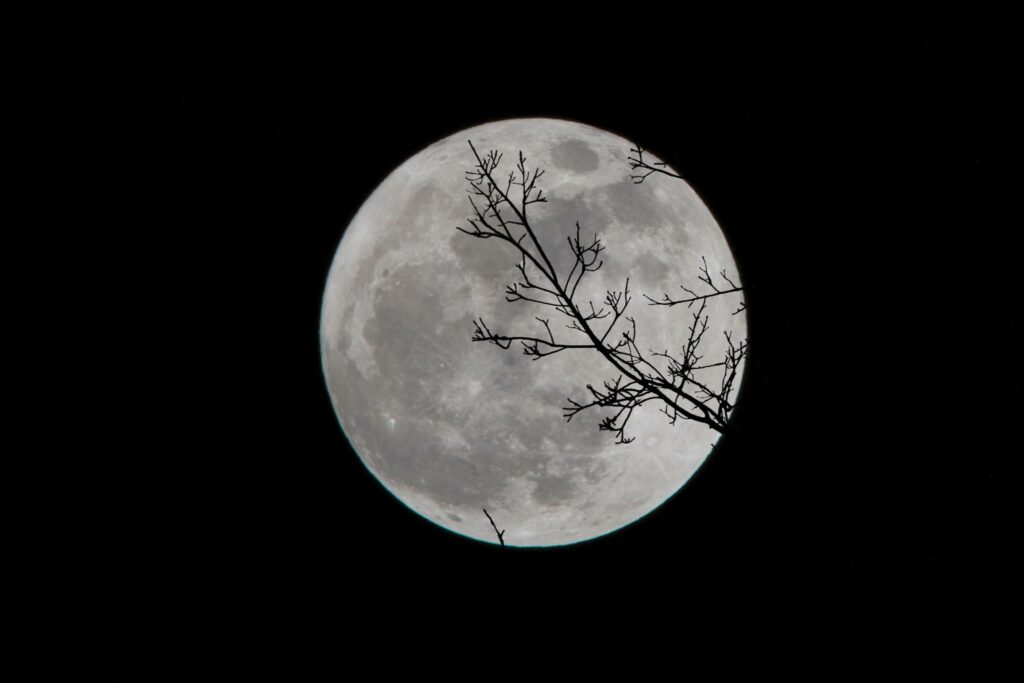
Frequently Asked Questions About How Moon Phases Affect Your Sleep
Is attending to moon phases worth it for better sleep?
Yes, understanding lunar phases can be worthwhile because recent studies indicate a significant influence on sleep quality. While some factors like stress or medical conditions are more direct, the moon's cycle is an intriguing, often overlooked element impacting rest, as acknowledged in groundbreaking research from Swiss scientists.
How do moon phases compare to other factors affecting sleep quality?
Moon phases, while impactful, are one among many factors affecting sleep, such as environmental elements like light and noise, and medical conditions or stress. Our article highlights that while sleep disorders are prevalent due to hectic schedules, lunar cycles also contribute to why some nights yield better rest than others.
What are the downsides of ignoring the potential influence of moon phases on sleep?
Ignoring the moon's potential influence might mean overlooking a contributing factor to restless nights and daytime fatigue. Although it's a newer area of study compared to traditional sleep disruptors, acknowledging this connection could lead to more personalized sleep strategies. Chronic pain sufferers, for instance, have reported increased discomfort during certain lunar phases.
Is the full moon considered bad for sleep?
The article suggests that various moon phases can affect sleep, including the full moon, where the entire lunar disc is brightly lit. While not explicitly labeled as 'bad,' the heightened luminosity during this phase could theoretically influence sleep patterns, similar to how ambient light plays a significant role in sleep quality.
Who is most affected by moon phases when it comes to sleep?
While the impact of moon phases on sleep is still being thoroughly researched, the article specifically mentions that chronic pain sufferers often report increased discomfort during certain phases. This suggests individuals with pre-existing sensitivities or conditions might be more acutely aware of lunar influences on their rest.
Does Yawnder have any insights into how moon phases affect sleep based on customer experiences?
While Yawnder focuses on providing quality sleep solutions at our Encinitas showroom, our role as a retailer means we rely on scientific research concerning broader sleep trends. The article indicates that Swiss scientists established the intriguing connection between lunar cycles and human sleep, shedding light on why some nights are more restful than others.
Browse Yawnder’s sleep education, research explainers, and practical guides.
Explore sleep guidesDoes the moon really affect sleep?
This is one of the rare folk beliefs with actual published research on both sides, and the honest answer is: there may be a small effect, it is not large, and it is easy to confuse with other things.
The most cited work is a Swiss laboratory study that reanalyzed sleep-lab data and reported that around full moon, participants took slightly longer to fall asleep, slept a little less overall, showed reduced slow-wave activity and had lower evening melatonin — in a lab with no windows, so light exposure could not explain it. Later, a study of communities in Argentina and of university students in the United States found bedtimes drifting later and sleep shortening in the nights leading up to a full moon, with the pattern strongest where artificial light was scarcest.
Against that, several large reanalyses of bigger datasets found no reliable lunar effect once you account for statistical multiplicity and seasonal patterns. Attempts to replicate the original Swiss result in other datasets have largely failed. So the state of play is a contested small effect, not an established one.
If there is an effect, why?
The most plausible explanation is straightforwardly practical: moonlight. In the nights before a full moon, the moon rises in the early evening and provides usable light after sunset. In pre-electric conditions that meant more evening activity and later bedtimes, and evening light also delays melatonin release. That would explain why the effect looks bigger in communities with less artificial light — and why in a city bedroom with streetlights and a phone, the moon is a rounding error next to your screen.
Other proposed mechanisms — gravitational pull, geomagnetic changes — lack support. Human bodies are far too small for lunar tidal forces to matter; the tides work on oceans, not on a person.
The thing people actually notice
A bright full moon through thin curtains is real light in the bedroom, and light in the bedroom does fragment sleep. So does expectation: if you believe the full moon disrupts your sleep, you notice and remember the bad nights and attribute them, which is a well-documented reporting bias. Both explanations are more useful than anything astrological, because both are fixable.
What to do about it
- Block the light. Blackout curtains or a sleep mask remove moonlight, streetlight and early summer sunrise in one move.
- Fix the bigger light problem first. An hour of phone in bed outweighs any moon phase. Dim the house in the last hour and keep screens off your face.
- Keep a fixed wake time, which stabilizes your clock regardless of what the sky is doing.
- Get morning light within an hour of waking — that is the signal that actually sets your rhythm.
- Handle the physical stuff: a room in the mid-60s Fahrenheit, breathable bedding, and a mattress that supports your position without trapping heat. Most "random" bad nights trace to temperature, alcohol, caffeine timing or pressure points.
If you sleep poorly on a regular schedule most nights of the month, that is not lunar — that is worth a conversation with a clinician, particularly if you snore loudly, wake gasping or feel unrefreshed after a full night. This is general information, not medical advice.
FAQ
Do people sleep worse during a full moon?
Some studies report slightly later bedtimes and shorter sleep in the nights approaching a full moon; larger reanalyses find no reliable effect. If there is one, it is small.
Is it the moon's gravity?
No. Lunar tidal forces act on large bodies of water, not on individual people.
Why do I always sleep badly on a full moon?
Most likely moonlight entering the bedroom, plus recall bias — you remember the nights that fit the pattern. Blackout curtains test the theory cheaply.
Does the moon affect dreams or REM sleep?
Findings on sleep stages are inconsistent and have not replicated well. There is no dependable evidence of a lunar dream effect.
What actually controls my sleep timing?
Light exposure — especially morning brightness and evening dimness — and a consistent wake time. Those dwarf any lunar influence.