Types of Mattress Coils Explained
Bonnell, offset, continuous, pocketed and microcoils compared: how each spring type is built, what it changes, and what a coil name cannot tell you.
Looking specifically for mini coils near the surface? See our best mattresses with microcoils. Prefer to avoid memory foam entirely? See our non-memory-foam mattress guide. A coil name describes architecture, not quality. Two mattresses can both use “pocket coils” and behave very differently once wire gauge, coil height, turns, spacing and edge design change. This guide covers the spring families you will see on a spec sheet and what each one actually changes.
| Coil type | How it is built | What it tends to change |
|---|---|---|
| Bonnell | Hourglass springs joined by helical wire | Buoyant and economical; more motion travels across the bed |
| Offset | Squared-off hourglass coils hinged together | Hinging action can contour more than plain Bonnell while staying connected |
| Continuous wire | Rows formed from one length of wire | Very stable rows; least independent point response |
| Pocketed (encased) | Each spring wrapped in its own fabric pocket | More independent movement; makes zoning practical |
| Microcoil | Short pocketed coils inside comfort or transition layers | Responsiveness and airflow above the main core |
Connected units: Bonnell, offset and continuous
Connected systems share load between neighboring springs. That can feel supportive and lively, and it is often less expensive to build. The tradeoff is that movement and compression spread outward, so a partner’s motion is easier to feel. Offset coils add a hinge-like flex that contours more than a plain Bonnell unit; continuous-wire rows trade contouring for row stability.
Pocketed support coils
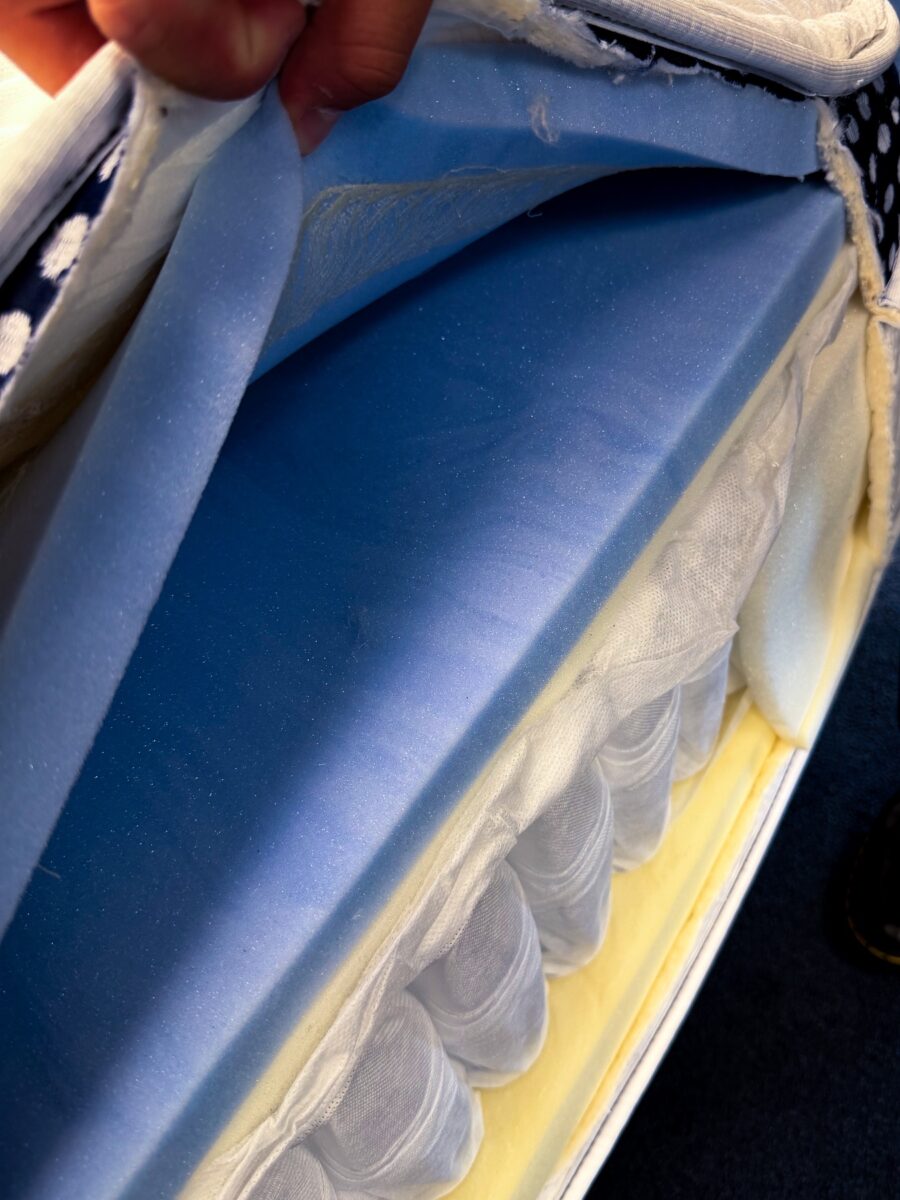
Fabric encasement lets each spring compress closer to where the load lands. That improves point response and is the reason most current hybrids use pocketed cores. Encasement alone discloses nothing about wire gauge, coil height, number of turns or perimeter reinforcement, so read the whole support unit before drawing conclusions.
Microcoils and hybrid comfort stacks
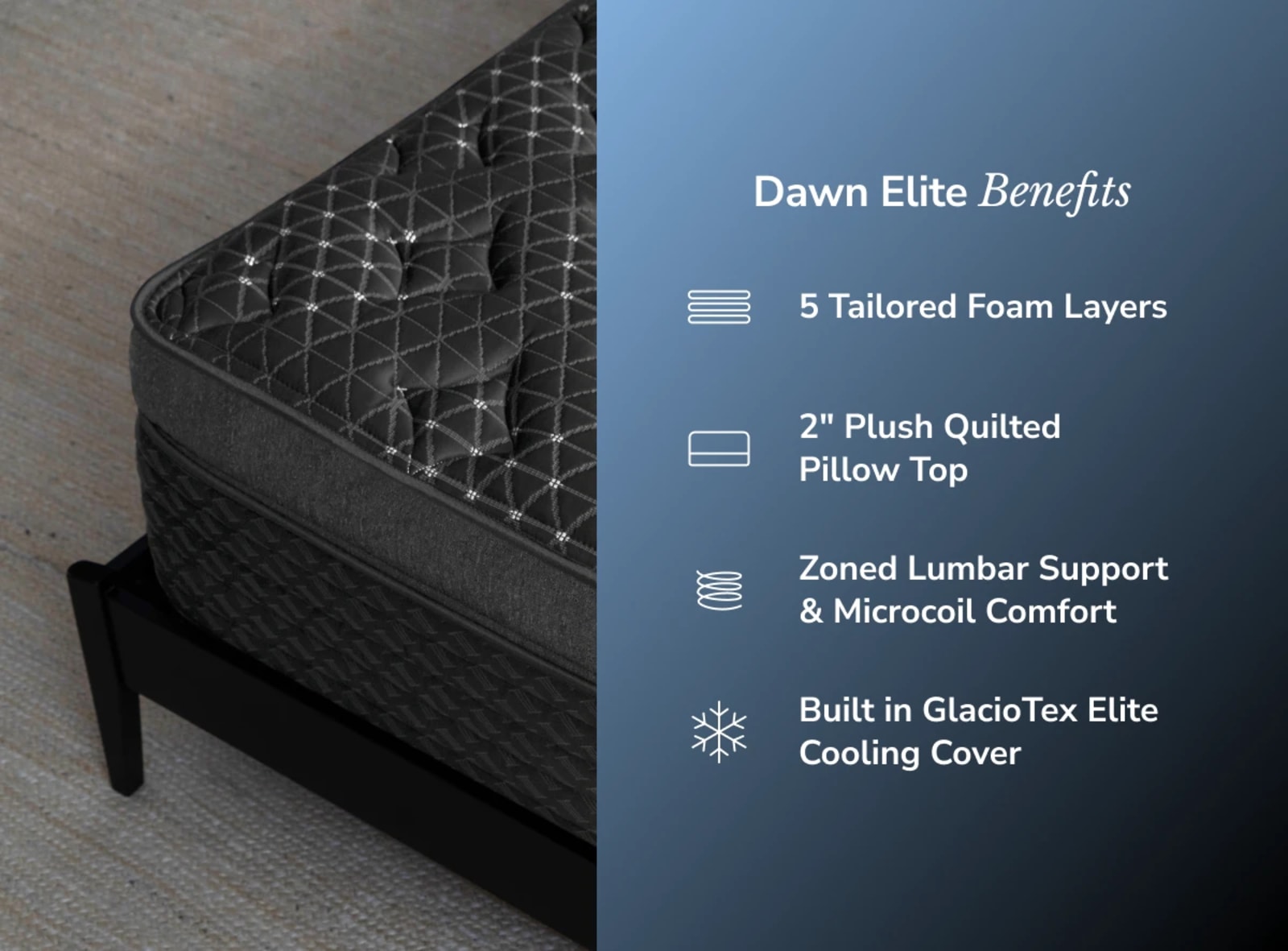
Microcoils are short pocketed springs placed above the core, usually replacing part of a foam transition layer. They respond quickly and leave air paths between springs. They are not a substitute for a support core, and their count should be listed separately so a headline number does not misrepresent the main coil count.
Gauge, zoning and edges change everything
Within any coil family, thicker wire raises resistance, and mixed gauges create zones or a firmer perimeter. A single unit can pair a 15-gauge center third with a lower-gauge edge row. That is why Yawnder records coil type, gauge, zoning and edge construction as separate fields rather than one label.
How to compare two coil systems fairly
Line up type, gauge, height, count for the same size, zoning method and edge design. Then compare that construction with measured results: motion transfer, edge support and pressure relief on the finished mattress. Construction predicts tendencies; our testing records what the bed did.
Related construction guides
- Read a construction spec sheet
- Foam density
- Coil gauge
- Quilting and comfort layers
- Construction and durability
For short definitions, use the Yawnder sleep glossary. To compare scored beds, open the mattress comparison tool.
Frequently asked questions
Which mattress coil type is best?
There is no universal winner. Pocketed coils generally isolate motion best and support zoning; connected units can be durable and buoyant at lower cost. Execution and materials decide the outcome.
Are offset coils the same as pocket coils?
No. Offset coils are still connected to each other by wire; pocket coils are individually encased in fabric and move more independently.
Do microcoils count as coils in the total?
They are real springs, but they sit above the support core. A fair spec sheet lists support coils and microcoils separately.
Does more wire mean a firmer bed?
Thicker wire (a lower gauge number) resists more, but comfort layers above the coils have a large effect on the firmness you feel.