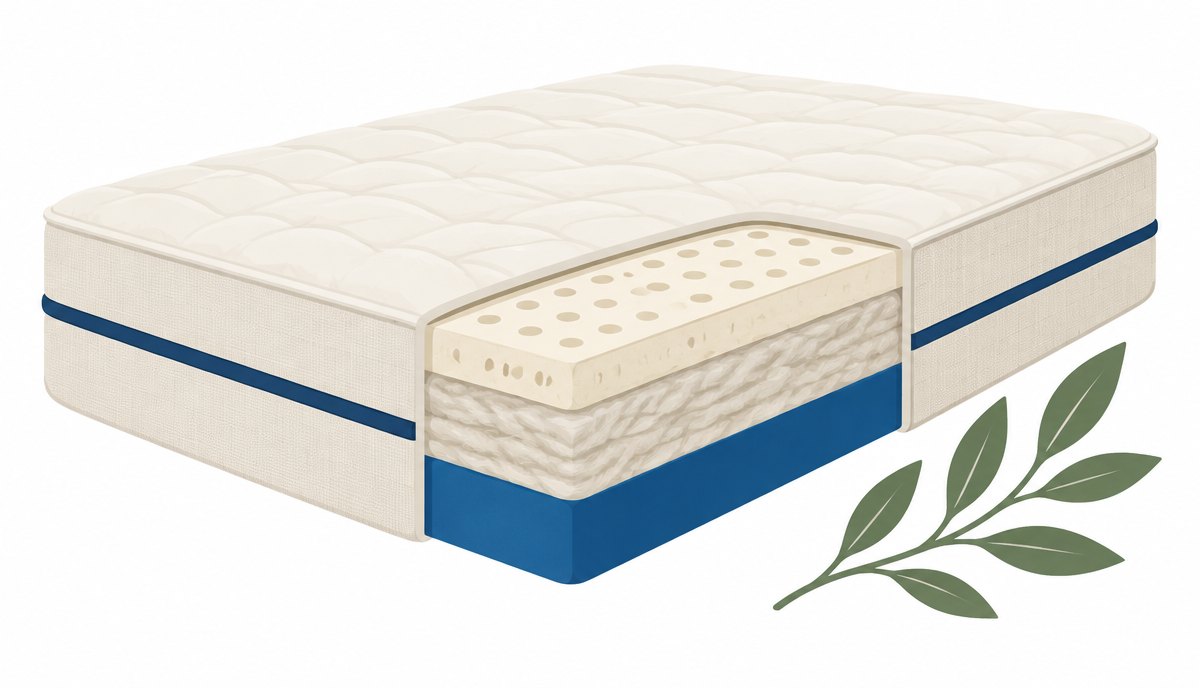
Quick answer: the best alternatives to memory foam are latex mattresses, traditional innersprings and hybrids that use latex, polyfoam or microcoils instead of slow-response memory foam.
Why skip memory foam?
Some sleepers dislike the slow response, deep contouring or heat retention associated with traditional memory foam. Others simply prefer a more buoyant surface that makes changing positions easier.
Best alternatives
- Latex: buoyant, durable and responsive.
- Traditional innerspring: coil support with a feel that depends on the upper materials.
- Microcoil comfort systems: small comfort coils paired with a supporting core.
- Responsive polyfoam hybrids: lighter contour without the classic slow memory-foam feel.
Check the full construction
A mattress marketed as a latex or hybrid bed can still contain memory foam in another layer. If avoiding it entirely matters to you, verify every comfort layer in the specification sheet.
Our top mattresses without memory foam
| Pick | Construction | Best for |
|---|---|---|
 Avocado Green |
Latex hybrid | Natural-material shoppers who want bounce and airflow |
 Birch Natural |
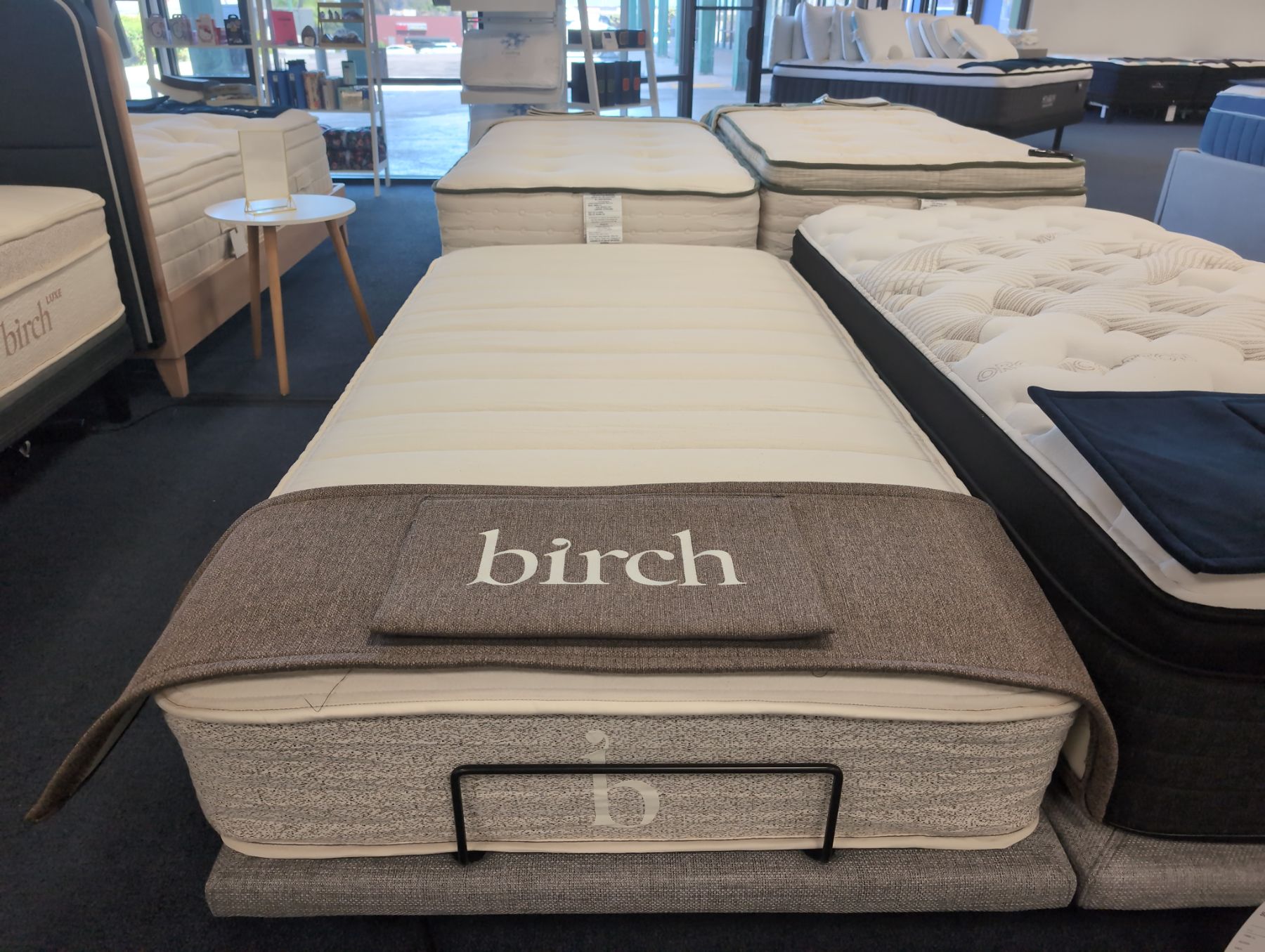
Latex + coils | Responsive medium-firm organic-style hybrid feel |
 WinkBed EcoCloud |
Latex hybrid | More cushioning without memory-foam sink |
 Sleep EZ Latex |
All-latex / configurable latex | Shoppers who want adjustable layer firmness |
 Naturepedic EOS |
Configurable latex + coils | Couples who want side-specific comfort options |
How to choose among these designs
For a springy latex-and-coil feel: compare the Avocado Green and Birch Natural. Both manufacturers describe latex, fibers and coil systems; the exact firmness and pillow-top configuration can change the feel. Avocado explicitly states that its Green Mattress does not contain memory foam or polyurethane foam. Check the current model and layer list before ordering.
For adjustable firmness: a configurable latex design such as Sleep EZ or Naturepedic EOS allows shoppers to compare different layer or comfort arrangements. Ask which layers are included, whether each side can be configured separately in your size, and what layer exchanges cost under the seller’s policy.
If you want to avoid all foam: “no memory foam” is not the same as “no foam.” Latex is a foam, and some mattresses use polyurethane foam. Ask for a complete layer list, including quilting and any optional pillow top. For a known natural-rubber-latex allergy, discuss suitable alternatives with your clinician and check the materials with the seller.
How to compare in person: Lie in your usual positions, then roll over and sit at the edge. A responsive feel may make movement easier, but a firmer model can still create pressure for a side sleeper. Test the exact comfort level rather than assuming every latex or innerspring mattress feels the same.
These picks are based on the listed construction and Yawnder’s linked reviews, not a claim that all models were tested side by side. See the manufacturers’ current Avocado Green specifications and Birch materials information; confirm specifications and purchase terms with the seller.
Latex-free and foam-free are different choices
If you need to avoid both latex and memory foam, ask about a configuration made without either material. Naturepedic describes its latex-free EOS Classic as using comfort microcoils and support coils instead of latex or polyurethane foam. Confirm the exact configuration, materials and seller terms; this is a manufacturer-described alternative, not a new side-by-side test claim.
If you have a known allergy, discuss suitable materials with your clinician. Ask the seller for the complete current layer list, including optional comfort layers and quilting, before ordering.
Who should consider a no-memory-foam mattress?
- combination sleepers who want easier movement
- hot sleepers who prefer more airflow
- people who dislike a slow “stuck” sensation
- shoppers specifically seeking latex or traditional innerspring feel
Important: a mattress marketed as “latex” or “hybrid” can still contain a thin memory-foam layer. If avoiding it completely matters, verify every layer in the specification sheet.
FAQ
Is polyfoam the same as memory foam?
No. Memory foam is a specific slow-response type of polyurethane foam. Many mattresses use faster-response polyfoam without the classic memory-foam feel.
Is latex-free the same as memory-foam-free?
No. A latex-free mattress can contain polyurethane or memory foam, while a latex mattress may contain no memory foam. Check the exact layer list.
Can a hybrid be memory-foam-free?
Yes. Hybrids can pair coils with latex, polyfoam, wool, microcoils or other comfort materials. Check the full layer list rather than assuming every hybrid contains memory foam.
Related guides
See our latex mattress guide, coil guide, and microcoil mattress guide.
Compare these 3 mattresses side by side
Sort all 142 mattresses we have tested by pressure relief, support, cooling, motion isolation, edge support, price, trial and warranty, then filter by how you actually sleep. Of those, 84 hold a complete standardized record and 41 a partial standardized record.
Compare these 3 mattresses side by side →Browse all tested mattresses →