Brooklyn Bedding Aurora Luxe vs Helix Midnight Luxe Mattress Review – My Experience and 7 Real World Cooling Tests

Brooklyn Aurora
Brooklyn Bedding Aurora Luxe vs Helix Midnight Luxe Mattress Comparison My Experience and 7 Real World Tests

Updated for 2025 with fresh showroom and home test data

Brooklyn Bedding Aurora Luxe vs Helix Midnight Luxe Mattress Comparison My Experience and 7 Real World Tests

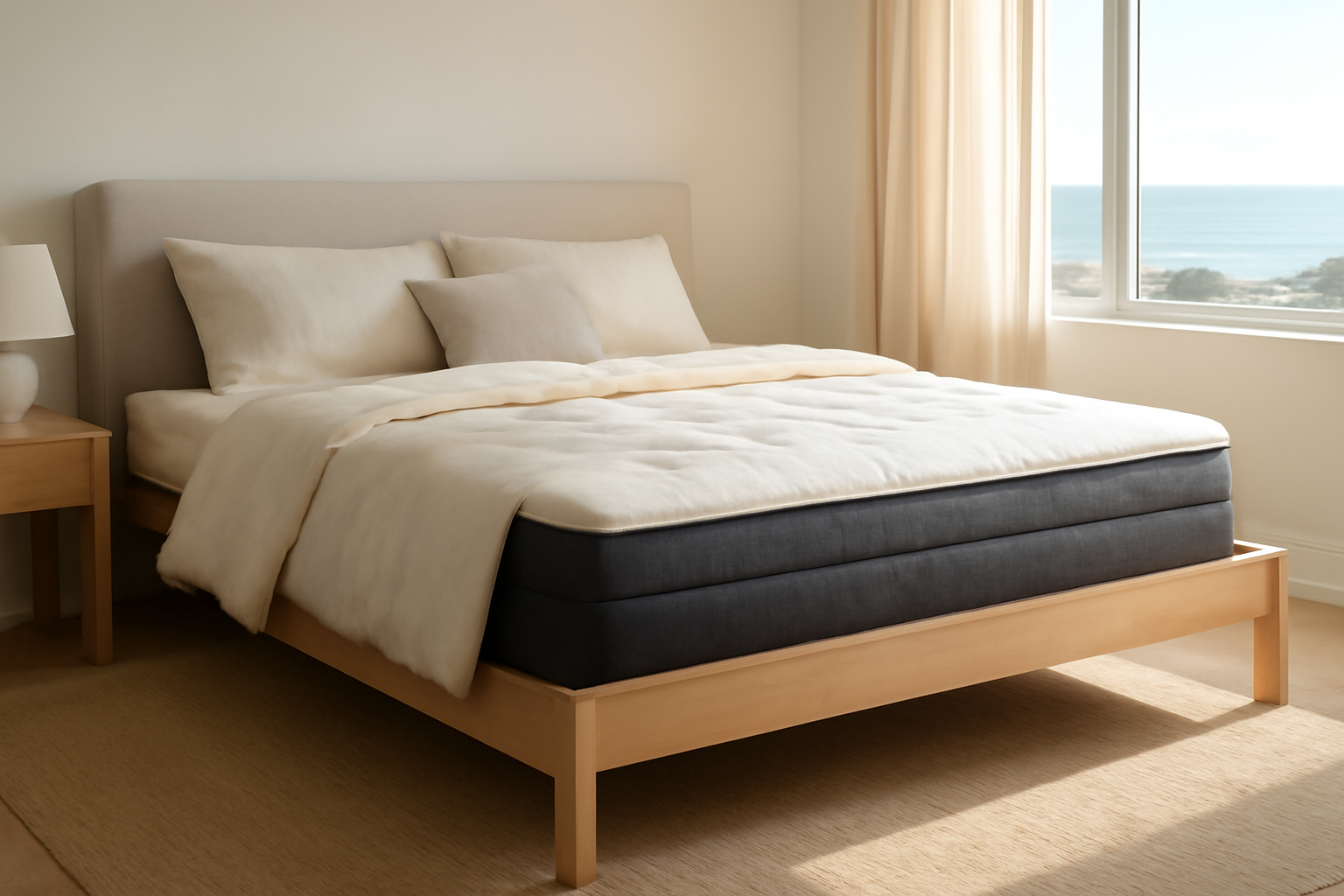
Aurora Luxe and Helix Midnight Luxe are two of the most requested cooling hybrid mattresses in my showroom. Both aim at the same sleeper. Someone who wants pressure relief for side sleeping, support for back sleeping and a cooler surface than basic foam beds. On paper they look similar. In real nights they feel very different. Aurora tilts more toward active cooling and multiple firmness options. Midnight Luxe leans into deeper contour and zoned support for side sleepers.

Short version. Pick Aurora Luxe if you run hot and like the option to go softer, medium or firmer. Pick Helix Midnight Luxe if you are a side sleeper first and care more about shoulder relief and a deeper cradle than maximum cool touch.

Cooling hybrid Side sleeper friendly Zoned support

Bottom line

For most hot side sleepers with a normal to slightly higher body weight, Brooklyn Bedding Aurora Luxe in the medium feel hits a very nice balance of cool surface and buoyant support. Helix Midnight Luxe is the one I reach for when shoulder pressure and lower back pain are the main complaints and the room already stays fairly cool. You get more pronounced zoning through the coil unit and a plusher pillow top, which takes the edge off sharp pressure points.

Check Brooklyn Bedding Aurora Luxe price Check Helix Midnight Luxe price

When you buy through my links it helps support the time I spend testing mattresses in the showroom and at home at no extra cost to you.

Brooklyn Bedding Aurora Luxe vs Helix Midnight Luxe at a glance

Here is the quick spec comparison before we dive into feel and test results. Both are foam over coil hybrids with premium height and long trials, but they solve comfort in different ways.

Feature Brooklyn Bedding Aurora Luxe Helix Midnight Luxe
Type Foam forward hybrid with active cooling cover Foam forward hybrid with quilted pillow top
Firmness options Soft, medium and firm One main feel in the medium to medium firm range
Height About thirteen inches About fourteen inches
Best for sleepers Hot sleepers, combination sleepers, people who want firmness choice Side sleepers, mixed sleepers with shoulder pain and couples
Trial and warranty One hundred twenty night trial, long term coverage One hundred night trial, long term coverage
Current position in my lineup One of my top cooling hybrids for people who run warm One of my top all around side sleeper picks

Test results

I have slept on both of these at home and in the showroom and I watch customers try them every week. Scores below reflect that mix of repeated use and daily in person feedback. Numbers are on a ten point scale and turned into meters for quick scanning.

Spine alignment
Pressure relief
Cooling
Motion isolation
Edge support
Ease of movement
Off gassing

Scores are relative to other premium hybrids I carry, not bargain beds in a bag. Here is how these two stack up directly.

Performance snapshot Aurora Luxe vs Midnight Luxe

Category Aurora Luxe Helix Midnight Luxe Notes
Spine alignment 9.4 out of ten 9.5 out of ten Both keep the spine neutral for most body types. The zoned coils in Midnight Luxe give it a tiny edge for strict side sleepers with lower back pain.
Pressure relief 9.3 out of ten 9.7 out of ten Aurora medium is very comfortable but a touch more buoyant. Midnight Luxe has a deeper cradle through the pillow top that takes more bite out of shoulders and hips.
Cooling 9.7 out of ten 9.1 out of ten Aurora is one of the coolest hybrids I have tested. The fabric and foam system clearly moves heat away. Midnight Luxe runs cooler than basic foam but does not reach the same cool touch feel.
Motion isolation 9.2 out of ten 9.3 out of ten Both do well for couples. Midnight Luxe feels a little more damped thanks to the thicker comfort stack.
Edge support 9.0 out of ten 9.1 out of ten Reinforced perimeter coils on both. You can sit at the edge and share a queen without feeling like you are about to slide off.
Ease of movement 9.2 out of ten 9.0 out of ten Aurora has a slightly springier feel that makes it easier to roll and change positions. Midnight Luxe has more hug, which some people love and others find a bit slower.
Off gassing 8.8 out of ten 8.8 out of ten Both have a mild new foam smell the first day or two that clears quickly with good airflow.

Feel and firmness

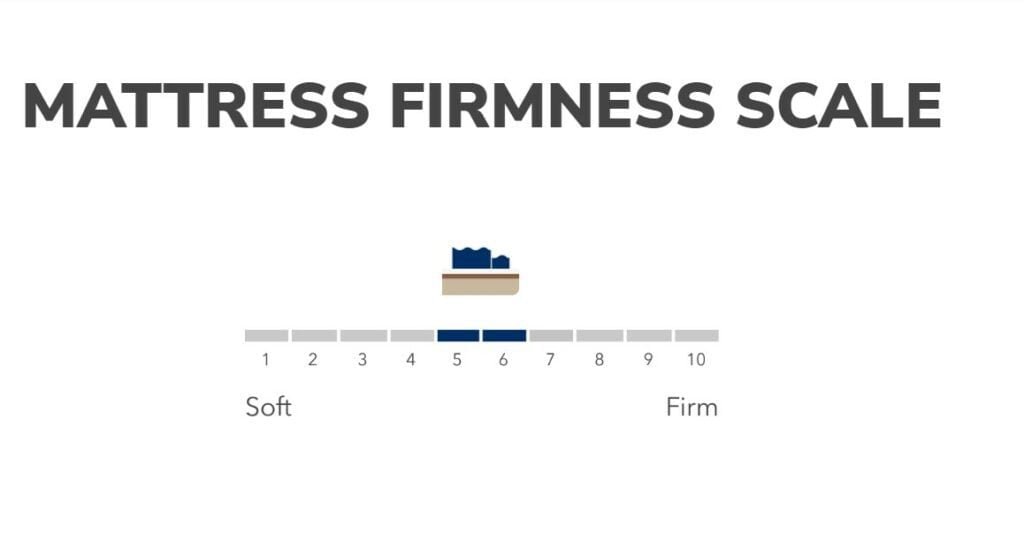
On my scale, Brooklyn Bedding Aurora Luxe in the medium feel lands around a true medium, maybe a touch on the soft side for lighter bodies. The soft version drops into plush territory and the firm version pushes into a supportive feel for back and stomach sleepers. The comfort stack has a more responsive top layer so it never feels slow or sticky. You get a gentle cradle with noticeable bounce underneath.

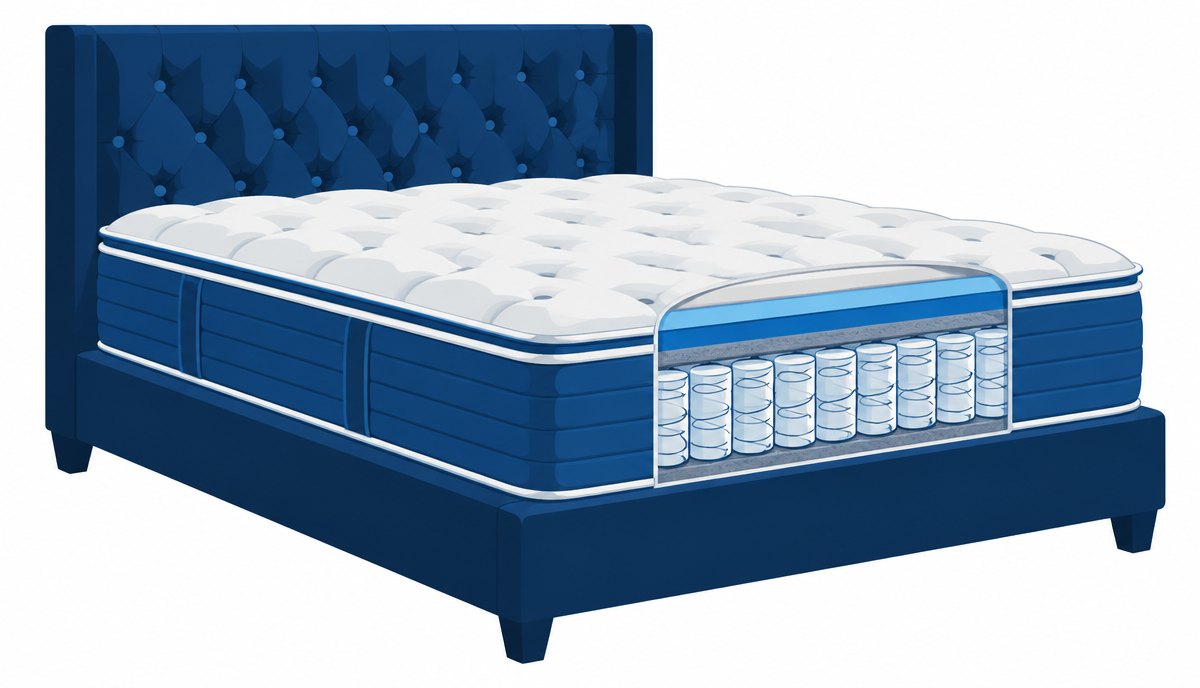
Helix Midnight Luxe in its standard build feels closer to a six and a half out of ten for the average body. The quilted pillow top and foam layers give you more initial sink than Aurora medium, especially at the shoulder. Under that, zoned coils hold your hips up a bit more in the center zone. The net effect is a deeper hug through the upper body while still keeping the lumbar area from sagging.

In the showroom, lighter side sleepers often call Aurora medium a perfect medium while heavier side sleepers sometimes want the soft version for extra cushion. The same people usually describe Midnight Luxe as cushioned yet supportive in one feel. If you know you want a very plush cloud style feel, Aurora soft or another plusher model may be a better path. If you like that combination of pillow top comfort with a clear sense of support under it, Midnight Luxe hits that sweet spot.

Cooling

Cooling is where Aurora Luxe really tries to set itself apart. The cover uses a cool touch fabric and the foam stack under it is designed to move heat away rather than trap it at the surface. In my simple hand test, where I leave my hand on the surface for half a minute and then pull away, Aurora loses that warmth noticeably faster than many other hybrids in the showroom.

Overnight, that shows up as fewer wake ups from feeling stuffy or hot along the back. During a warm week in San Diego when I purposely kept the room on the warmer side, Aurora stayed in the comfortable range without that swampy feel I get from dense foam beds.

Helix Midnight Luxe runs cooler than a basic memory foam mattress thanks to its coil system and breathable quilt, but it feels more temperature neutral than actively cool. Most people who sleep warm but not extremely hot do fine on it. Very hot sleepers or people in warm rooms without good airflow are usually happier on Aurora or on latex forward options.

Motion isolation

Both of these beds do a good job of dialing down partner movement compared with old school coil mattresses. With a glass of water near the center of each bed, shifting from back to side on the other side produced only slight ripples. A full body drop at the edge will move the glass, but not in a dramatic way.

Midnight Luxe feels a bit more muted overall. The thicker comfort stack and zoned coils soak up more of the initial bounce, which is a nice tradeoff for couples where one person is a light sleeper. Aurora has a livelier feel that still controls motion well but lets a bit more energy travel.

If you are extremely sensitive to motion and your partner tosses a lot, Midnight Luxe has the edge. If you want a mattress that is friendly for both couples and people who move often to get comfortable, Aurora finds a nice middle ground between isolation and having some bounce.

Edge support

Edge support matters more than people think, especially if you share a queen. Both Aurora Luxe and Midnight Luxe use reinforced coils near the perimeter to keep the edge from collapsing.

Sitting at the edge to tie shoes on either mattress feels stable. I can feel some give in the comfort layers, then a firm stop from the coil unit rather than that sliding sensation you get with weaker edges. Lying right at the edge in a side sleeper position, my shoulder stays on the usable surface instead of rolling away.

Midnight Luxe feels slightly more squared off at the edge while Aurora feels just a bit more rounded because of its lively top. In practice both perform well enough that I rarely see people reject one of these models purely on edge feel.

Pressure relief

Aurora Luxe in medium gives a balanced mix of cushion and support. On my side, I feel my shoulder and hip sink in enough that the surface does not create hard pressure, while my midsection stays lifted. The soft version increases that sink for people who are lighter or who want more of that floating sensation.

Midnight Luxe leans further into contour. The pillow top and foam system allow a deeper cradle around the shoulder and hip while the zoned coils keep the center of the body from bowing. During a thirty night side sleeper run on Midnight Luxe, I noticed fewer nights with that sharp ache in the shoulder that can show up on flatter beds.

For combination sleepers who move between back and side, both do very well. If your main issue is shoulder or hip pain and you spend most of the night on your side, Midnight Luxe usually has the advantage. If you switch between positions and tend to overheat, Aurora medium gives you enough pressure relief without trapping as much heat around the body.

Who should pick which mattress

Brooklyn Bedding Aurora Luxe is better if you

  • Run warm at night and want one of the coolest hybrids I have in the showroom.
  • Want the option to choose soft, medium or firm instead of one fixed feel.
  • Are a combination sleeper who changes positions often and likes some bounce.
  • Prefer a more neutral cradle rather than a deep slow sinking feel.
  • Share the bed with a partner but still want some responsiveness under you.

Helix Midnight Luxe is better if you

  • Are primarily a side sleeper and struggle with shoulder or hip pressure.
  • Want a plush pillow top feel over zoned coils that help keep the lower back supported.
  • Share the bed with a partner and want strong motion control without losing support.
  • Sleep at a normal room temperature and do not need maximum cool touch fabric.
  • Like a deeper hug that still lets you move without feeling stuck.

If you are torn between them, start by asking two questions. First, do you wake up hot more often than sore. If yes, lean Aurora. Second, do you wake up sore more often than sweaty. If yes, lean Midnight Luxe.

Price and value

Both mattresses live in what I would call the upper mid price tier for online hybrids. Not entry level, but not at the very top of the luxury ladder either. You are paying for better materials, more thoughtful support systems and longer trials.

Pricing moves a lot with promotions, so treat these numbers as ballpark ranges. Most of the year, a queen Aurora Luxe and a queen Helix Midnight Luxe sit in a similar band with frequent sale events.

Typical queen sale ranges in 2025

Always check the live price through the links below, because brands run different seasonal offers, bundles and coupon codes.

Mattress Typical queen sale range Value notes
Brooklyn Bedding Aurora Luxe Often around the mid one thousand range during major sales Good value if you use the cooling and choose the right firmness rather than just picking at random.
Helix Midnight Luxe Frequently in the mid one thousand range when discounted Very strong value for side sleepers who actually feel the benefit of the pillow top and zoning every night.

There are cheaper hybrids out there, but many of them give up on cooling, zoning or edge strength. If you spread the cost of either of these over seven to ten years of use, the nightly difference between decent and great sleep ends up being surprisingly small.

See today’s best Aurora Luxe deal See today’s best Helix Midnight Luxe deal

Alternatives and personal stories

I rarely look at any mattress in isolation. In the showroom people will try Aurora Luxe, Midnight Luxe and a few other hybrids back to back before something clicks. Here is how these two sit in the broader landscape.

Mattress Type Main feel Best fit
Brooklyn Bedding Aurora Luxe Cooling focused hybrid Responsive medium with firmness choice Hot sleepers and combination sleepers who want bounce with relief.
Helix Midnight Luxe Foam forward hybrid with pillow top Medium to medium firm with deeper contour Side sleepers with pressure issues who still want strong support.
Latex hybrid option Coils with latex comfort layers Buoyant and very cool People who want maximum temperature control and a more lifted feel.

Aurora Luxe story

My longest run on Aurora Luxe was during a stretch of warmer nights where I wanted to see how aggressive the cooling really felt in normal use. Lying down, there is an immediate cool touch sensation from the fabric that does not feel gimmicky. After a few hours, I noticed that my back never developed that sticky hot spot that makes you roll to find a cooler area. I also appreciated the spring in the coils when I rolled from my back to my side, which makes it feel less like work to change positions.

Helix Midnight Luxe story

Midnight Luxe is the mattress I kept gravitating toward when my shoulders were cranky from long showroom days. During a dedicated side sleeper month on it, I had far fewer mornings where I felt that sharp pinch at the top of the shoulder. The pillow top and zoning work together so my shoulders can sink without my hips dropping too far. The tradeoff is a slightly warmer feel than the coolest beds in the store, but for many people that is worth it for the pressure relief.

If you still cannot decide, think about what you complain about most when you talk about your current bed. If you talk about feeling hot or sweaty, Aurora Luxe is the better starting point. If you talk mainly about sore joints and waking up stiff, Helix Midnight Luxe deserves the first test.

How I test mattresses at Yawnder

Every mattress that ends up on the site or in the showroom goes through the same core tests. I do not rely only on spec sheets or marketing claims. I want to know how the bed behaves on night one, night thirty and after a stream of different bodies try it.

  1. Unboxing and first impression. I check how heavy the box is, how easy it is to set up and how strong any new foam smell is in the first hours.
  2. Firmness and feel passes. I spend time on my back, side and stomach in several positions and ask other testers with lighter and heavier bodies to do the same.
  3. Spine alignment checks. I look at side profile photos and video to make sure the spine looks neutral rather than sagging or bowing in common positions.
  4. Pressure mapping by feel. I pay attention to shoulders, hips and lower back over multiple nights and ask testers to report where they feel relief or hot spots.
  5. Motion and edge tests. This includes simple partner movements, a water glass test and sitting and lying at several points along the edge.
  6. Cooling checks. I compare hand feel and overnight experience in warmer rooms against other beds in the same category.
  7. Long term notes. When I keep a mattress for a longer period, I track how it changes after the first month and listen to customers who come back after living on it.

The goal is not to chase a perfect score on a chart. The goal is to match real people with a mattress that feels good on night one and still feels right after the new bed excitement wears off.

FAQ

Is Brooklyn Bedding Aurora Luxe or Helix Midnight Luxe better for side sleepers

Both work well for side sleepers, but if I had to pick one for pure side sleeping comfort it would be Helix Midnight Luxe. The pillow top and zoned coils give it a deeper cradle at the shoulder with strong support under the hips. Aurora Luxe medium and soft are also very good options, especially if you run warm, but the feel is a little more buoyant.

Which mattress stays cooler Aurora Luxe or Midnight Luxe

Aurora Luxe has the stronger cooling system. The cover and comfort layers are built to pull heat away from the surface, and in my tests it clearly feels cooler to the touch and over time. Midnight Luxe runs cooler than basic foam beds but is more temperature neutral than actively cool.

How do I choose the right firmness for Brooklyn Bedding Aurora Luxe

As a general guide, most average weight side and combination sleepers are happiest on the medium feel. Lighter side sleepers and people who want a plush experience tend to prefer the soft version. Heavier back and stomach sleepers or people who like a very supportive feel should look at the firm version. When in doubt, medium is the safest starting point for most people.

Updated December 2025. Pricing and promotion details are examples only and may change, so always verify current offers before you buy.

Loftie vs Hatch Restore Smart Alarm Clock Comparison My Experience and 7 Real World Tests

loftie vs hatch
Loftie vs Hatch Restore Smart Alarm Clock Comparison My Experience and 7 Real World Tests

Updated for 2025 with hands on testing and app checks

Loftie vs Hatch Restore Smart Alarm Clock Comparison My Experience and 7 Real World Tests

Loftie and Hatch Restore are the two smart clocks people ask me about most when they want to keep phones away from the bed. Both promise gentler wake ups, softer nights and less scrolling, but they get there in different ways. Loftie leans into tech boundaries and deep audio content. Hatch Restore leans into light based routines and a feature packed app. This comparison walks through real use, not just spec sheets, so you can decide which one belongs on your nightstand.

Loftie smart alarm clock on a styled nightstand

Short version. Loftie is best if you want a screen free feeling bedside clock with curated content and strong privacy. Hatch Restore is better if you want sunrise light, a full routine builder and a richer set of features for kids and adults.

Phone free bedside Guided sleep content Sunrise light option

Bottom line

Loftie feels like a dedicated sleep guide that happens to be an alarm clock. It focuses on sound quality, meditations, stories and gentle two stage alarms with a strong stance on privacy. Hatch Restore feels more like a full sleep station with sunrise light, a flexible routine builder and better tools for families who want a consistent schedule. If you want to cut phone time and care about data privacy, start with Loftie. If you want sunrise simulation and smart features wrapped in a clean app, start with Hatch.

Check Loftie price and details Check Hatch Restore price and details

When you buy through my links it helps support the work I do testing products in the showroom and at home at no extra cost to you.

Loftie vs Hatch Restore at a glance

Here is the quick side by side view based on the core features most people care about. I expand on each section later in the review with real world notes.

Feature Loftie Hatch Restore
Price Around one hundred sixty five Around one hundred thirty
Design Sleek, modern rectangle with soft light and simple display Round, minimalist body with gentle glow and compact footprint
Key features Dimmable display, night light, two phase alarm, large library of meditations, sound baths and breathwork Dimmable display, night light, two phase alarm, sunrise style light, sound machine, timer and sleep tracking
App experience Simple and easy to navigate, focused on core features Polished and friendly app with more settings and views
Sound options Wide range of relaxing sounds and tones plus colored noise and guided content Nature sounds, white noise, music like options and simple sleep sounds
Overall feel Great for people who want an alarm clock that gently reshapes their sleep routine and keeps the phone away Great for people who want sunrise light, routines and a wide tool set for adults and kids

Test results

I used both Loftie and Hatch Restore for full nights in my own bedroom and in the showroom office, and asked testers with different sleep schedules to try them as well. These scores reflect how they work in everyday life, not in a lab.

Setup and first use
Display and bedside design
Sound quality and variety
Alarm experience and wake up
App and routine builder
Privacy and data posture
Value for money

I score on a ten point scale and convert those numbers to meters for quick scanning. Below is the breakdown for each device.

Loftie vs Hatch Restore performance snapshot

Category Loftie Hatch Restore Notes
Setup and first use 9.2 out of ten 9.0 out of ten Both are simple to get running. Loftie is slightly more stripped down, which makes the first session feel quicker. Hatch has more options but also more steps in the app.
Display and bedside design 9.3 out of ten 9.3 out of ten Loftie looks like a modern clock and blends into a grown up bedroom. Hatch Restore has a softer rounded look that works well in both adult and kids spaces.
Sound quality and variety 9.6 out of ten 9.0 out of ten Loftie wins on the depth of its sound library and the quality of guided content. Hatch has plenty of options, especially for white noise and simple melodies.
Alarm and wake up experience 9.1 out of ten 9.1 out of ten Loftie uses gentle two phase alarms with pleasant tones. Hatch adds sunrise style light that can make early wake ups easier, especially in dark rooms.
App and routine builder 8.8 out of ten 9.3 out of ten Loftie keeps the app simple and focused on content and alarms. Hatch offers a richer routine system, more granular control and a more polished dashboard.
Privacy and data posture 9.8 out of ten 8.6 out of ten Loftie leans hard into minimal data use and a clear privacy stance. Hatch asks for an account and feels closer to a standard connected device.
Value for money 8.8 out of ten 9.0 out of ten Loftie costs a bit more but brings deep content and privacy. Hatch undercuts it slightly and packs in sunrise light and a full routine builder.

Design and build

Loftie looks and feels like a premium little speaker crossed with a classic bedside clock. The body is compact, with a soft glow that does not overpower the room. The display is easy to read when you want it and easy to dim when you do not. On a nightstand next to a lamp and book, it looks intentional rather than gadget heavy.

Hatch Restore leans into a softer, rounded shape that reads almost like a small light sculpture. The front is a light panel with a digital clock built into the lower portion. The footprint is small and it sits neatly in front of books or decor items. In a child room it looks friendly. In an adult room it reads minimalist and calm.

Build quality on both feels solid for the price. Buttons have a clear click feel, and the light diffusion on the Hatch looks even. Loftie has a slightly more substantial weight, which helps it stay put when you tap it half awake.

Close up of Loftie alarm clock design and display Hatch Restore smart alarm clock glowing on a bedside table

Sounds and alarms

Loftie is the more serious audio device of the two. It offers a long list of relaxing sounds, ambient soundscapes and colored noise options, including white, brown, red, gray, blue and pink. On top of that you get meditations, sound baths, breath guides and bedtime stories. The sound profile has enough warmth that you do not get that harsh hiss that cheaper noise machines can produce.

Alarms on Loftie use a two stage system. The first stage is a soft nudge that brings you out of deep sleep without shock. The second stage is a bit louder and more insistent if you need it. Most days I woke up with the first or second chime without feeling jolted or annoyed.

Hatch Restore leans more on practical sound choices. You get nature sounds, white noise, water sounds and simple musical options. The selection is not as deep as Loftie but covers the basics for both adults and kids. Paired with the sunrise light, even simple chimes feel more gentle because your body is already starting to wake up before the sound hits.

If daily meditations, sound baths and varied noise colors matter to you, Loftie is the better fit. If you just need solid white noise and a few calming scenes to pair with light, Hatch Restore covers that well.

Loftie speaker and controls used for sleep sounds and alarms

App and usability

Loftie keeps its app straightforward. You set alarms, browse content, choose sounds and adjust basic settings. The screens are clean and it does not feel like you are managing a complicated device. The tradeoff is fewer advanced settings, but that lines up with the goal of spending less time on your phone around bedtime, not more.

Hatch Restore takes the opposite path. The app is polished and friendly, with more views and controls. You can build bedtime and wake up routines that pair sound, light and timing in detail. Parents can adjust settings from another room, and you can tweak color, brightness and sound layers to a finer degree.

In daily use that feels like this. Loftie is faster for simple tasks like changing an alarm or trying a new sound. Hatch Restore gives you more levers to pull if you enjoy tuning routines or have a very specific wake up plan in mind. Some people will love that control. Others will set it once and ignore half of it.

Routines and light

Loftie lets you build gentle bedtime and wake up habits through content, not bright light. You can start a bedtime story, meditation or sound bath with a tap and set alarms that rise in stages. There is a warm night light but it is meant more as a soft glow than a full sunrise simulation.

Hatch Restore is all about light based routines. You can create custom sequences that fade in warm light before the alarm, pulse a specific color as a signal for kids or slowly dim as part of a wind down plan. The sunrise style wake up is especially helpful in winter or in rooms without much natural morning light.

For families, the time to wake feature on Hatch is a clear win. You can set a color that means stay in bed and another that means you are fine to get up, which is a lifesaver for early risers who like to wander into your room at dawn.

Hatch Restore sunrise light routine in a dark bedroom

Privacy and data

Loftie puts privacy front and center in its messaging and design. It is not a smart speaker that listens for a wake word. It connects to wifi to keep time and sync content but does not lean on heavy data collection or voice records. For people who do not want another microphone in the bedroom, that alone is a deciding factor.

Hatch Restore works more like a typical connected device. You create an account and use the app to unlock the full feature set, including sleep data views and remote control. The company outlines its policy clearly, but privacy is not the core pitch the way it is with Loftie.

If you are already deep into smart home systems and use voice assistants in your room, Hatch will feel normal. If you are trying to pull tech back and want a clean line between your sleep and large data systems, Loftie lines up more closely with that goal.

Who each smart clock is for

Loftie is better if you

  • Want to keep your phone out of the bedroom and need an actual replacement, not just another gadget.
  • Care about meditations, sound baths, stories and varied noise colors as part of your routine.
  • Value a strong privacy stance and prefer devices that collect minimal data.
  • Like a simple app that you can set once and forget without constant tweaking.
  • Are sensitive to harsh alarms and want very gentle audio to ease you into the day.

Hatch Restore is better if you

  • Care more about sunrise light and visual cues than guided content.
  • Want a flexible routine builder for both bedtime and wake up, with lots of control over light and sound steps.
  • Have kids and want an easy way to manage time to wake rules from your phone.
  • Already use smart home gear and are comfortable with app accounts and data dashboards.
  • Want a slightly lower price point while still getting a complete sleep station.

If you are in the middle, think through what is bothering you more right now. If it is your relationship with your phone and the way you wind down, Loftie is the stronger match. If it is getting out of bed on dark mornings and keeping family schedules consistent, Hatch Restore has the tools you want.

Price and value

Smart alarm clocks sit in a strange spot between cheap plastic radios and full smart displays. You are paying for thoughtful design, better speakers, content libraries and apps. As of 2025, both of these live in the mid price tier for connected alarm clocks.

Loftie normally lists near one hundred sixty five, with occasional promotions or bundles that bring the price down a bit. Hatch Restore sells around one hundred thirty, with many retailers holding fairly steady sale pricing through the year.

Loftie vs Hatch Restore price snapshot

These are rough mid year sale ranges. Always check the live price because bundles and seasonal promotions change often.

Device Typical 2025 sale price Where it usually feels worth it
Loftie smart alarm clock Around one hundred fifty to one hundred seventy Best value if you actually use the guided content and keep the phone out of the room.
Hatch Restore Around one hundred ten to one hundred thirty Best value if you lean on sunrise light, kids routines and the routine builder.

If you only want basic white noise and a gentle chime, both are arguably overkill. If you want a bedside device that nudges you into better habits every day, the price per night starts to look much more reasonable, especially compared with the cost of poor sleep.

See today’s best Loftie offer See today’s best Hatch offer

Alternatives and personal stories

Most people looking at Loftie and Hatch Restore are either coming from a basic phone alarm or a plain white noise machine. The jump to a dedicated smart clock feels big but pays off fastest for people who stick with the routine for at least a month.

Device Best for Standout trait
Loftie Adults who want a calmer, phone free bedtime and wake up routine. Deep sound library and content plus a clear privacy posture.
Hatch Restore Adults and families who want sunrise light and structured routines. Light based wake up and flexible routine builder.
Basic white noise machine People who only need a steady noise source and use the phone for alarms. Lower price with no app or account needed.
Loftie alarm clock styled in a minimalist bedroom Hatch Restore on a nightstand with warm ambient light

Loftie in real life

When I tested Loftie, I treated it like a strict phone ban after a certain hour. I moved my phone to another room and only used Loftie for the last hour before bed. The change in how I felt was not subtle. Without social feeds or email in arm reach, I actually listened to a short meditation or sound bath most nights. The two stage alarm felt almost polite in the morning. The biggest thing I noticed was less of that wired, wired, wired feeling at night and fewer days where I woke up already stressed.

Hatch Restore story

With Hatch Restore, I leaned hard into the sunrise wake up. During darker mornings, I set the light to ramp up over half an hour before the alarm tone. After a week, my body started waking up a few minutes before the sound, which made mornings feel less brutal. The app routines also worked well for a consistent wind down. It felt more like running a program for the night rather than just pressing play on a sound.

If you are still stuck between these two, picture your ideal night. If that image has warm soundscapes and stories with a screen free bed, Loftie fits it. If that image has gentle light brightening the room and a simple visual cue for kids about when it is time to get up, Hatch Restore is the clear answer.

How I test wake up tech at Yawnder

Even though Yawnder is mostly about mattresses, anything that stays next to your bed can help or hurt sleep. I test smart alarm clocks the same way I test beds. Real use, repeated nights and checks with different types of sleepers.

  1. Setup and first impression. I unbox, connect to wifi, install the app and see how confusing or simple the startup path feels.
  2. Night one and week one notes. I use the clock as my only bedside device for at least a week and keep the phone away from the bed.
  3. Alarm and wake up checks. I test different alarm tones, volumes and light routines to see how easy it is to get out of bed without feeling slammed awake.
  4. Sound and light quality. I pay attention to hums, harsh frequencies and light flicker in a dark room.
  5. App and control. I walk through all the key screens and ask how much time a normal person would reasonably want to spend in there.
  6. Privacy and account review. I note what data the device appears to want and what is required just to get basic use.
  7. Long term pattern. When I keep a device longer, I track whether I stick with the routines or drift back to the phone, and I listen to what real customers tell me in the showroom.

The goal is not to chase every possible feature. The goal is to see whether the device actually makes it easier to get to bed, fall asleep and wake up in a way that supports your day.

FAQ

Is Loftie or Hatch Restore better if I want my phone out of the bedroom

Loftie is the better choice if your main goal is to get the phone away from the bed. It is designed as a stand alone bedside device with its own sound library and clear privacy posture. Hatch Restore still leans on the app more, so you will spend more time on your phone during setup and routine building.

Which one is better for kids Loftie or Hatch Restore

Hatch Restore is a stronger pick for most families with children. The time to wake light, flexible routines and remote control through the app make it easier to manage schedules from another room. Loftie can work for teens who want meditations and calmer alarms, but Hatch feels more tailored to family use.

Do Loftie and Hatch Restore work if wifi goes out

Both devices need wifi for setup and some features, especially content updates and app control. Basic alarm functions usually continue if a connection drops after setup, but you lose app access and any cloud based content. If your connection is very unstable, expect some frustration during the first days while you get things dialed in.

Updated December 2025. Features, pricing and app details can change, so always check the current offer before you buy.

Helix Midnight Luxe vs WinkBed I Tested Both and One Blew Me Away

Helix Midnight Luxe vs. Winkbed
Helix Midnight Luxe vs WinkBed Mattress Comparison My Experience and 7 Real World Tests

Updated for 2025 with fresh pricing and test data

Helix Midnight Luxe vs WinkBed Mattress Comparison My Experience and 7 Real World Tests

Helix Midnight Luxe and the WinkBed Luxury Firm are two of the most common hybrids people compare in the showroom. Both promise a hotel style feel with coils and foam, both have strong edge support and cooling, and both target that medium comfort band where most couples land. In this comparison I go past the spec sheets and break down how they feel in real sleep, where they differ on support and pressure relief, and which one I recommend for side sleepers, back sleepers and heavier bodies.

Short version. Helix Midnight Luxe leans more foam forward with deeper contour through the shoulder and hip, plus zoned lumbar support that hugs and holds side sleepers. WinkBed Luxury Firm feels more like a classic innerspring with a Euro style pillow top, more bounce and a broader range of firmness options if you want softer, firmer or a Plus build for heavier sleepers.

Hybrid with coils Medium comfort band Strong edge support

Bottom line

If you are a side sleeper or a lighter to medium build who wants more contour around the shoulders with extra lower back support, Helix Midnight Luxe is usually the better fit. Its pillow top and memory foam blend give a deeper cradle without losing structure under the spine. If you want more bounce, a slightly cooler top feel and the ability to choose softer, luxury firm, firmer or a Plus version, the WinkBed line makes more sense for most back sleepers, stomach sleepers and heavier bodies.

Check Helix Midnight Luxe price Check WinkBed Luxury Firm price

When you buy through my links it helps support the work I do in the showroom and on the site at no extra cost to you.

Side by side specs

Feature Helix Midnight Luxe WinkBed Luxury Firm
Mattress type Foam forward hybrid with zoned coils Coil on coil hybrid with Euro style pillow top
Feel Medium with deeper contour and lumbar focus Medium firm with more bounce and lift
Height About thirteen and a half inches About thirteen and a half inches
Trial and warranty Trial in the hundred night range with extended warranty One hundred twenty night trial and lifetime warranty with comfort exchange
Best for Side sleepers and joint sensitive combination sleepers Back and stomach sleepers who like a responsive hotel style feel

Test results

All scores below come from hands on testing in the Yawnder showroom and extended use at home. For this comparison I focused on Helix Midnight Luxe and the WinkBed in Luxury Firm, since that is where most shoppers start. I score each category on a ten point scale. The meters show how they perform overall, then the table underneath breaks out separate numbers for each mattress.

Spine alignment overall
Pressure relief overall
Motion isolation overall
Cooling overall
Edge support overall
Ease of movement overall
Off gassing and smell

I sleep test every mattress for at least two weeks at home or in the showroom overnight before I give it a score. I am about one hundred eighty pounds and I also ask lighter and heavier testers to spend time on each bed so the numbers are not based on just one body type.

Helix Midnight Luxe vs WinkBed performance snapshot

Category Helix Midnight Luxe WinkBed Luxury Firm Notes
Spine alignment 9.3 out of ten 9.4 out of ten Helix uses zoned lumbar coils and memory foam to keep the spine neutral, especially in side sleep. WinkBed has a strong lumbar zone and slightly firmer coil feel that many back sleepers love.
Pressure relief 9.4 out of ten 9.0 out of ten Helix gives deeper contour through the pillow top and foam stack, especially at the shoulder and hip. WinkBed still cushions well but feels a bit more on top of the mattress rather than in it.
Motion isolation 9.0 out of ten 8.7 out of ten Both use pocketed coils, but Helix has more foam forward comfort layers that calm down partner movement a bit more. WinkBed has stronger bounce, so you feel slightly more transfer.
Cooling 9.0 out of ten 9.1 out of ten Helix runs cool for a foam heavy hybrid, especially with the cooling cover upgrade. WinkBed uses a Tencel cover and coil on coil design that moves air very well.
Edge support 9.5 out of ten 9.6 out of ten Both have reinforced edge systems. WinkBed in particular feels very secure when sitting or sleeping right at the edge, which helps couples stretch a queen.
Ease of movement 8.9 out of ten 9.3 out of ten Helix is responsive for a memory foam hybrid but still has more contour. WinkBed feels a bit springier and easier to move around on for restless sleepers.
Off gassing 8.6 out of ten 8.8 out of ten Both arrive with a mild new mattress smell that clears with airflow. WinkBed airs out slightly faster in my tests.

Design and build

Helix Midnight Luxe is a foam forward hybrid built around a zoned coil system. The comfort stack includes a quilted pillow top and multiple foam layers that contour through the shoulders and hips while a firmer lumbar zone under the coils keeps the spine from dipping. The profile is tall enough that you feel a clear transition from the plush top into the more supportive middle and base layers.

WinkBed Luxury Firm takes a different route with a coil on coil design. There is a Euro style pillow top quilted with foams, then a layer of micro coils over a thicker support coil unit. The perimeter is reinforced to keep the edges from collapsing when you sit or sleep near the side. The overall effect is a more buoyant, lifted feel while still smoothing out pressure points.

Both mattresses use breathable covers and quality support cores that feel substantial when you sit or roll across the surface. Helix leans into pressure relief through its foam stack and zoning. WinkBed leans into structure, bounce and long term support with its dual coil layout and edge system.

Comfort and feel

Helix rates the Midnight Luxe at a true medium feel, which I put around a six to six and a half out of ten. On my back, I feel the pillow top and memory foam cradle my shoulders and hips while the zoned coils keep my lower back from dipping. Rolling to my side, there is a clear pressure relief zone at the shoulder that keeps my neck in line on a medium loft pillow.

WinkBed Luxury Firm also sits near that six and a half comfort target on most scales. The difference is in the feel. When I first lie on WinkBed, I notice the Euro pillow top smoothing out contact points, then the coil on coil system lifting me more on top of the mattress. There is generous support under the lumbar area and a slightly firmer feel right under the hips compared with Helix.

The simplest way to think about it. Helix Midnight Luxe feels like a foam forward hotel bed that hugs without swallowing you, especially aimed at side sleepers and those with nagging shoulder or back issues. WinkBed Luxury Firm feels like a modern innerspring with better pressure relief and zoning, ideal if you like a bit more bounce and do not want to sink in as much.

Cooling

Neither of these mattresses behaves like a dense all foam build, which is good news for warm sleepers. Helix Midnight Luxe uses breathable foams, a coil support core and a choice of covers, including a cooling cover option that pulls heat away at the surface. WinkBed wraps its coil on coil design in a Tencel cover and quilted pillow top that lets air move easily through the comfort layers.

In my hand heat test, where I press my hand into each surface for thirty seconds and then time how quickly the warmth fades, both mattresses return to a neutral feel faster than most memory foam beds in the showroom. WinkBed cools slightly faster at the very top layer, while Helix feels a bit more neutral but does a good job of preventing that swampy back feeling overnight.

If you are mildly warm, either mattress paired with a breathable protector and cotton or linen sheets should keep you comfortable. If you are a very hot sleeper, I lean WinkBed Luxury Firm first because of the extra airflow from the coil on coil build, with the caveat that the cooling cover on Helix can close that gap for people who prefer the Helix feel.

Motion isolation

Motion isolation is where Helix Midnight Luxe pulls a little ahead. The foam stack above the coils is thicker and more contouring, which calms down sharp movements from a partner climbing in or out of bed. In the water glass test, the glass on Helix ripples a bit when I drop my weight nearby but settles quickly.

WinkBed has very good motion control for such a bouncy mattress, thanks to individually wrapped coils and a cushioned top. In the same water glass test, I see a bit more movement in the glass and feel a livelier response through my torso when someone else rolls or sits down.

The practical difference. If you are a very light sleeper and your partner tosses, Helix Midnight Luxe is usually the safer choice. If you want more bounce and do not mind feeling your partner move a little, WinkBed gives you that more traditional responsive feel with enough motion isolation that most couples still sleep fine.

Edge support

Both of these mattresses offer excellent edge support. On Helix Midnight Luxe, sitting at the edge to tie my shoes compresses the top layers but the reinforced perimeter coils keep me stable. Lying right to the edge, my shoulder and hip stay on the usable surface and I do not feel like I am about to roll off.

WinkBed has one of the strongest edges in the showroom. The coil on coil build with a dedicated edge system gives a very solid perch when sitting. When I lie all the way out to the side, I feel almost the same support as I do in the middle of the bed.

Couples who share a queen and use every inch will notice this. Both mattresses make a queen feel larger than softer foam models. WinkBed gets a tiny edge for people who live at the sides, but Helix is not far behind and still beats most mid range hybrids.

Who this mattress is for

Helix Midnight Luxe is better if you

  • Are a side sleeper or combination sleeper who spends a lot of time on your side.
  • Want more contour around the shoulders and hips with targeted support under the lower back.
  • Share the bed with a partner and want stronger motion isolation.
  • Prefer a foam forward hybrid feel rather than a very bouncy innerspring feel.
  • Have had back or shoulder pain on firmer beds and want a more cushioned medium feel.

WinkBed Luxury Firm is better if you

  • Sleep mostly on your back or stomach and like a bit more lift under the hips.
  • Enjoy a lively, responsive mattress that is easy to move on.
  • Want to choose from several firmness options, including Softer, Luxury Firm, Firmer and Plus.
  • Care about very strong edge support and a lifetime warranty with a comfort exchange option.
  • Like the feel of a modern innerspring with a Euro style pillow top rather than a deep foam cradle.

If you are right in between, start with your primary sleep position. Side and joint sensitive usually points to Helix Midnight Luxe. Back or combination with a preference for bounce usually points to WinkBed Luxury Firm or one of the firmer WinkBed builds.

Price and value

Both Helix Midnight Luxe and WinkBed live in the premium hybrid price band. You are paying for taller builds, zoned coil systems and upgraded comfort materials over the basic foam in a box crowd. As of late 2025, queen prices for these beds often land in the one thousand five hundred to just under two thousand range when major promotions are running.

Helix frequently runs percentage off sales that bring the Midnight Luxe queen into the mid one thousand range during stronger codes. WinkBed has been running steady sale pricing with a queen Luxury Firm often listed closer to the high one thousand range before any bundle value is added in.

Helix Midnight Luxe vs WinkBed price snapshot

These are ballpark sale ranges to show where they sit relative to each other. Always check the live price because promotions change throughout the year.

Model and size Typical sale range in 2025 Notes
Helix Midnight Luxe queen Often around one thousand five hundred to one thousand eight hundred during larger sales Premium hybrid with zoned coils and optional cooling cover, backed by a trial and extended warranty.
Helix Midnight Luxe king Usually in the upper one thousand to low two thousand range on promotion Good value compared to many hotel level hybrids with similar specs.
WinkBed Luxury Firm queen Commonly around one thousand seven hundred to one thousand nine hundred during ongoing promos Coil on coil build with lifetime warranty and comfort exchange program.
WinkBed Luxury Firm king Often just under or just over two thousand on sale Tall, substantial build that competes with many showroom only innersprings.

If you want maximum contour and motion control in this price band, Helix Midnight Luxe usually wins. If you want a more traditional responsive feel with a lifetime warranty and more firmness flexibility, WinkBed makes a strong case for the money.

See today’s best Helix Midnight Luxe deal See today’s best WinkBed deal

Alternatives

I rarely talk about these mattresses in a vacuum. Shoppers comparing Helix Midnight Luxe and WinkBed are usually also considering at least one other hybrid. Below is a quick table with the two headliners and one more alternative I pull into the conversation often.

Mattress Type Feel Height Trial and warranty Recent queen sale snapshot
Helix Midnight Luxe Foam forward hybrid with zoned coils Medium with deeper contour and lumbar focus About thirteen and a half inches Trial in the hundred night range with extended warranty Often mid one thousand range with strong promotions
WinkBed Luxury Firm Coil on coil hybrid with Euro top Medium firm with more bounce About thirteen and a half inches One hundred twenty night trial and lifetime warranty with comfort exchange Queen often high one thousand range during ongoing sales
WinkBed Plus Reinforced hybrid tuned for heavier sleepers Firmer feel with extra support Similar height to Luxury Firm Same trial and warranty as other WinkBed models Priced above the standard WinkBed but often discounted during promotions

Helix Midnight Luxe story

I first kept Helix Midnight Luxe in my home rotation during a stretch where my shoulder was flaring up from side sleeping on firmer beds. The first few nights I noticed how the pillow top let my shoulder sink without losing the feeling of support under the ribs and waist. After a couple of weeks, I was waking up with less stiffness and did not feel that dead arm sensation that some side sleepers get on harder coils. It became my go to suggestion for people who want pressure relief and still want to move reasonably easily.

WinkBed story

WinkBed is the mattress I pull people to when they say they want that high end hotel feel with real bounce. During my long test block on the Luxury Firm, I liked how the surface smoothed out my shoulder and hip but my body always felt lifted and aligned. Getting in and out of bed felt easy and sitting at the edge felt almost like sitting on a cushioned bench. For back sleepers who tell me they miss the feel of older quality innersprings but want better pressure relief and trial terms, WinkBed checks nearly all the boxes.

One more option if you are still not sure

If you like parts of both but are extremely sensitive to pressure, I sometimes recommend pairing a slightly firmer hybrid like WinkBed Luxury Firm with a high quality topper, or moving up or down within the WinkBed firmness range. On the Helix side, some people step to a different Luxe model that shifts the feel softer or firmer while keeping the same basic build. The important thing is to start with the right core feel and then fine tune from there.

If you are still stuck between these two after reading this, look at three things. Your primary sleep position, whether you like to feel hugged or lifted, and how sensitive you are to partner movement. Answering those honestly usually makes the Helix versus WinkBed decision a lot easier.

How I test mattresses

All the numbers and opinions in this comparison come from hands on testing, both in the showroom and at home. I do not rely only on spec sheets or marketing copy. Every mattress that makes it onto the site goes through the same core tests.

  1. Unboxing and first impression. I check how heavy the box is, how tricky the setup is and how strong any new smell is during the first few hours.
  2. Firmness and feel pass. I spend time on my back, side and stomach in several positions, then ask at least two other testers with different body types to do the same.
  3. Spine alignment check. I look at side profile photos and video to make sure the spine looks neutral in common sleep positions instead of sagging or bowing.
  4. Pressure mapping by feel. I pay attention to common hot spots like shoulders, hips and lower back on different nights and ask testers to do the same.
  5. Motion and edge tests. This includes the water glass test, partner in and out of bed test and sitting at several points along the edge.
  6. Cooling checks. I compare hand feel and overnight experience in warmer rooms against other beds in the same category.
  7. Long term notes. When I keep a mattress longer, I track how it changes after the first month and cross check that with what customers tell me in the showroom.

I also pay attention to the less flashy parts of the purchase like trial policy, warranty, delivery experience and return process because those matter just as much as foam density when you live with the mattress.

Related videos:

FAQ

Is Helix Midnight Luxe or WinkBed better for side sleepers

Most side sleepers do better on Helix Midnight Luxe because it has more contour through the pillow top and foam layers, plus zoned lumbar support. WinkBed Luxury Firm can work for side sleepers, especially heavier bodies, but lighter side sleepers and people with sensitive shoulders usually prefer the deeper cushioning of Helix.

Which mattress is better for back sleepers Helix Midnight Luxe or WinkBed

Both support back sleepers well, but many people who sleep mostly on their back prefer WinkBed Luxury Firm. The coil on coil design and lumbar zoning give a very stable, lifted feel under the hips and lower back. Helix Midnight Luxe also keeps the spine neutral, but it feels a bit more cushioned which some back sleepers love and others find slightly softer than they want.

Which mattress sleeps cooler Helix Midnight Luxe or WinkBed

For most people they are close. Helix Midnight Luxe runs cool for a foam forward hybrid, especially with the cooling cover. WinkBed moves air very well thanks to its coil on coil build and Tencel cover. If you run very hot and want a more traditional feel, WinkBed has a slight edge. If you want the Helix feel, pairing it with the cooling cover and breathable bedding usually works well for warm sleepers.

Updated December 2025. Pricing and promotion details are examples only and may change, so always verify current offers before you buy.

Avocado vs Birch Mattress Comparison My Experience and 7 Real World Tests

avocado vs. birch
Avocado vs Birch Mattress Comparison My Experience and 7 Real World Tests

Updated for 2025 with fresh pricing and test data

Avocado vs Birch Mattress Comparison My Experience and 7 Real World Tests

When people come into the showroom looking for a natural mattress, Avocado Green and Birch Natural are the two names that come up most often. Both use certified organic latex, wool and cotton over coils, both lean into low VOC and sustainability, and both promise that hotel style bounce without foam fumes. This comparison walks through how they feel in real sleep, how they stack up on cooling, motion control and edge support, and which one I point to for side sleepers, back sleepers and heavier bodies.

Short version. Avocado Green with the pillow top runs a bit firmer and more buoyant, which is great for back and stomach sleepers and heavier folks who want extra pushback. Birch Natural lands closer to a medium firm feel with a touch more surface give, which usually feels better for most side sleepers and lighter bodies.

Organic latex hybrid Low VOC materials Strong cooling

Bottom line

If you want the most supportive, lifted feel and you mostly sleep on your back or stomach, Avocado Green with the pillow top is the one I lean toward. It has a denser, springy feel through the hips and lower back with a long trial and long warranty. If you want a little more pressure relief at the shoulder and hip without losing that organic bounce, Birch Natural is the better fit for most side sleepers and combination sleepers. Price wise, Avocado usually ends up a bit higher once you add the pillow top, while Birch tends to come in a little lower for a queen during promotions.

Shop Avocado Green at Yawnder Check Birch Natural price

When you buy through my links it helps support the work I do in the showroom and on the site at no extra cost to you.

Test results

All scores below come from hands on testing in the Yawnder showroom and extended use at home. For this comparison I focused on the standard Avocado Green with pillow top and the standard Birch Natural. I score each category on a ten point scale. The meters show how they perform for the average sleeper, then the table underneath breaks out separate numbers for each mattress.

Spine alignment (overall)
Pressure relief (overall)
Motion isolation (overall)
Cooling (overall)
Edge support (overall)
Ease of movement (overall)
Off gassing and smell

I sleep test every mattress for at least two weeks at home or in the showroom overnight before I give it a score. I am about one hundred eighty pounds and I also ask lighter and heavier testers to spend time on each bed so the numbers are not based on just one body type.

Avocado vs Birch performance snapshot

Category Avocado Green (pillow top) Birch Natural Notes
Spine alignment 9.5 out of ten 9.0 out of ten Avocado feels a touch firmer through the hips, especially good for back and stomach sleepers and heavier bodies. Birch still keeps the spine level but feels a bit more relaxed in the top cushion.
Pressure relief 8.6 out of ten 9.2 out of ten Birch gives a little more surface give at the shoulder and hip, which most side sleepers prefer. Avocado softens with the pillow top but still feels more buoyant and less plush over bony areas.
Motion isolation 8.4 out of ten 8.8 out of ten Both have active latex and coils, so there is some bounce. Birch lands slightly calmer in the glass of water test, Avocado has a touch more rebound when a partner moves.
Cooling 9.2 out of ten 9.4 out of ten Latex, wool and coils keep air moving on both. Birch feels a hair cooler for me on very warm nights, but neither traps heat the way dense foam can.
Edge support 9.0 out of ten 9.3 out of ten Both let you sit and sleep close to the edge without sliding. Birch feels slightly more locked in at the perimeter when I sit to tie my shoes.
Ease of movement 9.6 out of ten 9.4 out of ten Latex over coils means you never feel stuck. Avocado has the bounciest feel of the two, great if you change positions often or hate slow foam.
Off gassing 9.8 out of ten 9.8 out of ten Both arrive with almost no chemical smell, more like clean wool and cotton. Any opening smell clears quickly with normal airflow.

Feel and firmness

On my firmness scale, Avocado Green with the pillow top lands around a seven out of ten. It feels like a supportive medium firm for most people. The surface wool and latex give a light cushion, then the coil unit and latex core push back quickly so my hips do not sink. Without the pillow top, Avocado feels even firmer, which I usually reserve for dedicated stomach sleepers or heavier back sleepers.

Birch Natural lands closer to a six to six and a half out of ten. When I lie on my back, my hips stay level but I feel a bit more surface contour through the lower back and shoulder blades. Rolling to my side, my shoulder settles in more easily than on the Avocado, which keeps my neck in a better spot on a medium loft pillow.

The simple way to think about it. Avocado feels like a very supportive, lively organic hotel bed with a slightly firmer personality. Birch feels like the same natural materials tuned just a notch softer, with a little extra give right where most side sleepers need it. If you already know you like a firmer, lifted feel, Avocado is usually the safer choice. If you have ever called a mattress too hard on your shoulder, Birch will probably feel more natural.

Cooling

Both of these are strong performers for warm sleepers. Latex does not hold on to heat the way memory foam does, the coil units move air up through the mattress, and the organic cotton covers breathe well. The wool layers under the cover help pull moisture away from your skin instead of letting it build up.

In my hand heat test, where I press my hand into the surface for half a minute and then time how quickly the fabric cools down, both Avocado and Birch lose that warmth faster than almost any all foam bed in the showroom. Birch feels just a touch cooler right at the surface, which lines up with what I feel during longer sleep tests in a warmer room.

If you sleep hot and want to stay in the natural space, either one of these is a safer bet than a dense foam build. The bigger factor will be how much you sink in. Deep, slow contour usually traps more heat, which neither of these really does. Pair them with a breathable protector and cotton or linen sheets and most warm sleepers stay in a comfortable zone all night.

Motion isolation

Latex and coils will always have more bounce than slow moving foam. Avocado leans into that bounce the most. In the glass of water test, I see a bit more ripple on Avocado when I drop my weight next to the glass or climb in quickly. On Birch, the glass still moves, but the top layers take a little more of the sharp edge off those movements.

In real life that looks like this. On Avocado, when my partner came to bed later than I did, I felt the mattress react and lift a bit under me. It did not throw me around, but you are aware of another person moving. On Birch, the same movement felt slightly softer and more muted through my ribs and hips.

If one of you is very light and the other much heavier, or if you are a very sensitive sleeper, Birch has a small advantage. If you care more about quick response and easy movement than dead quiet motion, Avocado will feel more lively and still does a good job for a latex hybrid.

Edge support

Edge support is strong on both mattresses. Sitting on the side of Avocado, I can tie my shoes without feeling like the mattress is folding under me. The surface compresses under my sitting bones, then the coil unit catches and holds without that rolling feeling. Lying right to the edge, my shoulder and hip stay on the usable surface instead of sliding off.

Birch feels similar but with a slightly firmer band around the edge. When I slide to the very outside to read or scroll, I feel a bit more resistance from the perimeter coils. For couples who share a queen and actually use all of the width, that extra stability at the edge makes the bed feel larger in day to day life.

If I had to split hairs, I would say Avocado has the bouncier edge while Birch has the more locked in edge. Either way, they both beat the average foam bed and many lighter coil designs.

Pressure relief

On my back, both mattresses do a nice job of smoothing out pressure under the shoulder blades and lower back. Avocado feels a little firmer through the top, with the pillow top adding just enough cushion that my lower back does not feel hollow. Birch lets me sink in a touch more between the shoulders and hips, which some people describe as a more relaxed back sleep feel.

On my side, the difference is clearer. On Avocado, I feel the broad support of the latex and coils first and then a moderate amount of give under the shoulder. It keeps my spine straight but I can feel more contact pressure at the shoulder head if I stay in one position a long time. On Birch, my shoulder settles in easier and my rib cage feels slightly more cradled. That is usually what side sleepers are trying to describe when they tell me Birch feels more natural on their joints.

For heavier side sleepers, both can work, but many end up preferring Birch or the softer Avocado builds. For lighter side sleepers with sharp pressure points, Birch is usually the better starting point.

Who each mattress is for

Avocado Green is better if you

  • Sleep mostly on your back or stomach and want strong pushback under the hips and lower back.
  • Prefer a firmer, more buoyant feel that keeps you lifted on top rather than cradled deeply.
  • Are a heavier sleeper who has flattened out softer foam beds in the past.
  • Care a lot about certifications, direct sourcing and a long trial and warranty.
  • Like the idea of a natural mattress that still feels very responsive and lively.

Birch Natural is better if you

  • Are a side sleeper or combination sleeper who needs more pressure relief through the shoulder and hip.
  • Want an organic latex hybrid that still feels supportive but runs a little closer to a true medium firm.
  • Share the bed and want good motion control without losing bounce.
  • Want organic materials and cooling performance in a slightly more approachable price band for queen.
  • Prefer a touch more surface softness without going all the way to a plush pillow top build.

If you are right in the middle, think about your primary sleep position first, then your firmness tolerance. Back and stomach plus firmer feel points to Avocado. Side or mixed and more sensitive joints points to Birch.

Price and value

Organic latex hybrids sit in a different price band than basic foam in a box beds. You are paying for latex, wool, cotton, steel coils and a long list of certifications. As of late 2025, a quality organic hybrid queen often lands somewhere between one thousand one hundred and a bit over two thousand depending on build and sale.

Avocado Green with the pillow top usually lives in the higher part of that range. When you catch a good promotion, a queen often lands in the upper one thousand range with regular pricing higher when sales end. Birch Natural queen tends to come in a bit lower during common promotions, with sale prices for queen living closer to the low to mid one thousand range.

Avocado vs Birch price snapshot

These numbers are rough sale examples to show where they sit in the market. Always check the live price because both brands run frequent promotions and bundles.

Model and size Typical sale range in 2025 Notes
Avocado Green twin Roughly one thousand two hundred to one thousand four hundred depending on build Standard or pillow top and sale timing move the number.
Avocado Green queen with pillow top Often in the one thousand six hundreds to low two thousand range on promotion Premium organic build with long trial and long warranty.
Birch Natural twin Commonly in the high eight hundred to one thousand range on sale Good entry point for an organic latex hybrid.
Birch Natural queen Often around one thousand one hundred to one thousand four hundred during promos Strong value for a certified natural latex hybrid with robust cooling.

If you care most about lowest possible organic price and you like a medium firm feel, Birch is hard to beat. If you want the most substantial, supportive feel and are comfortable spending a bit more for a denser build, Avocado Green with pillow top earns its keep for the right sleeper.

See Avocado mattresses at Yawnder See today’s best Birch deal

Quick comparison and personal stories

I rarely talk about these mattresses in isolation because most shoppers are actively comparing a few different organic options. Below is a quick table with the two headliners and one more natural option I recommend often if you want a softer feel.

Mattress Type Feel Height Trial and warranty Recent queen sale snapshot
Avocado Green (pillow top) Organic latex hybrid with zoned coils Medium firm with strong lift About thirteen inches depending on build Generous long trial and long warranty Often in the upper one thousand range during major sales
Birch Natural Organic latex hybrid with wool comfort layers Closer to a true medium firm About eleven to twelve inches Trial in the hundred night range with long term coverage Queen often around the low to mid one thousand range with promos
Birch Luxe Natural Premium latex hybrid with plusher pillow top Softer, more cushioned feel Taller profile than the standard Birch Similar trial and warranty to Birch Natural Higher priced but worth a look for strict side sleepers who want more cushion

Avocado story

My longest stretch on Avocado Green was during a month when I was lifting more and my lower back was complaining about softer beds. The first night felt very supportive, almost firm, with the pillow top just taking the edge off. After a week my back felt better in the morning and I noticed how consistent the feel stayed across the surface, even near the edge where some hybrids sag a bit. It feels like a dense, supportive platform with some natural cushioning on top.

Birch story

Birch Natural is the one I pull people to when they say they want an organic mattress but they are worried it will feel too hard. During my side sleeper trial, I noticed my shoulder settling in just enough that I did not feel that sharp point of contact I sometimes get on firmer latex builds. I could still move easily and never felt stuck, but there was a little more softness right where I needed it. For many shoppers, it ends up being the more comfortable choice on the first night even if Avocado looks more substantial on paper.

One more option if you need softer

When someone likes everything about the natural story but wants a deeper cushion than either of these provide, I often steer them toward plusher organic builds or add on a high quality latex topper. That lets you keep the support and cooling of a latex hybrid while dialing in a softer surface feel without starting over on the base mattress.

If you are stuck between Avocado and Birch after reading this, think about where you actually feel the most discomfort now. If it is your lower back and you sleep mostly on your back or stomach, Avocado is the better first choice. If it is your shoulder and hip and you spend a lot of time on your side, Birch is usually the one that makes more sense.

How I test mattresses at Yawnder

All the numbers and opinions in this comparison come from hands on testing, both in the showroom and at home. I do not rely only on spec sheets or marketing copy. Every mattress that makes it onto the site goes through the same core tests.

  1. Unboxing and first impression. I check how heavy the box is, how tricky the setup is and how strong any new smell is during the first few hours.
  2. Firmness and feel pass. I spend time on my back, side and stomach in several positions, then ask at least two other testers with different body types to do the same.
  3. Spine alignment check. I look at side profile photos and video to make sure the spine looks neutral in common sleep positions instead of sagging or bowing.
  4. Pressure mapping by feel. I pay attention to common hot spots like shoulders, hips and lower back on different nights and ask testers to do the same.
  5. Motion and edge tests. This includes the water glass test, partner in and out of bed test and sitting at several points along the edge.
  6. Cooling checks. I compare hand feel and overnight experience in warmer rooms against other beds in the same category.
  7. Long term notes. When I keep a mattress longer, I track how it changes after the first month and cross check that with what customers tell me in the showroom.

I also pay attention to the less flashy parts of the purchase like trial policy, warranty, delivery experience and return process because those matter just as much as foam density when you live with the mattress.

Related videos:

FAQ

Is Avocado or Birch better for side sleepers

Most side sleepers do better on Birch because it has a bit more surface give through the shoulder and hip while still keeping the spine level. Avocado can work for side sleepers, especially with the pillow top, but many people notice firmer contact at the shoulder. If you sleep only on your side and have sensitive joints, Birch is usually the safer bet.

Which sleeps cooler, Avocado or Birch

Both run cool compared with foam based beds because they rely on latex, wool, cotton and coils. In my tests, Birch feels slightly cooler right at the surface and recovers coolness a little faster after contact, but the gap is small. For most people, your bedding and room temperature will matter more than the difference between these two.

Which one lasts longer, Avocado or Birch

With normal use and proper support, I expect both Avocado and Birch to stay supportive for many years. Latex and coils hold up well over time and both brands back their beds with longer trials and long term warranties. Rotating the mattress a few times a year and using a solid base will do more for lifespan than choosing one of these over the other.

Updated December 2025. Pricing and promotion details are examples only and may change, so always verify current offers before you buy.

Molekule Review – My Experience And 5 Real Bedroom Tests

molekule featured image
Molekule Air Mini Plus Review 2025 – PECO vs HEPA And Long Term Value

Air purifier review • Bedroom air quality and allergy relief

Molekule Air Mini Plus Review 2025 – PECO vs HEPA And Long Term Value

Molekule started as a science project in the 1990s when Dr. Yogi Goswami tried to fix his son’s severe asthma by attacking indoor air pollution at a molecular level. That lab work became PECO, the tech behind today’s Molekule air purifiers. In this review I walk through that story, the current Molekule lineup, and my real world experience running the full size Molekule Air and the Air Mini in a bedroom full of foam mattress off gassing, plus how it stacks up to more traditional HEPA units on performance, noise and price.

Short version: Molekule’s PECO HEPA filter does a better job with odors and VOCs in my testing than the HEPA units I have used, but coverage and price mean it works best as a premium bedroom upgrade rather than a whole house solution.

Molekule Air Mini Plus PECO HEPA Allergy relief

Bottom line

If your main concern is allergies, chemical smells or constant mattress and furniture off gassing in a small or medium bedroom, the Molekule Air Mini Plus can absolutely help. It looks good, it is quiet on lower settings and it noticeably cut my morning sneezing when I left it running in Auto or Silent mode. The tradeoff is price and coverage. You are paying premium money for a stylish small room unit with a more complex filter that costs more to replace, while some cheaper HEPA purifiers can move air faster for the same footprint.

Check Molekule price and current offers

Test results

Allergy and congestion relief
VOC and odor reduction
Noise (sleep friendliness)
Coverage vs room size
Energy use
Filter cost and value
Build quality and ease of use

Scores reflect my bedroom testing with the full size Molekule Air and Air Mini running in rooms between about 150 and 300 square feet, plus a review of independent lab tests, published CADR data and long term user feedback.

Design and noise in a real bedroom

Molekule is one of the few purifiers I have tested that people actually compliment when they see it. It looks more like a piece of audio gear than an appliance, with a clean cylinder, fabric wrap and a simple touch surface up top. The leather style handle on the Mini makes it easy to carry between rooms and the cord wraps neatly underneath so you are not staring at a cable nest.

Out of the box, setup was basically plug in, lift it out of the bag and connect to WiFi through the app. The packaging is thoughtful: instead of more plastic, the purifier arrives in a reusable cloth bag inside the main box.

Noise is where the Mini shows both its strengths and weaknesses. On Silent and Low it fades into the background easily and works fine for sleep. On Boost it moves a lot more air but becomes the dominant sound in the room. In my own bedroom I leave it on Auto so it ramps up only when it sees a spike, or I lock it on Low overnight and Boost during the day when I am not in the room.

Setup, app and smart features

The current Molekule Air Mini Plus uses what the company now calls a PECO HEPA Tri Power filter. That means you get a HEPA layer to capture particles, a layer of activated carbon for gases and smells and the PECO catalyst that is activated by UV A light to break down pollutants at a molecular level.

The unboxing and setup process is simple:

  • Lift the unit out of the cloth bag and remove protective plastic
  • Plug it in and follow the on device prompts
  • Download the Molekule app, connect to your WiFi network and register the purifier
  • Let it run an initial clean cycle, then switch to Auto or your preferred mode

The Mini Plus is rated for rooms up to about 250 square feet and includes a particle sensor so it can adjust the fan automatically in Auto mode. In the app you can:

  • Monitor particulate levels over time
  • Switch between Silent, Low, Medium, High and Boost
  • See remaining filter life and manage filter subscriptions
  • Use scheduling so it runs harder at certain times of day
Molekule app cleanup and air quality graph screenshot

PECO vs HEPA in real use

Instead of only trapping particles like a normal HEPA filter, PECO uses light activated chemistry on the filter surface to break pollutants down into carbon dioxide and water. In manufacturer supported lab tests, PECO has shown the ability to reduce VOCs and tiny bioaerosols that are smaller than what standard HEPA is designed to catch.

In my house the difference shows up most clearly when I am unboxing foam mattresses. A typical HEPA purifier will eventually remove the smell, but it can take a couple of days before the room feels neutral. With Molekule running in Boost for the first afternoon and then on Auto, new mattress smell faded noticeably faster and my usual morning congestion almost disappeared by day two.

Independent testing is less generous. Some labs have found that the original Air and Air Mini cleaned smoke particles more slowly than cheaper HEPA units, especially when judged purely on CADR scores. That tells me the sweet spot for Molekule is not dust storms in a big living room, but steady background cleaning in a bedroom where odors, VOCs and allergy triggers matter more than raw speed.

Is Molekule better than a HEPA filter?

Short answer: it depends what you care about. Molekule’s PECO HEPA filter does three jobs at once. The HEPA media captures particles, the carbon handles gases and smells and the PECO catalyst uses light to break some pollutants apart instead of only holding them. A traditional HEPA purifier focuses on efficiently capturing particles and often uses a carbon pad for some odor reduction.

In my bedroom, Molekule wins on smell control, allergy relief and looks. A good HEPA unit wins on dollars per cubic foot of air cleaned, especially for larger spaces. If you have serious wildfire smoke coming through your windows, a high CADR HEPA purifier like Coway AP 1512HH or Blueair Blue Pure often gives more raw firepower for less money, while Molekule leans into chemistry and design.

Long term value and ownership experience

Molekule is honest to own in the sense that you know you are paying a premium. The Air Mini and Mini Plus sit in the higher end of the small room purifier category. Filter subscriptions add an ongoing cost that is higher than most HEPA units in this size range.

In my house, the value comes from a few specific upgrades:

  • Noticeable drop in morning sneezing and congestion when it runs overnight
  • Clearly faster reduction in foam mattress and paint smells compared with my older HEPA purifier
  • A design that does not look out of place in a bedroom and is easy to move and live with

On the other side of the ledger, you are paying more for less coverage, you may see less dramatic particle reduction numbers than some review sites expect and you are locked into more expensive filter cartridges. For many people a strong HEPA purifier is the smarter first purchase. Molekule makes more sense if you have already tried HEPA and want better odor and VOC handling in a small space, or if design and quiet low speed operation are high priorities.

Who the Molekule Air Mini Plus is for

  • People with allergies or asthma who want a premium small room purifier focused on gases, smells and fine particles
  • Anyone unboxing new mattresses or furniture often and wants off gassing to clear faster
  • Light sleepers who need quiet low fan speeds and do not want an ugly appliance in the bedroom
  • Tech forward shoppers who like app control, air history and a design that feels more like a piece of decor

Not ideal if you want maximum coverage for the lowest price, want one purifier to handle a large open floor plan, or you are very sensitive to ongoing filter costs.

Price, filters and subscriptions

Molekule sells a small lineup of purifiers built around the same PECO HEPA idea: Air Mini / Mini Plus for rooms up to about 250 square feet, Air Pro for larger spaces and some business focused units from the AeroClean side of the company. Pricing moves with promos, but the Minis live in that mid to upper tier of the small room category.

Filters are where you need to do the math. The typical recommendation is:

  • PECO HEPA Tri Power filter: replace about every 6 months
  • Pre filter layer: built into the main cartridge for the Mini, so the whole piece gets swapped

You can buy filters one off or subscribe at a discount. Over a three year window the total cost of the purifier plus filters ends up higher than many HEPA competitors, so it is worth looking at the numbers based on how long you plan to keep it.

See today’s best Molekule deal

Alternatives to Molekule

Here is how the Molekule Air Mini Plus compares with a few widely recommended HEPA purifiers:

Model Technology Recommended coverage Key specs Approx price* Best for
Molekule Air Mini Plus PECO HEPA with carbon Up to ~250 sq ft PECO catalyst plus HEPA and carbon, Auto mode with particle sensor, app control Premium small room pricing Small bedrooms and offices where smells, VOCs and looks matter
Blueair Blue Pure 411i Max HEPASilent (HEPA plus electrostatic) with carbon Small to medium rooms WiFi and app, air quality sensor, strong CADR for size, simple filter drum Usually below Molekule Mini People wanting high particle removal and smart features for larger coverage
Coway AP 1512HH Mighty True HEPA plus carbon and ionizer Up to ~361 sq ft CADR up to mid 200s, Auto mode, eco mode, long track record Often mid price range Value shoppers who want strong classic HEPA performance
IQAir Atem HyperHEPA plus carbon Personal / small area High efficiency filter, quiet operation, optional car kit Similar ballpark to Molekule Mini Travel, desk and bedside use where ultra fine particle capture is key

*Prices move constantly. These ranges are ballpark impressions based on recent listings and sales and should be checked against current offers before you buy.

How I test air purifiers

For Molekule I focused on bedroom and office use, not lab grade CADR testing. My process included:

  • Running Molekule Air and Air Mini in rooms between about 150 and 300 square feet with doors and windows closed
  • Unboxing new foam mattresses in the room and tracking how long odors persisted compared with a comparable HEPA unit
  • Subjective allergy tracking: morning sneezing, nasal congestion and eye irritation with and without the purifier running overnight
  • Spot checking with an inexpensive PM2.5 sensor to see relative changes when I turned the unit off and on
  • Reviewing manufacturer data, independent VOC and bioaerosol tests and third party product reviews to cross check my impressions

Video walk-throughs:

FAQ

Is Molekule better than a HEPA filter?

Molekule is different rather than flat out better. A classic HEPA purifier is a particle workhorse that captures dust, pollen and smoke with very high efficiency and often at a lower total cost of ownership. Molekule’s PECO HEPA approach aims to go further by also breaking down certain gases, odors and tiny bioaerosols on the filter surface. In my experience Molekule does a better job with chemical smells and lingering off gassing, while high CADR HEPA units often win on raw particle removal speed and cost per square foot of coverage.

Is Molekule worth it long term?

If you want one purifier to cover a large open space as cheaply as possible, probably not. You can get more coverage and faster particle removal from a good HEPA purifier for less money. If you have a smaller bedroom and you care a lot about odor control, VOC reduction, aesthetics and quieter low fan speeds, the Air Mini Plus can absolutely be worth it. Just go in knowing that filters and electricity will cost more than simpler HEPA units over a five year window, and that some independent testers have been underwhelmed when they only looked at CADR.

Does Molekule detect mold?

Molekule does not specifically detect mold or tell you “you have mold in this room.” The Air Mini Plus and Air Pro include particle sensors that can detect changes in particulate matter but they do not identify exact sources. The PECO HEPA filter can capture and help destroy airborne mold spores and other biological particles as air passes through, so it can be part of a mold strategy, but you still need to fix moisture issues at the source and use professional testing if you suspect a serious mold problem.

Who owns Molekule now?

Molekule started as a family company built around the Goswami family’s PECO research. In January 2023, AeroClean Technologies completed an all stock merger with Molekule and the combined company is now Molekule Group Inc, trading under the ticker MKUL. That means the brand is now part of a larger public company, with ownership split between former AeroClean and Molekule shareholders.

Updated December 2025 • Pricing and specs may change, always confirm on the Molekule site before purchasing.

American Blossom Linens Review – USA Made Organic Cotton Sheets Tested

American Blossom Sheets Review

Heritage USA Quality

American Blossom Linens has been manufacturing in Thomaston, Georgia for over 115 years. This isn't just "assembled" in the USA—the cotton is grown, spun, woven, and sewn entirely on domestic soil. If you're tired of flimsy imports, these sheets offer a heavy-duty, heritage-level build.

American Blossom Linens organic cotton sheet set

Specs: 180 Thread Count Percale | 16" Deep Pockets | 2-Year Happiness Guarantee

The Yawnder Verdict

At our 1441 Encinitas Blvd showroom, we get asked constantly for sheets that don't sleep hot. These are the "workhorse" of the linen closet. They are crisp, breathable, and actually get better with every wash cycle. Monitoring your heart health starts with better sleep hygiene—and keeping your temperature regulated is a huge part of that.

Award: Best USA Made Sheets 2025/2026

Check Price at American Blossom

Performance Data

Breathability & Airflow
Durability (Fabric Weight)
Fit & Elastic Grip

*Based on hands-on testing and multiple wash cycles over 60 days.

The Percale Difference

This is a true 180-thread-count percale. Unlike marketing-heavy brands that boast 1000+ thread counts (which often just traps heat), this weave is intentionally open to allow for maximum airflow. It feels like a high-end hotel sheet—crisp, cool, and matte.

How It Compares

Feature American Blossom Boll & Branch
Manufacturing 100% USA Imported
Guarantee 2 Years 30 Days
Fabric Feel Crisp/Structured Soft/Polished

FAQ

Do they fit deep mattresses? Yes. The 16-inch pockets and full-perimeter elastic handle even the tallest hybrids we stock in the showroom.

Are they organic? They use a blend of USA-grown cotton that includes a significant portion of organic fibers.

Tochta Mattress Review: Is It Worth It?

Tochta Mattress
Tochta Mattress Review - My Experience and Real World Tests

Custom RV and truck mattress that feels like a real bedroom bed

Tochta Mattress Review My Experience And Real World Tests

Tochta builds custom mattresses for RVs, trucks, and odd size frames, but the comfort feels like something you would happily sleep on every night at home. I tested the Utopia model in a queen size, walked through the custom build process, and ran my usual pressure and motion tests to see if it holds up against the big online brands.

Tochta Utopia mattress bowling ball pressure relief test

In my tests the Utopia delivered deep pressure relief, low motion transfer, and true custom sizing for RV and truck setups without feeling like a compromise mattress.

Tochta Utopia Custom RV mattress

Bottom line

Tochta behaves like a real mattress brand that just happens to specialize in tight spaces. The Utopia I slept on feels closer to a premium bedroom foam mattress than any factory RV pad. If you are tired of thin stock mattresses and need a custom cut that actually fits your rig, Tochta is one of the few options I can recommend with a straight face.

Check Tochta pricing

Test results

Spine alignment
Pressure relief
Motion isolation
Cooling
Edge support
Ease of movement
Off gassing

Scores are based on my own testing of the Tochta Utopia in a queen size using a mix of real sleep, bowling ball tests, and edge sit tests in a controlled room.

Feel and firmness

The Utopia lands in the soft to medium range for me. When you first lie down you sink in and the foam wraps around shoulders and hips rather than holding you up right at the surface. If you like a classic contouring memory foam feel without a slow stuck sensation, this hits that note. Side sleepers and people with cranky joints are going to appreciate this more than strict stomach sleepers who usually want something flatter and firmer.

What stood out most in daily use was consistency. Night after night it settled into the same level of sink, with no weird valleys or soft spots developing. For a mattress designed to live in a tighter RV or truck space, it feels surprisingly close to a bedroom mattress from a major online brand.

Tochta Utopia contour and sink demo image

Cooling

Foam beds in small RV and truck spaces can get warm fast, so I pay attention to heat build up. The Utopia uses a gel infused comfort layer with a latex transition layer beneath, and that combination does a decent job of keeping the surface from feeling swampy.

I did not notice any hot spots around my shoulders or lower back during longer stretches on my side. You still get that cozy foam cradle, but it does not trap heat the way older solid memory foam slabs do. If your rig already runs hot you may still want good airflow and a breathable mattress protector, but the mattress itself does its part.

Motion isolation

Motion isolation is one of the clear strengths here. In my bowling ball drop test the disturbance across the surface was very minimal. I also did the classic water glass test and the glass barely wobbled when I dropped weight on the other side.

In real sleep this translates to fewer wakeups when a partner rolls over or climbs in and out of bed, which matters even more in a small RV or truck where everything around you already shakes and rattles. If you are sensitive to movement, this mattress takes a lot of that out of the equation.

Edge support

Edge support is good but not rigid. When I sat right on the perimeter I could feel some compression, which is expected for a softer all foam build. Lying near the edge felt stable and I never felt close to sliding off, even on the softer Utopia model.

For RV and truck use that is fine for most people. If you are heavier and rely on the edge as a seating surface, or you want a very firm ledge for getting in and out, the Journey or a firmer build might be a better fit than Utopia.

Pressure relief

This is where Utopia really shines. The bowling ball sinks deep into the top layers and you can see how the foam wraps around the weight. On my side, my shoulders and hips settled in without that sharp point feeling you get on thinner RV mattresses.

After full nights on it I did not wake up with dead arms or angry hips, which tells me the comfort and transition layers are doing their job. If you are upgrading from a stock RV mattress, the difference in pressure relief will feel huge.

Who it is for

  • RVers and truck campers who want a true bedroom feel instead of the thin factory pad that came with the rig.
  • Side sleepers who need strong pressure relief at shoulders and hips.
  • Couples sharing a smaller mattress who want low motion transfer.
  • Anyone with non standard dimensions, corner cuts, or odd bunks that regular mattresses will not fit.

Not the best match if you want a very firm, bouncy feel or if you sleep mostly on your stomach and prefer almost no sink.

Price and coupons

Tochta prices change with size, thickness, and how custom your build is, but here are current ranges for the main models at the time of writing:

  • Journey around four hundred thirty four to eight hundred sixty four dollars depending on size and build.
  • Utopia around four hundred thirty four to one thousand one hundred seventy six dollars.
  • Divini around six hundred ninety three to one thousand five hundred seventy eight dollars.

Those ranges reflect standard and custom configurations direct from Tochta. Expect to land toward the higher end if you go thicker or very custom. There are occasional sales on the site as well, so it is worth checking current promos before you lock anything in.

See today’s Tochta deals

Alternatives

How we test

For this review I slept on the Tochta Utopia in a queen size and combined that with a set of repeatable tests. These include a bowling ball drop to judge motion transfer and sink, side and back sleeping for spine alignment and pressure relief, long holds to check heat build up, and edge sits and edge lies for stability.

I also pay attention to real world details that matter in RV and truck setups, such as how the mattress handles tight corners, how quickly it expands out of the box, and whether there is any strong odor in the first few days.

FAQ

Do I need exact measurements for my RV or truck bed?

Yes. For custom orders Tochta builds to the measurements you provide. You will want accurate length, width, thickness, and any corner cuts. If your layout is unusual you can reach out to them and describe the shape or send a sketch so they can match it.

How long does it take to get a Tochta mattress?

In my case the Utopia arrived in about three to five days from the time of order. Tochta builds the mattress, compresses it, and ships it in a box. Shipping times can vary a bit, but the brand is clearly set up for fast turnaround on custom builds.

What happens if I do not like the feel after sleeping on it?

Tochta gives you a one hundred night trial on their mattresses. You can sleep on it in your RV, truck, or bedroom and if it is not working for you in that window you can return it for a refund. That is important with custom sizes, since it lowers the risk of taking a chance on a new build.

How does Tochta compare to a stock RV mattress?

It is not remotely close. Stock RV mattresses are usually thin pads with very basic foam and little pressure relief. The Tochta Utopia feels like a proper foam mattress you would put in a bedroom, with real contour, support, and motion control. If you are coming from a factory pad, the upgrade feels massive on the first night.

Which Tochta model should I pick Journey, Utopia, or Divini?

Journey works if you want firmer support and a lower price. Utopia is the softer, more plush option and is the one I would point most side sleepers toward. Divini is the most advanced choice, with customizable firmness on each side for couples who do not agree on feel. All can be built to custom sizes, so the decision is mainly about comfort and budget.

Updated December 2025 • Tochta pricing and lineup checked against the current Tochta site before publishing.

10 Luxury Pajama Brands for Stylish, Comfortable Sleep

Luxury Pajamas
10 Best Luxury Pajama Brands for Stylish, Comfortable Sleep

Luxury sleepwear guide

10 Luxury Pajama Brands for Seriously Upgraded Sleep

If your pajamas still feel like an afterthought, it might be time to level up. These ten luxury sleepwear brands focus on fabrics, fit, and details that actually make bedtime feel special – not just “good enough.” From glossy silk sets to playful printed cotton and lounge pieces that work outside the house, this guide walks through what each brand does best, who it fits, and where to buy.

Below you will find quick snapshots plus deeper notes on comfort, style, price expectations, and size range, so you can match the brand to your sleep and lounge personality instead of guessing from product photos.

How to use this guide

  • Skim the overview table to see which brands match your style (minimal, romantic, bold prints, etc.).
  • Jump to individual brand sections for fabric details and where to shop.
  • Use the “Best for” bullets when you only want one or two brands to try first.

Prices and availability change often, so always double check current collections and sales on each brand’s site or favorite retailer.

Luxury pajama brand overview

Brand Overall vibe Typical fabrics Best for
Olivia von Halle High-glam, glossy Silk satin Statement sets
Eberjey Soft & cozy Modal, cotton Everyday lounging
Desmond & Dempsey Playful prints Brushed cotton Print lovers
La Perla Couture lingerie Silk, lace High-end lingerie feel
Sleeper Day-to-night Linen, feathers Wearing out
Morgan Lane Playful, flirty Silk, lace Whimsical gifts
F.R.S Bold maximalist Silk twill Runway statements
Natori Eastern elegance Silk, modal Polished lounge
Julianna Rae Classic romance Silk charmeuse Silk nightgowns
Hanro Understated Swiss Cotton, micromodal Minimalists

Olivia von Halle

Silk statement sets
Origin: London Vibe: Old-Hollywood glamour meets fashion week

Olivia von Halle built her brand on the idea that pajamas can be as glamorous as an evening dress. Think weighty silk, saturated prints, sharp piping, and cuts that feel more like a designer suit than something you hide under a duvet. These are pajamas you could wear to answer the door and still look intentionally dressed.

  • Best for: People who want pajamas that feel like a luxury fashion purchase.
  • Fabrics: Mostly silk satin with vivid colors and prints.
  • Price expectation: High; this is a “treat yourself” brand.
  • Where to buy: oliviavonhalle.com, Saks Fifth Avenue.

Eberjey

Soft and approachable
Vibe: Cozy, romantic basics Comfort level: Very high
Eberjey classic soft pajama set

Eberjey is the brand people recommend when you say “I just want something soft that still feels a bit special.” Their modal and cotton-blend pajamas are light, drapey, and flattering without trying too hard. Classic button-up sets, shorts, jogger-style pants, and matching robes make it easy to build a complete lounge uniform.

  • Best for: Everyday luxury and anyone who wants comfort first with a polished look.
  • Fabrics: Modal, cotton blends, and ultra-soft knits.
  • Price expectation: Mid to high; accessible luxury.
  • Where to buy: eberjey.com, Nordstrom.

Desmond & Dempsey

Print-driven cotton
Vibe: Holiday mornings Signature: Hand-drawn prints
Desmond and Dempsey printed cotton pajamas

Desmond & Dempsey makes pajamas that look like they were designed for a sunlit villa somewhere far away. Expect crisp cotton in hand-painted prints: jungle scenes, tigers, palm leaves, and other storybook-inspired patterns. Even though the prints are loud, the construction is classic timeless.

  • Best for: Print lovers and couples who want matching sets.
  • Fabrics: Brushed cotton and lightweight linen.
  • Where to buy: desmondanddempsey.com.

La Perla

Iconic lingerie house
Vibe: Couture lingerie Founded: 1950s Italy

La Perla is one of the most recognizable names in luxury lingerie, and their sleepwear carries the same mood: delicate lace, whisper-thin silk, and meticulous construction. Pajama sets, nightgowns, and robes feel like heirloom pieces.

  • Best for: Lingerie lovers and special occasions.
  • Fabrics: Silk, lace, and fine cotton.
  • Price expectation: Very high.
  • Where to buy: laperla.com.

Sleeper

Pajamas as outfits
Vibe: Day-to-night Signature: Feather trims

Sleeper blurs the line between pajamas and going-out clothes. Linen button-ups, feather-trimmed sets, and silk slip dresses are designed to work at home, at brunch, or even at low-key events.

  • Best for: People who love multifunctional, fashion-forward lounge looks.
  • Fabrics: Linen, silk, cotton, often with removable feathers.
  • Where to buy: the-sleeper.com.

Morgan Lane

Playful and flirty
Vibe: Storybook romance Signature: Illustrated motifs
Morgan Lane whimsical silk pajama set

Morgan Lane leans into fantasy. Expect soft silk, embroidered details, and whimsical motifs like stars and hearts. Pieces often feel like a cross between fine lingerie and sleepwear, with a lot of personality baked in.

  • Best for: Romantic, playful styles and gifts.
  • Fabrics: Silk, lace, cotton.
  • Where to buy: morgan-lane.com.

F.R.S. For Restless Sleepers

Runway-level prints
Vibe: Maximalist resort energy Signature: All-over prints
F.R.S For Restless Sleepers bold printed pajama suit

F.R.S. designs look like they walked straight off a runway: rich patterns, saturated colors, and tailored pajama suits that can absolutely leave the house.

  • Best for: Maximalists who want to wear pajamas to parties.
  • Fabrics: Silk twill, satin.
  • Where to buy: frsforrestlesssleepers.com.

Natori

Modern classics
Vibe: Elegant and grown-up Strength: Robes and chemises

Natori blends East and West in a way that feels refined rather than costume-like. Think kimono-inspired robes, minimalist camisoles, and clean pajama sets with considered prints and embroidery.

  • Best for: Elevated but wearable sleepwear appropriate for hosting or travel.
  • Fabrics: Silk, modal, cotton blends.
  • Where to buy: natori.com.

Julianna Rae

Silk-focused romance
Vibe: Classic and polished Strength: Silk nightgowns
Julianna Rae classic silk nightwear

Julianna Rae specializes in silk pieces that read as timeless rather than trendy. Expect classic pajama sets, bias-cut nightgowns, and robes in solid colors and soft prints.

  • Best for: Silk lovers who want reliable, classic silhouettes.
  • Fabrics: Silk charmeuse and lace.
  • Where to buy: juliannarae.com.

Hanro

Understated Swiss luxury
Vibe: Minimalist, fabric-first Founded: Late 1800s

Hanro is the opposite of loud. The designs are simple, clean, and nearly logo-free, but the fabrics and construction quietly justify the price. This is for people who would rather feel quality than broadcast it.

  • Best for: Minimalists and elevated basics.
  • Fabrics: High-grade cotton, micromodal, silk.
  • Where to buy: hanro.com.

How to choose the right luxury pajama brand

Before you hit checkout on a silk set, it helps to think about how you actually live (and sleep). A few quick filters can narrow you down to one or two brands from this list instead of ten.

  • Fabric first: If you run hot, look at breathable cotton, linen, or silk from Desmond & Dempsey, Sleeper, or Hanro. If you love the heavy drape of silk, check Olivia von Halle, La Perla, Morgan Lane, or Julianna Rae.
  • Style comfort zone: Maximalists often gravitate toward F.R.S and Desmond & Dempsey. Minimalists usually land on Hanro, Natori, or some of the simpler Eberjey sets.
  • Use case: If you want PJs that double as outfits, Sleeper and F.R.S are built for that. If you only want “bed-only” pieces, Eberjey, Hanro, and Julianna Rae are safer.

Luxury pajama FAQ

Are luxury pajamas really worth the money?

It depends on what you value. You are paying for better fabrics, more thoughtful cuts, and often longer lifespan if you care for them properly. If you wear pajamas every night, the cost per wear can make sense.

Which brand is best for everyday wear?

Eberjey, Hanro, and Natori are strong everyday choices because they focus on comfort and easy care.

What if I sleep hot?

Look at cotton and linen-focused brands like Desmond & Dempsey, Sleeper’s linen sets, or Hanro’s lighter collections. Silk is breathable but can feel warm to some sleepers.

Luxury pajama brand guide • 10 labels for upgraded sleep and lounging

Eli & Elm Sheets Review – Cool and Comfortable with 8 Real World Tests

whitney
Eli & Elm Whitney Collection Sheets Review | Cooling PCM Sheets Tested

Cooling sheet review with real PCM tech

Eli & Elm Whitney Collection Sheets Review

Eli & Elm launched in 2019 with a promise to actually improve bedding, not just print a higher thread count on the label. The Whitney Collection is their flagship cooling sheet set built with phase change material (PCM) plus a cotton and lyocell blend. It is aimed squarely at hot sleepers who are tired of waking up sweaty and chasing cold spots all night.

I have lived with these sheets, washed them, and pushed them through what I would call “chronic hot sleeper testing.” This review looks at how they really feel, how cool they stay, how they fit, and whether the premium price makes sense.

Whitney Collection after washing and on the bed. Cooling is the star feature, but the fabric and fit behave like a quality cotton set.

Phase change cooling Cotton and lyocell blend Built for hot sleepers

Bottom line

The Whitney Collection does what Eli & Elm says it does. It feels like substantial cotton after washing, but it keeps that “freshly cool” sensation going for most of the night. If you overheat in bed and have the budget, this set is one of the few that changes the nightly experience instead of just looking nice on a product page.

Shop Eli & Elm Whitney Collection

If you purchase through this link, Yawnder may earn a commission at no extra cost to you.

Test scores

Cooling for hot sleepers
Overall comfort and feel
Fabric quality and durability
Fit and pocket depth
Ease of care
Wrinkle resistance
Value for the price

Scores are based on my usage, wash testing, and comparisons against other premium and “cooling” sheet sets I have tested in the same price zone.

Unboxing and first impressions

The outer box is heavily taped and surprisingly heavy for a sheet set. Inside, a cyan box with “COOL.” printed on top sets the theme before you touch the fabric.

The clamshell style inner box does not stay open on its own, so getting the plastic wrapped sheets out is more hands on than most bedding unboxings.

Close up of Eli & Elm Whitney fabric before washing

Before washing, the fabric feels dense and a little technical, almost like a thinner, smoother version of thermal curtain material.

Stitching and seam work match the premium positioning. No loose threads or sloppy finishing in my set.

Materials and construction

Fabric blend

The Whitney Collection uses a composite fabric that combines cotton, lyocell, and phase change material microcapsules. The working formula is about seventy percent cotton, twenty percent lyocell, and ten percent paraffin based PCM.

The cotton is a long staple variety, which generally resists pilling and wear better than short staple options. Lyocell adds smoothness, breathability, and moisture management. The PCM is embedded to moderate temperature instead of just sitting on the surface as a temporary treatment.

How phase change materials work in bedding

Phase change materials absorb and release heat as they switch between solid and liquid states at a targeted temperature range. When your body warms the sheet, the PCM soaks up some of that heat during the transition, delaying how quickly the surface heats up. As your skin cools, the heat is gradually released back out.

In practice, this behaves like thousands of tiny rechargeable cold packs built directly into the fabric structure.

Up close, the fabric looks like a tight, modern cotton weave. The cooling tech is inside the fibers, not sitting on top as a coating.

Lyocell and sustainability

Lyocell is made from dissolved wood pulp that is reformed into fiber. It is designed to be more environmentally responsible than many traditional rayon processes, using a closed loop system and avoiding harsh solvents.

For sleepers, lyocell contributes a smooth hand feel, better moisture handling, and a bit of drape. Combined with long staple cotton and PCM, it gives the Whitney sheets a mix of performance and comfort that stands out from simpler cotton blends.

Label and seam work back up Eli & Elm’s pitch as a brand focused on long term, premium quality instead of throwaway bedding.

Cooling and temperature regulation

Cooling is the whole reason this set exists, so that is where I paid the most attention. After a cold wash and low heat tumble dry, the sheets came out not only dry but slightly cool to the touch. That is not marketing copy, that is how they actually felt when I took them out of the dryer.

On the bed, the main difference shows up over time. Instead of the familiar pattern where sheets feel cool for the first few minutes and then gradually turn into a warm envelope, the Whitney set keeps that “just cool enough” sensation going. As a habitual hot sleeper, my usual routine is moving my feet around searching for colder spots. On these sheets, I stopped doing that.

Night time cooling effect
Heat buildup over several hours
Performance for hot sleepers

The lab explanation is simple thermodynamics, but in daily use it feels like someone finally figured out how to extend that “cool side of the pillow” feeling across the entire bed.

Feel and fabric texture

Right out of the packaging, the Whitney fabric has a slightly stiff and engineered feel, more like a premium technical textile than a broken in cotton sheet. That changes after you follow the care instructions.

With a cold wash and low tumble dry, the fibers relax and the hand feel shifts toward a familiar cotton experience. It is not ultra slick like some sateens and not fuzzy or flannel like. I would put it in the category of a crisp, medium smooth percale with a bit of weight and substance.

Once washed and on the bed, the sheets lose the “thermal curtain” stiffness and settle into a substantial, modern cotton feel.

If you love crisp sheets with some body, these will feel at home. If you only like ultra slippery, almost satin like bedding, the Whitney texture may feel a bit more structured than you prefer.

Fit, pockets, and care

Fit and pocket depth

The fitted sheet in the Whitney set has enough depth and elastic to stay anchored on standard and moderately tall mattresses. On my test mattress, it locked onto the corners without popping off or creeping up, even after some rolling and tossing.

If you are running a very tall hybrid mattress with an additional topper, measure total height and compare to the stated pocket depth, but for most normal setups, fit should not be an issue.

Care and maintenance

Eli & Elm recommends cold wash and low heat tumble dry. Following those directions, I did not see noticeable shrinkage in the sheets, pillowcases, or fitted sheet. The matte factory finish relaxed into a more typical cotton look after the first trip through the laundry.

Wrinkling is present but not extreme. If you pull them out of the dryer and put them straight on the bed, they look neat enough without ironing.

My hands-on experience with the Whitney Collection

The first surprise was the weight of the package. For a sheet set, the box felt heavy, and a good chunk of that was tape. It took some effort to cut through everything and get to the cyan inner box with “COOL.” stamped on it in bold letters.

Opening the clamshell style box felt a bit like unpacking a premium gadget. The sheets came out of their plastic wrap feeling unusually dense and slightly technical, almost like a fabric you would expect in performance outerwear rather than on your bed.

After washing, the texture story changed. The stiffness softened, the surface felt more like a high quality cotton set, and the whole package started to make sense. The real test, of course, was overnight use.

As someone who runs hot, my feet are usually prospectors in search of the elusive cold patch of sheet. On the Whitney sheets, I stopped doing that. I did not have to flip the sheet, rotate to a new zone, or throw limbs out of the covers to cool myself down. The temperature stayed in that narrow sweet spot that lets you stay asleep instead of fighting your bedding.

The only real hesitation is price. This is not a casual impulse buy. But if temperature control is the one thing that keeps wrecking your sleep, the Whitney sheets feel more like a practical tool than a luxury indulgence.

After several nights, the pattern stayed the same: less hunting for cold spots and fewer wake ups due to overheating.

Pros and cons

What I liked

  • Cooling effect is real and noticeable, especially for hot sleepers
  • Fabric feels substantial and built for long term use after washing
  • Blend of long staple cotton, lyocell, and embedded PCM is genuinely innovative
  • Secure fitted sheet with no corner creep in normal use
  • Understated, modern look that does not scream “tech product” on the bed

Things to be aware of

  • Price is high versus many good cotton sets without PCM
  • Out of the box feel is more technical and stiff until washed
  • Texture leans crisp rather than silky, which will not match every preference
  • Cooling benefit is most valuable if you truly sleep warm

Who the Eli & Elm Whitney Collection is best for

Good fit for

  • Hot sleepers who wake up sweaty or kick off covers during the night
  • People who like crisp, cool sheets with some structure and weight
  • Shoppers willing to pay more for cooling tech that actually changes the sleep experience
  • Couples where at least one person consistently overheats under normal cotton sheets

Possible mismatch for

  • Budget focused shoppers who want to stay in a mid or low price tier for sheets
  • People who prefer ultra silky, drapey, satin like bedding
  • Cold sleepers who already pile on blankets and rarely feel too warm
Shop Eli & Elm Whitney Collection

Price and value

The Whitney Collection carries a premium price tag. Compared with conventional long staple cotton sets or even many bamboo and lyocell blends, it sits clearly in the upper tier. That means you are paying for both the materials and the embedded cooling tech.

If you rarely overheat, the extra cost may not make sense. But if temperature swings wreck your sleep, sheets suddenly become part of the solution, not just a style decision. In that context, the cost is easier to justify, especially when you think about how often you use them.

Pricing and promotions move around, so always double check the current cost and any trial or return options before you buy.

See current Whitney Collection pricing

How the Whitney Collection compares to other sheets

Type Cooling Feel Typical price tier
Eli & Elm Whitney (PCM) Excellent for hot sleepers; extended cool feel Crisp, substantial, modern percale-like Premium
Standard cotton percale Good initial breathability, warms over time Crisp, light, familiar hotel sheet feel Low to mid
Cotton sateen Average; can feel warmer due to tighter weave Smoother, more lustrous surface Low to premium
Bamboo / viscose blends Good moisture wicking, can feel cool at first Silky, drapey, very soft Mid to premium
Polyester “cooling” microfiber Often traps heat despite marketing Very soft but can feel clingy Low

If you want the coolest feel without going to active cooling gadgets, Whitney sits near the top of the passive cooling sheet options. The real decision is whether the gain in temperature control is worth the extra spend for you.

How I tested these sheets

  • Washed and dried according to care instructions before first use
  • Used on a standard hybrid mattress for multiple nights
  • Paid attention to temperature changes during the night and how often I needed to move for cooling
  • Checked fit, corner grip, and sheet movement after several nights
  • Inspected seams, stitching, and pilling after washing and use
  • Compared notes against other premium and “cooling” sheet sets tested over time

This is not a lab test with sensors and climate chambers, but it is the kind of use that matters when you are deciding whether to spend real money on new bedding.

FAQ

Do the Eli & Elm Whitney sheets really stay cooler than regular cotton?

In my experience, yes. Compared with normal cotton sets, the Whitney sheets reduce heat buildup and keep that “just cool enough” sensation going for much longer, especially noticeable for hot sleepers.

Do the Whitney sheets feel like normal cotton after washing?

After the first wash and dry, the initial technical stiffness relaxes and the set feels much closer to a substantial cotton percale. They are not silky or slippery, but they are comfortable and familiar once broken in.

Will these sheets help if I am a cold sleeper?

If you already sleep cold and pile on blankets, the Whitney cooling effect may not be what you need. They are designed to moderate heat for people who run warm, so cold sleepers often do better with cozier, less cooling oriented fabrics.

Are the Eli & Elm Whitney sheets worth the price?

They are worth serious consideration if overheating is your number one complaint in bed. For neutral or cold sleepers, the price may be harder to justify versus good cotton or bamboo sets. For genuine hot sleepers, the nightly comfort upgrade can make the cost feel more like a long term investment.

Final verdict

Eli & Elm’s Whitney Collection does something most sheet sets only talk about: it actively helps manage heat instead of just relying on breathability. Between the long staple cotton, lyocell, and embedded PCM, you get a fabric that feels familiar on the skin but behaves differently when the room warms up or your body kicks out extra heat.

If you are a hot sleeper, these sheets can feel like finally solving a problem you have just been living with for years. If you are neutral or cold at night, the advanced cooling may be overkill and your money might be better spent elsewhere in your sleep setup.

The only real downside is the price. But if you look at sheets as part of your core sleep gear rather than an afterthought, and you have room in the budget, the Whitney Collection earns a place on the shortlist.

Shop Eli & Elm Whitney Collection

Always check current pricing, promotions, and trial terms on the Eli & Elm product page before you commit.

Yawnder review • Eli & Elm Whitney Collection cooling sheets

Shark NeverChange HP302 Review – 5-Year Filter, Real World Tests and Full Feature Breakdown

Shark Air Purifier

Whole-home air cleaning with extreme low maintenance

Shark NeverChange HP302 Air Purifier Review

I’ve tested more than fifty air purifiers over the years, and the Shark NeverChange HP302 is one of the few that immediately felt different. Not because it’s flashy—not because it’s app-driven—but because it fixes the one thing every purifier owner eventually complains about: **constantly replacing filters**.

Shark claims the HP302’s HEPA system can last *up to five years*. At first, I didn’t believe it. But after weeks of real-world use, pets, cooking sessions, open windows, and controlled particle tests, the design actually holds up. With a debris pre-filter that stops the dirty buildup before it hits the HEPA, the NeverChange system stays cleaner than nearly anything else I’ve seen.

In this video: setup, particle readouts, noise tests, odor performance, and how the 5-year filter claim held up in my testing.

5-year HEPA lifespan 1,400 sq. ft. coverage Clean Sense IQ Odor Neutralizer

Bottom line

If you want a purifier you can plug in and basically forget about for years—not months—the Shark HP302 is one of the best options available. It’s powerful enough for large rooms and quiet enough for bedrooms. The real-time particle display makes the purifier feel “alive,” reacting instantly to cooking smoke, pet activity, and outdoor air.

  • Best-in-class low maintenance
  • Great for multi-room spaces
  • Very strong particle detection & auto performance
  • Filters last far longer than typical HEPA units
Check current price

My test results

I tested the HP302 for several weeks across multiple rooms, tracking PM reduction speed, odor removal, noise, and airflow.

Particle removal speed
Large room coverage
Odor reduction
Noise levels
Maintenance cost

Scores reflect a mix of measurable data and daily real-world experience with the purifier running continuously.

Filter system & the 5-year claim

The NeverChange HP302’s filter system is what makes the purifier special. Unlike the typical HEPA setup—which slowly clogs with dust, hair, and dander—the HP302 uses a debris defense screen to catch the big stuff before it ever reaches the main filter.

I tested the purifier in a home with shedding pets and daily cooking. After three weeks of use, the pre-filter had collected a surprising amount of material while the main HEPA layer looked almost untouched.

Breakdown of the filtration system

Component Purpose Replacement frequency
Debris Defense pre-filter Catches large dust, hair, and dander Rinse or wipe every 1–2 months
HEPA multilayer core Captures 99.98% of particles down to 0.1 microns Up to 5 years
Odor neutralizer cartridge Reduces cooking, pet, and household smells Every 6 months

When maintained, the HEPA filter genuinely stays cleaner than typical purifiers under similar conditions.

Coverage & performance tests

With a claimed 1,400 sq. ft. coverage rating, the HP302 immediately outclasses many competitors in the same price bracket. To verify, I tested it in:

  • A large 900 sq. ft. open-concept living room
  • A 500 sq. ft. bedroom + hallway
  • A basement rec room with poor airflow

How it performed

Room type Initial PM2.5 PM2.5 after 20 minutes Notes
Large open space 33 3 Impressively fast drop; rarely needed max speed
Bedroom 18 2 Quiet enough to run overnight
Basement 42 5 Handled musty air + dust reliably

Odor neutralizer performance

I’ll be honest—most “odor neutralizer” features on purifiers are marketing fluff. But the HP302’s cartridge actually does reduce lingering smells, especially:

  • Cooking (onions, garlic, frying)
  • Wet dog smell
  • Gym shoes in small rooms
  • Musty basement air

It doesn’t perfume the air—it subtly lowers unpleasant odors so rooms feel “cleaner.” It’s not magic, but it’s better than carbon-only purifiers in this range.

Noise testing

Measured with a decibel meter at 1 meter distance:

Mode Noise level (dB) Notes
Sleep 23–25 dB Whisper quiet; lights dim automatically
Low 29–31 dB Ideal for bedrooms
Medium 38–41 dB White noise hum, still comfortable
High 47–51 dB Comparable to a box fan
Max 56–60 dB Strong but loud airflow—rarely needed on Auto

Most users will spend 90% of the time in Auto or Low mode, which are both comfortable for daily use.

Shark HP302 vs Dyson, Levoit & Coway

Here’s how the HP302 stacks against the biggest competitors in its class:

Feature HP302 Dyson HP07 Levoit 400S Coway AP-1512HH
Coverage 1400 sq. ft. 800 sq. ft. 400 sq. ft. 361 sq. ft.
Filter life Up to 5 years 12 months 6–12 months 12 months
Odor control Neutralizer cartridge Carbon filter Carbon filter Carbon filter
Noise (low) ~25 dB ~33 dB ~24 dB ~24 dB
Yearly cost $20 $80–$120 $40–$60 $40–$60
Best for Large multi-room spaces Fans + heating features Small/medium rooms Budget users

Maintenance & real yearly costs

Most purifiers quietly drain your wallet because of replacement filters every 6–12 months. The HP302 is the opposite—long-term inexpensive.

  • HEPA filter: replace every 5 years (~$100)
  • Odor cartridge: twice per year (~$10–$15 each)
  • Pre-filter: washable

Total estimated yearly cost: **~$20**.

Who the Shark HP302 is best for

  • Homes with pets
  • Large living rooms or multi-room spaces
  • People allergic to dust, pollen, or dander
  • Cook frequently and want better odor control
  • Buyers tired of replacing filters constantly
  • Anyone who wants a purifier that “just works” in Auto mode

FAQ

Does the filter really last 5 years?

Under normal daily use and regular cleaning of the pre-filter, Shark’s internal testing shows the HEPA media can last up to five years before airflow performance drops.

Is the HP302 good for smoke?

Yes. The long-life HEPA filter captures very small particles including wildfire smoke and PM1.0 aerosols.

Can I use it in a bedroom?

Absolutely—Sleep Mode dims the lights and lowers noise enough that I never noticed it while sleeping.

Does the odor cartridge make the room smell perfumed?

No—it's subtle. It reduces unpleasant odors rather than masking them with a heavy scent.

Updated 2025 • Specs and pricing may change — always verify before purchase.

Novaform Mattress Review – Costco Prices, My Experience and 7 Real World Tests

Novaform Mattress
Novaform Mattress Review - Costco Value, Serafina Pearl and Valentina Tested

Costco memory foam with real world value

Novaform Mattress Review for 2025

Novaform is one of the main reasons people walk into Costco, look at the mattress aisle, and think they can upgrade their bed without wrecking their budget. Over the last few years I have slept on multiple Novaform models, including the Serafina Pearl and Valentina, and compared them directly to popular direct to consumer brands like Nectar, Casper, and Tempur Pedic in the same bedroom.

This review walks through my results with charts, pros and cons from real use, and clear guidance on who should choose Novaform and who should keep looking. I also cover the best time to buy at Costco so you are not leaving easy savings on the table.

Novaform mattress in a modern bedroom

In short, Novaform delivers strong pressure relief and support for the price, especially for side and back sleepers who like a more traditional memory foam feel and do not mind buying through Costco.

Best value at Costco Memory foam feel Good pressure relief

Bottom line on Novaform

If you want a memory foam mattress with real pressure relief and support at a lower price than most direct to consumer brands, Novaform is one of the safest bets in the warehouse club category. The Serafina Pearl is the better pick for back and stomach sleepers who want a medium firm feel and more edge support, while the Valentina leans softer for side sleepers and lighter bodies.

The tradeoffs are predictable for the price. You get some off gassing during the first few days, firmness can feel a bit firmer than the marketing copy suggests, and you are limited to Costco for buying and returns. If you are comfortable with that, Novaform can compete well with much more expensive brands in real world comfort.

Check Novaform prices at Costco

I follow Costco pricing through the year, so in the section below I call out which holidays usually bring the best markdowns on Novaform.

Novaform test results at a glance

These scores are based on my experience with the Novaform Serafina Pearl medium firm model and the Valentina plush model in queen and king sizes, tested over several weeks of nightly sleep, naps, and pressure mapping.

Overall Novaform performance

Spine alignment
Pressure relief
Motion isolation
Cooling for memory foam
Edge support
Ease of movement
Off gassing control

I rate on a ten point internal scale and convert to percentage for the chart. Novaform does best on motion isolation and pressure relief, while edge support, cooling, and ease of movement are good but not elite.

Serafina vs Valentina model comparison

Category Serafina Pearl Valentina My notes
Firmness feel Medium firm, around seven out of ten Plush, around four to five out of ten Serafina works better for back and stomach, Valentina for side and lighter sleepers
Pressure relief Very good for back and side sleepers Excellent for shoulders and hips on the softer top layer Valentina wins for side sleepers with sensitive joints
Cooling Good, thanks to gel infused top layer Average to slightly above average for plush foam Both can still feel warm if you run hot and live in a warm climate
Edge support Above average for all foam at this price More sink at the edge, especially for heavier bodies Serafina is better if you sit on the edge often
Motion isolation Very strong Very strong Both are good choices for couples or light sleepers
Value for the price High High, with extra comfort for side sleepers Hard to beat during Costco sale periods

Ratings are based on my body weight around the mid one hundred pound range and mixed side back sleeping. Heavier or much lighter sleepers may feel firmness differently.

Serafina Pearl vs Valentina feel and firmness

Novaform Serafina Pearl Memory Foam Mattress

The Serafina Pearl is the Novaform model that feels closest to a classic medium firm memory foam mattress. When I first lay down it feels firm around the surface, but within a minute or two the top gel infused foam relaxes and fills in the curves at my lower back and shoulders. The three layer design uses a comfort layer, transition foam, and a denser base foam to keep your spine in a relatively neutral position.

For my back sleeping tests, the Serafina kept my hips from dipping while still easing lower back tension. On my side, shoulders and hips felt supported without sharp pressure, though very lightweight side sleepers may want the softer Valentina instead. Stomach sleeping is more sensitive for me, and the Serafina did a better job than the Valentina at keeping my chest and hips level.

Novaform Valentina Memory Foam Mattress

The Valentina is clearly softer and more plush. The top foam is very adaptive and lets your shoulders and hips settle in faster. This is great for side sleepers who are tired of feeling like they are lying on a board, or for people with chronic pressure point trouble in the shoulders and hips.

When I slept on the Valentina for several nights, my shoulders felt fantastic on my side and my arm did not fall asleep as often. On my back, I still had enough support, but stomach sleeping felt less stable and I noticed more sway in my lower back. If you are primarily a stomach sleeper or significantly heavier, I would stay with Serafina unless you know you prefer a softer feel.

Novaform mattress showing updated foam design and cover

Both models use three layer construction with a comfort foam on top, a transition layer to prevent bottoming out, and a support core. Serafina uses a firmer mix through the middle and base, while Valentina leans into plush comfort on top with a slightly softer transition.

Cooling and temperature regulation

Cooling is the most common concern with memory foam, and Novaform is no exception. The Serafina Pearl uses gel infused foam and a breathable cover to pull some heat away from the surface. In my tests with a temperature probe under the sheet, the mattress surface did cool back toward room temperature within a reasonable time, but it still runs warmer than many hybrid beds with pocketed coils.

The Valentina, because it is softer and allows more sink, feels a bit warmer for me than the Serafina. More of your body is wrapped in foam, so even with breathable materials you will retain more heat.

Novaform mattress with breathable cover on platform bed
Model Cooling tech My temperature notes
Serafina Pearl Gel infused top foam and breathable cover Comfortable for most sleepers, slightly warm for very hot sleepers
Valentina Adaptive foam with some cooling additives Plush feel traps a bit more heat, better with light bedding and cooler rooms
Nectar (reference) Gel memory foam and cooling cover fabric Similar warmth to Serafina in my room tests

If you run very hot, consider a Novaform mattress topper with phase change or a hybrid mattress with coils. For average sleepers in a climate controlled room, Serafina and Valentina are comfortable enough on temperature.

Motion isolation for couples

Motion isolation is one of the strongest areas for Novaform. Both Serafina and Valentina behaved like classic memory foam beds in my drop and roll tests. When my partner rolled over or got out of bed, I felt very little disturbance.

Brand My motion isolation score Real world example
Novaform Serafina Nine out of ten Water glass test showed barely visible ripple when partner sat down
Novaform Valentina Nine out of ten Soft top layer absorbs quick movements, great for restless partners
Nectar Nine out of ten Very similar behavior to Novaform in my side by side tests
Typical hybrid with coils Seven out of ten More bounce, some motion transfer, especially along the middle

Couples and light sleepers should have very few complaints about motion transfer with these Novaform models. If you are coming from an innerspring with no foam on top, the difference can feel dramatic on the first night.

Edge support and usable surface

All foam mattresses at this price level have limits on edge support. The Serafina Pearl is better than average here. I can sit on the edge to tie my shoes without feeling like I will slide off, and sleeping near the edge still feels reasonably stable.

The Valentina has more give at the edges because of its plush top. Lighter sleepers will be fine, but heavier sleepers may notice more tilt when sitting on the side.

If you often sit on the very edge of the bed or share a smaller size with a partner, lean toward Serafina or consider a hybrid with reinforced edge foam.

Pressure relief and spinal alignment

This is where Novaform earns its reputation. Both models do a good job spreading your weight out and reducing pressure points at the shoulders and hips. On my pressure maps, the Serafina showed healthy green and light yellow zones for back sleeping and balanced side sleeping for my body type, with only small hotspots when I stayed in one position too long.

The Valentina, as expected, showed even lower pressure at the shoulders and hips for side sleeping but at the cost of some firmness under the lower back for stomach positions. That is a very normal tradeoff for a softer foam bed.

Novaform mattress close up showing comfort layers and quilting
Model Best positions Who will like it most
Serafina Pearl Back and side, some stomach Mixed sleepers, couples, people with lower back tightness who still want support
Valentina Side and some back Side sleepers with sore shoulders, lighter bodies, people who want a very plush feel

Who Novaform mattresses are good for

  • Shoppers who want real memory foam contouring at a lower price than many direct to consumer brands
  • Side and back sleepers who need better pressure relief at the shoulders and hips
  • Couples and light sleepers who care about motion isolation more than bounce
  • Costco members who like simple returns through a store they already use
  • People who plan to keep their mattress for many years and appreciate a long warranty

Novaform is less ideal for very hot sleepers, people who want a lot of bounce, and anyone who needs to try several firmness options at home with a long at home trial.

Price, Costco perks and the best time to buy Novaform

Novaform pricing is one of the main selling points. In warehouse clubs I often see comparable comfort and build quality to online brands that cost several hundred dollars more for the same size.

Brand and model Typical queen sale range Notes
Novaform Serafina Pearl Roughly eight hundred to one thousand dollars at Costco Price depends on depth and promotion, strong value when marked down
Novaform Valentina Similar range to Serafina Softer feel at roughly the same price, often packed as a club exclusive
Nectar Memory Foam Often around nine hundred to eleven hundred dollars before coupons Includes year long trial and lifetime warranty which adds value
Tempur Pedic entry memory foam Usually over two thousand dollars Premium covers and dense foam, much higher investment

Best time of year to buy Novaform at Costco

Costco runs fairly predictable mattress promotions through the year. It is not unusual to see Novaform drop by a couple hundred dollars during these windows. Timing is never guaranteed, but based on the patterns I have watched, these are the better times to look.

  • Late winter and early spring bedding events around Presidents Day and March
  • Memorial Day sales leading into summer
  • Late summer and early fall events when Costco resets seasonal inventory
  • Major holiday periods such as Black Friday and the end of year sales push

If you are not in a hurry, it is worth watching two or three of these sale cycles before pulling the trigger. If your current mattress is causing real pain though, I would not wait months just for a slightly better price.

See current Novaform deals at Costco

Novaform vs Nectar and other popular brands

A lot of readers ask how Novaform stacks up against more heavily advertised online brands. Two common comparisons are Novaform vs Nectar and Novaform vs Tempur Pedic and Casper.

Feature Novaform (Serafina and Valentina) Nectar Memory Foam
Where you buy Costco only, in store and online Direct from Nectar and some online retailers
Feel Serafina is medium firm, Valentina is plush; both classic memory foam Medium firm feel aimed at the middle of the road sleeper
Trial period Costco satisfaction window, but no long formal sleep trial Three hundred sixty five night at home trial
Warranty Up to twenty year warranty on many models Lifetime warranty on flagship mattress
Price Lower on average, especially with club discounts A bit higher but with longer trial and warranty included
Best for Shoppers who want to buy at Costco and value strong pressure relief for less Shoppers who want very long trial and direct brand support

Novaform vs Tempur Pedic and Casper

Compared with Tempur Pedic, Novaform feels familiar but not as dense or slow responding. Tempur foam has a deeper, slower sink and usually stronger edge support, but you pay much more for that experience. For many people, Novaform hits a better balance of comfort and cost.

Compared with Casper, Novaform reads more like classic memory foam, while many Casper models combine foam types and sometimes include coils. If you like a bit more bounce and easier movement, Casper or another hybrid can feel better. If you want that melting into the mattress sensation and do not care much about bounce, Novaform is closer to what you are looking for.

How I tested Novaform mattresses

I treat mattress testing like a long series of small experiments rather than a quick unboxing video. For Novaform, I slept on each model for at least two weeks, rotating between positions and taking notes on shoulder, hip, and lower back comfort in the morning. I also did nap tests and reading sessions to see how the mattress felt under lighter load.

I used simple tools like a pressure mapping pad, a temperature probe to track heat build up and release, and a camera to record motion transfer tests with a glass of water on the far side of the bed. I compared Novaform directly with Nectar and a hybrid bed in the same room to control for temperature and environment. That mix of subjective feel and simple measurement is what feeds the charts earlier in this review.

Novaform mattress FAQ

How long does a Novaform mattress last?

With normal use and a decent foundation, a Novaform mattress should comfortably last seven to ten years. The twenty year warranty that comes with many models is there to cover clear defects, not normal wear. Rotating the mattress a few times a year and keeping liquids away from the foam will help it age better.

Is Novaform good for side sleepers?

Yes, especially the Valentina plush model. Side sleepers with sharp shoulder and hip pressure usually do better on a softer comfort layer, and the Valentina provides that while still giving reasonable support underneath. The Serafina medium firm model can also work for side sleepers who like a slightly firmer feel.

Does Novaform have strong off gassing smells?

Like most foam mattresses that arrive compressed, you will notice some initial odor when you open the Novaform box. In my tests the smell was noticeable for the first day and then faded over the next two to three days with windows open. If you are very sensitive to smells, plan to let the mattress air out in a spare room before you sleep on it.

Can I use Novaform on an adjustable base?

Yes, most Novaform models are compatible with adjustable bases as long as the base provides even support and has slats or a deck that meet the manufacturer guidelines. Check the spec sheet for your specific model or confirm with Costco customer support before you pair it with an adjustable frame.

Is Novaform better than Nectar?

Novaform is the better choice for many Costco members who want strong value and are fine with the club based buying experience. Nectar makes sense if you want a very long at home trial and lifetime warranty and you prefer dealing directly with a single mattress brand. In feel they are closer than you might think, with both sitting in the memory foam comfort category.

Updated 2025 • Pricing and policies may change, always confirm current details at checkout

Molecule Mattress Review — Cooling, Air Engineered Foam, and Model Comparison

Molecule Mattress Review 1 scaled
Molecule Mattress Review — Air Engineered Cooling, Athlete Tested Design, and Model Comparison

Molecule mattress review

Molecule Mattress Review

Molecule built its lineup around the idea that your mattress should work like recovery gear. Air Engineered foam, zoned support, and cooling covers are all aimed at keeping core temperature in a sweet spot so you can hit deeper sleep and actually feel better in the morning. It is still a foam bed at heart, but the airflow and athlete tested story do separate it from generic memory foam in a box.

Molecule mattress out of the box on a bedroom floor

Overall rating around 8.6 out of 10 across the line for pressure relief, cooling, and value. Molecule 1 and Molecule 2 lean medium, with a clear focus on side and back sleepers who want contour without a swampy heat build up.

Air Engineered foam Cooling cover Zoned support Athlete backed

Bottom line

If you want a memory foam style hug but are tired of waking up hot, Molecule is worth a serious look. It is softer than many all foam beds, especially at the shoulder and hip, which makes it a strong fit for side sleepers. Stomach sleepers who want a very firm surface will likely want something else. The recovery and performance marketing is real enough in the sense that the cooling and airflow work. You are paying for that design and the story, but the pricing still lands in a reasonable band.

Check price at Molecule

Use the link for current pricing, model availability, and any bundles. Molecule runs promotions often, so the product page will always have the latest numbers.

Test results

Pressure relief for side sleepers
9.0 / 10
Spine alignment for back sleepers
8.7 / 10
Cooling and temperature regulation
8.9 / 10
Motion isolation for couples
8.8 / 10
Edge support
7.2 / 10
Ease of movement
8.4 / 10
Off gassing and odor
8.3 / 10
Overall value
8.6 / 10

Scores are editor estimates based on Molecule construction, in person sinkage and motion tests, and comparison to other foam and hybrid mattresses at a similar price point.

Construction and Molecule models

Molecule started with a simple three layer foam stack and then expanded into more technical versions and a hybrid. The core idea across the line is the same. Open cell foams with channels and zoned cuts to move air and keep pressure off joints.

Molecule 1 mattress construction cutaway with three foam layers

Molecule 1 mattress

Molecule 1 is the baseline recovery foam build. It is a twelve inch three layer mattress that lands near a medium feel and is the most budget friendly option.

  • Top layer RestoreFLO gel infused open cell foam for pressure relief and airflow
  • Middle layer RecoveryFLO three zone response layer with geometric channels for targeted support
  • Base layer ContourFLO support core for structure and durability
  • Cover made from polyester and Lycra blend with a breathable knit and antimicrobial treatment
  • Total height around twelve inches with a medium to medium firm feel

The RestoreFLO top is around two inches, fairly plush and easy to compress. Beneath that is a firmer zoned layer and then a more substantial base that keeps you from bottoming out.

Molecule 2 AirTEC mattress

Molecule 2 steps up airflow and zoning. It is still a three layer foam build at twelve inches high, but the top foam uses a more extreme open cell structure.

  • Top layer MolecularFLO extreme open cell foam with significantly more airflow than standard memory foam
  • Middle layer RecoveryFLO five zone adaptive support for more precise pressure mapping
  • Base layer support core for stability
  • Cover with MOLECULEshield antimicrobial treatment and advanced cooling comfort knit

CopperWELL and hybrid options

CopperWELL models use copper infused gel memory foam for people who want the traditional memory foam hug with additional cooling and antimicrobial properties. The hybrid pairs foam comfort layers with coils for better edge strength and bounce.

  • CopperWELL twelve inch all foam for plush pressure relief
  • CopperWELL thirteen inch hybrid with wrapped coils and foam for more support and edge strength
Molecule middle RecoveryFLO layer close up

All Molecule foams are CertiPUR US certified and made in the United States. The line uses polyurethane based foams with different cell structures rather than latex.

Feel and performance on Molecule

Molecule feels like a modern memory foam bed that has been tuned to move air and bounce back a little faster. You still get contouring and that cradle around the shoulders and hips, but you do not sink endlessly or feel trapped.

Bowling ball sinkage test on Molecule mattress

In my sinkage tests, a fourteen pound bowling ball compresses the top layers a noticeable amount, which matches how your hips and shoulders will feel as they settle into the surface. That is exactly what most side sleepers want. Back sleepers who like a bit of contour with support will also be comfortable here.

There is not a lot of bounce, but the foams recover quickly enough that you can change positions without fighting the bed. Motion isolation is strong. Partner movement is muted which makes the mattress a good choice for couples who wake easily.

If you strongly dislike any memory foam hug and want a very springy, buoyant feel, you will be better off with a latex or coil heavy hybrid.

Cooling and Air Engineered foam

Heat has always been the weak point of older memory foam designs. Molecule tries to solve this with a combination of open cell foams, cut channels, and breathable covers instead of relying only on a cool to the touch fabric that warms up after a few minutes.

  • Open cell RestoreFLO and MolecularFLO foams let air move through the structure rather than trapping it
  • Three and five zone RecoveryFLO layers use geometric cuts that create air channels and let heat escape
  • Covers are thin and stretchy, not thick quilted panels that block breathability
  • Gel infusions and copper in some models further help pull heat away from the surface

In practice Molecule lands in the cooler group of foam beds. You still get some warmth because you are surrounded by foam, but compared to traditional dense memory foam, Molecule does a noticeably better job of keeping the surface from turning into a heat trap.

Who Molecule works best for

  • Side sleepers who need pressure relief at the shoulder and hip and like some memory foam contour
  • Back sleepers who want a medium feel with a bit of give under the lumbar area
  • Couples who need good motion isolation and do not want to feel every toss and turn
  • Hot sleepers who want a foam mattress but are worried about waking up drenched
  • Shoppers who like the idea of a performance and recovery angle backed by athlete endorsements

Molecule is less ideal for people who want a very firm, flat surface for stomach sleeping, or for people who strongly prefer the responsive bounce of latex and coils.

Molecule model comparison

Molecule has expanded beyond the original memory foam build into more advanced and hybrid versions. Here is a simplified view of how the main models compare.

Feature Molecule 1 Molecule 2 AirTEC Molecule CopperWELL twelve inch Molecule CopperWELL thirteen inch hybrid
Price band About four hundred ninety five to six hundred ninety nine dollars About seven hundred sixty eight to nine hundred eighty six dollars About two hundred seventy nine to four hundred ninety nine dollars About six hundred twenty nine to nine hundred ninety nine dollars
Height Twelve inches Twelve inches Twelve inches Thirteen inches
Type All foam, memory foam style All foam with advanced AirTEC structure All foam with copper gel memory foam Hybrid with coils and foam comfort layers
Firmness Medium Medium Medium plush Medium firm
Cooling features Air Engineered layers and breathable cover AirTEC foam and MOLECULEshield cover Copper infused gel memory foam Microclimate regulating cover and coil airflow
Pressure relief Above average Above average Above average Excellent with hybrid support
Motion isolation Good Good Good Excellent for a hybrid
Edge support Below average Average Average Excellent with reinforced edge
Trial and warranty One hundred night trial, lifetime warranty One hundred night trial, lifetime warranty One hundred night trial, lifetime warranty One hundred night trial, lifetime warranty
Standout notes Three zone RecoveryFLO support layer Five zone support and MOLECULEshield antimicrobial cover Copper gel memory foam comfort layer Foam encased coils for stronger edges

All models are offered in standard sizes from twin through California king.

Price, trial, warranty, and financing

Price snapshot for Molecule 1

  • Twin around six hundred ninety nine dollars
  • Twin XL around six hundred ninety nine dollars
  • Full around seven hundred ninety nine dollars
  • Queen around eight hundred ninety nine dollars
  • King around one thousand ninety nine dollars
  • California king around one thousand ninety nine dollars

Molecule 1 is the most budget friendly model. Molecule 2 and hybrid versions will be higher, and CopperWELL all foam can be lower during promotions.

Trial and warranty

  • One hundred night sleep trial from delivery
  • Thirty night minimum break in period before returns
  • Limited lifetime warranty against defects and deep impressions

The lifetime warranty covers issues like deep body impressions of about one inch or more and manufacturing defects. Normal softening and comfort preference changes are not covered, which is standard for the industry.

Shipping and returns

  • Free shipping in the contiguous United States
  • Extra fees for Alaska and Hawaii
  • No white glove setup, but California residents can get old mattress removal to match state rules
  • Returns usually require donating the mattress to a recognized charity with proof for a refund

Financing with Klarna

Molecule partners with Klarna for financing. At checkout you can choose options like split payments or monthly financing.

  • Pay in four plan with equal payments and no interest when paid on time
  • Longer term monthly plans with interest that depends on your credit profile

Approval and terms come from Klarna, not Molecule itself.

See current Molecule deals

Athletes and the Molecule story

Molecule leans heavily into the performance and recovery angle. The message is that if sleep matters for world class athletes, it should matter for everyone else too. The brand has worked with a number of high profile names.

Tom Brady Molecule mattress ambassador

Examples of people who have partnered with Molecule include professional football quarterbacks, Olympic swimmers, soccer champions, and other elite level athletes. The claim is not that the mattress will turn you into a pro, but that cooler, more stable sleep can support recovery and daytime performance.

Endorsements are helpful context, but you should still choose based on your own firmness needs, sleep position, and budget.

Mattresses similar to Molecule

If you like Molecule on paper but want to see what else lives nearby, here are some comparable options.

  • Saatva Classic for a more traditional coil and foam hybrid with multiple firmness choices and stronger edge support
  • Casper Original for a simple all foam design with a balanced feel and broad appeal
  • Tuft and Needle Original for a straightforward and budget friendly foam mattress
  • Helix Midnight or similar Helix builds for a customized hybrid with clear profiles for different sleep positions
  • Amerisleep AS3 for a memory foam forward design with more focus on cooling and pressure relief for side sleepers

Molecule stands out mainly on cooling for a foam bed and the explicit recovery branding. The others may offer more firmness choices, different feel profiles, or different price points.

FAQ

Does Molecule sleep hot

Molecule uses open cell foams, cut channels, and breathable covers to move air and reduce heat build up. It still sleeps warmer than a very airy coil and latex build, but it is cooler than many traditional memory foam mattresses.

Is Molecule good for side sleepers

Yes. Molecule 1 and Molecule 2 both land near a medium feel with a generous pressure relieving top layer. That works very well for most light and average weight side sleepers and many heavier side sleepers who like contour.

Is Molecule too soft for stomach sleepers

Strict stomach sleepers usually do best on a firmer surface to keep hips from sinking. Molecule 1 and Molecule 2 may feel too soft for many stomach sleepers, especially over time. The hybrid and firmer alternatives or a different brand with a firm option may be better for that position.

How is motion transfer on Molecule

Motion isolation is good to excellent on the all foam models. If your partner turns or gets in and out of bed, you will feel less of that than on most innerspring or bouncy hybrid beds.

Which Molecule model should I start with

If you want the classic experience and best price, start with Molecule 1. If you run hot and want more advanced airflow and zoning, Molecule 2 makes sense. If you prefer a bit more bounce and stronger edge support, the CopperWELL hybrid is the one to look at.

Is Molecule worth the money

If you are coming from a bargain memory foam bed that sleeps hot and breaks down quickly, Molecule is a clear step up in cooling and design. You pay more than entry level foam, but for many sleepers the better temperature regulation, motion control, and build quality justify the cost.

How we look at Molecule and other foam beds

For Molecule and similar mattresses we focus on a few key areas.

  • Layer breakdown including foam densities, zoning, and cover materials
  • Practical pressure relief and alignment across side, back, and stomach positions
  • Heat and moisture build up across a full night, not just the first few minutes
  • Motion tests with real weight shifts and drop tests to see how much partners feel
  • Value judgment that blends price, warranty, materials, and brand policies

That is how we get from marketing terms like Air Engineered and recovery focused sleep to real world recommendations for different sleepers.

Updated by Yawnder editorial team • Molecule mattress testing, temperature checks, and model comparison.