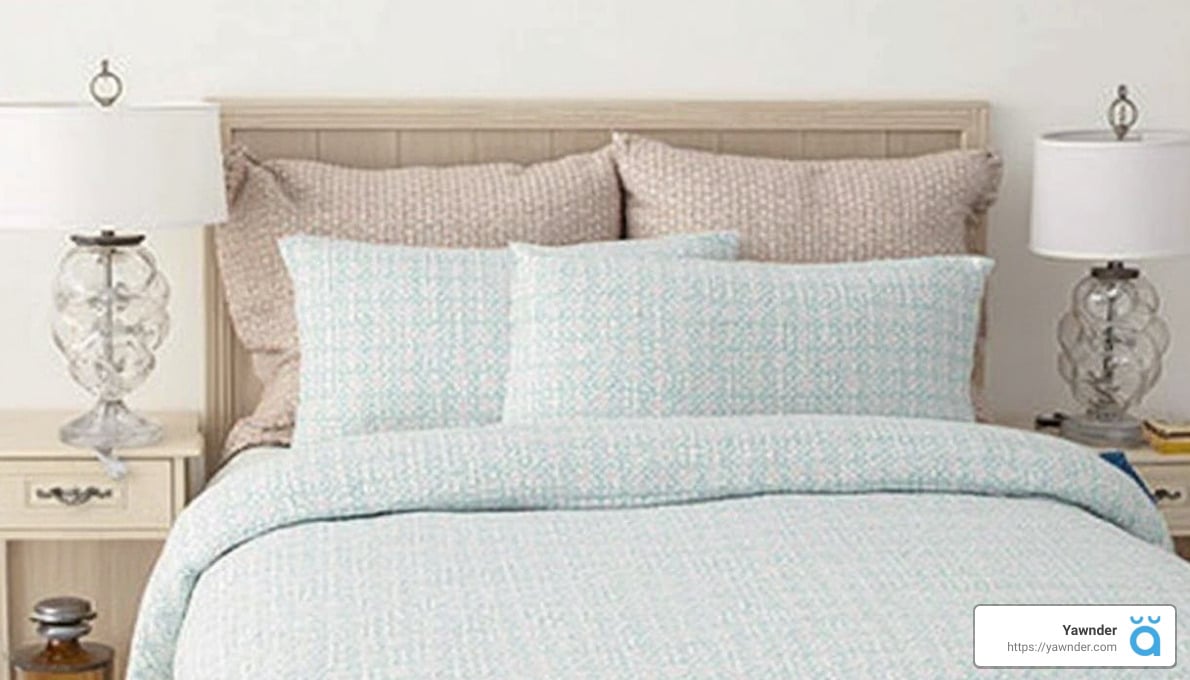
Pottery Barn vs Target: compare the sheet fabric before the price tag
Fabric and weave first: a crisp 100% cotton percale set is not directly comparable to a silky cotton sateen or polyester-blend set. Both retailers sell multiple bedding lines and thread counts. For a useful decision, pick one specific Pottery Barn fabric and a comparable Target Threshold or Casaluna set in the same size, then check fiber content, weave, pocket depth, care label and price.
What is worth paying more for?
Prioritize fabric you actually like, appropriate mattress depth, complete fitted-sheet elastic, and the ability to wash at your usual temperature. Higher thread count alone is not a reliable quality score, and a luxury price is not a substitute for a clear material specification. Compare the same size and full set contents—not separate sale pillowcases or mismatched package types.
For two more defined premium sheet comparisons, see Brooklinen vs Boll & Branch and Brooklinen vs Quince. Confirm today’s prices and returns with the specific retailer.
📅 Updated September 2026: Our comparison of Pottery Barn vs. Target sheets was verified for current product offerings and material quality. The core differences in luxury versus affordability, as detailed in this analysis, remain consistent in today’s market.
The quest for the perfect night’s sleep often leads us down a rabbit hole of thread counts, weaves, and fabrics. At the center of this journey is a simple, yet surprisingly complex, choice: where should you buy your bed sheets? Two retail titans dominate the conversation for many home decorators: Pottery Barn, the purveyor of timeless, aspirational comfort, and Target, the champion of accessible, on-trend design. One promises investment-worthy luxury, the other offers stylish affordability. It begs the question every discerning sleeper asks: When it comes to sheets, is the significant price difference between these two giants justified by a tangible difference in quality, comfort, and longevity?
Decoding the Bedding Aisle: Pottery Barn vs. Rarget
To navigate this decision, we need to move beyond brand perception and look at the tangible attributes that define a great set of sheets. This isn’t just about a name on a package; it’s about the raw materials, the construction, the feel against your skin, and how the product holds up after dozens of washes. We’ll break down the comparison into four key areas: the quality of the materials used, the impact of weave and thread count, the expected durability and long-term value, and finally, the aesthetic choices available at each retailer.
Materials Matter Most: A Look at Fabric Quality
The single most important factor determining the feel and performance of your sheets is the fiber they’re made from. This is where the primary difference between Pottery Barn and Target becomes most apparent.
Pottery Barn’s Premium Fiber Selection
Pottery Barn builds its bedding reputation on a foundation of premium materials. You will frequently find sheets made from 100% long-staple Egyptian or organic cotton. Long-staple cotton fibers are significantly longer than standard cotton fibers, which means they can be spun into smoother, stronger, and finer yarns. This results in sheets that are exceptionally soft, resistant to pilling, and more durable over time. The brand is also a major destination for Belgian flax linen, renowned for its breathability, moisture-wicking properties, and the effortlessly relaxed aesthetic it develops with each wash. Additionally, they feature sustainable options like TENCEL™ Lyocell, a plant-based fiber known for its silky-smooth feel, excellent temperature regulation, and eco-friendly production process.
Target’s Strategy of Variety and Value
Target’s approach is centered on providing choice and value across its popular house brands like Casaluna, Threshold, and Opalhouse. Their most common offering is 100% cotton, but it’s typically Upland cotton, which has shorter staples than its Egyptian counterpart. While still comfortable and breathable, these sheets may not have the same initial silky smoothness or long-term durability as those from long-staple cotton. Target has also made a significant push into premium-feeling materials at a lower cost. Their Casaluna line, for example, heavily features affordable linen blends and TENCEL™ blends. These offer a taste of the luxury feel without the high price tag of 100% pure versions. You will also find microfiber and cotton-polyester blends, which are budget-friendly and wrinkle-resistant but lack the breathability of natural fibers.
Weave, Thread Count, and the Science of Feel
Once you have the fiber, the next step is weaving it into fabric. The weave pattern and the density of the threads (thread count) dramatically influence how sheets feel against your skin.
The Great Debate: Crisp Percale vs. Silky Sateen
Both Pottery Barn and Target offer the two most popular cotton weaves: percale and sateen. A percale weave is a simple one-thread-over, one-thread-under grid pattern. This creates a light, crisp, and highly breathable fabric with a matte finish—perfect for those who tend to sleep hot. A sateen weave uses a four-threads-over, one-thread-under pattern. This exposes more thread surface, resulting in a silkier, smoother feel with a subtle sheen. Sateen sheets drape more closely to the body and are generally warmer than percale.
Beyond the Label: Demystifying Thread Count
For decades, a high thread count was the ultimate marker of luxury. However, the truth is more nuanced. Thread count simply refers to the number of threads woven into one square inch of fabric. While a higher count can mean a denser, softer sheet, it’s only meaningful when the threads themselves are high quality. A 400-thread-count sheet made from strong, long-staple cotton will feel far more luxurious and last much longer than a 1000-thread-count sheet made from weak, short-staple cotton, where manufacturers may twist multiple short fibers together to inflate the count.
A high thread count can never salvage poor-quality yarn. It’s like building a house with cheap, brittle bricks; no matter how many you stack, the foundation will always be weak. Focus on the quality of the fiber first and a respectable thread count (300-500) second.
Durability, Price, and the True Cost of Ownership
The final consideration is the intersection of price and performance. How will your chosen sheets hold up, and which option presents the better value for your budget and lifestyle?
The Investment vs. The Update
There’s no getting around the sticker shock: a set of queen-sized Belgian flax linen sheets from Pottery Barn can easily cost four to five times as much as a linen-blend set from Target’s Casaluna line. Pottery Barn positions its bedding as a long-term investment in your comfort. Target’s bedding is an accessible way to refresh your space, allowing you to experiment with new colors or materials without a major financial commitment.
Longevity, Pilling, and How Sheets Age
Durability is directly linked back to fiber quality. The long-staple cottons and high-quality flax linens used by Pottery Barn are naturally more resistant to pilling (those annoying little balls of fuzz) and thinning over time. With proper care, they can last for many years, often getting softer and more comfortable with age. Sheets made from shorter-staple cotton or synthetic blends, while great for the price, are more prone to showing wear more quickly. They may feel fantastic for the first year or two but are more likely to pill or feel less substantial after repeated laundering.
The Value of Craftsmanship and Certifications
Part of the premium price at Pottery Barn is allocated to details and assurances. You’re more likely to see prominent certifications like Oeko-Tex Standard 100 (tested for harmful substances) and Fair Trade Certified (ensuring ethical labor practices). While Target is also improving its transparency and offering many Oeko-Tex certified products, these quality markers are a cornerstone of Pottery Barn’s brand identity. This provides peace of mind that can be a valuable part of the purchase for many consumers.
So, which should you choose? If your priority is investing in a set of sheets that will provide peak softness and durability for years to come, and your budget allows, the superior materials from Pottery Barn offer a tangible, long-lasting benefit. You are paying for top-tier fibers that feel incredible and are built to last. If, however, you love to change your decor with the seasons, need a comfortable solution that is wallet-friendly, or are testing out a material like linen for the first time, Target provides fantastic style and very respectable quality for its price point. The best choice is the one that aligns with your personal comfort preferences, your budget, and how you live.
Ultimately, your sheets are just one part of a holistic sleep ecosystem. The true foundation of restorative rest is the surface that supports your body all night long: your mattress. To understand how the right mattress can transform your sleep, we invite you to visit our San Diego showroom at 1441 Encinitas Blvd, Encinitas CA. Our non-c