
Turn this comparison into a purchase decision
Use the comparison below to narrow the field, then check the live offer before you buy. Brand promotions can change faster than editorial pages.
iSense vs Sleep Number: adjustable feel is not a single feature
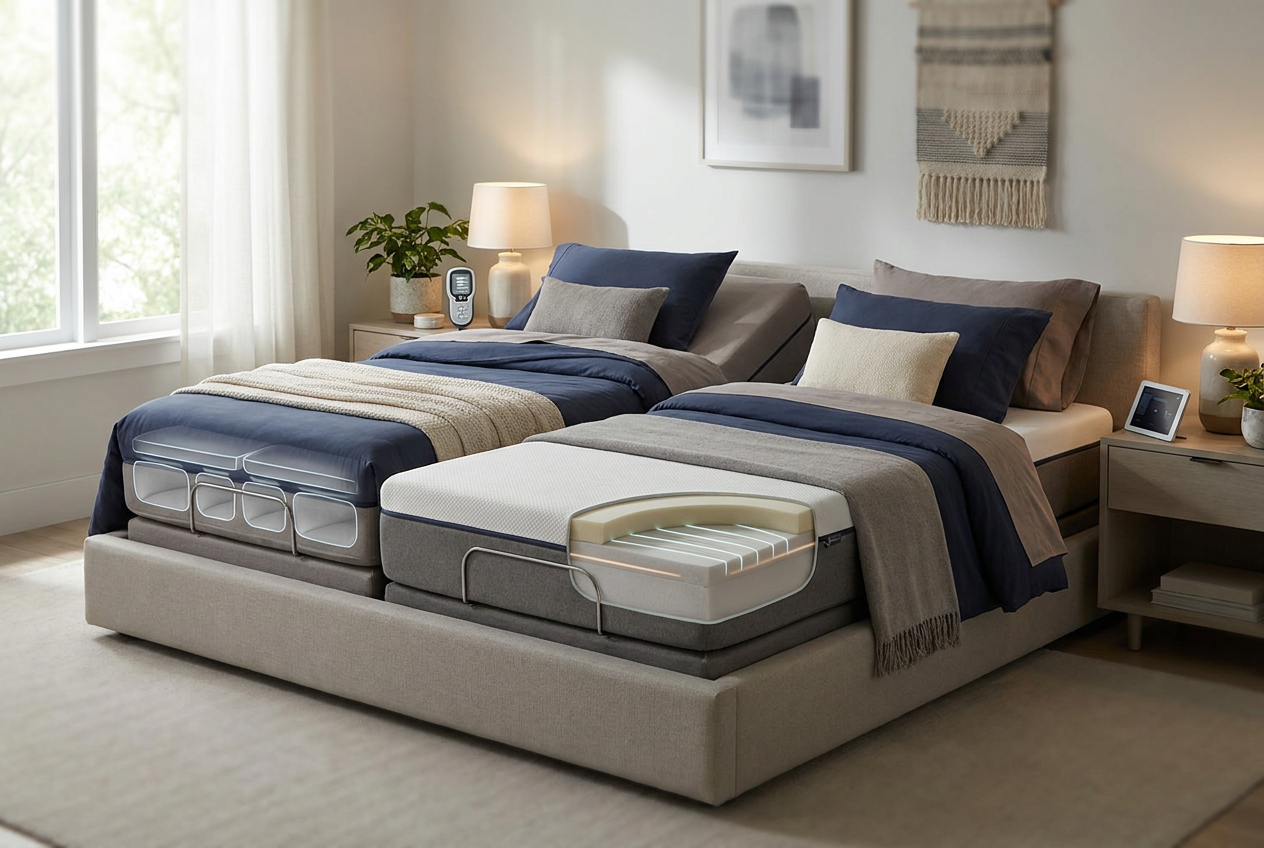
These smart-bed brands offer adjustable-firmness concepts, but specific series differ in pressure systems, comfort layers, remote/app features and base compatibility. Choose the exact iSense and Sleep Number models first; brand-wide claims about pressure relief or “tracking accuracy” are not substitutes for a matched model comparison.
Three questions before paying for adjustable firmness
Can each partner adjust their side independently in the selected mattress size? Which measurements and connectivity require a paid plan or particular app? What happens if a pump, air chamber, controller or other specialized part needs repair years later? Ask about service response, warranty coverage for electronic components and return pickup logistics before assuming the longest advertised warranty covers everything equally.
Check Sleep Number offers (Impact) · Sleep Number models explained.
📅 Updated September 2026: This comparison remains a definitive guide for adjustable air beds, and our verdict stands. We’ve ensured all key features and technologies are accurately represented for your informed choice.
iSense and Sleep Number both offer adjustable air beds, but they differ in their approach to technology and mattress construction. Sleep Number focuses on DualAir™ technology with a modular design, while iSense integrates Comfort Control™ technology into a more cohesive hybrid feel. iSense also emphasizes a quieter pump and a unified mattress experience.
When it comes to personalized comfort, the world of smart mattresses offers an incredible promise: a bed that adjusts to you. In this space, two names consistently rise to the top: iSense and Sleep Number. Both brands use advanced air chamber technology to let you change your mattress’s firmness on demand. But while the core concept is similar, their approach to comfort, technology, and overall design is surprisingly different. As San Diego’s trusted sleep experts, we at Yawnder believe an informed decision is the foundation of a great night’s sleep. This in-depth guide will break down the key features of iSense and Sleep Number mattresses to help you understand which innovative bed might be the perfect fit for your unique needs.
Watch our iSense mattress overview
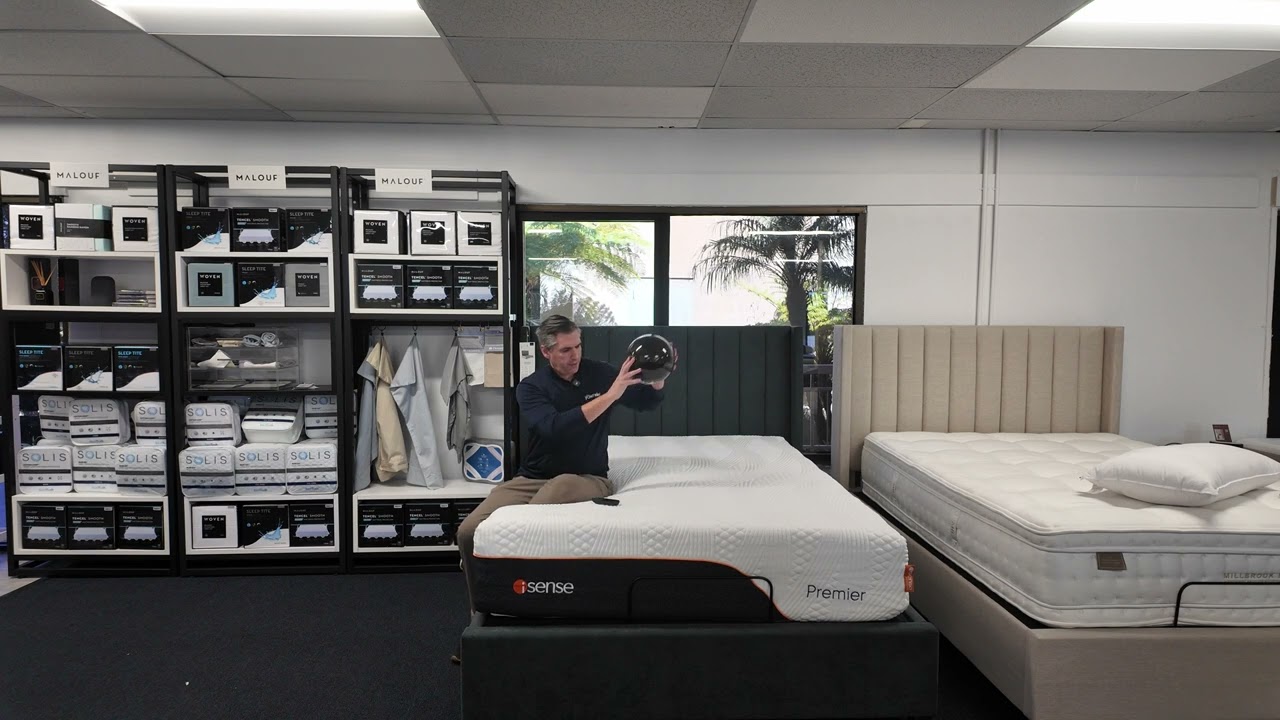
Core Technology Breakdown: Isense vs. Sleep Number
At the heart of both brands is the revolutionary idea of adjustable firmness via air. Unlike traditional innerspring or foam mattresses with a fixed feel, these beds use a pump to inflate or deflate air chambers inside the mattress, allowing you to dial in your precise level of support. This is a game-changer for couples with different preferences, individuals whose comfort needs change over time, or anyone seeking ultimate control over their sleep environment. While the goal is the same, the execution and philosophy behind their technology vary significantly.
Sleep Number‘s Approach: DualAir™ Technology
Sleep Number is arguably the most recognized name in the adjustable air bed market. Their proprietary system is called DualAir™ technology. In a queen-size mattress or larger, this means there are two separate air chambers, one on each side of the bed. Using a remote control or a smartphone app, each partner can independently adjust their side’s firmness. This firmness is quantified by their iconic “Sleep Number setting,” a scale from 1 to 100, where 100 is the firmest. Their higher-end 360® Smart Beds take this a step further with “Responsive Air” technology, which can automatically sense your movements and adjust the firmness throughout the night to maintain your chosen setting.
iSense’s Approach: Comfort Control™ Technology
iSense utilizes a very similar concept with its Comfort Control™ technology. It also features dual air chambers and a pump system that allows each sleeper to adjust their side to their preferred firmness level. Like Sleep Number, this is controlled via a remote or a dedicated app. However, a key distinction in the iSense philosophy is its focus on creating an integrated mattress experience from the ground up. Where Sleep Number often feels like a system of components (cover, foam layer, air chambers), iSense builds its mattresses to feel more like a cohesive, premium hybrid, where the adjustable air core is just one part of a unified whole. They’ve engineered their system to seamlessly merge the benefits of air with the familiar comfort of high-quality foams.
The Pump System: A Key Differentiator
The engine of these mattresses is the pump, and its design can impact your experience. Some users of Sleep Number beds have noted the sound of the pump, especially with 360® models that may make micro-adjustments during the night. The pump is typically housed in the mattress base or nearby. iSense has put a significant emphasis on engineering a quieter pump mechanism. They market their system as being virtually silent, allowing for adjustments without disturbing a sleeping partner. This appeals to light sleepers or those who anticipate changing their settings frequently and want to do so discreetly.
Comfort Layers and Mattress Construction
Beyond the air chambers, what you’re actually lying on—the comfort layers—defines the mattress’s feel. This is where the two brands have the most dramatic differences in design philosophy, directly impacting pressure relief, contouring, and the overall sleep surface sensation.
Sleep Number’s Modular Design
Sleep Number mattresses are constructed with a modular design. This means they are assembled in layers: a mattress cover, a comfort layer made of foam, the air chambers, and a foam base pad. The thickness and material of the comfort layer vary across their different series (Classic, Performance, Innovation), determining much of the bed’s price and feel. For example, their Innovation Series uses advanced foams for better temperature regulation and pressure relief. While this modularity can be beneficial for replacing parts, it’s also the source of a common user complaint: the “trench” or center gap. Because the comfort foam sits atop two separate air chambers, a noticeable division can sometimes be felt in the middle of the bed.
iSense’s Integrated Hybrid Design
iSense takes a starkly different path, focusing on an integrated, hybrid construction. They build their mattresses much like a traditional luxury mattress, but with their Comfort Control™ air technology at the core. They fuse the air chambers with substantial, high-quality comfort layers of memory foam or their proprietary Energex™ foam, which is designed to provide the pressure relief of memory foam without the heat retention. This creates a more seamless and uniform sleep surface, effectively eliminating the sensation of a gap in the middle of the bed. The result is a mattress that feels less like an air bed and more like a premium foam or hybrid mattress that just happens to be adjustable.
While Sleep Number offers modularity by placing foam layers over air chambers, iSense focuses on an integrated hybrid approach, building comfort directly into the mattress structure to create a more unified sleep surface.
Smart Features and App Integration
In today’s connected world, a smart bed is more than just adjustable—it’s a data hub for your well-being. Both brands offer robust app experiences, but their focus and the level of data they provide cater to different types of users.
Sleep Number’s SleepIQ® Score
Sleep Number’s entire ecosystem revolves around its SleepIQ® technology. This is a comprehensive sleep tracking system that monitors your heart rate, breathing patterns, and movement throughout the night, all without a wearable device. Each morning, you receive a “SleepIQ Score” out of 100, along with detailed insights into your sleep stages (light, deep, REM) and biometric data. The app connects this data to your daily activities, helping you see how factors like exercise or caffeine intake affect your score. For data-driven individuals who want to actively monitor and improve their sleep health, the SleepIQ ecosystem is a powerful tool.
iSense’s App Functionality
The iSense app is more streamlined and primarily focused on its core competency: comfort control. The interface is clean and intuitive, making it exceptionally easy to adjust your firmness level. While some models do offer sleep tracking, it is generally not as detailed or central to the experience as Sleep Number’s SleepIQ. iSense’s approach appeals to the user who wants the primary benefit of an adjustable air bed—perfected comfort—without being overwhelmed by daily scores and biometric data. It’s a system designed for effortless control rather than in-depth analysis.
Price, Warranty, and The Buying Experience
Practical considerations like cost and long-term support are crucial. Both brands represent a significant investment in your sleep, and understanding the value proposition is key.
Breaking Down the Cost
Generally, Sleep Number has a wider price spectrum, with entry-level models starting at a higher price point than iSen
Check the live offer
Promotions change. Use the current brand offer and one last side-by-side check before you order.
Compare both beds against 142 tested mattresses
Sort all 142 mattresses we have tested by pressure relief, support, cooling, motion isolation, edge support, price, trial and warranty, then filter by how you actually sleep. Of those, 86 hold a complete standardized record and 41 a partial standardized record.