Mattress Sagging: What’s Normal and What’s a Defect?
How to measure a body impression the way a warranty claim requires, which depths brands treat as defects, and what sagging is not covered.
Every mattress develops a visible sleeping area. Some of that is normal comfort-layer settling within the first months; some is a support failure that a warranty is supposed to cover. The difference is a measurement, taken a specific way — and getting the method wrong is why plenty of legitimate claims get denied.
| Observation | Usually | What to do |
|---|---|---|
| Slight surface softening in month one or two | Normal settling of comfort layers | Nothing; rotate if permitted |
| Visible impression that disappears when unweighted | Normal | Rotate; check foundation support |
| Impression still present with nothing on the bed | Potential warranty defect | Measure and photograph before filing |
| Dip at one edge only | Often a broken slat or unsupported frame | Inspect the base before blaming the mattress |
| Hammocking across the middle of a queen or larger | Frequently missing center support | Add center support; then re-measure |
How to measure an impression correctly
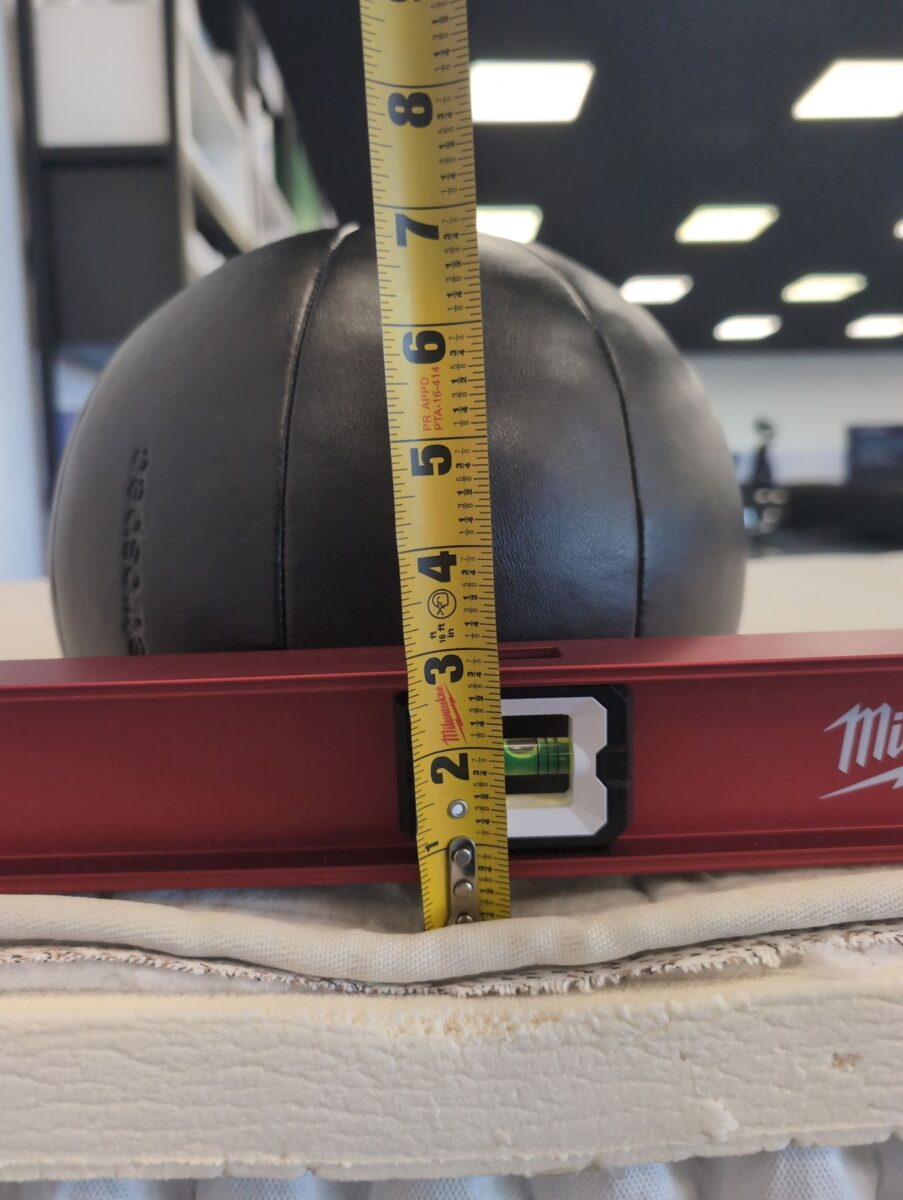
Strip the bed completely — no sheets, no protector, no topper — and leave it unweighted for at least a few hours. Lay a straight edge such as a taut string or a board across the mattress at the deepest point, resting on the untouched areas on either side, then measure the gap from the string down to the surface. Photograph the ruler and the string in the same frame. Almost every warranty defines the defect this way, and a measurement taken with bedding on the mattress will be rejected.
The thresholds brands publish
Most warranties state a specific depth. The common range runs from roughly three quarters of an inch to one and a half inches for an unweighted impression, and the exact number changes the outcome of a claim entirely. Our stored thresholds, with the brand’s own quoted language, are listed in the warranty guide and in our full warranty comparison.
Why the foundation is the first suspect
A sag that looks like mattress failure is frequently a base failure: a broken or bowed slat, a gap wider than the warranty allows, or a queen-or-larger frame with no center leg. Check the base before filing anything — brands do, and an unsupported frame is grounds for denial. See slat spacing and foundation requirements for the measurements to take.
What sagging warranties do not cover
Comfort preference is excluded everywhere: a bed that feels too soft for you but shows no measurable impression is not a defect. Stains almost always void coverage outright, which is the entire argument for a protector. Damage from an inadequate frame, commercial use, or removing the cover is typically excluded, and prorated periods can leave you paying a share of the replacement. Construction and durability explains which builds tend to soften early in the first place.
Can you fix it instead?
Sometimes, temporarily. Rotating, fixing the base, and adding a firm topper can restore usable comfort when the impression is shallow — our guide to fixing a sagging mattress covers what actually helps. None of it restores foam that has already broken down, and none of it should be done before you measure, because adding a topper hides the evidence a claim needs.
Related guides
Back to the Mattress Care & Ownership guide.
Frequently asked questions
How much sagging is normal in a new mattress?
Some surface softening in the first weeks is expected. An impression that remains with the bed unweighted is the one that matters.
How do I measure mattress sag for a warranty claim?
Strip the bed, leave it unweighted, run a taut string or straight edge across the deepest point resting on untouched areas, and measure the gap. Photograph the measurement.
What sag depth counts as a defect?
It depends on the brand’s published threshold, commonly between three quarters of an inch and one and a half inches unweighted. Check your specific warranty.
Will a topper fix a sagging mattress?
It can mask a shallow impression and improve comfort, but it does not restore support and it can complicate a warranty claim. Measure first.
Can the wrong bed frame cause sagging?
Yes, and it is one of the most common causes we see. Wide slat gaps and missing center support let the mattress bow.
Sources
Certification descriptions reflect each program’s published requirements at the time of writing; programs update their criteria, so verify a current certificate before purchase. Yawnder does not issue or administer any certification.