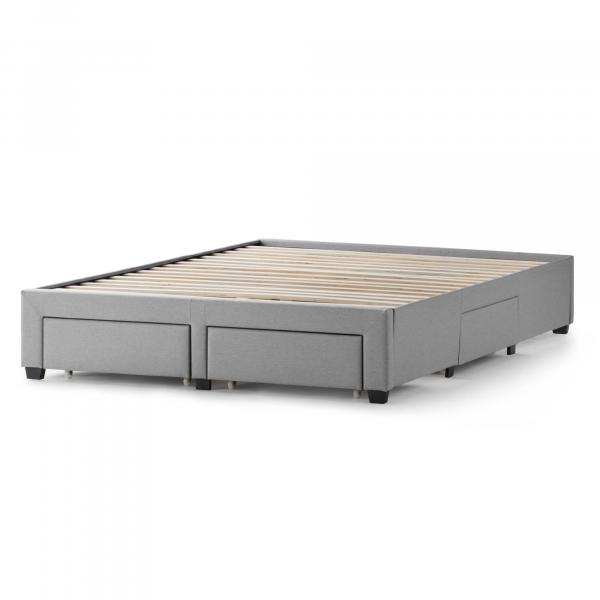
Mattress Slat Spacing & Foundation Requirements
How to measure slat gaps, what maximum spacing warranties require, when you need center support, and which bases void coverage.
The base under a mattress decides how it performs and whether its warranty survives. Slat spacing is the specification people miss most often, usually because a bed frame was bought first and the mattress warranty was read later — if at all.
| Requirement | Typical warranty language | How to check |
|---|---|---|
| Maximum slat gap | Commonly 3 inches or less; some foam beds specify tighter | Measure the clear space between adjacent slats, not slat centers |
| Slat width | Wide, flat slats rather than thin round rails | Look for solid wood boards, not dowels |
| Center support | Required on queen and larger, usually with a leg to the floor | Look under the middle of the frame for a supported center rail |
| Solid platform | Permitted, sometimes requiring ventilation | Solid surfaces can trap moisture under foam beds |
| Old box spring | Often not permitted under foam or hybrid beds | A coil spring unit flexes; most modern warranties require a rigid foundation |
| Adjustable base | Usually allowed if the mattress is rated for it | Confirm the mattress is adjustable-base compatible |
How to measure your slats
Measure the clear gap between two adjacent slats at the middle of the bed, where load is highest, and check several gaps rather than one — slats drift. If any gap exceeds your warranty’s maximum, the fix is inexpensive: add slats, or lay a bunkie board or a sheet of rigid material across the existing ones. Do this before you sleep on a new mattress, not after an impression appears.
Why gaps matter more on foam beds
An all-foam mattress has no coil unit to distribute load, so it conforms to whatever is underneath. Over-wide gaps let foam sag into the spaces, producing a ripple pattern that looks exactly like a defect and is excluded as improper support. Hybrids tolerate slightly more, but pocketed coil units still need continuous support at the perimeter and center.
Center support is not optional
On a queen, king or California king, most warranties require a center rail with at least one leg to the floor — some require two or three. Without it, the frame bows in the middle and the mattress follows, which is the classic “hammocking” complaint. If you are diagnosing a dip, check this before anything else; see sagging: normal or defect.
Box springs, platforms and adjustable bases
A traditional box spring is a flexing coil unit designed for old innerspring mattresses, and most current warranties do not accept one under a foam or hybrid bed — box spring vs foundation covers the distinction. Rigid foundations and slatted platforms are the norm. Adjustable bases are fine when the mattress is rated for articulation; a bed that is not can crease or delaminate.
Getting it right before delivery
Check three things against your warranty on the day the bed arrives: maximum gap, center support, and whether your base type is listed as acceptable. Photograph the setup. It costs nothing and it is the single cheapest insurance on a warranty claim you may need years later. If you bought from our Encinitas showroom, our delivery team checks the base as part of setup.
Related guides
Back to the Mattress Care & Ownership guide.
Frequently asked questions
What is the maximum slat spacing for a mattress?
Most warranties specify about 3 inches or less between slats, and some foam beds require tighter spacing. Check your specific warranty.
Do I need center support on a queen?
Most brands require a center rail with a leg to the floor on queen and larger sizes. Without it, the frame and mattress can bow.
Can I put a mattress on a solid platform?
Usually yes, though some manufacturers ask for ventilation to avoid trapped moisture under foam beds.
Can I use my old box spring?
Often not. A flexing coil box spring is designed for older innerspring mattresses; most modern warranties require a rigid foundation.
Will a bunkie board fix wide slat gaps?
Yes, a bunkie board or added slats is the standard inexpensive fix, and it is much cheaper than a denied claim.
Sources
Certification descriptions reflect each program’s published requirements at the time of writing; programs update their criteria, so verify a current certificate before purchase. Yawnder does not issue or administer any certification.