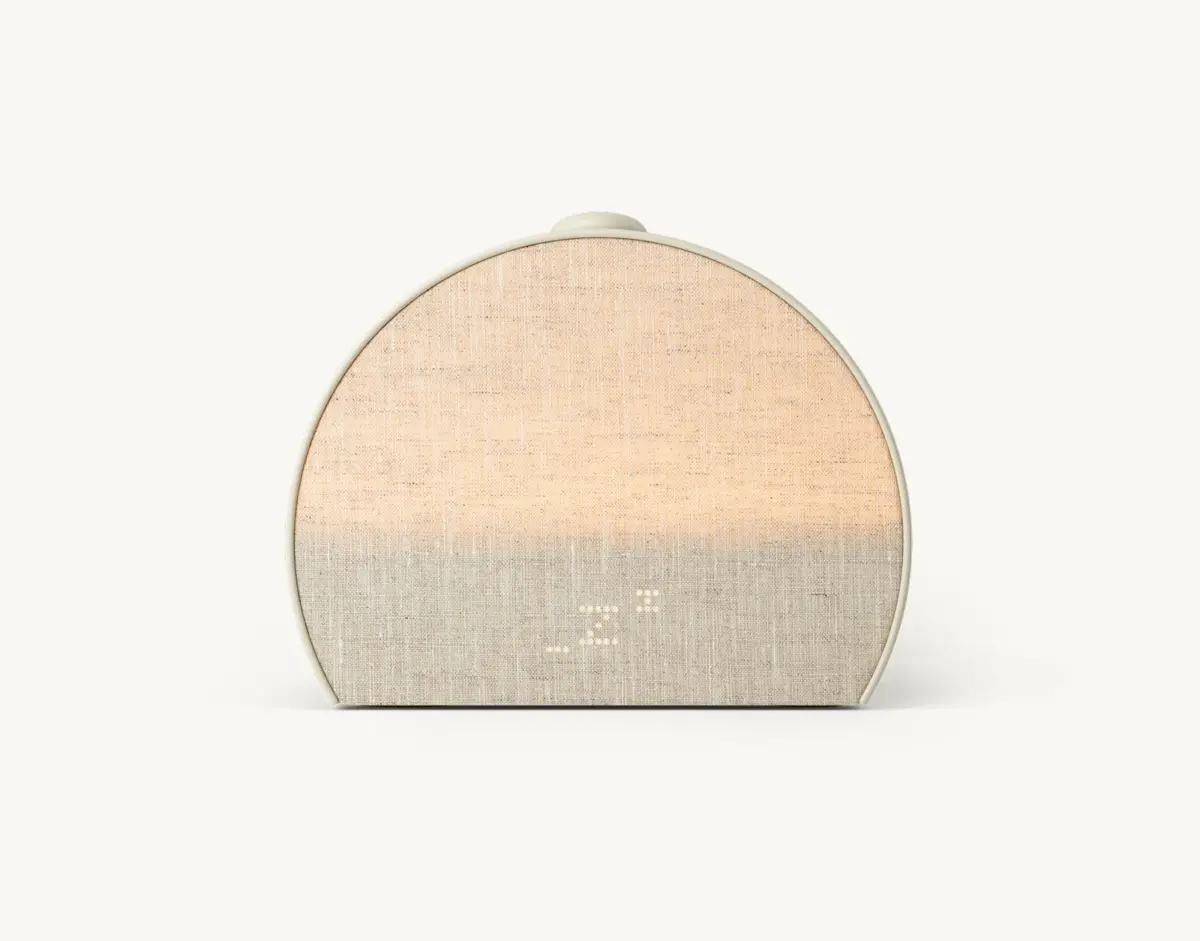
Hatch Sleep Clock Review (2026): Contactless Sleep Tracking Without a Wearable
Hatch Sleep Clock Review
A $249.99 bedside sleep tracker that uses micro-motion and breathing signals from your nightstand—no ring, watch, camera or microphone required.
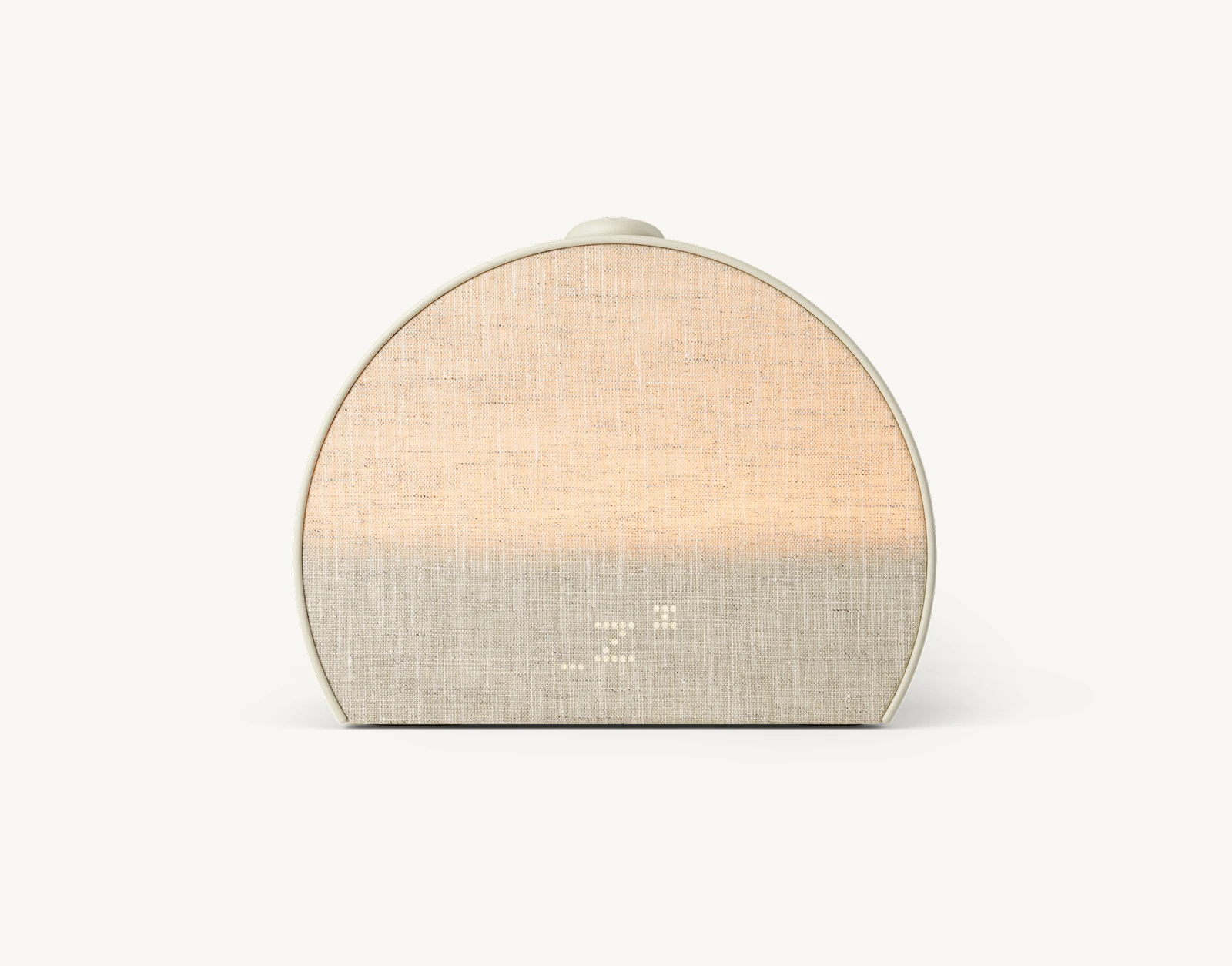
Hatch Sleep Clock quick facts
| Price | $249.99 direct from Hatch |
|---|---|
| Tracking method | Built-in micro-motion sensors detect breathing and movement from the nightstand |
| Wearable required | No |
| Camera or microphone | No, according to Hatch |
| Sleep data | Awake, light, deep and REM estimates plus personalized insights and recommendations |
| Subscription required for sleep data | No |
| Hatch+ trial | 30 days included with the current product |
| Alarm | Sunrise alarm |
| Audio | Built-in sleep-designed audio; Hatch+ expands the library |
| Trial | 30-night bedside trial |
| Warranty | 1 year |
How contactless tracking works
Hatch says Sleep Clock uses micro-motion sensors to detect subtle breathing and body movement throughout the night. The device sits on your nightstand rather than on your body and estimates whether you are awake or in light, deep or REM sleep.
Hatch recommends positioning the clock around mattress height and roughly 2–4 feet from the sleeper. That placement matters because the tracker needs a clear path to the person it is monitoring.
No camera and no microphone
For a bedside sensor, privacy concerns are reasonable. Hatch says the Sleep Clock does not use a camera or microphone for sleep tracking; it detects breath and movement through its motion-sensing hardware.
That does not make it “offline” or eliminate every privacy consideration, because the product still works with the Hatch Sleep app and cloud-connected ecosystem. It does mean the sleep-sensing method is different from a bedroom camera or audio recorder.
Shared beds are the main caveat
For a couple that wants separate individual records every night, two wearables—or two independently positioned sleep sensors—may be easier to reason about than one bedside tracker.
Sleep data without scores or streaks
Hatch deliberately positions Sleep Clock around understanding patterns rather than gamifying sleep. The current product does not center the experience on a single daily sleep score or streak. Instead, the app surfaces nightly details, sleep stages and recommendations based on observed habits.
That can be appealing if conventional wearable scores make you overly focused on “winning” sleep. The tradeoff is that people who love one-number dashboards may prefer Oura, Fitbit, WHOOP or Apple Watch.
Sleep Clock vs Restore 3
These devices now have cleanly separated jobs. Restore 3 is the $169 bedside routine device: light, audio, sunrise alarm and phone-down controls. Sleep Clock is the $249.99 model that adds contactless tracking, personalized insights and recommendations.
Choose Restore 3 if you want a calmer bedtime routine and do not care about sleep data. Choose Sleep Clock if understanding your sleep patterns is the reason you are shopping.
Sleep Clock vs Oura Ring 5
Oura Ring 5 puts the sensors on your finger, travels easily and handles shared-bed situations cleanly because it is attached to one person. Hatch Sleep Clock avoids wearing anything but is tied to your nightstand and relies more heavily on placement.
Oura also uses a paid membership for the full experience. Hatch says Sleep Clock’s sleep data and details do not require a subscription.
Sleep Clock vs Fitbit Air
Fitbit Air is much cheaper at $99.99 and runs up to a week on battery, but it is still a wrist-worn tracker. Sleep Clock costs more but adds the sunrise-alarm and bedside-audio experience while eliminating the wearable.
Sleep Clock vs Apple Watch and WHOOP
Apple Watch Series 12 and WHOOP 5.0 make more sense when you want daytime fitness/recovery data too. Hatch Sleep Clock is far more bedroom-specific. If you only care about the night and dislike wearing a device, that specialization is a strength.
What the sleep-stage data can and cannot tell you
Like other consumer sleep trackers, Sleep Clock estimates sleep stages indirectly rather than measuring brain activity with clinical polysomnography. Hatch publishes its own accuracy claims, but Yawnder has not independently reproduced those claims.
Use the device for trends: bedtime, wake time, duration, interruptions, consistency and how your routine changes over time. Do not treat a single REM or deep-sleep percentage as a medical diagnosis or definitive measurement.
Who should buy Hatch Sleep Clock?
Start with the full comparison: Best Sleep Trackers 2026.
More Yawnder tracker and bedside guides
Bottom line: Hatch Sleep Clock fills a real gap: it gives you bedside routines and contactless sleep tracking without putting a wearable on your body. The tradeoff is that the device is personal and placement-dependent, so it is strongest for one primary sleeper with a consistent nightstand setup.