Oura Ring 5 Review (2026): Sleep Tracking, Battery & Subscription
Oura Ring 5 Review
A smaller, lighter Oura built around sleep and recovery tracking—with excellent overnight wearability, long battery life and one recurring cost you should budget for.
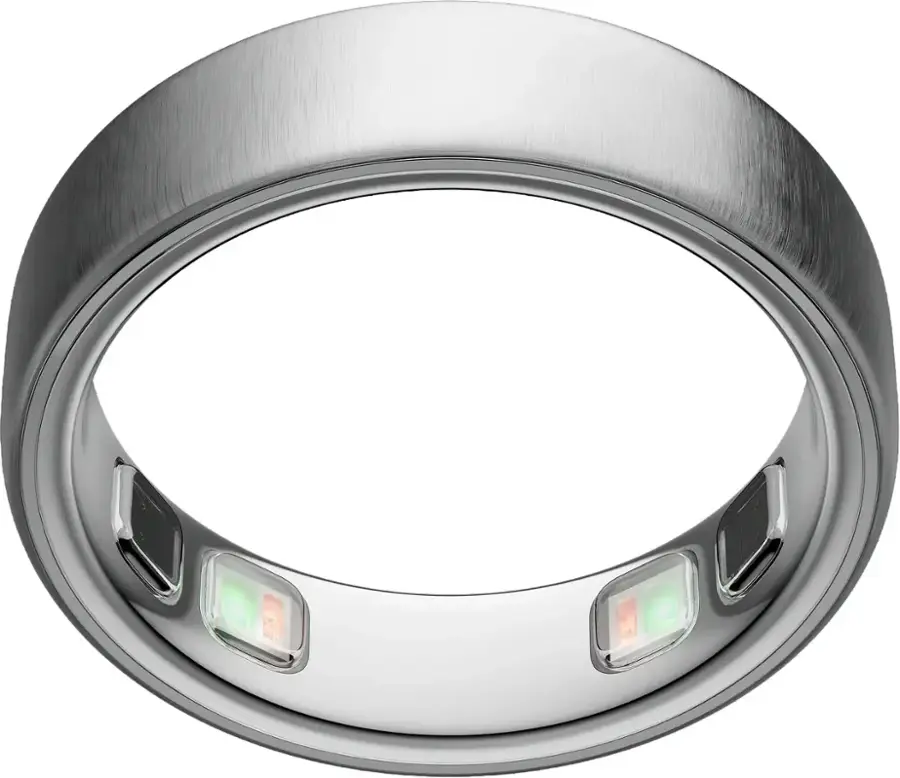
Oura Ring 5 quick facts
| Current generation | Oura Ring 5, launched in 2026 |
|---|---|
| Starting price | $399 direct from Oura |
| Battery | Typically 6–9 days, depending on size, settings and use |
| Membership | $5.99/month or $69.99/year in the U.S.; first month included for new members |
| Sizes | 6–13; Ring 5 uses its own sizing |
| Compatibility | iOS and Android |
| Main sleep data | Sleep duration, timing, stages, restfulness, HR, HRV, temperature trends, respiration-related signals |
| Water resistance | Up to 100 m / IP68 per Oura specifications |
What changed from Oura Ring 4?
Ring 5 is not just a renamed Ring 4. Oura redesigned the hardware around a smaller form factor and says the new ring has about 40% less volume than Ring 4. It uses an all-titanium build, redesigned optical sensing and a new sizing system. Oura lists a typical battery range of 6–9 days, compared with 5–8 days for Ring 4.
The practical benefit is simple: a sleep tracker only works if you keep wearing it. Making the ring smaller and extending the charging interval attacks the two most annoying parts of overnight wearable tracking.
Sleep tracking: what Ring 5 is good at
What not to overinterpret
Consumer trackers estimate sleep stages from indirect signals; they do not directly measure brain activity like a clinical polysomnogram. Ring 5 can be useful for comparing your own patterns over time, but a “deep sleep” percentage is not a medical grade on your night.
The subscription is part of the price
Oura Membership is currently $5.99 per month or $69.99 per year in the U.S. New members get the first month included. That means the real ownership decision is not just whether a $399 ring is worth it; it is whether you will keep using the software insights enough to justify the recurring fee.
Oura Ring 5 vs Apple Watch Series 12
For Apple’s current sleep features, see our Apple Watch Series 12 sleep tracking review.
Choose Ring 5 when sleep comfort, battery life and a screenless experience matter most. Choose Apple Watch Series 12 when you want sleep tracking inside a full smartwatch with apps, notifications, workouts and safety features. Apple now offers sleep score and sleep-stage tracking, but its up-to-24-hour battery means charging habits matter much more.
Oura Ring 5 vs WHOOP 5.0
We cover WHOOP’s current pricing, sleep metrics and membership tradeoffs in our WHOOP 5.0 review.
Both are subscription-centered recovery platforms. Oura is the less conspicuous overnight wearable; WHOOP is more training-oriented and offers 14+ day battery life on a screenless wrist band. Athletes who organize their day around strain and recovery may prefer WHOOP, while people primarily interested in sleep and low-profile wear may prefer the ring form factor.
Should Gen 3 or Ring 4 owners upgrade?
If your existing ring still fits well, holds enough charge and gives you the trends you actually use, there is no requirement to upgrade just because Ring 5 exists. The strongest upgrade case is for people who care about the smaller physical design, longer current-generation battery target, newer sensors or a worn-out older battery.
We are keeping our Oura Ring Gen 3 article online as historical-model coverage rather than rewriting that URL to pretend it reviewed newer hardware.
How Oura fits into the wider tracker market
For side-by-side comparisons with Apple Watch Series 12, Google Fitbit Air, WHOOP 5.0 and Eight Sleep Pod 6, see our updated Best Sleep Trackers 2026 guide. For cooling systems, alarms, white noise and sleep audio, use the broader Best Sleep Tech 2026 hub.
Bottom line: Oura Ring 5 is a strong sleep-first wearable if you value comfort, multi-day battery and long-term trend data more than a screen. Budget for the subscription from day one and treat the data as guidance—not a diagnosis.