
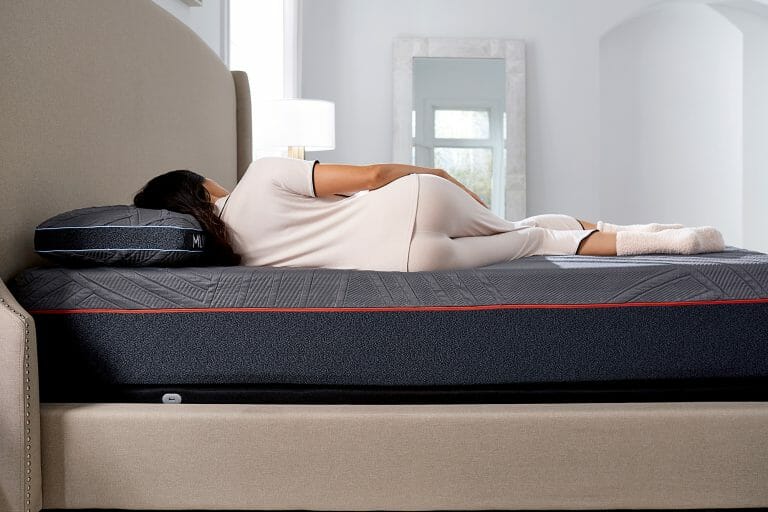

Best Mattress for Back Pain 2026: Tested for Spine Alignment
Waking up sore? We tested 50+ mattresses hands-on in our San Diego showroom on one standardized protocol. These beds offered the best spinal alignment.
1. Saatva Classic
Best Overall
The "Back Pain" Secret: The Saatva Classic is our #1 pick because of its dedicated "Lumbar Zone" technology. It uses a specialized active wire grid in the center third of the mattress that provides upward resistance against your lower back.
This prevents your hips from sinking too deep—the #1 cause of lower back pain.
Why it helps pain
- Active Lumbar Zone wire for support.
- Dual-coil design keeps spine aligned.
- White-glove delivery (no heavy lifting).
Potential Issues
- Motion transfer (you may feel partner move).
- Can feel too firm for lightweight side sleepers.
2. Plank Firm Luxe
Best for Stomach/Back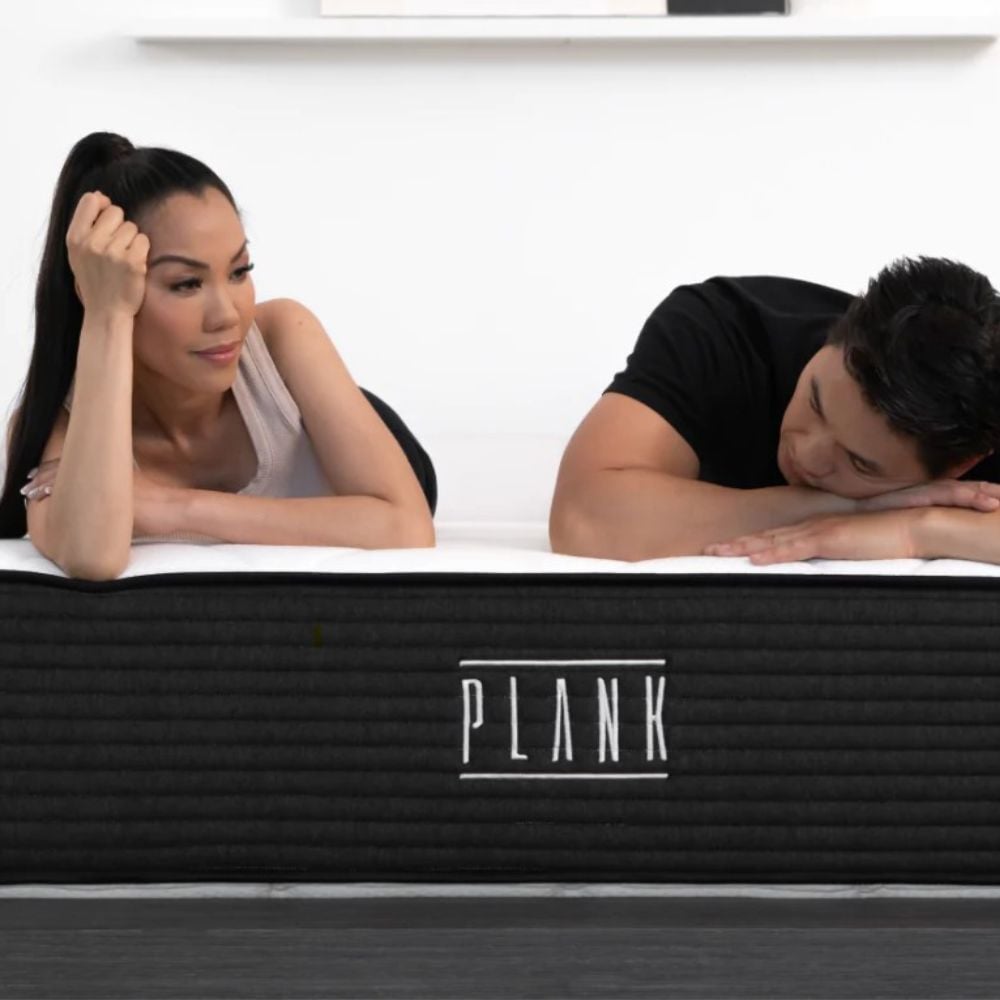
The "Alignment" Specialist: If your back hurts because your hips are sinking, you need the Plank. It is one of the firmest beds we have ever tested. It creates a perfectly flat, neutral sleeping surface, which is critical for stomach sleepers to prevent hyperextension of the lumbar spine.
It is flippable: One side is "Firm," and the other is "Ultra Firm."
Why it helps pain
- Prevents "hammocking" of the spine.
- Flippable design (2 firmness options).
- High-density foam prevents long-term sagging.
Potential Issues
- Too hard for most side sleepers.
- Minimal pressure relief on shoulders.
3. Loom & Leaf
Best Memory Foam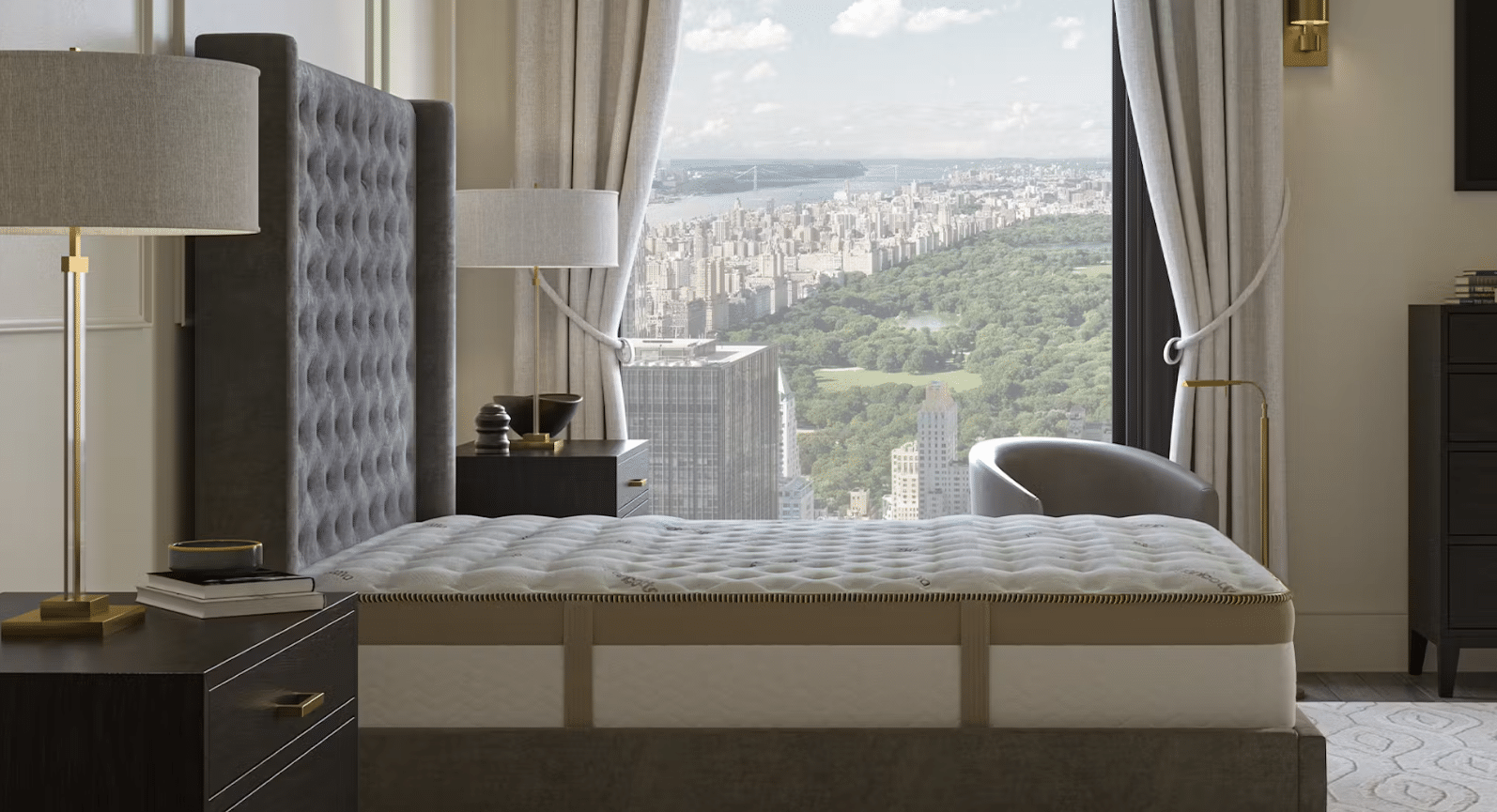
Pressure Relief Without the Sag: Many people with back pain love memory foam but hate the "quicksand" feeling. Loom & Leaf (by Saatva) solves this. It uses ultra-high-density (5lb) memory foam that contours to your back to relieve pressure points, but it is laminated with cooling gel to keep you supported.
It includes the same "Spinal Zone" gel layer as the Saatva Classic for lumbar alignment.
Why it helps pain
- High-density foam supports the lumbar curve.
- Zero motion transfer (great for couples).
- Cooling gel layer in the center third.
Potential Issues
- Sleeps warmer than a hybrid coil mattress.
- Harder to move around on than coils.
4. Helix Midnight Luxe
Best for Side Sleepers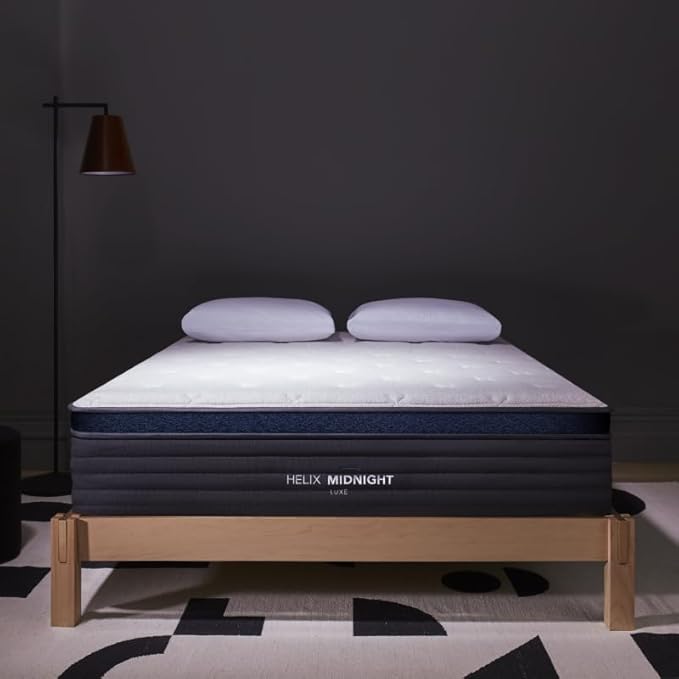
The Side Sleeper's Solution: If you sleep on your side and have back pain, it's usually because your hips are twisting. The Helix Midnight Luxe uses "Zoned Lumbar Support"—coils that are softer under your shoulders (to relieve pressure) and firmer under your hips (to keep your spine straight).
Why it helps pain
- Zoned coils prevent hip twisting.
- Pillow top cushions shoulder joints.
- Medium feel is versatile for couples.
Potential Issues
- Price is higher than standard Midnight.
- Edge support is good, but not "Plank" level.
Frequently Asked Questions
Is a hard mattress better for a bad back?
Not necessarily. A mattress that is too hard can push against your pressure points and cause your lower back to arch unsupported. However, stomach sleepers often benefit from the extreme firmness of the Plank.
Does memory foam help back pain?
Yes, because it contours to fill the gap in your lumbar curve. Beds like Loom & Leaf use high-density foam to ensure you don't sink too far, which is the key difference between cheap memory foam and supportive foam.
More back-pain picks we’ve tested
Beyond the four beds above, these six models earned a place in our back-pain testing for specific bodies and budgets — heavier sleepers, organic buyers, memory-foam fans and anyone shopping under $1,500.
| Model | Yawnder score | Firmness | Queen | Trial | Warranty |
|---|---|---|---|---|---|
| The WinkBed | 8.6 | .6/10$1,508 | 100 nights | 10-year | |
| Bear Elite Hybrid | 7.9 | 6.5 / 10 | $1,899 | 120 nights | 10-year |
| Awara Natural Hybrid | 8.2 | 7.0 / 10 | $1,299 | 365 nights | — |
| DreamCloud Premier Hybrid | 8.6 | .6/10$1,599 | 365 nights | 25-year | |
| Brooklyn Bedding Signature Hybrid | 8.5 | 8.0 / 10 | $1,332 | 120 nights | 10-year |
| Nectar Premier Copper | 8.4 | 6.0 / 10 | $1,499 | 365 nights | — |
The WinkBed — best for heavier sleepers
The WinkBed is a heavy-duty hybrid built to last, and the one we point heavier sleepers toward most often. Its pocketed coils are zoned to be firmer under the lumbar area, so the hips do not sink far enough to pull the spine out of line, and the Extra-Edge™ support system keeps the perimeter usable instead of collapsing.
Why we picked it: zoned lumbar coils, a high-coil-count support core built with high-density foams to resist sagging, gel-infused foam plus a breathable coil base for heat, and four firmness options — Softer, Luxury Firm, Firmer, and a Plus build made for sleepers over 300 pounds.
Watch out for: it is tall and heavy, so it is awkward to move and you may need deep-pocket sheets. The feel is traditional and responsive — if you want the slow sink of memory foam, this is not it.
Bear Elite Hybrid — best for active lifestyles
The Bear Elite Hybrid pairs zoned coils with copper-infused memory foam. The foam contours enough to take pressure off the lower back but rebounds quickly, so combination sleepers are not fighting the mattress every time they roll over.
Why we picked it: individually wrapped coils that firm up through the center third under the hips and lumbar spine, responsive copper-infused foam, and a naturally conductive copper layer over a breathable coil system that helps move heat away from the body.
Watch out for: the marketing leans hard on athletic recovery, but the useful part is plain zoned support — that benefit applies to anyone. It also sits a little above comparable hybrids on price.
Awara Natural Hybrid — best organic option
If you want natural materials, the Awara Natural Hybrid is the one we recommend for back pain. Natural Dunlop latex over pocketed coils gives a buoyant, supportive surface that holds the hips up rather than letting them settle — a good match for back and stomach sleepers.
Why we picked it: natural latex, organic cotton and New Zealand wool; latex’s floating support with none of the memory-foam sink; a firm profile that keeps the hips from dipping; and perforated latex over a coil base for airflow.
Watch out for: the firm feel is not universal — petite side sleepers often find it hard on the shoulders and hips. New latex also has a distinct smell that fades over the first few days.
DreamCloud Premier — best for pressure relief
The DreamCloud Premier blends the body-hugging feel of memory foam with innerspring support. Its cashmere-blend Euro top dissolves pressure around the hips and shoulders while the coil unit underneath keeps the lumbar region held up.
Why we picked it: stacked memory foam layers that adapt to your shape and fill the gap under the lower back, a medium-firm feel that suits a wide range of back pain sufferers, and a high-loft Euro top for plush cushioning without giving up support.
Watch out for: as a bed-in-a-box it can carry a faint new-mattress smell out of the box, which normally clears within a day or two in a ventilated room.
Brooklyn Bedding Signature Hybrid — best value
The Signature Hybrid delivers the features that matter for back pain without the premium price, which makes it the most accessible entry point on this list.
Why we picked it: up to 961 individually encased Ascension™ coils for targeted support and motion isolation, responsive TitanFlex™ foam so you never feel stuck, and three firmness choices (Soft, Medium, Firm) to match your position and weight.
Watch out for: it is excellent value, but long-term durability does not match the heavier, higher-priced builds above it.
Check Brooklyn Bedding price →
Nectar Premier — best value memory foam
If you like the classic contouring of memory foam but need real support underneath, the Nectar Premier is the value pick. Layers of differing density handle pressure relief up top and keep the spine on an even plane below.
Why we picked it: gel memory foam that adapts to the back and joints, a sturdy base foam that limits sinkage, excellent motion isolation for couples, and a long sleep trial at a competitive price.
Watch out for: despite the cooling gel, very hot sleepers usually do better on a hybrid or latex bed. It also lacks the zoned lumbar support that coil models offer.
How to choose a mattress for back pain
Support and spinal alignment come first
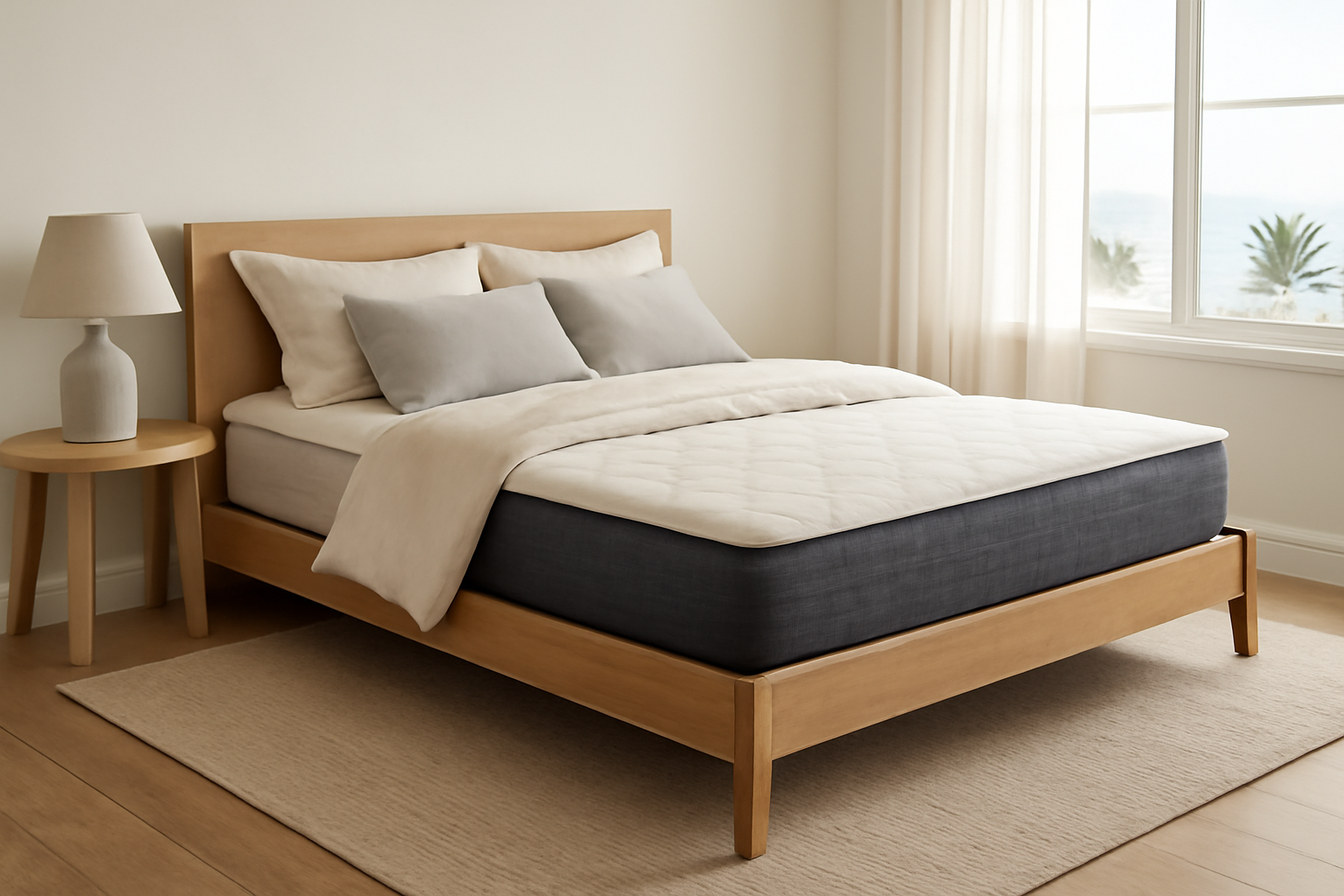
The single factor that matters most is alignment. Your mattress should hold the spine in a neutral position — roughly the shape it takes when you stand up straight. Too soft and the hips and shoulders sink, curving the spine; too hard and it creates pressure points while leaving the natural lumbar curve unsupported.
Firmness depends on your weight, not just taste
- Under 130 lbs: a softer surface (4–5 out of 10) usually works better, because you need enough contouring to relieve pressure — especially on your side.
- 130–230 lbs: medium-firm (6–7 out of 10) is the sweet spot for most positions, balancing support and cushioning.
- Over 230 lbs: a firmer build (7–9 out of 10) with a robust support core prevents excessive sinkage. The WinkBed Plus is the clearest example.
Features worth paying for
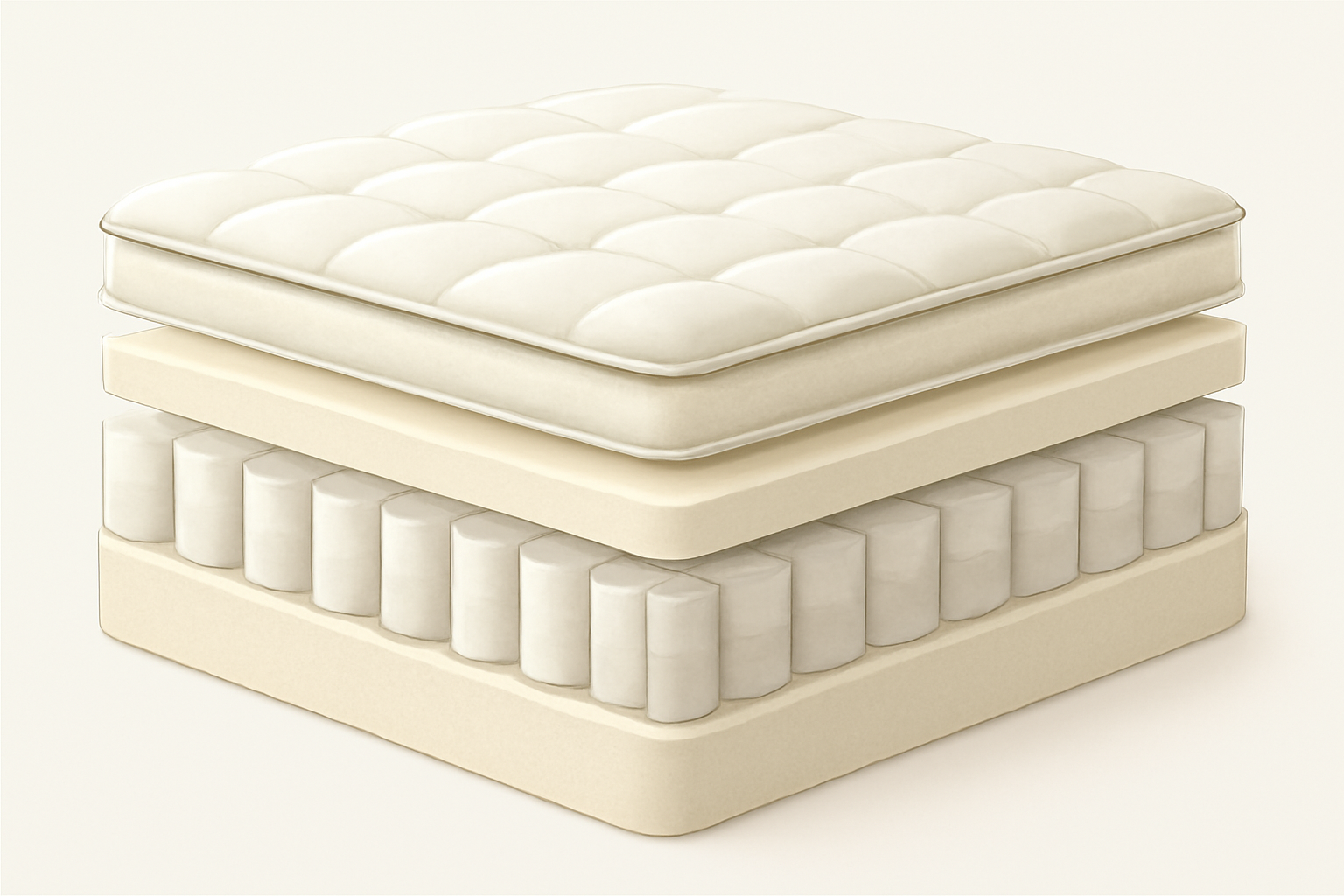
“Zoned support” is the term to look for: the mattress is firmer through the center third, under the hips and lower back, and softer at the shoulders and feet. Responsive foams and pocketed coils also matter — they stop you feeling stuck, so changing position at night does not mean straining your back to do it.
Your sleeping position
- Back sleepers need support under the natural lumbar curve. A medium-firm hybrid is usually the match.
- Side sleepers need the hips and shoulders to sink slightly so the spine stays straight — medium to medium-firm with real pressure relief.
- Stomach sleepers need the firmest surface available, so the hips cannot drop and arch the lower back.
Why the sleep trial matters more than the showroom
It can take weeks for your body to adapt to a new surface. An in-home trial — typically 100 nights to a full year — is the only way to know whether a mattress is genuinely helping your back. Lying on a bed for ten minutes in a store tells you about feel; a trial tells you about mornings.
When to see a doctor
A mattress is not a medical device. If your back pain is chronic, severe, or getting worse, see a doctor or physical therapist — they can diagnose the underlying cause and build a treatment plan. Rule out a medical condition before expecting a mattress to fix it.
More back-pain questions
Can a mattress cause back pain?
Yes. A mattress that has softened or sagged in the middle lets the hips drop below the shoulders, and your lower back holds that position for eight hours a night. A bed that is too firm for your weight can do the opposite, leaving a gap under the lumbar curve with no support in it.
How does lumbar support in a mattress work?
Lumbar support means extra reinforcement through the center third of the bed — a firmer coil zone, a denser foam insert, or an active wire grid. It pushes back where your body is heaviest so the pelvis stays level with the ribcage, instead of settling into the mattress and rotating the lower spine.
How long does it take to get used to a new mattress?
Expect 30 to 90 days. Your body adjusts to the new support level while the materials break in, which is exactly why a long sleep trial is worth more than a firmness guess.
Can a mattress topper help with back pain?
A topper is a reasonable stopgap. A firm topper adds support to a bed that is slightly too soft, and a soft topper cushions one that feels too hard. What it cannot do is fix a mattress that has already sagged — see our guides to mattress toppers for back pain and toppers for neck and back pain.
What is “zoned support”?
A mattress built with different firmness levels in different areas — usually firmer in the center third for the hips and lower back, softer at the shoulders and legs so pressure points get relief.
Related reading
Compare these picks against 142 tested mattresses
Sort all 142 mattresses we have tested by pressure relief, support, cooling, motion isolation, edge support, price, trial and warranty, then filter by how you actually sleep. Of those, 51 hold a complete standardized record and 91 a partial standardized record.
Compare with your profile preselected →Browse all tested mattresses →