Best Organic Mattresses 2026: Certified Picks

avocado box top

For the broader sustainability-shopping guide, see Eco-Friendly Mattresses. This page stays on mattresses with documented organic-material claims and certification context; latex, fiberglass-free construction and “non-toxic” terminology have separate guides.

Best organic mattresses we’ve tested

Organic, natural, non-toxic, eco-friendly and fiberglass-free are not interchangeable. This guide focuses on organic-material claims, the documentation behind them, and the mattresses we’ve tested and scored. Every score, firmness rating, price, trial and warranty below is pulled from Yawnder’s canonical mattress database rather than restated from older articles.

Organic vs natural vs eco-friendly vs non-toxic

  • Organic means meaningful certified-organic materials — cotton and wool under GOTS, latex under GOLS. It is a documented standard, not a vibe, and the certificate applies to specific materials rather than to the whole mattress.
  • Natural describes natural materials — latex, cotton, wool, coils — without necessarily being certified organic. A natural latex bed can be excellent and still hold no GOLS certificate.
  • Eco-friendly is a broader environmental claim that can cover sourcing, materials, manufacturing energy, packaging, durability or carbon offsets. Ask which of those the brand actually means.
  • Non-toxic has no legal definition, so treat it as marketing shorthand rather than a scientific guarantee. What’s checkable is the specific evidence: GOTS or GOLS materials, a GREENGUARD Gold or OEKO-TEX Standard 100 emissions test, a wool or plant-fiber fire barrier, and a law tag that lists what’s inside.

Because these searches overlap so heavily, one honest guide serves them better than several near-identical rankings — as long as the terminology stays straight.

What the certifications actually prove

  • GOTS (Global Organic Textile Standard) — covers organic fibers such as cotton and wool, including processing and social criteria along the supply chain.
  • GOLS (Global Organic Latex Standard) — covers organic latex, from the plantation through to how the latex is processed.
  • GREENGUARD Gold — a chemical-emissions test for indoor air quality. It measures VOC emissions; it is not an organic certification.
  • OEKO-TEX Standard 100 — tests finished textiles against a list of regulated and restricted substances.
  • MADE SAFE — a screening program against a list of substances the organization deems harmful.

A certificate only applies to the component and model it was issued for. A brand’s flagship may be GOTS-certified while a cheaper model in the same lineup is not, so match the certificate to the exact model and size you’re buying and ask for the current certificate if it matters to you.

Fiberglass, fire barriers and why “organic” isn’t the same as “fiberglass-free”

Every mattress sold in the US has to meet a flammability standard. Inexpensive foam beds often meet it with a woven fiberglass sock under the cover, which is fine while the cover stays zipped and a genuine mess if it comes off. Wool is the common alternative: it resists flame naturally, so organic and natural beds frequently use a wool or plant-fiber barrier instead.

Two things worth separating:

  • A mattress can be fiberglass-free without being organic — plenty of conventional foam beds use a non-fiberglass barrier.
  • An organic-certified mattress should not be assumed fiberglass-free either. The certificate covers materials such as cotton, wool or latex, not necessarily the fire barrier.

The brands behind the picks below publish wool or plant-fiber fire barriers rather than fiberglass. Verify it yourself the same way we do: read the law tag on the exact model, and ask the brand in writing what the fire barrier is made of. If a company won’t answer that question, treat it as an answer.

How we pick organic and natural mattresses

  • Documented materials. Certificates and law-tag disclosure that name what’s actually inside, not adjectives.
  • Latex and coils over dense foam, because they respond faster and move air — the reason natural builds tend to sleep cooler.
  • Comfort that matches your position, not just the materials story. A certified bed at the wrong firmness is still the wrong bed.
  • Durability. Latex and tempered coils are among the longest-lived materials in a mattress, which is the part of “eco-friendly” that shows up in your budget too: a bed you keep for a decade beats one you replace twice.
  • Trial and warranty, since organic beds cost more and you need a real window to judge one at home.

Our current organic and natural lineup

1. Avocado — Best Overall Organic

Avocado is one of the most heavily certified mainstream mattress brands: GOLS-certified organic latex, GOTS-certified organic cotton and wool, hand-tufted construction, and a wool fire barrier. The canonical Yawnder record confirms a 9.0 overall score, a 365-night trial, and a 25-year limited warranty. We are not publishing firmness, sub-scores, or a fixed queen price here because those fields are not currently populated in the standardized Avocado record. Check the live product page for current configuration and pricing.

2. Birch — Best Value Natural Hybrid

Birch pairs Talalay latex with pocketed coils, organic cotton and a wool fire barrier, and it is GREENGUARD Gold certified for low emissions. The canonical Yawnder record confirms a 9.0 overall score, a 365-night trial, and a limited lifetime warranty. We are not restating cooling, pressure-relief, edge-support, firmness, or price figures here because those fields are not currently populated in the standardized Birch record. Check the live listing for current pricing and configuration.

3. Avocado Grand Luxe — Best Luxury

The Grand Luxe is the plush end of the same certified materials story: 8.8 overall, firmness about 4, pressure relief 9.2, motion isolation 9.2, durability 9.2, roughly $3,799 queen with a 365-night trial and 25-year warranty. Choose it if you want the certifications without the firm surface.

4. Zenhaven — Best All-Latex

Zenhaven is a flippable all-latex bed — one side plusher, one firmer — under an organic cotton cover with a wool layer. Note the terminology: this is natural Talalay latex, not a GOLS-certified organic latex bed, which is exactly the distinction this guide exists to make. It scores 8.7 overall, firmness about 4.5 on the softer side, cooling 8.8 and the highest durability score in this lineup at 9.4, around $3,549 queen with a 365-night trial and lifetime warranty. Edge support (7.6) and motion isolation (7.4) are its weaker marks.

5. Nest Bedding Owl — Best for Side Sleepers

The Owl natural latex hybrid is the pick for side and combination sleepers who want pressure relief without a stuck feeling: 8.5 overall, pressure relief 9.2, firmness about 5.5, cooling 8.5, roughly $1,799 queen with a 365-night trial and a lifetime warranty. Latex over coils keeps it easy to move on, which matters if you change position all night.

6. PlushBeds Botanical Bliss — Best Customizable Latex

Botanical Bliss uses organic latex layers you can unzip and reorder, so one bed can be tuned firmer or softer after it arrives — useful for couples splitting the difference. It scores 8.4 overall, firmness about 6.5, cooling 8.8, durability 9.2, around $2,299 queen with a 25-year warranty. The standardized Yawnder record does not currently store a trial length for this model, so verify the live return window before buying. Motion isolation (7.2) is the trade-off latex usually makes.

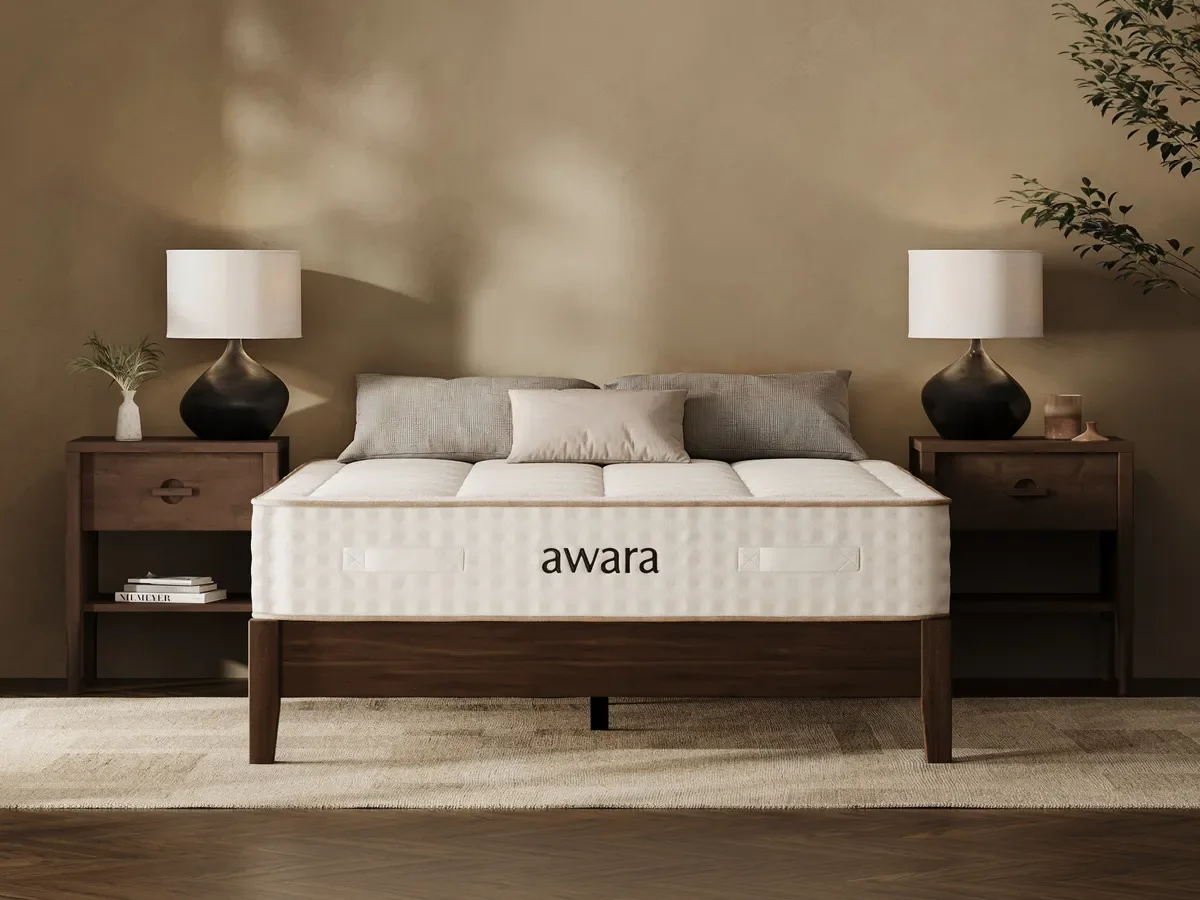
7. Awara Premier Natural Hybrid — Best Budget Natural Hybrid

Awara is the least expensive way into a latex-and-coil natural build: 8.4 overall, firmness about 6.5, cooling 8.7, pressure relief 8.5, roughly $1,699 queen with a 365-night trial. The step-up Premier Plus scores 8.5 with better motion isolation and edge support at about $2,099. The canonical record for the Awara Premier Natural Hybrid confirms a 365-night trial and a Forever Warranty (Lifetime).

8. Naturepedic EOS — Best Modular Certified Organic

Naturepedic builds to GOTS-certified organic standards and the EOS platform lets you swap individual layers, including different firmnesses on each side of a queen or king. It scores 8.4 overall, firmness about 6.5, cooling 8.6, durability 9.2, around $3,999 queen with a 90-night trial and a 25-year warranty — the shortest trial here, so decide deliberately.

On Saatva: Saatva’s latex hybrid remains a reasonable option if free in-room white-glove delivery and a 365-night trial matter more to you than certification depth. We don’t yet have it in our canonical scoring database, so rather than publish numbers we can’t stand behind, we’re leaving it out of the ranking until it’s scored. Its all-latex sibling Zenhaven is scored above.

Compare the picks

MattressBest forScoreFirmnessQueenTrialWarranty
AvocadoOverall organic9.06.0$1,956365 nights25 yr
BirchValue9.06.0See live price365 nights25 yr
Avocado Grand LuxeLuxury / plush8.84.0$3,799365 nights25 yr
ZenhavenAll-latex, flippable8.74.5 / firmer side$3,549365 nights20 yr
Nest Bedding OwlSide sleepers8.55.5$1,799365 nights10 yr
PlushBeds Botanical BlissCustomizable latex8.46.5$2,299100 nights25 yr
Awara Premier Natural HybridBudget natural hybrid8.46.5$1,699365 nightsConfirm at checkout
Naturepedic EOSModular certified organic8.46.5$3,99990 nights25 yr

Scores are Yawnder’s current canonical values. Prices are queen and move with promotions; confirm on the product page before you buy. Where our database and the live listing disagree — Birch’s queen price today, for example — we send you to the live price rather than print a number we can’t stand behind.

Choosing firmness, not just materials

  • Side sleepers usually want more pressure relief at the shoulder and hip — a plusher latex comfort layer or a pillow-top over a firm organic core.
  • Back sleepers want steady support with a little give at the lumbar curve; a medium to medium-firm latex hybrid is the usual answer.
  • Stomach sleepers generally need the firmer end so the hips don’t drop below the shoulders.
  • Hot sleepers tend to do better on latex and coils than on dense memory foam, because both move air and neither traps heat the way a thick slow-response foam layer does.

Sustainability beyond the materials list

If the environmental side is what you care about, look at the whole lifecycle rather than the cover fabric: manufacturing energy, waste and packaging, whether the brand runs a take-back or recycling program, and how long the bed lasts. Some brands publish renewable-energy use or carbon-offset programs — Avocado, for instance, publishes climate-neutral claims of its own. Treat those as brand disclosures, not third-party certifications, and weight durability heavily: the greenest mattress is usually the one you don’t replace in five years.

Practical steps before you buy

  • Ask for the certificate that matches your exact model and size, not the brand’s flagship.
  • Read the law tag for the material breakdown, including the fire barrier.
  • Air a new bed out with the room ventilated for a few days. Latex and wool often have a faint earthy smell that isn’t a chemical odor, and it fades.
  • Use a washable protector. It’s the single easiest way to keep an expensive organic mattress clean.
  • Note the trial length. A 90-night trial and a 365-night trial are very different amounts of room to change your mind.

Frequently asked questions

What does GOTS certified mean?

GOTS is the leading standard for organic fibers such as cotton and wool. It covers how the fiber is grown and how it’s processed, plus social criteria in the supply chain. It applies to the certified components, not automatically to the whole mattress.

What’s the difference between organic and natural?

Organic means certified — GOTS for cotton and wool, GOLS for latex. Natural describes the material’s origin without a certificate behind it. Both can make a good mattress; only one is documented.

Is there such a thing as a truly non-toxic mattress?

“Non-toxic” isn’t a defined or regulated term, so no mattress can honestly claim it as a guarantee. What you can verify is specific: certified organic materials, a low-emissions test such as GREENGUARD Gold or OEKO-TEX Standard 100, and a disclosed fire barrier.

Are organic mattresses fiberglass-free?

Usually, because they typically use wool as the fire barrier — but organic certification doesn’t itself certify the fire barrier. Confirm on the law tag or in writing from the brand.

Do organic mattresses smell?

Often less than conventional foam beds. Latex and wool can have a mild earthy smell at first that fades with airflow; it’s not the same as the solvent-like odor some foam beds arrive with.

Is latex better than memory foam?

Latex is more responsive, easier to move on and usually sleeps cooler. Memory foam contours more closely but tends to hold heat and feel slower. Neither wins outright — it depends on whether you want to sink in or stay on top.

Are organic mattresses worth the extra money?

They cost more up front, mainly because certified materials and latex are expensive. The case for them is documented materials, low measured emissions and long service life; latex and tempered coils are among the most durable components in any mattress. If the certifications don’t matter to you, a well-built conventional hybrid may serve you just as well.

Are organic mattresses good for hot sleepers?

Generally yes, because latex, coils, cotton and wool all move air and manage moisture better than dense memory foam. Firmness and cover fabric still matter, so don’t rely on materials alone.

Where can I try organic mattresses near San Diego?

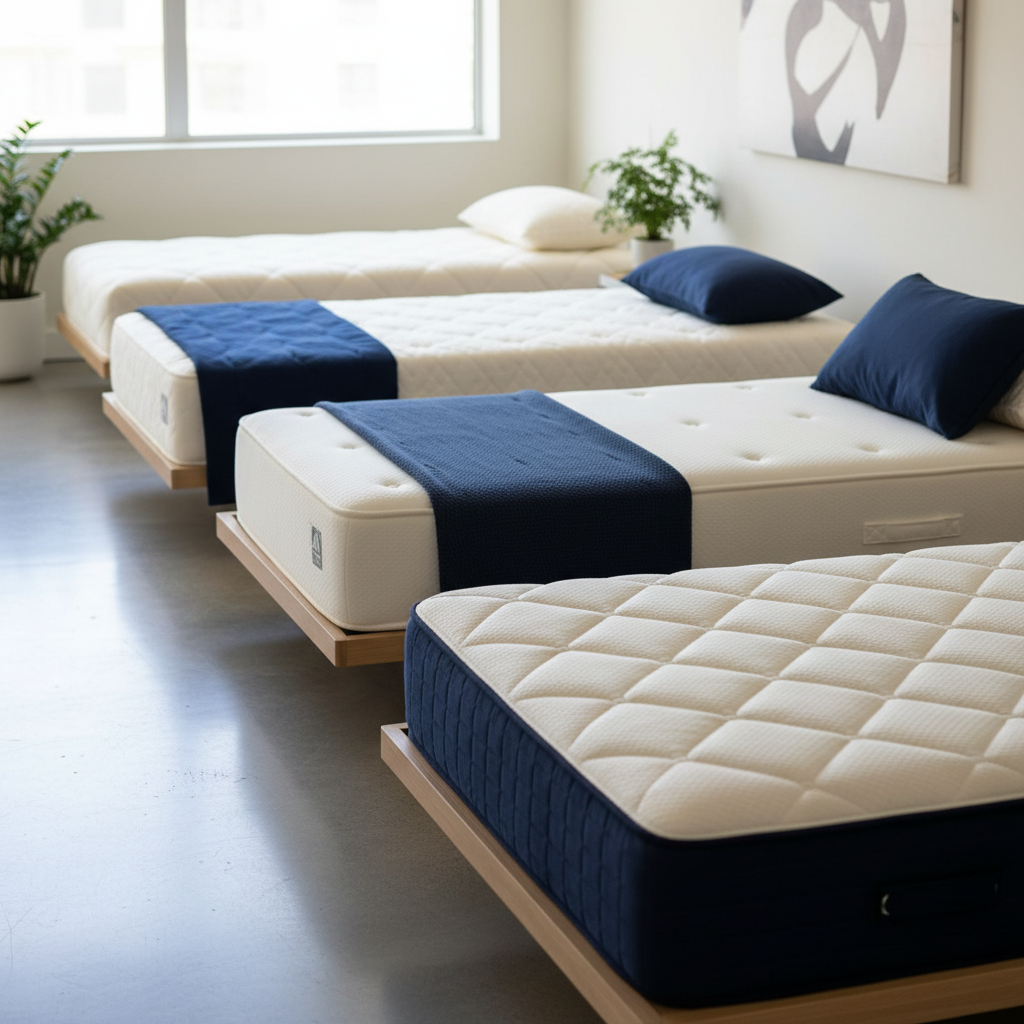
At our Encinitas showroom at 1441 Encinitas Blvd, Suite 116, Encinitas, CA 92024 — call or text 858-232-5760 first if there’s a specific model you want to lie on, since our floor lineup rotates and we don’t stock every bed in this guide.

Related reading

Best Vegan Mattresses (2026)

Best Vegan Mattresses: Top 5 Eco-Friendly Picks 2026

Discover the top vegan mattresses of 2026 that blend luxurious comfort with eco-friendly materials, ensuring you sleep soundly while supporting a sustainable lifestyle. Say goodbye to allergens and embrace guilt-free rest with these best picks that are perfect for your health and the planet!

Best Waterbed Brands

Close-up of a soft, white mattress labeled "Eressy's WaterBed" with quilted detailing on the side, atop a wooden bed frame.

Discover the ultimate in sleep comfort with our exclusive picks for the best waterbed brands of 2026! From relievers of back pain to affordable options, we’ve got the perfect waterbed tailored just for you.

What Is a Coil Mattress? Innerspring vs. Pocket Coils Explained

4 HybridBaseFoamwithIndividuallyPocketedSprings

A coil mattress is a mattress that uses metal springs as its support core. The coils compress and rebound under your body to provide support, responsiveness, airflow, and—in pocket-coil designs—better motion isolation. These springs can come in various shapes and sizes, but the basic function is the same: to create a surface that conforms to your body while also providing the necessary support to keep your spine in proper alignment.

The role of springs in mattresses cannot be overstated. Without them, a mattress would be little more than a soft, flat surface that would not provide the necessary support for a good night’s sleep. The springs in a mattress work together to distribute weight evenly, prevent sagging, and offer the necessary bounce to make it easier to move around and get comfortable. As such, the type and quality of the springs in a mattress can have a significant impact on how well you sleep.

History of Mattress Springs

Springs in mattresses have a long and varied history, with the earliest forms of mattresses being filled with hay or other natural fibers. While these early mattresses were certainly more comfortable than sleeping on the ground, they provided little in the way of support and tended to sag over time.

It wasn’t until the mid-1800s that the first metal spring mattress was patented in the United States by James Marshall. This new design featured a series of interconnected springs that provided a much more supportive sleeping surface than the previous hay-filled mattresses. As the popularity of metal spring mattresses grew, so too did the need for advancements in spring technology.

In the early 1900s, the Bonnell coil was introduced. These hourglass-shaped springs were interconnected, providing a stable base for the mattress while still allowing for some flexibility and bounce. This design was popular for many years, but it had its limitations, as the interconnected springs tended to create motion transfer between sleeping partners.

In the 1920s, the Marshall coil was introduced. These coils were individually wrapped in fabric, allowing them to move independently of one another and contour more effectively to the shape of the body. This design became known as the “pocket coil” and is still used in many modern mattresses today. Other advancements in spring technology include the introduction of offset coils, which are designed to minimize motion transfer, and continuous coil systems, which use a single wire to create a series of interconnecting springs.

The use of springs in mattresses provides several benefits beyond comfort and support. Springs help to increase the durability of the mattress, preventing sagging and ensuring that the mattress retains its shape over time. They also allow for better breathability, which can help regulate body temperature and prevent overheating while you sleep.

Today, mattress manufacturers continue to innovate with new types of spring systems and hybrid mattresses that combine springs with other materials like foam or latex. Some companies are even developing “smart” mattresses that use sensors and other technology to monitor sleep patterns and adjust the mattress settings for optimal comfort.

In conclusion, the history of springs in mattresses is a fascinating one, with constant innovation and improvement over the years. From hay-filled mattresses to the latest pocket coil technology, springs continue to play a crucial role in creating the perfect sleeping surface.

As mattress technology advanced, manufacturers experimented with different spring designs to improve comfort and support. The Bonnell coil, also known as the hourglass coil, was introduced in the early 1900s. The Bonnell coil provides a stable base for the mattress and offers some flexibility and bounce. The hourglass shape of the coils distributes weight evenly across the mattress, preventing sagging and ensuring that the mattress retains its shape over time.

In the 1920s, the pocket coil was introduced. These coils are individually wrapped in fabric, allowing them to move independently of one another and contour more effectively to the shape of the body. This design provides better support and conformability than the Bonnell coil and has become increasingly popular in recent years. Pocket coil systems offer several advantages over traditional Bonnell coils, including better motion isolation and targeted support.

Continuous coil systems use a single wire to create a series of interconnecting springs. This design provides a stable base for the mattress and offers good support and durability. Continuous coil systems are typically less expensive than pocket coil systems, but they may not provide the same level of conformability and motion isolation.

When shopping for a new mattress, it’s important to consider your personal preferences and sleeping style to determine which type of spring system is right for you. Modern mattress springs offer a range of options, each with its own unique set of benefits and drawbacks. Whether you prefer the support of a Bonnell coil, the conformability of a pocket coil, or the durability of a continuous coil system, there is a mattress spring design that will meet your needs.

Advantages of Mattress Springs

Mattress springs offer several advantages that make them an important component of a good night’s sleep.

Firstly, mattress springs provide the necessary support and comfort needed for a restful sleep. The springs work together to distribute weight evenly across the sleeping surface, keeping the spine in proper alignment and reducing the risk of back and neck pain. Additionally, the springs contour to the body’s shape, providing a comfortable sleeping surface that makes it easier to get and stay asleep.

Another advantage of mattress springs is their durability. Mattress springs are designed to withstand the weight and movement of the body, making them a long-lasting component of a mattress. By providing support over the long term, they help prevent sagging and ensure that the mattress retains its shape, providing a comfortable and supportive sleeping surface for years to come.

Finally, mattress springs promote breathability, which is especially important for people who tend to sleep hot. The design of mattress springs allows air to circulate through the mattress, which helps to regulate body temperature and prevent overheating during the night. This breathability can improve the overall quality of sleep, leading to a more restful and refreshing night’s sleep.

In conclusion, the advantages of mattress springs are numerous and important. They provide the necessary support and comfort for a good night’s sleep, are durable and long-lasting, and promote breathability for better temperature regulation. When shopping for a new mattress, it’s essential to consider the type and quality of springs used in the design to ensure that you get the best possible sleeping surface for your needs.

Saatva First Layer of Springs

Mattress Spring Innovations

Innovation in mattress technology has led to the development of new and exciting uses for mattress springs. Hybrid mattresses, for example, combine traditional spring systems with other materials like foam or latex. This combination provides a supportive base with added pressure relief and contouring, offering a more comfortable and restful night’s sleep.

Smart mattresses represent another exciting innovation in the world of mattress technology. These mattresses incorporate sensors and other technology to monitor sleep patterns, adjust mattress settings, and provide personalized recommendations for improving sleep quality. By tracking factors like sleep duration, heart rate, and body temperature, smart mattresses can provide the most comfortable and supportive sleeping surface possible. Some smart mattresses even offer automatic adjustments for snoring, individualized temperature control, and massage settings.

Looking forward, the future of mattress springs is likely to involve continued innovation and advancements in technology. With a greater focus on sustainability and eco-friendliness, manufacturers may explore new materials and designs that are more environmentally friendly while still providing the necessary support and comfort.

As sleep science continues to advance, manufacturers may also find new ways to incorporate technology into spring systems. The use of sensors to monitor the pressure exerted on each spring, for example, could lead to even more customizable and supportive sleeping surfaces.

Overall, the future of mattress springs is exciting and full of potential for continued innovation and improvement. As new technologies are developed and new materials are explored, the possibilities for improving sleep quality through better spring design are virtually endless.

Final Thoughts on Mattress Springs

Over the centuries, the evolution of mattress springs has led to innovations that have improved sleep quality for countless individuals. From the use of hay in early mattresses to the introduction of metal springs and the development of pocket coil and hybrid mattresses, spring technology has come a long way.

Mattress springs are crucial to achieving a restful and comfortable night’s sleep. They provide the necessary support for the body, distribute weight evenly across the sleeping surface, and offer a comfortable surface to sleep on. Additionally, the breathability of spring systems can help regulate body temperature, further improving sleep quality.

As mattress technology continues to advance, the future of mattress springs looks promising. New designs, such as hybrid and smart mattresses, are already changing the way we think about sleep. With continued research and development, it’s likely that we will see even more innovations in spring technology in the years to come.

In conclusion, mattress springs play a critical role in achieving a restful and rejuvenating night’s sleep. From the early days of hay-filled mattresses to the cutting-edge designs of today, spring technology has continued to evolve and improve. As technology continues to advance, we can expect to see even more exciting developments in the future, all aimed at providing a better night’s sleep for everyone.

Mattress Spring SystemDescriptionAdvantagesDisadvantages
Bonnell CoilTraditional hourglass-shaped coils linked together with wires. Most affordable option.Durable, supportive, classic bouncy feel.Can be noisy, not as conforming as other systems, may not provide enough support for heavier individuals.
Continuous CoilSerpentine rows of connected coils. More conforming than Bonnell coils, but still relatively affordable.More comfortable than Bonnell coils, provides better pressure relief.Not as supportive as pocket coils, can still be noisy.
Pocket CoilIndividual coils encased in fabric pockets. Most conforming and supportive option, good for motion isolation.Excellent pressure relief, minimizes motion transfer, conforms to body curves, luxurious feel.Most expensive option, may not be as breathable as other systems.
Open CoilSimilar to Bonnell coils, but with fewer coils and no border support. Least expensive option.Most affordable, lightweight, basic support.Not very conforming or supportive, can sag over time, not ideal for heavier individuals.
4 HybridBaseFoamwithIndividuallyPocketedSprings

Mattresses with the Most Coils

While coil count isn’t the sole factor in determining mattress quality, some brands do boast impressive numbers. Here’s a table showcasing a few contenders:

Brand/ModelCoil Count (Queen Size)Coil TypeKey FeaturesImage
Saatva Zenhaven888 Individually Wrapped MicroCoils & 166 High-Density Steel CoilsHybrid (MicroCoils + Innerspring)Dual firmness control, zoned support, temperature regulation
Amerisleep AS5 Hybrid888 Individually Wrapped Pocketed Coils & 148 Edge Support CoilsHybrid (Pocketed Coils + Innerspring)Pressure relief, zoned support, cooling technology
Helix Midnight Luxe1,000 Individually Wrapped Coils & 7 Zoned LayersHybrid (Pocketed Coils + Foam)Personalized comfort, pressure relief, cooling technology
Brooklyn Bedding Aurora Hybrid1,024 Individually Wrapped Coils & 5 Comfort LayersHybrid (Pocketed Coils + Foam)Targeted support, cooling technology, multiple firmness options
Avocado Green Mattress1,414 Individually Wrapped Innerspring Coils & Organic Latex Comfort LayersHybrid (Innerspring + Latex)Certified organic materials, edge support, responsive bounce

Please note that these are just a few examples, and many other mattresses on the market have high coil counts. It’s important to consider other factors like comfort, support, and budget when choosing a mattress. Additionally, remember that high coil count doesn’t necessarily guarantee a good mattress, as coil quality and type also play a crucial role.

Spring Mattresses We Reviewed

Frequently Asked Questions About Mattress Springs Explained: Innerspring vs. Pocket Coils

Is an innerspring mattress a good choice for someone with back pain?

Innerspring mattresses can offer robust support, which is beneficial for maintaining proper spinal alignment and potentially alleviating back pain. However, some older innerspring designs, particularly those that develop noise over time, might not provide consistent support compared to more advanced coil systems or hybrids.

How do pocket coils compare to traditional innerspring systems?

Pocket coils, also known as individually wrapped coils, provide superior motion isolation and conform more closely to the body compared to traditional interconnected innerspring systems. This individual encasement means each coil can move independently, reducing disturbances from a partner's movement and offering more targeted support.

What are the downsides of a traditional innerspring mattress?

Traditional innerspring mattresses can often develop noise as they age, and their interconnected coil structure may lead to more motion transfer across the bed. Unlike individually wrapped coils, they don't always conform as precisely to body contours, which can sometimes result in pressure points.

Is a hybrid mattress with coils and foam a good option for hot sleepers?

A hybrid mattress, which combines the support of coils with the comfort of foam, can be a good option for hot sleepers due to the increased airflow through the coil layer. The coil system promotes better air circulation compared to all-foam mattresses, which can help dissipate heat and keep you cooler.

Who are pocketed coils best for?

Pocketed coils are best for couples due to their excellent motion isolation, ensuring minimal disturbance from a partner's movements during the night. They also offer conforming support, making them suitable for a wide range of sleepers who need pressure relief and customized comfort.

Where can I try out different types of mattress springs in person in San Diego?

You can explore various mattress spring technologies, including advanced coil systems and hybrids, at the Yawnder showroom in Encinitas, CA. Our team can guide you through the differences in support and comfort provided by different coil constructions, helping you find the perfect fit.

Want to test this in person? Visit our Encinitas showroom or call 858-232-5760.

Ready to buy?
See today’s best sleep deals

Live pricing and current promotions on the mattresses, bases, and sleep tech we recommend.

Shop current deals
Do Not Sell or Share My Personal Information Privacy Policy
Y

Yawnder

We typically reply in a few minutes

👋 Hi there!

Have a question about mattresses, deliveries, or your order? We're here to help.