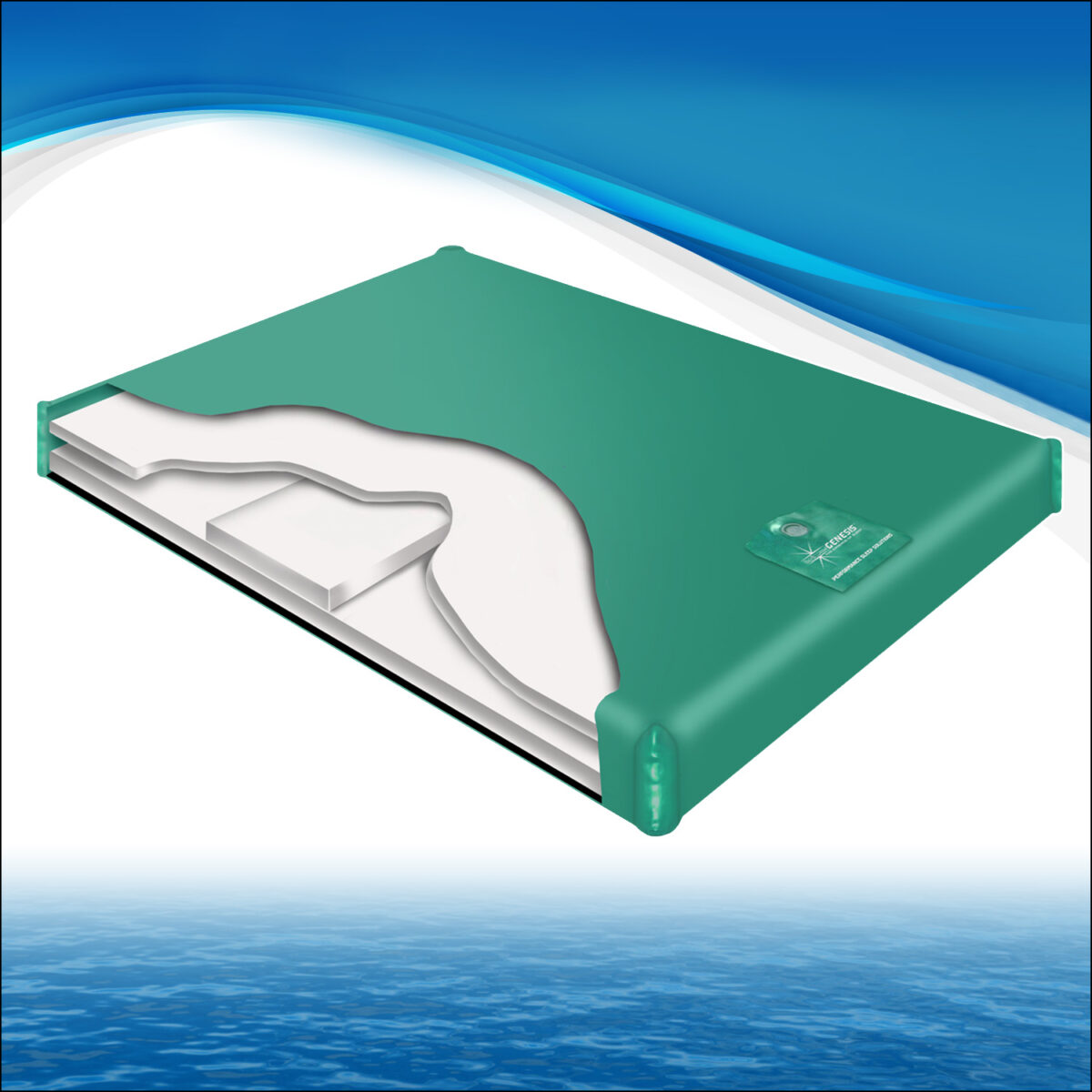
Waterbeds still appeal to sleepers who like a floating feel and adjustable water temperature. The right system depends on the frame you own, the amount of motion you prefer and how much maintenance you are willing to do.
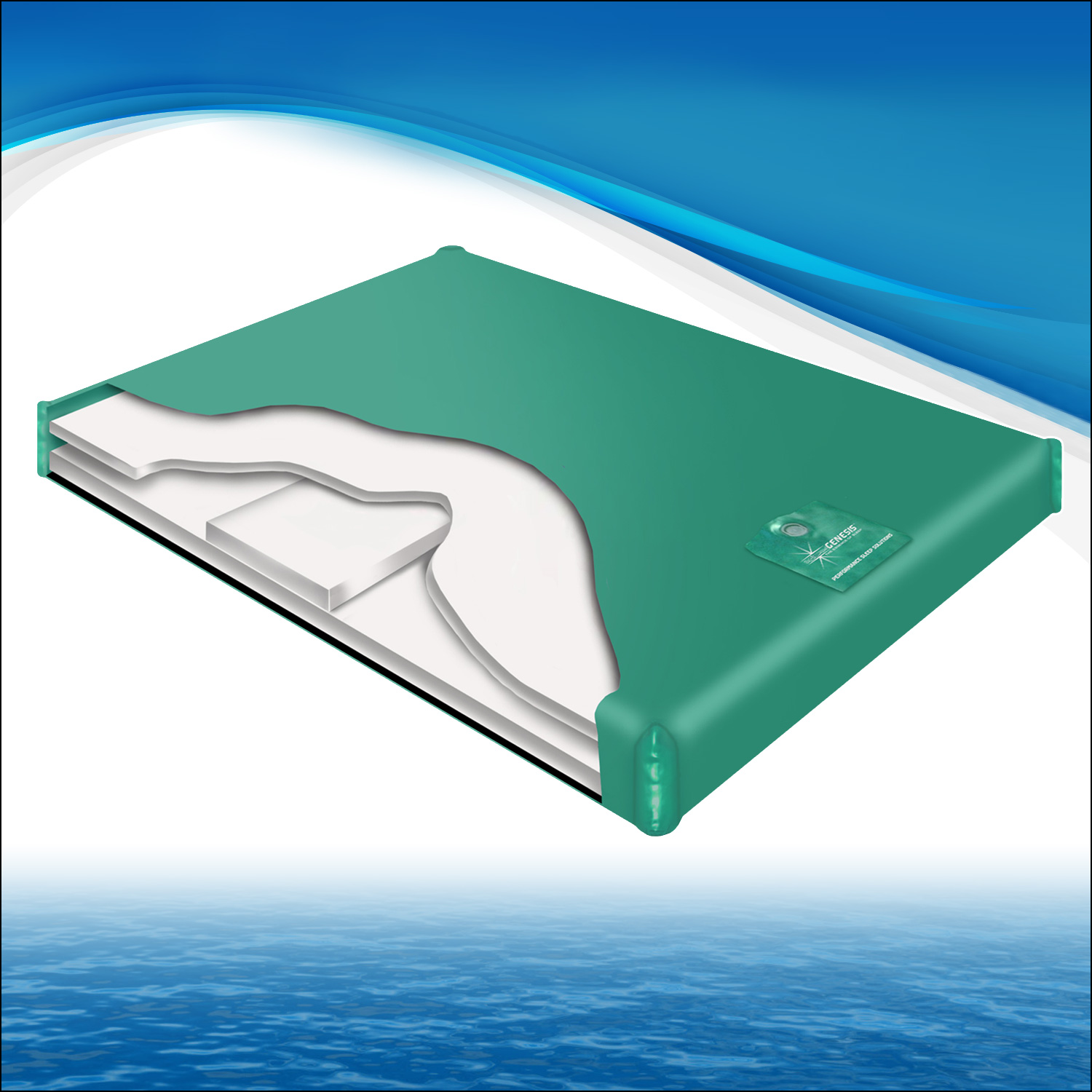
Waterbed brands to consider
| Brand | What to consider | Before ordering |
|---|---|---|
| Boyd Sleep | Offers traditional waterbed mattresses and fluid-support designs, including versions with wave-reducing fiber. | Confirm the exact bladder size, wave level and whether the liner, frame, heater and fill kit are included. |
| InnoMax Genesis | Genesis includes hard-side chambers with different motion and support configurations. InnoMax also lists free-flow chambers in its wider range. | Match your frame’s interior dimensions and check the individual model’s fill depth and warranty. |
A retailer may list other brands or older models. Confirm the current manufacturer, replacement-part availability and terms before buying. A manufacturer’s “waveless” percentage is a product claim, not a standardized independent comparison.
Example: InnoMax Genesis 700
InnoMax describes the Genesis 700 as a semi-waveless hard-side chamber with eight support layers. Its listing identifies a 60 × 84-inch queen and 72 × 84-inch king and a 20-year limited warranty. These are manufacturer specifications, not a Yawnder motion test; check the current warranty text, frame compatibility and retailer pricing before buying.
The listed waterbed queen length illustrates why a standard mattress label is not enough: measure the interior of the actual frame. A chamber and a complete bed bundle can also have very different prices because they may include different equipment.
Hard-side vs. soft-side waterbeds
Hard-side: A water chamber sits inside a rigid frame. This may suit someone replacing an existing waterbed bladder, but the chamber must match the frame’s interior dimensions and depth. Sheets made specifically for hard-side waterbeds may fit better than ordinary sheets.
Soft-side: Water chambers sit within a padded enclosure that can resemble a conventional mattress. Sizes, foundation requirements and weight vary. A standard-looking exterior does not mean every ordinary frame can support it.
Free-flow vs. reduced-wave: Free-flow chambers allow more water movement; fiber or other internal structures can reduce wave motion. Less motion may be preferable for a partner who is easily disturbed, but the feel is personal.
Components and total cost
| Component | Why it matters | Check before purchase |
|---|---|---|
| Chamber and support | The chamber holds the water; a compatible frame and base carry the system. | Interior dimensions, support requirements, motion level and whether the frame is included. |
| Safety liner | A liner is part of many systems and is intended to help contain a leak. | Correct size and fit; follow the manufacturer’s setup instructions. |
| Heater and controls | Some systems use a heater to adjust the water temperature. | Compatibility, included parts, operating instructions and condition of any existing heater. |
| Fill, drain and maintenance supplies | Setup and later moves require the correct equipment and care products. | Whether a kit or conditioner is included and which products the manufacturer approves. |
Price the components you actually need, not just the chamber. Compare delivered cost, installation, replacement parts and the return procedure for a filled or opened product. Some sellers distinguish a complete package from a replacement bladder, and policies can differ by seller.
What to check before buying
- Measure the existing system. Record the inside length, width and depth of a hard-side frame, not just the outside. Standard waterbed and conventional mattress sizes may differ.
- Check support and building rules. Filled waterbeds are heavy. Follow manufacturer load and foundation requirements, and check lease, insurance and building restrictions. If the floor’s capacity is uncertain, consult a qualified professional.
- Confirm included components. A chamber listing may exclude a safety liner, heater, frame, conditioner or fill-and-drain kit. Price the complete setup.
- Read the warranty. Check exclusions, prorated costs, leak coverage and required equipment. A long warranty is not a guarantee of a particular lifespan.
Maintenance and safety
Follow the manufacturer’s directions for filling, removing air, heater use and adding conditioner; schedules and products differ by system. Inspect the liner, heater and connections periodically. Before moving, drain the chamber according to its instructions and get help with heavy components.
Use only equipment approved for the waterbed and follow electrical safety instructions. Waterbeds are not appropriate sleep surfaces for infants; follow current pediatric safe-sleep guidance.
The American Academy of Pediatrics advises against placing infants to sleep on waterbeds. Use an appropriate firm, flat infant sleep surface instead.
For setup and draining, use the instructions for your exact chamber and heater. InnoMax publishes model-specific assembly instructions; contact the seller if a part or step is unclear. If you suspect a leak, follow the manufacturer’s instructions and address it promptly rather than assuming the liner removes all risk of property damage.
A conventional air mattress is not a substitute for a waterbed. See why you should not fill an air mattress with water.
Frequently asked questions
Are waterbeds still sold?
Yes. Boyd Sleep and InnoMax list waterbed products, though availability varies by model and retailer.
Are waterbeds good for back pain?
Comfort varies. A waterbed is not a proven treatment for back pain; talk with a healthcare professional about persistent symptoms.
Does a “waveless” model eliminate all movement?
Not necessarily. Motion reduction varies by construction and how the bed is set up; compare the manufacturer’s descriptions and try a compatible system when possible.
Will a waterbed chamber fit my normal bed frame?
Do not assume it will. A hard-side chamber requires a compatible rigid frame and support system, while soft-side requirements depend on the model. Check the manufacturer’s specifications and the floor’s capacity.
Can I use my existing heater?
Only if the manufacturer confirms it is compatible with your new chamber and system. Follow the heater’s instructions and replace damaged equipment.