It’s a question that feels like it was born from a late-night internet rabbit hole or a flash of poolside inspiration: can you fill an air mattress with water? The idea seems almost logical at first glance. If it can hold air, why not water? You might envision a dreamy, low-cost waterbed, a floating oasis of comfort. But before you drag your mattress to the nearest hose, it’s critical to understand the science behind why this is not just a bad idea, but a potentially dangerous and destructive one. This is one DIY project that crosses the line from creative to calamitous, and we’re here to explain why.
The Allure of the DIY Waterbed
The curiosity behind filling an air mattress with water is understandable, and it likely stems from the cultural memory of the classic waterbed. In the 1970s and 80s, the Waterbed was the pinnacle of groovy, unconventional comfort. It represented a departure from stiff, traditional innerspring mattresses, offering a unique, fluid support system that contoured to the body. These original waterbeds, however, were marvels of specific engineering. They were constructed from heavy-duty vinyl with reinforced seams, designed explicitly to contain the immense weight of water. They also included sophisticated heating systems to keep the water at a comfortable, consistent temperature and conditioning tablets to prevent bacterial growth. The modern air mattress, typically made from Polyvinyl Chloride (PVC), is engineered for a completely different purpose. Its design prioritizes portability, ease of inflation, and the ability to hold a substance—air—that is approximately 800 times less dense than water. Confusing the two is a fundamental misunderstanding of material science and structural engineering, setting the stage for inevitable failure.
Why It’s a Structural Catastrophe in the Making
Comparing air and water as fill materials for a mattress is like comparing a feather to a bowling ball. While both can occupy the same space, their physical properties are worlds apart. An air mattress is simply not built to withstand the forces that water exerts.
The Crushing Weight of Water vs. The Lightness of Air
Let’s do some simple, sobering math. A standard queen-sized air mattress (roughly 60″ x 80″ x 18″) has an internal volume of about 86,400 cubic inches. One US gallon of water occupies 231 cubic inches. This means your air mattress could theoretically hold over 374 gallons of water. Since one gallon of water weighs approximately 8.34 pounds, filling that queen air mattress would mean loading it with over 3,100 pounds of liquid. That’s the weight of a small car. For comparison, the air required to fill that same mattress weighs less than a pound. Your floor joists may not even be rated to handle such a concentrated load, let alone the thin vinyl seams of the mattress itself.
Seam Stress and Material Failure
Air is a compressible gas. When you lie on an air mattress, the air shifts and compresses, distributing your weight. Water is a non-compressible liquid. It doesn’t give; it pushes back with immense hydrostatic pressure. This pressure relentlessly attacks every inch of the mattress, with the most intense force concentrated on the seams. The heat-welded or glued seams of an air mattress are designed to be airtight, not watertight under thousands of pounds of pressure. Even a pinhole leak, which might be a minor annoyance with air, becomes a high-pressure jet of water. A full-scale seam rupture is the more likely scenario, resulting in a sudden and catastrophic flood.
Internal Baffle Collapse
Ever wonder how an air mattress maintains a relatively flat, stable surface? It’s not just an empty bag. Inside, a network of internal supports, called baffles or air coils, connects the top and bottom surfaces. These delicate structures are crucial for preventing the mattress from ballooning into an unusable, dome-like shape. They are designed to handle the gentle, evenly distributed pressure of air. Introducing over 3,000 pounds of sloshing, unforgiving water would instantly snap these internal tethers, causing the mattress to deform into a giant, unstable bladder before it inevitably bursts.
Water is deceptive. It flows and fits any shape, but its weight is relentless and unforgiving. A structure designed to hold air, which weighs next to nothing, will almost certainly fail under the immense, concentrated pressure of hundreds of gallons of water.
The Hidden Dangers Beyond the Mess
Even if you could magically create an air mattress that wouldn’t burst, the experiment would still be a terrible idea. The risks go far beyond a waterlogged bedroom and a voided warranty.
Hypothermia and Temperature Regulation
Water is an incredibly effective thermal conductor. It pulls heat away from your body 25 times faster than air. Purpose-built waterbeds contain powerful heaters to maintain the water at a safe and comfortable 85-95°F. Your DIY version would have no such feature. The water inside would quickly settle at room temperature, which is typically 15-25 degrees colder than your skin. Sleeping on this would continuously leach heat from your body, making for a miserably cold night’s sleep at best, and creating a genuine risk of hypothermia at worst.
Mold, Mildew, and Bacteria
A sealed bag of stagnant, unchlorinated water is the perfect incubator for life you don’t want in your bedroom. Within days, your mattress would become a breeding ground for mold, mildew, and bacteria. This poses significant health risks, releasing allergens and pathogens into your sleep environment. Real waterbeds require special chemical conditioners added every six to twelve months to prevent this, a step that is easily forgotten in a spur-of-the-moment DIY project.
Electrical Hazards
Let’s not forget the most immediate danger: water and electricity don’t mix. Many air mattresses have built-in electric pumps. Even with external pumps, you are operating an electrical device right next to what is essentially a high-risk water balloon. The potential for a leak or burst to interact with the pump, a power strip, or a wall outlet creates a serious risk of electrocution.
The Search for Better Sleep: A Smarter Solution
The impulse to fill an air mattress with water often comes from a desire for a different, more contouring, and supportive sleep experience. You’re looking for something better than a temporary, wobbly air bed. The good news is that sleep science has evolved far beyond 1970s waterbeds and basic air mattresses. Modern mattress technology offers a vast array of solutions that provide superior comfort, support, and temperature regulation without the risk of a household flood.
Instead of resorting to risky experiments, explore the world of advanced materials designed for sleep:
- Memory Foam: Offers exceptional pressure relief and motion isolation, contouring to your body’s unique shape.
- Latex: Provides a responsive, buoyant feel with natural cooling properties and hypoallergenic benefits.
- Hybrid Mattresses: Combine the best of both worlds, with supportive innerspring coils and luxurious foam comfort layers for a balanced, durable, and breathable sleep surface.
These materials are the result of decades of research into what makes a truly restorative night’s sleep. They address the core needs for pressure relief, spinal alignment, and thermal comfort that a makeshift waterbed could never satisfy.
Instead of risking a waterlogged disaster, invest in a sleep solution that is engineered for safety, comfort, and longevity. The perfect mattress isn’t a DIY hack away; it’s about finding the right technology to support your body and enhance your well-being. If you’re ready to upgrade from temporary solutions to lasting comfort, we invite you to explore your options with the guidance of experts. To feel the difference for yourself, visit our San Diego showroom at 1441 Encinitas Blvd, Encinitas CA, and let our sleep guides help you find the perfect match for your body and sleep style.
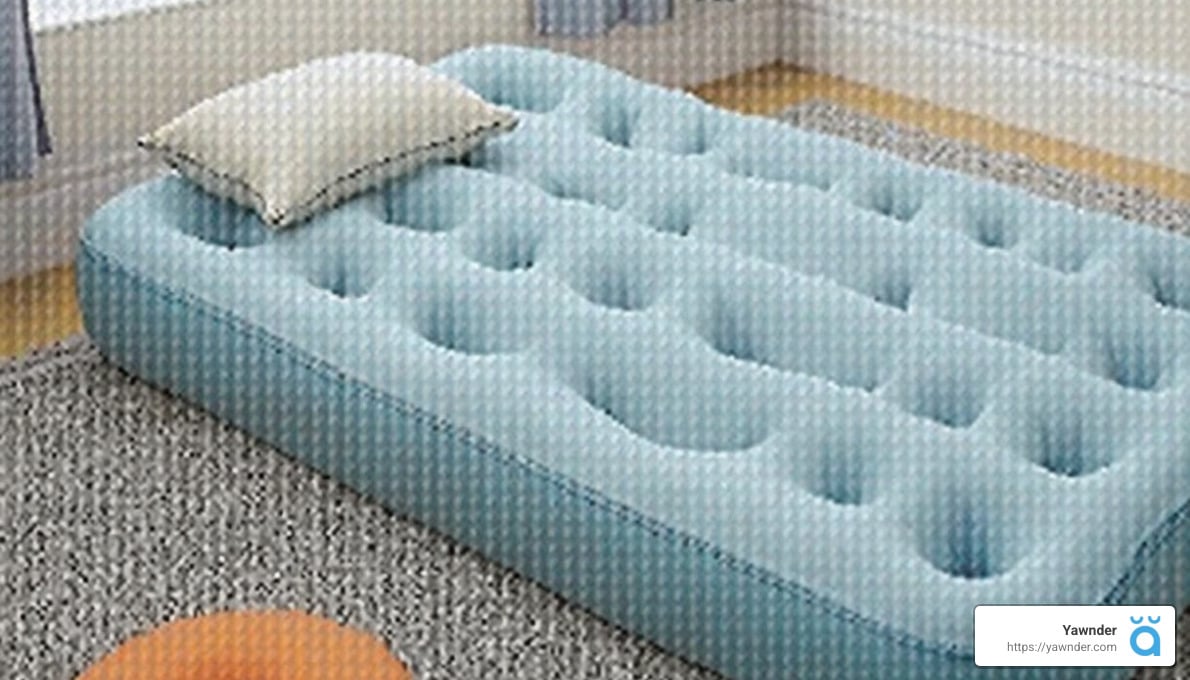
Frequently Asked Questions About Can You Fill an Air Mattress with Water? Here’s What Science Says You Shouldn’t
Can I fill an air mattress with water to make a DIY waterbed?
No, you absolutely should not fill an air mattress with water because it is not designed to handle the immense weight and pressure of water. The material and seams of an air mattress are engineered for compressible air, not dense, non-compressible liquid. Doing so would likely lead to catastrophic structural failure and water damage.
What happens if I try to fill a queen-sized air mattress with water?
If you try to fill a queen-sized air mattress with water, you would be loading it with over 3,100 pounds of liquid, which is the approximate weight of a small car. This extreme weight far exceeds the structural capacity of an air mattress and could damage your floor joists. The seams of the mattress, designed to be airtight, would be subjected to immense hydrostatic pressure, leading to a high probability of rupture.
How does an air mattress differ from a traditional waterbed in terms of construction?
An air mattress, typically made from PVC, is designed for portability and to contain air, which is significantly less dense than water. Traditional waterbeds from the 1970s and 80s were specifically engineered with heavy-duty vinyl and reinforced seams to safely contain the immense weight of water. The fundamental material science and structural engineering principles behind their construction are vastly different.
What are the main risks of using water instead of air in an air mattress?
The main risks of using water instead of air in an air mattress include structural failure due to the crushing weight of the water, seam rupture from hydrostatic pressure, and significant water damage to your home. Even a small leak would become a high-pressure jet of water, and a full-scale rupture is highly probable, creating a dangerous and destructive situation.
Why is water so much more problematic for an air mattress than air?
Water is approximately 800 times denser than air and is non-compressible, meaning it exerts immense hydrostatic pressure on the mattress’s structure. Air is a compressible gas that shifts and distributes weight, whereas water pushes back with unrelenting force. This fundamental difference in physical properties makes water catastrophic for an air mattress, which is designed for a much lighter, compressible fill.
Where can I find more information about proper mattress care and selection for durability?
You can find more information about proper mattress care and selection, including durable options, by visiting our showroom in Encinitas, CA. Our experts can guide you through various mattress types and explain the engineering differences that contribute to their longevity and performance. We would be happy to discuss how mattress materials are designed for specific purposes and what makes a high-quality, durable mattress.
Shop queen air mattresses on Amazon
As an Amazon Associate, Yawnder earns from qualifying purchases.