I am Ben Trapskin, founder of Yawnder. I have reviewed mattresses and sleep products for more than a decade and have personally tried every mattress o... Full Bio
Use Yawnder’s buying guides and comparison tools to narrow down mattresses by sleep position, body type, materials, cooling, firmness and price. Start with a category below or jump into the comparison engine if you already have a shortlist.
Yawnder’s Encinitas showroom has a curated selection of mattresses and adjustable bases. Not every model reviewed on Yawnder is on the floor, so check current showroom information or contact us before visiting if you want to try a specific mattress.
How we use reviews
Our goal is to help you understand the differences that actually affect sleep: firmness, pressure relief, cooling, motion isolation, edge support, responsiveness, construction, trial terms and price. A high-end mattress is not automatically the right mattress for every sleeper, and a model we review online is not automatically a product carried in our showroom.
The graphite/diamond infusion conducts heat deeper and faster than the surface-level GlacioTex of the Aurora.
Winner: Best Value
Aurora Luxe
The Aurora Luxe is often $400-$600 cheaper than the Black Diamond, making it a better pick for budget-conscious hot sleepers.
Winner: Back Support
Black Diamond
Diamond's patented zoned coil system provides stiffer lumbar support compared to Brooklyn Bedding's standard coils.
Tale of the Tape
Feature
Black Diamond
Aurora Luxe
Height
14.5 Inches
13.5 Inches
Cooling Tech
Graphite + Diamond + PCM
GlacioTex™ (PCM)
Firmness
Medium or Firm
Soft, Medium, or Firm
Trial Period
Check seller's policy
365 Nights (brand-direct)
Warranty
Forever Warranty
10 Year Warranty
Shipping
Free Bed-in-Box
Free Bed-in-Box
Key Difference: Depth of Cooling
The main difference lies in how they cool you. The Brooklyn Bedding Aurora Luxe relies heavily on its cover. It feels icy cold to the touch, but once you put sheets on it, that effect is dampened.
The Black Diamond, however, infuses conductive materials (graphite and actual diamond particles) into the foam layers. This means the mattress itself acts as a heat sink, pulling warmth away from your core all night long, even through sheets.
Key Difference: Support System
If you have back pain, the Black Diamond is the superior choice. Its zoned coil unit is specifically designed to prevent hip sinkage. The Aurora Luxe uses a more uniform coil system which feels great, but offers slightly less targeted lumbar support.
How to decide between these two cooling hybrids
Both beds are aimed at hot sleepers, but they attack heat from different directions, and that difference is what should drive your decision rather than the spec sheet. The Aurora Luxe cools at the surface with a phase-change cover, so the first impression is dramatic — the panel feels cold to the hand. The Black Diamond cools through the body of the mattress, because the conductive materials are inside the foam layers rather than only on the cover, so the effect is less theatrical at first touch and more consistent over a full night once sheets and a protector are in place.
A practical way to translate that: if you run warm but mostly notice it when you first get into bed, the Aurora Luxe gives you exactly the sensation you are shopping for at a lower price. If you wake at 3 a.m. damp and kicking the covers off, the deeper conductive approach of the Black Diamond is the better mechanism for that problem.
Firmness and body type matter more than cooling tech
Neither cooling system can rescue a mattress that is the wrong firmness for you, and this is where the Aurora Luxe has a structural advantage: it comes in soft, medium, and firm, while the Black Diamond is offered in medium or firm. Dedicated side sleepers under roughly 150 lb, who often need a genuinely soft comfort layer to let the shoulder drop, will find more options on the Brooklyn Bedding side. Back and stomach sleepers, and heavier sleepers who compress a soft build until it feels unsupportive, are better served by the firmer, zoned support of the Black Diamond.
Height is worth checking too. At 14.5 inches versus 13.5 inches, the Black Diamond is the taller build, which affects sheet fit — deep-pocket sheets rated to 16 inches or more are the safe choice — and it raises the top-of-mattress height on an already tall bed frame. Measure from the floor to the top of the mattress and aim for a seated height where your feet rest flat.
Warranty, trial, and long-term cost
Brooklyn Bedding now offers a 365-night trial for eligible brand-direct mattress purchases. Black Diamond purchases follow the selling retailer's written trial and return terms. The warranty is where they separate: a forever warranty on the Black Diamond versus 10 years on the Aurora Luxe. Treat that as a tiebreaker rather than a headline, because warranties cover manufacturing defects and impressions past a stated depth, not a change of heart about firmness. What actually protects you is the trial window — sleep on the bed for at least three weeks before deciding, and note the difference between your first-week reaction and your third-week mornings.
Factor in the price gap honestly. The Aurora Luxe is typically several hundred dollars less. If that gap is the difference between buying a supportive base and reusing a sagging one, spend it on the base — inadequate support ruins either mattress and voids most warranty claims.
Setup notes for both
Both ship compressed in a box. Give either mattress 24 to 48 hours to fully expand before judging feel, and air the room out for the first day, since new foam has a mild odor that dissipates. Use a breathable protector rather than a waterproof vinyl one; a plastic-backed protector traps exactly the heat you paid to move. Rotate head to foot every six months, and never flip — both are one-sided constructions with the comfort layers on top.
Frequently asked questions
Which one is genuinely cooler?
For all-night cooling, the Black Diamond’s conductive foam layers do more work than a cover-based system once sheets are on the bed. For the cold-to-the-touch first impression, the Aurora Luxe’s phase-change cover wins.
Which is better for back pain?
The zoned coil system in the Black Diamond gives firmer, more targeted lumbar support, which usually suits back-pain sufferers better than the more uniform coil unit in the Aurora Luxe.
Which is better for side sleepers?
The Aurora Luxe, mostly because it is available in a soft option. Side sleepers need the shoulder to sink, and neither of the Black Diamond’s two firmness options is built for that.
Do I need special sheets?
For either bed, look for deep-pocket sheets rated to 16 inches or more, especially with the 14.5-inch Black Diamond plus a protector.
How long before the mattress feels normal?
Allow 24 to 48 hours for full expansion and two to three weeks of body adjustment. Brooklyn Bedding's 365-night trial applies to eligible brand-direct orders; check the selling retailer's trial and return terms before deciding.
Yawnder Reviews · Original review material restored September 2026
Avocado Latex Mattress Review: Original Firm Latex Experience Restored
The Avocado Latex review had lost much of the original feel and construction context. This version restores why the model felt so different from Avocado’s spring hybrids.
Firmest Avocado feel
The reviewed Avocado Latex was the firmest mattress in the Avocado lineup at the time. Latex is buoyant rather than slow-sinking, and the hand-tufted construction made the surface feel even more supportive.
On-top rather than in-the-bed
Unlike memory foam, the mattress did not let the body sink deeply. You rested more on top of the latex, with quick rebound when changing positions.
Hand tufting
The visible peaks and valleys were created by hand tufting that mechanically held the layers together. In use, the tufting looked more dramatic than it felt under the body.
Motion transfer
Despite latex being responsive, the solid all-latex construction kept cross-bed motion relatively controlled compared with a spring mattress.
Natural-material construction
The original model used latex with organic cotton and wool rather than a coil unit, which is the main reason its feel differed so much from the Avocado Green hybrid.
Original sinkage image from Yawnder’s review.
Current-shopping note
Avocado has changed and discontinued models over time. Treat this as the historical hands-on review of the all-latex model Yawnder tested, not a description of every current Avocado mattress.
7th Avenue vs Cozey Sectional: Which Modular Couch Is Better
If you are deciding between a 7th Avenue sectional and a Cozey sectional, you are probably shopping for the same thing: a modular couch that is comfortable
for real daily use, fits your room without drama, and still looks sharp a year from now.
Both brands live in the modern modular category, but they serve slightly different buyers.
Quick takeaway: 7th Avenue is my pick when comfort and lounge depth are the priority. Cozey is a strong option when you want modular flexibility and a clean,
modern look, and you want to configure your layout with fewer headaches.
Best lounge comfort: 7th AvenueBest modular options: CozeyBest for deep seating fans: 7th AvenueBest for easy planning: Cozey
7th Avenue leans into deep seating and a true lounge feel.
Cozey focuses on modular layouts that fit a lot of room shapes.
What this comparison covers
This 7th Avenue vs Cozey sectional review focuses on the stuff that decides satisfaction after the honeymoon phase:
seat depth, cushion feel over long sessions, modular stability, fabric practicality, and how the overall value feels once the sofa becomes part of your routine.
Who should consider 7th Avenue
You want deep seating for lounging, movie nights, and long hangs
You care about cushion support that stays consistent
You want a modular sectional that still feels like a premium couch
Who should consider Cozey
You want modular flexibility and easy configuration options
You want a clean modern look across multiple collections
You care about planning the exact size before you buy
Planning tip: Cozey publishes dimensions directly on product pages. You can also use their help guide that explains where to find product dimensions so you can plan your layout with confidence:
Where to view Cozey product dimensions.
7th Avenue vs Cozey: quick comparison table
Here is the big picture. If you want a sectional you sink into, 7th Avenue usually wins.
If you want a modular system that is easy to plan, easy to expand, and easy to reconfigure, Cozey is a strong contender.
Cozey is a good fit for people who want modular seating that stays visually clean.
Category
7th Avenue
Cozey
Best for
Deep comfort, daily lounging, supportive cushions
Flexible modular layouts, configuration planning, clean modern style
Comfort feel
More lounge forward and cozy for long sessions
Varies by collection, generally supportive with a modern sofa feel
Modularity
Modular, built to create larger sectional shapes
Strong modular catalog across multiple collections and layouts
Planning and sizing
Great if you know the layout you want
Excellent for shoppers who want to validate dimensions and scale first
Value focus
Comfort to price ratio for people who live on their sofa
Modularity, style options, and layout control for the price
Comfort and seat depth: the difference you feel first
If you want a sectional that invites lounging, 7th Avenue is usually the safer bet.
Comfort is where most modular couches separate.
Some are built to look crisp and structured. Others are built to feel like the center of your home.
In this matchup, 7th Avenue tends to win when the goal is deep seating and a more relaxed lounge feel.
Cozey can still be very comfortable, but it is more collection dependent.
If you are a sit upright and read type, Cozey can be a great match.
If you are a sprawl out and stay there type, 7th Avenue usually fits that lifestyle better.
Choose 7th Avenue if
You want deep seating as the default
You want comfort that stays inviting for long sessions
You want a sectional that feels made for daily use
Choose Cozey if
You want a modern sofa feel with modular flexibility
You like a more structured presentation
You want to dial in the exact size on the product page
My 7 real world tests for modular sectionals
These tests predict whether a sectional stays enjoyable after months of daily use.
1. The two hour test
Sit longer than you think you need to. A sofa can feel fine for 10 minutes and fail at 90.
Pressure points and back support show up when you stop posing and start relaxing.
2. Cushion recovery
Stand up and look at the cushions. If they keep a dent and take a long time to rebound, you should expect more maintenance and more visible wear over time.
3. Corner seat reality
Many sectionals have a corner that looks great but feels awkward.
The corner should be a seat you want, not a connector you avoid.
4. Back support for real posture
If you slouch by default, deeper seats can be a dream. If you want upright support, too much depth can feel like a constant slump.
Modular sectionals should feel stable in the corner seats, not loose or awkward.
5. Fabric practicality
Choose fabric based on how you live. If you have kids or pets, you want something you can actually maintain.
If you want a soft hand feel, you may be trading some durability for comfort.
6. Modular stability
Modular is great until it shifts.
Look for a layout that stays together without constant adjustment, especially if you have people dropping into the corner and pushing modules around.
7. Delivery and setup reality
Modular can make delivery easier, but it still matters how pieces are boxed, how hardware is handled, and how simple it is to get everything aligned.
Check returns and what happens if a module arrives with a defect.
Modularity and layout planning
Cozey tends to appeal to buyers who want modular flexibility and predictable planning.
If you are comparing 7th Avenue vs Cozey for modular flexibility, Cozey deserves credit.
They make it straightforward to explore configurations and validate dimensions before you buy.
That matters if you are working with tight hallways, apartment stairs, or a room where a few inches can change everything.
7th Avenue is modular too, but the pitch is different.
It is less about endlessly browsing configurations and more about building a lounge focused sectional that becomes a daily comfort anchor.
If you are a “measure twice, order once” shopper, Cozey will feel familiar.
If you are a “make it the most comfortable seat in the house” shopper, 7th Avenue will feel more aligned.
Cozey sizing resource: Their product pages include a Dimensions button, and their help article explains exactly where to find it:
Where to view Cozey product dimensions.
My recommendation
If your main priority is comfort, lounging, and a sectional you will look forward to using every single day, I lean 7th Avenue.
If your priority is modular planning, clean styling, and picking the exact footprint that fits your space, Cozey can be a smart choice.
If your top priority is deep lounge comfort and a sectional that feels like the main seat in the house, 7th Avenue is usually the better fit.
If your top priority is modular planning, configuration flexibility, and choosing the exact footprint, Cozey may be the better fit.
How do I choose the right modular sectional size
Measure wall length, walking paths, and doorway clearance. Then map the footprint with painter tape.
For Cozey, check the Dimensions button on the product page so you can confirm the exact size before ordering.
What is the most common modular sectional regret
Buying based on looks, then realizing the seat depth is wrong, the corner is not comfortable, or the modules shift more than expected in daily use.
Should I prioritize comfort or modular flexibility
If your living room is your daily hangout space, comfort should win.
If your space is tricky, you move often, or you need a very specific footprint, modular planning becomes more important.
Where can I find Cozey sectional dimensions
Cozey provides dimensions on product pages. Their help center explains where to find the Dimensions button so you can plan your space.
Conclusion
In a 7th Avenue vs Cozey sectional comparison, it comes down to what you want your sofa to do.
If you want deep comfort and a true lounge feel, 7th Avenue is my pick.
If you want modular flexibility with clear configuration planning, Cozey is a strong alternative.
Room and Board Sectional vs Crate and Barrel: Which One Is Worth It
If you are searching for a Room and Board sectional vs Crate and Barrel sectional comparison, you are probably trying to avoid the classic furniture trap:
a sectional that looks perfect online but starts to feel flat, uneven, or uncomfortable once it becomes your daily hangout spot.
Both brands offer modern styling and premium pricing, but comfort and long term satisfaction depend on the exact model, cushion fill, and seat depth.
Quick takeaway: Room and Board usually wins on overall build confidence and upholstery options. Crate and Barrel wins on showroom style and initial plush feel.
If you want a safer choice for real everyday comfort, I recommend the 7th Avenue sectional instead.
Best overall build: Room and BoardBest showroom style: Crate and BarrelBest everyday comfort: 7th AvenueBest modular flexibility: 7th Avenue
Room and Board sectional styling tends to lean tailored and clean.
Crate and Barrel sectionals often win on first impression and showroom appeal.
Room and Board vs Crate and Barrel sectional: the quick comparison
Most people shop these two brands for the same reason: you want something that looks elevated, feels comfortable, and does not fall apart under real life use.
The issue is that premium pricing does not automatically mean premium comfort.
In this comparison, I focus on the factors that usually decide whether you love your sectional after six months.
If you only read one thing, read this: seat depth and cushion construction matter more than brand name.
The best looking sectional can still be the wrong fit if the depth is off or the cushions lose support.
This is the kind of “looks amazing online” setup that can still disappoint if depth and cushions are wrong.
Category
Room and Board
Crate and Barrel
Overall positioning
Quality focused modern furniture with strong upholstery options
Design forward modern furniture with broad style variety
Comfort consistency
More predictable, depends heavily on cushion fill
More variable, some models soften quickly
Build confidence
Typically stronger frame reputation
Can be solid, but more collection dependent
Value for the price
Better when longevity is the priority
Better when styling variety is the priority
Crate and Barrel sectionals: what people love and what to watch
A lot of Crate and Barrel sectionals feel plush at first sit, which can be a pro or a warning depending on cushion fill.
Crate and Barrel is very good at the part most brands struggle with: making furniture feel current without looking cheap.
If you want a sectional that looks like what you saved on Pinterest, this brand often delivers.
The potential downside is long term cushion resilience.
What tends to be strong
Showroom appeal and trend friendly silhouettes
Wide variety of sizes and configurations
Plush initial comfort on many models
What can disappoint
Cushions that soften faster than expected
Comfort and quality vary by collection
Price can feel high if comfort fades
Practical tip: If the showroom model already looks “broken in” and you have only been sitting for 5 minutes, ask what the fill is.
Some fills feel amazing initially but do not keep their shape without frequent fluffing or rotation.
Room and Board sectionals: what people love and what to watch
Room and Board is usually the safer pick if you care about construction and upholstery options.
Many of their sectionals have a more intentional “investment piece” feel.
The tradeoff is that some models lean tailored rather than sink-in lounge.
What tends to be strong
Better overall build confidence on many models
Strong fabric choices, including performance options
Clean, timeless modern styling
What can disappoint
Some models feel more upright or structured
Value drops as you upgrade fabric and add pieces
Comfort varies a lot by cushion fill
If you want a Room and Board sectional for lounging, prioritize seat depth and back cushion support.
If you want posture support, avoid overly soft cushion fills that collapse into the base.
Room and Board often nails clean lines, but comfort depends on depth and cushion selection.
My 7 real world tests for sectionals
These tests are meant to predict long term comfort and durability, not just how a sectional feels on the first sit.
1. Two hour comfort test
Sit the way you actually sit. If you start shifting constantly, that is your body telling you something.
Many people confuse “soft” with “comfortable.” Real comfort is pressure relief plus support.
2. Cushion recovery test
Stand up and look at the cushions. Do they bounce back, or do they keep a dent.
A dent does not automatically mean bad, but it can signal that the fill will compress faster over time.
3. Corner seat realism
If the corner is too upright or too shallow, it becomes dead space.
The corner should be a seat you actually want to use, not just a connector piece.
Corner seats are where many sectionals fail in real life comfort.
4. Seat depth and back support
Seat depth is one of the biggest predictors of love or regret.
Deeper seats can feel luxurious but may need extra back pillows.
Shallower seats can feel supportive but cramped for lounging.
5. Fabric reality test
Choose fabric based on how you live. If you have kids or pets, performance fabric matters.
If you want a super soft feel, accept that you may trade durability for comfort.
6. Frame and squeak test
Shift your weight and listen. If you hear squeaks or feel flex, that is not a great sign.
The frame should feel solid and quiet.
7. Delivery and setup sanity check
Confirm lead time, setup process, and what happens if something arrives damaged.
Sectionals are a logistics product as much as they are a comfort product.
My honest recommendation: 7th Avenue sectional
7th Avenue is the option I point to most often when people want deep comfort and flexible modular layouts.
If you are deciding between Room and Board and Crate and Barrel, my honest take is that neither is the best comfort to price ratio for most homes.
Both can work, but they are not the most predictable choice if you want deep lounging comfort and a consistent cushion feel for daily living.
In most cases, I recommend the 7th Avenue sectional instead.
It stands out for deeper seating, supportive cushions, modular flexibility, and an overall “built for daily use” feel.
Is Room and Board better quality than Crate and Barrel
Room and Board often has a stronger reputation for overall build consistency, but the exact model matters.
Crate and Barrel has strong options too, but quality varies more across collections.
What matters most when buying a sectional
Seat depth, cushion support, fabric durability, and how the sofa feels after at least 30 to 60 minutes of sitting.
Delivery logistics and return policy also matter because sectionals are difficult to exchange once installed.
Why recommend 7th Avenue over Room and Board or Crate and Barrel
Many shoppers want deep comfort and daily usability.
7th Avenue is usually a safer bet for that style of lounging, with modular flexibility and a comfort first design approach.
How do I choose the right sectional size
Measure your wall space, walking paths, and doorway clearance, then map the footprint with painter tape.
If you want the corner or chaise to be a real seat, confirm it is not too upright or shallow.
What is the most common sectional regret
Buying based on looks alone.
Many people realize too late that the seat depth is wrong, the cushions soften too much, or the corner is not comfortable.
Conclusion
In a Room and Board sectional vs Crate and Barrel sectional comparison, Room and Board usually edges ahead on build confidence and upholstery options,
while Crate and Barrel often wins on style and initial plushness.
If you want a more predictable everyday comfort pick, I recommend the 7th Avenue sectional instead.
Room & Board vs Crate & Barrel: what to compare in a real showroom
The highest-impact decision is the exact sectional configuration. Pick comparable seating capacity, corner/chaise placement and overall dimensions, not a three-seater against a large U-shaped sofa. Compare frame material, cushion construction and foam replacement availability within the actual model.
Ask for fabric swatches, note cleaning codes and verify whether covers are removable or washable in the selected upholstery; a removable cushion is not automatically machine washable. Check delivery and white-glove setup charges, the return rules on custom upholstery, lead times, and replacement parts. Brand-wide “durability scores” without matched models aren’t a substitute for those details.
For a more reconfigurable third option with owner context, see 7th Avenue vs Lovesac. For additional configuration ideas, read best modular sofas compared. Links here are editorial alternatives, not a claim that Room & Board or Crate & Barrel shares a commercial program with Yawnder.
Chilipad Sleep System Review – Does It Actually Keep You Cool at Night
Why I even bothered testing a water cooled mattress pad
I did not go looking for a “cooling gadget” because I thought it sounded fun.
I went looking because I was tired of the same nightly pattern: fall asleep fine, wake up too warm, start shifting around,
and then spend the next hour trying to get comfortable again.
I have tested breathable sheets, cooling protectors, and a bunch of mattresses that claim they “sleep cool.”
Some of those help, but a lot of cooling claims are basically marketing plus a slightly different cover fabric.
The problem is that your body keeps producing heat all night.
If the bed cannot continuously remove that heat, you eventually end up in the same place.
That is the reason Chilipad got my attention.
It is not trying to be a better fabric or a slightly cooler foam.
It is trying to control the temperature of the sleep surface directly.
That is a fundamentally different approach.
Chilipad Sleep System Review
Chilipad is one of the few cooling products I have used that does not depend on “cooling materials” to make the claim.
It uses active temperature control with circulating water, so the bed does not just start cool, it stays controlled through the night.
Quick takeaway: if overheating is what breaks your sleep, Chilipad can be a legit fix.
If your problem is mostly support or pressure relief, you should solve that first.
Your body naturally tries to cool itself as you fall asleep.
When the surface of your bed traps heat, that cooling process gets interrupted.
That is why so many people say they fall asleep fine but wake up later feeling restless, sweaty, or wired.
Memory foam can make this worse because it hugs the body and limits airflow.
Even with “cooling gel” or “phase change” add ons, passive materials often cannot keep up once your heat builds over hours.
The big promise of Chilipad is simple: instead of hoping your mattress sheds heat, it actively pulls heat away.
In practice, that changes the entire experience of the night.
My long term experience using Chilipad
The first thing I noticed was not the initial cold feeling.
It was the stability.
A lot of “cooling” products feel nice for ten minutes and then your body heat wins.
With Chilipad, the bed felt close to the same temperature later in the night as it did when I first got in.
I tested it intentionally in normal real world conditions, not a lab setup.
Comforter on. Usual sheets. Normal bedtime.
And the weird part is that it often worked better with bedding on top, because insulation helps keep the cooling focused where it matters.
The practical result for me was fewer wake ups from overheating and less tossing around trying to “find the cool spot.”
It did not fix every sleep issue on earth, but it addressed the heat piece more directly than anything else I have tested.
My personal bottom line: if you know your sleep quality drops because you run hot, this is one of the most direct solutions available.
It is not subtle. It is not placebo. It is obvious when it is dialed in.
How Chilipad works in plain English
Chilipad is a water based cooling system.
Water is far more efficient at carrying temperature than air, which is why this approach tends to feel more powerful than fans or “cooling foam.”
Thin tubing runs through the mattress pad.
The control unit heats or cools the water and circulates it continuously.
Instead of reacting after the bed gets hot, the system helps prevent the heat buildup in the first place.
My 5 real world tests
These are the checks that actually matter once the novelty wears off.
1. Does it stay cool after your body heat builds up
This is the whole reason to buy an active system. In my testing, yes.
It did not just start cool. It stayed controlled later into the night.
2. Can you sleep comfortably on top of it
The pad is thin, but you can still feel that there is a grid under you depending on your mattress and your sensitivity.
Most people adjust quickly, but if you are extremely texture sensitive, this is worth knowing.
3. Does it add annoying noise
You will hear it. It is not loud, but it is not silent.
Most people describe it as white noise from the water movement.
If you already sleep with a fan or sound machine, it usually blends in.
4. Does it help you stop waking up overheated
This was the biggest benefit for me. Fewer heat wake ups means fewer spirals where you wake up, get irritated,
and then suddenly you are fully awake thinking about your life.
5. Does it feel like a real solution or a hack
This is not a gimmick. If temperature is the issue, it actually fixes the issue.
The only question is whether the setup and the cost make sense for your situation.
Chilipad vs Dock Pro
Both solve the same problem, but they are aimed at slightly different buyers.
Chilipad is the strong value solution for most hot sleepers.
Dock Pro is the “I want the best experience possible” upgrade if you are noise sensitive or want faster temperature response.
Feature
Chilipad
Dock Pro
Cooling consistency
Excellent
Excellent plus faster response
Noise
Low white noise
Typically quieter
Adjustment speed
Gradual
Noticeably faster
Best fit
Most hot sleepers
Light sleepers and performance focused buyers
Chilipad vs Eight Sleep
This is the other comparison people ask for constantly.
Chilipad and Eight Sleep can both control bed temperature, but they are not the same kind of product.
One is mostly a temperature tool. The other is a temperature tool plus a subscription driven sleep tracking platform.
Feature
Chilipad
Eight Sleep
Core goal
Control bed temperature directly
Control bed temperature plus detailed sleep tracking
Ongoing costs
No required subscription
Often involves subscription for full feature set
Best for
People who mainly need cooling and heating control
People who want data, automation, and tracking
Complexity
More straightforward
More “smart” setup and app ecosystem
Buying mindset
I want my bed cooler tonight
I want a full sleep system with insights
My take: if your real problem is overheating, you do not need a full analytics platform to fix that.
Chilipad tends to be the more direct solution.
Eight Sleep makes more sense if you want the tracking ecosystem and you are good with ongoing subscription style ownership.
Related guides if you are comparing cooling options
If you are deciding between active cooling systems and simpler upgrades, these are worth reading next.
This is the decision section I wish more reviews included, because not everyone needs an active cooling system.
Chilipad makes the most sense when temperature is the bottleneck, not when your sleep is bad for ten other reasons.
Buy Chilipad if
You regularly wake up hot or sweaty
You sleep on foam and the heat buildup feels unavoidable
You and your partner want different sleep temperatures
You want cooling that does not “wear off” after the first hour
You want temperature control without paying an ongoing subscription
Skip it if
Your main issue is mattress support, back pain, or pressure points
You already sleep comfortably cool with breathable bedding and a fan
You are extremely noise sensitive and want the quietest possible experience
You do not want any extra setup steps in your bedroom
The honest version: this is not for casual “I get warm sometimes” people.
It is for people who know heat reliably ruins their sleep and want a direct fix.
Important note for night sweats and hot flashes
Temperature controlled sleep systems can be very helpful if you deal with night sweats, hot flashes, or hormonal temperature swings.
That said, persistent night sweats or sudden changes in how you tolerate heat can also have medical causes.
This review is not medical advice. If you have frequent night sweats, drenching sweats, fever, unexplained weight loss,
new symptoms, or symptoms that worsen quickly, it is smart to talk with a clinician.
A cooling system can improve comfort, but it should not replace proper evaluation when something feels off.
Video walkthroughs
FAQ
Does Chilipad actually work long term
Yes. The performance does not fade the way passive cooling materials can, because it actively controls surface temperature.
If the unit is maintained properly, the benefit stays consistent.
Does the pad feel weird to sleep on
Most people adjust quickly, but you may notice a subtle grid sensation depending on your mattress and how sensitive you are to texture.
With a fitted sheet over it, it becomes less noticeable for most sleepers.
Is the noise distracting
You will hear water circulation, but it is typically low and steady, closer to white noise than an annoying mechanical sound.
If you already sleep with a fan, most people find it easy to ignore.
It depends on what you want. If your goal is temperature control without a subscription ecosystem, Chilipad is the more direct choice.
If you want tracking, automation, and data, Eight Sleep may fit better, but it usually comes with a different ownership model.
Can Chilipad help with night sweats
It can improve comfort by keeping the sleep surface cooler, which may reduce how often you wake up overheated.
If night sweats are frequent or severe, it is still worth talking with a clinician to rule out underlying causes.
Final verdict
Chilipad is not the cheapest option and it is not a set it and forget it product the way sheets are.
But it does something sheets cannot do: it actively controls temperature through the night.
If heat is what breaks your sleep, this is one of the most direct upgrades you can make.
If heat is not your main issue, spend the money elsewhere first.
Live pricing, current promotions, and full manufacturer warranty through our affiliate partner. Buying through this link supports Yawnder’s independent testing at no extra cost to you.
After long-term testing, the Saatva Classic is still the luxury innerspring hybrid we recommend most — three firmness options,white-glove delivery and a 365-night home trial. Saatva runs its deepest discounts sitewide, so check today's price before you commit.
Comparing Saatva with other mattresses? Browse our mattress reviews to explore other brands and models.
Saatva Mattress Review Update: Classic Innerspring Feel with Modern Support
Long term take on the Saatva Classic. Firmness picks, cooling, motion isolation, edge support, pricing, and how it stacks up against memory foam and latex hybrids. Showrooms and trial details included.
Firmness expectations do not match reality for some buyers
Delivery scheduling hiccups during peak seasons
Early impressions for some (often weight and firmness mismatch)
Initial odor that usually clears in a few days
Customer service friction on escalations
Use the 365 night trial to test in real life.
Saatva FAQ
Which firmness should I choose?
Back: Luxury Firm. Stomach at or above 200 lb: Firm. Side: Plush Soft for more relief or Luxury Firm for less sink.
Does Saatva work with adjustable bases?
Yes. Choose the 11.5 inch Classic height. The 14.5 inch height is not recommended for adjustables.
How does Saatva handle returns and warranty?
365 night trial. Returns incur about a 99 dollar pickup fee. Lifetime warranty covers manufacturing defects.
Is the Classic good for hot sleepers?
Cooler than most foams thanks to coil airflow. If you sleep very hot, the Saatva Latex Hybrid breathes even more.
Edge support and motion isolation?
Edge support is excellent due to the foam rail. Motion isolation is good for a coil design but all foam mattresses typically isolate more movement.
5-year total cost of ownership
Evaluating a mattress investment requires looking beyond the sticker price. The Saatva Classic, while a premium product, demonstrates strong long-term value. Let's break down the approximate 5-year cost for a Queen size mattress.
Mattress Cost: A Queen Saatva Classic typically costs around $2,095. Prices fluctuate with promotions, but this serves as a solid baseline.
Delivery & Setup: This is a key value point for Saatva. The comprehensive white-glove delivery, including placement in your room and removal of your old mattress, is completely free. Competing services can cost $150-$250. (Cost: $0)
Trial Period "Cost": The 365-night trial is free. However, if you decide to return the mattress, Saatva charges a $99 transportation fee to cover the labor and gas for the pickup team. This is a sunk cost if you return it. (Potential Cost: $99)
Mattress Protector: A high-quality waterproof mattress protector is essential to safeguard your investment from spills and stains, which can void the warranty. A good one costs around $100-$150. (Cost: ~$125)
Replacement Horizon: Thanks to its durable dual-coil construction and high-quality materials, the Saatva Classic has an expected lifespan of 10-15 years, significantly longer than the 5-8 year average for many bed-in-a-box foam mattresses. This means over a 10-year period, you might buy one Saatva or two lesser-quality beds.
Estimated 5-Year Total: ~$2,095 (mattress) + $0 (delivery) + $125 (protector) = $2,220. This assumes you keep the mattress, which is the case for the vast majority of buyers. When spread over its expected lifespan, the annual cost of owning a Saatva Classic is remarkably low for a luxury product.
Bottom line
Want a buoyant supportive feel with excellent edge support and old-school quality? The Saatva Classic belongs on your shortlist.
Disclosure: Purchases via our links may earn Yawnder a commission. Thanks for supporting independent testing.
→ Related model:Saatva Loom & Leaf Review (2026) — Prefer memory foam over coils? Read our review of Saatva’s premium foam flagship, the Loom & Leaf.
Ready to buy?
Check current Saatva pricing and promos
Live pricing, current promotions, and full manufacturer warranty through our affiliate partner. Buying through this link supports Yawnder’s independent testing at no extra cost to you.
Yawnder Reviews · Original review material restored September 2026
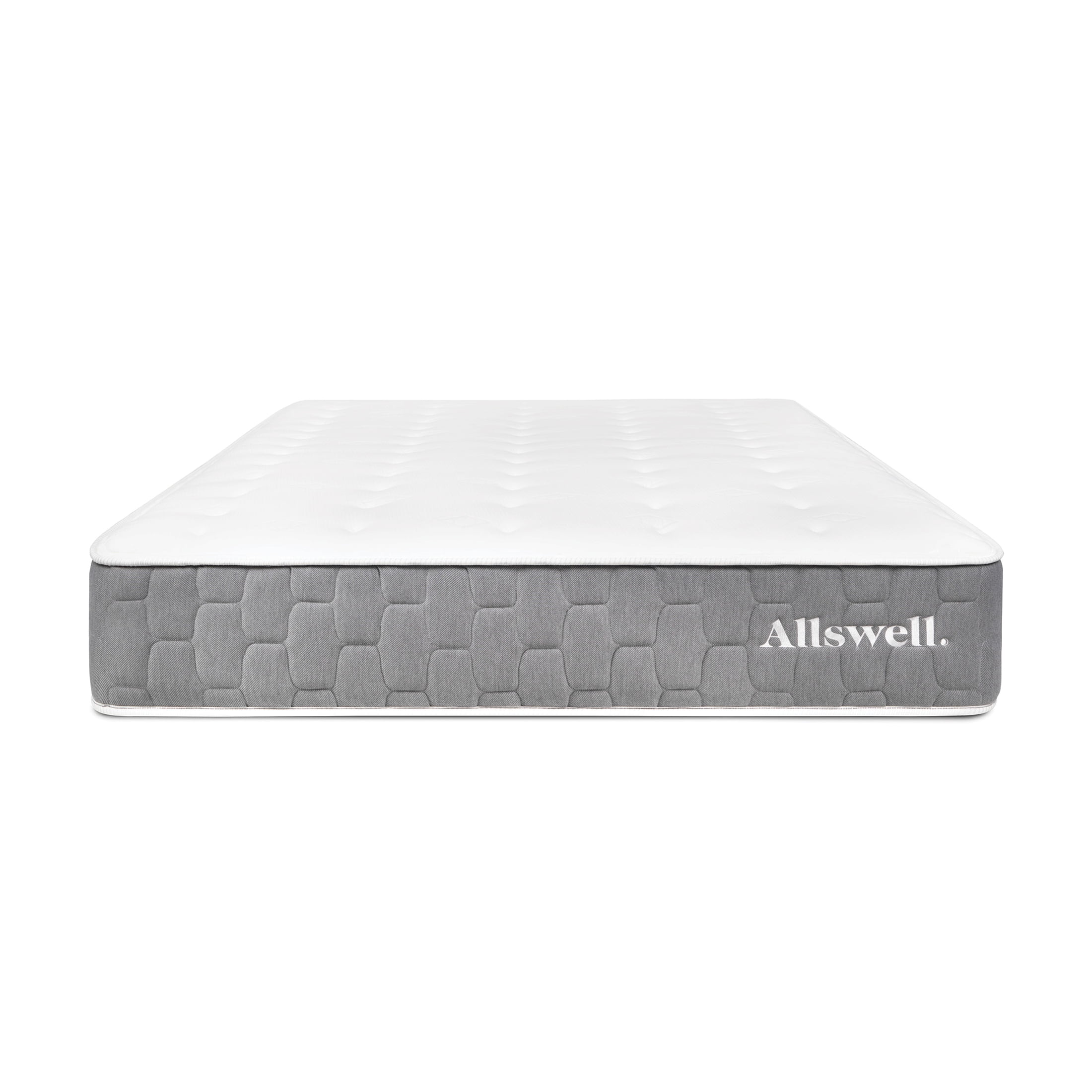
Allswell Mattress Review: Original Hybrid Testing Restored
The Allswell page had been reduced to a generic current-product summary even though Yawnder had reviewed the original hybrid and documented its construction, sinkage and motion behavior.
What we reviewed
Yawnder received the original Allswell/Luxe-era hybrid, built with quilted gel foam, transition foam and individually encased coils.
Medium-firm feel
The mattress kept the sleeper more on top of the bed than a soft foam mattress. That made position changes easy and reduced the amount of material surrounding the body.
Coil response
The spring system added bounce and support while the quilted comfort layer softened the initial contact. It felt more responsive than an all-foam mattress without becoming excessively springy.
Motion transfer
Individually wrapped coils moved more independently than a connected spring unit, so partner motion was reasonably well controlled for a budget hybrid.
Cooling
Because the mattress did not allow especially deep sink and had airflow through the spring core, it felt relatively cool compared with thick all-foam designs.
Original construction image.Original sinkage test.
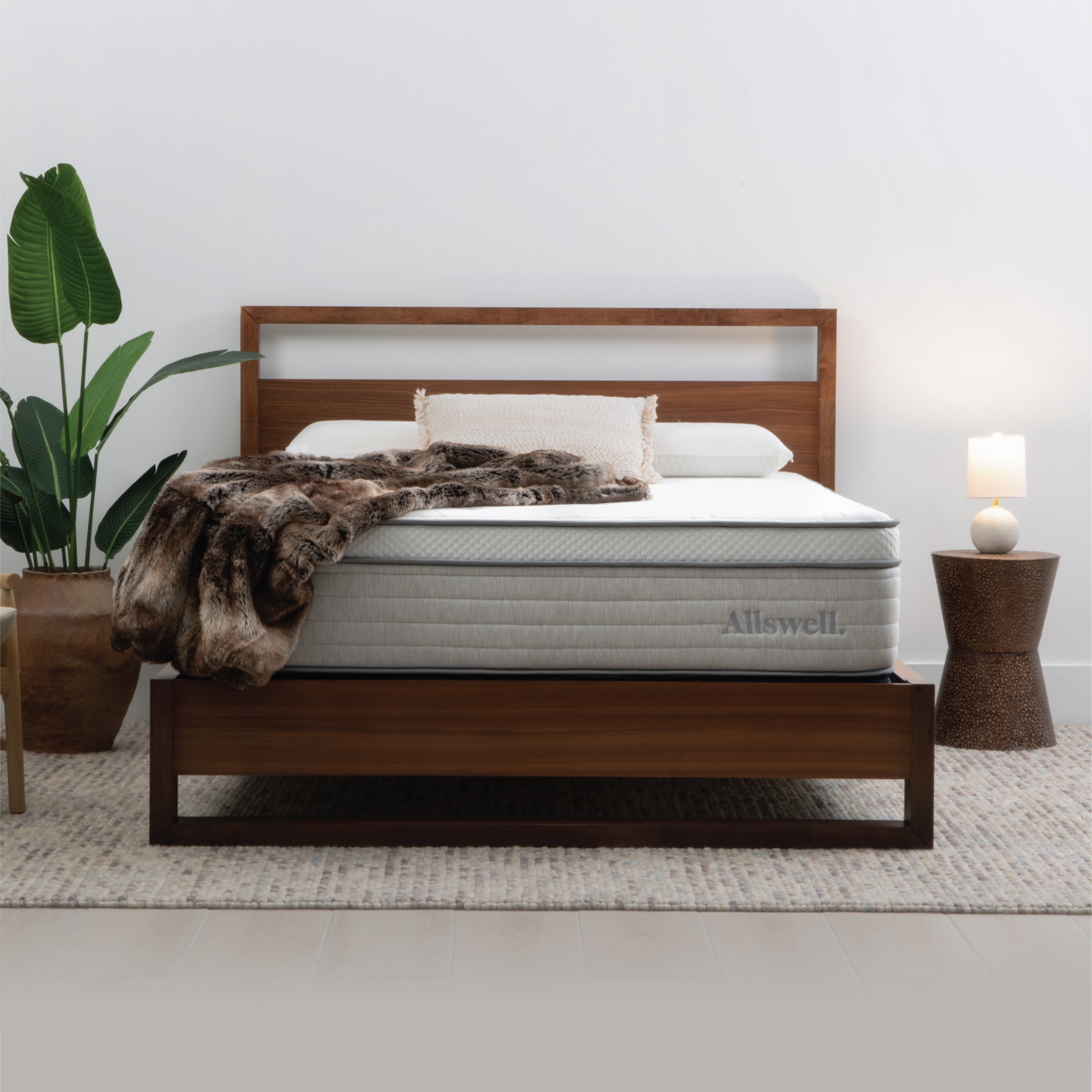
These current Walmart-listed models are not the specific historical mattress tested above. Their different heights and firmness options make comparing exact SKUs essential.
A taller, more upholstered hybrid with a cushioned surface. Check current sizes and availability.
Current retail product images: Walmart. Listings and promotional pricing may change. We have not assigned the older Yawnder test results to these specific configurations.
Current-shopping note
Allswell’s ownership and lineup have changed over time. Current Walmart/Allswell models should be checked by exact SKU; this restored page documents the original hybrid Yawnder tested.
Yawnder Reviews · Disclosure: Some links may be affiliate links. Current specifications and policies can change.
Discover the ultimate sleep experience with the GhostBed Mattress, blending comfort and support with innovative cooling technology—your ticket to a refreshing night’s rest! Plus, with an enticing 101-night trial, you can test the waters worry-free!
10 Luxury Pajama Brands for Seriously Upgraded Sleep
If your pajamas still feel like an afterthought, it might be time to level up.
These ten luxury sleepwear brands focus on fabrics, fit, and details that actually make bedtime feel special
– not just “good enough.” From glossy silk sets to playful printed cotton and lounge pieces that work outside the house,
this guide walks through what each brand does best, who it fits, and where to buy.
Below you will find quick snapshots plus deeper notes on comfort, style, price expectations, and size range,
so you can match the brand to your sleep and lounge personality instead of guessing from product photos.
How to use this guide
Skim the overview table to see which brands match your style (minimal, romantic, bold prints, etc.).
Jump to individual brand sections for fabric details and where to shop.
Use the “Best for” bullets when you only want one or two brands to try first.
Prices and availability change often, so always double check current collections and sales on each brand’s site or favorite retailer.
Olivia von Halle built her brand on the idea that pajamas can be as glamorous as an evening dress.
Think weighty silk, saturated prints, sharp piping, and cuts that feel more like a designer suit than something you hide under a duvet.
These are pajamas you could wear to answer the door and still look intentionally dressed.
Best for: People who want pajamas that feel like a luxury fashion purchase.
Fabrics: Mostly silk satin with vivid colors and prints.
Price expectation: High; this is a “treat yourself” brand.
Vibe: Cozy, romantic basicsComfort level: Very high
Eberjey is the brand people recommend when you say “I just want something soft that still feels a bit special.”
Their modal and cotton-blend pajamas are light, drapey, and flattering without trying too hard.
Classic button-up sets, shorts, jogger-style pants, and matching robes make it easy to build a complete lounge uniform.
Best for: Everyday luxury and anyone who wants comfort first with a polished look.
Fabrics: Modal, cotton blends, and ultra-soft knits.
Price expectation: Mid to high; accessible luxury.
Vibe: Holiday morningsSignature: Hand-drawn prints
Desmond & Dempsey makes pajamas that look like they were designed for a sunlit villa somewhere far away.
Expect crisp cotton in hand-painted prints: jungle scenes, tigers, palm leaves, and other storybook-inspired patterns.
Even though the prints are loud, the construction is classic timeless.
Best for: Print lovers and couples who want matching sets.
La Perla is one of the most recognizable names in luxury lingerie, and their sleepwear carries the same mood:
delicate lace, whisper-thin silk, and meticulous construction. Pajama sets, nightgowns, and robes feel like heirloom pieces.
Sleeper blurs the line between pajamas and going-out clothes. Linen button-ups, feather-trimmed sets, and silk slip dresses
are designed to work at home, at brunch, or even at low-key events.
Best for: People who love multifunctional, fashion-forward lounge looks.
Fabrics: Linen, silk, cotton, often with removable feathers.
Morgan Lane leans into fantasy. Expect soft silk, embroidered details, and whimsical motifs like stars and hearts.
Pieces often feel like a cross between fine lingerie and sleepwear, with a lot of personality baked in.
Vibe: Maximalist resort energySignature: All-over prints
F.R.S. designs look like they walked straight off a runway: rich patterns, saturated colors, and tailored pajama suits that can absolutely leave the house.
Best for: Maximalists who want to wear pajamas to parties.
Vibe: Elegant and grown-upStrength: Robes and chemises
Natori blends East and West in a way that feels refined rather than costume-like.
Think kimono-inspired robes, minimalist camisoles, and clean pajama sets with considered prints and embroidery.
Best for: Elevated but wearable sleepwear appropriate for hosting or travel.
Vibe: Classic and polishedStrength: Silk nightgowns
Julianna Rae specializes in silk pieces that read as timeless rather than trendy.
Expect classic pajama sets, bias-cut nightgowns, and robes in solid colors and soft prints.
Best for: Silk lovers who want reliable, classic silhouettes.
Hanro is the opposite of loud. The designs are simple, clean, and nearly logo-free,
but the fabrics and construction quietly justify the price. This is for people who would rather feel quality than broadcast it.
Before you hit checkout on a silk set, it helps to think about how you actually live (and sleep).
A few quick filters can narrow you down to one or two brands from this list instead of ten.
Fabric first: If you run hot, look at breathable cotton, linen, or silk from Desmond & Dempsey, Sleeper, or Hanro.
If you love the heavy drape of silk, check Olivia von Halle, La Perla, Morgan Lane, or Julianna Rae.
Style comfort zone: Maximalists often gravitate toward F.R.S and Desmond & Dempsey.
Minimalists usually land on Hanro, Natori, or some of the simpler Eberjey sets.
Use case: If you want PJs that double as outfits, Sleeper and F.R.S are built for that.
If you only want “bed-only” pieces, Eberjey, Hanro, and Julianna Rae are safer.
Luxury pajama FAQ
Are luxury pajamas really worth the money?
It depends on what you value. You are paying for better fabrics, more thoughtful cuts, and often longer lifespan if you care for them properly.
If you wear pajamas every night, the cost per wear can make sense.
Which brand is best for everyday wear?
Eberjey, Hanro, and Natori are strong everyday choices because they focus on comfort and easy care.
What if I sleep hot?
Look at cotton and linen-focused brands like Desmond & Dempsey, Sleeper’s linen sets, or Hanro’s lighter collections.
Silk is breathable but can feel warm to some sleepers.
Ready to buy?
See today’s best sleep deals
Live pricing and current promotions on the mattresses, bases, and sleep tech we recommend.
Eli & Elm Sheets Review (2026): Cooling, Feel & Fit
Cooling sheet review with real PCM tech
Eli & Elm Whitney Collection Sheets Review
Eli & Elm launched in 2019 with a promise to actually improve bedding, not just print a higher thread count on the label.
The Whitney Collection is their flagship cooling sheet set built with phase change material (PCM) plus a cotton and lyocell blend.
It is aimed squarely at hot sleepers who are tired of waking up sweaty and chasing cold spots all night.
I have lived with these sheets, washed them, and pushed them through what I would call “chronic hot sleeper testing.”
This review looks at how they really feel, how cool they stay, how they fit, and whether the premium price makes sense.
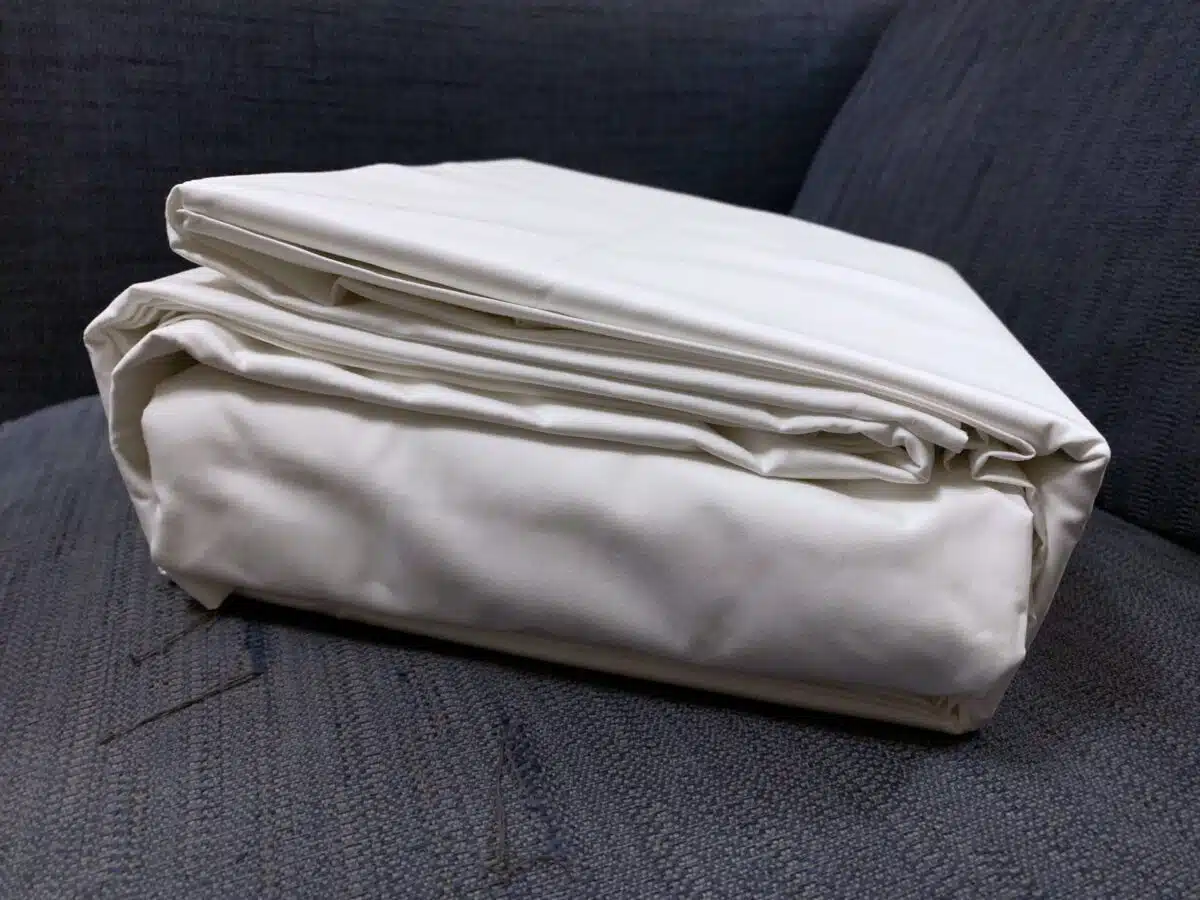
Whitney Collection after washing and on the bed. Cooling is the star feature, but the fabric and fit behave like a quality cotton set.
Phase change coolingCotton and lyocell blendBuilt for hot sleepers
Bottom line
The Whitney Collection does what Eli & Elm says it does.
It feels like substantial cotton after washing, but it keeps that “freshly cool” sensation going for most of the night.
If you overheat in bed and have the budget, this set is one of the few that changes the nightly experience instead of just looking nice on a product page.
If you purchase through this link, Yawnder may earn a commission at no extra cost to you.
Test scores
Cooling for hot sleepers
Overall comfort and feel
Fabric quality and durability
Fit and pocket depth
Ease of care
Wrinkle resistance
Value for the price
Scores are based on my usage, wash testing, and comparisons against other premium and “cooling” sheet sets I have tested in the same price zone.
Unboxing and first impressions
The outer box is heavily taped and surprisingly heavy for a sheet set. Inside, a cyan box with “COOL.” printed on top sets the theme before you touch the fabric.
The clamshell style inner box does not stay open on its own, so getting the plastic wrapped sheets out is more hands on than most bedding unboxings.
Before washing, the fabric feels dense and a little technical, almost like a thinner, smoother version of thermal curtain material.
Stitching and seam work match the premium positioning. No loose threads or sloppy finishing in my set.
Materials and construction
Fabric blend
The Whitney Collection uses a composite fabric that combines cotton, lyocell, and phase change material microcapsules.
The working formula is about seventy percent cotton, twenty percent lyocell, and ten percent paraffin based PCM.
The cotton is a long staple variety, which generally resists pilling and wear better than short staple options.
Lyocell adds smoothness, breathability, and moisture management.
The PCM is embedded to moderate temperature instead of just sitting on the surface as a temporary treatment.
How phase change materials work in bedding
Phase change materials absorb and release heat as they switch between solid and liquid states at a targeted temperature range.
When your body warms the sheet, the PCM soaks up some of that heat during the transition, delaying how quickly the surface heats up.
As your skin cools, the heat is gradually released back out.
In practice, this behaves like thousands of tiny rechargeable cold packs built directly into the fabric structure.
Up close, the fabric looks like a tight, modern cotton weave. The cooling tech is inside the fibers, not sitting on top as a coating.
Lyocell and sustainability
Lyocell is made from dissolved wood pulp that is reformed into fiber.
It is designed to be more environmentally responsible than many traditional rayon processes, using a closed loop system and avoiding harsh solvents.
For sleepers, lyocell contributes a smooth hand feel, better moisture handling, and a bit of drape.
Combined with long staple cotton and PCM, it gives the Whitney sheets a mix of performance and comfort that stands out from simpler cotton blends.
Label and seam work back up Eli & Elm’s pitch as a brand focused on long term, premium quality instead of throwaway bedding.
Cooling and temperature regulation
Cooling is the whole reason this set exists, so that is where I paid the most attention.
After a cold wash and low heat tumble dry, the sheets came out not only dry but slightly cool to the touch.
That is not marketing copy, that is how they actually felt when I took them out of the dryer.
On the bed, the main difference shows up over time.
Instead of the familiar pattern where sheets feel cool for the first few minutes and then gradually turn into a warm envelope, the Whitney set keeps that “just cool enough” sensation going.
As a habitual hot sleeper, my usual routine is moving my feet around searching for colder spots.
On these sheets, I stopped doing that.
Night time cooling effect
Heat buildup over several hours
Performance for hot sleepers
The lab explanation is simple thermodynamics, but in daily use it feels like someone finally figured out how to extend that “cool side of the pillow” feeling across the entire bed.
Feel and fabric texture
Right out of the packaging, the Whitney fabric has a slightly stiff and engineered feel, more like a premium technical textile than a broken in cotton sheet.
That changes after you follow the care instructions.
With a cold wash and low tumble dry, the fibers relax and the hand feel shifts toward a familiar cotton experience.
It is not ultra slick like some sateens and not fuzzy or flannel like.
I would put it in the category of a crisp, medium smooth percale with a bit of weight and substance.
Once washed and on the bed, the sheets lose the “thermal curtain” stiffness and settle into a substantial, modern cotton feel.
If you love crisp sheets with some body, these will feel at home.
If you only like ultra slippery, almost satin like bedding, the Whitney texture may feel a bit more structured than you prefer.
Fit, pockets, and care
Fit and pocket depth
The fitted sheet in the Whitney set has enough depth and elastic to stay anchored on standard and moderately tall mattresses.
On my test mattress, it locked onto the corners without popping off or creeping up, even after some rolling and tossing.
If you are running a very tall hybrid mattress with an additional topper, measure total height and compare to the stated pocket depth,
but for most normal setups, fit should not be an issue.
Care and maintenance
Eli & Elm recommends cold wash and low heat tumble dry.
Following those directions, I did not see noticeable shrinkage in the sheets, pillowcases, or fitted sheet.
The matte factory finish relaxed into a more typical cotton look after the first trip through the laundry.
Wrinkling is present but not extreme.
If you pull them out of the dryer and put them straight on the bed, they look neat enough without ironing.
My hands-on experience with the Whitney Collection
The first surprise was the weight of the package.
For a sheet set, the box felt heavy, and a good chunk of that was tape.
It took some effort to cut through everything and get to the cyan inner box with “COOL.” stamped on it in bold letters.
Opening the clamshell style box felt a bit like unpacking a premium gadget.
The sheets came out of their plastic wrap feeling unusually dense and slightly technical, almost like a fabric you would expect in performance outerwear rather than on your bed.
After washing, the texture story changed.
The stiffness softened, the surface felt more like a high quality cotton set, and the whole package started to make sense.
The real test, of course, was overnight use.
As someone who runs hot, my feet are usually prospectors in search of the elusive cold patch of sheet.
On the Whitney sheets, I stopped doing that.
I did not have to flip the sheet, rotate to a new zone, or throw limbs out of the covers to cool myself down.
The temperature stayed in that narrow sweet spot that lets you stay asleep instead of fighting your bedding.
The only real hesitation is price.
This is not a casual impulse buy.
But if temperature control is the one thing that keeps wrecking your sleep, the Whitney sheets feel more like a practical tool than a luxury indulgence.
After several nights, the pattern stayed the same: less hunting for cold spots and fewer wake ups due to overheating.
Pros and cons
What I liked
Cooling effect is real and noticeable, especially for hot sleepers
Fabric feels substantial and built for long term use after washing
Blend of long staple cotton, lyocell, and embedded PCM is genuinely innovative
Secure fitted sheet with no corner creep in normal use
Understated, modern look that does not scream “tech product” on the bed
Things to be aware of
Price is high versus many good cotton sets without PCM
Out of the box feel is more technical and stiff until washed
Texture leans crisp rather than silky, which will not match every preference
Cooling benefit is most valuable if you truly sleep warm
Who the Eli & Elm Whitney Collection is best for
Good fit for
Hot sleepers who wake up sweaty or kick off covers during the night
People who like crisp, cool sheets with some structure and weight
Shoppers willing to pay more for cooling tech that actually changes the sleep experience
Couples where at least one person consistently overheats under normal cotton sheets
Possible mismatch for
Budget focused shoppers who want to stay in a mid or low price tier for sheets
People who prefer ultra silky, drapey, satin like bedding
Cold sleepers who already pile on blankets and rarely feel too warm
The Whitney Collection carries a premium price tag.
Compared with conventional long staple cotton sets or even many bamboo and lyocell blends, it sits clearly in the upper tier.
That means you are paying for both the materials and the embedded cooling tech.
If you rarely overheat, the extra cost may not make sense.
But if temperature swings wreck your sleep, sheets suddenly become part of the solution, not just a style decision.
In that context, the cost is easier to justify, especially when you think about how often you use them.
Pricing and promotions move around, so always double check the current cost and any trial or return options before you buy.
How the Whitney Collection compares to other sheets
Type
Cooling
Feel
Typical price tier
Eli & Elm Whitney (PCM)
Excellent for hot sleepers; extended cool feel
Crisp, substantial, modern percale-like
Premium
Standard cotton percale
Good initial breathability, warms over time
Crisp, light, familiar hotel sheet feel
Low to mid
Cotton sateen
Average; can feel warmer due to tighter weave
Smoother, more lustrous surface
Low to premium
Bamboo / viscose blends
Good moisture wicking, can feel cool at first
Silky, drapey, very soft
Mid to premium
Polyester “cooling” microfiber
Often traps heat despite marketing
Very soft but can feel clingy
Low
If you want the coolest feel without going to active cooling gadgets, Whitney sits near the top of the passive cooling sheet options.
The real decision is whether the gain in temperature control is worth the extra spend for you.
How I tested these sheets
Washed and dried according to care instructions before first use
Used on a standard hybrid mattress for multiple nights
Paid attention to temperature changes during the night and how often I needed to move for cooling
Checked fit, corner grip, and sheet movement after several nights
Inspected seams, stitching, and pilling after washing and use
Compared notes against other premium and “cooling” sheet sets tested over time
This is not a lab test with sensors and climate chambers, but it is the kind of use that matters when you are deciding whether to spend real money on new bedding.
FAQ
Do the Eli & Elm Whitney sheets really stay cooler than regular cotton?
In my experience, yes.
Compared with normal cotton sets, the Whitney sheets reduce heat buildup and keep that “just cool enough” sensation going for much longer,
especially noticeable for hot sleepers.
Do the Whitney sheets feel like normal cotton after washing?
After the first wash and dry, the initial technical stiffness relaxes and the set feels much closer to a substantial cotton percale.
They are not silky or slippery, but they are comfortable and familiar once broken in.
Will these sheets help if I am a cold sleeper?
If you already sleep cold and pile on blankets, the Whitney cooling effect may not be what you need.
They are designed to moderate heat for people who run warm, so cold sleepers often do better with cozier, less cooling oriented fabrics.
Are the Eli & Elm Whitney sheets worth the price?
They are worth serious consideration if overheating is your number one complaint in bed.
For neutral or cold sleepers, the price may be harder to justify versus good cotton or bamboo sets.
For genuine hot sleepers, the nightly comfort upgrade can make the cost feel more like a long term investment.
Final verdict
Eli & Elm’s Whitney Collection does something most sheet sets only talk about: it actively helps manage heat instead of just relying on breathability.
Between the long staple cotton, lyocell, and embedded PCM, you get a fabric that feels familiar on the skin but behaves differently when the room warms up or your body kicks out extra heat.
If you are a hot sleeper, these sheets can feel like finally solving a problem you have just been living with for years.
If you are neutral or cold at night, the advanced cooling may be overkill and your money might be better spent elsewhere in your sleep setup.
The only real downside is the price.
But if you look at sheets as part of your core sleep gear rather than an afterthought, and you have room in the budget, the Whitney Collection earns a place on the shortlist.
Always check current pricing, promotions, and trial terms on the Eli & Elm product page before you commit.
Ready to buy?
Check current Eli & Elm pricing and promos
Live pricing, current promotions, and full manufacturer warranty through our affiliate partner. Buying through this link supports Yawnder’s independent testing at no extra cost to you.
Molecule Mattress Review: Our Original All-Foam Hands-On Test
Our Molecule mattress review documents Yawnder's original hands-on testing of the earlier all-foam Molecule generation. Below are our sinkage photos, inside-the-mattress teardown, motion-transfer impressions and cooling observations. These are historical findings, not testing results for today's CORE, CopperWELL, REFLEX or ENGAGE models.
Yawnder reviewed the original Molecule all-foam line, including the Molecule 1 and Molecule 2 era. The mattresses used layered polyurethane foams with open-cell and zoned designs intended to improve airflow and body contouring.
Sinkage and pressure relief
Using our 14-pound bowling ball, the mattress showed a meaningful amount of sinkage. That matched the feel in use: shoulders and hips were able to settle into the comfort system instead of riding on top of a stiff surface.
Motion transfer and response
Motion transfer was low, as expected from an all-foam construction. The interesting part was recovery speed—the foams rebounded relatively quickly rather than behaving like very slow traditional memory foam.
Inside the mattress
Yawnder opened the mattress to show the individual layers. The zoned middle layer used sculpted channels intended to let air move through the foam while varying support across the body.
Cooling impression
Our original conclusion was that Molecule slept cooler than many conventional three-layer foam beds we had tried at the time. That observation belonged to the model we physically tested and should not be generalized to every later Molecule model.
Original 14-pound bowling-ball sinkage photo.Original teardown image from Yawnder’s review.Close-up of the sculpted middle layer.
Molecule’s lineup has changed considerably since the original review. Use these observations as a record of our earlier foam-mattress testing. For a selection guide to the currently sold lineup, visit our Molecule mattress models compared page; verify price, availability and specifications with the manufacturer.
Affiliate link: Yawnder may earn a commission at no additional cost to you. Confirm the current model and availability with Molecule.
Yawnder Reviews · Disclosure: Some links may be affiliate links. Legacy observations are preserved for transparency and are not presented as current specifications.
YAWNDER REVIEWS · PRODUCT DETAILS CHECKED OCTOBER 2026
Turmerry Organic Latex Mattress review: is the customizable latex bed worth it?
The standout feature of the Turmerry Organic Latex Mattress is not just its natural-material construction. It is the ability to unzip the mattress, rearrange the Dunlop latex layers and tailor the feel after delivery. If a conventional mattress is too soft or too firm, you generally have to exchange the whole bed. With Turmerry's modular design, you have more room to adjust.
Our verdict: Turmerry is a compelling option for sleepers who want a responsive, buoyant latex feel, an organic-latex material story and meaningful firmness customization without paying luxury-store prices. It is less compelling if you want deep memory-foam sink, a hands-off white-glove setup or the strong perimeter support of a coil-based hybrid.
Best for: Natural-material shoppers, adjustable-firmness enthusiasts and couples with different comfort needs. Consider another design if: You want a plush memory-foam hug, dislike lifting latex layers or rely heavily on sitting at the edge.
Affiliate link: Yawnder may receive a commission if you buy. Price and promotions are set by Turmerry. We recommend checking the exact model and size before checkout.
At a glance — Organic Latex Mattress
Type: Springless, layered all-latex mattress with a seven-zone support design.
Materials: GOLS-certified organic Dunlop latex layers, a New Zealand wool fire barrier and a zippered organic cotton cover (per Turmerry).
Heights: 7-inch dual-sided, 10-inch and 12-inch configurations. Firmness options vary by height.
Feel: Buoyant, responsive, easier to reposition on than slow-response memory foam.
Trial: 120 nights with a mandatory 30-day adjustment period before a standard mattress return.
Warranty: 20-year limited warranty; full-coverage and prorated periods differ.
Pricing: Turmerry advertised the line from $899 when checked in October 2026; this is not a Queen-size price quote.
What is inside the Turmerry Organic Latex Mattress?
Organic Dunlop latex: The flagship model uses multiple perforated, seven-zone latex layers with different firmnesses. Dunlop latex springs back quickly after pressure is removed; it feels distinctly different from the slow melting sensation of traditional memory foam. The zoned cut is designed to vary support along the body, but individual pressure-relief results depend on your build and chosen firmness.
Wool layer: Turmerry describes natural New Zealand wool beneath the cover for fire resistance and moisture management. That is different from a fiberglass fire sock; confirm the law tag and current model specifications if fire-barrier materials are especially important to you.
Zippered organic cotton cover: Rather than a permanently sealed one-piece construction, the zippered cover gives access to the separate foam components. This is useful for changing the order of the layers but makes setup more involved than unrolling a finished hybrid.
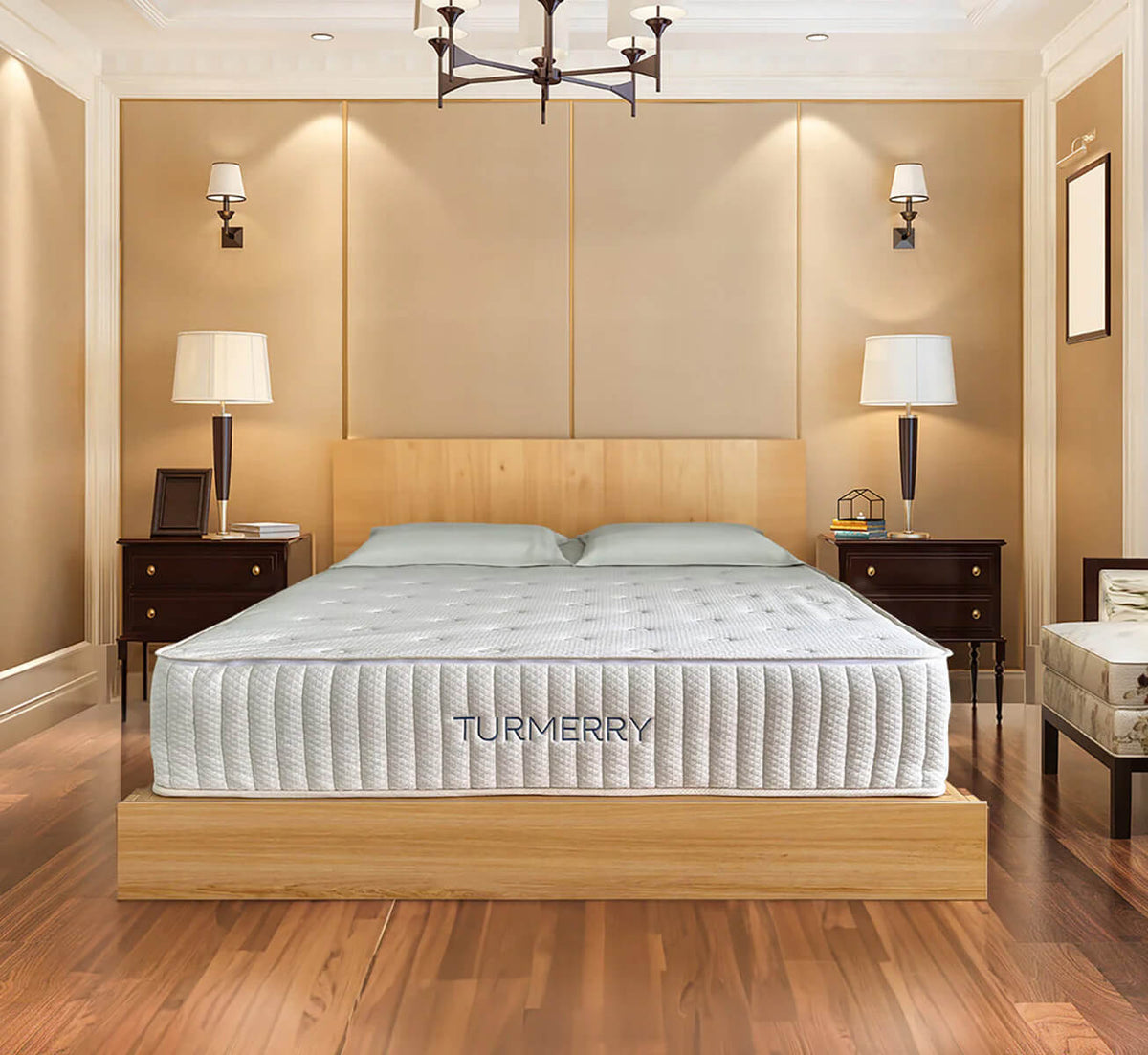
Product photograph retained from Yawnder's earlier Turmerry coverage; current covers and configurations may differ.
Can you actually change the firmness?
Yes, within the limits of the layers you own. The 10- and 12-inch models use multiple latex components that can be reordered to modify the surface feel. Turmerry also says it may exchange one layer at no charge when a firmness adjustment would improve comfort; contact the manufacturer for its current process and eligibility. This is an adjustment benefit, not a promise that every firmness or height can be created from any purchased configuration.
Archived Turmerry lineup imagery illustrating the modular layer concept.
How does it feel? Pressure relief, cooling, couples and edges
Pressure relief and support
Latex compresses under your shoulders and hips while pushing back more immediately than memory foam. That makes it appealing for people who want contouring without feeling stuck. The amount of pressure relief changes a great deal between Soft and Extra Firm; the materials alone do not make every configuration comfortable for every sleep position. The seven-zone design is a construction feature, not proof of a medical or back-pain outcome.
Cooling and breathability
Perforated latex, a cotton cover and wool that helps manage moisture all support airflow. Compared with thick, dense memory-foam layers, this construction generally has an advantage for people who dislike the enveloped sensation. That does not mean the mattress is actively cooled or that its surface stays at one temperature; room temperature, sheets and your chosen comfort layer still matter.
Motion transfer
All-latex foam avoids coil noise, but its bounce may allow more movement to be felt by a partner than deeply conforming memory foam. For an easily disturbed sleeper, trying the chosen firmness is more useful than relying on a generic motion-isolation rating.
Edge support and ease of movement
The lack of a reinforced coil perimeter may be noticeable if you regularly sit on the mattress edge. On the other hand, the fast-responding latex is convenient for people who move between positions overnight. These are construction-based expectations, not Yawnder instrument readings for a freshly tested 2026 sample.
Which Turmerry firmness and height should you buy?
Firmness labels are not interchangeable across brands, and Turmerry's 7-inch option is a distinct flippable configuration. Use these as starting points rather than universal rules:
Build
Available feel
Who should consider it
7-inch dual-sided
Medium/Firm or Firm/Extra Firm, depending on chosen build
Shoppers seeking a lower-profile, flip-to-change-feel mattress; potentially too firm for those who need a plush surface.
10-inch all-latex
Soft, Medium, Firm, Extra Firm
A flexible starting point for most shoppers; three 3-inch latex layers plus cover.
12-inch all-latex
Soft, Medium, Firm, Extra Firm
More latex depth and configuration flexibility; worth considering for those wanting a thicker build.
Side sleepers: Start with Soft or Medium, particularly if you are lighter or prone to shoulder pressure. Back sleepers: Medium or Firm can balance contouring with lumbar support. Stomach sleepers: Often benefit from Firm, with Extra Firm worth considering for those who need especially little hip sink. Heavier sleepers: Compare the 12-inch Firm and Extra Firm options carefully rather than assuming a soft surface will provide the desired support.
For couples with different preferences, Turmerry advertises Split Queen, Split King and Split Cal King internal latex layers under a shared cover. That is not the same thing as two independent mattress units for separately articulating adjustable bases; for that use, check separate Twin XL mattress sizing and base compatibility.
Turmerry's all-latex mattress vs its other designs
It is important not to treat every Turmerry mattress as the same bed. The brand sells several constructions with meaningful differences:
Model / approach
What changes
Best reason to choose it
Organic Latex Mattress
Springless, customizable Dunlop latex layers and seven-zone support
Maximum interest in modular firmness, latex feel and a no-coil build.
Organic Latex Hybrid
Talalay latex comfort over pocketed steel coils
Prefer a classic hybrid feel, airflow through a coil unit and a more familiar spring-supported perimeter.
DIY Hybrid With Latex
Modular latex comfort layers combined with a coil system
Want layer-level customization and coil support; assembly matters.
Dual Side Flippable / 7-inch
Two firmness sides in a slimmer construction
Prefer flipping the bed instead of rearranging several pieces.
Bigg+ Mattress
Extra-firm latex support layers built for higher weight capacity
Need a purpose-built high-support option; check manufacturer weight guidance.
Turmerry's Latex Hybrid and DIY Hybrid also have different warranty terms from the flagship all-latex model. Do not apply the 20-year warranty to the entire catalog without checking the specific model.
More Turmerry products: mattresses, toppers, pillows and bedding
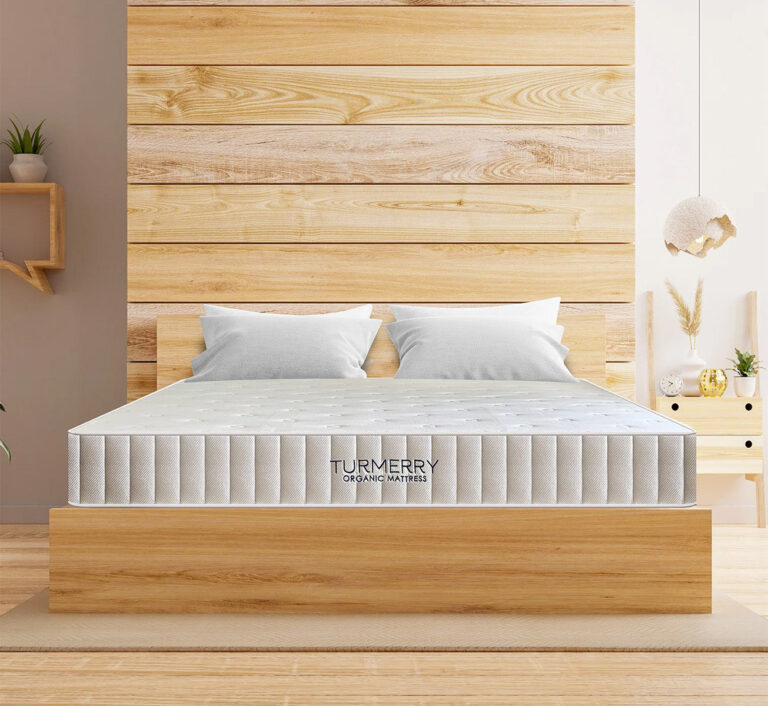
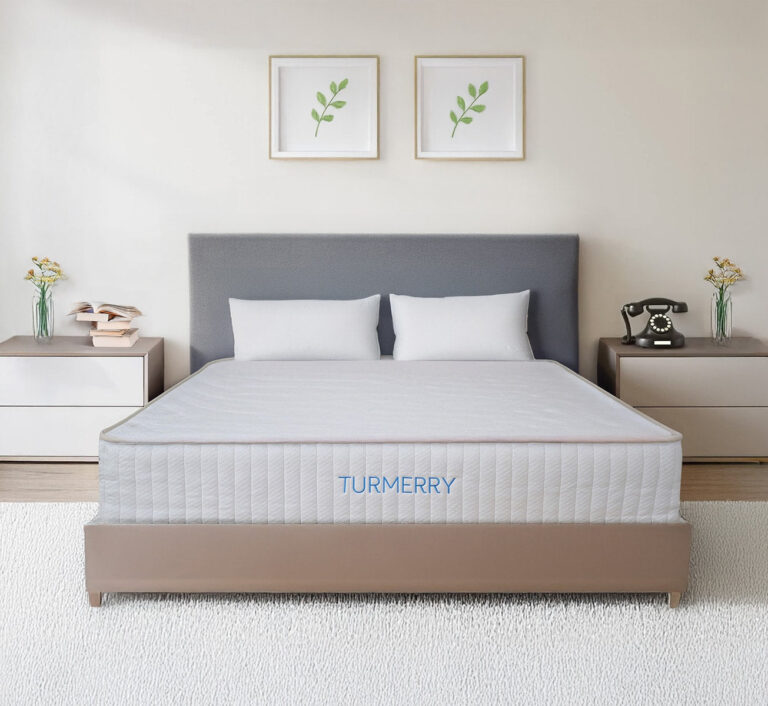
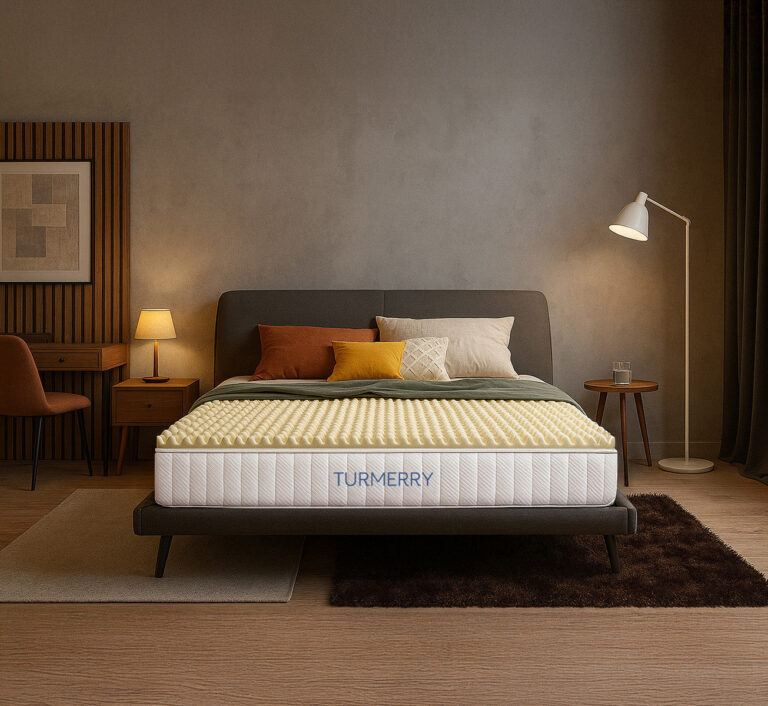
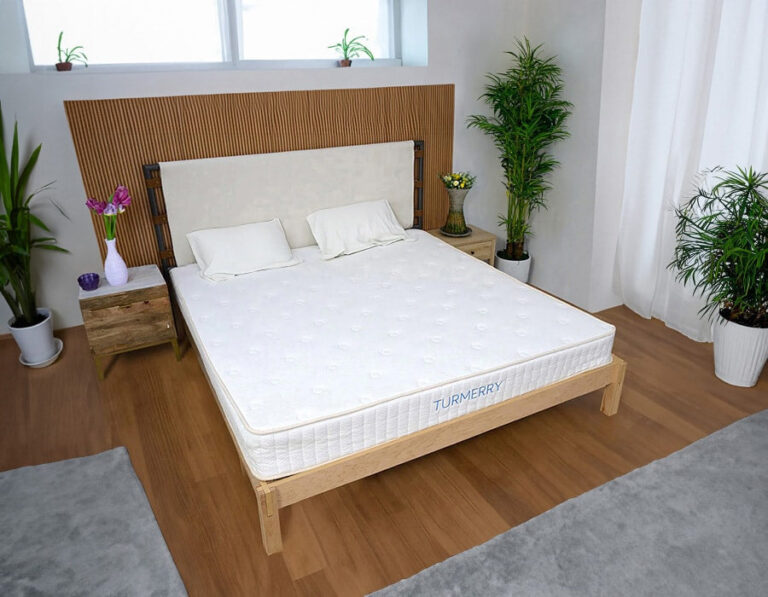
Turmerry is not a one-mattress company. Its current lineup includes all-latex beds, two different kinds of latex hybrid, a convoluted egg-crate mattress, flippable and specialty sizes, plus a wide range of toppers and natural-material sleep accessories. Below are official manufacturer photos of several representative products, with the differences that matter most before buying. These are not photographs from an independent 2026 Yawnder product test.
All-latex mattress
7-Zone Organic Latex Mattress
This is Turmerry's flagship springless design and the focus of this review. Stacked, perforated organic Dunlop latex layers sit beneath a wool-and-cotton cover. Select 7-, 10- or 12-inch builds, with meaningful adjustment by changing layer order on compatible models. Choose this over the hybrid when the ability to fine-tune a latex-only feel matters most.
Finished hybrid mattress
Organic Latex Hybrid Mattress
The more familiar, ready-to-sleep option pairs about 2 inches of Talalay latex comfort with an 8-inch pocketed-coil support core. The coil system adds a spring-supported perimeter and a different responsiveness than solid latex. It comes as a medium-firm build rather than the flagship's menu of swappable Dunlop layers. Its stated limited warranty is 10 years, not 20.
Customizable hybrid mattress
DIY Hybrid Mattress With Latex
For shoppers who want coils and a reconfigurable latex comfort system, the DIY Hybrid combines an 8-inch Texas Pocket Springs QuadCoil support core with 2 or 4 inches of zoned organic Dunlop latex. The zippered cover allows access to the comfort layers, unlike the simpler finished hybrid. Compare the total height, assembly effort and firmness-layer selections before ordering.
Contoured all-latex mattress
Organic Egg Crate Latex Mattress
This 10- or 12-inch mattress changes the surface geometry: a roughly 2.4-inch convoluted latex layer sits above standard Dunlop support layers. The peaks and valleys create a different initial cushioning sensation. Turmerry offers Soft or Medium for the egg-crate surface; Firm and Extra Firm choices concern the layers beneath it. It is a better comparison for people seeking extra surface contour than those seeking a flat, uniform latex top.
Two firmness options in one bed
Dual-Side Flippable Latex Mattress
The thinner dual-sided version is designed for a practical switch between Medium/Firm or Firm/Extra Firm feel by flipping the entire mattress. It is worth comparing with the 7-inch flagship configuration if you prefer a simple two-sided choice instead of stacking or rearranging several latex pieces. A lower profile can mean less depth for deep pressure relief.
Topper for an existing mattress
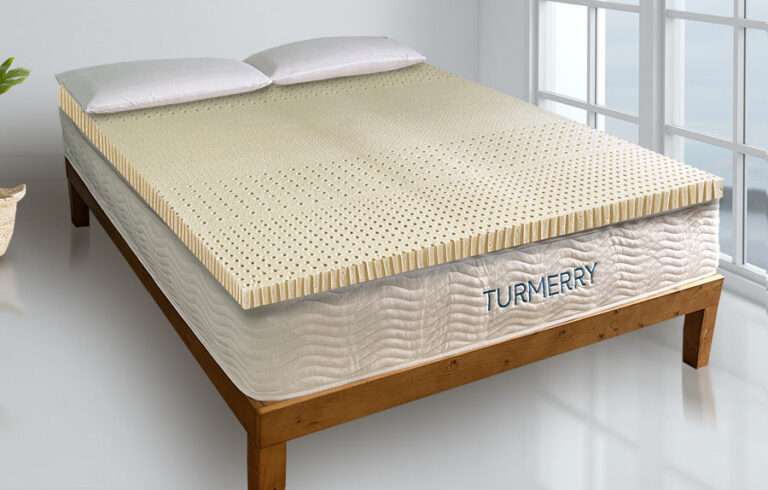
7-Zone Organic Latex Mattress Topper
Replacing an entire bed is not always necessary when the underlying support is still sound. Turmerry's perforated Dunlop latex toppers add a responsive, breathable comfort layer in different thicknesses and firmness choices; an optional cotton cover is offered. A topper can change surface comfort but cannot repair a broken spring unit or a deeply sagging support core.
Ergonomic latex pillow
Organic Latex Contour Pillow
This shaped Dunlop latex pillow has two distinct edge heights—approximately 4 and 5 inches—plus a recessed middle. Turmerry lists Medium and Firm densities. It is an interesting match for side and back sleepers who want a firmer, springier neck-supporting pillow than soft down alternatives. Pillow height is highly personal, so check how the curve lines up with shoulder width and mattress softness.
Bedding and mattress protection
Organic Waterproof Mattress Protector
Turmerry's waterproof protector uses an organic-cotton fabric surface and a laminated waterproof barrier, with fitted-sheet style elastic. That distinction matters: waterproof is not the same as being entirely made of cotton, and a waterproof laminate is part of the construction. This is a practical add-on for spills and stains without changing the mattress firmness the way a topper would.
Images: Turmerry manufacturer product photography, obtained from the official Turmerry website in October 2026 and stored in Yawnder's media library. Designs, colors and packaging may change. Image links and shopping buttons use Yawnder's Turmerry affiliate link.
Other Turmerry products worth knowing about
Organic Kids Mattress: A lower-profile all-latex mattress aimed at growing children, sold in smaller bed sizes and multiple firmness choices. Compare fit and firmness as children grow instead of applying adult weight-based recommendations.
RV and camper mattresses: Turmerry also sells latex mattresses and toppers in RV and custom-friendly dimensions. Measure the actual platform, rounded corners and height clearance before ordering rather than assuming a regular Queen fits an RV.
Bigg+: A specialty higher-support mattress in Turmerry's lineup. It is intended for a different weight and support use case than the plush flagship configuration; check current weight and size specifications directly.
Cooling graphite latex topper: Graphite-infused latex is Turmerry's alternative for shoppers interested in additional heat-dissipation features without switching to memory foam. Cooling claims should be considered separately from independently measured temperature results.
Egg Crate Topper: A convoluted Dunlop latex option for adding a more sculpted surface to an otherwise supportive mattress. It is not the same product as the entire Egg Crate Mattress above.
Alternative pillows: Beyond the latex contour design, Turmerry sells conventional organic latex, shredded latex, buckwheat, wool and graphite-infused pillows. Compare fill, height, shape and how easy the pillow is to adjust.
Organic bedding: Turmerry's broader catalog includes cotton sheet sets, topper covers, wool comforters, duvet covers and blanket throws. These are separate products with their own care instructions, prices, policies and certification details.
Which Turmerry product should you choose?
Your priority
Start by comparing
Why
Adjustable firmness without springs
7-Zone Organic Latex Mattress
Reorderable Dunlop latex layers in compatible heights.
A simpler, familiar medium-firm hybrid
Organic Latex Hybrid
Talalay comfort layer and pocketed-coil structure.
Hybrid support with customizable surface
DIY Hybrid
Customizable latex over a coil core, more setup involved.
More surface contour
Egg Crate Mattress or Topper
Convoluted latex changes the initial cushioning sensation.
Two feels, minimal layer handling
Dual-Side Flippable
Flip to switch between two firmness surfaces.
Improve a sound existing mattress
Latex Topper
Adjust comfort without replacing the entire support core.
Latex pillow or spill protection
Contour Pillow or Waterproof Protector
Targeted bedding add-ons rather than a new mattress.
Shopping tip: Prices, product availability, trial eligibility and warranties vary by product. Turmerry's 120-night mattress trial and 20-year flagship warranty are not blanket promises for every accessory or hybrid. Always compare the policy and specifications on the exact item's current checkout page.
Disclosure: The links above are affiliate links. Purchases may earn Yawnder a commission at no additional cost to you.
Turmerry vs other organic and natural mattresses
Turmerry vs PlushBeds Botanical Bliss: Both appeal to people who want layered latex and some control over firmness. Compare the price in your exact size, the number of layers, the certification paperwork and the return process rather than assuming the materials feel identical.
Turmerry vs Naturepedic EOS: Naturepedic EOS emphasizes a broader modular component system and certified-organic construction, typically at a higher price. Turmerry may make more sense if you prefer a straightforward all-latex mattress with reorderable comfort layers.
Turmerry vs latex hybrids (Birch, Awara or Avocado): A hybrid replaces much of the latex core with coils, which can improve edge structure and introduce a different bounce. Turmerry's all-latex model is worth considering if the ability to adjust and replace foam layers is the priority.
Pros and cons of the Turmerry Organic Latex Mattress
What we like
Actual layer-level firmness adjustment, not just a choice on a product page.
GOLS-certified latex materials and a published component-level materials story.
Responsive latex that makes changing sleep position easy.
Multiple heights and split-internal-layer options for couples.
120-night trial and 20-year limited warranty on the flagship Organic Latex Mattress.
What to consider
Modular components require carrying, positioning and occasionally rearranging heavy latex slabs.
More buoyant than memory foam; not a deep, slow-moving hug.
Perimeter support may feel different from a reinforced innerspring.
Lower-profile 7-inch model has fewer comfort choices.
Brand warranties vary by model; trial has a mandatory 30-day period.
Current price, 120-night trial, returns and warranty
Price: The company's website showed a starting advertised price of $899 for its flagship latex model when checked in October 2026. This does not establish a Queen-size selling price and can change with thickness, size, firmness and promotions. Our recommendation is to select your configuration on the current site before evaluating the value.
Trial and returns: Turmerry publishes a 120-day mattress trial measured from delivery, with a 30-day minimum tryout before the standard return process. It may offer a layer exchange to address firmness complaints. Return eligibility, pickup/donation instructions and refunds depend on its current policy, so save the terms that apply to your specific order.
Warranty: The Organic Latex Mattress is covered by a 20-year limited warranty for the original purchaser. Turmerry lists years 1–10 as the full-coverage period and years 11–20 as prorated; eligible claims in the latter period involve part of the original price and possibly transportation costs. A longer warranty is not a promise that comfort or softness will remain unchanged for 20 years.
Certifications: Turmerry advertises GOLS-certified organic latex and additional testing/certifications across its product lines. Certification of a latex component does not automatically establish a finished-mattress GOTS certification. If exact compliance matters, request the current certificate for the mattress and materials you select.
Before ordering
Pick the actual height and firmness for your sleep position and weight.
Confirm whether internal split layers or two separate mattress units fit your adjustable base.
Check current promotions, shipping details, mattress-trial eligibility and any restrictions.
Consider how you will carry and assemble multiple latex boxes.
The Organic Latex Mattress uses a springless latex core, but it also includes a wool layer and organic cotton cover. Other Turmerry models use coils. “All-latex” describes the support and comfort core, not literally every material in the mattress.
Is Turmerry good for side sleepers?
The softer 10- or 12-inch configurations may suit many side sleepers because shoulders and hips can sink farther in. A firm or extra-firm build could be uncomfortable for lighter side sleepers; personal fit matters more than a blanket rating.
Can you change the firmness after buying?
You can reorder the separable latex layers in compatible configurations. Turmerry says it can swap a layer without an additional charge in eligible comfort-adjustment cases. Contact the company to confirm the current process.
Does Turmerry use fiberglass?
Turmerry describes the flagship mattress as fiberglass-free and uses natural wool as its fire barrier. Verify the current law tag and product listing for your specific variant; the mattress's latex certification alone does not answer the fire-barrier question.
Can couples order different firmness on each side?
Yes, Turmerry lists internally split latex layers for certain Queen and King configurations beneath one cover. For two independently moving adjustable bases, confirm whether you instead need separate mattress units.
Is the 20-year warranty the same as a 20-year free replacement promise?
No. It is limited, nontransferable, and becomes prorated after year 10 on the flagship all-latex model. Terms for hybrid models differ.
What are the downsides of a modular latex mattress?
More setup work, heavy individual latex layers and a springier feel that will not suit everyone. It is a design trade-off: the same removable layers that create flexibility are more work than a conventional one-piece bed.
Final verdict: should you buy a Turmerry mattress?
If you want a natural-latex feel and control over firmness after delivery, the Organic Latex Mattress deserves a place on your shortlist. The 10-inch Medium is a reasonable comparison point for many shoppers, with Soft more appropriate when cushioning is the priority and Firm or Extra Firm worth considering when you need less sink. If you prefer reinforced edges and a traditional coil feel, compare the Turmerry Hybrid as a separate product rather than expecting the flagship all-latex construction to behave like one.
Editorial methodology: This update draws on Yawnder's existing Turmerry article and archival images, with specifications cross-checked against Turmerry's official product, mattress-quiz, certification, returns and warranty pages in October 2026. Feel and performance comments are informed construction-based assessments; no new 2026 lab results or independent numerical test scores are claimed here. Affiliate disclosure: Purchases through marked Turmerry links may earn Yawnder a commission at no additional cost to you.
Experience a restful night’s sleep with the Nest Owl Hybrid Latex mattress, featuring natural latex and pocketed coils for unparalleled support and comfort! With a 365-night trial and cooling properties, it’s the perfect choice for those seeking a harmonious blend of luxury and wellness in their sleep.
Vispring mattress review: what matters before spending luxury money?
The bottom line: Vispring is a genuine hand-built, pocket-spring mattress specialist, not an ordinary compressed mattress-in-a-box brand. The decision is about a particular collection and spring tension, its natural upholstery stack and the base you put under it—not merely whether the name is expensive. The brand's Original, Classic and Luxe collections contain different configurations. I have not published a verified Yawnder instrument-score table for every Vispring model, so this guide does not assign them all the same firmness or cooling number.
Vispring models to know
Collection
Examples
How to shop
Original
Elite, Devonshire, Baronet Superb
Begin with the spring feel, tension choice and wool/cotton cushioning
Classic
Herald Superb, Regal Superb
Compare natural-fill layers, ticking and spring specifications against Original
Check whether the added upholstery and more elaborate spring system justify the upgrade for your body
Why tension matters more than a universal firmness score
Vispring offers multiple spring tensions on selected models. For example, Herald Superb is offered in soft, medium, firm and extra-firm spring tensions, while the same product describes wool, cotton and horsehair in its upholstery. The feeling is a combination of mattress springs, fill, base, and sleeper weight. Don't translate a retailer's subjective "medium-firm" label into a universal lab score; actually lie on the exact configuration. With a partner, ask whether split spring tensions are available and verify which base is being quoted.
How I'd evaluate the value
First, ask for the full model name, spring tension and base specification in writing. Next, compare alignment while lying on your side and back rather than sitting on the edge for ten seconds. Check whether the filling lets your shoulder settle without twisting your mid-back or letting your hips sink too low. Then compare the real delivered price, mattress-only versus mattress-plus-divan, the return policy, handling, and warranty documentation. Natural fibers feel different from thick memory foam; that does not guarantee you will sleep cooler, firmer or more comfortably.
Common questions
Is Vispring worth the cost? It can make sense when you want a precisely specified spring-and-natural-fiber bed, value traditional construction, and know which comfort combination suits you. Price alone doesn't make a mattress a good ergonomic fit.
Which Vispring is best for side sleepers? There is no universal model. A softer tension and appropriate upholstery may better accommodate a shoulder, but body size and mattress foundation change the result.
Are the collections equivalent? No. Original, Classic and Luxe have different materials and constructions. Read the model name and technical sheet before relying on another review's measurements.
The Vispring page had retained only a small fraction of a much larger article. This version restores the material/craftsmanship context that explains why Vispring sits in a different category from ordinary mass-market mattresses.
Pocket-spring heritage
Vispring traces its history to the early 1900s and was among the early adopters of individually pocketed spring construction in Britain. That spring architecture remains central to how the brand tunes support.
Natural upholstery
The older article documented wool, horsehair, cotton, silk and cashmere across different models. Those fibers are layered and hand-finished rather than molded into a single foam comfort block.
Hand-built construction
Vispring beds are assembled by skilled craftspeople with tufting, upholstery layering and model-specific spring counts/tensions. The useful distinction is the amount of hand labor and material variation across the range.
Why model names matter
Vispring is not one mattress. Models such as Masterpiece, Signatory and Regal use different spring units, upholstery packages and tensions, so a brand-level review should not imply one universal feel.
Original article image.Original collection image.
Current-shopping note
Current Vispring models, materials and pricing vary by market and retailer. Use this restored guide to understand the construction philosophy, then evaluate the exact model you are considering.
Yawnder Reviews · Disclosure: Some links may be affiliate links. Current specifications, availability and policies can change.
Yawnder Reviews · Original review material restored September 2026
PlushBeds Botanical Bliss Review: Original Layered Latex Testing Restored
The PlushBeds page had lost much of Yawnder’s actual Botanical Bliss review, including the unusual DIY-style layer assembly and firmness customization.
What we reviewed
Yawnder received the 10-inch Botanical Bliss in medium firmness, the model that represented PlushBeds’ core all-latex offering.
Layer-by-layer assembly
Unlike a finished one-piece mattress, the cover arrived separately from the latex layers. You lay the cover on the foundation, stack the latex layers inside, then zip everything together.
Adjustable firmness through layer order
Each latex layer had a different firmness. Changing their order altered the feel, so the mattress could be tuned without replacing the whole bed.
Latex feel
The Botanical Bliss had the buoyant, fast-recovering response typical of latex rather than the slow hug of memory foam. That made repositioning easy and kept the sleeper more on top of the surface.
Natural-material build
The reviewed model used organic cotton, wool and latex rather than polyurethane comfort foams, which was a key reason shoppers considered it.
Current Botanical Bliss product image; the original assembly photo is no longer in the media library.Current Botanical Bliss product image; the original warranty photo is no longer in the media library.
PlushBeds has updated certifications, layer options and policies over time. Verify the exact current Botanical Bliss configuration, but the restored setup and latex-feel observations remain useful.
Tuft & Needle Mint Review (2026): Feel, Cooling & Value
Tuft and Needle Mint mattress review
Tuft and Needle Mint Mattress Review - My Experience and 5 Real World Tests
Tuft and Needle built the Mint for people who liked the original T and N but wanted more height, more pressure relief, and stronger cooling.
I bought a Mint in a twin size and have spent extended time on it, then ran five Yawnder style tests pressure relief, cooling, motion isolation, edge support, and overall feel.
I also looked at how the Mint fits into the Tuft and Needle lineup alongside Essential, the original, and the Mint Hybrid so you can pick the right one for your body and sleep style. Important model update: These hands-on observations come from the earlier Mint generation. Tuft & Needle now sells the Mint Mattress II, which the company says has a slightly firmer feel, additional height and updated foam layers. Do not apply the older model's test results or specifications to today's Mint II without confirming them against the current product page.
If you want a soft to medium all foam mattress that you can sink into without feeling stuck, Mint is one of the better value plays in the big name space.
It is not the cheapest foam bed online, but the combination of comfort, cooling upgrades, and brand track record make it a compelling middle ground.
In my tests Mint lands near a medium firm feel that leans soft on first contact, with very good pressure relief and calm motion.
It works best for side and back sleepers under about two hundred thirty pounds who want a deeper cradle without the swampy heat of old memory foam.
The Mint mattress is the softest and most cushioned Tuft and Needle core model.
You get more foam height than the Essential and original, graphite and ceramic gel in the top layer for temperature control, and a balanced feel that hugs without collapsing.
If you mostly sleep on your side or back and want a foam bed that feels plush on top but still keeps your spine aligned, Mint is usually the right place to start.
Lighter stomach sleepers can make it work, but heavier people and strict stomach sleepers are usually better served by the Essential or by moving to a different brand that runs firmer.
Tuft and Needle gives you a one hundred night trial and a ten year warranty, so you have time to see how your body actually feels after a few weeks, not just the first night.
Video walkthrough of the Tuft and Needle Mint and who it fits best.
Which Tuft and Needle mattress is right for you
Tuft and Needle has a small but clear lineup.
Essential, the original, Mint, and Mint Hybrid cover most needs if you know your sleep position, body type, and feel preference.
By sleeping position
Back sleepers
Best fit for most average and heavier back sleepers is the T and N Mint Hybrid because the coils keep your hips from dipping while the foams cushion your shoulders.
If you prefer a foam only feel and you are average weight, the Mint all foam model is a good alternative.
Side sleepers
For average weight side sleepers, Mint is the sweet spot.
It gives enough depth at the shoulder and hip without flattening out.
Lightweight side sleepers can also consider the Essential if budget is tight and they do not need as much foam under them.
Heavier side sleepers get better long term support from the Mint Hybrid.
Stomach sleepers
Stomach sleepers need lift, not sink.
Essential is the safest Tuft and Needle choice here, especially under two hundred thirty pounds.
Some light stomach sleepers can get away with Mint if they like a bit more give, but the deeper cradle will not be ideal for everyone.
By body type
Lightweight under one hundred thirty pounds
Essential or Mint will both work.
Choose Essential if you like a slightly firmer neutral feel.
Choose Mint if you like a softer top and do not mind a deeper hug.
Average weight one hundred thirty to two hundred thirty pounds
Mint or Mint Hybrid.
The all foam Mint is better if you want more hug and quiet motion.
The Hybrid is better if you want extra support, a little bounce, and stronger airflow.
Heavier over two hundred thirty pounds
Mint Hybrid is the only Tuft and Needle model I would consider here, and even then I would also cross shop firmer coil heavy beds outside the brand.
The all foam Mint is likely to feel too soft and may not hold its feel as long for very heavy sleepers.
If you change positions a lot at night and do not want to think too hard about it, Mint or Mint Hybrid are the most forgiving models in the line.
Test results for Tuft and Needle Mint
These scores come from my five core tests pressure relief, cooling, motion isolation, edge support, and ease of movement, plus general alignment checks.
Spine alignment
8.8 of 10
Pressure relief
9.2 of 10
Motion isolation
9.3 of 10
Cooling and temperature
8.4 of 10
Edge support
7.8 of 10
Ease of movement
8.2 of 10
Off gassing
8.6 of 10
Mint performs strongest on pressure relief and motion control.
Cooling is better than many foam beds at this price and the edge is fine for sleep, only average for sitting.
Video look at sinkage and how the Mint hugs your body in real time.
Feel and firmness
The Tuft and Needle Mint has what I would call a medium firm rating on paper, yet on the body it feels more like a medium with a plush top.
When you first lie down, you immediately notice the upper foam layer giving way under your shoulders and hips, then the deeper support foam catches you before you sink too far.
Compared to the original Tuft and Needle, Mint is thicker and plusher.
You sink in faster and you feel more hugged.
The original has a flatter more neutral feel and keeps you more on top of the mattress.
That difference is obvious as soon as you move between them in the same room.
If you like to feel cradled, Mint is the better fit.
If you want a firmer, more straightforward foam feel, Essential or the original Tuft and Needle will feel closer to what you expect.
Sinkage shot shows how quickly Mint allows the weight to settle while keeping enough resistance underneath for support.
Construction and materials
Mint is an all foam build with three main layers, each doing a specific job.
The focus is on pressure relief, cooling, and consistent support rather than fancy zoning or complicated coils.
About twelve inches tallThree foam layersGraphite and ceramic gel in top layerCertiPUR US foams
Top comfort layer Mint foam
This is a soft, pressure relieving foam that has graphite and ceramic gel mixed into it.
The goal is to pull heat away from the body while letting your curves sink in.
It is the layer you feel most when you first lie down.
Middle adaptive layer
This T and N adaptive foam transitions you from the soft top into the support core.
It contours to the shape of your body, fills in the space under your waist and lower back, and helps with motion control so you do not feel every little movement from a partner.
Bottom support core
A high density base foam acts as the foundation.
It holds up the upper layers and keeps the mattress from feeling like a hammock over time.
Cover
The cover is breathable, moisture wicking, and has a clean, modern look.
It is designed to work with the foams rather than fight them, so you still feel the contour of the top layer instead of being separated by a stiff fabric.
Side view of the Mint construction with comfort and support layers visible under the cover.
Close look at the different foam layers used in the Mint, including the graphite and gel infused top section.
Video showing how each foam layer reacts when pressed and released.
Cooling and temperature control
Foam beds have a reputation for feeling warm, so I always pay attention to how a mattress handles heat over time, not just for the first minute.
With Mint, the graphite and ceramic gel do make a noticeable difference at the surface.
In my infrared heat test the Mint showed a warm imprint where I had been lying, which is expected, but that imprint faded at a steady pace once I got up.
It did not cling to the heat the way older generation memory foam does.
The open cell structure also helps that heat disperse through the foam stack rather than stay parked at the surface.
I would call Mint temperature neutral to slightly cool for many people.
Hot sleepers who live in warmer climates or run very warm by nature may still want to pair Mint with breathable sheets and a lighter comforter, but for most sleepers it will be more comfortable than the average budget foam bed.
Thermal camera view of how the Mint gains and loses heat after you get out of bed.
Motion isolation and partner disturbance
Mint is a classic example of why many couples land on foam.
The combination of a softer top and adaptive middle layer does an excellent job eating movement.
In my tests I placed a glass of water near the center of the mattress and dropped a bowling ball at different spots.
The glass barely moved even when the ball landed closer to it.
When I rolled from my back to my side and then to my stomach, the waves died out quickly and did not travel across the surface.
If you have a restless partner, kids climbing into bed, or a pet that jumps up and down, Mint will do a better job keeping you asleep than most coil heavy beds and even some hybrids.
Edge support and alignment
Edge support is often a weak spot for all foam beds and Mint is no different.
Sleeping near the edge felt stable enough that I did not feel like I was going to slide off, but sitting right on the edge to tie my shoes did compress the foam more than a reinforced hybrid would.
For spinal alignment, Mint does well as long as you pick it for the right body and position.
Side and average weight back sleepers stayed level in my tests with no obvious sag at the hips.
Lighter back sleepers also did fine.
Heavier sleepers, especially stomach sleepers, are more likely to notice some dip in the midsection over time, which is why I usually steer that group to hybrids.
How Tuft and Needle Mint works for each sleeping position
Mint is designed as a one mattress fits most solution, but real bodies do not always behave that way.
Here is how it performed for me across positions and where I think it fits best.
Side sleepers
Side sleepers tend to love Mint.
The top layer lets your shoulder and hip dip in fast enough that you avoid the sharp pressure points you can get on firmer beds.
The adaptive middle foam fills in the curve of your waist so your spine stays closer to neutral.
Back sleepers
For back sleepers, Mint provides a nice balance of contour and support if you are in the light to average weight range.
You will feel the foam wrap around your lower back rather than push against it, which can be a relief if you are coming from a very firm innerspring.
Heavier back sleepers may want more pushback from a hybrid or coil heavy design.
Stomach sleepers
Stomach sleepers are where Mint becomes more of a maybe.
The soft top that makes side sleeping so comfortable can allow the hips to sink farther than ideal when you lie on your stomach, especially at higher body weights.
Light stomach sleepers who only spend part of the night in that position may still be fine, but strict stomach sleepers should look harder at the Essential or consider other brands that run firmer.
Mint just out of the box and expanding on the frame. Expect it to relax and fill out fully within a few hours.
In short, Mint is strongest for side sleepers and mixed side or back sleepers.
Stomach sleepers need to be more selective and heavier sleepers should consider hybrid or firmer alternatives.
Common Tuft and Needle Mint complaints
Even when a mattress is popular, it will not be the right fit for everyone.
Here are the themes that come up most often and that align with what I would expect from the design.
Too soft or not enough support
For heavier sleepers and some back or stomach sleepers, Mint can feel too soft.
They may notice their hips sinking more than they like, which can lead to back discomfort over time.
Edge support concerns
As with most all foam mattresses, the edges are not as firm as a coil reinforced perimeter.
People who sit on the edge a lot may feel like they are compressing it too much.
Off gassing on day one
Some owners report a noticeable foam smell when they first unbox the mattress.
This is common with compressed foam beds and usually fades within a few hours to a few days if you let it air out.
Heat for very warm sleepers
Even though Mint includes graphite and gel, there are reports from very warm sleepers that it can still feel hot.
This tends to be less common than with older foam beds but is worth noting if you are extremely heat sensitive.
Long term durability questions
A smaller number of people mention sagging or a softer feel than expected over time.
This tends to show up more often in heavier weight ranges, which is one reason I steer that group to hybrids.
The one hundred night trial gives you room to figure out if any of these issues matter for your body, but going in with clear expectations is still important.
Price, trial, and warranty
Tuft and Needle positions Mint as the premium step up from the original.
It costs more than Essential and the standard T and N, but you are paying for extra foam height, more cooling tech in the comfort layer, and a more plush feel.
The mattress comes with a one hundred night sleep trial.
That means you can sleep on it in your own room, with your own sheets and routine, and still send it back if you realize the feel is not right.
Tuft and Needle coordinates pickup in that case and issues a refund of the purchase price.
Warranty coverage runs ten years and covers defects such as deep impressions beyond a certain depth that are not caused by improper support or misuse.
It does not cover normal softening over time, which is standard across the industry.
Pricing for all Tuft and Needle mattresses moves with promotions, bundles, and sales events.
Mint sits in that middle tier where you can still get good value while stepping above true budget foam offers.
Mint sits at the center of the Tuft and Needle universe, but the brand has a few other mattresses and a full set of sleep accessories that can round out a setup.
Mattresses
Essential and original
These are the more affordable Tuft and Needle foam options.
They use adaptive foam for pressure relief and support in a thinner, simpler build and are better bets if you want a slightly firmer feel or are shopping on a tight budget.
T and N Mint Mattress
The focus of this review.
Thicker, more cushioned, and designed for cool comfort and pressure relief with a washable cover and reinforced foam edges.
T and N Mint Hybrid
Combines Tuft and Needle adaptive foam with pocketed coils and extra cooling features such as Micro Diamond style memory foam.
This is the most supportive and bouncy option and a better pick for people who want coil lift and airflow.
Bedding and pillows
Percale and organic percale sheet sets in cotton and organic cotton for a crisp, breathable feel.
Linen sheet sets made from French flax for people who run warm and like a more relaxed texture.
Foam pillows with a solid core and cooling elements for people who like a more substantial loft under their head.
Body pillows and dog beds that use similar foams to the mattresses for consistent feel across the room.
Furniture and extras
Wood frames and metal platform bases that work with foam and hybrid mattresses without needing a box spring.
Box foundations for people who want a higher sleep surface and traditional look.
Quilts and weighted blankets for layering comfort and a heavier, calming feel at night.
You do not need to buy everything from one brand for a good sleep setup, but if you like the Tuft and Needle feel, matching sheets, pillows, and frames can make the whole system feel more dialed in.
How I tested the Tuft and Needle Mint
For this review I used the same five real world tests I lean on for most foam and hybrid beds.
Pressure relief
I evaluated side, back, and stomach positions, paying attention to pressure at shoulders, hips, and lower back.
I also used my bowling ball and hand press tests to see how quickly the top layers give way and how the deeper foam responds.
Cooling
I used an infrared camera to track heat build up and dissipation after lying on the mattress, and noted how the surface felt over longer stretches of time, not just the first few minutes.
Motion isolation
I placed a glass of water on one side while dropping a bowling ball and moving on the other, watching for ripples and how quickly they died out.
Edge support
I sat on the edge to tie shoes, then lay close to the side to see whether I felt supported and how much the foam collapsed at the perimeter.
Overall feel and alignment
I rotated through sleep positions over multiple nights, paying attention to morning stiffness, how easy it was to change positions, and whether any spots felt numb or strained after longer sessions.
These tests are not lab instruments, but they mirror how real people actually use a mattress and give a more honest picture than specs alone.
FAQ
Is the Tuft and Needle Mint mattress good for side sleepers
Yes. Mint is one of the better side sleeper options in the Tuft and Needle line.
The softer top layer and adaptive foam middle do a good job relieving pressure at the shoulder and hip while still keeping the spine reasonably aligned for light and average weight sleepers.
Does the Tuft and Needle Mint sleep hot
Mint is designed to run cooler than basic foam beds.
The top layer uses graphite and ceramic gel to draw heat away from your body and the foams have an open cell structure for better airflow.
Most people will experience it as temperature neutral to slightly cool, though very warm sleepers may still want breathable bedding to help.
Is Mint too soft for heavier sleepers
For sleepers over about two hundred thirty pounds, Mint can feel too soft over time, especially for back and stomach positions.
In that range I usually recommend the Mint Hybrid or a firmer coil based mattress outside the Tuft and Needle family.
How long does the Mint mattress off gassing smell last
Like most foam mattresses that ship compressed in a box, Mint can have a noticeable odor when first opened.
In my experience and from owner feedback, the smell usually fades within a few hours to a couple of days if you let the room air out.
Can I use the Tuft and Needle Mint on an adjustable base
Yes. Mint is compatible with most modern adjustable bases as long as they provide even support and are the correct size for the mattress.
Is the Mint mattress worth the higher price over the original Tuft and Needle
If you want more pressure relief, a softer surface, and upgraded cooling, then the Mint is usually worth the extra cost.
If you prefer a firmer, simpler foam feel and are very price conscious, the Essential or original Tuft and Needle will be enough.
Ready to buy?
Check current Tuft Needle pricing and promos
Live pricing, current promotions, and full manufacturer warranty through our affiliate partner. Buying through this link supports Yawnder’s independent testing at no extra cost to you.
Verify your identitySave 10% — Military, First Responders, Teachers, Nurses, Students & Government employees
Powered by Yawnder Verify. Your information is encrypted and only used to confirm your eligibility.
Don't have a work or school email? Upload your ID instead ›
Upload a photo of your ID, badge, orders, pay stub or enrollment letter. We review submissions by hand, usually the same business day, and email your 10% off code once approved.


 Aurora Luxe