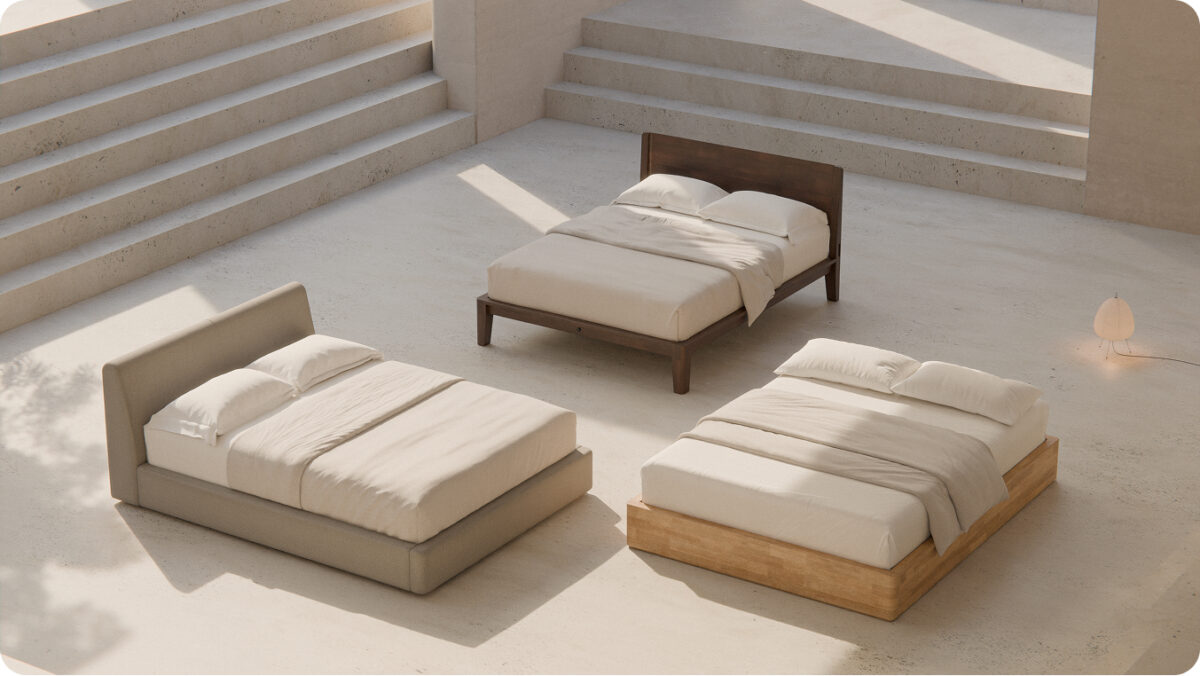
Choosing the right bed frame is about more than just looks. It’s the foundation of your sleep system, providing essential support for your mattress and affecting everything from comfort to the lifespan of your bed. With countless styles, materials, and features available, finding the perfect one can feel overwhelming. This guide breaks down every option, from sleek platform beds to feature-rich adjustable bases, ensuring you have the knowledge to select a frame that fits your mattress, your room, and your sleep style perfectly.
Compare bed-frame options
| Frame | Support & assembly | Storage / footprint | Mattress compatibility |
|---|---|---|---|
 Thuma Classic Bed / original The BedRead review | Wood platform with cushioned slats and Japanese joinery; designed for tool-free assembly. | Open under-bed space. Measure the complete frame and headboard, not just mattress size. | Supports the mattress on slats. Compare the current slat gap and center support with your mattress warranty. |
 Floyd Bed FrameRead review | Modular panel platform; assembly uses the specified hardware and tensioning system. | Panel edges add floor area beyond the mattress. Storage options vary by configuration. | Check the exact panel layout and mattress size. Do not substitute specifications from a different Floyd model. |
 Keeps Bed FrameRead review | Wood platform covered in our original review. | Compare headboard, legs and clearances with the reviewed sample. | Use the article for the original construction; confirm current availability and specifications before buying. |
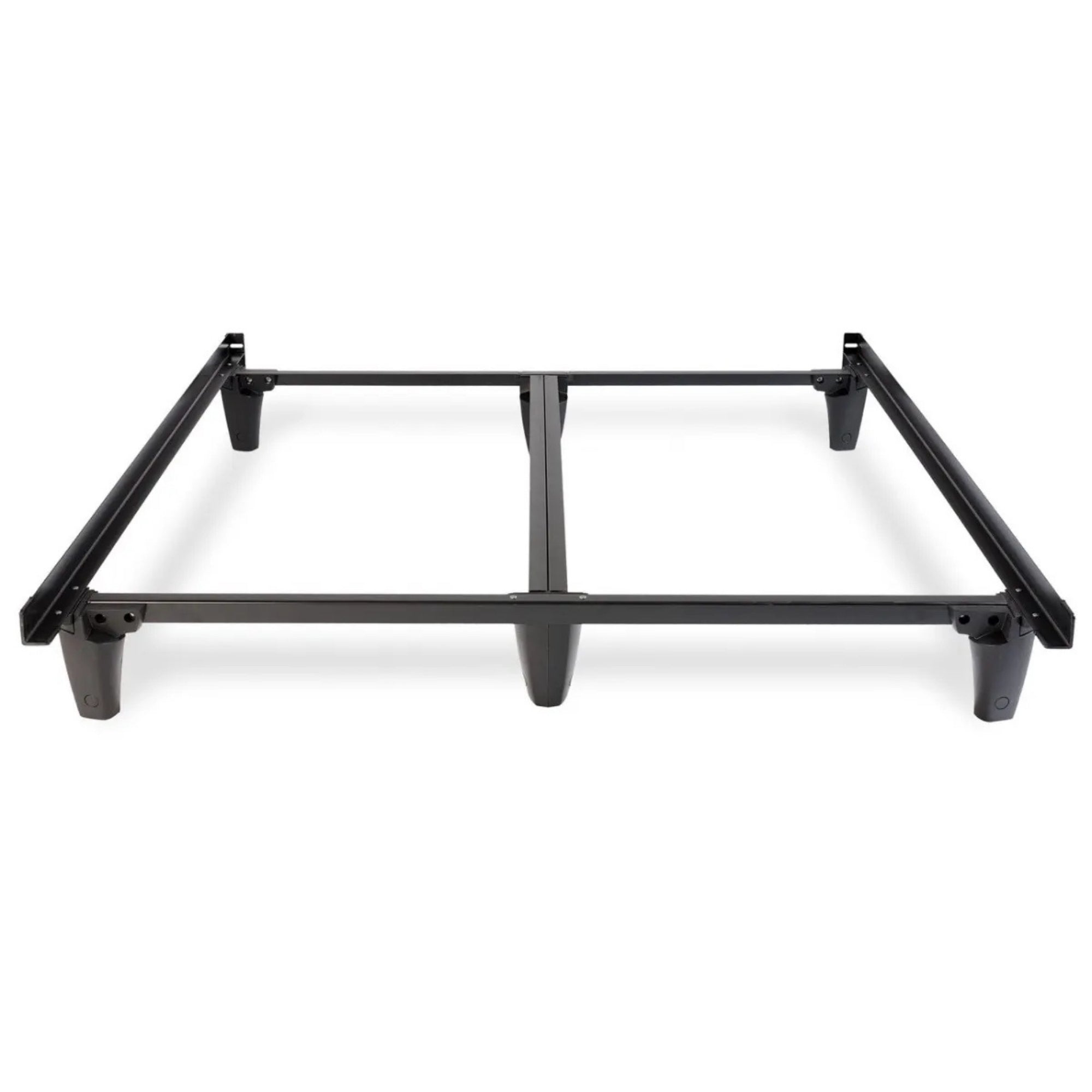 enGauge Bed FrameView sizes & price | Tool-free steel / composite frame; about 8 inches high. | A compact support frame rather than a complete decorative platform. | From $149. Requires a foundation or box spring; do not put a mattress directly on its rails. |
 Modway HorizonRead review | Steel platform design from our original review. | Open lower area can be useful for bins; confirm usable clearance. | Verify the current support grid, center legs and load rating for the selected size. |
Thuma, Floyd, Keeps and Modway photos come from the original Yawnder reviews. The enGauge photo is the current store product image.
Bed frame review directory
Wood and modular platforms
Compare how the support deck, joints and footprint fit your room.
Metal frames and foundations
Separate a mattress-ready platform from rails that require a foundation.
Fit and storage guides
Start with the constraint your room or mattress creates.
Adjustable support
Motorized bases have a separate feature and compatibility decision.
Check these measurements before ordering a frame
- Support surface: determine whether the mattress rests on slats, a panel, a foundation or an adjustable base. enGauge rails need a separate foundation.
- Slat spacing and center support: use your mattress maker’s written requirements. A common gap guideline is not a substitute for that warranty.
- Complete footprint: include headboard thickness, panel overhang and any side ledges. Standard mattress dimensions do not describe the frame’s outside dimensions.
- Storage clearance: measure from floor to the lowest rail or center brace. A drawer or bin needs space to slide out as well as fit underneath.
- Assembly route: check box size, stairs and access to fasteners. Tool-free assembly can still require a second person to move long pieces.
- Rated load: verify the current size and whether the rating includes mattress weight. Do not transfer a rating from an older version or a different frame.
- Adjustable-base fit: confirm inner dimensions, removable support deck, center legs and headboard clearance before combining products.
Current references: Thuma Classic Bed, Floyd Bed Frame, and Knickerbocker enGauge.
Types of Bed Frames
The first step is understanding the major categories. Each design serves a different aesthetic and functional purpose.
Platform Beds
Platform beds are characterized by a solid or slatted surface designed to support a mattress without a box spring. Their low-profile, modern aesthetic is a popular choice for contemporary bedrooms.
- Best for: Memory foam or hybrid mattresses; minimalist decor.
- Pros: No box spring needed, clean look, sturdy support for foam.
- Cons: Can be low to the ground, less airflow with a solid surface.
- Mattress Compatibility: Excellent for most mattresses, provided slats are 3 inches apart or less to prevent foam from sagging.
Panel Beds
A traditional style, the panel bed consists of a headboard and footboard connected by side rails. The rails support a box spring and mattress. The panels of the headboard and footboard are often decorated with molding or upholstery.
- Best for: Traditional bedroom styles; those who prefer a higher bed profile.
- Pros: Classic and stately appearance, very durable construction.
- Cons: Requires a box spring, can look bulky in small rooms.
- Mattress Compatibility: Requires a box spring or bunkie board for support. The mattress rests on the box spring foundation.
Adjustable Bases
An adjustable base is a motorized foundation that can raise the head and foot of the bed to various angles. It replaces a traditional frame or fits inside certain existing frames. They are excellent for pressure relief, reading in bed, or helping to reduce snoring and acid reflux symptoms through elevation.
- Best for: Alleviating snoring or reflux, reading/watching TV, customized comfort.
- Pros: Personalized sleep positions, zero-gravity presets, massage features.
- Cons: Expensive, heavy, requires a compatible mattress (most foam/hybrids work).
- Mattress Compatibility: Works with most memory foam, latex, and hybrid mattresses. Not compatible with traditional innerspring mattresses with rigid border wires.
Upholstered Beds
These frames feature fabric or leather covering the headboard, footboard, and rails. The soft, padded surfaces add a touch of comfort and luxury. They can range from minimalist designs to dramatic, tufted headboards.
- Best for: Adding texture and warmth, readers who like a soft headboard.
- Pros: Comfortable for sitting up, wide variety of colors and fabrics.
- Cons: Fabric can be difficult to clean, may not be ideal for those with allergies.
- Mattress Compatibility: Varies by design. Many are platform-style, while others require a box spring. Check the support structure.
Storage Beds
Perfect for maximizing space, storage beds incorporate drawers into the base or use a hydraulic lift to reveal a large hidden compartment underneath the mattress platform. This is a practical solution for smaller rooms or anyone needing extra organizational space.
- Best for: Small apartments, condos, or anyone needing to de-clutter.
- Pros: Excellent space-saving, keeps items dust-free and out of sight.
- Cons: Can be heavy and difficult to move, may be more expensive.
- Mattress Compatibility: Most are platform beds that do not require a box spring. Ensure the slat system is robust.
Metal Bed Frames
The most basic option is a simple, adjustable metal frame that holds a box spring and mattress. However, the category also includes stylish wrought iron, steel, or brass designs that create a vintage or industrial look.
- Best for: Budget-conscious shoppers, those needing a simple box spring foundation.
- Pros: Inexpensive, lightweight, often adjustable for different sizes.
- Cons: Basic models offer no aesthetic appeal, can be prone to squeaking over time.
- Mattress Compatibility: Simple rail-style frames require a box spring. More decorative metal beds may have a built-in slatted platform.
Wood Bed Frames
From rustic pine to modern oak, wood frames offer natural beauty and timeless appeal. They are available in every style imaginable, including platform, panel, and four-poster designs. Solid wood is durable and long-lasting, while engineered wood provides a more affordable alternative.
- Best for: A natural or traditional aesthetic, long-term durability.
- Pros: Sturdy and reliable, wide range of styles and finishes.
- Cons: Solid wood can be expensive and heavy.
- Mattress Compatibility: Varies greatly by design. Always check if it is a platform style or requires a box spring.
Four-Poster & Canopy Beds
These frames make a dramatic statement with four vertical columns, one at each corner. Four-poster beds have posts that extend upwards, while canopy beds connect these posts at the top to drape fabric. They create a grand, room-within-a-room feeling.
- Best for: Large bedrooms with high ceilings, creating a focal point.
- Pros: Elegant and dramatic, defines the sleeping space.
- Cons: Requires a large room, can feel overpowering in small spaces.
- Mattress Compatibility: Most designs require a box spring.
Bed Frame Size Guide
Your frame must match your mattress size and fit comfortably in your room. Always leave at least 2-3 feet of clearance on the sides and foot of the bed for easy movement.
| Size | Mattress Dim. (in) | Typical Frame Dim. (in) |
|---|---|---|
| Twin | 38″ x 75″ | 40″-43″ x 78″-80″ |
| Twin XL | 38″ x 80″ | 40″-43″ x 83″-85″ |
| Full | 54″ x 75″ | 56″-59″ x 78″-80″ |
| Queen | 60″ x 80″ | 62″-65″ x 83″-85″ |
| King | 76″ x 80″ | 78″-81″ x 83″-85″ |
| California King | 72″ x 84″ | 74″-77″ x 87″-89″ |
Frame Materials and Durability
The material of your frame determines its lifespan, stability, and tendency to make noise.
- Solid Hardwood: Woods like oak, walnut, and maple are the most durable and highest quality. They are heavy, resistant to squeaking, and offer a premium, natural look.
- Engineered Wood (MDF/Particleboard): A budget-friendly option, but less durable than solid wood. It can be prone to damage from moisture and may not last as long.
- Steel: Strong, durable, and allows for modern, minimalist designs. High-quality steel frames are very stable, but lower-quality ones can be prone to bending or squeaking over time.
- Upholstery: The underlying frame is typically wood or metal, but the fabric exterior has its own durability concerns. High-performance fabrics will resist stains and pilling better than decorative options like velvet.
Choose the support system before the finish
Use the reviewed frames above to narrow the construction, then choose the headboard, color and storage options that fit your room.
- Direct mattress support: start with a platform such as the reviewed Thuma, Floyd or Modway design, and verify its current support deck against your mattress requirements.
- A separate foundation: a rail frame such as enGauge needs a box spring or suitable foundation above it. Include that cost and height in your plan.
- Extra storage: check the usable clearance beneath the lowest rail or brace, plus the room needed to pull drawers or bins out.
- Head and foot elevation: compare motorized features in our adjustable bed hub, then confirm the base fits inside your chosen decorative frame.
- A longer-term purchase: compare joints, replaceable parts and the current written warranty rather than assuming a brand or material guarantees lifetime durability.
Frequently Asked Questions
Do I need a box spring with my new bed frame?
It depends on the frame. Platform beds have a built-in support surface and do not require a box spring. Traditional panel or metal frames with only side rails require a box spring or other foundation.
What is the best slat spacing for a memory foam mattress?
Check the spacing limit in your mattress maker’s written support requirements. Many foam mattresses call for closely spaced slats, but the allowable gap, slat width and center support vary. Measure the frame rather than assuming every platform meets the warranty.
How much weight can a queen bed frame hold?
Use the current rating for the exact frame and size. Check whether it includes mattress weight, whether a separate foundation has its own rating, and whether center legs must contact the floor. The material name alone does not establish a load limit.
Are adjustable bases worth it?
They are worth comparing if you want head or foot elevation for reading, relaxing or changing position. They add motors, controls and a separate compatibility check. Use our adjustable bed guide to compare those features, and confirm that both your mattress and decorative frame allow the base to move.
Bottom Line
A bed frame is a long-term investment in your sleep quality and bedroom design. Prioritize function first: ensure the frame has the correct support structure, slat spacing, and weight capacity for your specific mattress. Once those boxes are checked, you can focus on the style, material, and features that best suit your space and budget. From a simple platform to a feature-rich adjustable, the right frame provides the perfect foundation for years of great sleep.
Modular platform option: Floyd
Compare Floyd’s current configurations and check the complete frame footprint before buying.
Check Floyd Price →Yawnder Reviews independently selects every product we cover. This article may contain affiliate links — if you buy through them, Yawnder earns a commission at no extra cost to you. Pricing reflects publicly listed MSRP at time of publication and may change.
Bed-frame buying tip
Check mattress dimensions, slat spacing, center support and weight limits before buying a frame. Adjustable-base compatibility also varies by frame design.
Want to compare current availability and pricing on Amazon?
Compare bed frames on AmazonAs an Amazon Associate, Yawnder may earn from qualifying purchases.