Air Purifier vs. Dehumidifier for a Bedroom (2026)
Quick answer: An air purifier filters airborne particles. A dehumidifier removes moisture from the air. If your concern is pollen, dust, smoke or pet-dander particles, choose a purifier. If your bedroom is persistently too humid, choose a dehumidifier or address the moisture source. If you have both excess humidity and airborne-particle concerns, you may need both.
The 30-Second Decision: Which One Do You Need?
- Check bedroom humidity first. Use an inexpensive digital hygrometer. The EPA generally recommends keeping indoor relative humidity around 30% to 50%.
- If humidity is repeatedly above about 50%: investigate the moisture source and consider a dehumidifier. Condensation, damp surfaces and a persistent musty smell are clues that moisture control deserves attention.
- If humidity is normal but the problem is pollen, pet dander, dust or smoke particles: choose an air purifier sized for the room.
- If both are happening: use the two appliances for their separate jobs rather than expecting one to replace the other.
Simple rule: measure moisture; identify the pollutant; then buy the appliance that actually addresses it.
Our Recommended Bedroom Picks
These are two strong starting points depending on the problem you actually have. We chose them because their published specifications line up well with common bedroom use cases—not because one device can replace the other.
Affiliate disclosure: Yawnder may earn a commission if you purchase through links below, at no additional cost to you.
Best premium air purifier for a bedroom
Alen BreatheSmart 45i
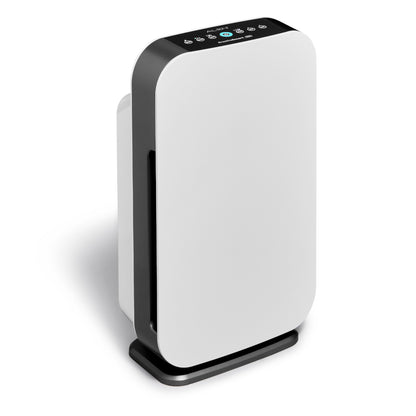
The 45i is a good fit when your priority is airborne pollen, pet dander, dust or smoke particles and you want enough capacity to run it at a quieter speed overnight. Alen lists a CADR of 255, four fan speeds, app control and a published noise range of about 24–50 dB.
- Best for: allergies, pet dander, smoke and general bedroom particle filtration
- Published CADR: 255
- Published coverage: up to 950 sq. ft. every 30 minutes on high
- Nice for sleep: low-speed operation, auto mode and dimmable controls
Best dehumidifier for a damp bedroom
Midea Cube 20-Pint Dehumidifier
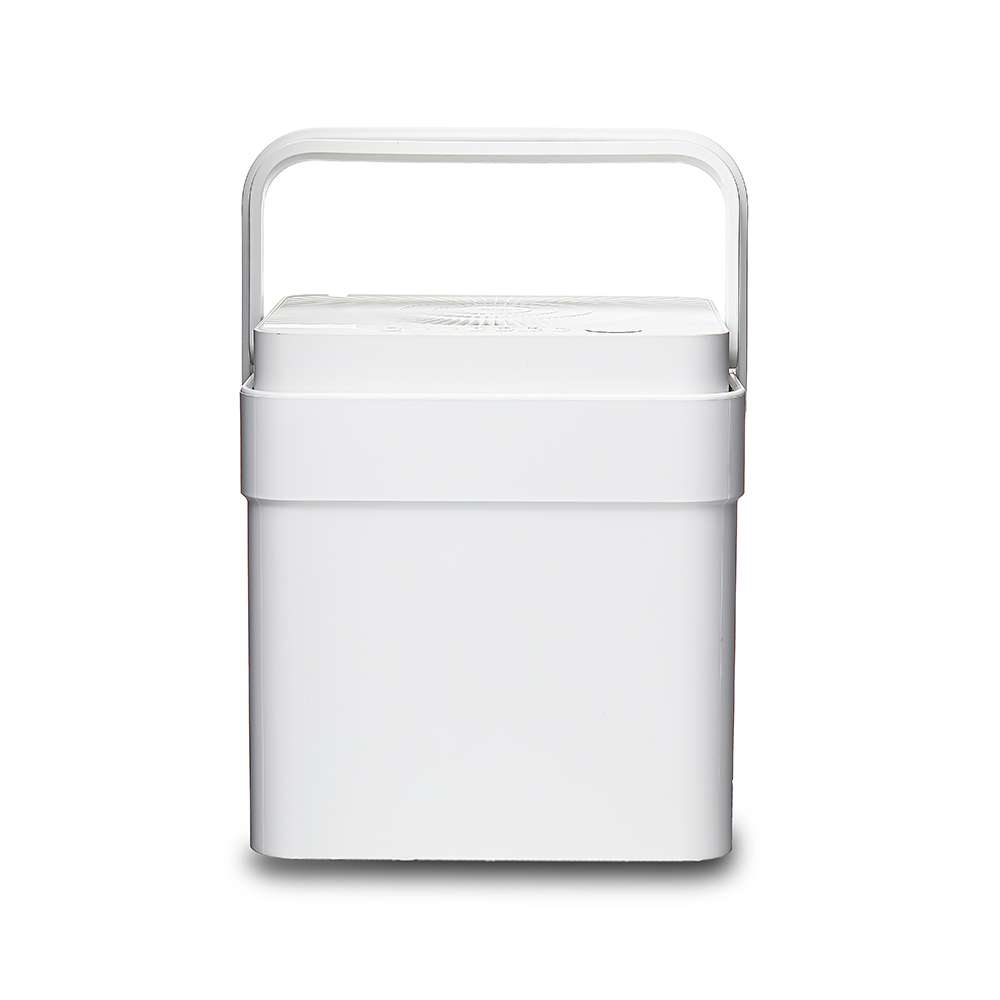
The Midea Cube is the more relevant choice when the problem is measurably high humidity. Midea rates this model at 20 pints per day and up to 1,500 square feet, with smart controls and an included continuous-drain option.
- Best for: persistently humid bedrooms and damp spaces
- Moisture removal: 20 pints/day
- Published coverage: up to 1,500 sq. ft.
- Convenience: smart control and continuous drainage
Check Midea Cube price on Amazon →
As an Amazon Associate, Yawnder earns from qualifying purchases.
Which should you buy? If your humidity is already in a healthy range, buy the purifier. If your room is regularly too humid, buy the dehumidifier. If you have both high humidity and particle pollution, the two devices can complement each other.
Air Purifier vs. Dehumidifier at a Glance
| Question | Air Purifier | Dehumidifier |
|---|---|---|
| Main job | Filter airborne particles | Remove water from indoor air |
| Lowers humidity? | No meaningful amount | Yes |
| Reduces airborne pollen/dander? | Can, with effective particle filtration | Not its primary function |
| Addresses a damp room? | No | Yes, if properly sized and moisture sources are controlled |
| Collects water? | No | Usually tank or drain |
| Requires filters? | Usually | Often has an intake filter, but not for room-air purification |
What an Air Purifier Does
An air purifier circulates room air through filtration. Depending on the filter system, it can reduce airborne particles such as pollen, dust, pet-dander particles and smoke particles.
It does not fix a damp bedroom. If relative humidity is high because of climate, ventilation, leaks or other moisture sources, filtration alone does not remove that water from the air.
See our Best Air Purifiers of 2026 for current purifier recommendations.
What a Dehumidifier Does
A dehumidifier pulls moisture from indoor air and collects or drains the resulting water. Its job is humidity control rather than fine-particle filtration.
A dehumidifier may have a basic washable intake filter to protect the machine, but that should not be confused with a dedicated room air purifier.
What Humidity Should a Bedroom Be?
For most homes, a useful target is roughly 30% to 50% relative humidity. The EPA recommends that range for indoor air, while the CDC advises keeping household humidity no higher than 50% when possible to help discourage mold growth. Humidity can vary by season, climate, HVAC use and room location, so a hygrometer is more useful than guessing by feel.
If your bedroom repeatedly climbs above 50% to 60%, look for the reason before treating the symptom. Common causes include a nearby shower, poor bathroom exhaust, closed-up rooms, drying laundry indoors, an oversized or poorly dehumidifying air conditioner, exterior moisture intrusion, plumbing leaks or a damp basement/crawlspace.
For mold prevention, the moisture source matters more than the appliance. The EPA’s guidance is straightforward: control moisture, fix leaks and dry wet materials promptly.
Which Is Better for a Bedroom?
Choose based on the measurable problem:
- High relative humidity: dehumidifier.
- Airborne dust, pollen, pet dander or smoke: air purifier.
- Both: potentially both devices.
- Low humidity: a dehumidifier is the wrong tool.
Can an Air Purifier Reduce Humidity?
No, not in the way a dehumidifier does. A purifier’s fan may make air movement more noticeable, but standard portable filtration does not remove meaningful quantities of water vapor from the room.
Can a Dehumidifier Clean the Air?
It can indirectly change conditions associated with excess moisture, but it is not a substitute for a dedicated particle purifier. If your goal is removing airborne smoke or pollen particles, evaluate a purifier by its filtration and clean-air delivery.
Can You Run an Air Purifier and Dehumidifier Together?
Yes. They perform different jobs and can operate in the same bedroom. Keep each device’s intake and exhaust unobstructed and follow manufacturer clearance requirements.
A dehumidifier can generate heat while operating, so placement and room temperature may affect overnight comfort.
Which Is Better for Mold?
This is where the distinction matters most. A purifier may capture some airborne particles or spores that reach its filter, but it does not solve an active moisture source or remove mold growing on building materials.
If excess moisture is contributing to damp conditions, humidity control and fixing the moisture source are fundamental. Visible or extensive mold problems may require professional assessment/remediation rather than relying on either appliance alone.
Which Is Better for Dust Mites?
Dust-mite management is not simply an air-filtration problem. Humidity conditions and bedding management matter because mites live primarily in fabrics and settled environments rather than floating continuously in room air.
Yawnder also has a Dust-Mite-Proof Bedding guide covering encasements and bedding strategies.
Which Is Better for Pet Dander?
For airborne pet-dander particles, the air purifier is the relevant appliance. A dehumidifier does not filter those particles from the room.
See Best Air Purifiers for Pet Dander in Bedrooms.
Which Is Better for Wildfire Smoke?
Use particle filtration for smoke particles. A dehumidifier does not remove smoke simply by lowering humidity.
Our Wildfire Smoke and Sleep guide covers reducing exposure in the bedroom.
How Do You Know if You Need a Dehumidifier?
Measure relative humidity with a hygrometer rather than guessing from how the room feels. Persistent condensation, dampness or musty conditions also warrant investigating where moisture is coming from.
A dehumidifier can manage moisture in the air, but it should not be used to hide a plumbing leak, roof leak or other building problem.
Air Purifier vs. Dehumidifier vs. Humidifier
| Device | Primary job |
|---|---|
| Air purifier | Reduce airborne particles through filtration |
| Dehumidifier | Remove moisture from air |
| Humidifier | Add moisture to air |
If your issue is dry rather than damp air, read Air Purifier vs. Humidifier.
Noise and Sleep
Both appliances use fans, and compressor-style dehumidifiers can add additional mechanical noise. If the machine will run overnight, compare noise at the setting you actually expect to use rather than only the quietest advertised mode.
For purifiers, buying enough airflow capacity can let you run a lower fan speed overnight.
Placement
Keep both appliances away from obstructions and follow their individual clearance instructions. A dehumidifier also needs convenient tank access or drainage if you plan continuous operation.
For purifier-specific positioning, see Where to Put an Air Purifier in a Bedroom.
How to Size an Air Purifier for a Bedroom
For particle removal, do not shop by marketing terms such as “large room” alone. Look for a Clean Air Delivery Rate (CADR) that matches the bedroom size. The EPA notes that higher CADR means the purifier can clean more air and serve a larger space.
| Bedroom floor area | EPA minimum CADR estimate* |
|---|---|
| 100 sq. ft. | 65 cfm |
| 200 sq. ft. | 130 cfm |
| 300 sq. ft. | 195 cfm |
| 400 sq. ft. | 260 cfm |
| 500 sq. ft. | 325 cfm |
*EPA sizing estimates assume an 8-foot ceiling. Higher ceilings can justify moving up in CADR. See the EPA’s Guide to Air Cleaners in the Home.
For smoke and fine-particle concerns, the EPA specifically suggests looking at the purifier’s smoke CADR. For gases and odors, particle filtration alone is not enough; activated carbon or another gas-removal medium may be relevant, and performance is harder to compare because CADR ratings apply to particles.
Need product picks? Start with our Best Air Purifiers of 2026. Once you choose one, placement matters too: see Where to Put an Air Purifier in a Bedroom.
How to Size a Dehumidifier
Dehumidifiers are rated by how many pints of water they can remove in 24 hours under standardized test conditions. Capacity depends on both the size of the space and how damp it is. ENERGY STAR recommends considering room area together with the severity of the moisture problem, and notes that it is generally better to oversize than undersize.
For a normal bedroom, start with the measured humidity level and the actual moisture load rather than buying the biggest machine available. A very damp basement bedroom, coastal room with persistent moisture, or room affected by an adjoining bathroom may need more capacity than a similarly sized upstairs bedroom.
When comparing models, check the ENERGY STAR dehumidifier guidance, tank size, continuous-drain option, auto-humidistat, operating temperature range and energy efficiency.
Air Purifier vs. Dehumidifier by Bedroom Problem
| Bedroom problem | Usually the better first tool | Why |
|---|---|---|
| Pollen entering from outside | Air purifier | Targets airborne particles |
| Pet dander | Air purifier | Filters airborne pet-related particles |
| Wildfire smoke / PM2.5 | Air purifier | Particle filtration is the relevant mechanism |
| Humidity consistently above 50% | Dehumidifier | Removes water vapor from room air |
| Condensation on windows | Dehumidifier + source investigation | Condensation often points to a moisture or surface-temperature problem |
| Musty smell in a damp room | Dehumidifier + inspect for moisture/mold | Do not mask a moisture problem with filtration alone |
| Visible mold | Fix moisture source / remediate | Neither appliance removes established mold from building materials |
| Dust mites | Humidity control + bedding strategy | Mites are largely a fabric/settled-environment problem |
| Normal humidity + general dust | Air purifier + cleaning | Filtration can reduce suspended particles; cleaning removes settled dust |
| High humidity + allergies | Potentially both | They solve different parts of the problem |
Which One Is Better for Allergies?
If the trigger is airborne pollen or pet-related particles, an appropriately sized purifier is the more direct appliance. But an air purifier is only one part of bedroom allergen control because many allergens settle into bedding, carpet and upholstery. Regular cleaning and bedding choices still matter.
If your bedroom is also humid, humidity control can be important because damp conditions can support mold and dust-mite populations. For a broader sleep setup, see our Best Mattress for Allergies and Dust-Mite-Proof Bedding guides.
Which One Is Better for a Musty Smell?
A musty smell is a reason to look for moisture, not simply add fragrance or rely on a purifier. Check humidity, inspect around windows, exterior walls, closets, plumbing, HVAC registers and the area behind furniture. If the room is damp, a dehumidifier may help control ambient moisture, but leaks or water intrusion need to be fixed directly.
An air purifier with activated carbon may reduce some odors, but it should not be used to conceal a persistent damp or mold problem.
Can an Air Conditioner Replace a Dehumidifier?
Air conditioners remove some moisture while cooling, but their primary job is temperature control. In some homes the AC may keep humidity in range; in others—especially during mild, humid weather or in problem rooms—humidity can remain high even when the room feels cool. A hygrometer tells you whether you actually have a moisture problem.
Can a Dehumidifier Replace an Air Purifier?
No. Even if a dehumidifier has a washable intake filter, that filter is mainly there to protect the appliance. It is not equivalent to a purifier designed and rated for particle removal.
Running Both at Night: Practical Setup
- Do not crowd the machines together. Give each device the clearance specified by its manufacturer.
- Do not point exhaust directly into the other’s intake. You want room circulation, not a short loop between appliances.
- Place the purifier where airflow is unobstructed. Our bedroom purifier placement guide covers this in detail.
- Plan drainage for the dehumidifier. Continuous drainage can be more convenient than emptying a bucket, but only when the setup is safe and manufacturer-approved.
- Watch room temperature. Compressor dehumidifiers can add noticeable heat to a small bedroom.
- Use automatic controls where possible. A humidistat can prevent unnecessary dehumidifier runtime once the target humidity is reached.
Noise, Heat and Operating Cost
For sleep, the “best” appliance is one you can actually tolerate overnight. Purifiers generally get louder as fan speed rises; dehumidifiers add fan noise plus compressor cycling. If you are noise-sensitive, compare published decibel measurements at the speed or setting you expect to use—not just the quietest sleep mode.
Energy use also works differently. A purifier is essentially running a fan through filters, while a compressor dehumidifier is actively condensing moisture and may draw substantially more power. Actual cost depends on wattage, runtime and local electric rates. For dehumidifiers, ENERGY STAR certification can help identify more efficient models.
Maintenance: What Each Device Needs
| Task | Air Purifier | Dehumidifier |
|---|---|---|
| Primary recurring task | Replace/clean filters as specified | Empty tank or maintain drain; clean intake filter |
| Monitor | Filter life and airflow | Humidity reading and water collection |
| Keep clear | Air intake and outlet | Air intake, exhaust and drain path |
| Common neglect problem | Loaded filter reduces performance | Dirty filter/tank or blocked drain |
The EPA notes that overloaded air-cleaner filters do not work well, so replacement schedules matter. Dehumidifier tanks and drainage components also need routine cleaning according to the owner’s manual.
Common Buying Mistakes
- Buying a purifier for a humidity problem. It will not remove meaningful water vapor.
- Buying a dehumidifier for smoke or pollen. Lower humidity is not particle filtration.
- Ignoring the moisture source. A dehumidifier cannot repair a leak or water intrusion.
- Choosing a purifier only by room-size marketing. CADR gives you a more useful particle-filtration benchmark.
- Using “HEPA” as the only shopping criterion. Filter type matters, but so do airflow, CADR, noise and replacement-filter cost.
- Assuming one overnight run permanently fixes the room. Both appliances work while conditions and runtime allow; the underlying source still matters.
Frequently Asked Questions
Is an air purifier or dehumidifier better for allergies?
For airborne pollen and pet-related particles, filtration is the direct tool. Humidity management is a separate environmental factor and may matter in damp conditions.
Will an air purifier stop mold?
No. It does not fix the moisture conditions that allow mold growth or remove established growth from building materials.
Can I use a purifier and dehumidifier at the same time?
Yes. One handles particles and the other moisture.
Does a dehumidifier remove dust?
Dust removal is not its primary function. Use cleaning and appropriate particle filtration for dust.
Which one should I buy first?
Measure humidity and identify the problem. Excess moisture points toward dehumidification; airborne particle concerns point toward filtration.
Should I run a dehumidifier all night?
It can be appropriate if the model is designed for unattended operation and you follow its manual, but an automatic humidistat is preferable to running continuously without a target. Once humidity reaches the desired range, extra dehumidification may be unnecessary.
Should I run an air purifier all night?
Continuous or long-duration operation generally filters more air than short bursts. The EPA notes that higher fan speeds and longer run times increase filtration. For sleep, choose the highest setting you can comfortably tolerate.
Will a dehumidifier help with a musty bedroom?
It may help if excess humidity is contributing to the mustiness, but you should still inspect for leaks, damp materials or mold. Treat the cause rather than relying on the machine to hide it.
Is 60% humidity too high for a bedroom?
It is above the EPA’s ideal 30% to 50% range, and the EPA recommends keeping indoor humidity below 60%. If your bedroom sits near or above 60% for long periods, investigate why.
Do I need both an air purifier and a dehumidifier for mold?
Neither appliance substitutes for fixing moisture problems and cleaning or remediating established mold. A dehumidifier may help control excess humidity; a purifier may capture some airborne particles. The source of moisture remains the priority.
Can I put both devices next to my bed?
You can use both in a bedroom, but do not block their airflow or ignore manufacturer clearance requirements. In a small room, spreading them apart usually avoids one appliance immediately recirculating the other’s exhaust.
Bottom Line
Air purifier = particles. Dehumidifier = excess moisture. Don’t buy one expecting it to perform the other’s job. Measure bedroom humidity, investigate persistent moisture sources, and size an air purifier by actual airflow/filtration needs.
For most bedrooms, the smartest sequence is: 1) measure humidity, 2) identify the pollutant or moisture source, 3) choose the correct appliance, and 4) size it for the actual room. If humidity is in a healthy range but you want less airborne pollen, smoke or pet dander, focus on filtration. If the room is damp, address moisture first. If you have both problems, using both devices is reasonable because they are doing two different jobs.
Sources: U.S. Environmental Protection Agency guidance on air cleaners and indoor humidity; CDC mold-prevention guidance; and ENERGY STAR dehumidifier guidance.
Continue exploring the Yawnder Air Purifiers & Bedroom Air Quality hub.