Quick answer: Put the air purifier where its intake and exhaust have room to move air freely—not hidden behind a nightstand, curtain or bed. It does not need to sit directly beside your head. In most bedrooms, an open spot several feet from major obstructions is more useful than obsessing over an exact distance from the bed.
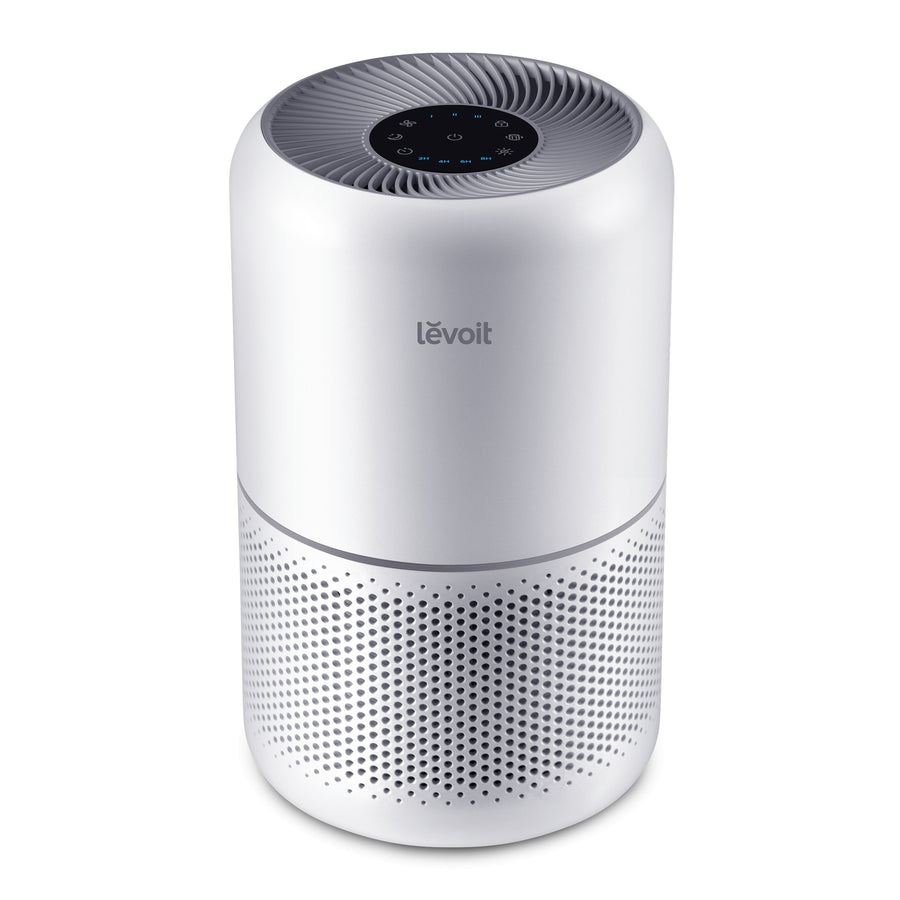
Best Bedroom Air Purifier Placement at a Glance
| Location | Verdict | Why |
|---|---|---|
| Open area near bed | Good | Convenient if intake/exhaust remain unobstructed |
| Against a wall | Depends | Fine only if the manufacturer’s intake/exhaust design allows it |
| Behind curtains | Avoid | Fabric can obstruct airflow |
| Under a desk | Usually avoid | Furniture can restrict circulation |
| Inside a closet | Avoid | It mainly cleans closet air |
| Near a doorway | Can work | Useful if airflow remains open; may mix adjoining-room air |
Does an Air Purifier Need to Be Next to the Bed?
No. The purifier’s job is to circulate room air through its filters. A properly sized unit can clean bedroom air without sitting inches from your pillow.
Placing it very close to the bed may actually be less comfortable if fan noise or a stream of air bothers you. Move it farther away and use enough purifier capacity that you can still get useful airflow at a tolerable fan speed.
Give the Intake Room to Breathe
First identify where your purifier pulls air in. Some models use a large front or rear intake; others draw air from 360 degrees around the body. Blocking that intake can reduce effective airflow.
Follow the manufacturer’s clearance instructions rather than applying one universal “six inches from the wall” rule to every purifier design.
Don’t Block the Clean-Air Outlet
Many tower purifiers exhaust filtered air upward. Others blow forward or at an angle. Avoid placing shelves, curtains or furniture directly over or in front of the outlet.
The cleaner air still has to mix with the rest of the bedroom. An open path helps that happen.
Floor or Table?
Use the purifier in the orientation and location its manufacturer allows. Large floor units belong on stable flooring. Compact purifiers may be designed for a table or dresser, but make sure the surface is stable and does not block an intake underneath the unit.
There is no general need to elevate a large floor purifier just to get it “closer to breathing height.” Air in the room is continually mixing.
Should the Purifier Face the Bed?
Not necessarily. Directing airflow at the bed can create an unwanted draft. The priority is unobstructed circulation through the purifier and around the room.
If you like moving air while sleeping, placement can serve both purposes. If you dislike drafts, angle or move the unit so the exhaust does not blow directly toward you.
What About Windows?
Opening a window exchanges indoor and outdoor air, which can be useful when outdoor conditions are good. But during wildfire smoke, high pollen or other poor outdoor-air conditions, an open window can continually introduce the particles you are trying to remove.
Particle filtration does not bring fresh outdoor air into a bedroom or remove carbon dioxide. When outside air is clean, ventilation can help dilute indoor CO₂; during smoke events, balance ventilation against outdoor smoke and heat. The right strategy depends on the conditions and pollutant.
Should the Bedroom Door Be Open or Closed?
A closed door gives the purifier a more defined volume of air to clean. An open door connects the bedroom to a larger volume, so the same purifier may effectively be working on part of the hallway or adjoining room too.
You don’t have to sleep with the door closed solely for the purifier. Just understand that open-plan airflow affects sizing.
Placement for Pet Dander
If a pet sleeps in the bedroom, don’t put the purifier directly beside the pet simply because that seems like the “source.” Choose an open location where room air can circulate through the machine.
Our Best Air Purifiers for Pet Dander guide covers prefilters, pet hair, cleaning and bedroom sizing in more detail.
Placement During Wildfire Smoke
During smoke events, the goal is to reduce infiltration and continuously filter indoor particles while maintaining a safe indoor temperature. Keep the purifier in the room where you spend the most time, ensure airflow isn’t blocked, and avoid opening windows when outdoor smoke levels are high.
See our existing Wildfire Smoke and Sleep guide for the broader bedroom strategy.
One Purifier or Two?
One correctly sized purifier is usually simpler for a normal bedroom. Very large, unusually shaped or divided spaces may benefit from multiple units because walls and furniture affect circulation.
Don’t assume two tiny purifiers automatically outperform one larger unit. Compare their actual clean-air delivery and where they can be placed.
Placement in a Large Primary Bedroom
Large bedrooms may include a sitting area, hallway, bathroom opening or high ceilings. Those features increase the effective air volume. A purifier tucked into one distant corner may not mix air as effectively as a more central open location.
When noise matters, a larger purifier placed farther from the bed and run at a moderate speed can be more comfortable than a small unit running loudly on a nightstand.
Size the purifier for the room before choosing its spot
Measure the bedroom’s length and width and multiply them to find floor area. For example, a 12-by-15-foot room is 180 square feet. For wildfire smoke, the EPA recommends a smoke clean air delivery rate (CADR) of at least two-thirds of the room’s area: approximately 120 cubic feet per minute for that room. Higher ceilings and connected spaces may require more capacity.
Check which fan speed produces the advertised CADR. If the highest setting is too noisy to use overnight, a larger unit that can deliver useful airflow at a quieter setting may be a better fit. A purifier’s room-size claim should be read alongside its CADR and the conditions behind that claim.
A practical bedroom setup
- Identify the intake and outlet. Check the manual for the required clearance and orientation. Choose a stable spot where neither path is blocked by bedding, furniture or curtains.
- Test the sound and draft. Run the unit at the setting you expect to use while lying in bed. Move it if the noise or airflow interferes with sleep, while keeping the recommended clearance.
- Run it for the conditions you are addressing. Longer operation generally filters more room air. During smoke events, keep it running as appropriate and reduce outdoor smoke entry when conditions permit.
- Maintain the filter. Follow the manufacturer’s replacement and prefilter-cleaning instructions. Check more often during heavy smoke or dusty periods; reduced airflow may indicate a loaded filter.
What placement cannot fix
Particle filters capture airborne particles that pass through them; they do not fix a leak, remove established mold from a wall, or eliminate every pollutant. Odors and gases require an appropriate gas-removal medium such as activated carbon, and performance varies. Avoid ozone-generating air cleaners; the EPA’s air-cleaner guide explains filter types and their limits.
If the bedroom feels damp or musty, check humidity and look for the moisture source. Compare the separate roles of filtration and moisture removal in our air purifier versus dehumidifier guide.
If a room feels stuffy: A particle purifier is not a substitute for outdoor-air ventilation. Check whether the bedroom receives fresh air and whether an open door or a ventilation system improves circulation with the rest of the home. Outdoor air quality and heat affect whether opening a window is appropriate. See the EPA air-cleaner guide.
Common Placement Mistakes
- Hiding the purifier behind furniture
- Putting curtains against the intake
- Blocking an upward exhaust with a shelf
- Choosing placement solely by proximity to the bed
- Ignoring manufacturer clearance instructions
- Buying too small a purifier and trying to compensate by putting it inches from your face
- Leaving filters or prefilters clogged and blaming placement for poor airflow
How to Tell if the Location Works
Check that the purifier has unobstructed intake and exhaust paths, is stable, doesn’t create an annoying draft, and can run at a useful fan speed without disrupting sleep. If the unit has a particle sensor, remember that the sensor measures air near the purifier—not every corner of the bedroom.
Frequently Asked Questions
How far should an air purifier be from the bed?
There is no universal ideal distance. Put it far enough away that noise and drafts don’t disturb you while keeping its airflow unobstructed.
Can I put an air purifier on my nightstand?
If the model is designed for tabletop use, the surface is stable, and none of its intakes or outlets are blocked. A large floor purifier should remain on an appropriate floor surface.
Can an air purifier go in a corner?
It can if the design still has the manufacturer’s recommended clearance and unobstructed airflow. A tight corner is a poor choice for models that draw air through surfaces facing the walls.
Should I put an air purifier near a window?
Proximity to a window is less important than airflow and whether the window is open. During poor outdoor-air conditions, an open window can continuously introduce new particles.
Should I run my bedroom air purifier all night?
Continuous operation provides more consistent particle removal. Use a quieter speed overnight if necessary.
Bottom Line
The best place for a bedroom air purifier is usually the most practical open location with unobstructed intake and exhaust airflow. Don’t wedge it behind furniture, don’t assume it must sit beside your pillow, and don’t use placement to compensate for an undersized machine.
For model recommendations and sizing, see Best Air Purifiers of 2026, or browse the full Air Purifiers & Bedroom Air Quality hub.