
Best Mattress for Allergies in 2026
Four beds chosen for dust mite resistance, low chemical emissions, and washable covers.
The bottom line
The best mattress for allergy sufferers is naturally resistant to dust mites and mold, low in chemical emissions, and easy to keep clean. Our top pick is the Saatva Zenhaven — natural Talalay latex is inherently antimicrobial, dust-mite resistant, and wrapped in organic wool with no chemical flame retardants. Pair with a zippered allergen-blocking encasement and weekly hot-water sheet washes for the cleanest sleep environment possible.
Our picks
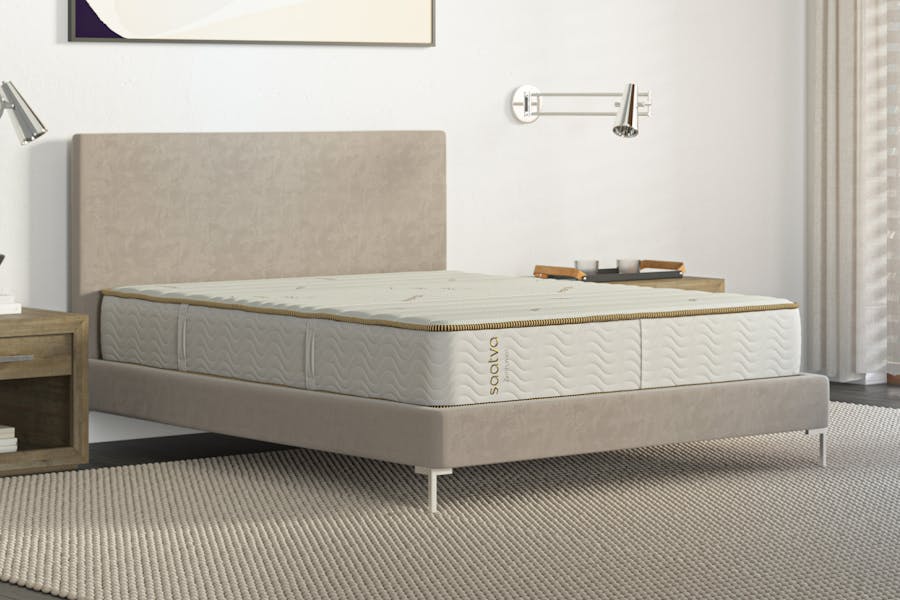
Saatva Zenhaven
Natural Talalay latex is inherently antimicrobial, dust-mite resistant, and mold resistant. Organic cotton + wool cover, no chemical flame retardants. The cleanest sleep surface in our lineup.
Queen from $2,995. See today’s price →
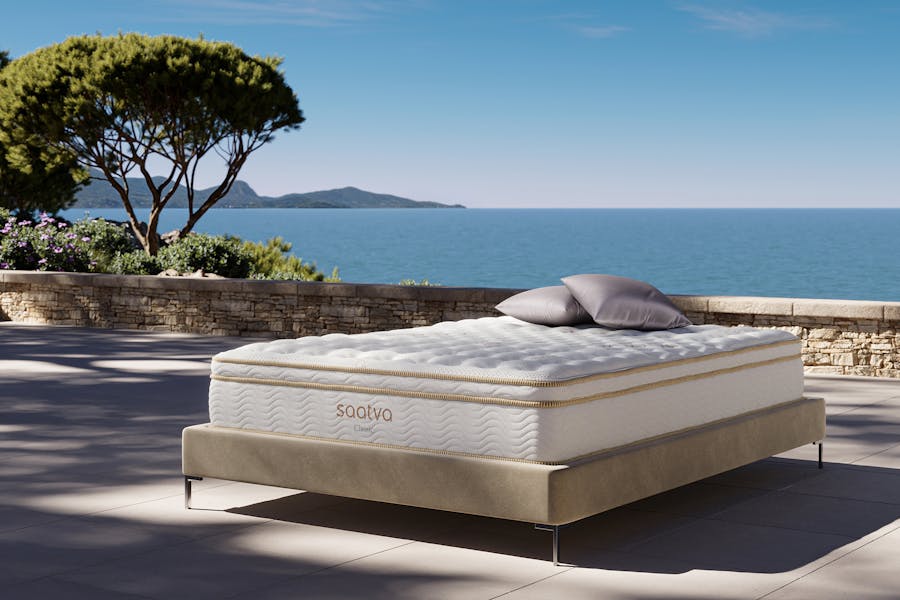
Saatva Classic
Organic cotton cover (not synthetic), CertiPUR-US certified foams (no formaldehyde, no heavy metals). Coil construction breathes — dust mites need humidity to thrive.
Queen from $1,995. See today’s price →
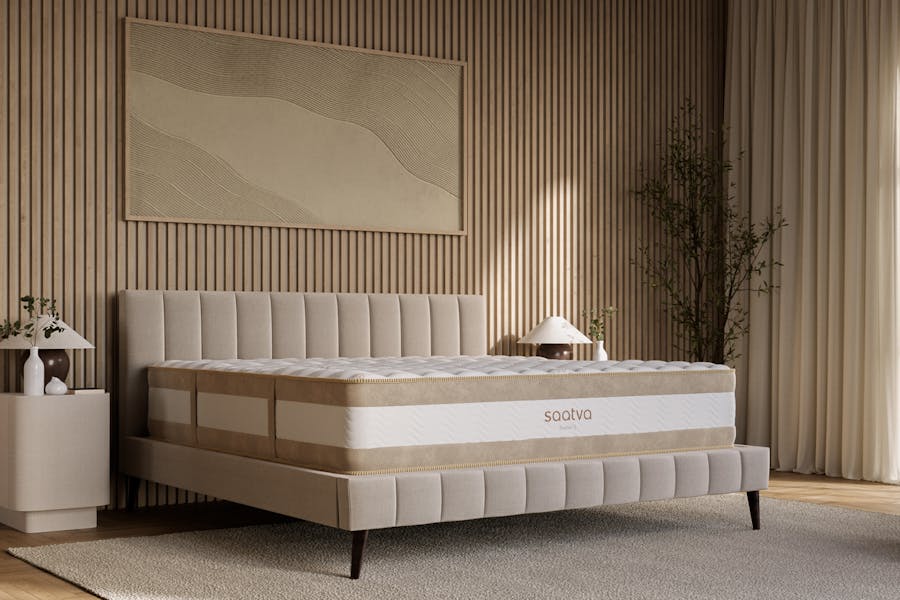
Saatva Rx
Same clean material standards as the Classic plus orthopedic-grade lumbar support. Greenguard Gold certified for low chemical emissions — matters for chemical-sensitive sleepers.
Queen from $3,295. See today’s price →
Helix Midnight Luxe
GREENGUARD Gold certified, CertiPUR-US foams, and a removable/washable cover. The washable cover is the key feature for dust mite control — wash hot every 6–8 weeks.
Queen from $2,373. See today’s price →
What allergy sufferers actually need
Three things drive bedtime allergy symptoms: (1) dust mites in the mattress core, (2) mold spores from trapped humidity, and (3) off-gassing from chemical flame retardants and adhesives. The fix is a breathable, naturally resistant material (latex), an organic-fiber cover that can be cleaned, and certifications that prove the foams are low-emission.
Certifications worth caring about
- CertiPUR-US — foams are made without formaldehyde, heavy metals, or ozone depleters.
- GREENGUARD Gold — the mattress passes strict chemical emission limits for sensitive individuals (kids, elderly, allergy sufferers).
- GOTS / GOLS — organic certifications for cotton, wool, and latex inputs.
- OEKO-TEX Standard 100 — the cover and fabric layers test free of harmful substances.
Mattress protector is non-negotiable
Even the cleanest mattress fills with allergens over time. A zippered allergen-blocking encasement traps dust mites inside and keeps new ones out. Wash sheets weekly in hot water (130°F+), and wash any removable mattress cover every 6–8 weeks.
Save up to $600 on a Yawnder-rated mattress
Stack Yawnder’s editorial discount with brand promos. Use code at checkout:
Try them before you buy
If you’re in Southern California, swing by the Yawnder San Diego showroom at 1441 Encinitas Blvd, Encinitas, CA 92024. Our premium pillowtop and hybrid lineup covers most of the firmness range we recommend in this guide.
Frequently asked questions
Why dust mites and humidity go together
Dust mites are the allergen most people are reacting to in bed, and they need two things: skin cells to eat and moisture in the air around them. That is why humidity control does as much work as the mattress itself. Mites struggle below roughly 50% relative humidity, so a dehumidifier or an air-conditioned bedroom in a damp coastal climate is a cheap, practical step alongside whatever bed you buy. Trapped moisture is also what leads to mildew smells inside a mattress, so a construction that lets air move — coils, latex with pinholes, a breathable cotton or wool cover — is easier to keep dry than a dense slab of foam sitting on a solid platform. None of this makes a bedroom allergen-free; it reduces the places allergens accumulate and makes the bed easier to keep clean.
Latex, memory foam or a hybrid?
Natural latex
Latex is dense and non-fibrous with no open cavities for debris to settle into, and it holds less moisture than memory foam, so it is generally less hospitable to dust mites and mildew. It is also the lowest-odour category we test, which matters if smells set you off. What it is not is a medical guarantee: if you have a known latex sensitivity or allergy, weigh that with your doctor before choosing a latex bed, and note that most latex beds are wrapped in cotton and wool so your skin never touches the latex directly. Canonical picks in this category: the Avocado Mattress (9.0 overall, 6.0/10 firmness, 9.3 cooling, 8.8 off-gassing, $1,956 queen, 365-night trial, 25-year warranty), the Birch Mattress (9.0 overall, 6.0/10, 9.0 cooling, 9.0 off-gassing, $1,956 queen, 365 nights, 25 years) and the Zenhaven (8.7 overall, 4.5/10, 8.8 cooling, 9.2 off-gassing, $3,549 queen, 365 nights, 20 years), which is flippable soft/firm.
Memory foam
Foam has no fibres for dust to cling to either, and a certified foam is a reasonable choice — but foam holds body heat and moisture, and that combination is the one dust mites like. If you want foam, look for a removable, machine-washable cover and a low-emission certification, and give it several days of airing before you sleep on it. The Nolah Mattress is our best-scoring all-foam option for this use case (8.4 overall, 6.0/10 firmness, 8.5 cooling, 8.3 off-gassing, $1,099 queen, 120-night trial, 15-year warranty).
Latex hybrid
Coils plus a natural comfort layer is the easiest combination to keep dry, because the coil unit moves air through the middle of the bed. The Awara Premier Natural Hybrid is the value pick here: 8.4 overall, 6.5/10 firmness, 8.7 cooling, 8.8 off-gassing, $1,699 queen, 365-night trial.
| Mattress | Type | Score | Firmness | Cooling | Off-gassing | Queen | Trial |
|---|---|---|---|---|---|---|---|
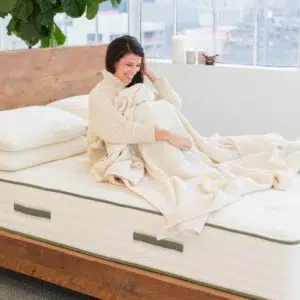 Avocado Mattress Avocado Mattress |
Latex hybrid | 9.0 | 6.0/10 | 9.3 | 8.8 | $1,956 | 365 nights |
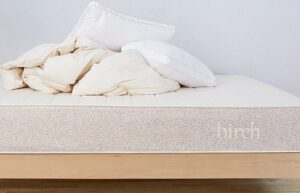 Birch Mattress Birch Mattress |
Latex hybrid | 9.0 | 6.0/10 | 9.0 | 9.0 | $1,956 | 365 nights |
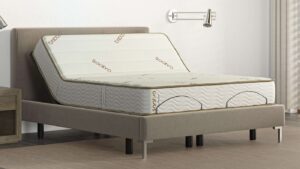 Zenhaven Zenhaven |
Latex, flippable | 8.7 | 4.5/10 | 8.8 | 9.2 | $3,549 | 365 nights |
| Awara Premier Natural Hybrid | Latex hybrid | 8.4 | 6.5/10 | 8.7 | 8.8 | $1,699 | 365 nights |
| Nolah Mattress | All foam | 8.4 | 6.0/10 | 8.5 | 8.3 | $1,099 | 120 nights |
Keeping the bed clean: a routine that actually holds up
- Zippered encasement, not a fitted protector. A six-sided encasement with a tight-woven fabric and a zip closure is the only cover style that fully encloses the mattress. A fitted protector covers the top and sides only, so it does less to shut allergens in or out. Our mattress protector guide covers the specific models.
- Wash bedding weekly and hot. Sheets and pillowcases at 130°F or above; the temperature is what matters, not the detergent.
- Wash removable mattress covers every 6–8 weeks. Check the care tag first — some covers are machine-washable cold only, and a hot wash will shrink them onto the mattress.
- Vacuum the surface monthly with an upholstery tool before you put a freshly washed encasement back on.
- Keep bedroom humidity near 40–50%. A cheap hygrometer tells you where you stand.
- Don’t forget pillows. They sit against your face all night and collect far more skin and moisture per cubic inch than the mattress does. Choose ones you can wash, or encase them too.
What certifications tell you — and what they don’t
Low-emission certifications such as GREENGUARD Gold, CertiPUR-US and OEKO-TEX are useful if you are sensitive to odours and VOCs: they set limits on what the foams and fabrics can emit. They say nothing about dust mites, pollen or pet dander, which are the allergens most people in this category are reacting to. Similarly, GOTS and GOLS certify the origin of the cotton, wool and latex, not an allergy outcome. Treat certifications as evidence about chemistry and sourcing, and treat the cover, the encasement and your cleaning routine as the part that affects allergen exposure.
A note on what a mattress can do
A mattress is not a treatment. No bed prevents allergies, eliminates symptoms or guarantees you won’t react. The realistic goal is a surface with fewer places for allergens to accumulate, a cover you can actually wash, a construction that stays dry, and low emissions if smells bother you. Symptoms that persist or worsen belong with an allergist, who can test what you are actually reacting to — it is often the pillow, the carpet or a pet rather than the mattress.
A few more questions
Is an air mattress a good long-term option for allergy sufferers?
No. It has no fibrous surfaces, which is the argument people make for it, but a PVC bladder sleeps hot and damp, offers poor support, and typically fails within a couple of years. A latex or latex-hybrid bed with a washable cover gives you the same easy-to-wipe surface without the trade-offs.
Should I choose a mattress topper if I can’t replace the mattress yet?
A washable-cover topper over a zippered encasement is a reasonable stopgap, and it is much cheaper than a new bed. It does not fix a mattress that has sagged or that smells musty from trapped moisture — at that point you are managing a problem rather than solving it.
How long should a mattress last if allergies are the concern?
Seven to ten years for most builds; the natural latex beds above carry 20– to 25-year warranties and hold up considerably longer in practice. Replacement timing is really about support and hygiene together: an encased mattress you have cleaned regularly ages far better than a bare one.
Do I need an organic mattress specifically?
Not necessarily. Organic certification matters most if chemical smells or VOC sensitivity are part of your picture; if your triggers are dust and dander, spend the money on the encasement, the bedding and humidity control first. If you do want the organic route, our organic mattress guide covers the certified options in detail.
Can I compare latex and foam in person near San Diego?
Yes for part of the range. Our showroom at 1441 Encinitas Blvd, Encinitas CA carries a rotating selection of our reviewed premium pillowtop and hybrid lineup, so you can feel the difference between a coil-supported natural build and a foam surface before deciding. Call or text 858-232-5760 first if you want to check what is on the floor.
Compare these 3 mattresses side by side
Sort all 142 mattresses we have tested by pressure relief, support, cooling, motion isolation, edge support, price, trial and warranty, then filter by how you actually sleep. Of those, 86 hold a complete standardized record and 41 a partial standardized record.
Compare these 3 mattresses side by side →Browse all tested mattresses →