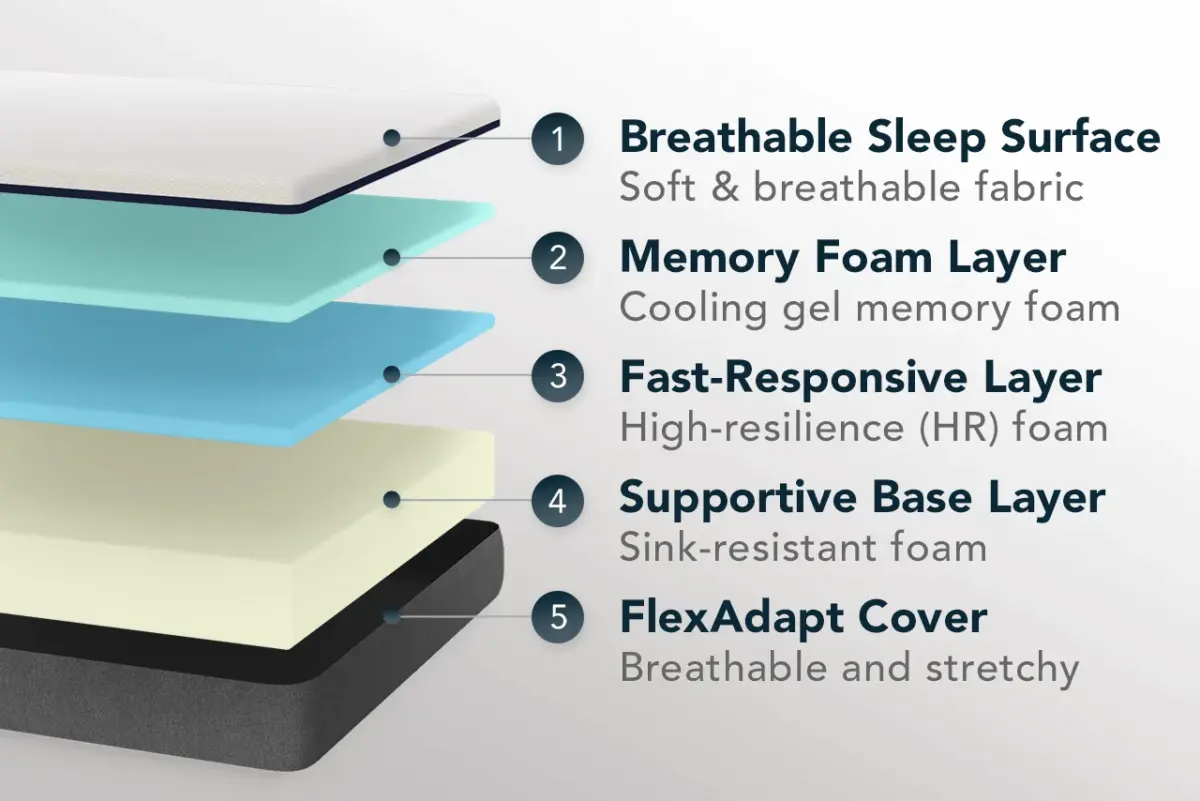
Quick answer: A mattress transition layer sits between the softer comfort layers and the firmer support core. Its job is to smooth that change in feel, limit excessive sinking into the support system and help the mattress deliver progressive support. Not every mattress needs a distinct transition layer.
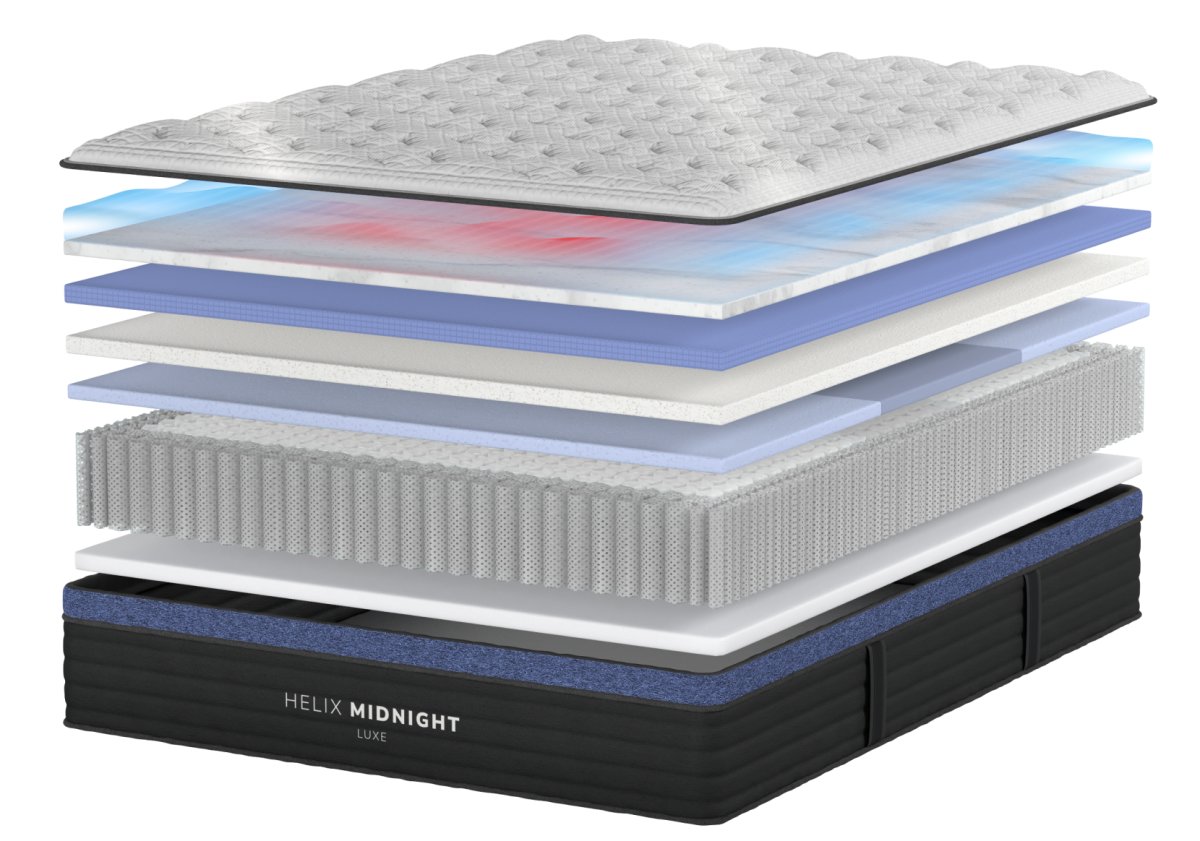
Where is the transition layer?
Think of a mattress in three functional sections: the comfort system near your body, an optional transition layer underneath it, and the support core deeper in the mattress. Real designs can be more complicated, but this framework makes construction easier to understand.
What does a transition layer do?
- Creates a more gradual change from soft comfort materials to a firm support core
- Helps keep heavier parts of the body from pressing abruptly into firmer materials below
- Can add responsiveness or contouring
- Can be zoned to alter support across the mattress
- Can influence how the comfort layers and deeper support system feel together
What materials are used?
Polyfoam
Polyfoam is common because manufacturers can tune firmness and response while keeping the layer relatively lightweight.
Memory foam
Memory foam can deepen contouring, although using it lower in the stack feels different from placing it directly at the surface.
Latex
Latex can provide a more responsive transition with less of the slow-moving feel associated with traditional memory foam.
Microcoils
Some premium mattresses use microcoils as part of the comfort or transition system. They can add responsiveness and airflow. See our microcoil mattress guide.
Examples in real mattresses
A transition layer can appear in both a foam mattress and a hybrid, but its position and purpose depend on the design:
- Saatva Contour5: Saatva lists a transition layer with two firmness options above its support foam base. This is an example of a transition between foam components in an all-foam design. See the Contour5 construction details.
- Saatva Murphy Bed Mattress: Saatva describes polyfoam between memory foam above and the coil unit below. This illustrates a transition layer in a hybrid. See the product specifications.
- Brooklyn Bedding Plank Firm Rx: Its layer diagram identifies VariFlex transition foam as part of a more complex construction that also uses coils and microcoils. Check the current product details for the full stack.
These examples describe how the brands label their layers; they do not establish that one model is more comfortable or durable than another. Specifications and available versions may change.
Does every mattress have a transition layer?
No. A simple all-foam mattress may place its comfort foam directly over a firmer polyfoam core. Some hybrids place comfort materials directly above pocketed coils. A missing dedicated transition layer is not automatically a design flaw.
How thick should a transition layer be?
There is no universal ideal thickness. The appropriate design depends on the comfort system, support core, total mattress height, firmness target and intended sleeper. Thickness by itself is another specification—not a quality score.
Why transition layers matter more for heavier sleepers
Heavier sleepers generally compress the upper layers more deeply, which means they may engage the transition and support layers more strongly. A transition system that prevents abrupt bottoming-out can therefore become especially noticeable as load increases.
Transition layer vs comfort layer
The comfort layer is primarily responsible for the immediate surface feel, cushioning and pressure relief. The transition layer sits deeper and helps bridge that comfort system to the support core. The same material can be used in either role depending on where and how it is deployed.
For the upper portion of the bed, see mattress quilting and comfort layers explained.
Transition layer vs support core
The support core provides the mattress’s primary deep support and structural base. In hybrids and innersprings it is commonly a coil unit; in all-foam mattresses it is usually firmer polyfoam. The transition layer modifies how your body reaches that core rather than replacing it.
Can a transition layer be zoned?
Yes. Manufacturers can sculpt foam, change perforation patterns or otherwise alter resistance across the layer. Zoned transition foams can work alone or alongside zoned coils. Read our zoned-support explainer for how those systems work.
Does a thicker transition layer make a mattress better?
No. More material can create a deeper comfort system, but it can also change responsiveness, sinkage, temperature and cost. The relevant question is whether the complete stack produces the intended pressure relief and support.
How to read a mattress layer diagram
When a manufacturer shows a cutaway, ask what each layer is doing rather than counting layers. A seven-layer mattress is not inherently more sophisticated than a four-layer mattress. Look at the material, thickness, firmness/density when disclosed, position in the stack and the job the layer is supposed to perform.
Yawnder’s Mattress Construction & Materials hub explains the larger system, while our foam-density, coil-gauge and coil-count guides decode common specifications.
Questions to Ask When Comparing Models
Ask the seller for the layer diagram for the exact model, size and firmness you are considering. Check whether the transition component sits beneath a pillow top, above or below microcoils, or directly over the main support core. Ask which materials and layer thicknesses are disclosed and whether the model has changed since the review you are reading.
Then use the specifications as a starting point for testing, rather than as a verdict. Compare the whole mattress in your usual positions, paying attention to shoulder and hip pressure, lower-back comfort and ease of movement. If you share a bed, test with your partner and compare the relevant return terms.
How shoppers can compare the feel
Lie in your usual sleeping position long enough to notice both immediate pressure and deeper support. If the surface feels comfortable at first but you sense an abrupt firmness underneath, compare a different firmness or comfort-system design. If you feel too deeply enveloped or find it difficult to change positions, compare a more responsive surface.
Ask the retailer for the complete layer diagram, the exact model and firmness, the applicable trial and any return fee. Foam density describes mass per volume; it is not the same as firmness and cannot predict comfort on its own. A thicker or higher-density layer does not automatically solve a poor overall fit.
Bottom line
A transition layer is a bridge, not a badge of quality. It can make a mattress feel more progressive and prevent an abrupt shift from cushioning to deep support, but the best design depends on how every layer works together.
Frequently asked questions
Do hybrid mattresses need a transition layer?
Not always. Some place comfort materials directly over pocketed coils; others use foam, latex or microcoils between the surface and main coil unit.
Can you feel a transition layer?
Usually you experience its effect as part of the complete mattress rather than feeling a distinct boundary.
Is transition foam the same as support foam?
Not necessarily. Transition foam is defined mainly by its role and location between comfort and deeper support; its formulation and firmness vary by design.