Yawnder Reviews · Updated October 8, 2026
Best Mattress Protectors: Waterproof, Cooling & Fit
Choose a mattress protector by coverage, fit and how much it changes the sleep surface. A fitted waterproof protector handles everyday spills; a five-sided model adds sidewall protection; a zippered encasement surrounds the whole mattress.
Protectors are thin protective layers. For extra cushioning, use our mattress topper hub or pad vs topper guide.
Mattress protector comparison: coverage, depth and care
| Protector | Coverage / surface | Fit check | Price & care |
|---|---|---|---|
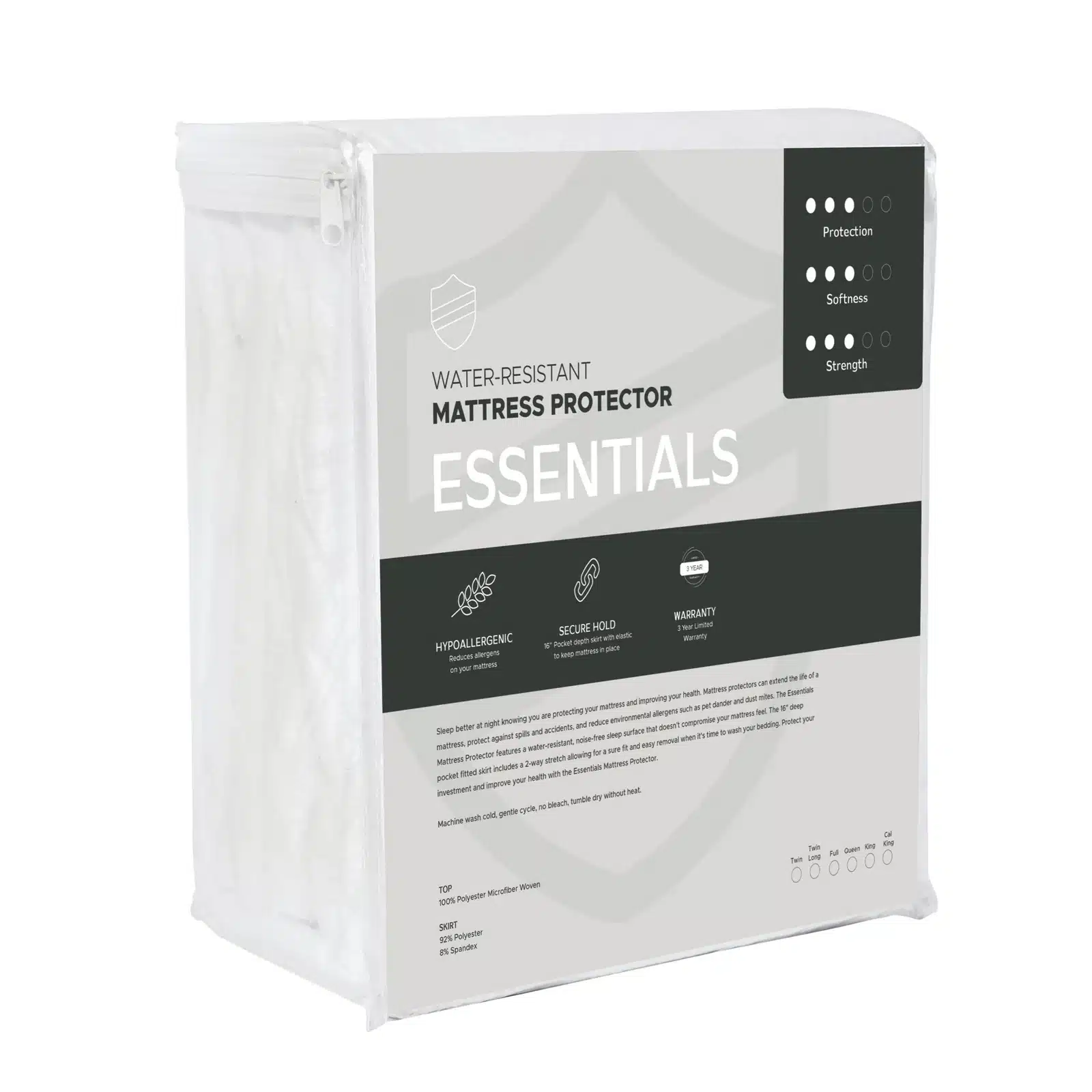 Essentials Waterproof Mattress ProtectorView sizes & price Essentials Waterproof Mattress ProtectorView sizes & price | Fitted waterproof top protector; microfiber surface. | Listed for mattresses up to about 16 inches. Include topper height in your measurement. | From $34. Cold gentle washing; follow the drying label. |
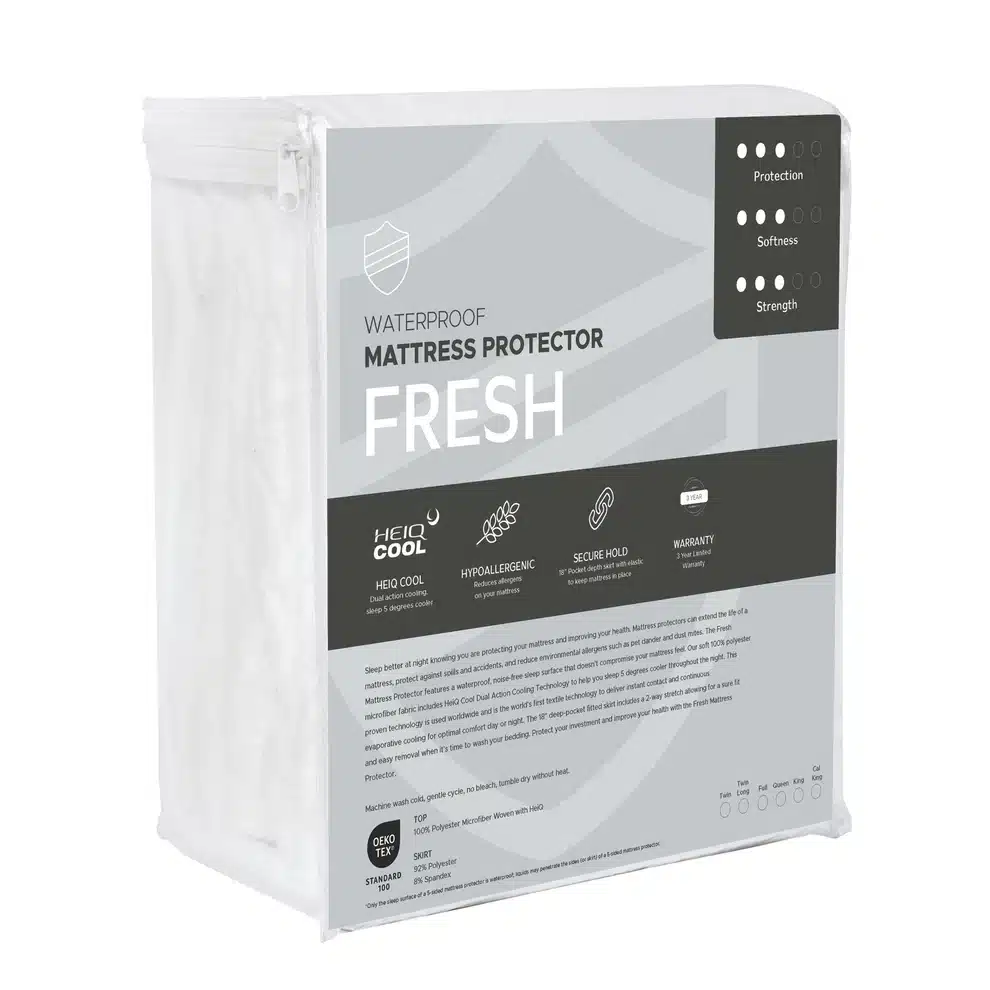 Yawnder Fresh HEIQ Cooling Mattress ProtectorView sizes & price Yawnder Fresh HEIQ Cooling Mattress ProtectorView sizes & price | Fitted waterproof protector with a HEIQ-treated cooling-focused surface. | Listed pocket depth up to 18 inches. Check elastic tension on your mattress. | From $49. Cold gentle washing; a cool-touch finish is passive. |
 Malouf Five Sided Mattress ProtectorView sizes & price Malouf Five Sided Mattress ProtectorView sizes & price | Five-sided protection; Tencel lyocell surface with waterproof membrane. | Covers the top and four sidewalls, with an open underside. Confirm the selected size’s depth. | From $69.99. Machine washable; use the model’s care label. |
 DreamFit DreamComfort Waterproof Mattress ProtectorView sizes & price DreamFit DreamComfort Waterproof Mattress ProtectorView sizes & price | Fitted waterproof microfiber protector. | Corner bands and perimeter elastic help hold the cover in place. Check depth and articulation. | From $79. Cool gentle wash; low-heat drying as directed. |
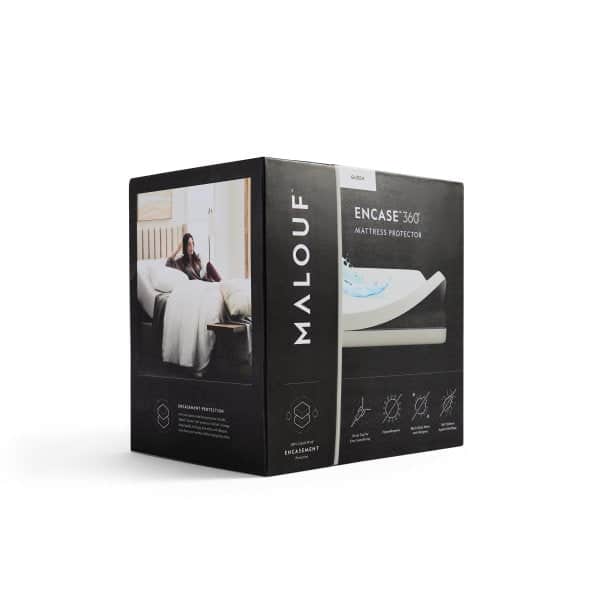 Malouf Encase HD 360 Mattress ProtectorView sizes & price Malouf Encase HD 360 Mattress ProtectorView sizes & price | Six-sided zippered encasement; removable top panel. | Match both mattress dimensions and thickness. The currently published Yawnder SKU is Full. | $109.99 for that Full-size listing. Confirm washing instructions before removing the top. |
Starting prices vary by size and may change. Published stock does not establish showroom availability. See the product page for the selected size and current terms.
Pick the coverage you need
Fitted protection
The simplest starting point for liquid protection over the sleeping surface.
Cooling and feel
Prioritize a thin, comfortable layer when you want to preserve the mattress feel.
Full enclosure
A zippered cover is a different construction from a fitted protector.
Comfort layers
Choose cushioning separately from waterproofing.
Five-sided coverage adds waterproof sidewalls; six-sided encasement adds a bottom and zipper. Do not assume every fitted protector has waterproof sides, or that every encasement has the same zipper barrier. Confirm the model’s construction for your specific use.
Mattress protector review directory
These articles cover individual products and older review samples. Their observations can help you compare feel and construction, while the current product page establishes today’s specification.
Waterproof surfaces and fabric feel
Compare how a thin cover sits over the mattress.
Cooling-focused designs
Compare surface fabrics and the tradeoff between protection and heat.
Pocket depth, noise and adjustable-bed fit
Measure the complete stack: mattress plus topper, if the protector will cover both. A protector advertised for a deep mattress can still fit poorly if its elastic is stretched over the edge or its waterproof panel sits too high.
Check noise under your fitted sheet: turn over, sit on the edge and rub the surface. Membrane thickness, fabric and tension affect rustling; a material description alone does not establish that a protector is silent. The comparison above does not assign untested noise scores.
Articulate an adjustable base: raise the head and foot, then check for bunching or corners lifting. A secure fitted cover and a six-sided encasement can behave differently when the mattress bends.
Washing a waterproof protector
- Follow the label for water temperature, cycle and detergent; avoid bleach or additives unless allowed.
- Use the recommended drying temperature. Excess heat can damage waterproof membranes.
- Dry the protector fully before putting it back on the mattress, including its seams and elastic.
- Inspect for peeling, cracking, worn seams or a damaged zipper; these can compromise protection.
- Keep a spare if the protector’s drying time would leave your mattress uncovered.
A protector reduces exposure to spills but does not replace the mattress maker’s warranty requirements. Check those requirements and the Yawnder purchase policy before ordering.
Mattress protector questions
Will a protector make a firm mattress softer?
A thin protector should make a small change in feel. A quilted pad or topper adds cushioning; those layers solve a different problem.
Should the protector go over a topper?
If you want to protect both layers, a protector can cover the mattress and topper together, provided the pocket is deep enough and the fit stays secure. Check both manufacturers’ instructions.
Does “cooling” mean waterproof?
No. Cooling fabric and liquid protection are separate features. Look for an explicit waterproof membrane or barrier in the selected model.
Yawnder independently selects the products we cover. Some links are affiliate links; purchases through those links may earn us a commission at no extra cost to you. Prices and available configurations can change.
Want to compare current availability and pricing on Amazon?
Compare mattress protectors on AmazonAs an Amazon Associate, Yawnder may earn from qualifying purchases.