Best Eco-Friendly Mattress Protectors
Look past “green” marketing. The useful questions are what the face fabric is made from, how waterproofing is achieved, which certifications apply to the finished product, and whether the protector can be washed and kept for years.
Current organic-focused protectors
| Pick | Current starting price | What is verified | Tradeoff |
|---|---|---|---|
| Happsy Waterproof Organic Protector | $79 | Organic cotton jersey; GOTS-approved waterproofing; fits mattresses up to 15″ | Fewer luxury features |
| Naturepedic Waterproof Organic Protector | $129 | GOTS-certified organic cotton jersey; TPU barrier; 30-day returns | Costs much more than basic protectors |
| Avocado Organic Waterproof Protector | $169 | Organic cotton construction with waterproof barrier; brand publishes detailed certification/testing information | Premium price |
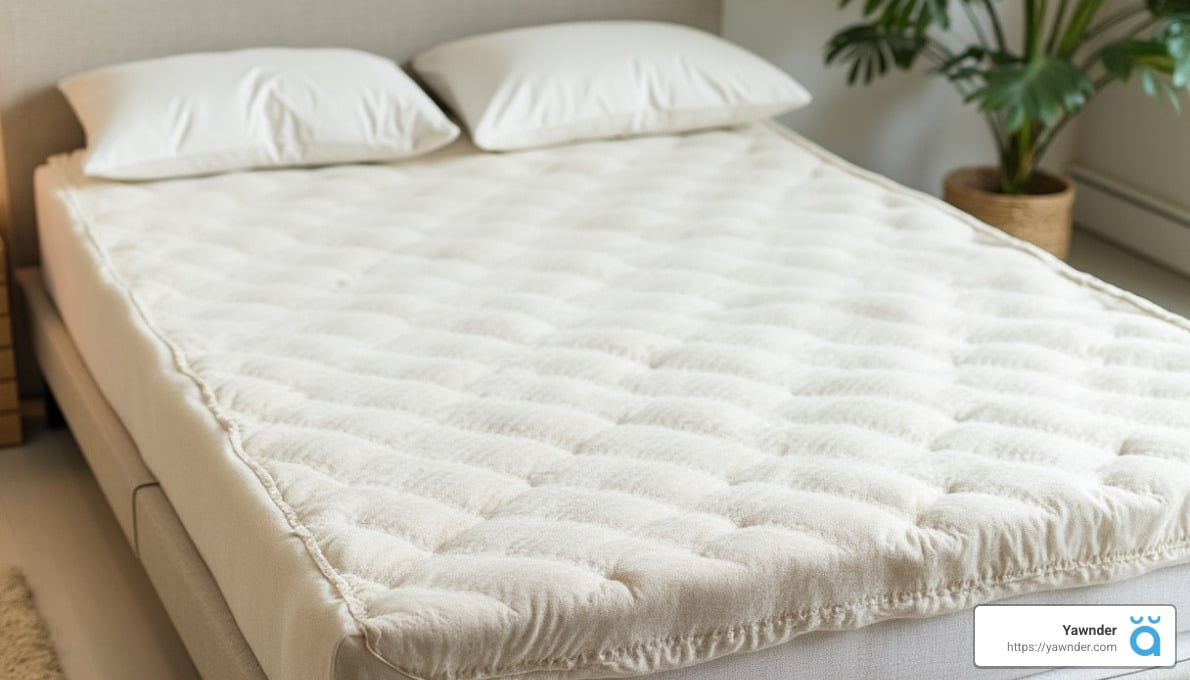
Happsy — lower-cost organic-focused option
Happsy currently starts at $79 and uses organic cotton jersey with GOTS-approved waterproofing. It is the most accessible price of these three if organic material sourcing is the main priority.
Naturepedic — strongest midrange documentation
Naturepedic currently lists its waterproof organic protector from $129. The face is GOTS-certified organic cotton jersey over a thin TPU waterproof barrier, with a 30-day return policy.
Avocado — premium certified option
Avocado currently lists its Organic Waterproof Mattress Protector from $169. The brand also publishes unusually detailed certification and PFAS testing information for this protector construction.
What “eco-friendly” should mean here
There is no single certification that proves a mattress protector is environmentally ideal. Use specific evidence instead: certified organic fibers, a documented supply chain, durable construction, transparent waterproofing materials, third-party chemical or emissions testing, and care instructions that let you keep the protector in service.
GOTS
GOTS is useful when a brand claims organic textile content because it addresses certified organic fibers and processing requirements. Check whether the certification applies to the finished protector or only to a component.
OEKO-TEX and chemical testing
These can provide information about tested substances or emissions, but they are not the same thing as organic certification and should not be described that way.
Waterproofing is the hard part
A non-waterproof organic cotton pad can be made with fewer synthetic materials, but it will not give the same liquid barrier. Waterproof protectors commonly use TPU or another thin membrane. That may be a reasonable compromise if protecting the mattress from liquid damage is the goal.
When a regular protector is the greener choice
If you already own a durable protector that fits, washes well and still blocks liquid, replacing it solely to buy an “eco” label can create unnecessary waste. Longevity matters. Compare all current options in the Mattress Protector Hub.
Showroom note: these outside brands are not being represented as products available to try in Yawnder’s Encinitas showroom.
Want to compare current availability and pricing on Amazon?
See eco-friendly protectors on AmazonAs an Amazon Associate, Yawnder may earn from qualifying purchases.