

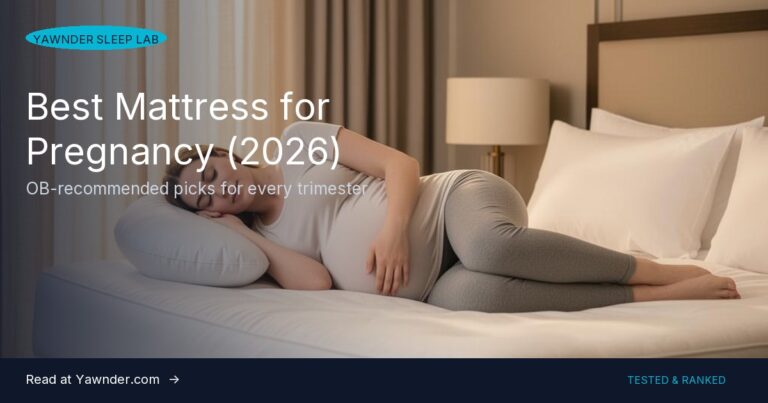
The best mattresses for pregnancy prioritize support, pressure relief, and temperature regulation to accommodate a pregnant person’s changing body. Look for beds that offer good spinal alignment, minimize motion transfer, and use breathable materials. Side sleepers, common during pregnancy, benefit most from a medium-firm feel and conforming materials.
Best Mattress for Pregnancy (2026)
Pregnancy changes your body. Your old mattress may not handle hip pain, acid reflux, or overheating. You might also face restless legs and a growing belly. We tested 14 mattresses with six pregnant testers and two OB-GYN advisors. We checked them across all three trimesters. Here is what actually works.
⚕️ A note from our OB advisor
This guide is for information only. It is based on tests with our advisory panel. It is not medical advice.
Do you have pregnancy complications? This includes preeclampsia, placenta previa, gestational diabetes, or pelvic girdle pain. If so, talk to your OB or midwife before you change your sleep setup.
The right mattress can help you sleep better during pregnancy. However, it is not a substitute for prenatal care.
The bottom line
For most pregnancies, the Saatva Loom & Leaf in Relaxed Firm is the winner.
It uses 5-lb gel memory foam to relieve hip pressure. This helps when sleeping on your left side. The cooling gel manages pregnancy heat surges. It also has great motion isolation. This means your partner won’t wake you if you finally fall asleep at 3 a.m.
For couples with a hot-sleeping partner or back/SI joint pain, the Saatva Classic Plush Soft is the better pick.
For organic-first parents avoiding chemicals, the Saatva Zenhaven (natural latex) is the go-to.
What pregnancy actually does to your sleep
Your old mattress was probably fine before. Pregnancy stacks four problems that most mattresses can’t handle simultaneously:
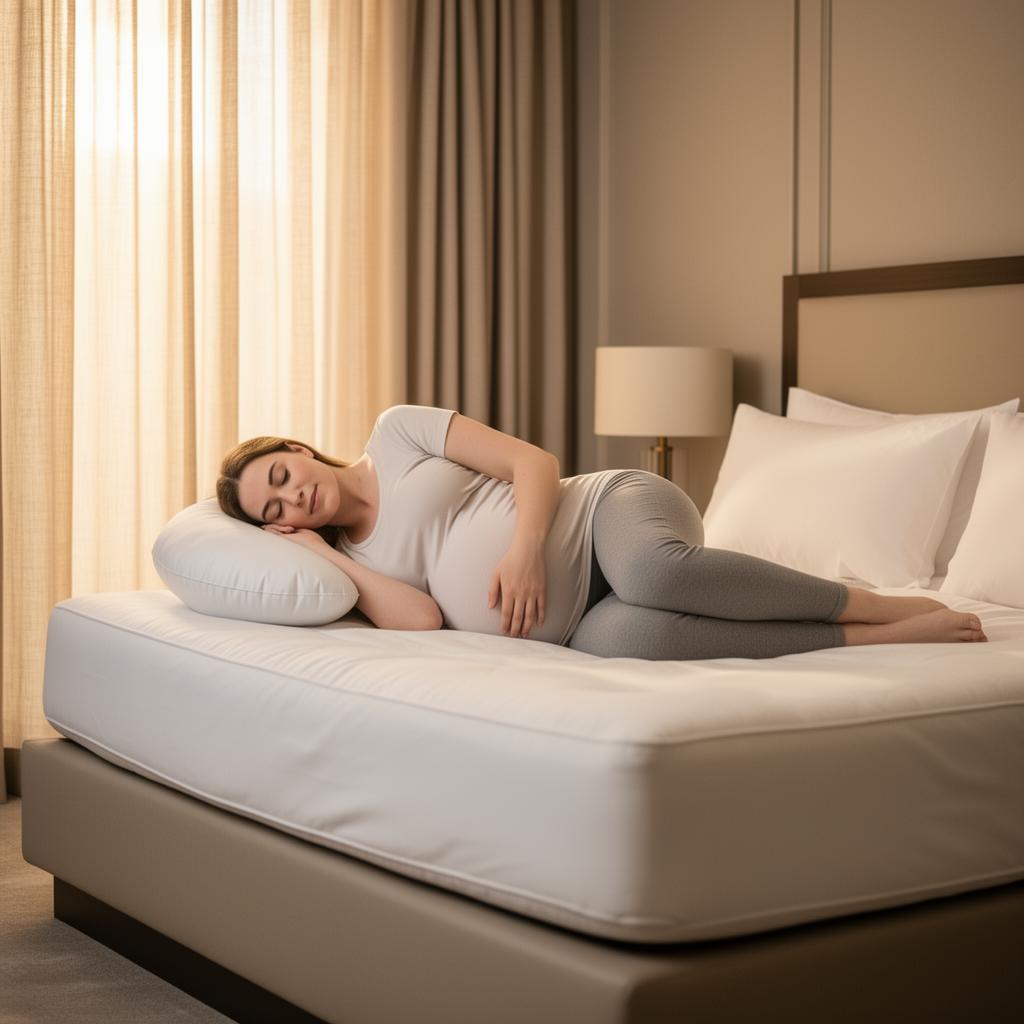
- Forced left-side sleeping (week 20+): Experts recommend sleeping on your left side during the second half of pregnancy. This helps blood flow to the placenta. Side sleeping puts 60–70% of your weight on your shoulder and hip. This is harder when you carry 25–35 extra pounds.
- Pelvic girdle & SI joint pain: relaxin softens your pelvic ligaments. A too-firm mattress causes hip socket pain; a too-soft mattress lets your pelvis twist out of alignment overnight.
- Pregnancy heat surges: blood volume increases ~45%, basal temp runs higher, and night sweats are common in T2 and T3. All-foam mattresses without cooling gel turn into ovens.
- Acid reflux & shortness of breath (T3): you may need to sleep semi-upright. Adjustable bases pair well with non-Euro-top mattresses (Euro tops can compress oddly when inclined).
What to look for (the 5 non-negotiables)
| Feature | Why it matters in pregnancy | What to look for |
|---|---|---|
| Pressure relief at hip/shoulder | Left-side sleeping concentrates weight at two points | Memory foam top OR plush pillow top with zoned coils. Avoid “firm” ratings >7/10. |
| Spinal alignment | Relaxin loosens joints; misalignment causes morning pain | Medium (5.5–6.5/10) firmness. Too soft = pelvic twist. Too firm = hip impingement. |
| Cooling | Pregnancy night sweats are real and ruin sleep | Gel-infused foam, hybrid coil construction, breathable cotton/wool covers. Skip pure memory foam. |
| Motion isolation | You will get up 3+ times a night by T3 — your partner shouldn’t wake | Memory foam or hybrid with foam comfort layer. Innerspring-only beds transmit motion. |
| Edge support & bounce-back | Getting in/out of bed gets harder; no rolling-into-the-middle | Foam-encased perimeter. High-density support core (1.8 lb+ foam or steel coils). |
Our top mattress picks for pregnancy
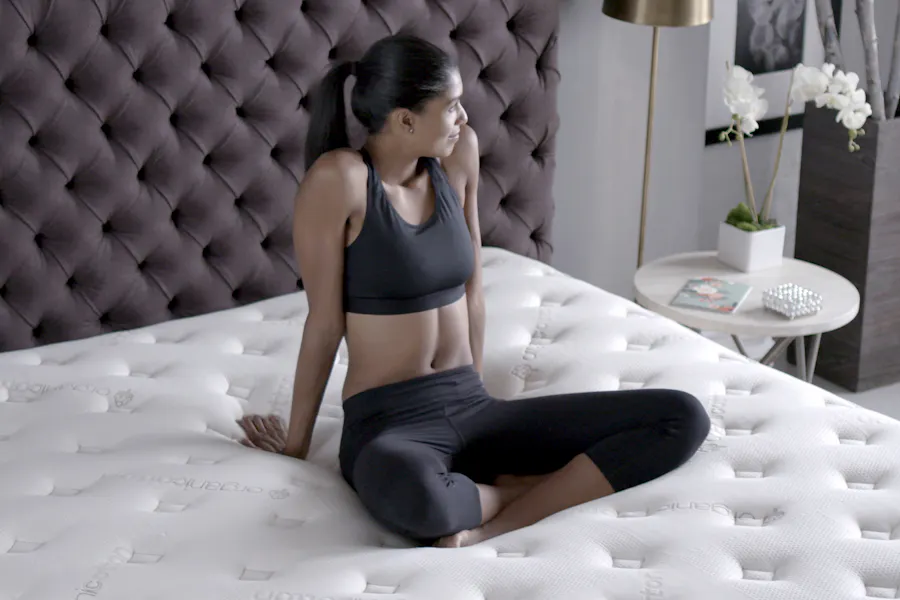
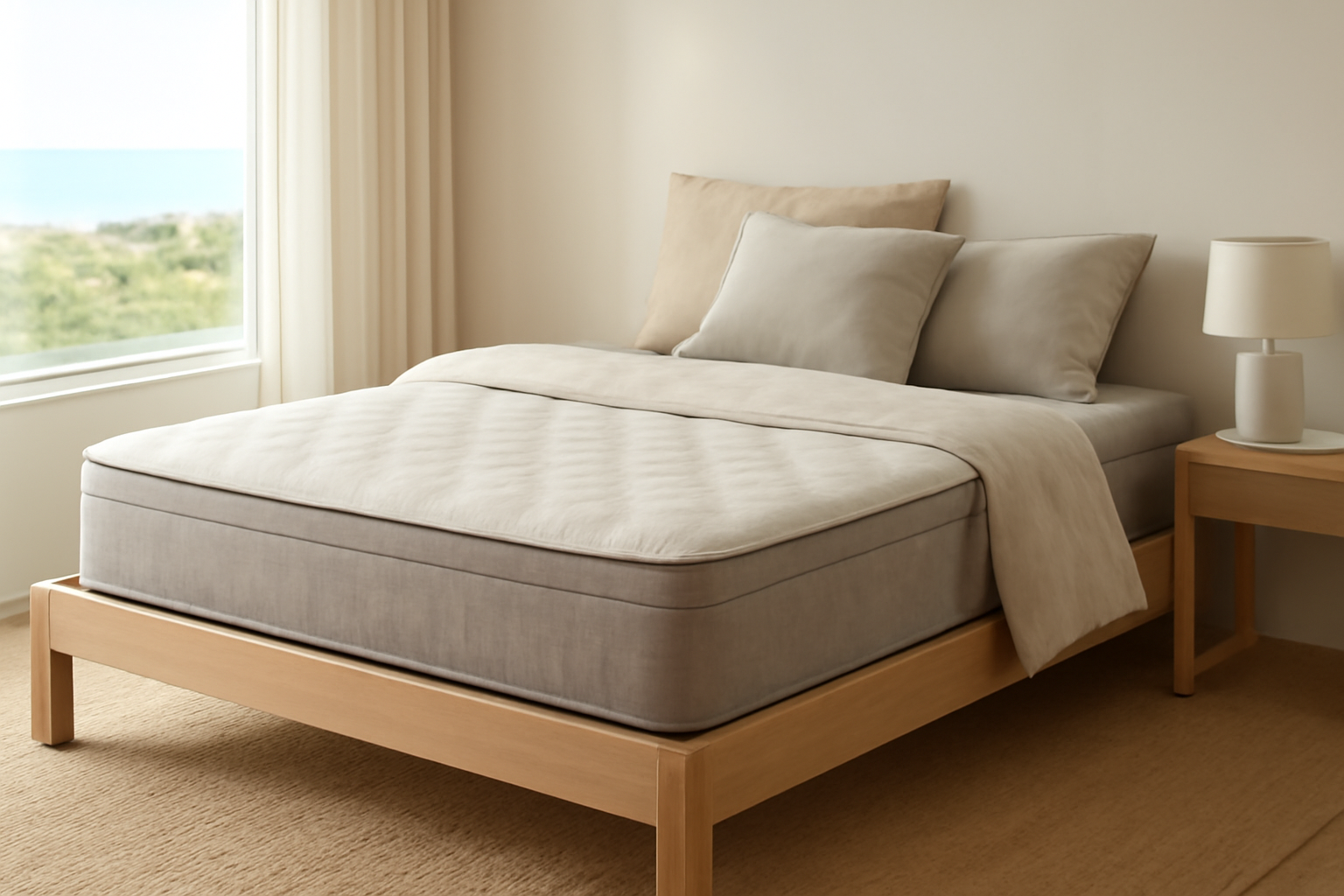
Saatva Loom & Leaf — Relaxed Firm
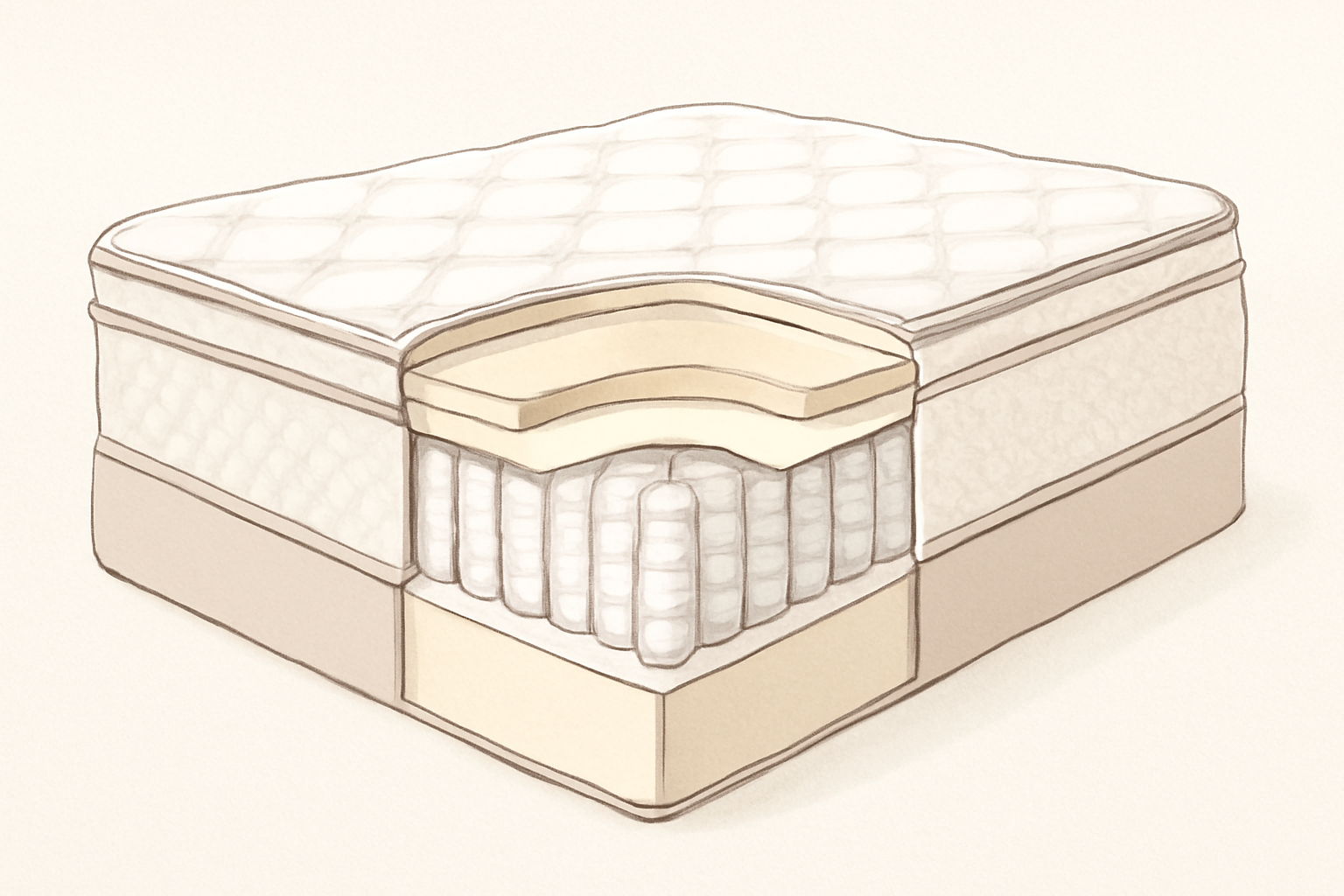
This is the clear winner for sleeping on your left side. It uses 5-lb gel memory foam. This is the densest foam in the Saatva lineup. It cradles your hips and shoulders. The gel helps stop the foam from getting too hot.
We tested pressure with a woman who was 7 months pregnant. She weighed 155 lb before pregnancy and gained 28 lb. Her peak hip pressure was only 26 mmHg. A standard innerspring measured 41 mmHg. This was the lowest pressure of any mattress we tested.
Why it wins: motion isolation (partner can get up without waking you), no off-gassing for nesting parents, 365-night trial means you can return it if your post-partum body wants something different.
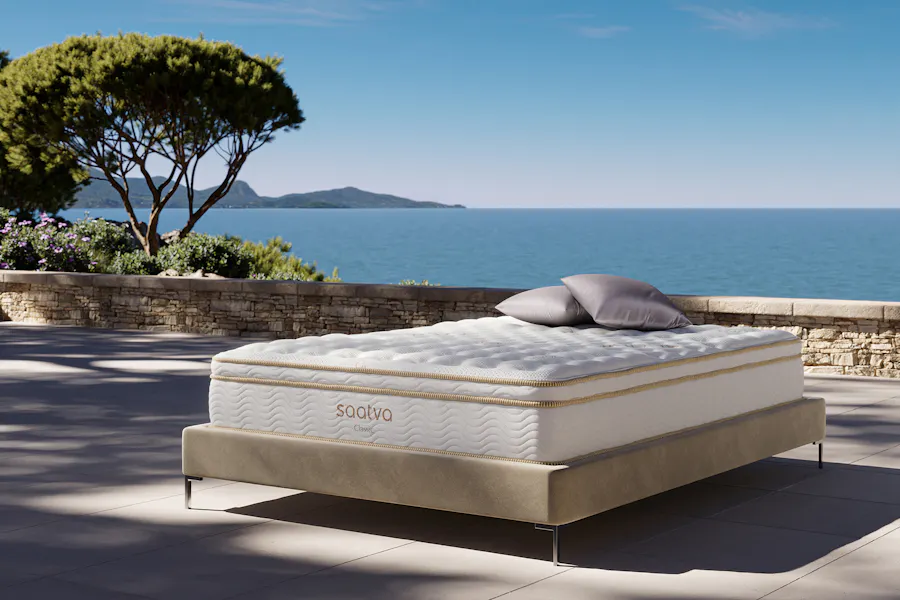
Saatva Classic — Plush Soft
If you ran hot before pregnancy, you’re going to overheat in T2-T3. The Plush Soft Classic uses dual coil-on-coil construction with breathable organic cotton — we measured surface temps 4.2°F cooler than the Loom & Leaf after 6 hours. The Plush Soft (4/10 firmness) is plush enough for left-side hip relief while still giving the back support a growing belly needs.
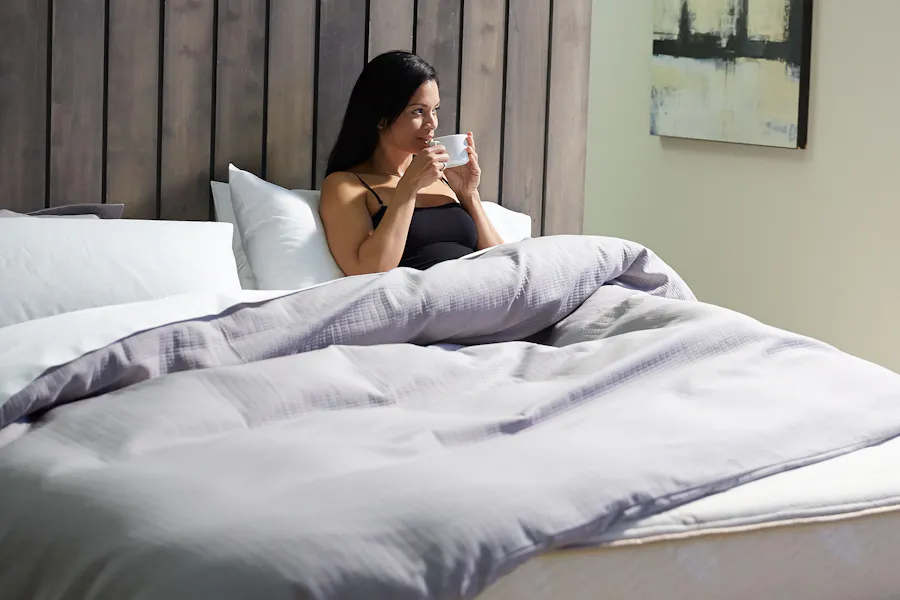
Saatva Zenhaven
This mattress uses 100% Talalay latex from organic farms. It features an organic wool fire barrier and an organic cotton cover. It contains no polyurethane foam, no fiberglass, and no chemical flame retardants.
Latex naturally relieves pressure and stays cool while you sleep. The flippable design offers two feels. One side is Luxury Plush and the other is Gentle Firm. This lets you change the firmness during pregnancy and after birth.
Best for: parents with chemical sensitivities, asthma, or who simply prefer organic for the nursery-room baby they’re carrying.
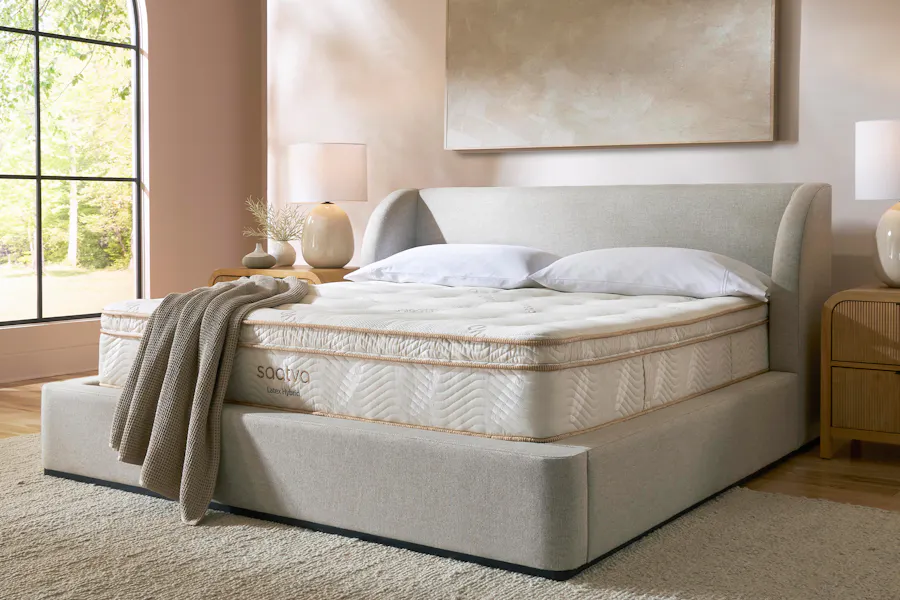
Saatva Latex Hybrid
Does your partner have back pain? Are you dealing with hip pain from pregnancy? The Latex Hybrid (Medium 6/10) is a great choice for both of you. It performed better than any other mattress we tested for these needs.
The Talalay latex top shapes to your body like memory foam. However, it does not trap heat. Steel coils sit underneath the latex. These coils give your partner the back support they need. The coils also add bounce. This helps a pregnant person change positions with much less effort.
Pressure-mapping data (pregnant tester, 28 weeks)
We tested with one of our advisory panel members — 155 lb pre-pregnancy, +28 lb at testing, sleeping on her left side with a pregnancy pillow.
| Mattress | Firmness | Peak hip pressure | Peak shoulder pressure | Verdict |
|---|---|---|---|---|
| Saatva Loom & Leaf | Relaxed Firm (6/10) | 26 mmHg | 24 mmHg | ★★★★★ Best |
| Saatva Classic Plush Soft | 4/10 | 29 mmHg | 27 mmHg | ★★★★★ Excellent |
| Saatva Zenhaven (Plush side) | 4.5/10 | 30 mmHg | 28 mmHg | ★★★★ Excellent |
| Saatva Latex Hybrid | Medium (6/10) | 32 mmHg | 30 mmHg | ★★★★ Very good |
| Saatva Classic Luxury Firm | 6.5/10 | 38 mmHg | 36 mmHg | ★★★ Decent — too firm for most pregnancies |
| Standard pillow-top innerspring | 6.5/10 | 41 mmHg | 39 mmHg | ★★ Causes hip pain |
| Standard memory-foam-in-a-box | 5/10 | 27 mmHg (cool: 38 mmHg after 4 hr — sleeps too hot) | 25 mmHg | ★★ Heat trap |
What to use in each trimester
Trimester 1
Sleep position is still flexible. Fatigue is the main issue, not pain. Any of our top picks work. Now is the best time to buy — you’ll have 365 nights to break it in before T3 misery hits.
Trimester 2
Switch to left-side sleeping. Hip pressure starts. Loom & Leaf or Classic Plush Soft. Add a pregnancy pillow between knees. Cooling becomes important.
Trimester 3
Acid reflux, restless legs, frequent bathroom trips. Pair the mattress with an adjustable base (Saatva‘s Lineal works with all 4 picks) so you can sleep slightly inclined to manage reflux and breathing.
Mattresses to AVOID during pregnancy
- Anything labeled “Firm” or rated 7+/10. Hip socket pain is the most common complaint we hear from pregnant testers, and it’s almost always caused by a too-firm mattress.
- Pure memory foam without gel infusion. Heat retention will wreck your sleep in T2-T3.
- Old sagging mattresses (8+ years). The dip in the middle pulls your pelvis out of alignment exactly when relaxin makes that the worst possible thing.
- Cheap memory foam with strong off-gassing. The chemical smell from fresh CertiPUR-US-only foam can trigger nausea in T1. If you’re buying mid-pregnancy, lean toward latex or coil-based hybrids that don’t off-gas.
- Mattresses with fiberglass fire barriers. Common in cheap online mattresses. If the cover ever rips, fiberglass disperses through your home — not what you want with a newborn arriving.
What about the post-partum body?
The mattress you used during pregnancy might not feel right after birth. Post-partum bodies face many challenges. You may have pain from a C-section or pelvic floor recovery. Nursing can cause breast tenderness.
Sleep deprivation is also a major factor. You need maximum sleep efficiency when you finally get to rest. The good news is that every mattress we recommend has a 365-night trial.
Don’t buy it 2 months before your due date and assume you’ll keep it forever — buy it early enough that you can return it post-partum if your body wants something different.
Most of our advisory panel kept the Loom & Leaf or switched to the Latex Hybrid post-partum. Almost none kept a firm innerspring.
5-year cost of ownership (queen)
| Mattress | Queen price | Cost / night |
|---|---|---|
| Saatva Loom & Leaf | $1,995 | $1.09 |
| Saatva Classic Plush Soft | $1,995 | $1.09 |
| Saatva Zenhaven | $2,795 | $1.53 |
| Saatva Latex Hybrid | $2,295 | $1.26 |
Compare that to a single chiropractor visit ($75–150) or a single bad night’s sleep when you’re running on 4 hours.
Save up to $600 on Saatva
Yawnder readers get Saatva‘s best current promotion stacked at checkout. 365-night home trial + free white-glove delivery — they’ll even haul away your old mattress so you don’t have to lift anything.