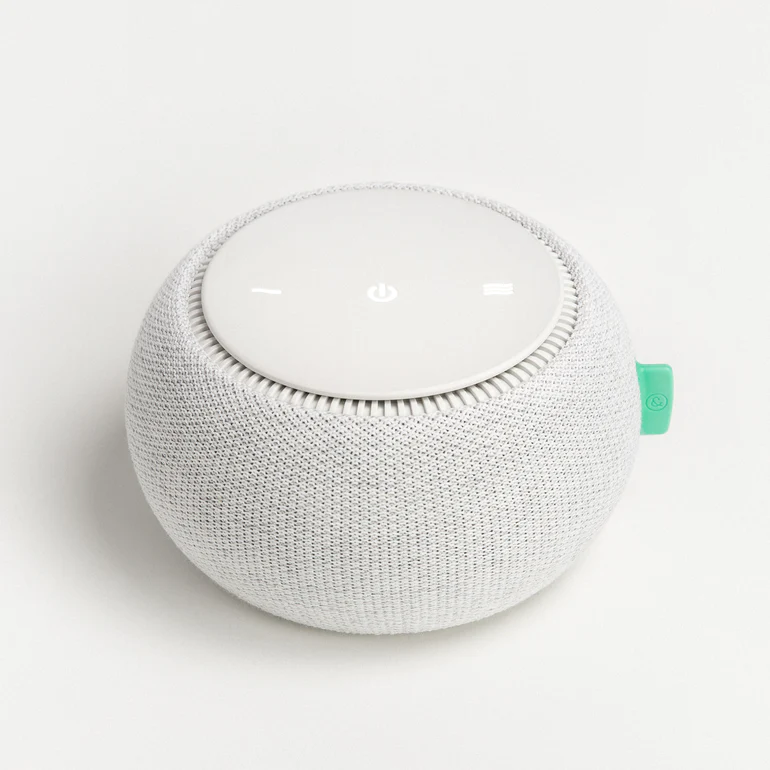
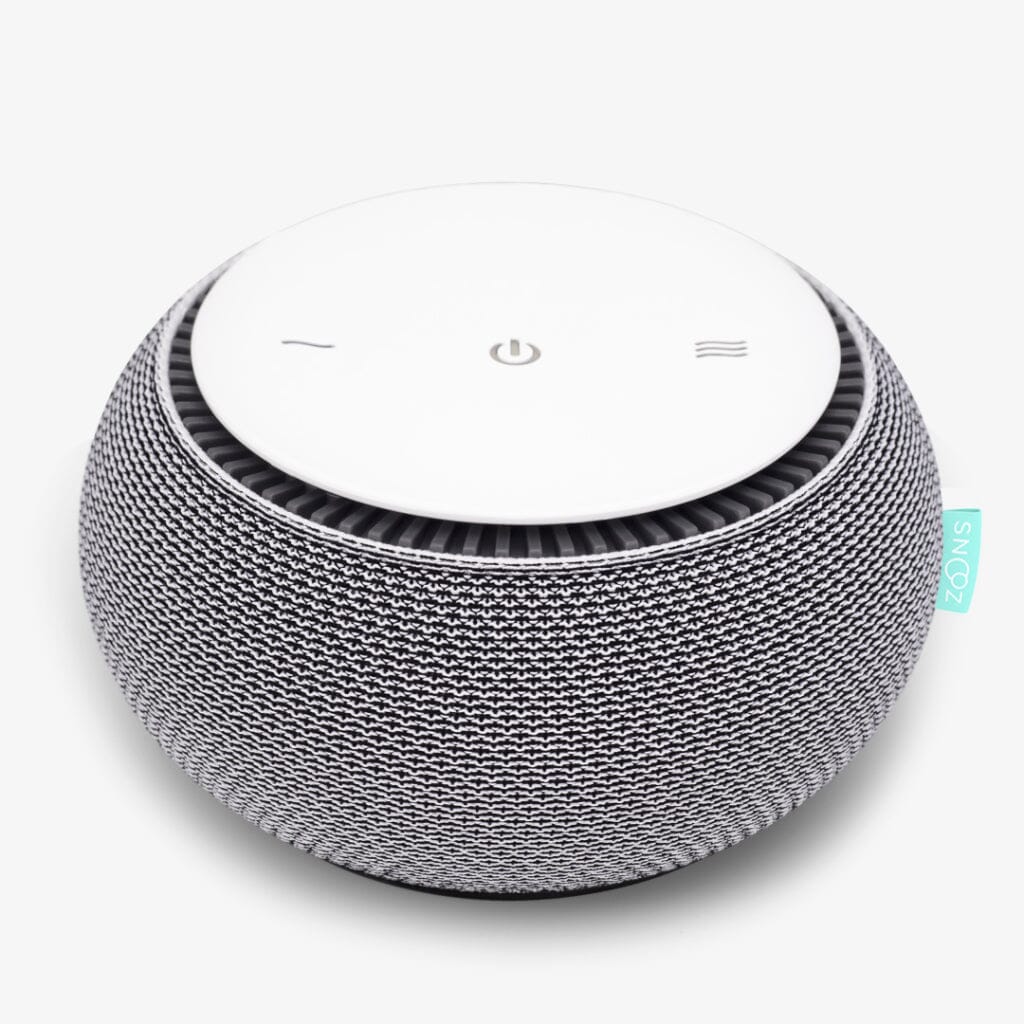
SNOOZ Original uses a real internal fan to create steady sound without blowing a breeze across the room. Yawnder’s earlier coverage includes long-term experience with the machine; current specifications and purchase terms below come from SNOOZ’s published information.
What it sounds like and how it works
Instead of playing a recorded track through a speaker, SNOOZ uses a fan inside its housing. The manufacturer lists ten volume levels. Turn the outer shell to change the tone from a lighter fan sound toward a deeper hum. The free companion app offers remote adjustment and scheduling.
Its familiar, non-looping whoosh can make background sounds less noticeable, but masking depends on the noise, the room and the volume you choose. It will not block every sound and is not a treatment for insomnia or other sleep disorders.
What Yawnder’s long-term coverage found
Our earlier notes favored the natural texture of fan noise over a short digital loop. Adjusting the tone is useful because a deeper hum and a lighter rush can mask different background noises differently. The basic controls are simple, and the optional app is convenient if the machine is across the room.
Those are observations from Yawnder’s earlier ownership experience, not a new side-by-side measurement or a guarantee that every unit will last the same length of time. The main drawbacks are the price and the limited variety of sound types.
SNOOZ vs. Dohm and digital machines
| Option | Sound and controls | Tradeoff |
|---|---|---|
| SNOOZ Original | Real fan, adjustable tone, ten volume levels and optional app | Higher price; one family of fan sounds |
| Dohm Classic | Real fan, two speeds and mechanical tone adjustment | Simpler controls; fewer volume steps and no app |
| Digital sound machine | Speaker playback may offer multiple fan, noise and nature sounds | Sound character varies; some recordings may have audible loops |
The manufacturer also sells SNOOZ Pro. Its separate tone control, scheduling features and included case make it a different package; this article does not claim a hands-on comparison of the Pro. Check the current Pro listing for details and pricing.
Setup, volume and travel
- Start low: choose the lowest comfortable volume that masks enough of the unwanted sound. Move the device or adjust tone before simply turning it up.
- Try placement: putting it between the bed and the noise source may help, depending on the room.
- For babies and children: keep the sound machine well away from the sleeping area and use a low volume. Follow current pediatric guidance and the device instructions; a calibration feature does not make every setting safe.
- For travel: SNOOZ lists a 100–240V adapter with a U.S. plug; check plug compatibility and use the appropriate outlet adapter.
- For privacy: check app permissions and wireless requirements before using remote controls.
SNOOZ lists a range of 46–87 dBA measured at the device; sound exposure at a sleeper’s position depends on distance and settings. Do not interpret the maximum volume as a recommended listening level.
Price, trial and warranty
The manufacturer listed the Original at $99.99 when checked in October 2026. Prices and promotions can change, and a retailer may have different terms.
SNOOZ’s direct return policy describes a 100-night happiness guarantee and a prepaid return label. It also says returns must be in new condition and original packaging; expedited shipping charges are not refunded. Check eligibility and conditions before ordering. SNOOZ lists a one-year limited warranty.
Frequently asked questions
Does SNOOZ play a recording?
The Original uses a real fan to produce its sound; the app controls the device rather than turning the sound into a recorded loop.
Do I need the app?
On-device controls handle basic power and volume. The app adds features such as remote control and schedules.
Does it blow air toward the bed?
Its fan is enclosed to create sound without the breeze of a conventional room fan.
Will it block loud neighbors?
It may make some noises less noticeable, but masking depends on volume, distance, the type of noise and your sensitivity.