
Yawnder reviews · Original 2016 testing archive · Refreshed October 2026
This update distinguishes original hands-on evidence from current product availability and makes no newly invented numerical test claims.
Quick verdict
The original Cumulus was appreciated as a lighter alternative to thick down comforters. Its phase-change textile was intended to moderate brief temperature swings, but it did not actively refrigerate the sleeper or guarantee an end to overheating. Actual warmth still comes from fill weight, room temperature and layering.
Product photographs and original evidence
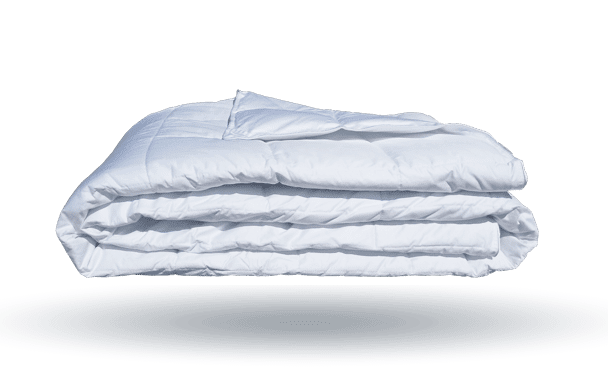
Images are from Yawnder's library and are labeled when they depict a later manufacturer listing rather than the original test unit.
Who this review can help
Useful for
- People who find their current duvet too insulating but still want an enclosed comforter
- Shoppers comparing lightweight down-alternative construction with heavier goose-down bedding
Not a match for
- Anyone expecting powered cooling or a measured all-night temperature reduction
- Cold-room sleepers seeking the warmth of a heavy winter duvet without layering
Original testing and practical findings
What the reviewer tried
The old review described firsthand use of a lightweight Cumulus duvet in warmer sleeping conditions, with less of the heavy insulated feel of traditional winter comforters.
Phase-change construction
Historical Slumber Cloud materials referenced Outlast phase-change technology designed to buffer short swings in surface temperature. That isn't equivalent to a cooled-water mattress pad or active fan system.
What it felt like
The comforter was described as light and easy to layer. Whether it stays comfortable for one person depends on their bedroom and other bedding; there is no verified modern tog or all-night temperature score in this article.
Care and fit
Always check a current comforter's fill, shell, dimensions and laundering limits. Comforter dimensions don't necessarily match a particular duvet cover and can vary between model generations.
Historical observations should not be mistaken for newly collected or standardized performance data.
Quick facts and disclosure
| Category | Lightweight down-alternative duvet/comforter |
|---|---|
| Historical feature | Phase-change textile technology |
| Current exact version | Not independently verified |
| Active cooling | No |
What to consider when shopping today
See our earlier Slumber Cloud mattress-pad test for another construction, or research BedJet if you specifically want powered airflow rather than passive bedding temperature management.
Frequently asked questions
Can a phase-change duvet eliminate night sweats?
No product should be assumed to prevent night sweats. If they are persistent or unexplained, seek medical advice.
Is Cumulus a good summer duvet?
It may suit warmer rooms more than a heavy winter fill, but your actual bedding, ambient temperature and individual preferences matter.
Is the original Cumulus still on sale?
This page does not verify a current seller for the exact historical version.
Editorial disclosure: Yawnder may receive compensation from qualifying retailer links; where a free sample was provided, it is identified in the review.