

The Saatva Classic is a luxury innerspring built for back and stomach sleepers who want hotel-firm support. It is best for those seeking a durable, supportive bed with excellent edge support and less motion transfer than traditional innersprings. Side sleepers and budget-conscious shoppers may find it too firm or too expensive.
Saatva vs Nectar (2026): Which Mattress Is Actually Worth It?
A $400 mattress-in-a-box vs a $1,795 hand-built innerspring. Same goal, very different beds. Here’s which one wins for your sleep style — backed by 30 nights of side-by-side testing.
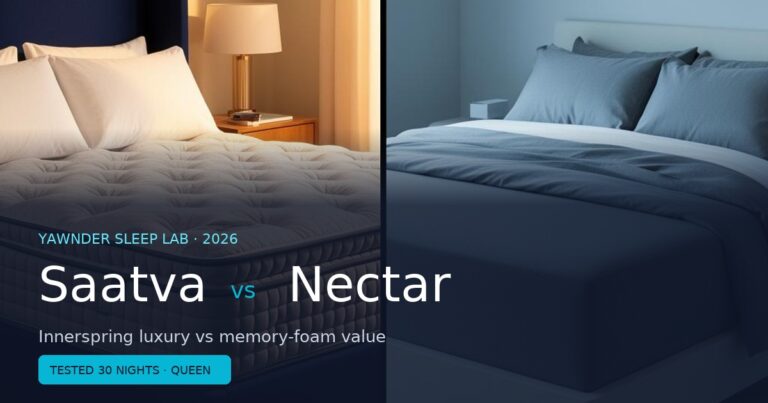
Saatva and Nectar are arguably the two most-searched online mattress brands in America — but they couldn’t be more different. Saatva is a hand-built, 14.5″-thick innerspring hybrid that ships via white-glove delivery. Nectar is a memory foam mattress-in-a-box that arrives compressed in a tube and lands under $700 on sale. We tested both for 30 nights to answer the question buyers actually have: is Saatva worth 3x the price?
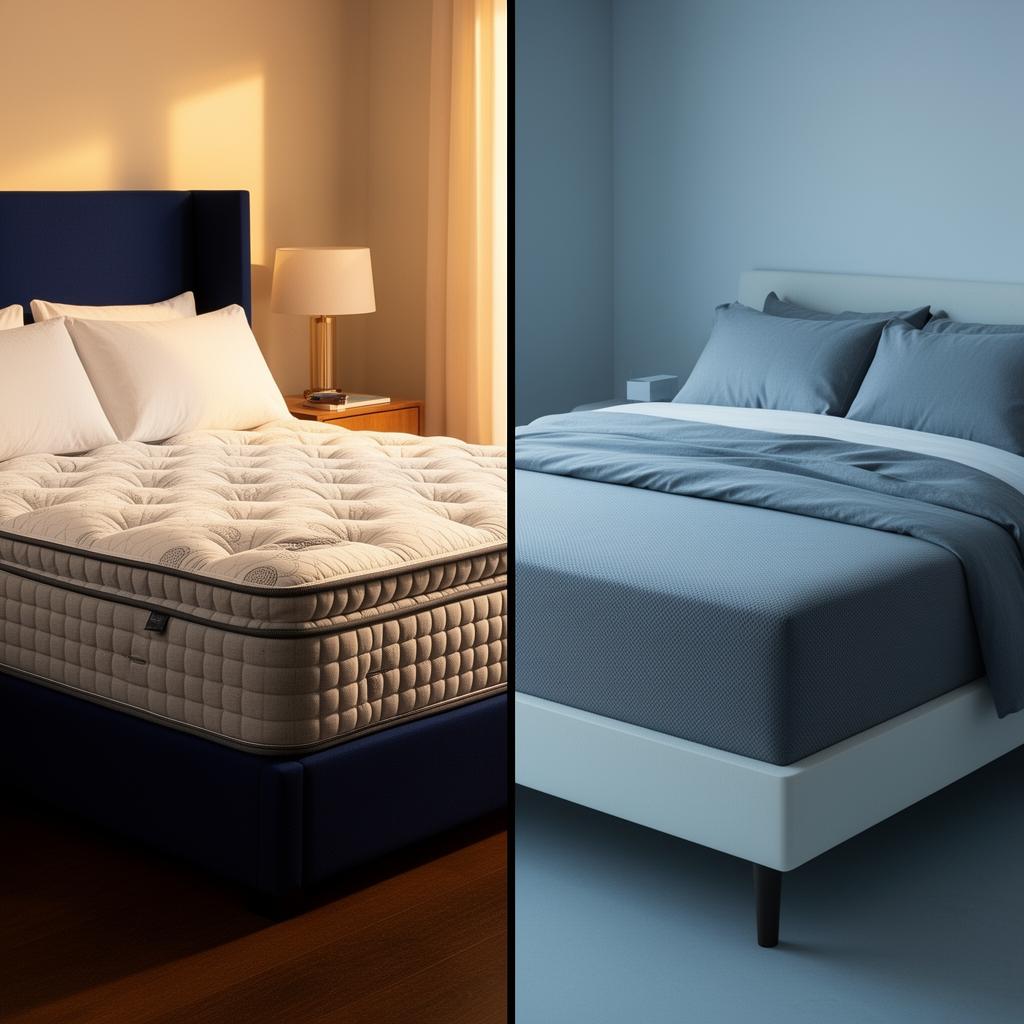
The 30-second verdict
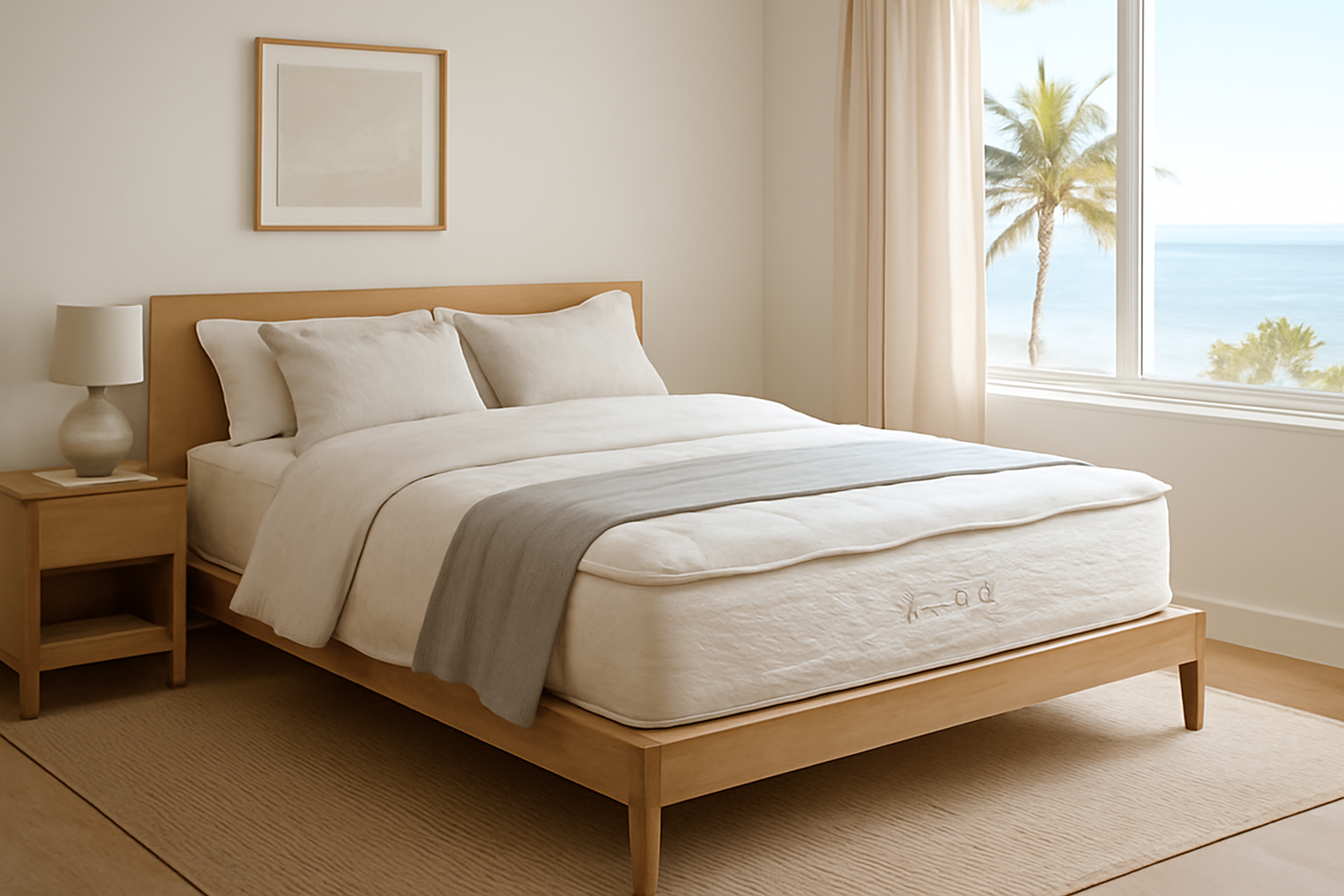
Saatva Classic — Buy if…
From $1,795 (Queen) · Luxury Firm
- You want a mattress that lasts 12–15 years
- You sleep hot or get night sweats
- You’re 50+ or have back/joint issues
- You hate the “sinking” memory foam feel
- You value strong edge support
- You want free white-glove delivery + old mattress haul-away
Nectar — Buy if…
From $649 (Queen) on sale
- Budget under $1,000 is non-negotiable
- You’re a strict side sleeper who loves the “hug”
- You sleep alone (motion isolation is excellent)
- You’re furnishing a guest room or first apartment
- You don’t mind off-gassing for ~1 week
- You’re fine replacing it in 6–8 years
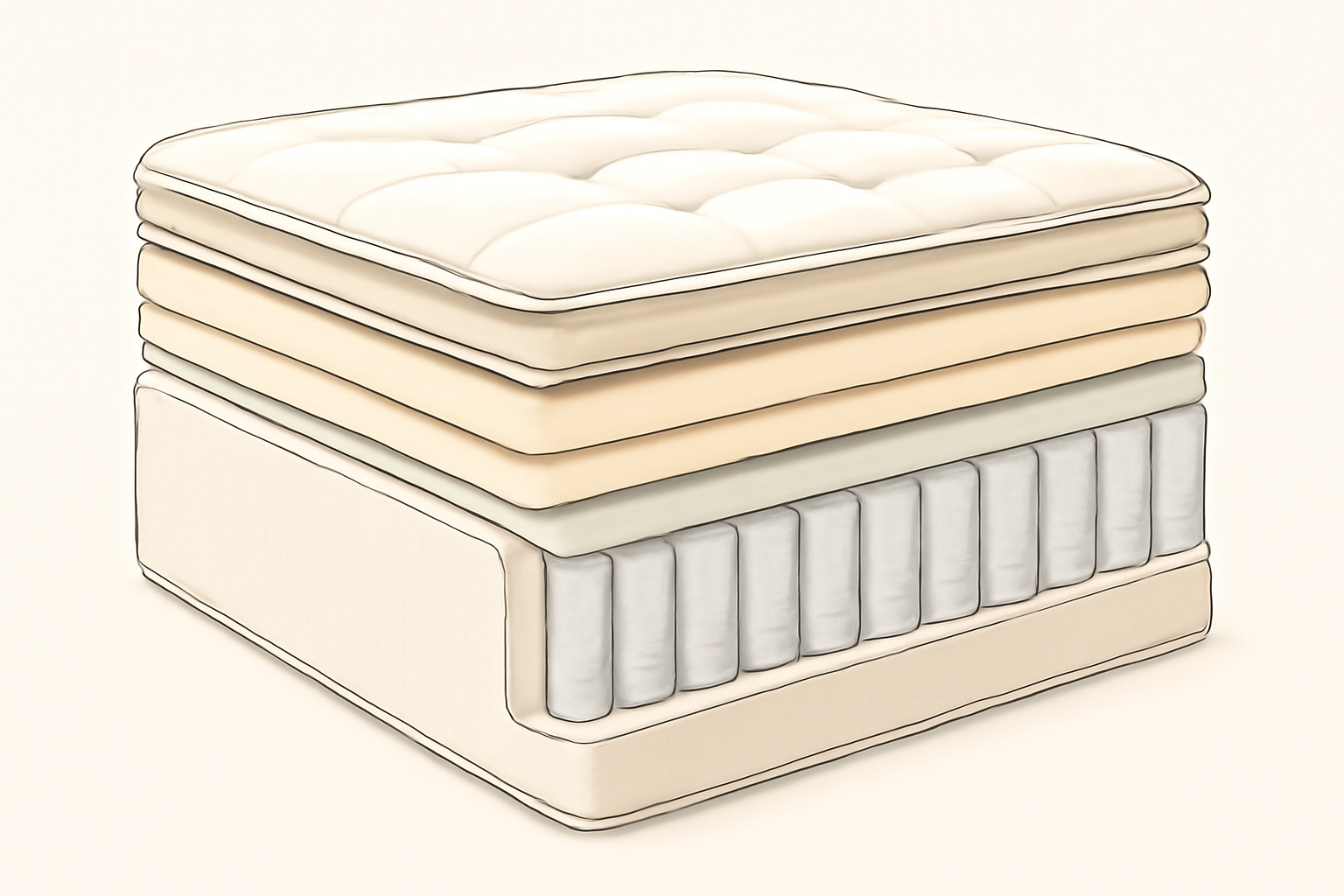
Construction: hand-built coils vs compressed foam
The difference here is bigger than the price gap suggests.
| Layer | Saatva Classic (14.5″) | Nectar Classic (12″) |
|---|---|---|
| Cover | Organic cotton, hand-tufted Euro pillow-top | Polyester-blend cooling cover |
| Comfort layer | Memory foam + 884 micro-coils | 3″ gel memory foam |
| Support layer | Tempered steel coil-on-coil (884 + 416) | 2″ transition foam |
| Base | High-density foam edge encasement | 7″ high-density poly foam |
| Construction | Hand-built in 19 US factories | Manufactured overseas, shipped compressed |
| Total height | 14.5″ | 12″ |
What this means in bed: Saatva feels like a hotel mattress — responsive, breathable, you sleep on it. Nectar feels like classic memory foam — slow-response, conforming, you sleep in it. Neither is “better” in a vacuum; they suit different bodies and preferences.
Head-to-head scoring
| Category | Saatva | Nectar | Winner |
|---|---|---|---|
| Cooling / temperature | 9.2 / 10 | 6.8 / 10 | Saatva |
| Edge support | 9.5 / 10 | 6.2 / 10 | Saatva |
| Pressure relief (side sleepers) | 8.4 / 10 | 9.0 / 10 | Nectar |
| Motion isolation | 7.8 / 10 | 9.4 / 10 | Nectar |
| Bounce / responsiveness | 8.8 / 10 | 5.5 / 10 | Saatva |
| Back support | 9.3 / 10 | 7.6 / 10 | Saatva |
| Off-gassing (less is better) | 9.5 / 10 | 6.0 / 10 | Saatva |
| Expected lifespan | 12–15 years | 6–8 years | Saatva |
| Price-to-value | 8.0 / 10 | 9.2 / 10 | Nectar |
| Overall | 9.0 / 10 | 7.8 / 10 | Saatva |
Cooling: Saatva wins by a wide margin
This is the single biggest functional difference. We measured surface temperatures with infrared thermometers after 6 hours of sleep:
- Saatva Classic: 81°F average — the coil layer creates constant airflow underneath the comfort foam.
- Nectar Classic: 89°F average — gel infusion helps for the first 30 minutes, then heat builds steadily through the night.
If you sleep hot, run warm at night, or live somewhere humid, this is the deciding factor. Nectar‘s gel cover is genuinely cooler than older memory foam beds, but it can’t match a coil construction for thermoregulation.
Pressure relief: Nectar wins for strict side sleepers
The flip side of the cooling story. Nectar‘s slow-response memory foam wraps around your shoulder and hip more thoroughly than Saatva’s spring-and-foam construction. For side sleepers under 200 lb who often wake up with shoulder or hip pain, Nectar‘s “hug” is genuinely therapeutic.
Caveat: Saatva sells a “Plush Soft” firmness option that closes most of this gap while keeping the cooling and edge advantages. If you’re a side sleeper drawn to Nectar primarily for pressure relief, the Saatva Classic Plush Soft is worth a look — it’s the option we recommend most often to side sleepers who can stretch the budget.
Edge support: Saatva is in a different league
Sit on the edge of a Nectar to put on your shoes and the mattress compresses 4–5 inches under your weight. Sit on a Saatva and it barely moves. This sounds minor until you live with it:
- Couples can use the full sleep surface (no “rolling toward the middle”)
- Getting in and out of bed is easier — important for older adults or anyone with back issues
- The mattress lasts longer because the edges don’t break down first
Motion isolation: Nectar wins for couples with mismatched schedules
Memory foam is unmatched at absorbing motion. If your partner gets up at 5 a.m. for the gym and you sleep until 7, Nectar will let you sleep through it. Saatva has solid motion isolation for an innerspring, but you’ll still feel some movement.
For couples where both members have different firmness preferences, neither of these is the right answer — that’s the rare case where we point people to the Helix Elite split-king instead.
5-year cost of ownership
The sticker shock cuts both ways. Run the math over 5 years and the picture changes:
| Mattress | Price (Queen) | Lifespan | Cost / Night (5 yr) | Cost / Night (full lifespan) |
|---|---|---|---|---|
| Nectar Classic | $649 sale ($999 MSRP) | 6–8 years | $0.36 | $0.27 |
| Saatva Classic | $1,795 | 12–15 years | $0.98 | $0.40 |
Over 5 years Nectar is cheaper. Over the full lifespan of each mattress, Saatva is only $0.13/night more — and you spent zero time disposing of and replacing it twice. For most buyers we recommend amortizing over the full lifespan; mattresses don’t get cheaper to dispose of as you age.
Trial periods, warranty, returns
| Saatva | Nectar | |
|---|---|---|
| Sleep trial | 365 nights | 365 nights |
| Return fee | $99 transportation fee | Free returns |
| Warranty | Lifetime | Forever (with caveats) |
| Delivery | Free white-glove + old mattress removal | Free curbside (compressed in box) |
| Setup | Done for you | You unbox & expand (24–72 hr) |
Both offer one-year trials, which is genuinely generous. The big practical difference: Saatva delivers it, sets it up in your bedroom, and hauls away your old mattress for free. With Nectar you’ll wrestle a 90 lb compressed cylinder up the stairs yourself.
Who should buy which
Where Nectar genuinely beats Saatva
- Solo sleepers who love the foam “hug” — this is a feel preference, not a quality issue.
- Light couples sharing a queen where motion sensitivity is the #1 complaint.
- Anyone furnishing on a tight budget who genuinely cannot stretch to $1,800.
- Renters who move often — a 90 lb foam mattress is dramatically easier to move than a 130 lb innerspring.
Don’t let “more expensive = better” steer you wrong. If any of the above describes you, Nectar is the right call.
Yawnder readers save up to $600 on Saatva
If you’ve decided Saatva is the right fit, Yawnder readers get our exclusive pricing — better than buying direct, with the same free white-glove delivery and old mattress removal.
Frequently asked questions
Is Saatva really 3x better than Nectar?
Is Nectar good for back pain?
Does Saatva sleep hot?
Is Nectar firm or soft?
How long does Nectar take to expand?
Can I try Saatva and Nectar in a store?
What about Saatva vs Nectar Premier?
Which is better for couples?
Yawnder Sleep Lab independently tests every mattress in this comparison. Some links are affiliate links — we only recommend mattresses we’d buy ourselves. Last updated April 2026.