
Valerian Root for Sleep: Benefits & Uses

valerian root

Quick answer

Valerian root is an herb sold in supplements and teas for sleep. Evidence about whether it helps sleep is inconsistent, and it has not been established as an effective treatment for chronic insomnia. The National Center for Complementary and Integrative Health reports that the American Academy of Sleep Medicine recommended against using it for chronic insomnia in adults.

Ask a healthcare professional before using it, especially if you take medications or other supplements. Avoid combining valerian with alcohol or sedatives.

What the research says

Studies use different valerian preparations, doses and measures, making findings hard to compare. NCCIH describes the evidence for sleep problems as inconsistent and says there is not enough evidence to draw conclusions about anxiety. A historical reputation or an individual testimonial does not establish effectiveness.

Scientists have investigated possible effects on brain signaling, but the NIH Office of Dietary Supplements says there is no scientific agreement on its mechanism of action.

What is valerian root?

Valeriana officinalis is a plant whose root is sold in capsules, extracts and teas. Products can vary in ingredients and concentration, so findings from one preparation should not automatically be applied to another.

What to check on a supplement label

  • Identify the plant, amount, form and other active ingredients; some products combine several herbs.
  • Check the manufacturer, batch information and any relevant independent quality testing.
  • Review warnings and discuss the product with a clinician or pharmacist, particularly if you take medication.

A supplement label or quality seal does not prove that a product will treat insomnia. There is no standard dose established here for treating a sleep disorder.

Other options for persistent insomnia

If difficulty sleeping persists or affects your daytime life, seek an evaluation. The NIH describes cognitive behavioral therapy for insomnia (CBT-I) as a usual first treatment for long-term insomnia. A clinician can also assess other factors such as sleep apnea, medicines, pain or stress.

Safety and interactions

NCCIH reports that short-term use appears generally safe for most adults, but long-term safety is uncertain. Possible effects include headache, stomach upset, mental dullness, excitability and vivid dreams. Rare liver injury has been reported, often alongside other herbs; causation and long-term effects remain uncertain.

Do not combine valerian with alcohol or sedatives. It may add to sedating effects of some medications or supplements. Bring a complete medication and supplement list to a clinician or pharmacist before use. Safety in pregnancy and breastfeeding is not well established, and use in children requires medical guidance.

If you have used valerian regularly for a long time, ask a clinician about stopping; NCCIH notes that withdrawal symptoms have been reported after abrupt discontinuation following chronic use.

Frequently asked questions

Does valerian root reliably improve sleep?

The evidence is inconsistent. It has not been established as an effective treatment for chronic insomnia.

Is valerian safe with alcohol or sleep medication?

It should not be combined with alcohol or sedatives. Ask a clinician or pharmacist about your specific medicines and supplements.

Is valerian safe during pregnancy or breastfeeding?

Safety is not well established. Seek medical advice before use.

What is recommended for long-term insomnia?

NIH describes CBT-I as a usual first treatment. A healthcare professional can recommend an evaluation and options tailored to you.

Keep exploring
See today’s best sleep deals

Browse Yawnder’s sleep education, research explainers, and practical guides.

Explore sleep guides
MaryRuth’s Organics Review: Nighttime Minerals & Sleep

Mary Ruth Vitamins

Updated October 18, 2026. This editorial review checks MaryRuth’s current sleep-related products and label information. It does not report a new hands-on trial or independent laboratory testing.

MaryRuth’s Organics review: our verdict for sleep shoppers

MaryRuth’s liquid format may appeal to people who dislike swallowing pills. That convenience does not establish better absorption or better sleep than other formats. Choose by the specific ingredient panel, serving size and cost—not the brand name or a blanket promise of wellness.

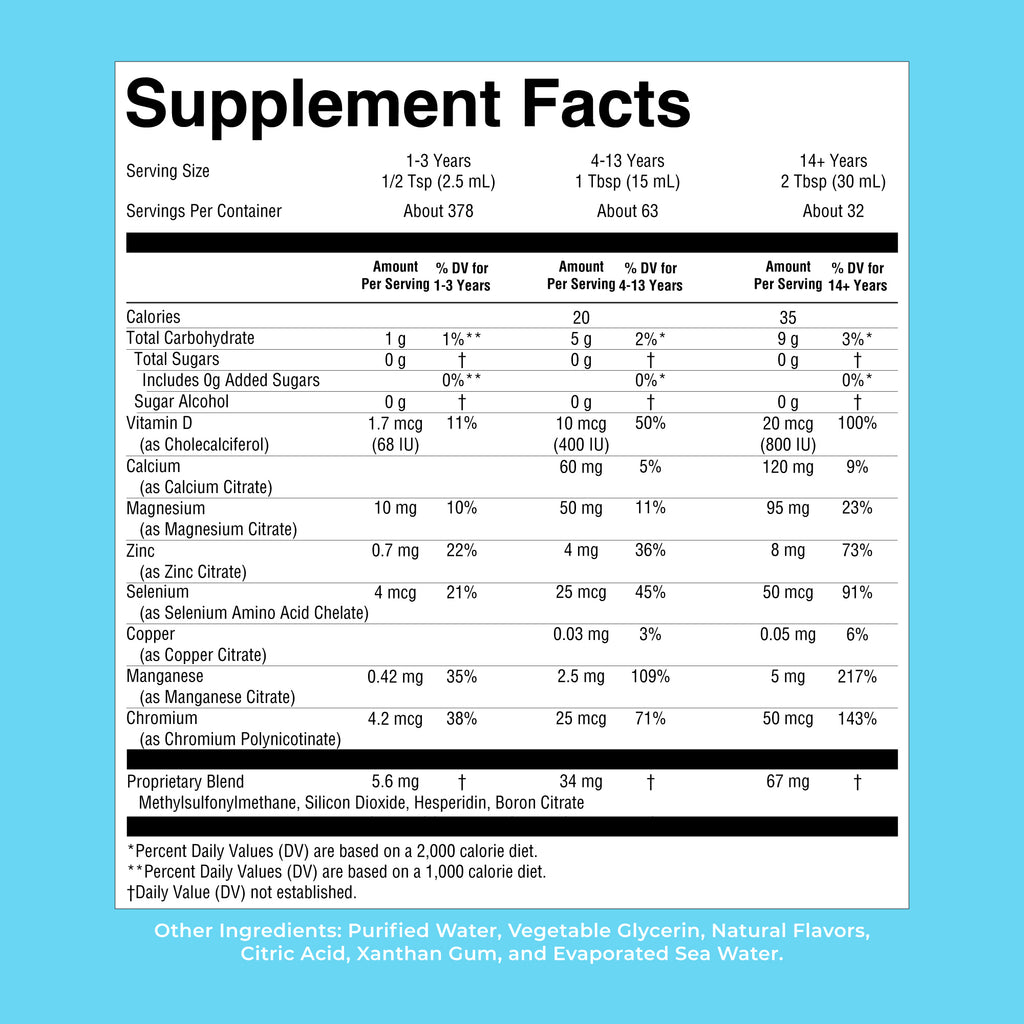
The Liquid Nighttime Multimineral is a melatonin-free mineral supplement. It should not be confused with a proven insomnia treatment or with magnesium glycinate. The Coconut formula pictured below uses magnesium citrate. Other MaryRuth’s sleep products have different ingredients, so this review does not extend one formula’s details to the entire brand.

Liquid Nighttime Multimineral: label check

For the pictured 32 oz Coconut bottle, the adult serving is 2 tablespoons (30 mL), with about 32 servings. The panel lists:

IngredientPer 30 mL serving
Magnesium, as citrate95 mg
Calcium, as citrate120 mg
Vitamin D320 mcg (800 IU)
Zinc8 mg
Selenium50 mcg
Copper0.05 mg
Manganese5 mg
Chromium50 mcg
Proprietary blend67 mg total: MSM, silicon dioxide, hesperidin and boron citrate

The adult serving also lists 35 calories and 0 g total sugar. Those facts do not mean the product has no carbohydrates: it lists 9 g total carbohydrate. Verify your bottle’s flavor, size and panel because formulas can change.

MaryRuth’s Coconut Nighttime Multimineral label showing 95 mg magnesium per 30 mL
Manufacturer’s Coconut 32 oz Supplement Facts, reviewed in October 2026.

Which MaryRuth’s nighttime product are you comparing?

ProductImportant distinction
Liquid Nighttime MultimineralThe Coconut formula above contains minerals and no melatonin.
Extra Strength Liquid Nighttime MultimineralThe manufacturer describes higher calcium and magnesium amounts. Check its own panel; do not reuse the Coconut amounts above.
Liquid Ultra Sleep SupportA separate melatonin-free blend featuring EverZen and L-theanine. Ingredient research and manufacturer benefit claims do not independently validate the finished product.
Morning multivitamins and hair supplementsDifferent nutritional goals; they are not substitutes for a sleep assessment.

Does it help you sleep?

NCCIH describes limited and inconsistent research on magnesium for insomnia. Correcting an identified nutrient deficiency is a different question from treating insomnia in someone with adequate intake. We cannot infer a sleep benefit from the presence of magnesium, calcium or vitamins alone.

We also do not endorse “adrenal fatigue” as an explanation for sleep trouble. The Endocrine Society says scientific evidence does not support it as a medical condition. Persistent fatigue or disturbed sleep warrants an assessment for its actual cause, rather than assuming an adrenal supplement is the answer.

Organic, vegan and non-GMO descriptions concern particular product attributes. They do not establish that a supplement is safer, more effective or free of every contaminant. Check the specific certification and label rather than assuming every MaryRuth’s product shares the same attributes.

Side effects, interactions and storage

Supplemental magnesium can cause diarrhea, nausea and cramping. The adult upper limit is 350 mg daily from supplements and medicines unless a clinician advises otherwise; that limit excludes magnesium naturally present in food. Add up overlapping multivitamins, magnesium products and medicines. Kidney disease increases concern about magnesium accumulation.

Minerals can interfere with absorption of medicines, including some antibiotics and osteoporosis medicines. Ask a pharmacist about your exact products and timing. Review use with a clinician during pregnancy or breastfeeding, with medical conditions, or for a child; the adult serving shown here is not a pediatric recommendation.

The manufacturer says to shake gently and refrigerate after opening. Follow the actual bottle’s storage directions and expiration date; we do not apply a universal shelf life across the brand. Public manufacturer heavy-metal test information is available, but we have not independently tested this product or confirmed a report for your batch.

Price, discounts and buying advice

The checked Coconut 32 oz page displays $42.95 one-time and $38.66 on subscription. Using about 32 adult servings, that is approximately $1.34 or $1.21 per serving, before shipping and tax. Confirm the selected size and recurring delivery terms at checkout. Prices and promotions can change.

We removed expired October 2023 codes rather than presenting them as active offers. Check the current manufacturer checkout and policy terms. We do not reproduce unsourced Reddit quotes, testimonials or celebrity endorsements as evidence.

For context, read our magnesium and sleep comparison, Lemme Sleep review and OLLY Sleep review. These contain different ingredients and are not interchangeable recommendations.

Frequently asked questions

Is MaryRuth’s Nighttime Multimineral magnesium glycinate?

The Coconut panel reviewed here lists magnesium citrate, 95 mg per 30 mL adult serving.

Does it contain melatonin?

The checked Nighttime Multimineral formula is melatonin-free. Always check the exact product, as the brand sells several nighttime formulas.

Are liquid vitamins absorbed better?

Liquid delivery may be easier to take, but we have not established a general absorption advantage for this brand over other supplement formats.

To compare mineral forms and serving amounts, see our magnesium and sleep guide. The Coconut formula reviewed here uses citrate, so its label should not be read as a glycinate dose.

Sources and review method

We read the manufacturer’s Supplement Facts image, product directions and purchase options, then checked sleep and safety claims against independent health guidance. No numerical effectiveness score or new tester outcome is assigned.

Check MaryRuth’s current label and price

Sleep Gummies Compared: Ingredients, Evidence & Precautions

Sleep Gummies

The best sleep gummy for you cannot be determined by a star rating, celebrity endorsement or the largest ingredient dose. Start with whether you want melatonin, need to avoid THC, and can tolerate the full ingredient list. This adult-focused guide connects the current labels and evidence in our individual reviews.

By Ben Trapskin, founder of Yawnder. Updated October 18, 2026. This is an editorial comparison of labels and research, not a head-to-head clinical trial. Any firsthand experience belongs to the specific review where it is identified.

Quick answer: compare ingredients before choosing a gummy

There is no established universal winner for insomnia. A gummy may be convenient if you dislike swallowing pills, but the format alone does not establish faster absorption, better dose accuracy or greater effectiveness. Tablets and gummies sold as supplements are not automatically governed by different standards simply because of their shape.

For persistent trouble sleeping, discuss the cause and treatment options with a clinician. CBT-I is recommended as an initial treatment for chronic insomnia. A pleasant taste or a relaxing ritual does not establish that a supplement treats a sleep disorder.

Compare the formulas we have reviewed

These are label comparisons, not rankings of clinical benefit. Amounts apply to the checked formula and serving; verify your current package.

ProductChecked formulaMain tradeoff
OLLY Sleep Blackberry Zen3 mg melatonin and 50 mg L-theanine per two gummies, plus botanicalsContains added sugar and gelatin; possible melatonin side effects
Lemme Sleep5 mg melatonin, 50 mg L-theanine and 20 mg magnesium per two gummies, plus a botanical blendA different melatonin amount does not establish better sleep
Plant People WonderSleepMelatonin-free reishi, GABA and botanical blendContains maltitol and isomalt; extract equivalents differ from actual extract mass; label graphics conflict on GABA
Slumber Deep Zzzs Original25 mg CBD, 8 mg CBN and 3 mg THC per gummyTHC, impairment and drug-testing concerns; merchant shipping restrictions
Lemme ChillAshwagandha-based product marketed for occasional stressDifferent purpose and precautions; not interchangeable with a melatonin sleep product
Charlotte’s Web CBD Sleep10 mg CBD and 3 mg melatonin per two gummiesDifferent from the separate Stay Asleep CBN formula; cannabinoid and melatonin precautions both apply
Hemp Bombs Original CBD Sleep15 mg CBD and 5 mg melatonin per gummyOriginal lists gelatin; Maximum Potency and Melatonin-Free have different formulas and serving sizes
Sunday Scaries CBD Gummies for Sleep50 mg CBD, 30 mg CBN and 1 mg melatonin per two gummies, according to the pictured panelMarketing copy mixes per-gummy and per-serving amounts; distinct from its THC sleep gummies

Use the individual reviews for current price snapshots, variant distinctions, sources and purchase buttons. Buying through an affiliate button may earn Yawnder a commission, as disclosed in the review.

For ingredient background, read our melatonin timing and duration guide, melatonin alternatives guide and CBD-versus-melatonin comparison. Use the matching product review to check the exact variant and its source label.

How to read a sleep-gummy label

  • Serving size: “5 mg” may describe two gummies, not one. Read both fields together.
  • Exact variant: standard, extra-strength, melatonin-free and children’s products can have different formulas.
  • Complete ingredients: check added sugar, sugar alcohols, gelatin, botanicals and any cannabinoid ingredients.
  • Extract equivalents: a botanical-equivalent milligram claim is not necessarily the mass of extract in your serving.
  • Quality information: check the scope of any certification or batch report. Quality testing does not establish clinical effectiveness.

Calculate cost per labeled serving, not per gummy or bottle. Compare one-time and subscription totals separately, including shipping and renewal terms. Do not interpret more milligrams per dollar as a reason to take more.

What does the evidence support?

NCCIH’s melatonin overview describes possible usefulness for certain sleep-timing problems and insufficient evidence to recommend melatonin for chronic insomnia. That distinction matters when a gummy is marketed broadly for “better sleep.”

Magnesium, botanicals and cannabinoids have different evidence bases and safety considerations. A study of one extract, dose or population cannot automatically validate every gummy containing that ingredient. A customer survey is also different from a randomized, blinded trial.

We have removed the earlier ten-favorites ranking, broad effectiveness claims and unsourced ingredient-dose suggestions. Products omitted from this comparison have not been established as ineffective; we are limiting the table to formulas covered in the checked reviews.

Precautions that matter before buying

Melatonin may cause next-day sleepiness, headache, dizziness or nausea. Melatonin-free blends can still have side effects and medication interactions. CBD and THC add separate risks: FDA warns that CBD can cause liver injury and affect medicines, and that combining it with alcohol or sedating drugs increases sedation risk.

Ask a clinician or pharmacist before combining sleep products, particularly if you take medication, have a medical condition, or are pregnant or breastfeeding. Do not drive while drowsy or impaired. Keep gummies securely away from children and pets.

This is an adult comparison. Do not use an adult roundup to select a child’s melatonin dose. Children’s sleep concerns should be discussed with their health professional.

Common questions

Are gummies better than pills?

Not automatically. Compare the specific formula, serving, quality and suitability. Format alone does not prove a clinical or absorption advantage.

Does sugar-free mean no sugar alcohols?

No. WonderSleep’s checked ingredients include maltitol and isomalt despite its sugar-free positioning.

Is more melatonin better?

A larger amount is not proof of better sleep. Follow your package directions and discuss ongoing need with a clinician.

Can a THC-free claim guarantee a negative drug test?

No. Do not rely on product marketing or a general roundup as assurance of a particular test result.

Sources and comparison method

Product details are linked to our individual reviews, which document the manufacturer labels checked in October 2026. Research and precautions draw on NCCIH’s sleep overview, its melatonin fact sheet and FDA’s CBD safety information. No universal effectiveness score is assigned.

Start with a detailed label review

Compare the standard OLLY formula with Lemme Sleep, or read WonderSleep if avoiding melatonin is your priority.

Read the OLLY Sleep Review

CBD Oil Benefits: Evidence, Risks & Marketing Claims

Blog CBD Oil Benefits

By Ben Trapskin, founder of Yawnder. Updated October 18, 2026. This is an evidence guide, not a personal treatment plan or a claim of medical review.

CBD is marketed for sleep, anxiety, pain, recovery, skin health and many other outcomes. The evidence is much narrower than those marketing claims suggest, and consumer CBD products are not equivalent to an FDA-approved prescription medicine.

The most important distinction: prescription CBD vs consumer CBD

The FDA has approved one cannabis-derived prescription drug containing purified cannabidiol, Epidiolex, for seizures associated with specific rare disorders. FDA has not approved other consumer CBD products as treatments for sleep disorders, anxiety, pain, diabetes, cancer, heart disease or other conditions. FDA regulation of cannabis and CBD.

CBD and sleep

A randomized pilot trial in 30 people with primary insomnia found 150 mg nightly CBD similar to placebo on most sleep outcomes. This is a study dose, not a recommendation. For the fuller evidence and label-reading discussion, see our CBD oil for sleep guide.

CBD is frequently marketed as a sleep aid, but evidence does not justify treating ordinary CBD oils, gummies or tinctures as established insomnia treatments. NCCIH notes that a review of cannabinoid therapies found insufficient evidence to support their use for treating sleep disorders. NCCIH: Sleep disorders and complementary approaches.

CBD and anxiety

Small human studies have explored CBD for anxiety-related outcomes, but findings from a particular dose or controlled study cannot be generalized to every retail CBD product. Product concentration, formulation, THC content, contaminants and labeling accuracy vary.

CBD and pain

Cannabinoids have been studied for chronic pain, but much of that research involves cannabis preparations containing THC, prescription-style formulations or products very different from a typical retail CBD oil. NCCIH describes the evidence as limited and notes that adverse effects are more common with cannabinoid treatment than placebo in some reviews. NCCIH: Cannabis and cannabinoids.

Which CBD benefit claims need the most caution?

Claim category How to assess it
Prescription seizure treatment Evidence and approval apply to a specific medicine and indications, not to every retail CBD oil.
Sleep, anxiety or pain Check the exact formulation, population and outcome. Do not transfer results from THC-containing preparations to CBD alone.
Preventing cancer, dementia or heart disease The evidence cited here does not establish these benefits for retail CBD products.
Skin health, weight loss or broad “anti-inflammatory” benefits Marketing, laboratory mechanisms and individual reports are not proof of a clinically useful outcome from a consumer product.

Safety and drug interactions

FDA identifies real CBD safety concerns, including potential liver injury, drug interactions and sedation. NCCIH also notes changes in alertness, mood, appetite and gastrointestinal symptoms, along with possible label inaccuracies and contamination in over-the-counter products.

Product quality matters

  • A CBD amount printed on a label does not guarantee the product contains exactly that amount.
  • THC or contaminants may be present even when consumers do not expect them.
  • “Full spectrum,” “broad spectrum,” “hemp extract” and similar terms do not prove effectiveness.
  • Third-party testing can improve transparency, but it does not prove a health benefit.

What this means before you buy

CBD is an active compound with legitimate pharmaceutical research behind it, but that does not validate the sweeping health claims used to market consumer CBD oils. If you are considering CBD for a health or sleep problem—especially if you take medications—discuss it with a qualified healthcare professional and rely on current evidence rather than an affiliate product claim.

Common questions about CBD benefits

Does a public lab report establish a health benefit?

No. A certificate of analysis provides information about the tested sample, not proof that the product improves sleep or treats a condition.

Can CBD products interact with medicines?

Yes. Check with a clinician or pharmacist before use; FDA identifies drug interactions, liver injury and sedation among CBD risks.

Can “THC-free” guarantee a negative drug test?

No. Marketing language and testing limits cannot guarantee a particular test result.

Sources and related reading

Research context includes the CBD insomnia pilot trial, FDA’s CBD safety overview and the NCCIH sources linked above. For specific labels, see our Charlotte’s Web review and Slumber review.

Read the sleep evidence before comparing products

Learn what current studies show and how to evaluate product labels and lab reports.

Read the CBD Sleep Guide

Do Not Sell or Share My Personal Information Privacy Policy
Y

Yawnder

We typically reply in a few minutes

👋 Hi there!

Have a question about mattresses, deliveries, or your order? We're here to help.