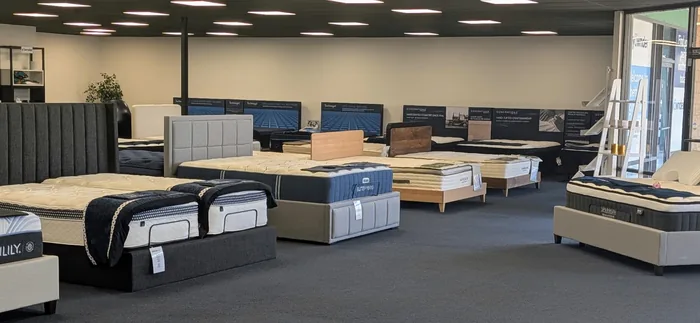
Here’s what I’ve learned from running a mattress showroom: Buying online is convenient, but it’s also surprisingly easy to spend $2,000 on the wrong feel. Shopping in a store gives you information you cannot get from a product description, but a five-minute lie-down is no substitute for sleeping on a mattress at home. The best experience combines the two: research prices and policies online, then compare the actual feel in person if you can.
I founded Yawnder partly because I thought shoppers should be able to try mattresses from brands normally sold online without having to buy first and return later. That doesn’t mean you have to buy in a store. It means I think you should know the strengths and weaknesses of both channels. — Ben Trapskin, Yawnder
Online vs in-store mattress shopping: quick comparison
| Factor | Buying online | Shopping in person |
|---|---|---|
| Comfort and firmness | Descriptions, reviews, videos and at-home trial | You can feel immediate cushioning, bounce, edge support and firmness before ordering |
| Price research | Easy to compare prices and promotions across sellers | Can ask for matched pricing and clarify the delivered total in one conversation |
| Model choice | Massive selection but many names and variations | Selection depends on showroom; opportunity to compare several physically |
| Setup and delivery | Varies from boxed doorstep service to premium installation | Varies by retailer and manufacturer; ask about old-mattress removal |
| Trial and returns | May offer long trials, but check return fees and qualifying conditions | May offer a trial or exchange, but not every showroom policy matches brand-direct terms |
| Risk of a poor first fit | Higher when buying solely from photos and star ratings | Lower for major feel mismatches, but still possible after full nights of sleep |
Five things a mattress store can tell you that the internet usually can’t
1. Whether a mattress is really soft or just marketed as plush
Firmness scores aren’t standardized across brands. A “medium” hybrid from one manufacturer can feel firmer than another brand’s “luxury firm.” Try two or three side by side to establish what your definition of medium means.
2. Whether your shoulders and hips have enough room
Side sleepers often discover that a supportive mattress still pushes uncomfortably against the shoulder. Back sleepers can discover the opposite problem: lots of nice initial cushioning but too much sink under the pelvis. These are things you may notice quickly in a thoughtful side-by-side comparison.
3. How easy it is to roll over
Slow-response foam has a different feel from latex or a responsive hybrid. You won’t learn much about that from a marketing list of cooling technologies, but you can learn a great deal by lying down, rolling over and trying another bed.
4. How the edges really behave
On a Queen shared by two people, edge comfort affects how much of the surface actually feels usable. Sit and lie near the border. Not every advertised “reinforced edge” feels the same.
5. Whether an adjustable base changes your preferred feel
If you want head and foot elevation, confirm the mattress flexes comfortably with the base and does not feel overly stiff or cramped when raised. Compare the adjustable-bed mattress guide and don’t treat an adjustable base as automatically returnable just because the mattress has a sleep trial.
Where online mattress shopping wins
- Research depth: You can compare a large range of mattress models, read owner complaints and dig into construction specifications before speaking to anyone.
- Shopping convenience: Ordering, financing applications and home delivery can be completed without visiting a store.
- Model availability: Some unusual sizes and niche mattress materials may never appear on a showroom floor.
- Time to think: A good online research process gives you space to compare options rather than making a choice under a salesperson’s gaze.
- In-home trial opportunities: When terms permit it, sleeping for several weeks is much more informative than a short floor test.
The critical word is terms. A 100-night, 120-night or 365-night claim may involve a break-in requirement, a return fee, only one exchange, a specific selling channel or exclusions for accessories. The trial you receive comes from your purchase agreement, not whatever promotion you saw in a different advertisement.
How I’d test a mattress in a store
- Bring your normal sleep position with you. If you sleep on your side, start on your side—not sitting on the corner of the bed.
- Spend several minutes on each contender. Give the comfort layers enough time to respond.
- Keep track of shoulder pressure, hip sink and lower-back support rather than asking for one generic firmness number.
- Roll and change positions, then test the edges where you would actually sleep.
- Compare the same size and exact firmness in writing; “Luxe,” “Elite” or “Plus” can be a different mattress, not just a cosmetic upgrade.
- If you shop as a couple, have both people lie on the bed simultaneously, then try turning independently.
- Ask the salesperson to explain returns, delivery, pickup charges and foundation requirements before you buy.
For the complete walkthrough, use our 15-minute mattress testing checklist. The point of testing is to narrow possibilities—not to pretend a showroom can predict exactly how you will feel after a month.
How to compare online and showroom prices fairly
The most common mistake is comparing unlike products: a Queen at one seller against a King at another, an upgraded cooling cover against a base model, or a bundle price against a mattress-only price. Sometimes a retailer-exclusive model has a different construction even though its marketing language sounds identical.
| Question to ask | Why it matters |
|---|---|
| Is this the exact same mattress and firmness? | Retailer-exclusive builds and renamed models can make comparisons misleading |
| Is this the final price for my size? | Banners may use the lowest advertised size |
| What is included in delivery? | Doorstep drop-off is different from room setup and removal |
| Are the bed base and protector optional? | Bundles can hide costs or items excluded from returns |
| What happens if I return it? | Pickup fees and minimum trial periods can change true value |
| When does the warranty apply? | The bed frame or foundation requirements may affect coverage |
Use Yawnder’s mattress price comparison guide for budget tiers and live-tool context. If two prices look far apart, investigate the full model name and the delivered total before deciding the cheaper one is the better deal.
Three red flags I’d watch for regardless of where you buy
A discount so large it replaces real product information
A crossed-out price isn’t a durability test. Ask about feel, materials, height, warranty, trial and the actual payable total. If no one can explain what you’re getting, the promotion isn’t enough.
A salesperson who insists every back sleeper needs the firmest possible mattress
The right support depends on body shape, sleeping position and the bed’s ability to let the shoulders and hips settle without losing alignment. Firmness is one ingredient—not a prescription. If two beds both support you properly, preference becomes a meaningful factor.
A store or website that hides the return details
Mattress trials aren’t universally free returns. Compare fees, minimum use periods, original packaging rules and accessories that are final sale. The warranty vs trial guide explains why a comfort complaint and a manufacturing-defect claim are different.
Should you test in person, then buy online?
It’s a reasonable strategy to research across channels, but be fair to your own goals. Make sure the online model is truly identical to the one you tried, compare the actual bottom-line price, and check whether the seller’s return and warranty process is the same. A discount isn’t necessarily worth losing convenient local help if delivery or fit goes wrong.
At Yawnder, we carry online-oriented brands people often cannot compare side by side at a conventional store. My goal is to give you the practical benefits of trying a mattress first, without the old high-pressure showroom experience. Ask us how a particular product and sales channel are covered; don’t assume all brands have identical policies.
My recommendations by shopper type
- First-time mattress buyer: Test several material types in person if possible, then compare the finalists online.
- Buyer who already knows an exact model: Shop the same model and size across channels, looking carefully at trial and delivery differences.
- Hot sleeper: Try cool-touch surfaces in person, but remember initial surface coolness isn’t the same as full-night heat regulation.
- Couple with different preferences: In-person testing can quickly reveal whether you need a different firmness, a larger size, or a split configuration.
- Remote shopper without a good local store: Prioritize transparent construction details, reliable reviews and a workable trial—not the flashiest product quiz.
Questions I hear most often
Are mattresses always cheaper online?
No. You have to compare the same model, same size, same accessories and delivered total. Pricing and promotions vary, and some stores can match an applicable offer. There isn’t a universal cheaper channel.
Can I know after ten minutes whether a mattress is right?
You can often rule out obvious feel mismatches and narrow your choices. Long-term pressure comfort and sleeping temperature still take more time to evaluate.
Does a showroom purchase include the manufacturer’s website trial?
Not automatically. A brand-direct policy and a local retailer’s policy may differ. Get the specific terms from the seller for your order.
Do I need to buy an expensive mattress to sleep well?
No. Fit, comfort and appropriate support matter more than price. Spend where an upgrade solves a problem you can identify; otherwise, a well-chosen value model may be the smarter purchase.
Bottom line
I like the convenience and transparency of online research, and I like the immediate feedback of a well-run showroom. You don’t have to pick a side. Build a shortlist online, compare the feel in person if possible, and insist on an apples-to-apples written price and return policy before paying. That’s how I would buy my next mattress.
Shopping in San Diego? Visit the Yawnder showroom in Encinitas, or start with our top mattress picks and side-by-side comparison tool.
About the author: Ben Trapskin founded Yawnder and has hands-on showroom experience with many of the mattresses reviewed on the site. This is editorial buying advice informed by that experience, not a controlled study of consumer outcomes. Yawnder sells mattresses and may earn affiliate commissions through links in related articles. Updated October 21, 2026.
Compare both beds against 142 tested mattresses
Sort all 142 mattresses we have tested by pressure relief, support, cooling, motion isolation, edge support, price, trial and warranty, then filter by how you actually sleep. Of those, 86 hold a complete standardized record and 41 a partial standardized record.