
To stop a squeaky bed, start with the frame. Strip the bed, tighten every bolt including the centre support legs, then wax or pad the joints that still creak and line the slat pockets with felt tape. Foam and latex mattresses are much less likely to squeak because they have no spring unit; if the noise follows an innerspring or hybrid mattress to a different frame, the coil system may be worn.
| Where the squeak happens | Most likely cause | First fix |
|---|---|---|
| Near a corner | Loose bolt or bracket | Tighten fasteners |
| When slats flex | Wood rubbing on wood | Add felt tape or wax |
| When the whole bed rocks | Uneven floor or loose leg | Pad or level the legs |
| With the mattress on the floor | Worn spring unit | Consider mattress replacement |
The five fixes, in the order to try them
- Tighten every bolt and bracket. Work around the frame with an Allen key or wrench and snug up every fastener, including the centre support legs most people forget. This alone solves the majority of squeaks.
- Lubricate the joints that still creak. A little candle wax, beeswax or paraffin on wooden joints, or a light silicone spray on metal ones. Avoid oily lubricants near fabric, and never spray anything onto the mattress.
- Pad the contact points with felt tape. Line slat pockets and any spot where wood meets wood or metal meets metal. Cheap felt furniture tape works perfectly and is invisible once the bed is made.
- Cushion the frame against the floor. Old towels, rubber pads or furniture cups under the legs stop the whole bed rocking against an uneven floor, which is a squeak people often blame on the mattress.
- Rotate the mattress and check the support. Rotate head to foot to even out wear, and make sure slats sit no more than 3 inches apart. Wide gaps let the mattress flex, and flexing is what makes an innerspring talk back.
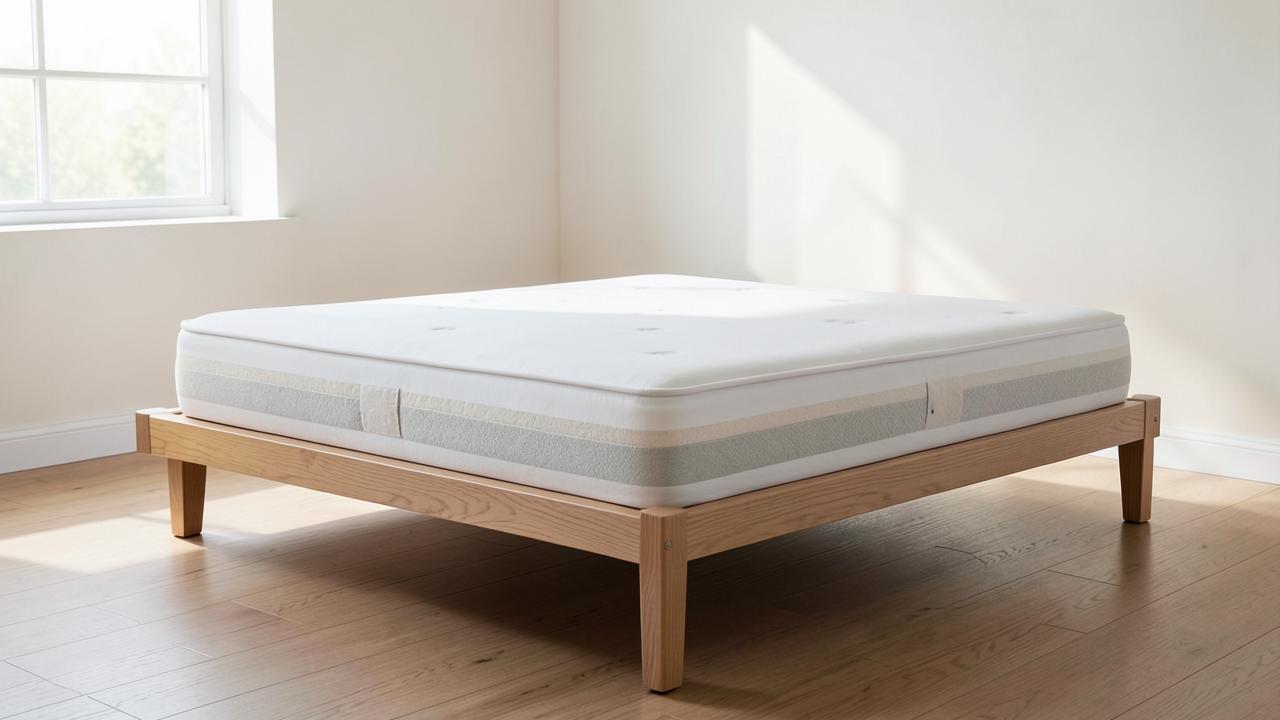
10-minute squeak test: mattress, frame, slats or floor?
- Strip the bed. Remove pillows, bedding and anything stored underneath so loose items cannot fool you.
- Test the mattress on the floor. Press and roll across several areas. If it stays quiet off the frame, the mattress is probably not the problem.
- Rock the empty frame. Push each corner, the headboard and footboard separately. A squeak here usually means a loose fastener, rubbing joint or uneven leg.
- Press every slat. Test where each slat meets the rail. Wood-on-wood chirps are especially common at these contact points.
- Check the floor and wall. Make sure every leg is firmly planted and the headboard is not rubbing the wall or baseboard.
Shortcut: if the bed is silent with the mattress on the floor but noisy once the mattress goes back on the frame, focus on the frame, slats, foundation and floor contact points before replacing the mattress.
Find the squeak before you fix anything
Chasing the wrong noise is how people end up buying a mattress they did not need. Take the bed apart in stages and press hard on each part in turn.
The bed frame
The usual suspect. Loose bolts, brackets that have worked their way open, slats rubbing in their pockets, and centre support legs that no longer touch the floor. Rock each corner and listen.
The box spring or foundation
Set it on the floor without the mattress and kneel on it in several places. Older box springs have internal wooden supports and staples that loosen with age, and once those go the whole unit creaks under any movement.
The mattress
Put it on the floor alone and move around on it. Silence means the mattress is fine. Foam and latex beds have no metal in them and cannot squeak; innersprings and hybrids can, once the coil casings or edge wires wear.
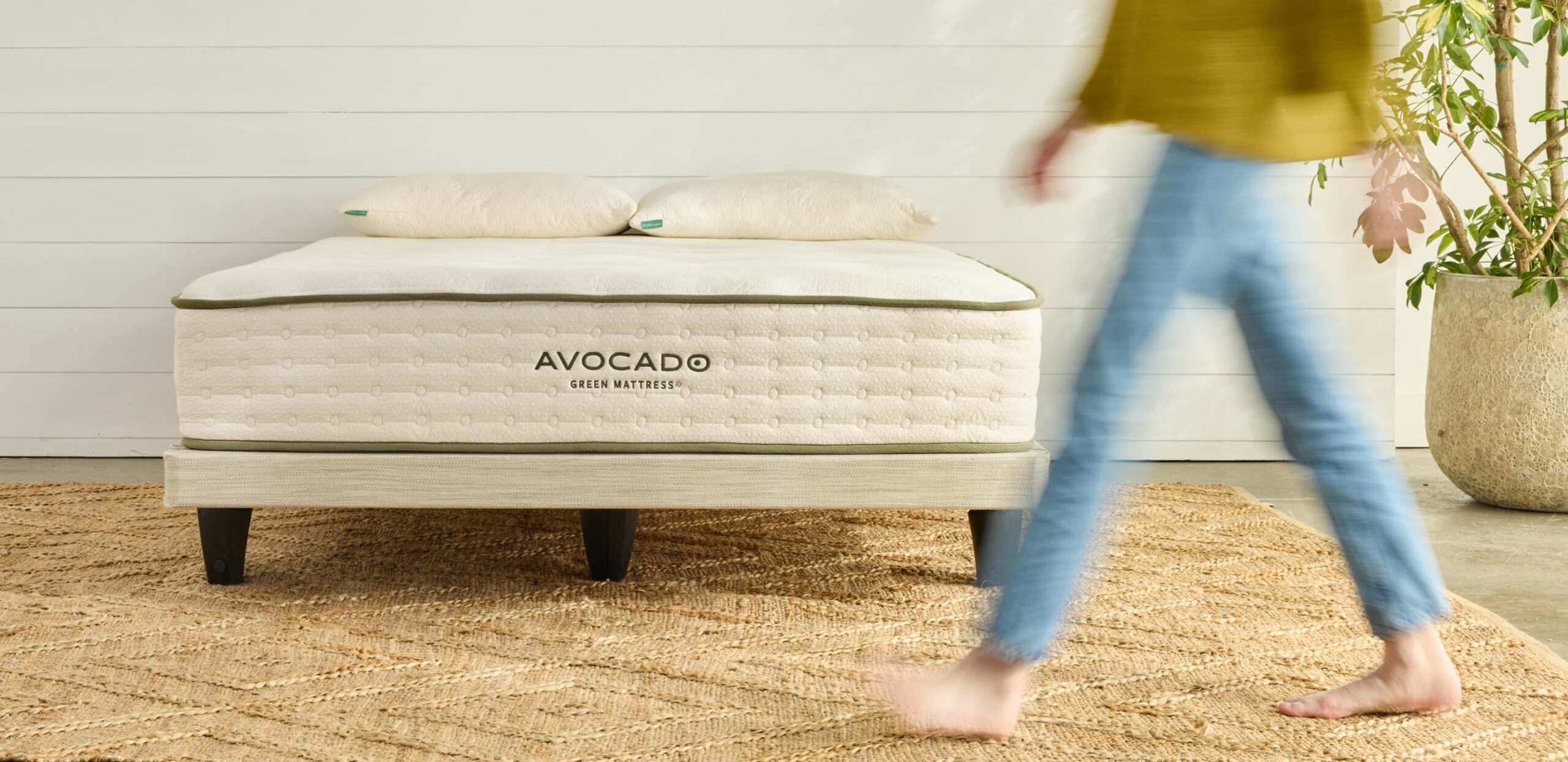
How to stop a squeaky bed by bed type
Wooden bed frame
Wood frames usually squeak where two pieces rub or where a bolt has loosened enough to let the joint flex. Tighten the hardware first, then add a dry barrier such as beeswax or felt between rubbing surfaces. If a slat pocket is noisy, line the contact point instead of coating the whole frame.
Metal bed frame
Metal frames are most often noisy at bolts, brackets and overlapping rails. Tighten every connection evenly and check that the frame is square on the floor. If two metal pieces still rub after tightening, use a thin non-staining barrier at the contact point rather than soaking the joint with oil near bedding.
Platform bed or squeaky slats
Remove the mattress and press each slat individually. Add felt tape where slats touch the side rails, replace cracked or bowed slats, and make sure the centre support is actually touching the floor. A small gap under a centre leg can make the entire bed flex and chirp with every movement.
Box spring or foundation
Put the foundation on the floor and press across it without the mattress. If the noise follows the foundation, inspect its wooden perimeter, fabric-covered slats and any loose internal supports. Traditional spring-style box springs can develop internal metal noise that is difficult to repair cleanly; a worn unit is often better replaced than opened up.
Mattress
A foam or latex mattress has no coil unit to squeak. If an innerspring or hybrid mattress makes the same noise when tested directly on the floor, the sound may be coming from internal springs or components. If that noise is paired with sagging, a visible dip or loss of support, replacement makes more sense than trying to open the mattress.
Adjustable base
First determine whether the sound happens while the base is stationary or only while it moves. A stationary squeak can come from the mattress retainer, legs or frame contact points. If the noise comes from the motor, actuator or moving mechanism, unplug the base and use the manufacturer’s service guidance rather than disassembling powered components.
Useful supplies for a squeaky-bed repair
You usually do not need a special kit. These inexpensive basics cover most frame and slat noises:
- Felt furniture tape for slat pockets and wood-on-wood contact.
- Beeswax for dry lubrication on wooden joints.
- Rubber furniture cups for legs that shift or rock on hard flooring.
- Hex-key / wrench set for tightening frame hardware.
- Small wood or composite shims for stabilizing a slightly uneven support point.
Affiliate links may earn Yawnder a commission at no extra cost to you.
Cheap DIY materials that actually work
- Beeswax or candle wax. Rub into wooden joints and slat ends. Silent, dry and does not stain bedding the way oil does.
- Felt furniture tape. The single best few dollars for a wooden or upholstered frame.
- Rubber floor pads or furniture cups. Stop the frame rocking on an uneven floor.
- A sheet of plywood. Bridges slats spaced too far apart. A short-term fix, not a permanent one, because it also cuts airflow under the mattress.
- Cardboard or fabric shims. Fill a gap where a rail no longer seats tightly.
When it is time to replace instead of repair
A new frame or foundation
Replace when the wood is cracked or split, slats are visibly bowed, brackets no longer hold a bolt, or the noise comes straight back within a week of every fix. Look for a solid platform with slats under 3 inches apart and a proper centre support.
A new mattress
Replace when the mattress itself makes the noise on the floor, or when the squeak arrives alongside sagging, a visible dip or waking up sore. At that point the springs are worn and quieting them is not possible.
If the mattress is the squeak
Worn coils cannot be repaired. See what we currently have discounted, including quiet foam and latex beds with no springs to creak.
Frequently asked questions
Is it always necessary to replace my mattress if it’s squeaking?
Is it always necessary to replace my mattress if it’s squeaking?
No. Squeaks almost always come from metal-on-metal or wood-on-wood contact in the frame, foundation or box spring rather than the mattress itself. All-foam and latex mattresses have no springs and cannot squeak. If you have an innerspring or hybrid and the noise clearly follows the mattress to a different frame, then the coils or their casings are worn and replacement is the fix.
Who benefits most from felt tape?
Who benefits most from felt tape?
Anyone with a wooden or upholstered frame where slats sit in a rail pocket. Felt tape on the contact points stops the rubbing that causes the creak, costs a few dollars and takes ten minutes. It is less useful on metal frames, where the noise usually comes from loose bolts instead.
Lubricating joints or tightening them — which works better?
Lubricating joints or tightening them — which works better?
Tighten first. Most squeaks are a loose bolt or bracket, and lubricant on a loose joint just quiets it for a week. Lubricate only after everything is snug and a joint still creaks as it flexes.
What are the downsides of the DIY route?
What are the downsides of the DIY route?
Time, and the risk of chasing the wrong noise. If the frame is cracked, the slats are bowed or the box spring has broken internal supports, no amount of tightening or wax will hold. Two rounds of fixes that do not last is the point to stop and replace the part that has failed.
How do I find the exact source of the squeak?
How do I find the exact source of the squeak?
Strip the bed and work in stages. Press each corner of the frame, then each slat, then the box spring on its own on the floor, and finally the mattress on the floor. Whichever stage makes the noise is your culprit, and you have just saved yourself from replacing the wrong thing.
Does a squeaky bed mean the mattress or frame is bad quality?
Does a squeaky bed mean the mattress or frame is bad quality?
Not necessarily. Age, humidity swings, moving house and years of ordinary flexing loosen joints on good frames too. It is usually maintenance, not a defect.
The bottom line
Start with a wrench, not a credit card. Tighten everything, wax the joints, tape the contact points and pad the legs, and most beds go quiet for the cost of a coffee. Only when the same noise survives two rounds of that is it genuinely time to replace a part.
Related: best mattresses of 2026 · best mattresses for back pain · how we test