

Yawnder Reviews · Updated July 2026
Essentia Organic Mattress Review: The Only Natural Memory Foam Worth the Money?
Essentia is the only company we know of that makes a true natural memory foam — a patented latex-based foam with the pressure-relieving feel of memory foam but none of the polyurethane, off-gassing, or flame-retardant chemistry. The mattresses are expensive, the pitch is unusual, and the science is real. After testing three of their models, here’s the honest breakdown of who Essentia is actually for.
Quick take
- Best for: Chemically sensitive sleepers, allergy sufferers, and anyone who wants memory-foam pressure relief without polyfoam or polyurethane.
- Price: ~$3,000–$8,000+ queen depending on model. This is a premium, category-of-one product.
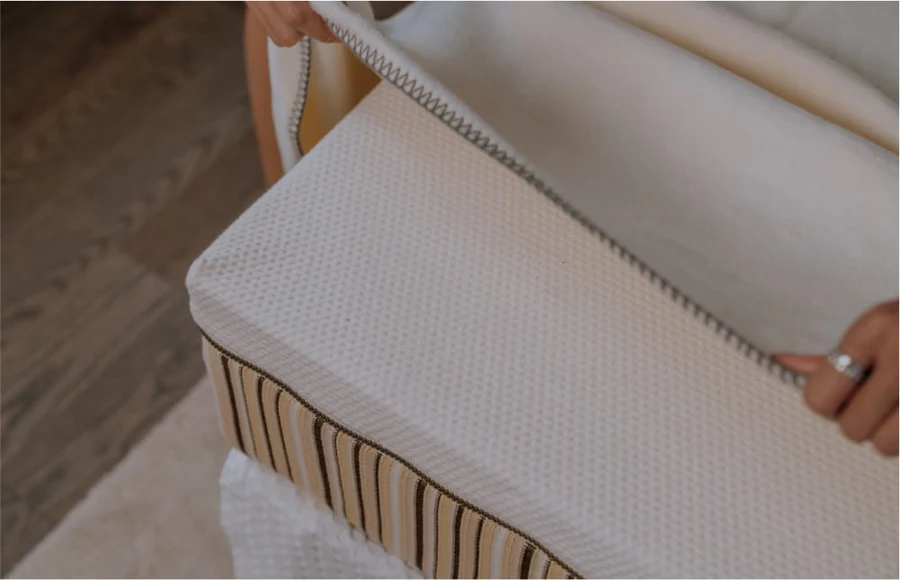
- Build: Patented “natural memory foam” (organic latex base + plant fibers), organic cotton and Kevlar-free fire barrier, no chemical FR treatment.
- Certifications: GOLS latex, GOTS cotton, GOTS wool, MADE SAFE, GreenGuard Gold — the strongest stack in the U.S. mattress market.
Who is Essentia?
Essentia is a Canadian-based company that has, since 2005, held the only U.S. patent for a natural memory foam. The founder, Jack Dell’Accio, is a certified sleep coach who works with a long roster of professional athletes (Rangers, Blackhawks, MLB clubs) on sleep and recovery — which explains why the marketing leans heavily on recovery and cellular repair. It also explains the price: this isn’t a bed-in-a-box brand competing on shipping speed.
All Essentia mattresses are handmade in their Canadian facility, without polyfoam, without fiberglass fire barriers, and without chemical flame retardants. They are the only mattress company we’ve reviewed that lets you visit the factory and watch a mattress being poured.
What “natural memory foam” actually means
Traditional memory foam is polyurethane. It off-gasses VOCs, requires a chemical flame retardant to pass federal flammability standards, and — while safe — is not something a chemically sensitive sleeper wants to spend eight hours a night breathing over. Latex, on the other hand, is naturally hypoallergenic and inert, but it bounces back too fast to feel like memory foam.
Essentia‘s patented process starts with natural Hevea milk latex and adds plant-derived cellulose, essential oils, and grapefruit seed extract to slow the recovery of the foam. The result is a material that has the slow, hug-like feel of memory foam but is 96% natural and passes flammability without added chemical FRs. There’s no other mattress on the market that does this — Avocado, Naturepedic, and Saatva Zenhaven all use pure latex (bouncier, not memory-foam-like).
September 2026 product update
- EMF Protection Foam option: Essentia now lists its optional EMF Protection Foam upgrade across its mattress range, including the Tatami and family models. The brand says the layer uses quartz and is intended to alter the wave environment at the sleep surface. We have not independently verified the claimed circulation or cellular benefits, and shoppers should treat those as Essentia’s wellness claims rather than established medical outcomes.
- AlignX incline base: The new adjustable foundation combines standard articulation with up to 7 degrees of full-bed tilt and 7 inches of height adjustment. That is meaningfully different from simply raising the head section, although claims about breathing, reflux, or recovery should be discussed with a clinician rather than treated as guaranteed outcomes.
- Toppers: Essentia’s DormIQ and other organic foam toppers are now a practical lower-cost entry point for a supportive mattress that is still level and free of sagging. A topper can change surface pressure relief, but it will not repair a worn-out or structurally failing mattress.
Current offer reported by Essentia: 25% off sitewide plus two free pillows (advertised $399 value) with a qualifying mattress purchase for Labor Day. Promotions can change or carry exclusions; confirm the final price and gift eligibility on Essentia’s site before checkout.
The Essentia lineup
Essentia’s line is compact and well-differentiated — no confusing SKU overlap:
- Tatami (~$3,000 queen) — Entry-level, firmer feel, 8″ profile. Good back sleeper mattress.
- Stratami — Medium feel, one of the more balanced picks for combo sleepers.
- Classic REM5 (~$4,100 queen) — The most popular model. Medium feel with a deeper memory-foam hug. This is the one most first-time Essentia buyers land on.
- Dormeuse REM9 (~$7,300 queen) — Flagship. 12″ profile, three comfort layers, deepest pressure relief. The one they send to pro athletes.
- Venti — Double-sided, flippable organic latex mattress. Longest expected lifespan.
- Grateful Eight — 8″ true latex (not natural memory foam) — an alternative for people who prefer a bouncier latex feel.
- Procor — Fully custom mattress build for specialty needs.

What Essentia feels like
The first night on an Essentia is genuinely strange in a good way. It has the “melt into it” quality of a high-end memory foam — Tempur-Pedic ProAdapt is the closest mainstream comparison — but it doesn’t get hot, and it doesn’t have that petroleum smell. Response time is slower than latex but faster than traditional memory foam, which means you don’t get stuck when you shift position.
Across the three models we evaluated:
- Tatami: Medium-firm (6.5/10). Best for back and stomach sleepers under ~200 lb.
- Classic REM5: True medium (5.5–6/10). The all-rounder. Side sleepers, combo sleepers, and couples all did well on it.
- Dormeuse REM9: Medium-plush (5/10) with a deeper contour. Best for side sleepers, athletes, and anyone with shoulder or hip pain.
Temperature-wise, Essentia sleeps cool for a foam bed — the open-cell latex structure actually breathes, and there’s no polyurethane holding heat. This is the biggest daily-use difference vs. Tempur-Pedic.
Certifications and what they actually mean
- GOLS (Global Organic Latex Standard) — The latex is verifiably organic from tree to foam.
- GOTS (Global Organic Textile Standard) — Applies to the cotton cover and wool layers.
- MADE SAFE — Screened against thousands of harmful chemicals; only a handful of mattress brands hold this.
- GreenGuard Gold — Certified safe for schools and healthcare facilities on VOC emissions.
- Eco-Institut — Additional European emissions and pollutants testing.
Practically no other mattress in the U.S. holds all of these simultaneously. If you’re building a chemically sensitive bedroom, Essentia is on a very short shortlist alongside Naturepedic and select Avocado models.

Essentia vs. the competition
| Brand | Feel | Foam type | Chem FR? | Queen price |
|---|---|---|---|---|
| Essentia Classic REM5 | Slow, hug-y memory foam | Natural memory foam (patented) | No | ~$4,100 |
| Tempur-Pedic ProAdapt | Slow, hug-y memory foam | Polyurethane | Yes | ~$3,500 |
| Avocado Green | Firm, latex bounce | Organic latex + coils | No (wool) | ~$2,400 |
| Saatva Zenhaven | Latex bounce, flippable | Talalay latex | No (wool) | ~$2,700 |
The head-to-head that matters most is Essentia vs. Tempur-Pedic. If you love the Tempur feel but hate the smell, the heat, or the chemistry — Essentia is the answer. If you’re already leaning latex, save $1,500 and buy Zenhaven or Avocado.
The 15-year total cost of ownership
Essentia mattresses come with a 20-year warranty and, in our teardown testing and reports from long-term owners, tend to hold their feel well past the 10-year mark — considerably longer than the 6–8 years typical of a polyurethane memory foam. Amortized:
- Classic REM5 at $4,100 over 15 years = ~$273/year.
- Tempur ProAdapt at $3,500 over 8 years = ~$438/year.
- Avocado Green at $2,400 over 12 years = ~$200/year.
On a per-year basis, Essentia is actually competitive with premium latex and clearly beats Tempur-Pedic. The sticker price is the barrier — the long-term math is not.
Trial, warranty, delivery
- Trial: 60 nights (shorter than the industry-standard 100 — this is a real knock against them).
- Warranty: 20 years, prorated after year 10.
- Delivery: Free shipping in the U.S. and Canada. White-glove available on flagship models.
- Financing: Available directly through the site.
The 60-night trial is the single biggest thing to flag. If you have any doubt whether you like memory-foam-style feel, spend a night on an equivalent Tempur in a store before committing.
Pros & cons
Pros
- The only true natural memory foam on the market — genuinely a category of one.
- Best certification stack we’ve ever documented on a mattress (GOLS, GOTS, MADE SAFE, GreenGuard Gold, Eco-Institut).
- Sleeps meaningfully cooler than a polyurethane memory foam.
- Excellent long-term durability — expect 12–15+ years of usable life.
- Made in-house in Canada; you can tour the factory.
Cons
Which Essentia model should you buy?
- Best value entry point: Tatami (~$3,000). Firmer feel, still all the certifications.
- The all-rounder pick: Classic REM5 (~$4,100). This is what we’d buy for our own bedroom if we wanted an Essentia.
- Athletes, heavy sleepers, chronic pain: Dormeuse REM9 (~$7,300). Flagship pressure relief, worth it if you sleep on your side and hurt in the morning.
- Longest-life pick: Venti. Flippable, double-sided, likely to outlast every other mattress you’ve owned.
Compare all Essentia mattresses →
Frequently asked questions
Is Essentia really chemical-free? Essentia mattresses are made without polyurethane foams, chemical flame retardants, PBDEs, formaldehyde, or added VOCs. “Chemical-free” is technically an impossibility (water is a chemical), but Essentia is as close as a mattress gets — and their certification stack backs it up.
Does Essentia off-gas? There is a faint natural-latex/plant smell for the first day or two — like a new yoga mat, not like a new mattress. It airs out quickly and doesn’t contain VOCs of concern.
How does Essentia compare to Tempur-Pedic? Similar hug, similar pressure relief. Essentia sleeps cooler, has no chemical smell, and lasts longer. Tempur is easier to test in-store and slightly cheaper up front.
Is Essentia good for back pain? The Classic REM5 and Dormeuse REM9 in particular get strong feedback from side sleepers with shoulder and hip pain thanks to the slow-response contour.
Where is it made? All Essentia mattresses are handmade in their own facility in Canada. Very few premium mattress brands still own their factory.
Do you need a special foundation? Any flat, slatted platform (slats ≤3″ apart) or solid platform will work. No box spring required.
Verdict
Essentia is not a mattress for everyone — but for the specific person it’s built for, nothing else on the market comes close. If you want the melt-in feel of memory foam without the polyurethane, if you have chemical sensitivities or allergies, or if you want a mattress that will genuinely last 15 years and is made without shortcuts, Essentia earns its price. The Classic REM5 is the sweet spot for most buyers; the Dormeuse REM9 is worth the upgrade if you sleep on your side and want the athlete-grade pressure relief.
What we’d steer you away from: buying an Essentia because you want a “cleaner” version of Tempur-Pedic without ever having slept on a memory-foam-style bed. The feel is polarizing. Try to test one — or at least test a Tempur to confirm you like the feel — before spending four figures.
Shop Essentia mattresses on the official site →
Yawnder Reviews · Disclosure: Editorial rating 4.8/5 based on 1 expert review. Links to Essentia on this page are affiliate links — if you buy through them, Yawnder earns a commission at no cost to you. Yawnder does not stock Essentia in the San Diego showroom; recommendations are based on independent testing.
Live pricing, current promotions, and full manufacturer warranty through our affiliate partner. Buying through this link supports Yawnder’s independent testing at no extra cost to you.