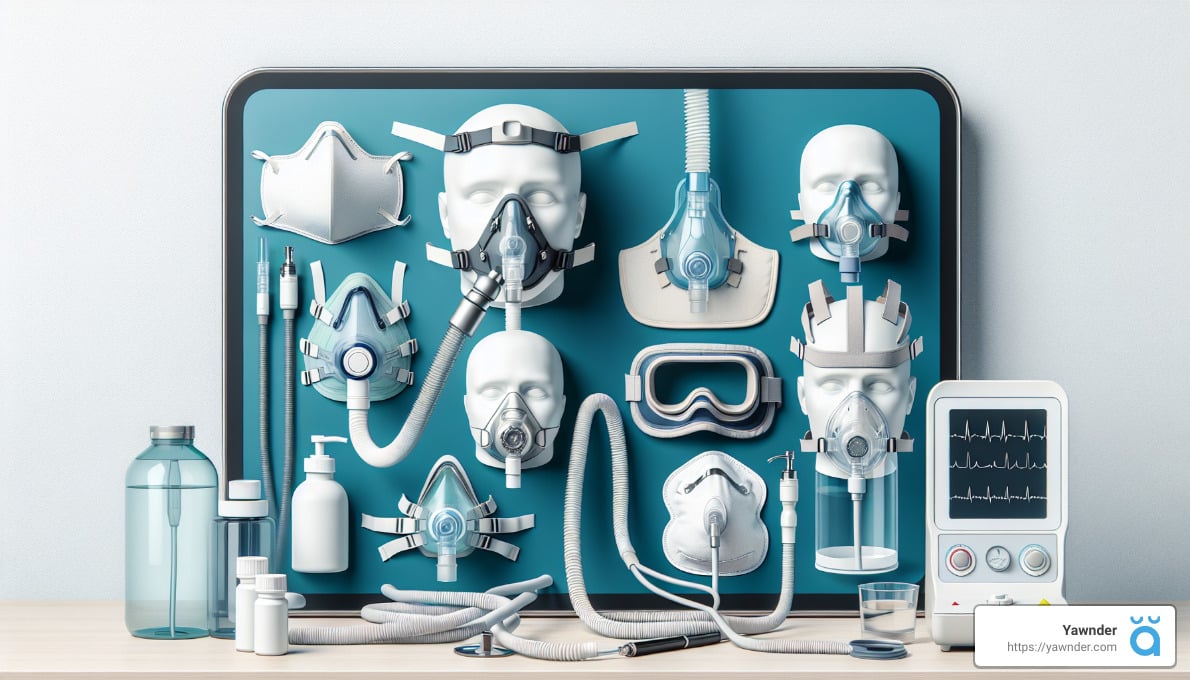
A CPAP mask should fit your face, work with your prescribed equipment and feel comfortable enough to use. There is no single best mask for everyone. This guide explains the main styles and questions to discuss with your sleep clinician or equipment provider; it is not a clinical ranking or a substitute for fitting advice.
I’m Ben Trapskin, the founder of Yawnder. My interest in sleep products grew from my own experiences with sleep disturbances. For CPAP therapy, work with your care team on mask selection and treatment settings.
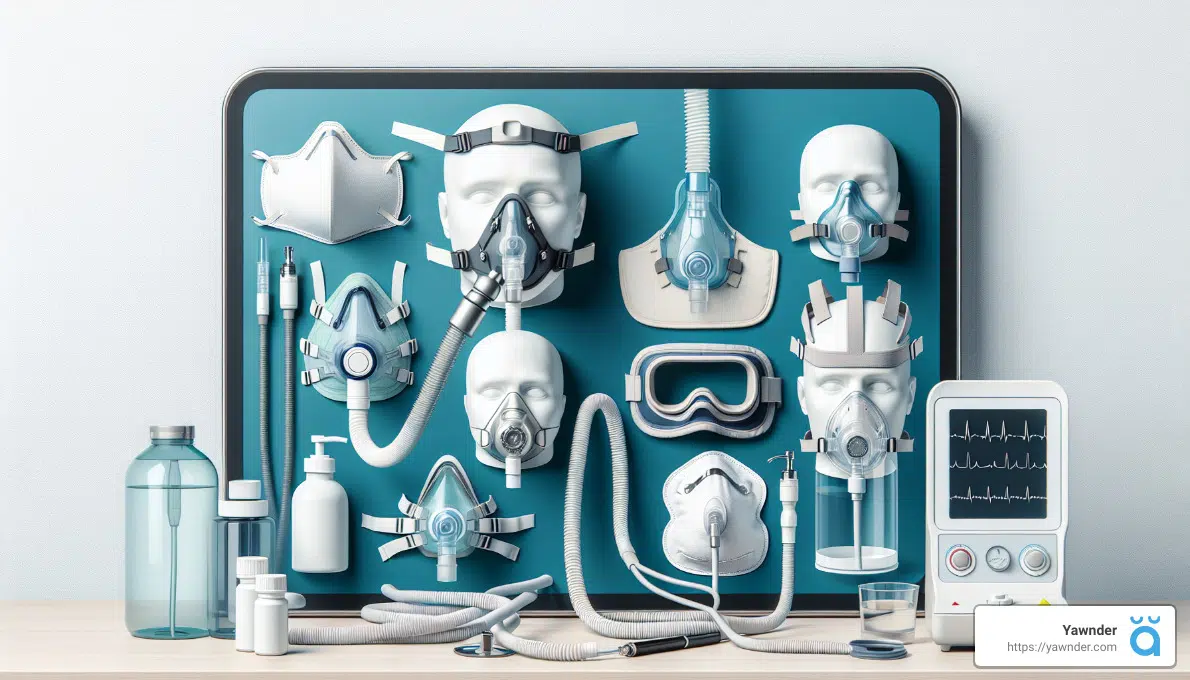
CPAP Mask Types
Nasal masks
A nasal mask seals around or under the nose. It may suit someone who breathes comfortably through their nose and prefers less coverage than a full-face design. Fit, pressure needs and nasal congestion should be discussed with the prescribing clinician.
Nasal-pillow masks
Nasal pillows seal at the nostril openings and cover less of the face. For example, ResMed describes the AirFit P10 as a nasal-pillow mask. A smaller mask is not automatically the best choice: comfort and leaks depend on the individual.
Full-face and minimal-contact masks
Full-face masks deliver air through the nose and mouth; designs differ in where the cushion sits. They may be considered when mouth breathing or nasal obstruction makes a nasal interface difficult. The ResMed AirFit F20 is one example of a full-face mask. A minimal-contact or under-the-nose full-face design still delivers air to both the nose and mouth.
These are examples of mask styles, not claims that Yawnder tested or ranked each model. Features, sizes, availability and compatibility can vary by version.
Check Magnets and Medical Implants
Some CPAP masks use magnetic clips. Magnets can interfere with certain implanted medical devices or metallic objects in the user or someone in close physical contact, including a bed partner. The FDA’s ResMed safety communication identifies affected magnetic mask models and the relevant implants and objects; other manufacturers have issued their own notices.
Check the exact model and its current labeling. If the FDA’s contraindications apply to you or someone close to the mask, follow the FDA’s instructions, switch to a non-magnetic mask if available, and contact your healthcare and mask providers promptly to arrange a suitable alternative and treatment plan. Some models have both magnetic and non-magnetic versions; do not assume they are interchangeable.
How to Choose and Fit a Mask
- Ask for a fitting: A clinician or equipment provider can help you compare cushion sizes and check the seal while lying in your usual position and using your prescribed pressure.
- Consider breathing and comfort: Tell your provider about mouth breathing, congestion, facial hair, skin sensitivity or discomfort. A different size or style may help.
- Check your equipment: Confirm that the mask, tubing and machine are compatible, particularly with travel devices or proprietary connections.
- Review cleaning and replacement: Follow the manufacturer’s instructions for your exact mask and supplies. Ask your insurer or provider about replacement coverage and costs.
- Look at the whole purchase: Check prescription requirements, fitting support, exchange rules and current safety notices before ordering.
If Your Mask Leaks or Hurts
Talk with your provider if you have persistent leaks, skin irritation, dry mouth, discomfort or difficulty using the mask. Overtightening can make a mask uncomfortable and does not guarantee a seal. Your care team can review fit, cushion condition, humidification and other possible adjustments; do not change prescribed pressure settings on your own.
Frequently Asked Questions
Is a full-face mask better than a nasal mask?
Neither style is universally better. Breathing patterns, treatment requirements, fit and personal comfort all matter. A clinician or equipment provider can help compare options.
Can I use a magnetic mask if I have an implant?
It depends on the mask and implant. Review the exact manufacturer labeling and FDA notice, including risks to people in close contact. If a listed contraindication applies, follow the notice and contact your provider about a non-magnetic alternative.
Are CPAP masks interchangeable with every machine?
Do not assume so. Many systems use standard connectors, but some machines and travel setups have specific requirements. Confirm compatibility with the provider or manufacturer.
Does a quieter or smaller mask guarantee better sleep?
No. Fit, leaks, pressure settings and comfort vary. Ask for help if a mask is making prescribed therapy difficult to use.
Yawnder may earn a commission from qualifying purchases through the ResMed link. Availability and terms can change.