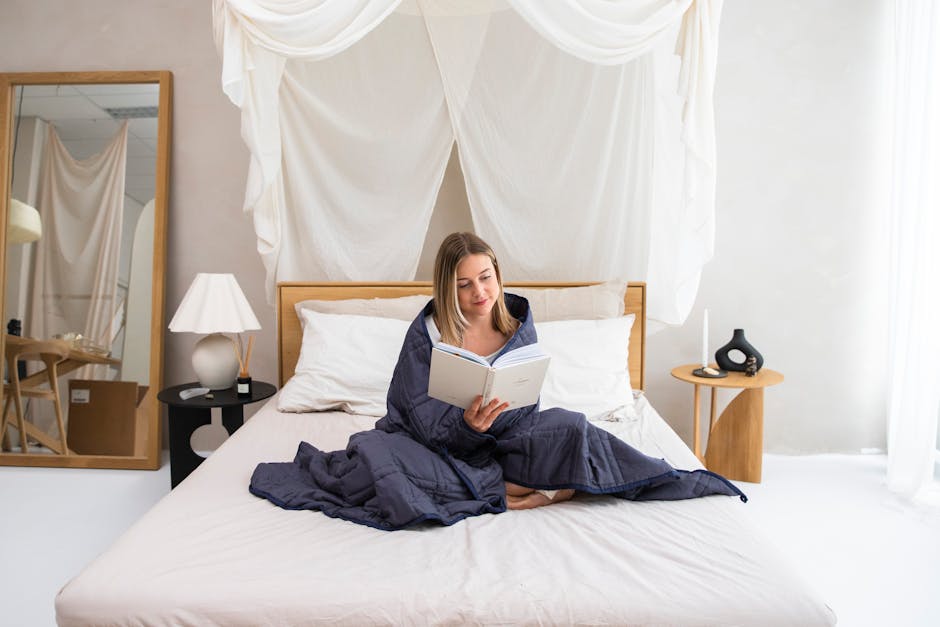
Weighted Blankets for Anxiety: What the Research Actually Shows
There is real research suggesting weighted blankets may reduce anxiety for some people, but that is not the same as proving a consumer blanket treats an anxiety disorder or works through a specific hormone pathway.
What the newer reviews found
What the evidence does not establish
Research does not justify saying that buying a weighted blanket reliably increases serotonin, raises melatonin, lowers cortisol, treats PTSD, treats ADHD, cures insomnia or guarantees deeper REM sleep. Those claims frequently appear in product marketing, but the clinical literature does not support presenting them as universal consumer-product effects.
Why people may still like them
Even without a proven hormone mechanism, evenly distributed pressure can feel pleasant, secure or grounding to some people. Comfort is a valid reason to use a blanket. The evidence question is whether those subjective effects translate into reliable clinical improvements across different populations—and that remains less certain.
What about insomnia?
The sleep evidence is more mixed than the anxiety evidence. Some studies report improvements in insomnia severity, sleep onset or total sleep time, while systematic reviews note inconsistent methods and outcomes. A weighted blanket should not replace established insomnia treatment such as cognitive behavioral therapy for insomnia when that is clinically appropriate.
What about acute anxiety?
Several studies in medical settings have found lower self-reported anxiety during short periods of weighted-blanket use. For example, a 2024 randomized surgical study reported lower preoperative anxiety scores, and a recent randomized crossover study in hospitalized adults also found lower self-reported anxiety during the blanket intervention. Those settings are encouraging but are not proof that sleeping under one every night treats an anxiety disorder.
How to decide whether to try one
- Choose a blanket you can remove independently.
- Start with comfort, heat and washability—not a promised medical outcome.
- If anxiety or insomnia is persistent or impairing, treat the blanket as an optional comfort aid rather than a substitute for professional care.
- Stop if the added pressure worsens breathing, pain, heat or anxiety.
Sources
- Wong et al., 2024: systematic review and meta-analysis
- Zhao et al., 2024: randomized-trial systematic review and meta-analysis
- 2024 multicenter randomized trial of preoperative anxiety
See our current product comparison in Best Weighted Blankets 2026 and our Weighted Blanket Safety Guide.